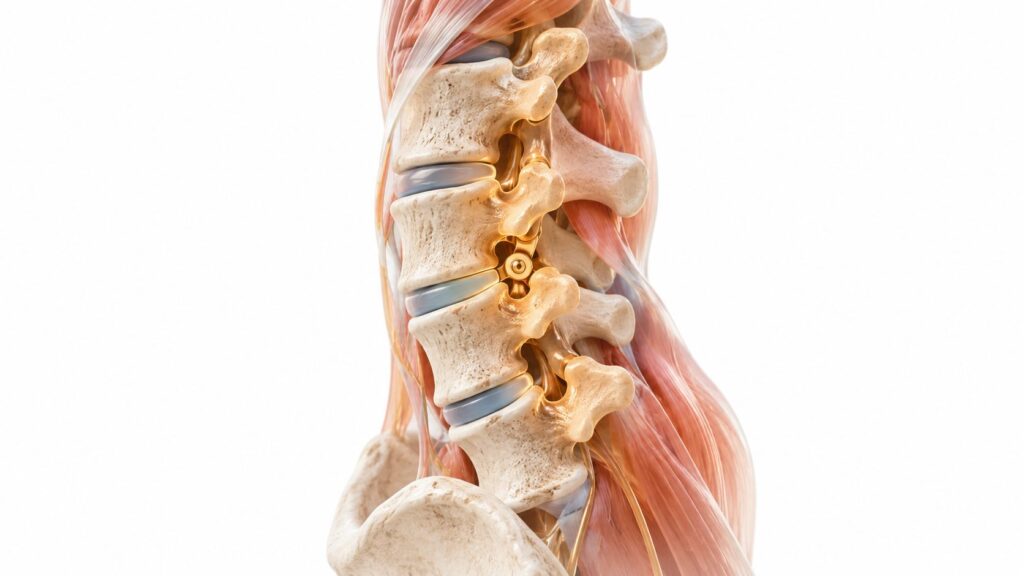
Understanding Vertebral Compression Fractures and Treatment Options
What is vertebroplasty and how can it help if you’re suffering from spinal pain? Here’s what you need to know:
Vertebroplasty is a minimally invasive procedure that:
- Injects medical-grade bone cement into fractured vertebrae
- Stabilizes the broken bone and relieves pain
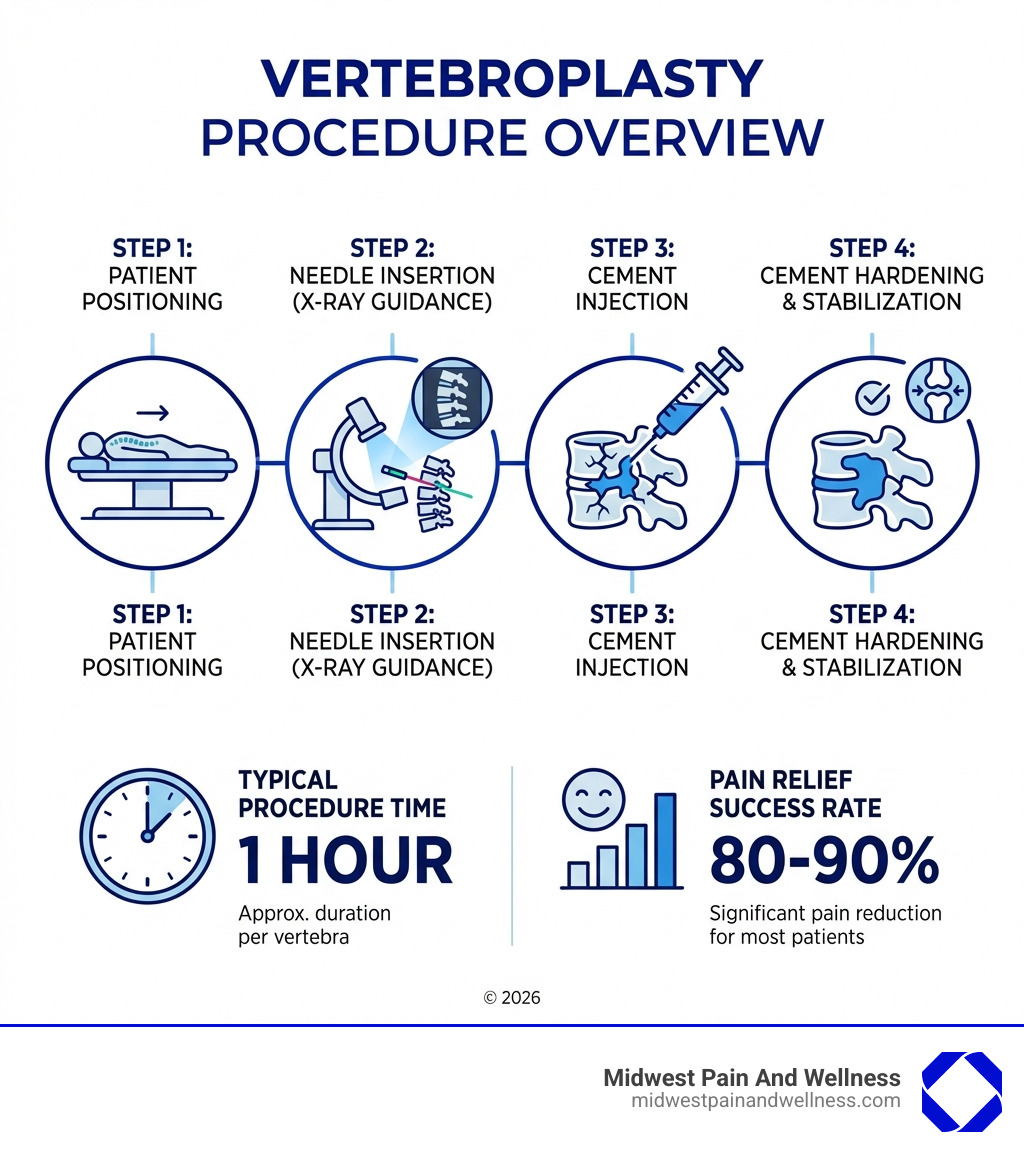
- Takes about one hour per treated vertebra
- Requires only local anesthesia and a small needle insertion
- Allows most patients to go home the same day
- Provides pain relief for 80-90% of patients
If you’ve been diagnosed with a vertebral compression fracture (VCF)—often caused by osteoporosis—you’re likely experiencing significant back pain that limits your daily activities. These fractures can happen from simple movements like bending or coughing. Vertebroplasty offers an effective solution without major surgery.
The procedure works by injecting a special cement (polymethylmethacrylate or PMMA) directly into the fractured vertebra using X-ray guidance. This cement hardens quickly, stabilizing the bone and preventing further collapse. Many patients experience immediate pain relief, while others notice improvement within a few days.
As Dr. Yaw Donkoh, a double board-certified physician in anesthesiology and interventional pain management, I’ve helped many patients understand what is vertebroplasty and how it can restore their quality of life through minimally invasive spinal procedures.
What is Vertebroplasty and How Does It Work?
Vertebroplasty is a percutaneous procedure where a specialized bone cement, typically polymethylmethacrylate (PMMA), is injected into a fractured vertebral body. The primary goal is to stabilize the fracture and reduce pain. The procedure works by filling the voids within the trabecular bone, which increases the stiffness and strength of the vertebra, often returning it to prefracture levels. This stabilization prevents further collapse of the bone and provides immediate pain relief for many patients.
We perform vertebroplasty by carefully guiding a needle into the fractured vertebra under continuous X-ray (fluoroscopy) guidance. Once the needle is precisely positioned, we slowly inject the medical-grade bone cement. This cement, resembling a thick paste, hardens quickly to create an internal cast that stabilizes the weakened bone. Studies show that even with as little as 2 ml of PMMA cement, the strength of a fractured vertebral body can be restored to its prefracture levels, helping the vertebra bear weight more effectively.
Conditions and Injuries Treated by Vertebroplasty
Vertebroplasty is primarily used to treat painful vertebral compression fractures (VCFs) resulting from several conditions:
- Osteoporosis: The most common cause, where bones become brittle and prone to fracture from minimal trauma like bending or coughing.
- Spinal Tumors: Both primary and metastatic cancers can weaken vertebrae, leading to painful compression fractures.
- Multiple Myeloma: A cancer affecting plasma cells that frequently leads to bone-destroying lesions and VCFs.
- Vertebral Hemangiomas: Benign vascular tumors that can cause structural weakness in the vertebrae.
While vertebroplasty specifically addresses VCFs, we offer comprehensive care for related conditions. For more information on other potential sources of spine pain, you can explore topics like Degenerative Disc Disease or Spinal Stenosis. If you’re experiencing chronic back pain in Chicago Ridge, visit our page on Spinal Stenosis, Degenerative Spine Disease (Neck, Mid-Back, Low-Back).
Main Benefits of Undergoing Vertebroplasty
The benefits of vertebroplasty are significant for those suffering from chronic pain due to VCFs:
- Dramatic Pain Relief: Vertebroplasty is successful about 80 to 90% of the time in relieving fracture pain. Many patients report immediate relief or significant reduction within two to three days.
- Improved Mobility: About 75 percent of patients regain lost mobility and become more active following the procedure, which is crucial for preventing complications from immobility.
- Structural Support: The injected bone cement increases the stiffness and strength of the affected vertebra, helping to prevent further collapse and deformity.
- Minimally Invasive: The procedure involves only a small skin nick, leading to faster recovery times and allowing most patients to go home the same day.
- Reduced Complications: Getting patients moving again quickly helps combat risks like deep vein thrombosis (DVT), pneumonia, and muscle weakness associated with bed rest.
Risks and Potential Complications
While generally safe with a complication rate of only 1 to 3 percent, vertebroplasty does carry some risks:
- Cement Leakage: This is the most frequent complication. While often asymptomatic, cement can occasionally escape into the spinal canal or nerve root foramen, causing irritation or numbness. In rare cases, it can travel to the lungs (pulmonary cement embolism).
- Infection: There is a small risk of infection at the injection site, occurring in less than one in 1,000 cases.
- New Vertebral Fractures: Some debate exists regarding whether the procedure increases the risk of fractures in adjacent vertebrae. However, recent research like the VERTOS IV trial suggests it may actually protect against further height loss.
- Bleeding/Hematoma: Any needle insertion carries a minor risk of bleeding.
- Allergic Reaction: Rare reactions to the bone cement or contrast agents are possible.
- Thermal Injury: The hardening of PMMA cement generates heat, which is carefully monitored to avoid injury to surrounding tissues.
Who is a Candidate for Vertebroplasty?
Ideal candidates for vertebroplasty typically include:
- Patients with Painful VCFs: Those with persistent, severe pain (NRS score of 5 or greater) that hasn’t responded to conservative treatments.
- Acute or Subacute Fractures: The procedure is most effective for fractures that are recent (ideally within eight weeks) and confirmed as active via MRI or SPECT imaging.
- Fractures from Osteoporosis or Cancer: These are the primary underlying conditions that benefit from cement augmentation.
Contraindications where vertebroplasty may not be suitable include:
- Stable, Asymptomatic Fractures: If the fracture isn’t causing pain, the procedure is not recommended.
- Active Infection: Bone infection (osteomyelitis) is an absolute contraindication.
- Spinal Canal Compromise: If bone fragments are already pressing on the spinal cord.
- Uncorrected Bleeding Disorders: Patients must be able to safely manage blood-thinning medications.
- Other Back Pain Causes: The procedure does not treat pain from herniated discs or spinal stenosis without an active VCF. For these, we offer Minimally Invasive Lumbar Decompression (MILD) in Chicago Ridge or Facet Joint Injections Chicago.
The Vertebroplasty Procedure: Preparation to Recovery
Preparation for Vertebroplasty
Your journey begins with a consultation and physical exam. We use imaging like MRI or CT scans to precisely locate the fracture. You’ll be instructed to stop blood-thinning medications several days prior and fast for 6-8 hours before the procedure. Please arrange for a driver to take you home.
What Happens During Vertebroplasty?
The procedure is performed in our Chicago Ridge facility using advanced imaging.
- Anesthesia: Most procedures use local anesthesia with moderate sedation (“twilight” anesthesia).
- Positioning: You’ll lie face down while the area is cleaned and numbed.
- Needle Insertion: Using fluoroscopy (X-ray), a thin needle is guided through a small skin nick into the fractured vertebra.
- Cement Injection: Medical-grade PMMA cement is slowly injected. The process takes about one hour per treated bone, and the cement hardens within minutes.
Recovery After Vertebroplasty
- Immediate Care: You’ll lie on your back for about an hour while the cement fully sets, followed by 1-2 hours of observation.
- Going Home: Most patients go home the same day. You may feel soreness at the insertion site for a few days, which can be managed with ice packs.
- Activity: Rest for 24 hours, then gradually increase activity. Avoid heavy lifting for 4-6 weeks.
For more details, visit our Treatment Procedures page.
Vertebroplasty vs. Kyphoplasty and Conservative Methods
Conservative Methods
These include bed rest, pain medication, and bracing. While less invasive, they don’t address the structural weakness of the bone and carry risks like muscle atrophy or further bone loss from prolonged inactivity.
Kyphoplasty
Also known as “balloon vertebroplasty,” this procedure involves inflating a small balloon within the bone to create a cavity and restore vertebral height before injecting cement.
- Comparison: Kyphoplasty is generally better at initial height restoration (up to 97% in some studies), while vertebroplasty is often faster and equally effective for pain relief. Both procedures have success rates of 80-90% for alleviating pain. A study on spine mechanics shows both can restore normal mechanics, and the choice depends on your specific fracture and anatomy.
Long-Term Outcomes and Effectiveness
- Sustained Pain Relief: Studies like the VERTOS V trial show that vertebroplasty provides superior pain relief and quality of life improvements for at least 12 months compared to conservative management.
- Mechanical Restoration: By increasing the stiffness of the fractured vertebra, the procedure stabilizes the spine and prevents further deformity.
- Fracture Risk: Recent evidence from the VERTOS IV trial indicates that vertebroplasty does not increase the risk of new vertebral fractures and may protect against height loss.
- Survival Benefits: Medicare dataset studies suggest that patients undergoing vertebral augmentation have higher survival rates at 5 and 10 years compared to those managed non-surgically, likely due to improved mobility and reduced complications from bed rest.
Factors Influencing Success
- Cement Volume: While 2 ml can restore strength, 4-8 ml is typically needed for full stiffness restoration depending on the location (thoracic vs. lumbar).
- Cement Distribution: A uniform filling pattern provides better stabilization. High-viscosity cements help achieve even distribution and reduce leakage risks.
- Bone Quality: Underlying bone mineral density (BMD) affects how well the cement integrates, though the procedure is specifically designed to reinforce osteoporotic bone.
- Fracture Acuity: Vertebroplasty is most effective when performed within 8 weeks of the acute fracture.
- Team Expertise: Precise needle placement and controlled injection require a skilled interprofessional team, like our specialists in Chicago Ridge.
Key Considerations for Patients
When considering vertebroplasty at Midwest Pain And Wellness, we will discuss:
- Pain Severity: Is your pain moderate to severe and impacting daily life?
- Treatment History: Have conservative methods like physical therapy or medication failed to provide relief?
- Overall Health: We review your medical history to ensure you are a safe candidate for sedation and the procedure.
- Alternatives: We explore all options, including kyphoplasty or other techniques like Epidural Injections or consulting with a Back Pain Specialist Near Me.
- Post-Procedure Care: Addressing the underlying cause of the fracture (like osteoporosis) through nutrition and medication is essential for long-term health.
Conclusion
Vertebroplasty is a highly effective, minimally invasive option for treating painful vertebral compression fractures. It offers dramatic pain relief, improved mobility, and structural support with minimal risk. At Midwest Pain And Wellness in Chicago Ridge, Dr. Yaw Donkoh and our expert team provide personalized, opioid-free solutions to help you regain your quality of life. If you’re struggling with spinal pain, contact us today to discuss your options.
For more information, visit our page on Vertebral Compression Fracture Treatment in Chicago Ridge.