Understanding Workplace Injury Protection
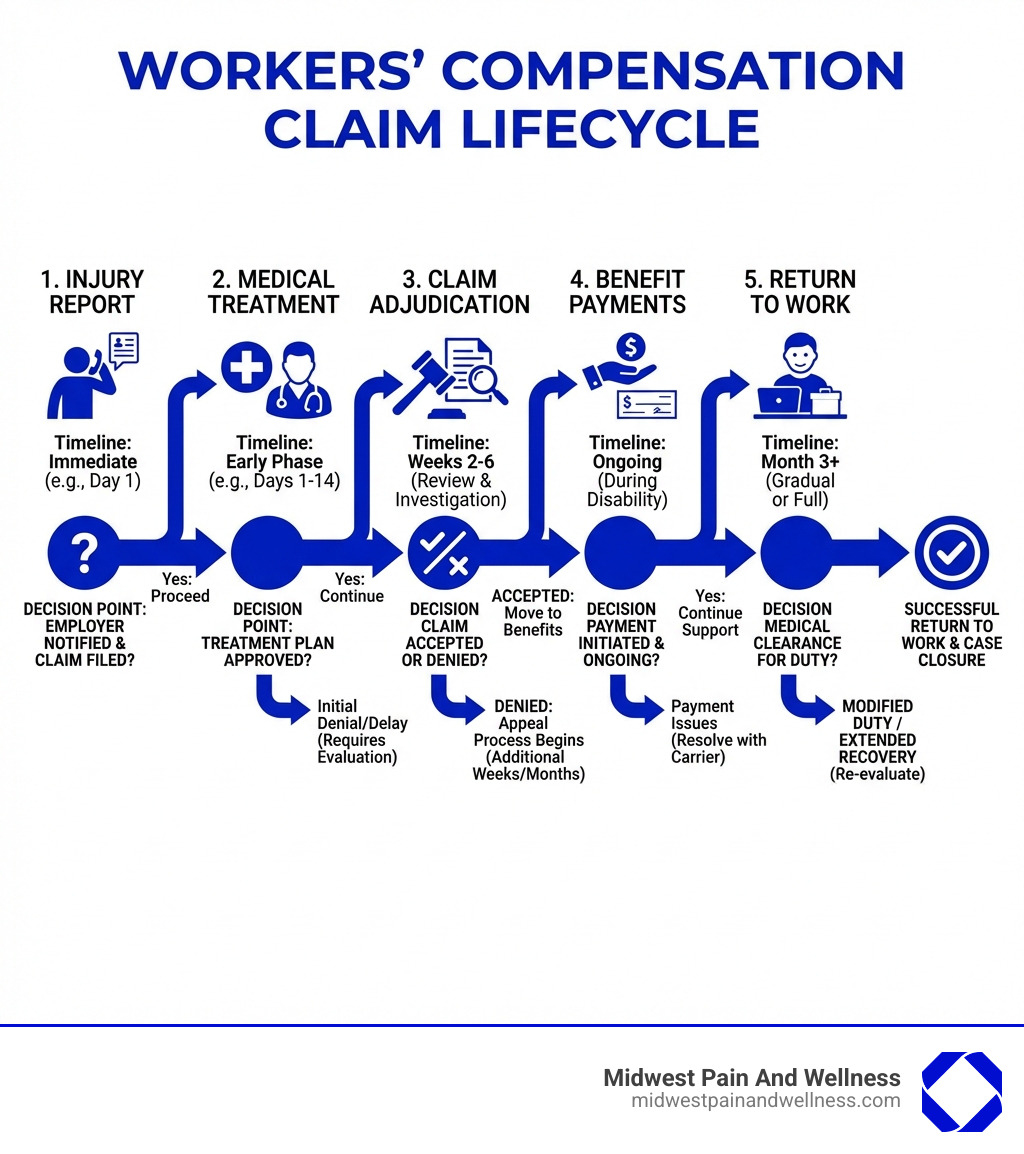
How workers’ comp works? is a question that matters the moment an injury happens on the job. Workers’ compensation is a no-fault insurance system that provides injured workers with medical care and wage replacement benefits without requiring proof of employer negligence. Here’s the basic process:
- Employee reports injury to employer immediately after incident
- Employer files claim with workers’ compensation board or insurance carrier
- Medical treatment begins with approved healthcare providers
- Claim investigation determines work-relatedness and benefit eligibility
- Benefits paid for lost wages (typically two-thirds of average weekly wage) and medical expenses
- Return-to-work coordination supports recovery and job reintegration
The system operates as an exclusive remedy — employees receive benefits regardless of fault, but generally cannot sue their employer for workplace injuries. This trade-off, established in most jurisdictions over 100 years ago, protects both workers and employers while ensuring injured workers get the care they need.
Understanding how workers’ comp works? becomes especially important when chronic pain develops from workplace injuries. As Dr. Yaw Donkoh, a double board-certified physician in anesthesiology and interventional pain management, I’ve guided many patients through the workers’ compensation recovery process, helping them access appropriate medical treatment and achieve meaningful pain relief without relying on opioids. My experience with outcome-focused, minimally invasive procedures aligns directly with the goals of workers’ compensation systems: returning injured workers to health and productivity as safely and effectively as possible.
Defining the System: What is Workers’ Compensation?
At its core, workers’ compensation is a “grand bargain.” It is a no-fault compromise where the employee gives up the right to sue their employer in exchange for guaranteed medical coverage and wage replacement. This concept is known as the exclusive remedy. In Illinois, this system is governed by the Illinois Workers’ Compensation Commission, ensuring that the wheels of industry keep turning even when a cog gets a bit jammed.
Historically, this wasn’t always the case. Before the early 20th century, if you were hurt at work, you had to prove your boss was negligent—a long, expensive, and often losing battle. The enactment of workers’ compensation laws, such as the Workers’ Compensation guidelines managed at the federal level and mirrored by states like Illinois, changed everything.
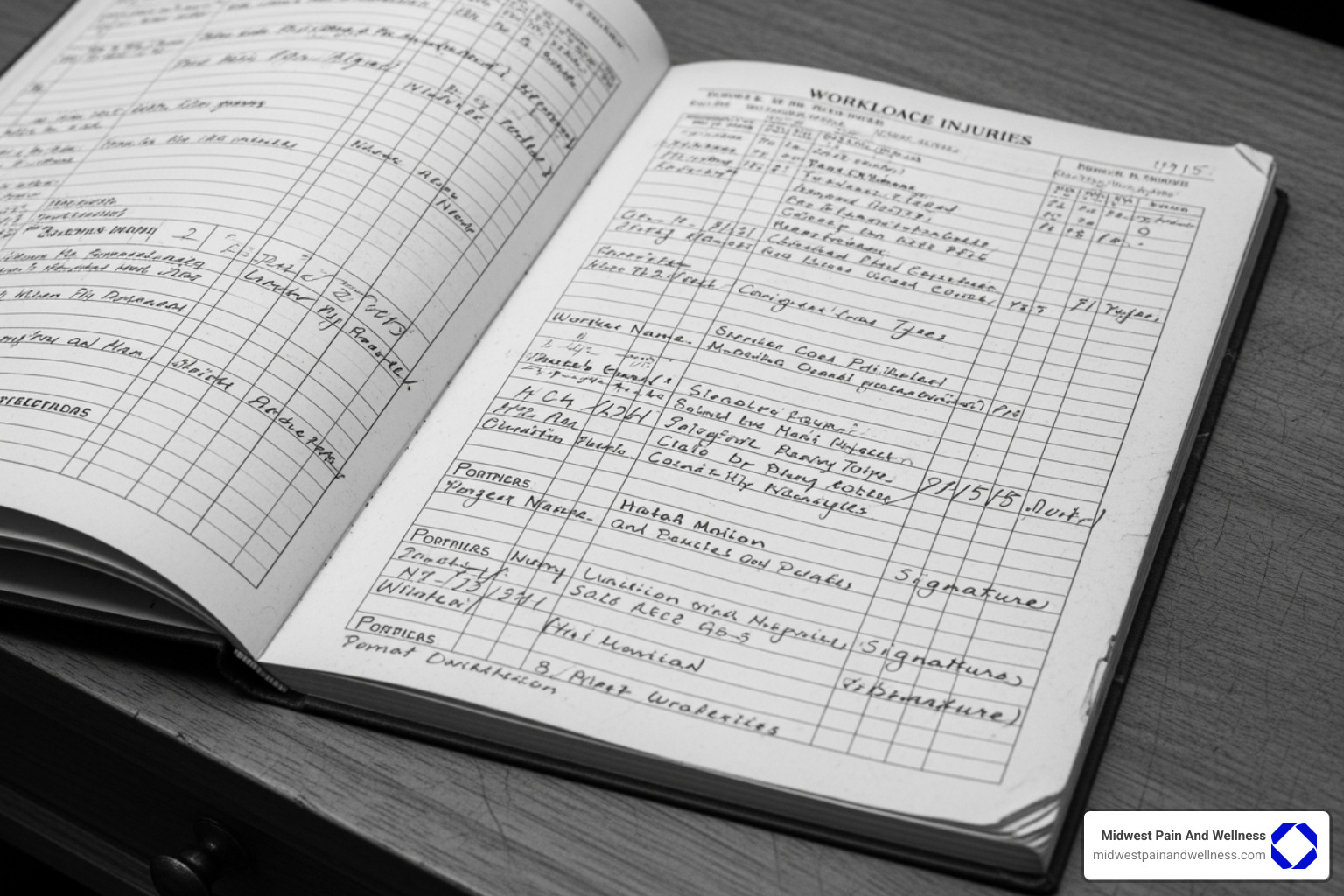
When we look at how workers’ comp works?, we see it provides several key pillars of support:
- Wage Replacement: If you can’t work, you still need to eat. The system typically pays out a portion of your average weekly wage.
- Medical Care: All “reasonable and necessary” medical expenses related to the injury are covered.
- Employer Immunity: Because the employer pays for the insurance, they are generally immune from personal injury lawsuits stemming from the accident.
- Disability Benefits: Whether your injury is temporary or permanent, the system provides financial tiers to match the severity of your condition.
Eligibility and Coverage: Who and What is Protected?
You might wonder, “Does my stubbed toe count?” While the system is broad, it isn’t a free-for-all. To qualify, an injury must “arise out of and in the course of employment.” This is often determined by an organizational test—essentially, were you doing something for your boss’s benefit when it happened?
Coverage extends far beyond sudden accidents like falling off a ladder. It includes:
- Occupational Diseases: Illnesses caused by your work environment (e.g., lung issues from chemical exposure).
- Repetitive Motion Injuries: Conditions like carpal tunnel syndrome that develop over years of typing or assembly line work.
- Hearing Loss: Exposure to high decibels (often over 90 decibels) over a certain period is a compensable injury.
- Psychological Trauma: In many cases, if you witness a traumatic event at work, the resulting PTSD or anxiety may be covered.
Research published in PubMed: Health Risk Calculator and Claim Incidence suggests that an individual’s overall health can impact the incidence and cost of these claims. Furthermore, pre-existing conditions do not automatically disqualify you. If your job “aggravates” or “accelerates” an old back injury, it is typically covered under the Illinois system. However, there are some specific exemptions; for example, some agricultural workers or domestic servants may have different rules depending on their hours worked or annual earnings.
The Step-by-Step Guide: How Workers’ Comp Works?
Navigating the aftermath of a workplace injury can feel like trying to solve a Rubik’s cube in the dark. But understanding the steps can shed some light on the process.
Immediate Reporting and Documentation
The clock starts ticking the second you are injured. In Illinois, you generally have 45 days to notify your employer. If you wait too long, you might lose your right to benefits entirely.
- Report the Incident: Tell your supervisor immediately. Even if it seems minor, document it.
- Seek Medical Attention: Go to a provider who understands Chicago Ridge workers’ comp services. At Midwest Pain And Wellness, we focus on diagnosing the root cause of your pain to get you back on your feet.
- Gather Evidence: Collect witness statements and keep copies of every medical bill and report.
The Role of the WSIB and State Boards
While Ontario uses the WSIB, here in the U.S., each state has its own board. For our neighbors to the north, you can find info on Provincial Workers’ Compensation Boards in Canada, but for those of us in the Chicago Ridge area, the Illinois Workers’ Compensation Commission (IWCC) is the referee. They handle:
- Claim Investigation: Ensuring the injury actually happened at work.
- Benefit Calculation: Determining exactly how much your weekly check should be.
- Dispute Resolution: If your employer’s insurance denies your claim, the board provides a path for appeals and hearings.
How Workers’ Comp Works? for Medical Recovery
Recovery isn’t just about physical therapy; it’s about coordination. You may be asked to attend an Independent Medical Exam (IME). Don’t let the name fool you—the doctor is chosen and paid for by the insurance company to provide a second opinion on your “Maximum Medical Improvement” (MMI). MMI is the point where a doctor decides your condition isn’t going to get significantly better with more treatment.
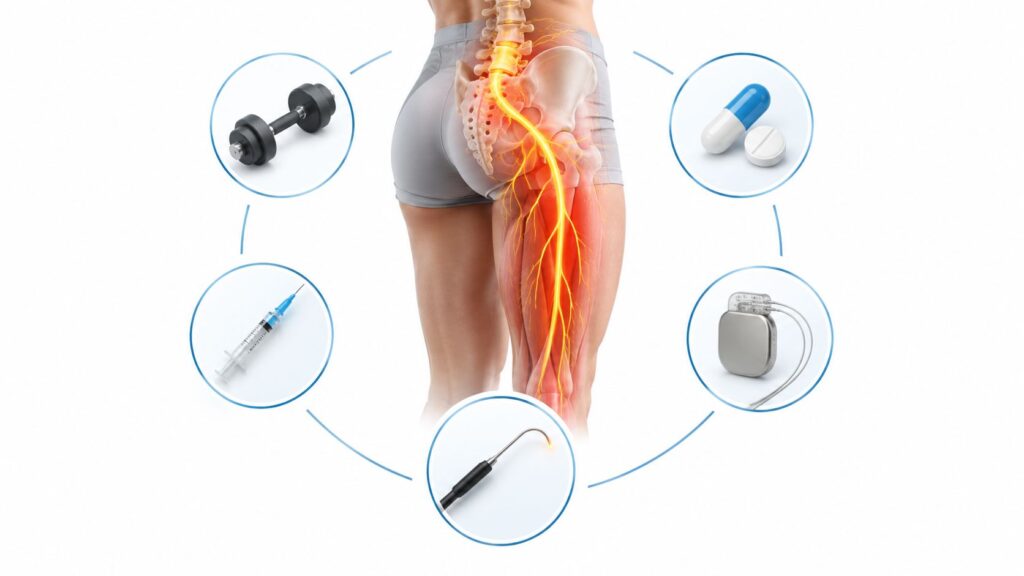
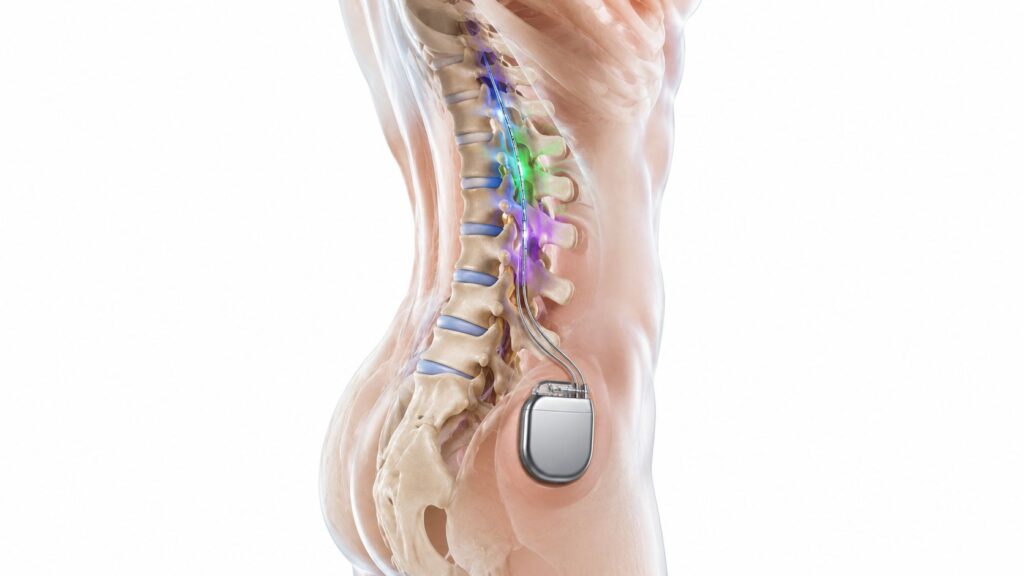
At Midwest Pain And Wellness, we prioritize interprofessional coordination. We work with your primary doctors and the insurance adjusters to ensure our interventional, opioid-free therapies—like nerve blocks or spinal cord stimulation—are recognized as necessary steps for your long-term relief.
Understanding Your Benefits and Financial Support
The financial side of workers’ comp is designed to keep you afloat. Here is how the benefits are generally categorized:
| Benefit Type | Description | Typical Payout |
|---|---|---|
| Temporary Total Disability (TTD) | You are completely unable to work while recovering. | 2/3 of Average Weekly Wage |
| Permanent Partial Disability (PPD) | You have a permanent impairment but can still work in some capacity. | Based on the “body part” or “person as a whole” |
| Vocational Rehabilitation | Help finding a new career if you can’t return to your old job. | Tuition, counseling, and job placement |
| Survivor Benefits | Payments to dependents if a workplace injury results in death. | Burial expenses and weekly stipends |
Beyond these, you are also entitled to medical mileage (reimbursement for driving to and from doctor appointments) and coverage for all prescriptions and medical devices.
Employer Responsibilities and Insurance Mechanics
Employers aren’t just passive observers; they fund the entire system. In Illinois, having workers’ comp insurance is mandatory for almost every employer.
Calculating Premiums and Experience Mods
Ever wonder why a construction company pays more for insurance than a library? It comes down to Payroll Classification. Each job has a “risk code.”
- Experience Modification (Mod Rate): This is a multiplier based on the company’s safety history. An experience modification of less than 100% means the company is safer than average, leading to lower premiums.
- Safety Checks: Employers can use tools like the WSIB Safety Check (in Ontario) or similar state databases to see their statistics.
What Happens if an Employer is Uninsured?
If your employer dropped the ball and doesn’t have insurance, they are in hot water. In many jurisdictions, being uninsured is a criminal misdemeanor that carries heavy fines—sometimes up to $10,000 or more. If this happens to you:
- You may be able to sue your employer directly in civil court (bypassing the “exclusive remedy” rule).
- Some states have an Uninsured Employers Benefits Trust Fund (UEBTF) to pay claims when the employer cannot.
Frequently Asked Questions about Workers’ Compensation
Can I sue my employer instead of claiming workers’ comp?
Generally, no. Because of the “exclusive remedy” rule, you cannot sue for pain and suffering. However, exceptions exist if the employer intentionally harmed you or if they failed to carry the required insurance.
What are common misconceptions about workers’ compensation?
- “It was my fault, so I can’t claim.” Wrong! Unless you were intoxicated or trying to hurt yourself on purpose, fault doesn’t matter.
- “I have to use my sick days first.” No. You should file for workers’ comp immediately. Using sick leave can actually complicate your claim and shift the financial burden onto you.
- “Federal and Provincial/State rules are the same.” They aren’t. As noted in PubMed: Coverage Gaps and Cost-Shifting, differences in regional laws can lead to gaps in who bears the financial burden of an injury.
How workers’ comp works? for pre-existing conditions
Many people fear that an old high school football injury will ruin their claim. In reality, if your work duties caused a “material aggravation” of that old injury, you are still eligible for benefits. The key is providing medical evidence that shows a clear change in your condition due to your job.
Conclusion
Understanding how workers’ comp works? is the first step toward a successful recovery. The system is designed to be a safety net, but it requires you to be proactive—report early, document everything, and choose the right medical partners.
At Midwest Pain And Wellness, we are dedicated to helping residents of Chicago Ridge and the surrounding areas navigate the medical side of their workers’ compensation claims. Our double board-certified doctors specialize in custom, interventional care plans that focus on long-term relief without the risks of opioids. We believe that an injury shouldn’t define your future.
If you are struggling with a work-related injury and need a team that understands the complexities of the system, we are here to help. Schedule a consultation for workers’ compensation recovery today and let us help you get back to the life you love.