Why Acupuncture Pain Relief Matters for Chronic Pain Sufferers
Acupuncture pain relief offers a proven, drug-free option for managing chronic pain. If you’re struggling with persistent pain and seeking alternatives to opioids or surgery, here’s what you need to know:
Quick Answer: How Acupuncture Relieves Pain
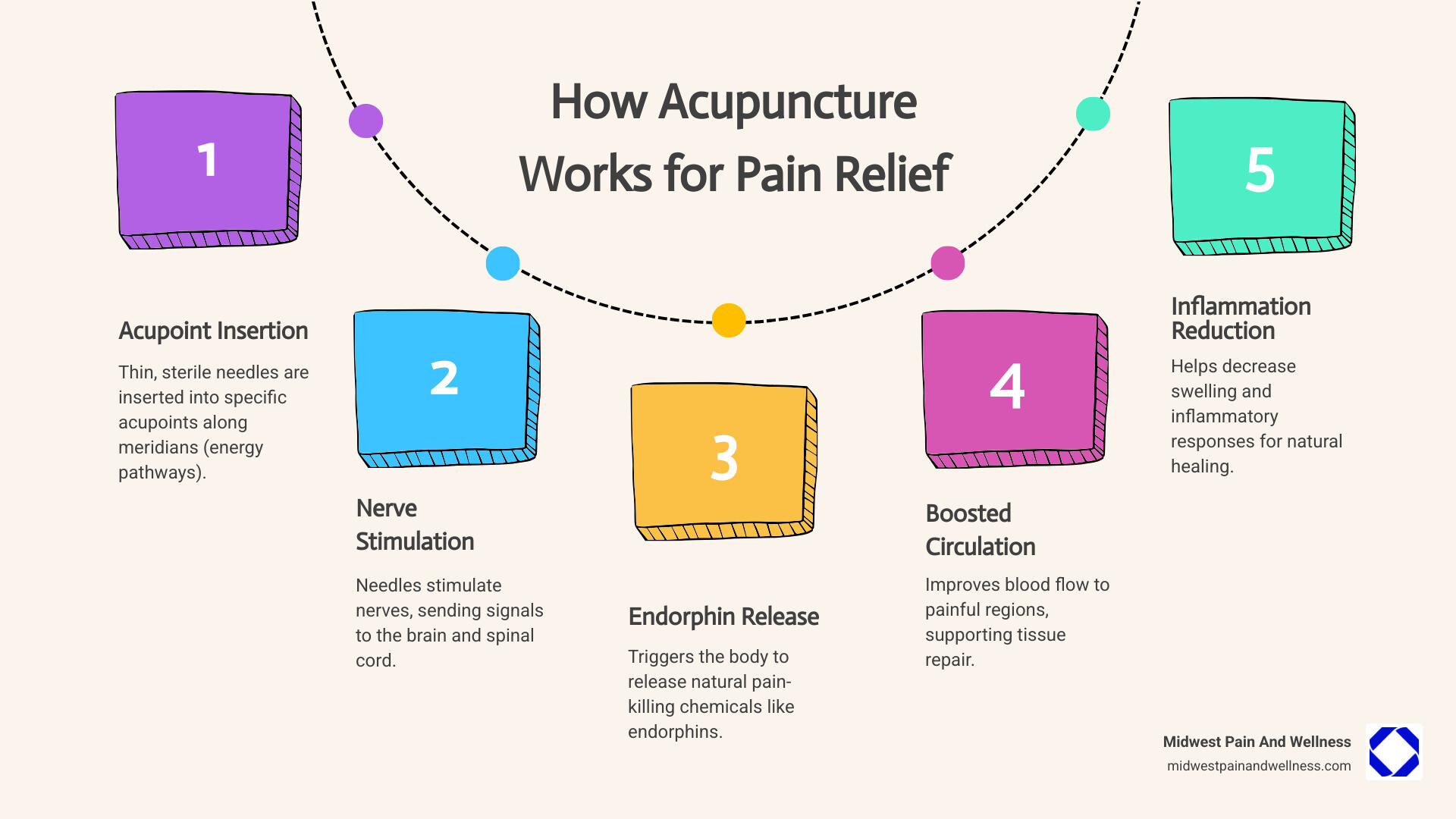
- Stimulates natural painkillers – Triggers your body to release endorphins and other pain-relieving chemicals
- Reduces inflammation – Helps decrease swelling and promotes healing in affected areas
- Improves circulation – Increases blood flow to painful regions, supporting tissue repair
- Safe and gentle – Uses hair-thin, sterile needles with minimal side effects when performed by qualified practitioners
- Works for multiple conditions – Effective for back pain, migraines, arthritis, fibromyalgia, and many other chronic pain conditions
Living with chronic pain is challenging, and traditional pain management often relies on medications with unwanted side effects or invasive procedures. Acupuncture offers a different path.
This ancient practice from Traditional Chinese Medicine has gained recognition in modern Western medicine for its effectiveness. Research shows that acupuncture is significantly more effective than sham treatments for chronic low back pain and as effective as conventional treatments for migraine prevention.
Acupuncture’s beauty lies in its holistic approach. Instead of just masking pain, it works with your body’s natural healing systems to address the root causes of discomfort. It’s also remarkably safe when performed by trained practitioners, with serious side effects being extremely rare.
Understanding Acupuncture: What It Is and How It Works
If you’re curious about acupuncture pain relief, this ancient practice from Traditional Chinese Medicine (TCM) has helped people manage pain for thousands of years. Understanding how it works can help you decide if it’s right for you.
What is acupuncture?
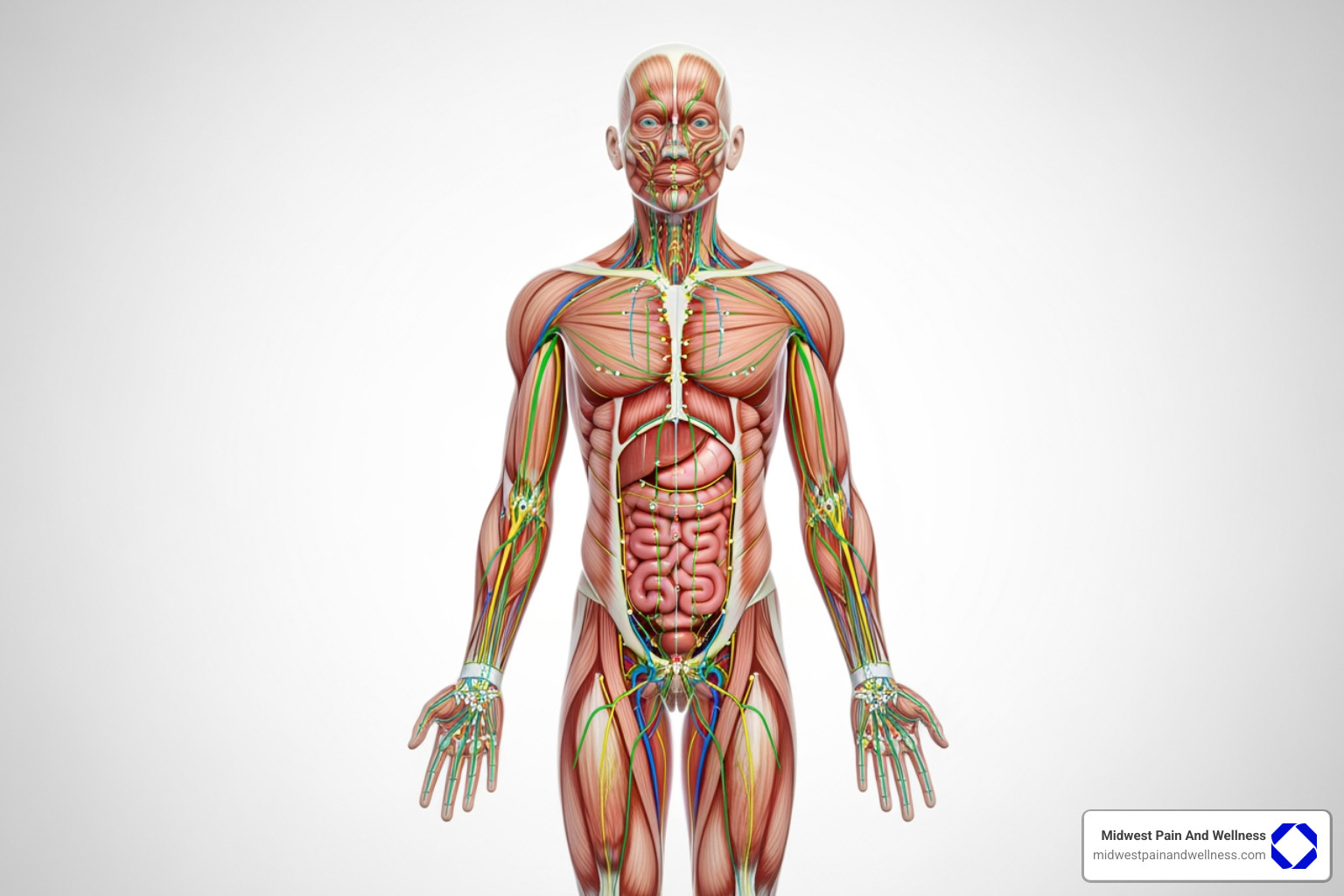
Acupuncture involves the gentle placement of very thin, sterile needles—often no thicker than a human hair—at specific points on your body called acupoints. In TCM, these points are located along pathways called meridians, which are channels for your body’s vital energy, or “qi” (pronounced “chee”).
When this energy flow is blocked, TCM teaches that pain and illness can result. The goal of acupuncture is to stimulate these acupoints to restore balance and encourage your body’s natural healing processes.
How does acupuncture provide pain relief?
Acupuncture pain relief can be understood from both traditional and modern perspectives.
The TCM Perspective: Pain is a sign that your qi isn’t flowing properly. By placing needles at specific acupoints, an acupuncturist works to unblock these pathways and restore harmony. A sensation called “déqì” (pronounced “duh-chee”)—a dull ache, warmth, or tingling—is a positive sign that your body is responding.
The Western Medical View: Modern science explains that acupoints stimulate nerves, muscles, and connective tissue. This nerve stimulation signals your brain and spinal cord to release endorphins—your body’s natural painkillers—along with other pain-relieving chemicals.
Acupuncture also influences the part of your brain that controls serotonin (affecting mood and pain perception) and prompts the release of corticosteroids (aiding pain relief and healing). The local stimulation increases blood flow, which reduces inflammation and promotes healing—a key factor in managing chronic pain.
Whether you connect with the ancient wisdom or modern science, the result is the same: acupuncture engages your body’s ability to heal itself. For more detailed insights, the Mayo Clinic offers excellent resources.
What are the different types and approaches?
Acupuncture is not a one-size-fits-all treatment. A skilled practitioner can tailor the technique to your specific needs.
Traditional Chinese acupuncture is the most common form, involving needle insertion at points across the body, sometimes with gentle manipulation, heat (moxibustion), or mild electrical stimulation to balance your entire system.
Body acupuncture is the standard practice of placing needles along meridian pathways throughout the body to address your whole system.
Auricular (ear) acupuncture is a specialized technique where small needles are placed at points on the ear, which is seen as a mini-map of the body, to address issues elsewhere.
Electroacupuncture adds a small electrical current through the needles to improve stimulation, which is particularly effective for triggering endorphin release and managing pain.
Acupressure is a needle-free alternative where practitioners apply manual pressure to acupoints, working on the same principles.
At Midwest Pain and Wellness, our double board-certified doctors believe in a comprehensive, multi-modal approach to pain management. We collaborate with other practitioners to create custom care plans designed for long-term relief, not just temporary fixes. You can learn more about our specific treatment procedures and how we might incorporate acupuncture into your personalized care plan.
The Science and Benefits of Acupuncture Pain Relief
The acceptance of acupuncture pain relief in Western medicine is supported by decades of scientific research. As practitioners of evidence-based care, we want you to understand the science and how it translates into real benefits.
What is the scientific evidence for acupuncture?
The scientific community has put acupuncture under the microscope, with encouraging results for chronic pain.
For chronic low back pain, a systematic review of 25 studies found that acupuncture provided significant pain reduction compared to sham acupuncture. For acute back pain, patients saw improvements over both sham treatments and anti-inflammatory medications.
For migraines, acupuncture performs as well as conventional prophylactic medications in reducing frequency. Studies also show significant reductions in chronic daily headaches and tension headaches.
For knee osteoarthritis, multiple meta-analyses have demonstrated clinically meaningful short-term improvements in pain levels. One study noted a 0.9-point improvement on a 20-point pain scale at eight weeks compared to sham treatment.
When researchers compare real acupuncture to sham acupuncture (where needles are inserted superficially or at non-traditional points), results are sometimes mixed, as sham treatments often show benefits too. This suggests a placebo effect plays a role. However, if you’re experiencing real pain relief in a safe, gentle way, the relief is genuine, and that’s what counts. For a comprehensive look at the research, we recommend this evidence-based review of acupuncture for pain.
What are the primary benefits of acupuncture for pain?
Beyond clinical trials, acupuncture pain relief offers real-world benefits. First, it provides natural pain relief by activating your body’s own pain-fighting systems, releasing endorphins without pills or medication side effects.
Acupuncture also causes a reduction in inflammation, one of the root causes of many chronic pain conditions. By improving circulation and triggering beneficial biochemical responses, it helps calm inflamed tissues so they can heal.
Many patients also notice their mood lifting and sleep improving, as acupuncture influences serotonin and other neurotransmitters. Better sleep and emotional balance create a positive cycle for managing pain.
One of its greatest strengths is its minimal side effects. Unlike many pain medications, acupuncture is gentle and doesn’t carry the same risks of drowsiness or dependency.
Finally, acupuncture complements other therapies beautifully. It works well alongside physical therapy, chiropractic care, and other interventions as part of a comprehensive pain management strategy. Our patients often report reduced reliance on pain medications, improved physical function, and an overall better quality of life.
Is acupuncture safe? What are the risks?
When performed by a qualified practitioner, acupuncture is remarkably safe. The single most important safety factor is choosing an experienced, licensed acupuncturist.
Modern protocols require sterile, single-use, disposable needles, which has virtually eliminated the risk of blood-borne infections. Each needle is new and disposed of immediately after use.
Most side effects are mild and temporary, such as soreness or mild discomfort at the needle sites. Occasionally, there’s minor bleeding or bruising. Some people feel pleasantly tired or relaxed after a session, which is a good sign.
Serious complications are exceedingly rare (about one in 100,000 needles inserted). These could include infection or organ puncture, but these risks are minimal with a skilled practitioner who understands anatomy.
At Midwest Pain and Wellness, your safety and comfort guide everything we do. We want you to feel confident and relaxed, knowing you’re in capable, caring hands.
Your Acupuncture Journey: What to Expect
Starting something new, especially when it comes to your health, can feel a bit like stepping into unknown territory. But here’s the good news: your acupuncture pain relief journey is likely to be much more relaxing and straightforward than you might imagine. Let’s walk through what you can expect, step by step.
How do I prepare for a session?
The beauty of preparing for acupuncture is that there’s really not much to it. You don’t need to do anything drastic or complicated.
Wear loose, comfortable clothing that can be easily rolled up. Your acupuncturist will need access to various points on your arms, legs, and torso, so think comfortable layers rather than tight jeans or restrictive outfits. We want you feeling relaxed from the moment you arrive.
Have a light meal an hour or two before your appointment. Coming in on a completely empty stomach might leave you feeling lightheaded, but you don’t want to arrive uncomfortably full either. Think of it as the Goldilocks approach – just right.
Skip the caffeine and alcohol right before your session. Both can interfere with your body’s natural responses and make it harder for you to fully relax into the treatment. Save that cup of coffee for afterward if you need it.
Be ready to talk openly about your health history with your practitioner. This includes any medications you’re taking, supplements you use, and other treatments you’re receiving. If you have a pacemaker or are pregnant, it’s especially important to mention this, as certain acupuncture points and techniques may need to be avoided. The more we know, the better we can tailor your treatment to your specific needs.
What happens during and after an acupuncture treatment?
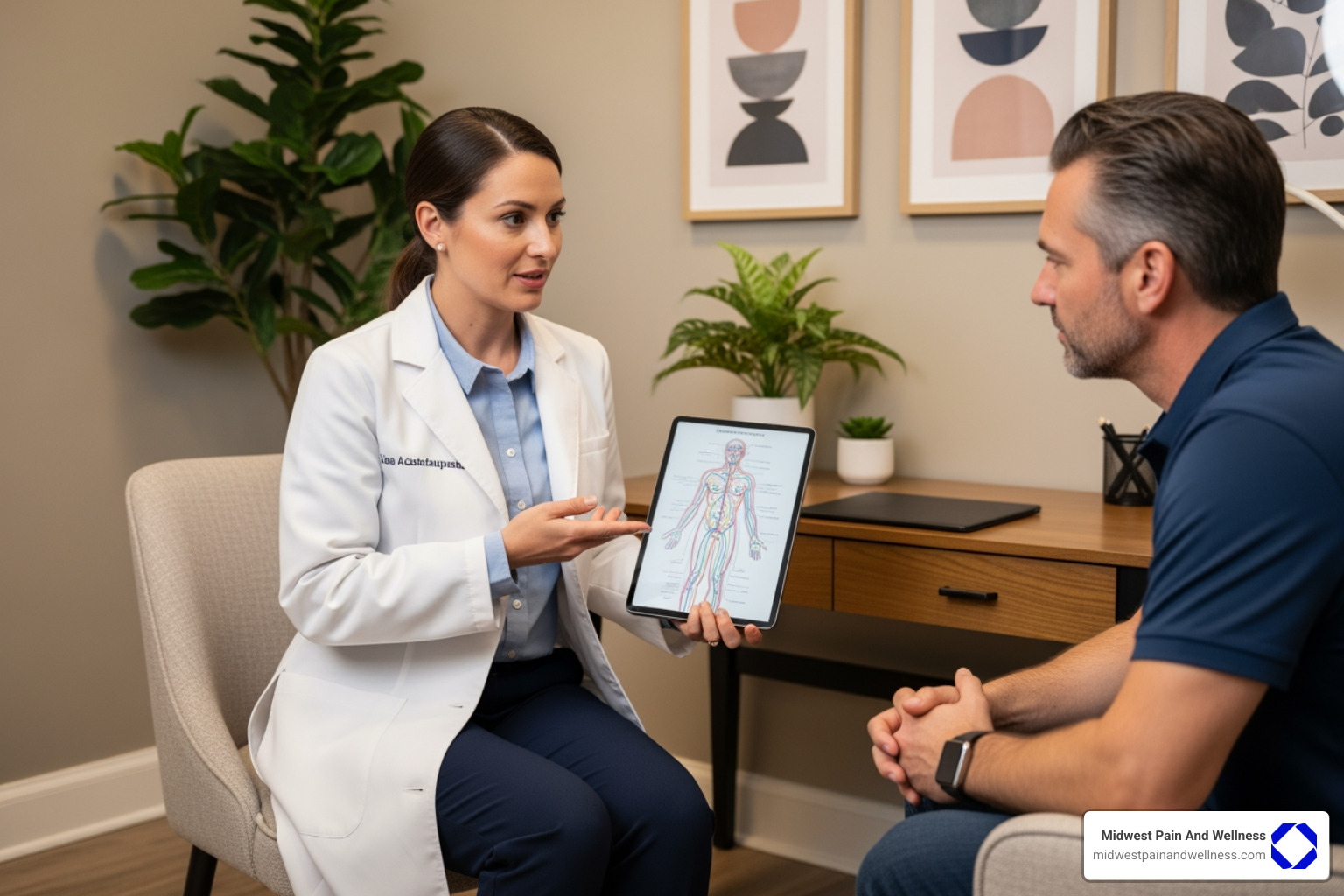
Your first visit typically begins with a thorough consultation. We’ll sit down together and talk about what’s been bothering you, your medical history, and what you’re hoping to achieve with treatment. This isn’t a quick check-the-boxes conversation – we really want to understand your unique situation so we can create a personalized plan for your acupuncture pain relief.
When it’s time for the actual treatment, you’ll lie comfortably on a padded table. We make sure you’re positioned in a way that allows you to truly relax. Some people lie on their back, others on their stomach, depending on which points we’re treating.
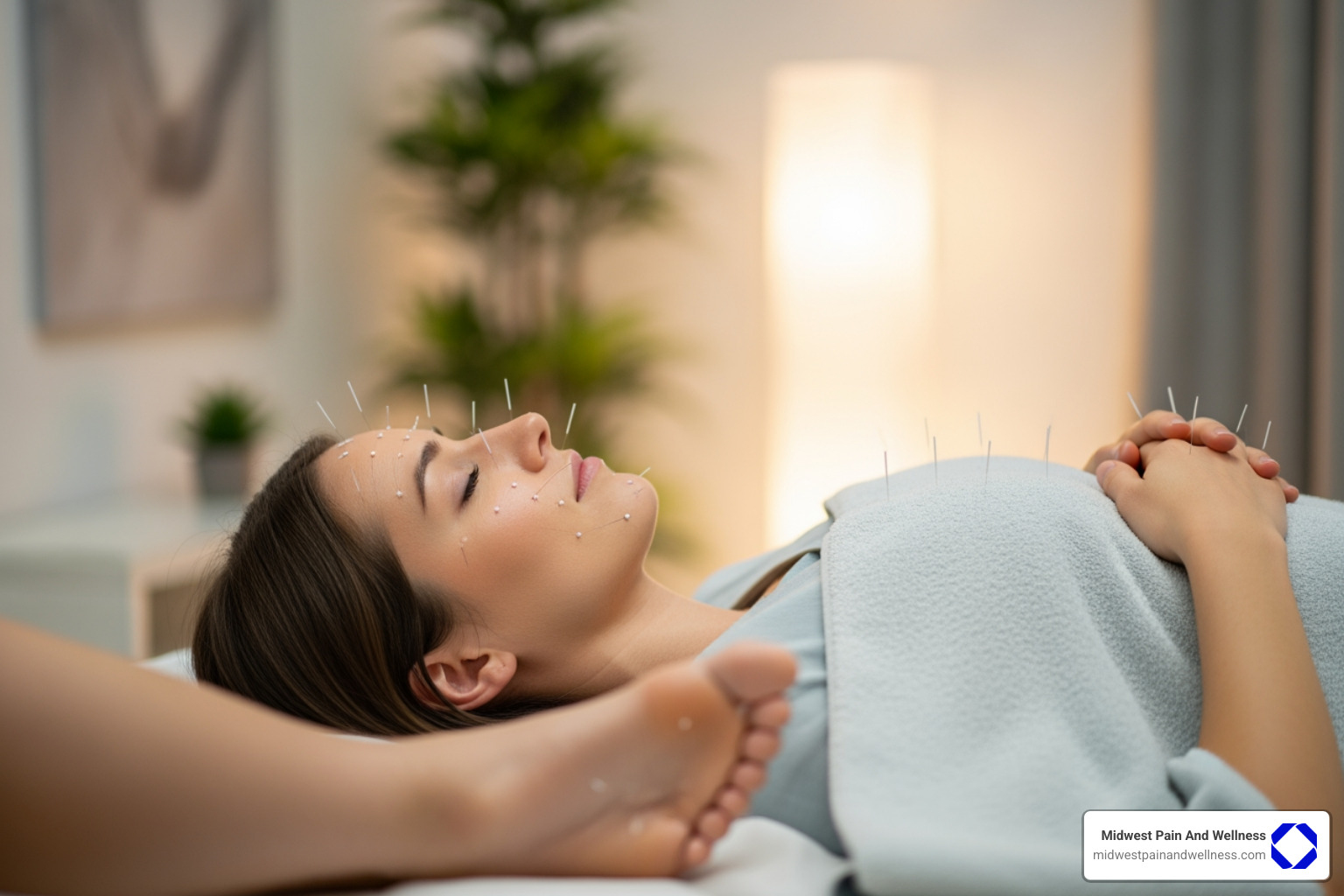
Then comes the needle insertion. Your acupuncturist will carefully place anywhere from 5 to 20 very thin, sterile needles into specific acupoints on your body. These needles are incredibly fine – much thinner than the needles used for injections or blood draws. Most people describe the sensation as a tiny pinch, if they feel anything at all. It’s usually far less uncomfortable than you might imagine.
Once the needles are in place, you might notice some interesting sensations. Some people feel a dull ache, others experience tingling, warmth, or a feeling of heaviness around the needle sites. This is that “déqì” sensation we mentioned earlier – it’s actually a good sign that your body is responding to the treatment. If anything feels uncomfortable or painful, just let your practitioner know, and they can adjust the needles immediately.
Now comes the best part: the relaxation period. The needles stay in place for 10 to 30 minutes while you rest quietly. Many people find this time deeply peaceful. Some listen to soft music, others simply close their eyes and breathe. It’s not unusual for people to drift off to sleep – consider it a bonus meditation session!
After the needles are removed, most people report feeling wonderfully calm and relaxed. Some feel energized, like they’ve had a reset button pressed. It’s a good idea to take things easy for the rest of the day if you can. Listen to your body.
As for results, some people notice immediate relief, while for others, the benefits build gradually over several sessions. A typical treatment plan involves one or two sessions per week, with 6 to 8 treatments being common for addressing a specific complaint. Of course, everyone’s different, and your practitioner will adjust the frequency and duration based on how you respond.
How do I choose a qualified acupuncturist?
Finding the right acupuncturist is one of the most important steps in your journey toward acupuncture pain relief. You want someone who’s not only skilled but also someone you feel comfortable with.
Start by checking credentials. In Illinois, acupuncturists must meet state licensing requirements. Look for practitioners who are properly licensed and have completed their training at accredited institutions. This ensures they’ve received proper education and understand both the art and science of acupuncture.
Certification from the National Certification Commission for Acupuncture and Oriental Medicine (NCCAOM) is another excellent indicator of quality. This national certification demonstrates that a practitioner has met rigorous standards for education and competency. You can find a certified practitioner through their website, which allows you to search by location and specialty.
Don’t underestimate the power of asking for recommendations. Talk to friends, family members, or your primary care doctor. Personal experiences can give you valuable insights into what it’s like to work with a particular practitioner.
Feel free to interview potential practitioners before committing to treatment. Ask about their experience treating conditions similar to yours, their approach to care, and what kind of results they typically see. A good acupuncturist will be happy to answer your questions and help you feel confident in your decision.
It’s also wise to inform your primary care physician that you’re considering acupuncture. They can offer insights into how it might complement your current treatment plan and help coordinate your overall care. At Midwest Pain and Wellness, we believe in collaboration – working together with your other healthcare providers to give you the best possible outcomes.
Speaking of expertise, we’re proud of our team here in Chicago Ridge. We invite you to learn about our double board-certified doctor and find how our integrated, multi-modal approach can make a real difference in your pain management journey. You can also explore the various procedures we use for treatment to see how acupuncture fits into our comprehensive care philosophy.
Acupuncture in the Context of Modern Pain Management
At Midwest Pain and Wellness, we see acupuncture pain relief as more than just an alternative therapy—it’s a powerful, evidence-based tool that fits beautifully into a comprehensive approach to managing pain. For our patients in Chicago Ridge, Illinois, it offers a safe, opioid-free path to feeling better that works alongside other treatments to create lasting results.
What conditions can benefit from acupuncture pain relief?
One of the most remarkable things about acupuncture is its versatility. While we always conduct a thorough assessment to determine if it’s the right fit for your specific situation, we’ve seen it make a real difference for so many different types of pain.
Chronic low back pain is perhaps where acupuncture shines brightest. If you’ve been living with that persistent ache that just won’t quit, acupuncture can offer significant relief. The same goes for neck pain—whether it’s from poor posture, an old injury, or just the stress of daily life, those stiff, painful muscles often respond beautifully to treatment.
For those battling headaches and migraines, acupuncture can be truly life-changing. Imagine fewer days lost to debilitating pain, fewer medications needed, and more time to actually enjoy your life. Many of our patients report both reduced frequency and intensity of their headaches after a course of treatment.
If you’re dealing with osteoarthritis, particularly in your knees, acupuncture can help manage that grinding pain and improve how your joints function. It’s especially helpful when combined with other therapies like physical therapy or weight management. Fibromyalgia patients often find relief too, with electroacupuncture proving particularly effective at easing the widespread pain and stiffness that makes this condition so challenging.
Women suffering from menstrual cramps don’t have to just grin and bear it month after month. Acupuncture can significantly reduce that discomfort. And if you’re an active person dealing with sports injuries—from tennis elbow to muscle strains—acupuncture can speed your recovery and get you back to doing what you love.
Even postoperative pain responds well to acupuncture. In fact, a National Institutes of Health consensus panel specifically concluded that it’s effective for postoperative dental pain, and many patients find it helps with general surgical recovery too.
Acupuncture works best as part of a team approach. It shouldn’t be used to delay seeing a medical provider for a health problem, but rather as a complement to comprehensive care. We encourage you to explore our full range of conditions we treat to see how our multi-modal approach addresses your specific pain concerns.
Is acupuncture covered by insurance?
This is one of the first questions many people ask us, and it’s an important one! The honest answer is: it depends on your specific insurance plan.
Coverage for acupuncture pain relief varies widely from one insurance provider to another, and even between different plans from the same company. Some plans offer generous coverage, while others may not cover it at all or only for certain conditions. We always recommend calling your insurance provider directly to get the most accurate information about your benefits, deductibles, and any co-pays you might face.
Many insurance plans require a referral from your primary care physician or a specialist before they’ll cover acupuncture treatments. This is actually a good opportunity to have a conversation with your doctor about whether acupuncture might help your condition. They can often provide valuable insights and help coordinate your overall care.
Even when acupuncture is covered, there are often limits on what conditions qualify for coverage. For example, some plans might cover it only for chronic back pain or chemotherapy-related nausea, but not for other conditions. There may also be restrictions on the number of sessions allowed per year—perhaps 10 or 20 visits annually.
The good news? Our team at Midwest Pain and Wellness is here to help you steer these questions. We understand that dealing with insurance can feel overwhelming, especially when you’re already managing pain. We’re happy to work with you to understand your coverage options and find a path forward that makes sense for your health and your budget.
Conclusion: A Path to Holistic Pain Relief
You don’t have to accept chronic pain as a permanent part of your life story. There are effective, gentle alternatives that can help you reclaim the comfort and freedom you deserve.
Acupuncture pain relief is more than just an ancient practice – it’s a scientifically supported, time-tested approach that can genuinely transform your relationship with pain. By gently stimulating your body’s own healing capabilities, acupuncture offers a natural way to reduce discomfort, calm inflammation, and ease the stress that so often accompanies chronic pain conditions. The beauty of it? It’s remarkably safe, produces few side effects, and works wonderfully alongside other therapies you might already be using.
At Midwest Pain and Wellness in Chicago Ridge, Illinois, we’re passionate about providing comprehensive care that doesn’t rely on opioids. Our double board-certified doctors understand that every person’s pain is unique, which is why we take a multi-modal, interventional approach. We collaborate with other practitioners to design custom care plans focused on achieving long-term relief, not just temporary fixes. Acupuncture is one of the powerful tools in our toolkit, and it might be exactly what you’ve been looking for.
Whether you’re exploring alternatives to traditional pain management for the first time or you’re ready to add a holistic dimension to your existing care plan, we’re here to walk alongside you. Your journey toward less pain and more living starts with taking that first step.
We invite you to explore our opioid-free pain management solutions and find how integrating acupuncture into your personalized treatment plan can open the door to lasting relief and renewed wellness. You deserve to feel better, and we’re here to help make that happen.