When Back Pain Takes Over Your Life
Finding the right back pain doctor can be the turning point between living with daily discomfort and reclaiming the life you deserve. Here’s what you need to know:
Types of Back Pain Doctors:
- Primary Care Physicians – Your first stop for initial evaluation and treatment
- Pain Management Specialists – Board-certified doctors who focus on interventional procedures
- Physiatrists – Physical medicine and rehabilitation experts
- Orthopedic Specialists – Surgeons who handle structural spine issues
- Physical Therapists – Movement and exercise specialists
- Chiropractors – Spinal manipulation and alignment experts
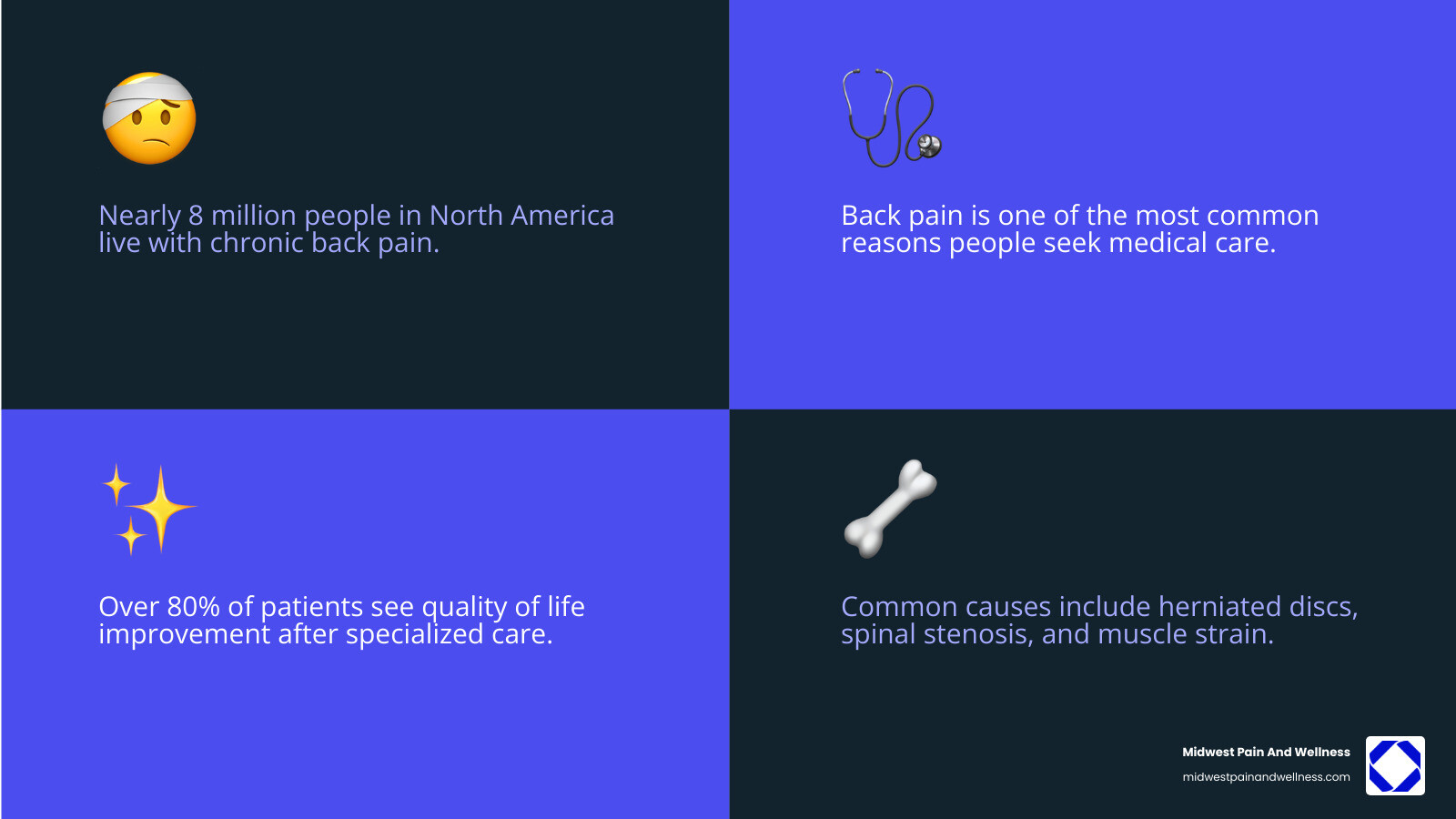
Chronic pain, which lasts longer than three months, affects nearly 8 million people in North America. If you’re one of them, you know how it can impact your physical and mental health, your work, and your time with loved ones.
But here’s the good news: more than 80% of patients notice improvement in their quality of life after just one or two visits to a specialized pain clinic.
The challenge is finding the right specialist for your unique condition. Fortunately, advances in interventional pain management, image-guided procedures, and regenerative medicine provide today’s back pain doctors with more tools than ever to help you heal without relying on surgery or opioids.
This guide will walk you through the different types of back pain specialists, what to expect from your first visit, the latest treatment options available, and how to find a qualified doctor who can help you get back to living your life.
The Team of Experts: Who is the Right Back Pain Doctor for You?
Finding the right back pain doctor means understanding the team of specialists available, each with a unique role in your recovery.
Your journey often starts with your primary care provider. They evaluate your initial symptoms, review your medical history, and can refer you to a specialist, acting as your healthcare coordinator.

When pain persists despite rest, medication, and physical therapy, it’s time to see a specialist. The best outcomes often come from a multi-disciplinary approach, where experts collaborate on your care. This is because back pain affects your movement, sleep, and mental health—not just your spine.
At Midwest Pain And Wellness, this collaborative approach is central to our practice. Our double board-certified doctors work with therapists and other practitioners to see the whole picture of your health. Meet our specialists to learn how we create customized care plans.
The Role of Spine and Pain Specialists
These specialists have dedicated their careers to studying the spine, nerves, and pain pathways. You’ll see them when your pain is complex, severe, or persistent.
Physiatrists (Physical Medicine and Rehabilitation doctors) focus on restoring function without surgery and are skilled at diagnosing pain and coordinating care to improve movement.
Pain Management Physicians, like our double board-certified doctors, are often fellowship-trained anesthesiologists. We specialize in interventional pain management, using advanced, minimally invasive procedures to target pain sources without relying on opioids.
Neurologists diagnose and treat nerve-related back pain, such as sciatica or nerve compression, which can cause numbness, tingling, or weakness.
Orthopedic Specialists treat the musculoskeletal system (bones, joints, muscles). While they are surgeons, they often provide non-surgical treatments first for structural issues like arthritis or disc problems.
Neurosurgeons are consulted when surgery is necessary for severe conditions like major disc herniations or spinal stenosis that haven’t responded to other treatments.
Rheumatologists specialize in inflammatory conditions affecting the spine, such as rheumatoid arthritis or ankylosing spondylitis.
The key is finding the right specialist for your specific situation—and often, that means having several of them work together on your behalf.
The Role of Therapists and Other Practitioners
Some of the most powerful healing happens with the support of therapists and other practitioners who work alongside your back pain doctor.
Physical Therapists are movement experts who assess your posture, strength, and flexibility. They create personalized exercise programs to reduce pain and prevent future injury, forming a foundation for recovery.
Occupational Therapists help you perform daily activities without aggravating your pain. They suggest ergonomic changes and better body mechanics to adapt your environment for healing.
Chiropractors use spinal manipulation to improve alignment, which may help the body heal itself. Many people find this approach provides relief for certain types of back pain.
Clinical Psychologists specializing in pain management address the mental and emotional toll of chronic pain. They teach coping strategies to manage related anxiety and depression, improving your overall quality of life.
At Midwest Pain And Wellness, we value this team approach. We work closely with these practitioners to ensure your treatment plan is comprehensive, addressing the physical, functional, and emotional aspects of your pain. Learn more about our team and our collaborative healing process.
The Midwest Pain And Wellness Clinic Advantage
Choosing where to seek treatment for chronic back pain can be overwhelming. A specialized clinic like Midwest Pain And Wellness offers a different approach than a general practice. We are committed to finding the source of your pain and creating a path to lasting relief, not just managing symptoms with prescriptions.

What makes a specialized back pain doctor at our Chicago Ridge clinic different? It’s our approach to your care from day one.
Our comprehensive assessment goes beyond a quick exam. We take time to understand your pain’s history, patterns, and impact on your life. Our doctors conduct thorough physical exams, review your medical history, and analyze diagnostic tests to ensure no detail is missed.
We develop custom care plans because your pain is unique. We consider your diagnosis, lifestyle, and personal goals to create a treatment that is custom specifically to you.
Our collaborative care model means we don’t work in isolation. We partner with physical therapists, psychologists, and other practitioners to provide integrated care that addresses your whole person, not just your spine.
We are committed to opioid-free management. Our practice focuses on safer, effective alternatives, using advanced procedures to provide relief without the risks of long-term opioid use.
The result is an improved quality of life our patients can feel. More than 80% of patients notice improvement after just one or two visits to a specialized pain clinic. That’s real people sleeping better, moving easier, and returning to activities they love.
If you’re curious about the philosophy behind our approach, visit our What is Pain Management? page to learn more.
What to Expect from Your First Back Pain Doctor Visit
We understand that a first visit to a pain clinic can be intimidating. Our goal is to make your first appointment a comfortable and thorough conversation.
Upon arrival, our staff will help you with intake forms, which provide a foundation for understanding your medical history and symptoms.
During the medical history review, your doctor will discuss your pain in detail: when it started, what it feels like (dull, sharp, burning), and what triggers it. We’ll also discuss what helps or worsens your pain and review past treatments to build an effective plan.
The physical examination involves assessing your posture, range of motion, strength, and reflexes. Your doctor will examine your spine and muscles for clues about the source of your pain.
We will carefully review any imaging studies (X-rays, MRIs) you bring to connect your symptoms with structural findings.
We will then discuss our initial findings clearly and transparently, explaining our thoughts on your condition in understandable terms.
A key step is goal setting. We’ll discuss what success means to you—whether it’s playing with grandkids, sleeping better, or returning to a hobby—so your goals become our targets.
Finally, we’ll outline a treatment plan custom to you. This may include further tests, interventional procedures, or physical therapy. We’ll discuss all options so you can make informed decisions. You are a partner in your care, and that partnership starts at your first visit.
Advanced Treatment Options for Lasting Relief
Living with back pain doesn’t mean accepting limitations. At Midwest Pain And Wellness, we believe you deserve access to the most advanced, evidence-based treatments. Modern pain management offers hope for lasting relief without surgery or opioids.
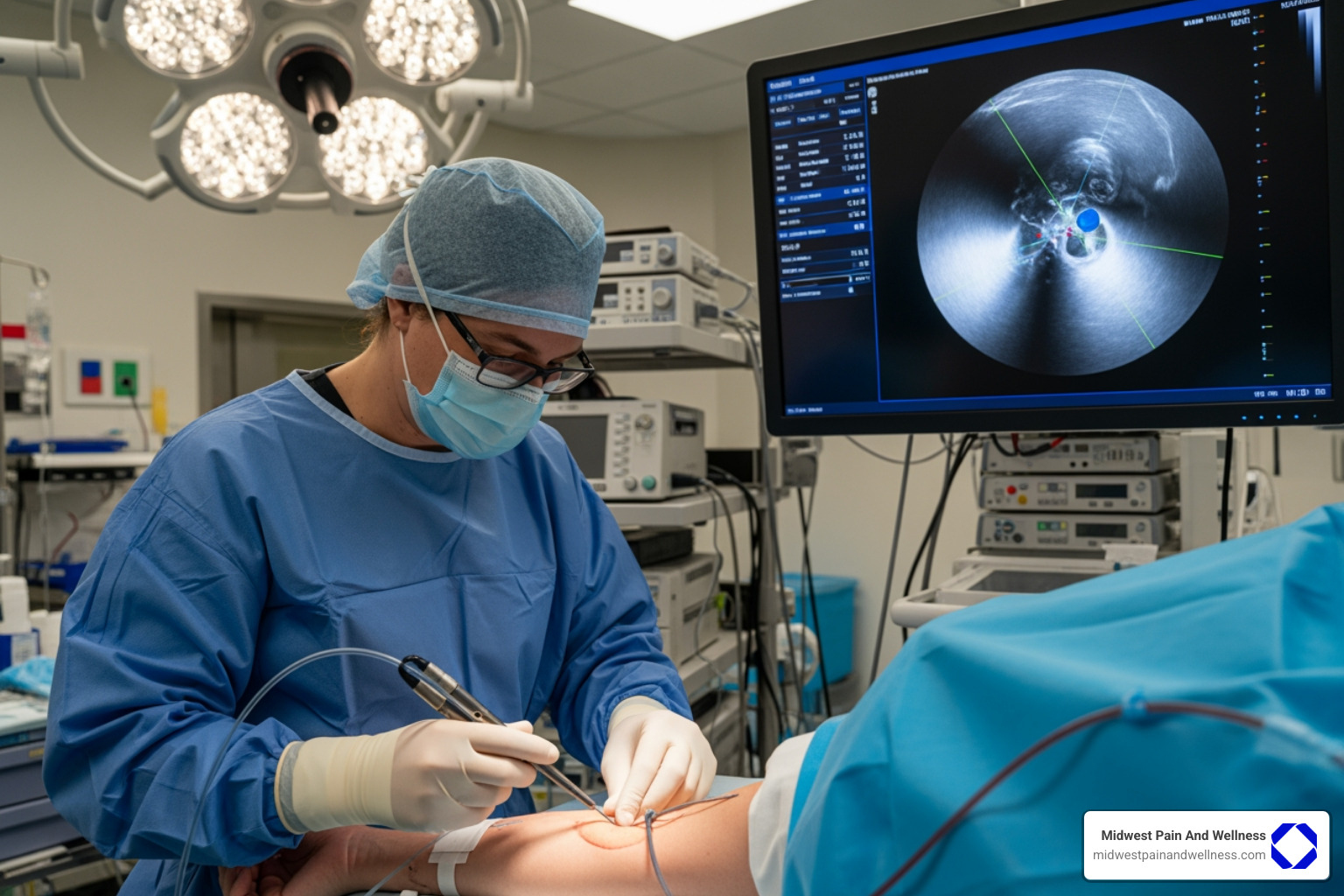
A decade ago, options for chronic back pain were often limited. Today, we have precise, minimally invasive procedures that target the exact source of your pain.
Our approach is interventional pain management, where your back pain doctor uses advanced techniques to interrupt pain signals and promote healing. This means less discomfort, faster recovery, and better outcomes for you. The key is targeted treatment. We identify the specific nerve, joint, or tissue causing pain and address it directly, which makes a significant difference in recovery.
You can explore the full range of solutions we offer on our View our Treatment Procedures page.
Interventional and Minimally Invasive Procedures
The secret to these procedures is real-time imaging guidance. Using fluoroscopy (live X-ray) or ultrasound, we can see inside your body as we work, guiding us to the exact treatment location with a level of precision previously impossible. This allows us to deliver medication directly to the problem area, reducing risk and improving results.
Radiofrequency Ablation (RFA) uses controlled heat from radio waves to ‘turn off’ pain signals from a specific nerve. It is highly effective for conditions like facet joint arthritis, providing relief that can last for months.
For lumbar spinal stenosis, the Minimally Invasive Lumbar Decompression (MILD) Procedure in Chicago Ridge offers significant relief. We remove small pieces of bone and ligament that are compressing nerves, avoiding traditional open surgery.
For severe, persistent pain, Spinal Cord Stimulator Therapy in Chicago Ridge can be life-changing. A small implanted device sends gentle electrical pulses to the spinal cord, interrupting pain signals before they reach the brain.
For painful vertebral compression fractures, our specialized Vertebral Compression Fracture Treatment in Chicago Ridge uses procedures like vertebroplasty or kyphoplasty to stabilize the bone and reduce pain, often within days.
Addressing Common and Complex Conditions
Every back pain condition is unique. As interventional pain and spine specialists, we have the expertise and tools to treat a wide range of common and complex conditions.
Spinal stenosis occurs when spinal spaces narrow, pressuring nerves. The MILD procedure is specifically designed and highly effective for this condition.
Degenerative disc disease is the natural wear and tear on your spinal discs. We offer multiple treatments to alleviate the resulting pain.
If you have pain after back surgery (post-laminectomy pain), you are not out of options. Our Post-Laminectomy Pain Treatment in Chicago Ridge offers targeted solutions.
Sciatica and herniated discs often go hand-in-hand. We have multiple approaches to address the nerve pain and the underlying disc issue.
Arthritis in the spine causes inflammation and pain, and RFA has proven highly effective for facet joint arthritis.
See the full range of conditions we address on our See all Conditions We Treat page.
The Future of Healing: Regenerative Medicine
Regenerative medicine is an exciting frontier in pain management that focuses on helping your body heal itself. Instead of just managing symptoms, we can now harness your body’s natural healing capabilities to repair damaged tissue.
Platelet-Rich Plasma (PRP) therapy uses the healing power of your own blood. We concentrate platelets, which are rich in growth factors, from a blood sample and inject this solution into the injured area. This stimulates cell repair, reduces inflammation, and promotes healing.
Stem cell therapy uses stem cells from your own body to potentially repair cartilage, bone, and soft tissues in the spine. These cells can transform into the types of cells needed for repair. While the field is evolving, results are promising for patients who haven’t found relief with other treatments.
The appeal of regenerative medicine is its natural approach. We work with your body’s biology to create lasting healing, offering hope for long-term improvement. Learn more about these and other advanced treatments on our Learn more about our advanced therapies page.
Finding Your Specialist and Taking the Next Step
Now that you know about the specialists, treatments, and what to expect, it’s time to find the right back pain doctor and take the first step toward relief.

Searching for a specialist while in pain can be overwhelming. You need a doctor who understands your condition, offers modern treatments, and treats you as a partner in your care.
At Midwest Pain And Wellness, our practice is built on these principles. Our double board-certified doctors use a multi-modal, interventional approach, collaborating with other practitioners to create comprehensive, opioid-free solutions. Learn what sets us apart on our Why Us page.
Finding the right back pain doctor is crucial for your outcome. Here’s how to find a qualified provider.
How to Find a Qualified Back Pain Doctor
- Check Credentials: Board certification is key, signifying specialized training. Look for certifications in pain medicine, anesthesiology with a pain fellowship, or physical medicine and rehabilitation.
- Ask Your Primary Care Provider: They know your history and can recommend trusted specialists in interventional pain management.
- Use Physician Directories: Search hospital networks or professional organizations by specialty. Look for doctors with expertise in interventional procedures like epidural injections or RFA.
- Read Patient Reviews: Look for consistent themes about a doctor’s communication style, staff friendliness, and listening skills.
- Verify Credentials: Once you have a shortlist, check a doctor’s standing and any disciplinary actions through resources like the Federation of State Medical Boards (FSMB). This ensures you’re choosing a professional with a clean record.
- Verify Your Insurance: Before scheduling, confirm the doctor is in-network and understand your coverage for copays, deductibles, and referrals to avoid financial stress.
- Consider a Specialized Pain Clinic: Clinics like ours in Chicago Ridge are designed for complex pain, with specialized equipment and a focused team, which often leads to better outcomes.
Preparing for Your Appointment
Being prepared for your first appointment helps your doctor get a clear picture of your condition, speeding up your path to relief.
- Gather Medical Records: Bring notes from previous doctors and physical therapists. This history helps your new doctor understand what has and hasn’t worked.
- Bring Imaging Results: Your X-rays, MRIs, or CT scans are crucial for correlating your symptoms with structural findings in your spine.
- List Your Medications: Make a complete list of all prescriptions, over-the-counter drugs, and supplements, including dosages.
- Write Down Questions: Include your main concerns, questions about treatments, and your personal goals for recovery (e.g., less pain, better sleep).
- Keep a Pain Journal: For a week or two before your visit, note the intensity, timing, and triggers of your pain, and how it affects your daily activities.
- Bring Practical Items: Don’t forget your insurance card, photo ID, and any completed forms. Arrive early if you need to fill out paperwork.
- Consider a Support Person: A friend or family member can help you listen, take notes, and remember important details from the discussion.
Coming prepared shows your doctor you’re serious about getting better and helps them provide the most accurate assessment possible. It’s the beginning of a collaborative relationship focused on one goal: getting you back to the life you want to live.
Conclusion
By reading this guide, you’ve already taken a powerful step toward addressing your back pain.
Remember: chronic pain—pain that lasts longer than three months—doesn’t have to define your life. While it can feel overwhelming, relief is achievable when you find the right back pain doctor who truly understands your condition.
We’ve covered the specialists who can help and the advanced treatments available, from image-guided injections and radiofrequency ablation to regenerative medicine. Modern interventional pain management offers targeted, minimally invasive solutions for lasting relief without surgery or opioids.
At Midwest Pain And Wellness in Chicago Ridge, Illinois, this is our daily mission. Our double board-certified doctors find the root cause of your pain and create custom care plans using a collaborative, multi-disciplinary approach. We work with a team of practitioners to address every aspect of your pain for true, holistic healing.
The encouraging news is that more than 80% of patients at specialized pain clinics notice improvement after just one or two visits. This is a real possibility for you.
You deserve to live without pain and enjoy your life again. Taking control of your health starts with one decision: reaching out to a specialist who can help.
We’re here for you, ready to listen, ready to help, and ready to partner with you on your journey to a life with less pain and more joy.
Learn about the conditions we treat and schedule your appointment today