Why Finding the Right Back Pain Specialist Matters
If you’re searching for a back pain specialist near me, you’re not alone. Back pain affects a staggering 76 percent of Americans at some point, but finding the right provider can feel overwhelming. With specialists ranging from chiropractors and physical therapists to pain management physicians and surgeons, how do you know where to start?
Most back pain improves without surgery. The key is matching your specific condition to the right specialist and treatment plan. You should consider seeing a specialist if your pain:
- Lasts more than six weeks
- Interferes with daily life
- Involves numbness or tingling down your legs
- Doesn’t respond to home remedies
This guide will help you steer your options, understand what different specialists offer, and choose the best fit for your pain relief goals. We’ll cover everything from diagnosis to treatment so you can take the next step with confidence.
Understanding Back Pain: Causes and When to Seek Help
Your back is a complex system of bones, muscles, discs, and nerves. When any part is irritated or injured, you feel it. Before searching for a back pain specialist near me, understanding the potential cause can be helpful.
What are the common causes of back pain?
Most back pain is mechanical, meaning it relates to how the parts of your back move and work together.
- Muscle or Ligament Strain: This is the most frequent cause, often from lifting something heavy, a sudden awkward twist, or poor posture.
- Bulging or Herniated Discs: The soft cushions between your vertebrae can get damaged and press on nerves, sometimes causing sciatica (pain shooting down the leg).
- Arthritis: Osteoarthritis can wear down the joints in your lower back, leading to pain and sometimes spinal stenosis, a narrowing of the spinal canal.
- Skeletal Irregularities: Conditions like scoliosis (a curved spine) or osteoporosis (brittle bones) can lead to chronic pain and fractures.
- Myofascial Pain and Fibromyalgia: These conditions involve pain in the connective tissues around muscles or widespread pain throughout the body, respectively.
In rare cases, back pain can be a symptom of an issue elsewhere in the body, like kidney stones. For a clinician-reviewed overview of back pain causes, red flags, and treatment options, see the NIAMS Back Pain resource from the National Institutes of Health.
When should I see a back pain specialist?
While minor stiffness often resolves on its own, certain signs indicate it’s time for professional help.
- Pain lasts over six weeks: If pain lingers, an underlying issue likely needs diagnosis.
- It controls your life: When pain disrupts sleep, work, or hobbies, it’s time to seek help.
- Pain travels down your legs: This is a red flag for nerve compression, especially if accompanied by numbness, tingling, or weakness.
- Home remedies fail: If rest, ice, heat, and over-the-counter medications aren’t working, you need a different approach.
- Sudden, severe pain or “red flag” symptoms: Seek immediate attention for severe pain after an injury or if back pain is paired with fever, unexplained weight loss, or changes in bowel or bladder control.
Catching back pain early is the best way to prevent it from becoming a chronic problem. At Midwest Pain And Wellness, we focus on finding the root cause to create a personalized, opioid-free treatment plan. The sooner we start, the sooner you can get back to your life.
Navigating the Landscape of Back Pain Specialists
When you search for a back pain specialist near me, you’ll find a team of professionals who can help. Understanding their roles is key to finding the right fit for your pain.
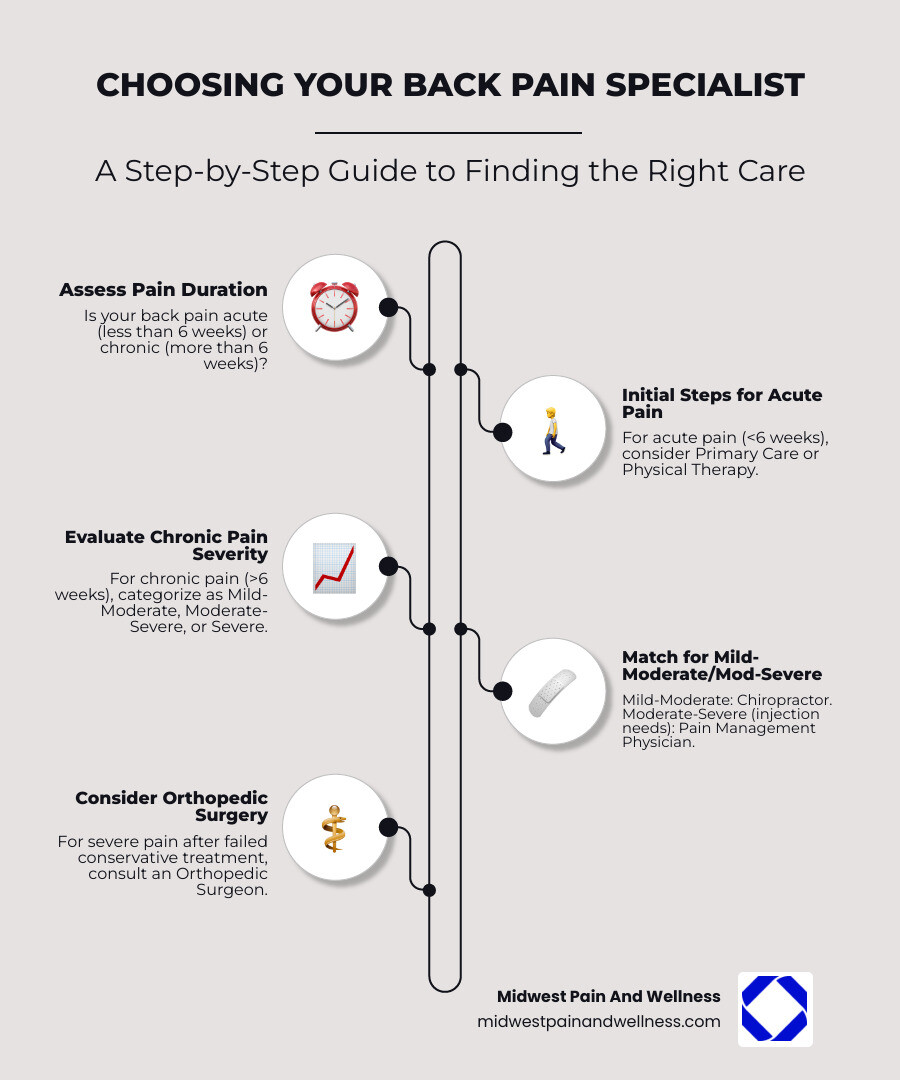
What are the different types of back pain specialists?
-
Chiropractors: These specialists focus on spinal health, using hands-on adjustments to improve alignment and nerve function. They often incorporate exercises and lifestyle advice into their care.
-
Physical Therapists: As movement experts, they identify muscle imbalances and weaknesses. They use prescribed exercises and hands-on techniques to restore function, improve strength, and get you back to your activities.
-
Pain Management Physicians: These doctors are experts in diagnosing and treating chronic pain. At Midwest Pain And Wellness in Chicago Ridge, Illinois, our double board-certified pain management physicians use an opioid-free approach, focusing on treatments that address the source of your pain. Our toolkit includes non-opioid medication management and advanced interventional procedures that deliver targeted relief. These include epidural steroid injections, nerve blocks, and radiofrequency ablation.
We also offer cutting-edge treatments such as Minimally Invasive Lumbar Decompression (MILD) for spinal stenosis, which you can learn about on our MILD procedure page. For persistent pain, we provide neuromodulation therapies like Spinal Cord Stimulator Therapy and Peripheral Nerve Stimulation. Our clinic also uses regenerative therapies like Platelet-Rich Plasma (PRP) and cell-based treatments to harness your body’s natural healing power.
-
Orthopedic Surgeons: These are the surgical specialists for the musculoskeletal system. Surgery is typically a last resort, recommended only after conservative treatments have failed to provide relief.
-
Physiatrists (PM&R Doctors): These physicians specialize in non-surgical rehabilitation, coordinating care with therapists and other specialists to improve function and quality of life.
Often, the best results come from collaboration. At Midwest Pain And Wellness, our multi-modal, interventional approach means we work with other practitioners to create a custom care plan that is as unique as your pain.
Diagnosing Your Back Pain: What to Expect
When you visit a back pain specialist near me, the first step is a thorough diagnosis. At Midwest Pain And Wellness, we believe an accurate diagnosis is the foundation of effective, long-term relief. You can’t fix what you don’t understand.
What diagnostic methods do back pain specialists use?
Your first visit is like detective work, where we gather clues to solve the mystery of your pain.
-
A Detailed Conversation: We start by listening to your story. When did the pain begin? What does it feel like? What makes it better or worse? Your daily activities, work setup, and medical history provide crucial context.
-
A Physical Examination: We’ll observe how you move, check your posture, and test your range of motion, muscle strength, and reflexes. We may perform specific movements to pinpoint the exact source of the pain.
-
Imaging Studies: To see beneath the surface, we may use X-rays to view bone structure, MRI scans for a detailed look at soft tissues like discs and nerves, or CT scans for complex bone issues. We also use high-resolution ultrasound to visualize muscles and nerves and to guide injections with precision.
-
Nerve Studies: If nerve damage is suspected, EMG and nerve conduction studies measure electrical activity in your nerves and muscles to determine if a nerve is pinched and how severely.
-
Diagnostic Injections: Sometimes, the best way to confirm the pain source is to temporarily numb it. By injecting a local anesthetic into a specific joint or near a nerve, we can identify the culprit if your pain disappears. This targeted approach ensures we treat the actual problem.
By combining your story, our physical findings, and advanced diagnostic tests, we build a complete picture of your condition. This allows us to move forward with a treatment plan designed for your specific situation, not assumptions.
Treatment Pathways: Non-Surgical Solutions
If you’re worried that seeing a back pain specialist near me automatically means surgery, you can relax. The vast majority of back pain responds well to non-surgical treatments, which are always our first line of defense.
At Midwest Pain And Wellness, our double board-certified doctors specialize in comprehensive, opioid-free pain management. We use a multi-modal approach, combining different therapies into a custom care plan for your specific needs.
What are the non-surgical treatment options for back pain?
Our non-surgical toolkit is extensive, and we often combine methods for the best results.
-
Physical Therapy and Chiropractic Care: We often collaborate with physical therapists and chiropractors. Physical therapy helps strengthen core muscles and improve flexibility, while chiropractic adjustments can correct spinal misalignments that irritate nerves.
-
Medication Management: Our opioid-free approach uses strategic medications like non-steroidal anti-inflammatory drugs (NSAIDs), muscle relaxants, and specific nerve pain medications to manage symptoms effectively.
-
Interventional Pain Procedures: These are our specialty. Using precision guidance, we deliver relief directly to the source of your pain. Common procedures include epidural steroid injections, nerve blocks, facet joint injections, and radiofrequency ablation (RFA), which uses heat to quiet painful nerve signals. We use a steroid-sparing approach, prioritizing alternatives to repeated cortisone injections.
-
Regenerative Therapies: We harness your body’s own healing power with treatments like Platelet-Rich Plasma (PRP) therapy, cell-based options, and prolotherapy to repair injured tissues. Learn more about these cutting-edge options at Regenerative Therapy, PRP & Cell-Based Options in Chicago Ridge.
-
Minimally Invasive Procedures: For spinal stenosis, we offer the Minimally Invasive Lumbar Decompression (MILD) procedure to relieve nerve pressure without open surgery. Find out more at Minimally Invasive Lumbar Decompression (MILD) in Chicago Ridge.
-
Neuromodulation: For chronic, resistant pain, we offer advanced solutions like Spinal Cord Stimulator Therapy and Peripheral Nerve Stimulation, which use gentle electrical pulses to block pain signals.
-
Complementary Therapies: We also recognize the value of treatments like acupuncture, massage therapy, and even Botox for Chronic Migraine, Cervical Dystonia in Chicago Ridge as part of a holistic plan.
Our goal is to find the right combination of these therapies to provide you with lasting relief.
When Surgery is Considered: Surgical Treatment Options
Surgery for back pain is a last resort. As a back pain specialist near me, I can assure you it’s reserved for cases where conservative treatments haven’t worked or when there’s severe nerve compression causing progressive weakness.
The goal of spine surgery is to physically address a structural problem. It’s a decision made only after careful evaluation and discussion with a surgeon.
What are the surgical treatment options for back pain?
Common procedures include:
-
Microdiscectomy: A minimally invasive surgery to remove the portion of a herniated disc that is pressing on a nerve, often relieving sciatica.
-
Laminectomy/Foraminotomy: These procedures create more space for the spinal cord and nerves by removing a small piece of bone, which is effective for spinal stenosis.
-
Spinal Fusion: This surgery permanently joins two or more vertebrae to eliminate painful motion and provide stability, often used for degenerative disc disease or spinal instability.
-
Artificial Disc Replacement: An alternative to fusion for some patients, this procedure replaces a damaged disc with an artificial one to preserve motion.
-
Vertebroplasty and Kyphoplasty: For painful vertebral compression fractures, often from osteoporosis, bone cement is injected to stabilize the fracture and relieve pain. Learn more at Vertebral Compression Fracture Treatment in Chicago Ridge.
Even after surgery, some patients experience persistent pain. At Midwest Pain And Wellness, we work with surgeons and provide comprehensive care before and after surgery, including specialized treatments for conditions like Post Laminectomy Pain Treatment in Chicago Ridge.
Finding Your Specialist: Practical Steps
Now that you’ve decided to find a back pain specialist near me, let’s make the process manageable. Finding the right expert doesn’t have to be stressful.
How to Find a Specialist and What to Expect
Start with your primary care provider. They know your medical history and can provide a referral, which many specialized clinics require. They can help you determine if you need a pain management physician, an orthopedic surgeon, or another type of specialist.
Use online resources wisely. Hospital system directories and reputable health websites like U.S. News Health can help you find highly-rated doctors. Look for specialists whose approach aligns with your goals. For example, at Midwest Pain And Wellness, we focus on a multi-modal, interventional, and opioid-free approach.
Check for credentials. Board certification indicates a doctor has undergone rigorous training and testing in their specialty. Our double board-certified physicians are committed to providing expert, up-to-date care.
Read patient reviews. Testimonials offer real insight into a clinic’s communication style and patient experience.
During your first appointment, expect a partnership. We’ll begin with a detailed conversation about your pain, its impact on your life, and what you’ve tried so far. Be prepared to discuss your medical history and bring any previous imaging results (X-rays, MRIs). This will be followed by a physical exam to assess your movement, strength, and reflexes. After this thorough evaluation, we’ll discuss our findings in plain language and outline potential next steps. This is your opportunity to ask questions and become an active participant in your recovery. You should leave with a clear understanding of your condition and a proposed treatment plan.
Beyond the Clinic: Managing Back Pain at Home
While guidance from a back pain specialist near me is crucial, your daily habits play a huge role in your recovery. Empowering yourself with effective self-care strategies can reduce pain and prevent future flare-ups.
How can I manage back pain at home?
Incorporate these practical steps into your daily routine to support the care you receive from your specialist:
-
Use Ice and Heat: For acute pain or after an injury, apply ice for 20 minutes at a time to reduce inflammation. For chronic stiffness and muscle tension, use a heating pad or warm bath to relax muscles and improve blood flow.
-
Stay Gently Active: Prolonged bed rest can worsen chronic back pain. Low-impact activities like walking, swimming, or gentle cycling keep your muscles strong and flexible without jarring your spine.
-
Stretch Regularly: Focus on stretches for your hamstrings, hip flexors, and back muscles as recommended by your therapist. Just a few minutes each day can significantly improve flexibility and reduce stiffness.
-
Mind Your Posture and Ergonomics: When sitting, ensure your back is supported and feet are flat on the floor. Take regular breaks to stand and move. Adjust your workspace so your computer screen is at eye level to avoid straining your neck and back.
-
Strengthen Your Core: Your abdominal and back muscles act as a natural brace for your spine. Simple exercises like planks and bird-dogs build this crucial support system.
-
Lift Safely: Always bend at your knees and hips, not your back. Keep heavy objects close to your body and avoid twisting while lifting.
-
Manage Stress: Stress causes muscle tension, which can trigger or worsen back pain. Practice deep breathing, meditation, or other relaxation techniques.
-
Prioritize Quality Sleep: Use pillows to support the natural curve of your spine. A pillow between your knees (for side sleepers) or under your knees (for back sleepers) can help maintain proper alignment.
At Midwest Pain And Wellness, we integrate these home strategies into your comprehensive treatment plan. This partnership between our expertise and your daily commitment is a powerful combination for lasting relief.
The Power of Collaboration: Multidisciplinary Care
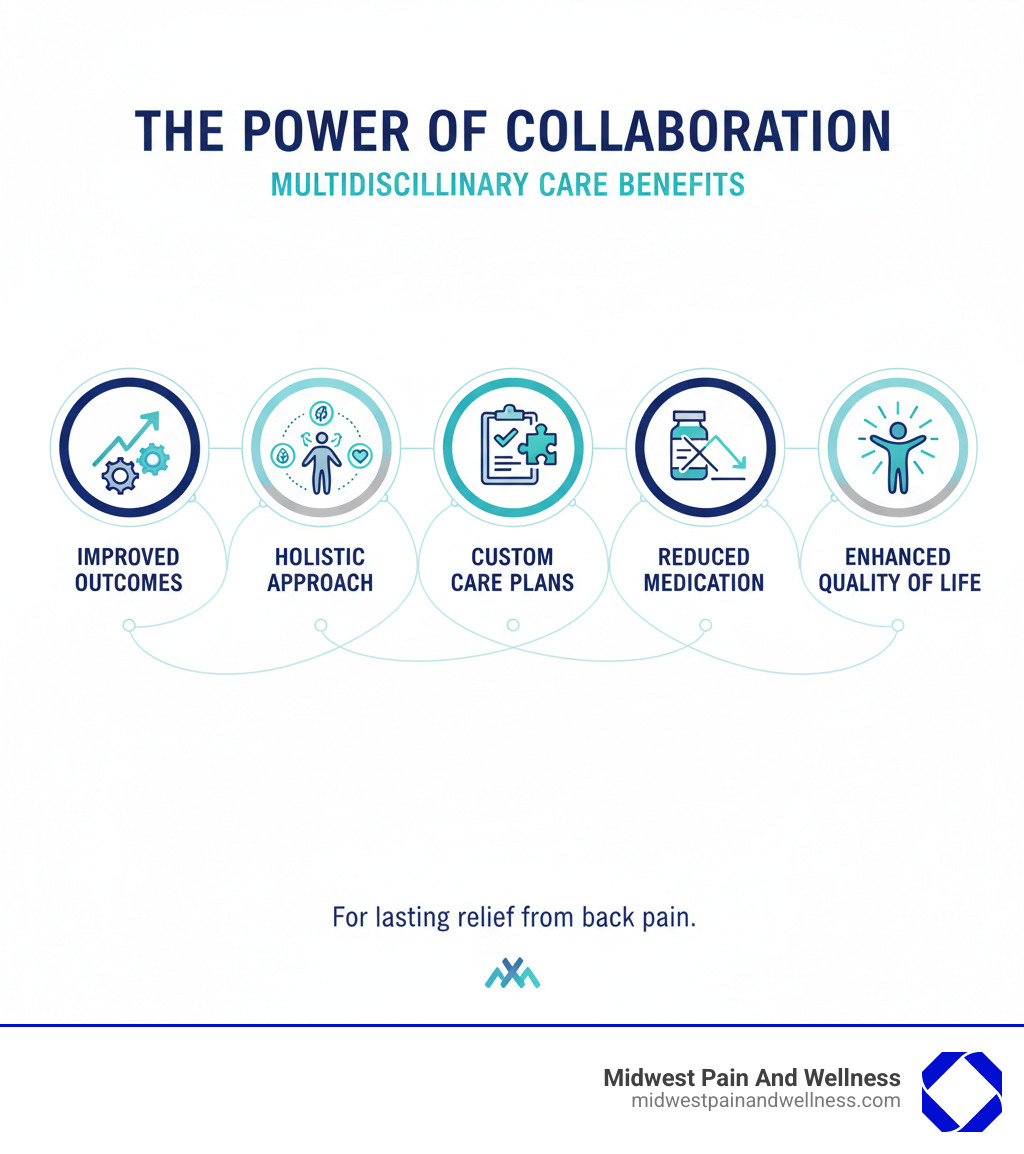
Solving complex back pain often requires more than one perspective. A multidisciplinary team of experts can see the whole picture—how you move, what causes you stress, and how your body is compensating for pain—to find a solution that works.
What are the benefits of a multidisciplinary approach to back pain treatment?
At Midwest Pain And Wellness, our double board-certified doctors collaborate with physical therapists, chiropractors, and other practitioners to build a truly comprehensive care plan for you. This team approach offers significant benefits:
-
A More Accurate Diagnosis: By looking at your pain from multiple angles, we can identify the true root cause, not just the symptoms.
-
A Truly Custom Care Plan: Your treatment is custom to your specific needs, combining different modalities for a stronger foundation for healing.
-
Better, Lasting Outcomes: Research and our experience show that patients in coordinated care programs experience greater pain reduction and improved long-term function.
-
Access to a Wider Range of Treatments: Our collaborative model integrates advanced interventional procedures, regenerative therapies, and cutting-edge neuromodulation like Spinal Cord Stimulator Therapy with physical rehabilitation and lifestyle guidance.
-
Empowered Patients: When you work with a team, you become an active, educated partner in your own care, equipped with the tools to manage your pain and prevent future issues.
When you search for a back pain specialist near me, look for one who accepts this collaborative model. It’s the core of what we do at Midwest Pain And Wellness because we believe your pain deserves a team dedicated to your long-term relief.
Taking the Next Step Towards Relief
Living with back pain can feel isolating, but you don’t have to face it alone. You’ve already taken an important step by learning about your options. Now it’s time to seek professional help.
Finding the right back pain specialist near me in the Chicago Ridge, Illinois, area means finding a partner for your health journey. At Midwest Pain And Wellness, our double board-certified doctors listen to your story and create a personalized, opioid-free treatment plan that addresses your pain at its source.
We use a multi-modal approach, combining advanced interventional procedures with other therapies to ensure you receive comprehensive care. Your back pain has a story, and it deserves an expert response.
Don’t let pain dictate your life for another day. Take control of your journey and start moving toward a future with less pain.
Ready to take that next step? Find out how our team at Midwest Pain And Wellness can create a custom care plan designed for your long-term pain relief.
Find out more about our comprehensive approach to pain management.