Understanding a Powerful Solution for Spinal Compression Fractures
What is kyphoplasty is a question more than one million Americans ask each year after experiencing a painful vertebral compression fracture. Kyphoplasty is a minimally invasive procedure where bone cement is injected into a fractured vertebra to stabilize it and provide immediate pain relief. During the procedure, a small balloon is first inserted to restore the vertebra’s height, then medical-grade cement is injected to permanently fix the fracture in place.
Key Facts About Kyphoplasty:
- Procedure Type: Outpatient, minimally invasive surgery
- Duration: 30 minutes to 1 hour (depending on number of vertebrae treated)
- Anesthesia: Moderate sedation or local anesthesia
- Recovery: Same-day discharge, return to light activities within 24-48 hours
- Success Rate: 92% of patients report significant pain relief
- Pain Improvement: Average pain drops from 9/10 to 3/10
If you’re living with chronic back pain from a spinal compression fracture, you’re not alone. These fractures most commonly result from osteoporosis, where bones become fragile and can collapse from simple activities like sitting down or bending over. Left untreated, compression fractures can lead to loss of height, a hunched posture (kyphosis), reduced mobility, and a significantly higher risk of serious health complications.
The good news? Kyphoplasty offers a proven path to relief without major surgery or long-term opioid use.
As Dr. Yaw Donkoh, a double board-certified physician in anesthesiology and interventional pain management, I’ve helped countless patients understand what is kyphoplasty and how it can restore their quality of life through this safe, effective procedure. My training in minimally invasive techniques and outcomes-focused approach ensures patients receive personalized care that addresses both immediate pain relief and long-term wellbeing.
Understanding the Basics: What is Kyphoplasty?
At its core, kyphoplasty is a minimally invasive medical procedure designed to treat painful vertebral compression fractures (VCFs). These fractures occur when one of the bones in your spine (vertebrae) collapses, often due to conditions like osteoporosis, spinal tumors, or trauma. The procedure aims to stabilize the fractured vertebra, reduce pain, and restore some of the lost vertebral height.
You might also hear kyphoplasty referred to as balloon kyphoplasty or cementoplasty. The term “balloon kyphoplasty” is particularly descriptive, as it highlights a key step in the procedure: the use of a balloon to create space and restore height within the fractured bone before injecting bone cement. This makes it a percutaneous procedure, meaning it’s performed through a small incision in the skin, rather than large open surgery.
The magic ingredient in kyphoplasty is a special medical-grade bone cement, typically polymethyl methacrylate (PMMA). This cement acts as a strong, internal cast, providing structural support to the weakened vertebra. Once injected, it hardens quickly, stabilizing the bone and alleviating the pain often caused by the instability of the fracture. Our team at Midwest Pain and Wellness uses these advanced techniques to help patients regain comfort and mobility. You can learn more about the various conditions we treat, including those that can lead to VCFs. For those interested in the scientific underpinnings, there’s extensive scientific research on percutaneous vertebral augmentation that supports these methods.
Identifying Symptoms and the Need for Kyphoplasty
Recognizing the symptoms of a vertebral compression fracture is the first step toward finding relief. The primary indicator is often severe back pain, which can be sudden and debilitating. This pain typically worsens with movement and improves with rest. Many patients describe it as a sharp, localized pain in the back.
Beyond immediate pain, VCFs can lead to other significant issues:
- Loss of height: Over time, multiple compression fractures can cause a noticeable reduction in overall body height as vertebrae collapse.
- Kyphosis: This is the medical term for a hunched posture, often referred to as a “dowager’s hump.” It develops as the front part of the vertebrae collapse, creating an exaggerated forward curve in the upper spine. This can lead to further pain, breathing difficulties, and even digestive issues.
- Reduced mobility: The pain and structural changes in the spine can make everyday activities like walking, standing, and bending incredibly difficult, severely impacting a person’s quality of life.
If you or a loved one in the Chicago Ridge area are experiencing these symptoms, especially severe back pain that doesn’t improve with conservative treatments, it’s crucial to seek evaluation. Our specialized team is here to help you understand your options for Vertebral Compression Fracture Treatment in Chicago Ridge.
How Kyphoplasty Differs from Vertebroplasty
While often mentioned together, kyphoplasty and vertebroplasty are distinct procedures with important differences, especially in their approach to restoring vertebral height. Both involve injecting bone cement into a fractured vertebra, but kyphoplasty adds a crucial preliminary step.
Here’s the breakdown:
- Vertebroplasty: In this procedure, a physician injects special bone cement directly into the fractured bone. The goal is to fill the cracks and stabilize the fracture, reducing pain. However, it does not typically restore any lost vertebral height.
- Kyphoplasty: This procedure goes a step further. Before injecting the cement, a balloon tamp (a small, inflatable balloon) is inserted into the collapsed vertebra. This balloon is then carefully inflated, which helps to gently push the collapsed bone back into its original position, restoring some of the lost height and correcting the kyphotic deformity. This inflation also creates a cavity within the vertebra, providing a controlled space for the subsequent cement injection.
The key advantages of the balloon tamp in kyphoplasty are:
- Height restoration: The ability to restore vertebral height is a significant benefit, helping to alleviate kyphosis and improve posture.
- Cavity creation: The balloon creates a well-defined cavity, allowing for better cement control during injection.
- Reduced cement leakage: By creating a space, the cement is less likely to leak outside the vertebral body compared to direct injection in vertebroplasty, making kyphoplasty generally safer in terms of cement extravasation.
This distinction is vital, as the restoration of height can have a profound impact on a patient’s posture, mobility, and overall quality of life.
Here’s a quick comparison:
| Feature | Kyphoplasty | Vertebroplasty |
|---|---|---|
| Height Restoration | Yes, aims to restore vertebral height | No, primarily focuses on stabilization |
| Balloon Use | Yes, balloon tamp used to create cavity | No, cement injected directly |
| Cavity Creation | Yes, creates a cavity for cement | No, cement fills existing spaces |
| Cement Control | Better control, lower leakage risk | Higher risk of cement leakage |
| Primary Goal | Pain relief, height restoration, deformity correction | Pain relief, fracture stabilization |
| Minimally Invasive | Yes | Yes |
| Anesthesia | Local or moderate sedation | Local or moderate sedation |
| Duration | 30 mins – 1 hour per level | 30 mins – 1 hour per level |
Who is a Candidate for This Procedure?
Understanding what is kyphoplasty is just one part of the equation; knowing if it’s the right solution for you is equally important. Kyphoplasty is typically recommended for individuals experiencing painful vertebral compression fractures that haven’t responded to conservative treatments. Our double board-certified pain management doctors carefully evaluate each patient to determine candidacy.
The primary conditions that often lead to VCFs and make someone a candidate for kyphoplasty include:
- Osteoporosis: This is by far the most common cause. Osteoporosis weakens bones, making them fragile and prone to fracture from minimal trauma, such as a cough, sneeze, or simply sitting down too abruptly. Most compression fractures occur in older patients who have osteoporosis.
- Multiple Myeloma and other Cancers: Cancer that spreads to the spine can weaken the vertebral bodies, leading to painful compression fractures. Kyphoplasty can provide significant pain relief and structural support in these cases. Research highlights the role of vertebral augmentation procedures in managing vertebral compression fractures secondary to multiple myeloma. For instance, early intervention with kyphoplasty (within 6–8 weeks post-fracture) in multiple myeloma patients has been shown to optimize functional outcomes and reduce analgesic needs. You can explore the latest research on vertebral augmentation for multiple myeloma.
- Spinal Trauma: While less common than osteoporosis-related fractures, injuries from accidents or falls can also cause VCFs that may benefit from kyphoplasty.
We usually consider kyphoplasty when:
- You have severe, persistent back pain directly related to a compression fracture, confirmed by imaging (X-ray, CT, or MRI).
- Your pain has not improved with conservative treatments like bed rest, pain medication, or bracing after several weeks.
- The fracture is relatively new (acute or subacute). While some chronic fractures may be treated, the best outcomes for height restoration are often seen with earlier intervention (within eight weeks of the fracture).
Kyphoplasty is not suitable for all types of back pain. If your pain is caused by a herniated disc, arthritis, or spinal stenosis, other treatments would be more appropriate. Our team of experts in Chicago Ridge can help you understand your specific condition and guide you toward the most effective treatment plan. If you’re looking for specialized care, our Back Pain Specialist Near Me services are readily available.
The Step-by-Step Guide: What Happens During the Procedure?
When you come to Midwest Pain and Wellness for a kyphoplasty, our priority is your comfort and safety. The procedure is typically performed on an outpatient basis, meaning you can usually go home the same day. It’s a minimally invasive technique, which means smaller incisions and generally faster recovery times compared to traditional open surgery.
Here’s a general overview of what happens during a kyphoplasty procedure:
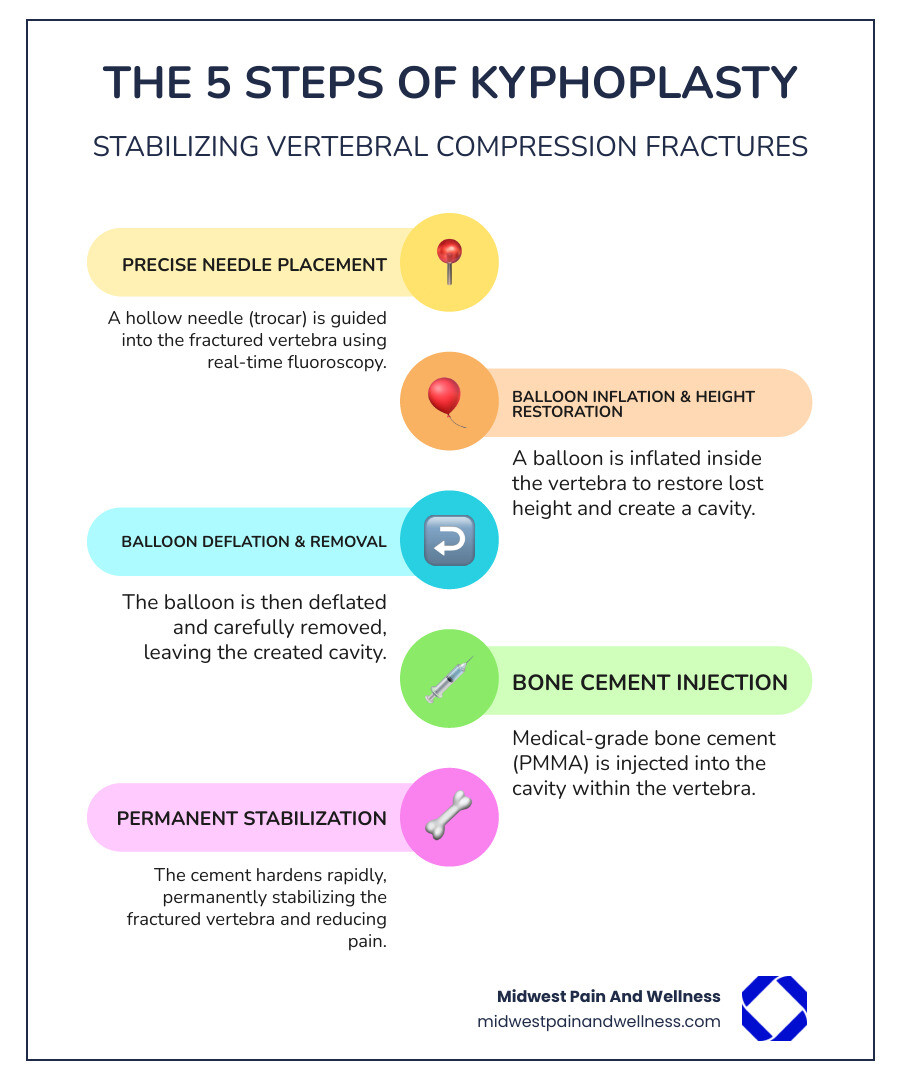
- Preparation and Anesthesia: You’ll be positioned face-down on a special table. We’ll administer moderate sedation, similar to what you might receive for a colonoscopy, to help you relax and remain comfortable. Local anesthesia will also be injected into the skin and deeper tissues around the treatment area to numb it, so you won’t feel any pain during the procedure. While you might be vaguely aware of pressure or movement, you generally won’t experience discomfort.
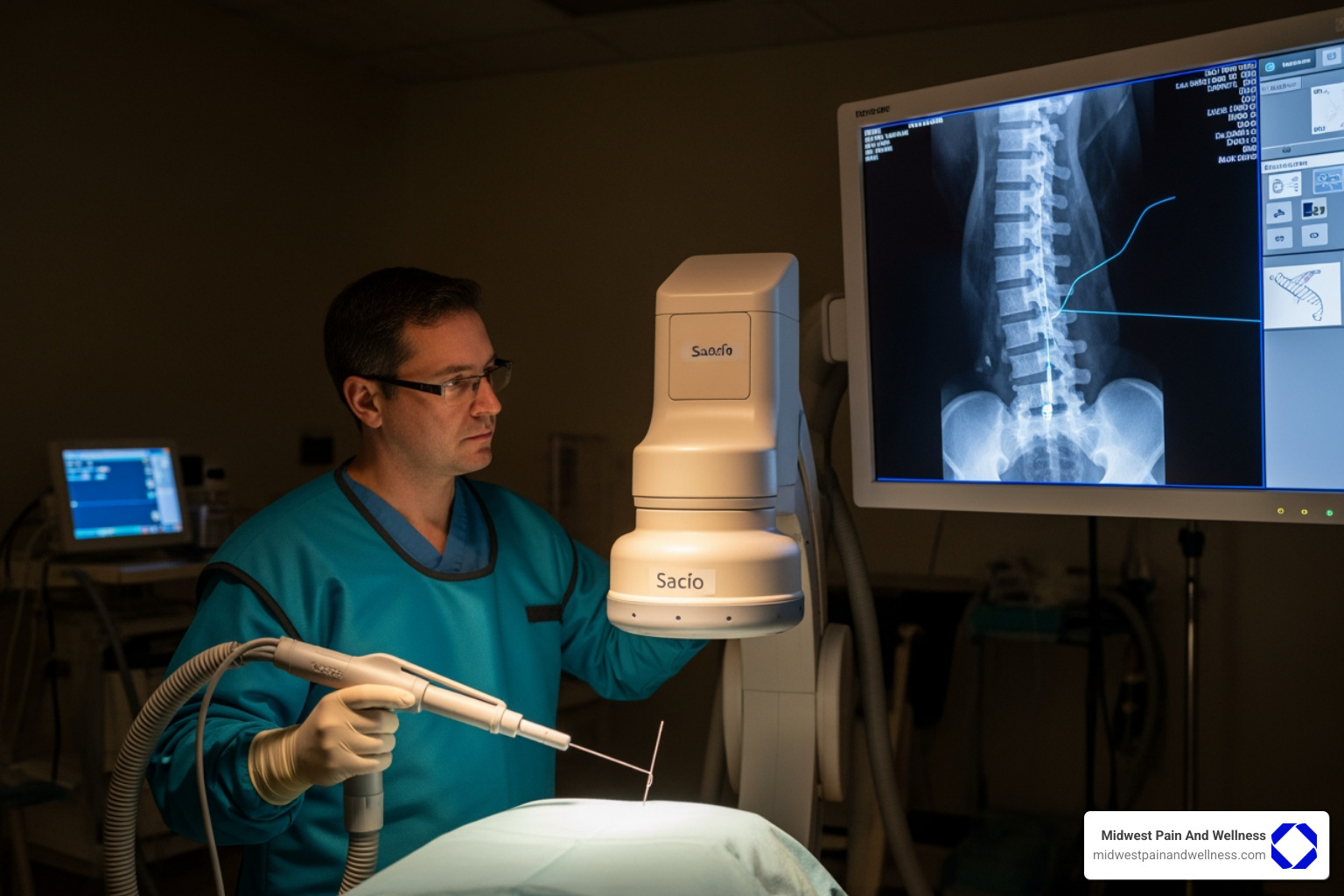
- Image Guidance: This is a crucial step for precision and safety. We use real-time X-ray imaging, called fluoroscopy, to guide our instruments. This allows us to visualize the exact location of the fractured vertebra and ensure accurate placement of the needles.
- Trocar Insertion: A small incision (just a few millimeters) is made in your back over the fractured vertebra. Through this incision, a hollow needle, known as a trocar, is carefully inserted into the vertebral body. This is all done under continuous fluoroscopic guidance to avoid nearby nerves or critical structures.
- Balloon Inflation: Once the trocar is in place, a special balloon device is threaded through it and positioned within the fractured vertebra. The balloon is then slowly inflated. This inflation serves two key purposes: it gently pushes the collapsed bone outwards, helping to restore some of the lost vertebral height, and it creates a cavity or space within the bone.
- Cement Injection: After the cavity is created, the balloon is deflated and removed. Then, the medical-grade bone cement (PMMA) is injected into the newly formed cavity. The cement is initially a thick, paste-like consistency, which allows for controlled injection. We monitor this process closely with fluoroscopy to ensure the cement fills the fracture and remains within the vertebral body.
- Stabilization: The cement hardens quickly, typically within 15-20 minutes, stabilizing the fractured vertebra from the inside. This internal “cast” provides immediate structural support and significantly reduces pain.
The entire procedure usually takes less than an hour for one section of your spine. If more than one vertebra needs treatment, it might take a bit longer. Our goal is to provide effective, targeted relief with minimal disruption to your daily life. For more information on similar approaches, you can explore our Non-Surgical Pain Relief options.
Preparing for Your Kyphoplasty Procedure
Proper preparation is key to ensuring a smooth and successful kyphoplasty procedure. Our team at Midwest Pain and Wellness will provide you with detailed instructions, but here are some general guidelines on how to prepare:
- Pre-Procedure Appointment and Evaluations: You will have a consultation with one of our pain management specialists. During this appointment, we’ll conduct a physical exam and review your medical history. We may also order diagnostic imaging tests, such as X-rays, CT scans, or MRI scans, to precisely locate and assess the fracture. Blood tests may also be required to check your overall health and clotting ability.
- Medication Review and Adjustments: It’s crucial to inform us about all medications you are currently taking, including over-the-counter drugs, herbal supplements, and vitamins. We pay particular attention to blood thinners (like aspirin, ibuprofen, warfarin, or other anticoagulant medications) as these can increase the risk of bleeding during the procedure. You will likely need to stop taking these medications for several days or even a week before your kyphoplasty, under our guidance. Never stop prescribed medications without consulting your doctor.
- Fasting Instructions: You will be given specific instructions regarding eating and drinking before your procedure. Typically, you will need to refrain from food and liquids for several hours (usually 6-8 hours) prior to your scheduled kyphoplasty.
- Allergies and Medical Conditions: Please inform us of any allergies you have (e.g., to medications, iodine, latex) and any recent illnesses or changes in your health. Women should also inform us if there is any possibility of pregnancy.
- Arrangements for Transportation: Since you will receive sedation, you will not be able to drive yourself home after the procedure. It’s essential to arrange for a trusted friend or family member to pick you up and stay with you for the first 24 hours.
- Comfort and Attire: On the day of the procedure, wear loose, comfortable clothing. You will be asked to remove jewelry, glasses, and any metal objects.
Following these instructions carefully helps minimize potential risks and ensures you are in the best possible condition for your kyphoplasty. Understanding What is a Pain Management Dr? can also help you feel more prepared for your consultation and treatment plan.
Recovery and Expected Outcomes
One of the significant advantages of kyphoplasty is its relatively quick recovery time, especially compared to open spinal surgery. Since it’s a minimally invasive outpatient procedure, most patients can go home the same day.
Here’s what you can generally expect during your recovery and in terms of outcomes:
- Immediate Post-Procedure: After your kyphoplasty, you’ll spend some time in a recovery area while the sedation wears off. You may feel some soreness or mild discomfort at the needle entry site, which typically subsides within a day or two and can be managed with ice packs. Some people feel less or no pain from the compression fracture almost right after the procedure.
- First 24-48 Hours: We recommend resting and staying in bed for the first 24 hours, except for necessary activities like using the restroom. You’ll have a small bandage over the incision site, which you should keep on for about 48 hours. After that, you can usually resume showering according to our instructions.
- Gradual Return to Activity: Within two days, most people feel significantly less back pain and can move more easily than before the surgery. You can slowly return to light activities. However, it’s crucial to avoid heavy lifting and strenuous activities for at least six weeks to allow for proper healing and to prevent new fractures. We will provide specific guidance custom to your individual recovery.
- Long-Term Outcomes: Kyphoplasty has an excellent success rate in alleviating pain and improving mobility. One study found that 92% of people reported some pain relief after having kyphoplasty done. Patients often experience immediate and lasting pain relief, with reported average pain score drops from a 9 out of 10 to a 3 out of 10. Following the procedure, many patients regain lost mobility and become more active. This can significantly improve your quality of life, reducing the need for pain medication and allowing you to participate in activities you once enjoyed. Recent clinical studies, such as the VERTOS V trial, have shown superior pain relief and improved health-related quality of life for patients receiving vertebral augmentation. You can review a clinical study on pain relief and quality of life for more details.
Our team at Midwest Pain and Wellness is committed to your comprehensive care, including post-procedure follow-ups to monitor your progress. We also offer various Pain Injections Chicago for different conditions, should you require further pain management.
Benefits, Risks, and Safety for Seniors
When considering a medical procedure, it’s natural to weigh the potential benefits against the risks. Kyphoplasty offers significant advantages, especially for individuals suffering from painful vertebral compression fractures.
Key Benefits of Kyphoplasty:
- Immediate Pain Relief: For many patients, the most striking benefit is the rapid and substantial reduction in back pain, often felt almost immediately after the procedure. This relief can be life-changing, allowing patients to move more freely and comfortably.
- Mobility Restoration: By stabilizing the fractured vertebra and reducing pain, kyphoplasty helps patients regain lost mobility and return to their daily activities. This is crucial for preventing complications associated with prolonged immobility.
- Restoration of Vertebral Height and Correction of Kyphosis: Unlike vertebroplasty, kyphoplasty actively works to restore some of the lost height of the collapsed vertebra and correct the hunched posture (kyphosis). This not only improves appearance but can also reduce pressure on internal organs and improve lung function.
- Reduced Risk of Complications from Immobility: Untreated compression fractures often lead to severe pain and immobility, which can increase the risk of serious health issues like pneumonia, blood clots, and muscle wasting. By restoring mobility, kyphoplasty helps mitigate these risks.
- Minimally Invasive: As an outpatient procedure, kyphoplasty involves small incisions, less blood loss, and a faster recovery compared to traditional open surgery.
Potential Risks and Complications:
While kyphoplasty is considered very safe and low-risk, like any medical procedure, it carries some potential complications. These are rare, but it’s important to be aware of them:
- Cement Leakage: The most common complication is the leakage of bone cement outside the vertebral body. While often asymptomatic, in rare cases, cement can leak into the spinal canal or nearby nerves, potentially causing pain, numbness, or neurological deficits. However, kyphoplasty has a significantly lower incidence of cement leakage compared to vertebroplasty due to the balloon-created cavity.
- Infection: The chance of infection requiring antibiotic treatment is less than one in 1,000. We take strict sterile precautions to minimize this risk.
- Bleeding: There is a minimal risk of bleeding at the injection site.
- Nerve or Spinal Cord Injury: Although extremely rare, improper needle placement could potentially injure nerves or the spinal cord. We use advanced fluoroscopic guidance to minimize this risk.
- New Compression Fractures: Approximately 10 percent of patients may develop additional compression fractures after vertebral augmentation procedures. This is often due to ongoing osteoporosis, which requires continued management.
- Allergic Reaction: A rare possibility of allergic reaction to the medications or materials used.
Safety for Elderly Patients:
Kyphoplasty is an extremely safe procedure and is routinely performed on elderly patients. In fact, most compression fractures occur in older patients who have osteoporosis, making them the primary demographic for this treatment. The minimally invasive nature and the use of moderate sedation (rather than general anesthesia in many cases) make it a well-tolerated option for seniors. The benefits of pain relief and improved mobility are particularly vital for elderly individuals, as prolonged immobility can lead to a cascade of health problems. Our pain management specialists are highly experienced in treating older adults with compassion and care, ensuring the procedure is custom to their specific health needs. For other minimally invasive options for spinal conditions, you can learn about Minimally Invasive Lumbar Decompression (MILD).
Frequently Asked Questions about Kyphoplasty
We understand that you might have more questions about what is kyphoplasty and how it might impact your life. Here, we address some of the most common inquiries our patients have.
Is kyphoplasty a permanent solution?
Yes, kyphoplasty is generally considered a permanent solution for the specific compression fracture it treats. Once the bone cement is injected and hardens, it permanently stabilizes that particular fractured vertebra. The cement acts as an internal cast, providing lasting structural support. This fixation helps prevent further collapse of the treated vertebra and typically provides long-term pain relief at that site. However, it’s important to understand that kyphoplasty does not cure the underlying condition (like osteoporosis) that led to the fracture. Therefore, while the treated fracture is permanently fixed, you might be at risk for new compression fractures in other vertebrae if the underlying bone density issues are not addressed through ongoing medical management.
Is the procedure safe for elderly patients with osteoporosis?
Absolutely. Kyphoplasty is an extremely safe and routinely performed procedure for elderly patients, especially those with osteoporosis. In fact, given that most compression fractures occur in older individuals due to age-related bone weakening, this demographic frequently benefits from the procedure. Its minimally invasive nature, coupled with the use of local anesthesia and moderate sedation (reducing the need for general anesthesia), makes it a well-tolerated option for seniors. The benefits of restoring mobility and providing rapid pain relief are particularly crucial for elderly patients, as prolonged bed rest and immobility can lead to severe complications like pneumonia, blood clots, and muscle weakness. Our team carefully assesses each patient’s overall health to ensure kyphoplasty is a safe and effective option.
How long does the actual surgery take?
The actual kyphoplasty procedure is remarkably quick. For a single vertebral level, it usually takes less than an hour to complete. Many sources indicate that the procedure can take as little as 30 minutes. If more than one vertebral body level needs to be treated, the procedure will naturally take a bit longer, but it is still considered a relatively short intervention. Because it’s an outpatient procedure, you’ll spend some time in recovery afterward, typically a few hours, before being discharged to go home the same day. This efficiency is one of the reasons it’s a popular and effective choice for rapid pain relief.
Conclusion
Understanding what is kyphoplasty reveals a powerful, minimally invasive solution for the often debilitating pain of vertebral compression fractures. At Midwest Pain and Wellness, we pride ourselves on offering comprehensive, opioid-free pain management using the most current and effective therapies, including kyphoplasty.
Our double board-certified doctors use a multi-modal, interventional approach, collaborating with other practitioners to create custom care plans custom to your unique needs. We are dedicated to providing long-term pain relief and helping you regain your quality of life. If you’re struggling with back pain from a compression fracture and believe kyphoplasty might be right for you, we encourage you to reach out.
Don’t let spinal pain control your life. Take the first step towards a more comfortable future. Schedule your Vertebral Compression Fracture Treatment with Midwest Pain and Wellness today. We’re here to help you live well.