Understanding Your Options for Nerve Block Treatment in the Chicago Ridge Area
If you’re searching for a nerve block Chicago Ridge, you’re likely seeking relief from persistent pain. At Midwest Pain And Wellness, we specialize in providing these targeted, non-surgical treatments to help you manage chronic pain and reclaim your life.
What is a Nerve Block? A nerve block is a minimally invasive procedure where a physician injects local anesthetic and steroid medication around specific nerves to interrupt pain signals. The procedure typically takes 15-30 minutes and can provide relief lasting from hours to several months.
Unlike opioid medications that mask pain, nerve blocks work by stopping pain signals at their source. This makes them a cornerstone of modern interventional pain medicine for conditions like back pain, sciatica, arthritis, and migraines. They offer both diagnostic value (pinpointing the pain source) and therapeutic relief.
For residents in Chicago Ridge and surrounding areas, our clinic provides accessible, expert care. Nerve blocks are outpatient procedures performed under local anesthesia, allowing you to return home the same day. They are a key part of a comprehensive, opioid-free pain management strategy for conditions like herniated discs, spinal stenosis, or post-surgical pain.
Understanding Nerve Blocks: Diagnostic vs. Therapeutic Pain Relief
Nerve blocks serve two primary purposes: diagnostic and therapeutic. Both are vital tools in our comprehensive approach to pain management.
Diagnostic Nerve Blocks act like detectives for your pain. By injecting a local anesthetic near a suspected nerve, we can identify the precise source of your discomfort. If the pain subsides, we’ve found the culprit, which allows us to create an effective long-term treatment plan for you.
Therapeutic Nerve Blocks focus on providing pain relief and reducing inflammation. These injections combine a local anesthetic with a corticosteroid (an anti-inflammatory) to calm the irritated nerve and disrupt pain signals, offering you much-needed relief.
While diagnostic blocks are short-lived, therapeutic blocks can provide relief for weeks or even months. The effectiveness varies per person, with some experiencing significant relief and others a more modest difference.
Here’s a quick comparison:
| Feature | Diagnostic Nerve Blocks | Therapeutic Nerve Blocks |
|---|---|---|
| Purpose | Identify pain source | Provide pain relief and reduce inflammation |
| Duration | Short-term (as anesthetic wears off) | Weeks to months (variable, depending on medication) |
| Outcome | Information for a precise treatment plan | Reduced pain, decreased inflammation, improved function |
For more in-depth information about this crucial pain management technique, please visit our page on Nerve Block for Pain.
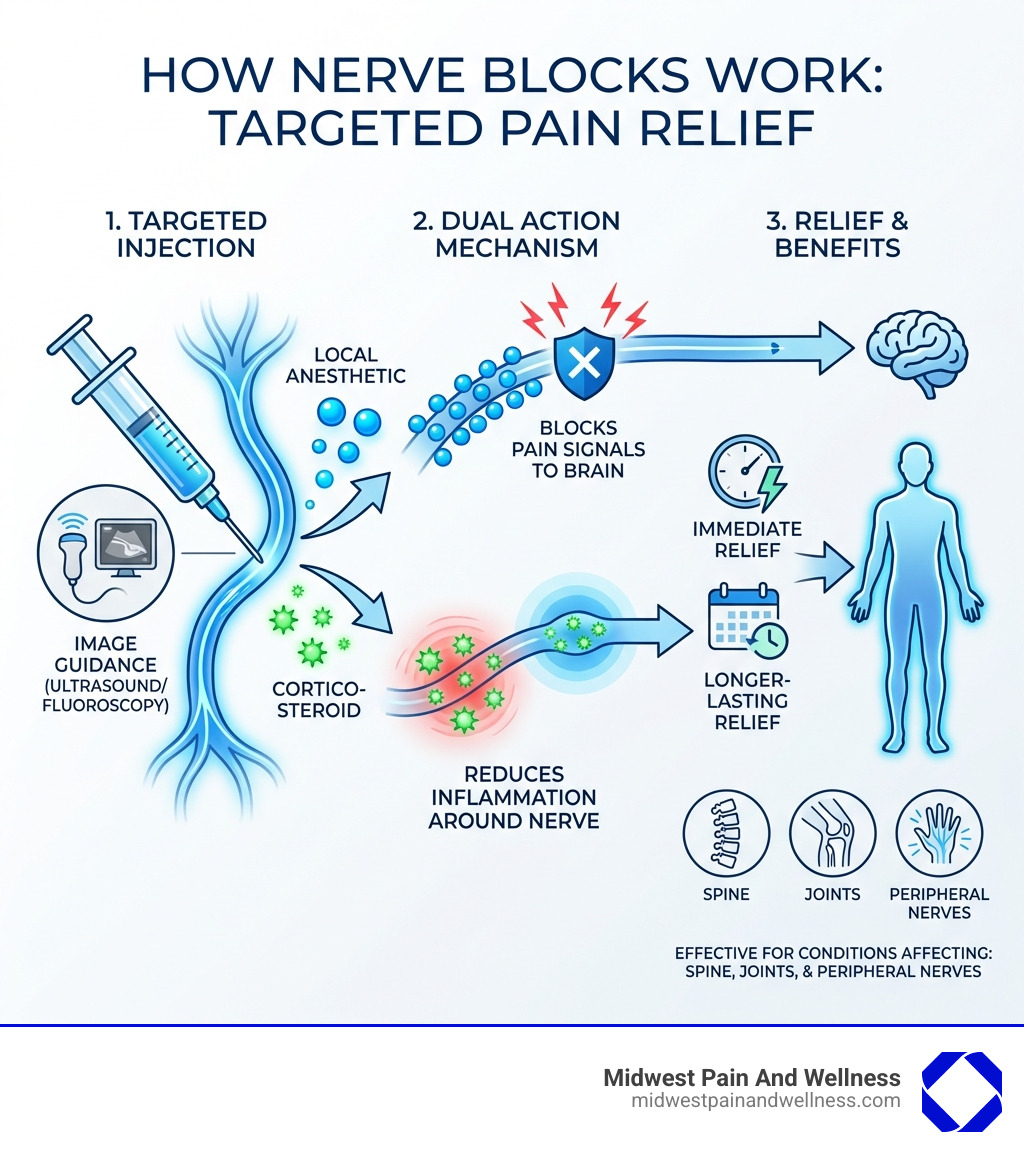
How a Nerve Block Works
A nerve block intercepts pain signals before they reach your brain. Here’s a breakdown of this highly precise procedure:
- Targeted Injection: We carefully inject medication directly at the affected nerve or nerve cluster.
- Local Anesthetic: This numbs the nerve, temporarily blocking its ability to transmit pain signals to your brain.
- Corticosteroid Medication: Often included in therapeutic blocks, this powerful anti-inflammatory reduces swelling and irritation around the nerve, providing longer-lasting relief.
- Image Guidance: To ensure accuracy and safety, we use advanced imaging like:
- Ultrasound: To visualize soft tissues and nerves in real-time.
- Fluoroscopy (low-dose X-ray): For guiding injections near spinal structures. A contrast dye may be used to confirm the medication spreads to the intended area.
This combination of anesthetic, steroid, and precise delivery provides effective, targeted pain relief.
What Conditions Can a Nerve Block in Chicago Ridge Treat?
Nerve blocks are versatile tools for residents seeking a nerve block Chicago Ridge. We offer solutions for a wide range of conditions, including:
- Back and Neck Pain: From degenerative processes, injuries, or nerve compression.
- Sciatica: Pain radiating down the leg due to irritation of the sciatic nerve.
- Herniated Discs: When a spinal disc compresses a nearby nerve.
- Spinal Stenosis: A narrowing of the spinal canal that puts pressure on nerves.
- Arthritis Pain: Including pain from facet joint arthritis in the spine.
- Chronic Headaches and Migraines: Such as occipital nerve blocks for pain in the back of the head.
- Complex Regional Pain Syndrome (CRPS): Chronic pain usually affecting an arm or a leg.
- Post-Surgical Pain: Persistent pain that develops after surgery.
- Neuropathic Pain: Pain caused by damage to the nervous system.
- Shingles (Post-herpetic neuralgia): Lingering nerve pain after a shingles outbreak.
Our goal is to provide targeted relief, helping you regain function and improve your quality of life. To learn more about the various conditions we treat, please visit our Conditions We Treat page.
Types of Nerve Blocks and The Procedure Explained
We offer various types of nerve blocks, each designed to target specific nerves or regions of the body responsible for pain. The choice of nerve block depends on your specific condition and the location of your pain.
Here are some common types of nerve blocks we use:
- Epidural Steroid Injection: This involves injecting medication into the epidural space, a fatty area surrounding the spinal cord. It’s commonly used for nerve pain in the neck, back, or legs caused by conditions like herniated discs or spinal stenosis.
- Facet Joint Injection: Facet joints are small joints located between each vertebra in your spine. When these joints become inflamed or arthritic, they can cause significant back or neck pain. Injections into these joints or the nerves supplying them (medial branch blocks) can provide relief.
- Selective Nerve Root Block (SNRB): As the name suggests, this block targets a specific spinal nerve root as it exits the spinal column. It’s particularly effective for pain radiating down an arm or leg (like sciatica) caused by nerve root irritation.
- Peripheral Nerve Block: These blocks target individual nerves outside the spine, such as nerves in the shoulder (suprascapular nerve block), knee (genicular nerve block), or head (occipital nerve block). They are used for localized nerve-related pain.
- Sympathetic Block: This type of block targets the sympathetic nerves, which are part of the autonomic nervous system. They are often used for conditions like Complex Regional Pain Syndrome (CRPS) or certain types of abdominal or pelvic pain.
Each of these procedures is performed with precision and care, often using image guidance to ensure optimal results. To explore more about the specific treatments we offer, please visit our Treatment Procedures page.
What to Expect During the Procedure
We understand that undergoing any medical procedure can be a source of anxiety. Rest assured, our team at Midwest Pain And Wellness strives to make your nerve block experience as comfortable and reassuring as possible. Here’s a general overview of what you can expect when receiving a nerve block Chicago Ridge:
- Outpatient Procedure: Nerve blocks are typically performed on an outpatient basis, meaning you won’t need an overnight stay in the hospital. You’ll come in for your appointment and be able to go home the same day.
- Preparation: Before the procedure, we’ll review your medical history and current medications. It’s important to inform us if you’re taking any blood thinners. We’ll ensure the injection site is thoroughly cleansed and sterilized to prevent infection.
- Local Anesthesia and Sedation Option: We will administer a local anesthetic to numb the skin and superficial tissues at the injection site, minimizing any discomfort. For your comfort, we may also offer mild sedation, which can help you relax during the procedure. You will remain awake and able to communicate with our team throughout.
- Image Guidance: As discussed, we use advanced imaging techniques like fluoroscopy (live X-ray) or ultrasound to guide the needle precisely to the target nerve. This ensures accuracy and safety.
- The Injection: Once the needle is in the correct position, we will inject the medication (local anesthetic and/or corticosteroid). You might feel a slight pressure or tingling sensation during this part, but it should not be painful.
- Procedure Time: The actual injection part of a selective nerve root block typically takes approximately 15 to 30 minutes to complete. The total time you spend in our center, including preparation and post-procedure observation, is usually around 1-2 hours.
- Monitoring Vital Signs: Throughout the procedure, our team will closely monitor your vital signs (heart rate, blood pressure, oxygen levels) to ensure your safety.
- Post-Procedure Observation: After the injection, you’ll be moved to a recovery area for a short period of observation. We’ll monitor you for any immediate side effects and ensure you’re feeling well enough before discharge.
- Recovery: You may experience some temporary numbness or weakness in the treated area for a few hours as the local anesthetic wears off. We advise limiting strenuous activity on the day of the procedure. Minor stiffness at the injection site typically resolves within a few days.
For more detailed information on the specific procedures we offer, please refer to our Procedures We Use For Treatment page.
Diagnostic and Therapeutic Injections
As we’ve highlighted, nerve blocks serve a dual purpose: diagnosis and therapy.
Diagnostic blocks are crucial for accurately identifying the pain generator. If you have pain that could originate from several areas, a diagnostic block can help us isolate the exact nerve or joint causing the problem. For example, if we suspect a specific nerve root is causing your sciatica, blocking that nerve can confirm our hypothesis if your pain temporarily subsides. During a diagnostic nerve block procedure, we will instruct you to keep a “pain diary” or note any changes in your pain levels at different intervals. This feedback is essential for us to evaluate the response and fine-tune your treatment plan.
Once the pain source is confirmed, therapeutic injections follow. These are designed to provide sustained relief by reducing inflammation and desensitizing the nerve pathways. A successful diagnostic block often paves the way for a targeted therapeutic injection, maximizing your chances of long-term pain management. The information gathered from diagnostic blocks can also guide decisions for more advanced interventions, such as radiofrequency ablation, which provides longer-lasting relief (typically 6-12 months) for certain conditions.
Your Guide to Getting a Nerve Block in Chicago Ridge
Finding the right care for your pain is a significant step towards improving your quality of life. For those seeking a nerve block Chicago Ridge, we at Midwest Pain And Wellness are dedicated to providing expert, compassionate care.

Finding a Specialist
When considering a nerve block, seek treatment from experienced, board-certified physicians specializing in pain management. Our double board-certified doctors at Midwest Pain And Wellness have extensive expertise in interventional pain medicine. We pride ourselves on offering comprehensive, opioid-free pain management using current therapies.
Our consultation process is thorough. We believe in a multi-modal, interventional approach, collaborating with other practitioners to create custom care plans for long-term pain relief. We take the time to listen to your concerns, understand your unique pain experience, and develop a treatment strategy that best suits your needs. Your journey to relief starts with a detailed evaluation to determine the most appropriate course of action.
We are conveniently located in Chicago Ridge, making specialized pain management accessible to our community. If you are in the surrounding areas, our partner clinics are also ready to help. For instance, you can Get Directions to our Orland Park clinic if that is more convenient for you.
Who is a Good Candidate for This Procedure?
Nerve blocks are not a one-size-fits-all solution, but they can be incredibly effective for the right candidates. You might be a good candidate for a nerve block Chicago Ridge if you:
- Suffer from Chronic Pain: If you’ve been experiencing persistent pain that significantly impacts your daily life and hasn’t responded to more conservative treatments.
- Have Failed Conservative Care: This means you’ve tried treatments like physical therapy, oral medications, chiropractic care, or other non-invasive methods without achieving satisfactory relief.
- Are a Non-Surgical Candidate: Many chronic pain patients may not be ideal surgical candidates due to various health reasons or simply prefer to explore less invasive options before considering surgery. Nerve blocks can delay or even eliminate the need for surgery for some patients.
- Experience Specific Nerve-Related Pain: Nerve blocks work best when your pain is clearly related to a single nerve or a small group of nerves that can be precisely targeted. Conditions like sciatica, herniated disc pain, or certain types of headaches fall into this category.
- Require a Medical Evaluation: Candidacy is determined through a comprehensive medical evaluation by a pain specialist. We will assess your specific symptoms, medical history, and imaging results to determine if a nerve block is the appropriate treatment for you.
It’s also important to note who might not be a good candidate. Individuals with an active infection at the injection site, those on certain blood-thinning medications, or those with bleeding disorders may need alternative treatments or careful consideration. Our expert, Dr. Donkoh, and our team will thoroughly evaluate your situation to ensure the safest and most effective treatment plan.
Accessing Nerve Block Treatments in Chicago Ridge
At Midwest Pain And Wellness, we are committed to providing top-tier pain management services right here in Chicago Ridge. Our clinic is specifically designed to offer comprehensive solutions for various chronic pain conditions, with a strong emphasis on interventional techniques.
Our philosophy centers on an opioid-free approach to pain management. We believe in getting to the root cause of your pain and providing treatments that offer long-term relief and improve your quality of life, without relying on addictive medications. Nerve blocks are a cornerstone of this approach, offering targeted relief with minimal side effects.
We use a multi-modal, interventional approach, meaning we combine various advanced procedures and therapies to create a customized treatment plan for each patient. This could include nerve blocks, along with other interventional techniques, physical therapy, and lifestyle modifications. We collaborate with other practitioners to ensure you receive holistic care.
Our main location is conveniently situated in Chicago Ridge, Illinois. If you’re searching for “nerve block Chicago Ridge,” you’ve found a dedicated team ready to help. We also serve patients from surrounding communities, including those who might find our La Grange clinic more accessible. You can Get Directions to the La Grange clinic or simply Contact Us directly at our Chicago Ridge office to schedule your consultation.
Frequently Asked Questions about Nerve Block Injections
We understand you likely have many questions about nerve block injections. Here, we address some of the most common inquiries our patients have.
How long does the pain relief from a nerve block last?
This is one of the most common questions we hear, and the answer, unfortunately, isn’t a simple one-size-fits-all. The duration of pain relief from a nerve block can vary significantly from person to person and depends on several factors:
- Type of Medication: The local anesthetic provides immediate relief, but its effects wear off within a few hours. The corticosteroid component, however, works to reduce inflammation over a longer period, typically starting to show its full effects a few days after the injection.
- Specific Condition Being Treated: Some conditions respond with longer-lasting relief than others.
- Individual Response: Each person’s body reacts differently. Some patients experience significant relief for several months, while for others, the relief might be shorter, lasting a few weeks.
- Repeat Procedures: Nerve blocks can provide relief for up to several months, with some patients requiring repeated procedures for sustained pain management. If you experience significant but short-lasting relief, you may be a candidate for long-term pain control with radiofrequency ablation. We generally recommend not exceeding three steroid injections into the same area per year to minimize potential side effects. This helps maintain a therapeutic window for effective and safe treatment.
Nerve blocks are often part of a broader pain management strategy. While they can offer substantial relief, they may not be a permanent cure. According to the American Society of Anesthesiologists, nerve blocks have become an important tool in modern pain management, offering targeted relief with minimal systemic effects.
What are the benefits and potential risks?
Like any medical procedure, nerve blocks come with both benefits and potential risks. We believe in fully informing our patients so you can make educated decisions about your care.
Benefits of Nerve Blocks:
- Significant Pain Relief: The primary benefit is the reduction or elimination of pain, which can be life-changing for chronic pain sufferers.
- Improved Function and Quality of Life: By alleviating pain, nerve blocks can help you regain mobility, participate in physical therapy more effectively, and return to daily activities you enjoy.
- Diagnostic Value: As discussed, they are excellent tools for pinpointing the exact source of your pain, guiding more precise treatment plans.
- Minimally Invasive: Compared to surgery, nerve blocks are much less invasive, performed on an outpatient basis with relatively quick recovery times.
- Opioid-Sparing: They offer an effective non-opioid solution for pain management, aligning with our commitment to opioid-free care.
Potential Risks of Nerve Blocks:
While nerve blocks are generally considered safe when performed by qualified professionals using image guidance, there are some potential risks, though serious complications are rare:
- Bleeding and Bruising: Minor bleeding or bruising at the injection site is common and usually resolves quickly.
- Infection: There’s a small risk of infection at the injection site, which is why we maintain strict sterile techniques.
- Nerve Damage: Although rare, there is a possibility of temporary or, in very rare cases, permanent nerve damage. Our use of image guidance significantly minimizes this risk.
- Temporary Numbness or Weakness: The local anesthetic can cause temporary numbness or weakness in the treated area, which typically wears off within a few hours.
- Headache: Occasionally, a headache can occur, especially after certain types of spinal injections.
- Allergic Reaction: A rare possibility of allergic reaction to the medications used.
- Side Effects of Steroids: While generally safe, corticosteroids can have side effects like temporary increase in blood sugar, fluid retention, or facial flushing. We limit the frequency of steroid injections to mitigate these risks.
We encourage you to discuss any concerns you have with our team.
Can nerve blocks be combined with other treatments?
Absolutely! At Midwest Pain And Wellness, we firmly believe that nerve blocks are most effective when integrated into a comprehensive pain management program. Nerve blocks are often just one piece of a larger puzzle, designed to work synergistically with other therapies to provide optimal and long-lasting relief.
Our approach is truly multi-modal. This means we don’t rely on a single treatment but rather combine various strategies to address all aspects of your pain. Here is how nerve blocks can be combined with other treatments:
- Physical Therapy: Reducing pain with a nerve block can create a “therapeutic window” that allows you to participate more effectively in physical therapy. This is crucial for strengthening muscles, improving flexibility, and restoring function, which are vital for long-term pain management. Nerve blocks are often part of a comprehensive pain management program that may include oral medications, exercise, and stretching.
- Oral Medications: While we prioritize an opioid-free approach, certain non-opioid oral medications, such as anti-inflammatories or nerve pain medications, can complement the effects of a nerve block.
- Lifestyle Changes: We often recommend incorporating healthy lifestyle changes, including regular exercise, a balanced diet, stress management techniques (like mindfulness or meditation), and ensuring adequate sleep. These factors significantly impact chronic pain management and can improve the effectiveness of your nerve block.
- Stretching and Exercise: A well-structured exercise and stretching regimen, often guided by a physical therapist, can help maintain the benefits of a nerve block and prevent pain recurrence.
- Other Interventional Techniques: Depending on your condition, we may combine nerve blocks with other minimally invasive interventional procedures, such as radiofrequency ablation or spinal cord stimulation, for more durable relief.
Our team of specialists works collaboratively to create a personalized treatment plan that integrates these various components, ensuring a holistic and effective approach to your pain. Learn more about Our Team and our commitment to comprehensive care.
Take the Next Step Towards a Pain-Free Life
If you’re living with persistent pain, especially in the Chicago Ridge area, we want you to know that relief is possible. Our mission at Midwest Pain And Wellness is to help you regain function, improve your quality of life, and empower you to live a more comfortable, active life.
We understand that chronic pain can be isolating and frustrating, but you don’t have to face it alone. Our personalized treatment plans, combining advanced nerve block techniques with a comprehensive, opioid-free approach, are designed to address your unique needs and provide lasting relief.
Don’t let pain dictate your life any longer. We invite you to take the next step. Schedule a consultation with our expert team today. During your consultation, we will conduct a thorough evaluation, discuss your symptoms, review your medical history, and determine if a nerve block or another interventional procedure is the right solution for you.
Let us help you steer your pain journey with expertise and compassion. Schedule an appointment for pain injections in Chicago and find how targeted, effective pain management can transform your life. Your path to relief starts here.