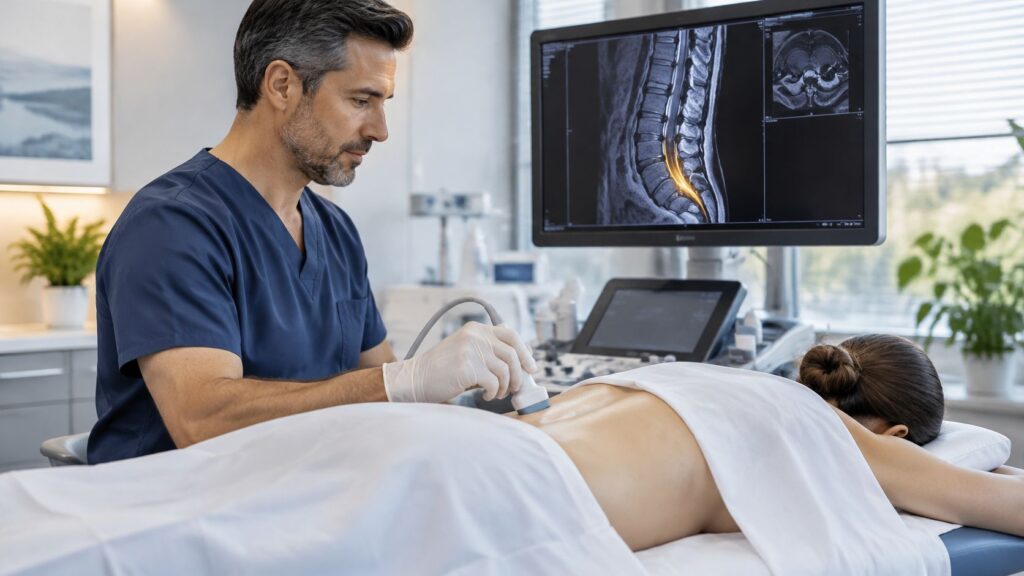
You bend to pick something up, finish a long drive, or get out of bed and feel pain shoot from the low back into the buttock and down the leg. By that night, sitting is hard, sleep is broken, and every search result seems to offer the same advice: rest, stretch, wait.
Some cases do settle with time and smart self-care. Others keep flaring because the treatment does not match the source of the nerve irritation. That is where people often lose weeks doing random stretches, avoiding movement, or relying on temporary fixes that never address the mechanics of the problem.
The right starting point is a clear plan. Begin with sensible home measures, pay attention to warning signs, and escalate care when pain, numbness, or weakness are not improving. If your symptoms sound like one of the spine or nerve conditions listed on our sciatica and nerve pain treatment page, the next step is not guesswork. It is identifying the pain generator and choosing the least invasive treatment that has a real chance to help.
At Midwest Pain & Wellness, that path can start with conservative care and progress, when needed, to targeted, opioid-sparing options such as image-guided injections, radiofrequency ablation, MILD for lumbar spinal stenosis, or regenerative treatments. The goal is durable relief for patients in Chicago Ridge, Oak Lawn, Palos Hills, and nearby communities, not another short-lived patch.
Understanding Your Sciatica and a Path Forward
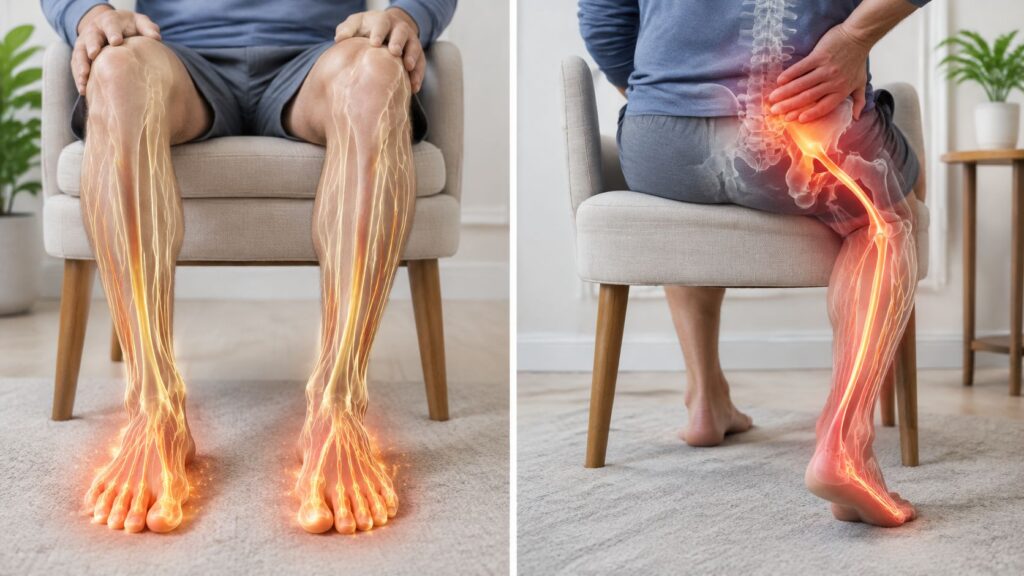
Sciatica isn't a diagnosis by itself. It's a pattern of nerve pain. The sciatic nerve becomes irritated or compressed, and the pain often travels from the lower back into the leg. Some people feel stabbing pain. Others describe burning, tingling, numbness, or weakness.
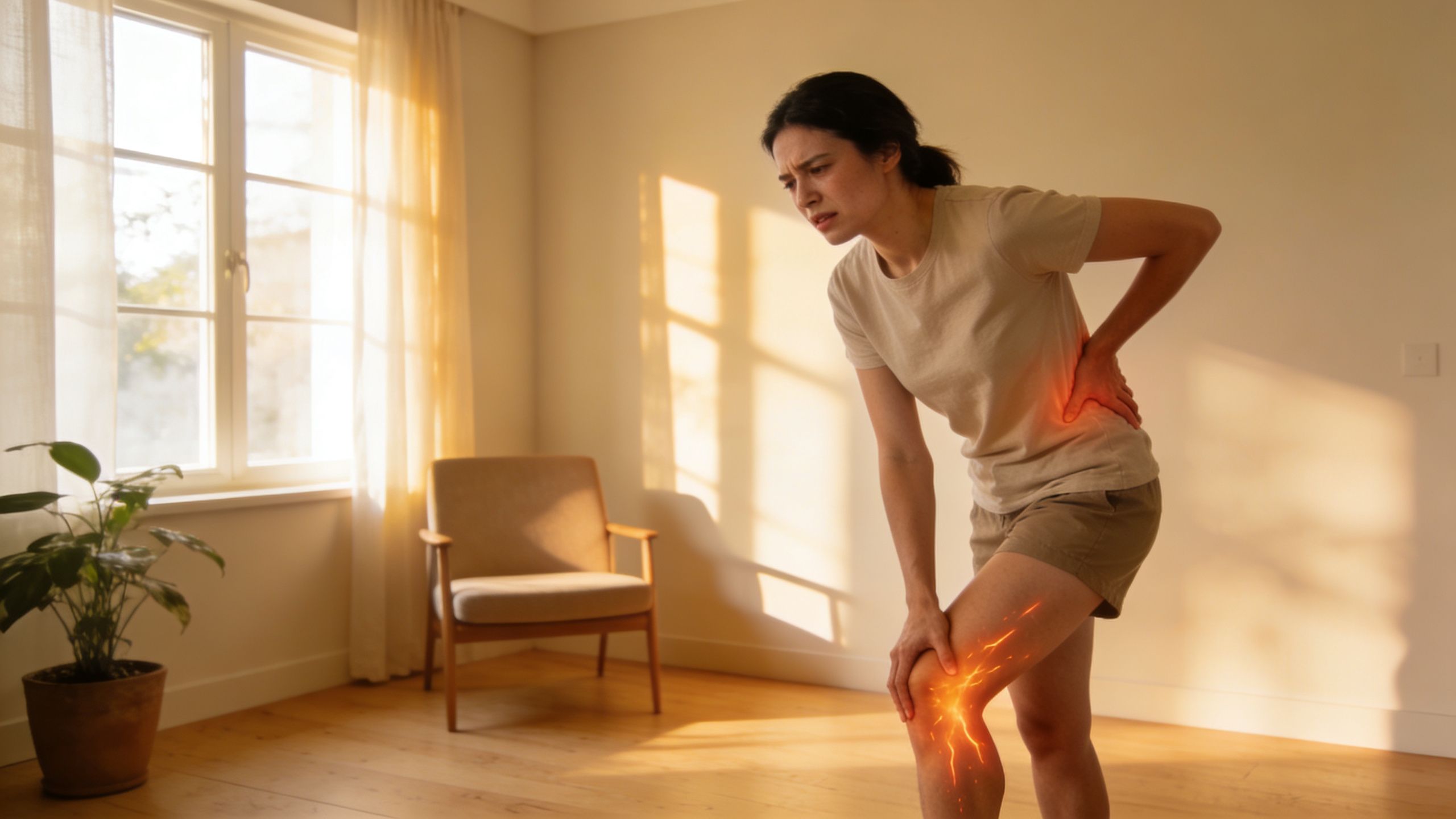
People across Oak Lawn, Palos Hills, Palos Heights, Worth, Bridgeview, Hickory Hills, Alsip, Burbank, Evergreen Park, and Orland Park often come in after trying to wait it out. Sometimes that works. Sometimes it doesn't. The difference usually comes down to the cause, the severity of nerve irritation, and whether the treatment matches the mechanics of the problem.
What a practical path looks like
A useful plan starts with conservative care, not panic. It also avoids the opposite mistake, which is doing random online stretches for too long while the pain becomes more entrenched. If you're trying to figure out whether your symptoms fit one of the spine and nerve issues listed by Midwest Pain & Wellness conditions we treat, the pattern matters more than the label you give it at home.
A full-spectrum approach usually includes:
- Early symptom control with cold, heat, medication when appropriate, and activity modification
- Targeted movement that reduces nerve tension rather than provoking it
- Structured rehabilitation when the acute flare settles
- Escalation to interventional care if pain stalls, intensifies, or limits normal recovery
Sciatica improves fastest when treatment is matched to the source of nerve compression, not when every patient gets the same handout.
The good news is simple. You have options between doing nothing and having surgery.
Immediate Relief Strategies for Acute Sciatic Pain
A typical flare starts the same way. You sit a little too long, stand up, and feel pain shoot from the low back or buttock into the leg. The next few hours matter. Good early decisions can calm an irritated nerve. Poor ones can keep the flare going.
Start with symptom control that does not aggravate the nerve
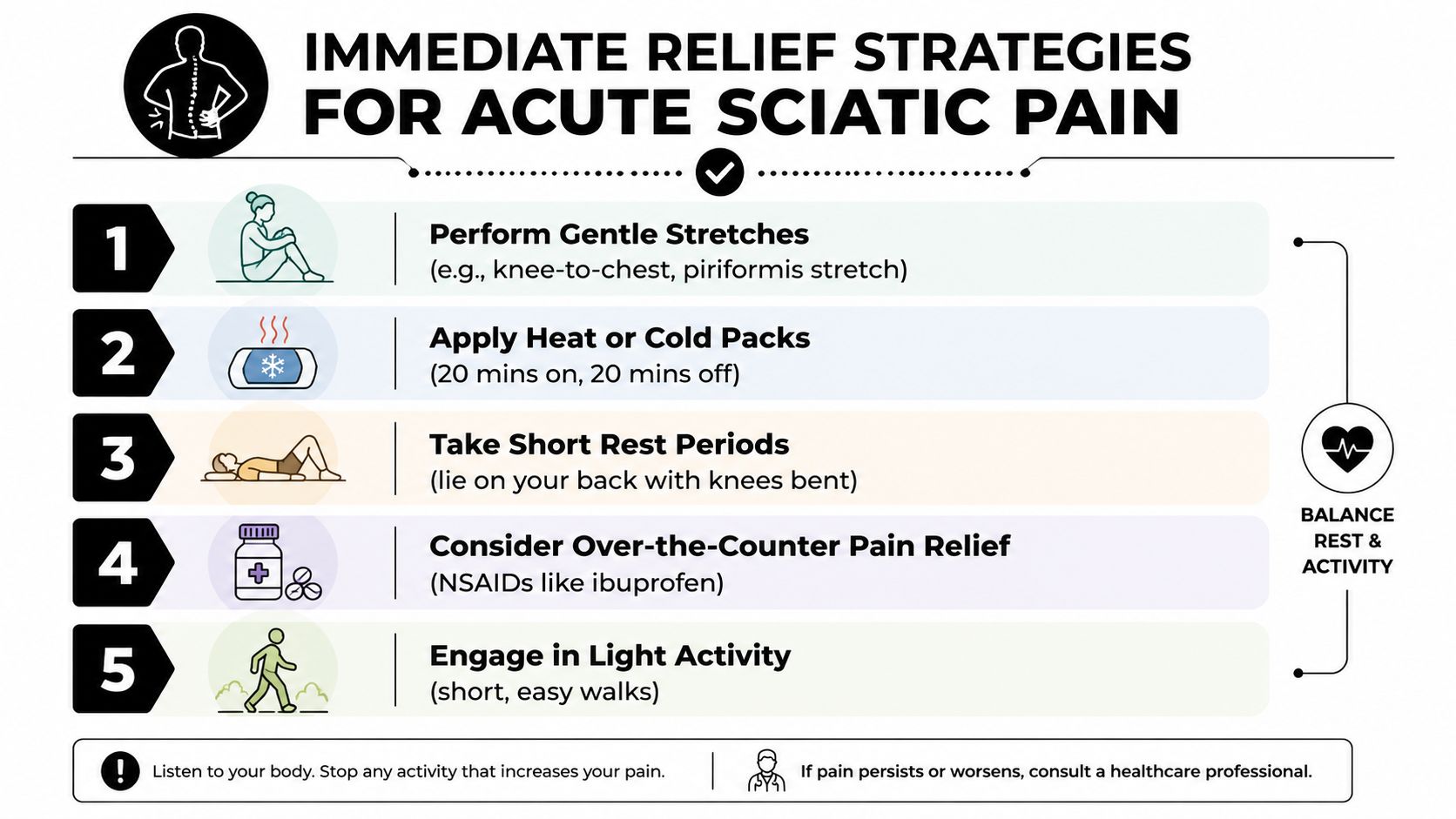
In the first day or two, cold often helps more than heat, especially if the area feels sharp, inflamed, or freshly irritated. After that, heat may be the better tool when the surrounding muscles tighten and the pain becomes more stiff than sharp.
Use either one for about 15 to 20 minutes at a time with a cloth barrier over the skin.
A simple approach works well:
Early flare
Use a cold pack on the low back, upper buttock, or most tender area.After the sharp edge eases
Try heat for muscle guarding or spasm.If your body responds better to one than the other
Use what gives clearer relief. The goal is lower pain and easier movement, not following a rigid rule.
Reduce mechanical irritation
Sciatica usually gets worse when the nerve stays compressed, stretched, or inflamed for hours at a time. That is why I tell patients to avoid the positions that keep loading the same irritated structure.
Make these changes right away:
- Walk for short intervals instead of staying in one position too long
- Get out of low, soft chairs that round the lower back
- Limit long car rides and desk sessions until the flare settles
- Place a small roll behind the low back if sitting is unavoidable
- Turn your whole body together when getting out of bed or off the couch, rather than twisting through the waist
One practical checkpoint matters more than any single tip. If an activity pushes pain farther down the leg, stop and modify it. If symptoms pull back toward the buttock or low back, that is usually a better sign.
Use over-the-counter medication with judgment
Nonprescription anti-inflammatory medication can help some patients during an acute flare. Ibuprofen or naproxen are common examples. They are not harmless, and they are not the right choice for everyone.
Use extra caution if you have a history of stomach ulcers, kidney disease, bleeding risk, blood thinner use, uncontrolled blood pressure, or certain heart conditions. Acetaminophen may be an option for some people who cannot take NSAIDs, but it does not treat inflammation the same way. When pain is severe enough that you are stacking medications for days without getting control, home care is no longer enough.
That is often the point where patients ask the right question. What do you do when rest, heat, and basic medication are not enough, but you are not ready for surgery? In our clinic, that is where a more precise, opioid-sparing plan becomes useful.
Choose positions that quiet the leg
There is no single best position for every case of sciatica, because disc irritation, stenosis, and muscular compression can behave differently. Still, a few positions are consistently easier to tolerate during a flare:
| Position | Why it may help |
|---|---|
| On your back with knees bent | Can reduce pull through the low back and sciatic pathway |
| On your side with a pillow between the knees | Can keep the pelvis more level and reduce twisting |
| Slightly reclined with lumbar support | Often feels better than unsupported upright sitting |
Check how you feel after you get up, not just while you are resting there. A position that feels good for 10 minutes but causes a surge of leg pain when you stand is not helping enough.
Know when immediate relief strategies have hit their limit
Home care should start to make the day more manageable. You should be able to move a little easier, sleep a little better, or put less weight through the painful leg without a sharp increase in symptoms.
Get medical attention sooner if you develop new weakness, numbness that is spreading, trouble controlling bowel or bladder function, or pain so intense that walking becomes difficult. Those are not signs to keep experimenting at home.
For many people in Chicago Ridge, Oak Lawn, and Palos Hills, the next step is not opioids and it is not jumping straight to surgery. It is getting the pain generator identified and choosing the least invasive treatment that matches it.
Foundational Exercises to Soothe the Sciatic Nerve
A patient will often tell me, “I've been stretching every day, and the pain still shoots to my calf.” That usually means the plan is too generic. Sciatica responds best when the movement matches the pain pattern.

The first job of exercise is not to “loosen everything up.” It is to calm irritated nerve tissue, reduce protective muscle guarding, and help pain retreat out of the leg. In clinic, I look for movements that improve symptoms during the session and do not trigger a rebound later that day.
Start with centralization, not intensity
Pain that shifts from the foot or calf toward the buttock or low back is often a better sign than pain that spreads farther down the leg. That pattern is called centralization, and it is one reason repeated, controlled movement often works better than aggressive stretching.
A few rules keep these exercises safer and more useful:
- Watch leg symptoms closely
- Use gentle repetition instead of force
- Prioritize control over range of motion
- Stop if numbness, weakness, or radiating pain increases
One sentence matters here. A stretch that feels good in the moment but leaves you with more leg pain an hour later is not helping.
Choose the movement bias that fits your pattern
Online exercise lists miss the part that matters most. Disc-related sciatica and spinal stenosis often tolerate opposite positions.
| Symptom pattern | Movements often better tolerated |
|---|---|
| Pain worsens with sitting, bending, or getting up from a chair | Extension-biased directional movement may help |
| Pain worsens with standing upright or walking for several minutes | Flexion-biased positions may feel better |
That is a starting point, not a diagnosis. A proper exam still matters, especially when symptoms have lasted more than a few weeks. Patients who want an experienced evaluation can learn more about Dr. Donkoh's interventional pain background.
Foundational movements that often help early
These are common early-stage options when they fit the symptom pattern.
Knee-to-chest stretch
This is often better tolerated when flexion reduces symptoms. Bring one knee toward the chest in a slow, controlled way, then switch sides. Pulling hard on the leg can irritate a sensitive nerve, so the movement should stay easy.
Pelvic tilts
Lie on your back with knees bent and gently rock the pelvis to flatten, then release the low back. This can reduce guarding and restore small, controlled motion without loading the spine heavily.
Gentle spinal rotation
A small lower trunk rotation can help mobility in some patients. Keep the motion short and smooth. Deep twisting is a poor trade-off during a flare because it can stir up leg symptoms after the exercise ends.
Build support after the nerve calms down
Once radiating pain is less reactive, the focus shifts from symptom control to support. The goal is better load-sharing through the hips, pelvis, and trunk so the low back is not doing all the work.
Useful options often include:
- Bridges to train the glutes and support pelvic control
- Bird-dogs to build trunk stability with coordinated limb movement
- Gentle hip mobility work to reduce strain transferred into the lumbar spine
- A walking progression to rebuild tolerance without impact
This stage is where many people either improve steadily or flare themselves up again. Advancing too fast is a common mistake. Waiting too long to rebuild strength is another.
Common exercise mistakes that keep sciatica going
I see the same problems repeatedly:
- Forcing hamstring stretches when the nerve is the actual pain source
- Starting advanced core work before the leg pain is controlled
- Copying social media routines without knowing the pain generator
- Stopping all movement out of fear
- Returning to heavy lifting as soon as pain drops a little
Exercise has a real role in how to fix sciatica, but it has limits. If the right movements are not changing your sitting tolerance, walking distance, or leg pain pattern, it may be time to move beyond self-care and identify whether the driver is a disc, stenosis, SI joint dysfunction, or another pain source that needs targeted treatment.
When to See a Pain Specialist for Your Sciatica
There is a point where persistence stops being useful and starts becoming costly. If you've been doing the right basics and the pain still controls your walking, sitting, sleep, or workday, it's time to get the nerve evaluated more precisely.
A major problem in sciatica care is that patients are often told to keep stretching long after those stretches have stopped changing the trajectory. A 2025 study in Pain Medicine found that 62% of sciatica patients with symptoms lasting over 3 months who continued only stretches and physical therapy had persistent pain, as summarized by Healthline's discussion of sciatica stretches. That's the point where a smarter escalation plan matters.
Red flags that shouldn't wait
Some symptoms need urgent medical evaluation rather than a routine office visit.
Seek immediate care if you develop:
- Progressive leg weakness
- Numbness in the saddle or groin area
- Loss of bladder or bowel control
- Rapidly worsening neurologic symptoms
- Severe pain after a major injury
Those signs can indicate more serious nerve compromise.
Signs you've outgrown self-care
Other situations aren't emergencies, but they are strong reasons to stop managing this alone.
Consider a specialist evaluation if:
- pain keeps returning after short-lived improvement
- sitting tolerance is collapsing
- walking distance is shrinking
- sleep is disrupted most nights
- you can't participate in exercise because the pain is too intense
- over-the-counter medication is doing very little
For many people in Palos Hills, Bridgeview, Oak Lawn, or nearby Illinois communities, the next step is not more random stretching. It's a targeted assessment by a physician who treats spine and nerve pain all day. You can learn more about that care pathway through Dr. Donkoh's background and clinical focus.
Getting specialist care isn't admitting failure. It's choosing a more precise plan before short-term nerve irritation turns into a chronic pain cycle.
Your Diagnostic Journey at Midwest Pain & Wellness
The first visit usually feels easier once you know what to expect. Patients often arrive worried they'll be rushed into a procedure or told nothing can be done. A proper interventional pain evaluation should do neither.
The visit starts with the story of the pain
The pattern matters. A clinician wants to know where the pain starts, where it travels, whether it reaches the calf or foot, and whether numbness or weakness is part of it. The timing matters too. Pain that strikes with sitting and bending can point in a different direction than pain that builds with standing and walking.
Prior treatment matters just as much. If you've already tried medication, chiropractic care, home stretching, or formal therapy, that history helps narrow what has and hasn't been addressed.
The exam looks for function, not just tenderness
A focused physical exam often includes:
- Strength testing to look for true motor weakness
- Reflex assessment for signs of nerve root involvement
- Sensory testing to map numbness or altered sensation
- Range-of-motion testing to see which movements provoke or relieve symptoms
- Provocative maneuvers that help distinguish nerve root irritation from hip, sacroiliac, or muscular sources
That distinction matters. Many patients call any buttock and leg pain "sciatica," but not every radiating pain pattern is coming from the same structure.
Imaging and nerve testing when needed
Sometimes the history and exam give enough direction to begin treatment. Sometimes the picture needs confirmation.
A physician may recommend:
| Test | What it can help clarify |
|---|---|
| MRI of the lumbar spine | Disc issues, stenosis, nerve root compression |
| X-ray | Alignment and bony changes |
| EMG or nerve conduction studies | Whether a nerve is irritated and how severely |
The purpose isn't to collect tests. It's to match symptoms with anatomy so treatment is more precise.
A good diagnosis doesn't just name the pain. It identifies the pain generator and tells you which treatments are likely to help, which ones are likely to waste time, and which ones might aggravate the problem.
A treatment plan should fit your life
The next step isn't identical for every patient. One person needs medication adjustments and a refined exercise program. Another needs an image-guided injection because pain is too severe to participate in rehab. Another may need decompression planning because stenosis is driving leg symptoms.
That individualized approach is what keeps the plan practical. It also keeps the care opioid-sparing and focused on function.
Advanced Opioid-Sparing Treatments for Lasting Relief
When conservative care has been done well and progress stalls, targeted intervention can break the cycle. The role of a pain specialist isn't to replace rehabilitation. It's to reduce the barrier that keeps patients from recovering.

For sciatica that resists initial conservative care, epidural steroid injections are a high-efficacy bridge treatment that reduces inflammation and helps patients participate in physical therapy. Surgery can help selected patients, but patient selection is critical, and non-operative care should be optimized first, according to Goodman Campbell's review of treatment pathways.
Epidural steroid injections
If a nerve root is inflamed, an epidural steroid injection can calm the irritation around that nerve. This isn't the same as taking an oral anti-inflammatory and hoping enough medication reaches the problem area. The medication is delivered close to the source under image guidance.
These injections are often a good fit when:
- leg pain is more dominant than back pain
- rehab is limited by pain severity
- a disc herniation or inflamed nerve root is suspected
- the goal is to reduce symptoms enough to restore walking, sleep, and exercise tolerance
They are not magic and they are not permanent structural repairs. They are often most useful as a bridge that lets the next stage of recovery happen.
Medial branch blocks and radiofrequency ablation
Not all pain that feels like sciatica is coming directly from a compressed nerve root. Some patients have overlapping pain from the facet joints in the spine. In that group, medial branch blocks can help confirm the source, and radiofrequency ablation (RFA) can reduce pain by interrupting the small pain-signaling nerves that serve those joints.
RFA isn't meant for every patient with leg pain. It tends to fit best when the exam and imaging suggest a facet-mediated component, especially in chronic low back pain that coexists with referred symptoms.
MILD and Vertiflex for spinal stenosis patterns
For patients whose symptoms are driven more by lumbar spinal stenosis, the pattern is often different. Standing and walking may trigger aching, heaviness, or pain into the legs, while leaning forward or sitting gives relief.
In carefully selected cases, minimally invasive options such as MILD or Vertiflex Superion may help create more space for irritated nerves without jumping directly to larger surgery. These procedures aren't first-line care for a simple acute strain or every disc problem. They are tools for a specific anatomy and symptom pattern.
Spinal cord stimulation and other advanced options
When pain becomes chronic, complicated, or persistent after surgery, spinal cord stimulation may enter the discussion. The goal is not to mask everything blindly. The goal is to alter pain signaling in patients whose symptoms have not responded to more direct mechanical and inflammatory treatments.
Other patients may be evaluated for:
- Peripheral nerve stimulation
- Sacroiliac or facet interventions
- Regenerative options such as PRP in select cases
- Targeted blocks that clarify the pain generator before a longer-lasting treatment is chosen
A clinic that performs a range of these procedures, including epidural injections, medial branch blocks, RFA, spinal cord stimulation, MILD, and Vertiflex, is Midwest Pain & Wellness and its procedure list.
The best procedure is the one that matches the pain generator. A technically perfect injection in the wrong target won't give durable relief.
What doesn't work well in advanced cases
Once symptoms have become persistent, a few patterns repeatedly fail patients:
| Approach | The common problem |
|---|---|
| Repeating the same home stretches for months | No meaningful change in the pain pattern |
| Escalating opioid use without a diagnosis update | Temporary suppression without functional recovery |
| Choosing surgery before clarifying the pain source | Mismatch between anatomy and symptoms |
| Relying on one modality alone | Incomplete treatment of a multi-factor pain problem |
The most durable results usually come from a multimodal plan. That may mean a procedure to reduce inflammation, followed by exercise progression, posture work, and activity rebuilding. It may also mean identifying when surgery is the right next step rather than pretending every patient should avoid it forever.
Building Long-Term Resilience to Prevent Sciatica's Return
Relief is the first milestone. Keeping it is the essential work. A lot of recurrent sciatica doesn't come from one dramatic injury. It comes from repeated low-level stress on the same vulnerable structures.
Make your daily environment less provocative
If you sit for work in Burbank, Hickory Hills, Evergreen Park, or nearby areas, your setup matters. The goal isn't perfect posture every second. The goal is reducing prolonged positions that keep loading the same tissues.
A practical workstation routine includes:
- Use a chair that supports the low back
- Keep hips and knees in a comfortable neutral position
- Bring the screen to eye level
- Take standing or walking breaks regularly
- Avoid living on a soft couch with a rounded spine in the evening
Driving deserves the same attention. Long car rides often flare sciatica because the hips stay flexed and the lumbar spine settles into a sustained position. Support the low back and stop to move when possible.
Rehearse safer movement patterns
Many flare-ups happen during ordinary tasks, not in the gym.
Use these principles:
- Hinge at the hips instead of folding through the lower back
- Keep loads close to the body
- Turn with your feet rather than twisting while carrying weight
- Exhale during effort so you don't brace poorly and spike spinal load
- Respect fatigue because tired muscles stop supporting the spine well
Keep a maintenance routine simple
Long-term prevention doesn't require a complicated program. It requires consistency.
A basic maintenance mix often includes:
| Focus | Examples |
|---|---|
| Mobility | gentle hip work, controlled spinal mobility |
| Stability | bridges, bird-dogs, core control drills |
| Endurance | walking and graded activity |
| Recovery habits | position changes, sleep support, pacing |
Many people overcomplicate things. They stop the boring but effective habits as soon as pain improves.
The back usually tolerates ordinary life better when the hips move well, the core stabilizes on demand, and long static positions don't dominate the day.
Think beyond the flare
Nutrition, body weight, sleep quality, and general activity all influence how resilient the spine and nervous system feel over time. You don't need perfection. You do need habits that reduce repeated irritation and support tissue recovery.
If symptoms return, don't wait for them to become severe before getting re-evaluated. Recurrent pain often responds better when the pattern is addressed early.
If sciatic pain is limiting your sleep, work, walking, or ability to exercise, Midwest Pain & Wellness offers evaluation and opioid-sparing treatment for spine and nerve pain in the Chicago Ridge area, including nearby Illinois communities such as Oak Lawn, Palos Hills, Palos Heights, Worth, Bridgeview, Hickory Hills, Alsip, Burbank, Evergreen Park, and Orland Park. A focused assessment can help determine whether you need refined conservative care, image-guided intervention, or a broader plan to restore function and reduce the chance of another flare.