Your Guide to Knee Pain Relief with Viscosupplementation
Hyaluronic acid injection for knee pain chicago offers a proven, non-surgical solution for people suffering from osteoarthritis and chronic knee discomfort. If you’re searching for relief, here’s what you need to know:
Quick Answer: Finding Hyaluronic Acid Injections in Chicago
- What it is: A gel injection (viscosupplementation) that lubricates your knee joint
- Who it helps: People with mild to moderate knee osteoarthritis who haven’t found relief from physical therapy or medications
- How long it lasts: Pain relief typically lasts 6-12 months
- The procedure: Takes 15-30 minutes, minimally invasive, often done with ultrasound guidance
- Where to go: Look for board-certified pain specialists offering interventional, opioid-free treatments
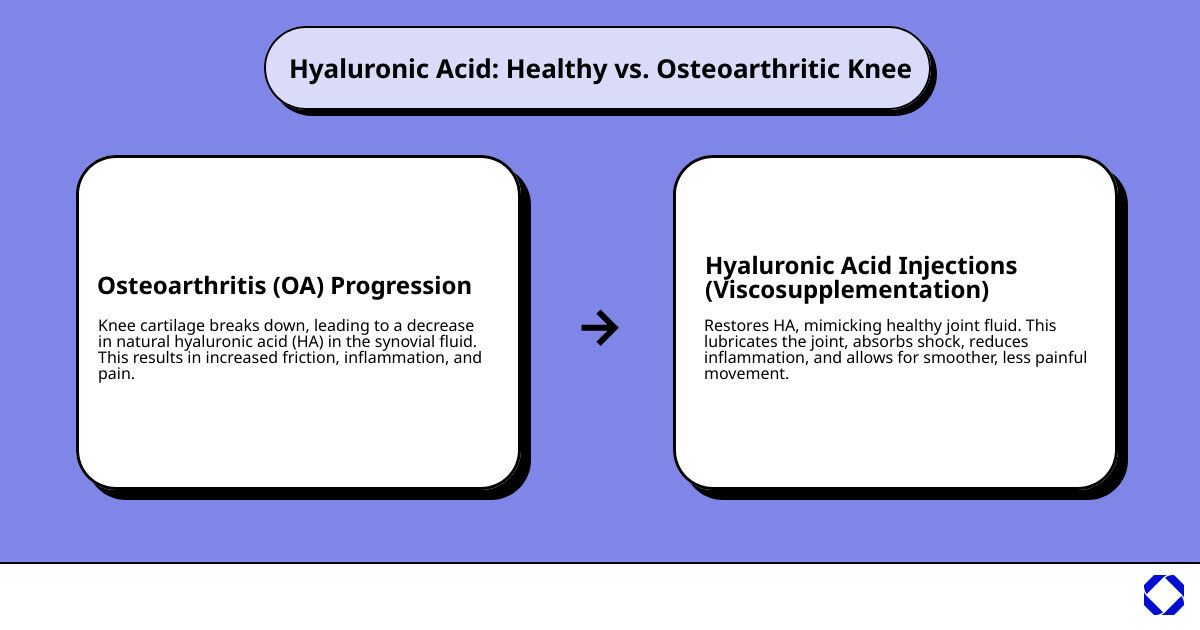
Knee pain can make even the simplest things like walking, standing, or exercising feel challenging. When your knee cartilage breaks down due to osteoarthritis, the natural hyaluronic acid in your joint fluid decreases. This leads to more friction, inflammation, and pain.
The good news? You don’t have to live with that pain or rush into surgery. Hyaluronic acid injections work by restoring what your body has lost—adding lubrication back into your knee joint while reducing inflammation. It’s a targeted treatment that delivers medication directly where you need it most.
In Chicago, these injections are widely available from qualified pain specialists who use advanced techniques like ultrasound guidance for precise delivery. Many patients experience significant relief that lets them return to activities they enjoy without the need for opioids or invasive procedures.
This guide will walk you through everything you need to know about hyaluronic acid injections—from how they work to what happens during the procedure, plus how to find the right provider in Chicago for your needs.
What is Hyaluronic Acid (Viscosupplementation) and How Does It Work?
Think of your knee joint like a well-oiled hinge on a door. When it’s working properly, everything moves smoothly and quietly. But what happens when that oil dries up? You get squeaking, stiffness, and eventually, damage. That’s essentially what happens in your knee when osteoarthritis takes hold.
Hyaluronic acid (HA) is nature’s lubricant for your joints. Your body produces this substance naturally, and it’s a major component of the synovial fluid that surrounds your knee joint. In a healthy knee, this thick, gel-like fluid does two important jobs: it lubricates the cartilage surfaces so they glide smoothly past each other, and it acts as a shock absorber to cushion impacts when you walk, run, or jump.
When osteoarthritis develops, things start to break down. The protective cartilage in your knee—which is partly made of hyaluronic acid—begins to wear away. At the same time, your body produces less natural HA, and what’s left becomes thinner and less effective. The result is more friction, more inflammation, and that all-too-familiar pain and stiffness that makes even simple movements uncomfortable.
This is where viscosupplementation comes in. The term literally means “restoring the thickness” of your joint fluid. When we perform a hyaluronic acid injection for knee pain chicago, we’re replenishing what your body has lost. We inject a gel form of hyaluronic acid directly into your knee joint, essentially topping up that natural lubricant that’s been depleted.
But here’s what makes this treatment really interesting—it’s not just about lubrication. Research shows that hyaluronic acid injections work through several mechanisms at once.
First, the injected HA immediately starts working as a lubricant and shock absorber. It helps your cartilage surfaces move more freely and reduces that painful bone-on-bone friction you’ve been feeling.
Second, hyaluronic acid has natural anti-inflammatory properties. It helps clear out inflammatory molecules that build up in your knee joint, which directly addresses one of the main sources of your pain. Some experts believe this anti-inflammatory effect is actually more important than the lubrication aspect.
Third—and this is the really cool part—HA injections can actually encourage your joint to produce more of its own natural hyaluronic acid over time. It’s like jump-starting your body’s own healing process.
By targeting the root causes of knee pain rather than just masking symptoms, viscosupplementation offers a more comprehensive approach to managing osteoarthritis. You can learn more about how this fits into a complete treatment plan on our conditions we treat page.
The Primary Benefits for Knee Pain Sufferers
If you’re dealing with knee pain from osteoarthritis, hyaluronic acid injections can make a real difference in your daily life. Let’s talk about what you can actually expect from this treatment.
Pain reduction is usually the first thing patients notice. Most people start feeling relief within about 48 hours of their injection, though it typically takes around four to six weeks to experience the full effect. Studies consistently show that these injections lead to significant improvements in both pain levels and knee function. For many patients, that relief lasts anywhere from six months to a year, and sometimes even longer.
Getting back to normal activities is what it’s really about. When your knee hurts less and moves more easily, suddenly things you’d been avoiding become possible again. Walking the dog, playing with your grandkids, or just getting through your workday without constant discomfort—these are the improvements that matter most. By restoring cushioning and lubrication to your joint, HA injections help reduce stiffness and improve your range of motion.
Surgery isn’t your only option. For many people, especially those with mild to moderate osteoarthritis, hyaluronic acid injections provide enough relief to delay or even avoid knee replacement surgery. That’s a big deal when you consider the recovery time and risks associated with major surgery. These injections give you a chance to manage your symptoms effectively without going under the knife.
The procedure itself is remarkably simple. We’re talking about a 15-30 minute outpatient visit. No hospital stay, no lengthy recovery period. Most patients return to light activities the same day. It’s about as minimally invasive as you can get while still addressing the problem directly.
The relief lasts. While hyaluronic acid injections aren’t a permanent cure for osteoarthritis, they provide substantial, long-lasting relief. That six-to-twelve-month window of reduced pain gives you time to work on other aspects of your treatment plan—like physical therapy and lifestyle modifications—that can help maintain your knee health over the long term.
Potential Risks and Side Effects
We believe in being upfront about what you might experience after a hyaluronic acid injection. The good news is that most side effects are mild and temporary, but it’s important to know what’s normal so you’re not caught off guard.
The most common side effects happen right around the injection site. You might notice some soreness, tenderness, or mild pain where the needle went in. Some patients experience a temporary increase in knee pain or a brief flare-up of their arthritis symptoms right after the injection. This typically resolves quickly on its own.
Swelling or stiffness in the knee can occur in the first few days after your injection. This is usually mild and goes away within a day or two. You might also see some slight bruising around the injection site—this is completely normal and nothing to worry about.
Now let’s talk about the less common risks. Allergic reactions are rare but possible. Some hyaluronic acid preparations are derived from chicken combs, so if you have allergies to eggs, bird feathers, or other bird products, definitely let us know. Newer formulations are made through bacterial fermentation, which makes allergic reactions even less likely.
Infection is extremely uncommon but worth mentioning since any time we puncture the skin, there’s a small risk. We follow strict sterilization protocols to minimize this risk. The actual chance of developing a joint infection is about one in ten thousand—very, very low.
During your consultation, we’ll go over your complete medical history and discuss these potential risks in detail. We want you to feel completely comfortable and informed before we proceed with any treatment.
The Procedure for Hyaluronic Acid Injection for Knee Pain Chicago
Getting a hyaluronic acid injection for knee pain chicago at Midwest Pain And Wellness is simpler than you might think. We’ve designed every step to prioritize your comfort and safety while delivering the best possible results. Our double board-certified doctors bring both expertise and advanced technology to ensure your treatment is precise and effective.
Your journey begins with a thorough consultation. We’ll sit down together to understand your complete medical history and discuss exactly what you’re experiencing. One of our specialists will perform a physical examination of your knee and review any imaging you’ve had done—X-rays, MRI scans, or other tests. This conversation is crucial because it helps us determine if hyaluronic acid injections are truly the right fit for your specific situation. We’ll also talk about any medications you’re currently taking, since some might need a brief pause before your procedure.
When your injection day arrives, just wear something comfortable and loose-fitting that gives us easy access to your knee. You won’t need to fast or make dramatic changes to your routine. If you notice any new symptoms like a fever, just give us a heads up before you come in.
The injection itself is remarkably quick—usually just 15 to 30 minutes from start to finish. You’ll be in and out the same day. First, we thoroughly clean and sterilize the skin around your knee with an antiseptic solution. This careful preparation is one of the many steps we take to keep infection risk extremely low.
Next comes a local anesthetic to numb the area. This makes the entire process much more comfortable for you. You might feel a slight pinch, but the numbing agent quickly takes effect.
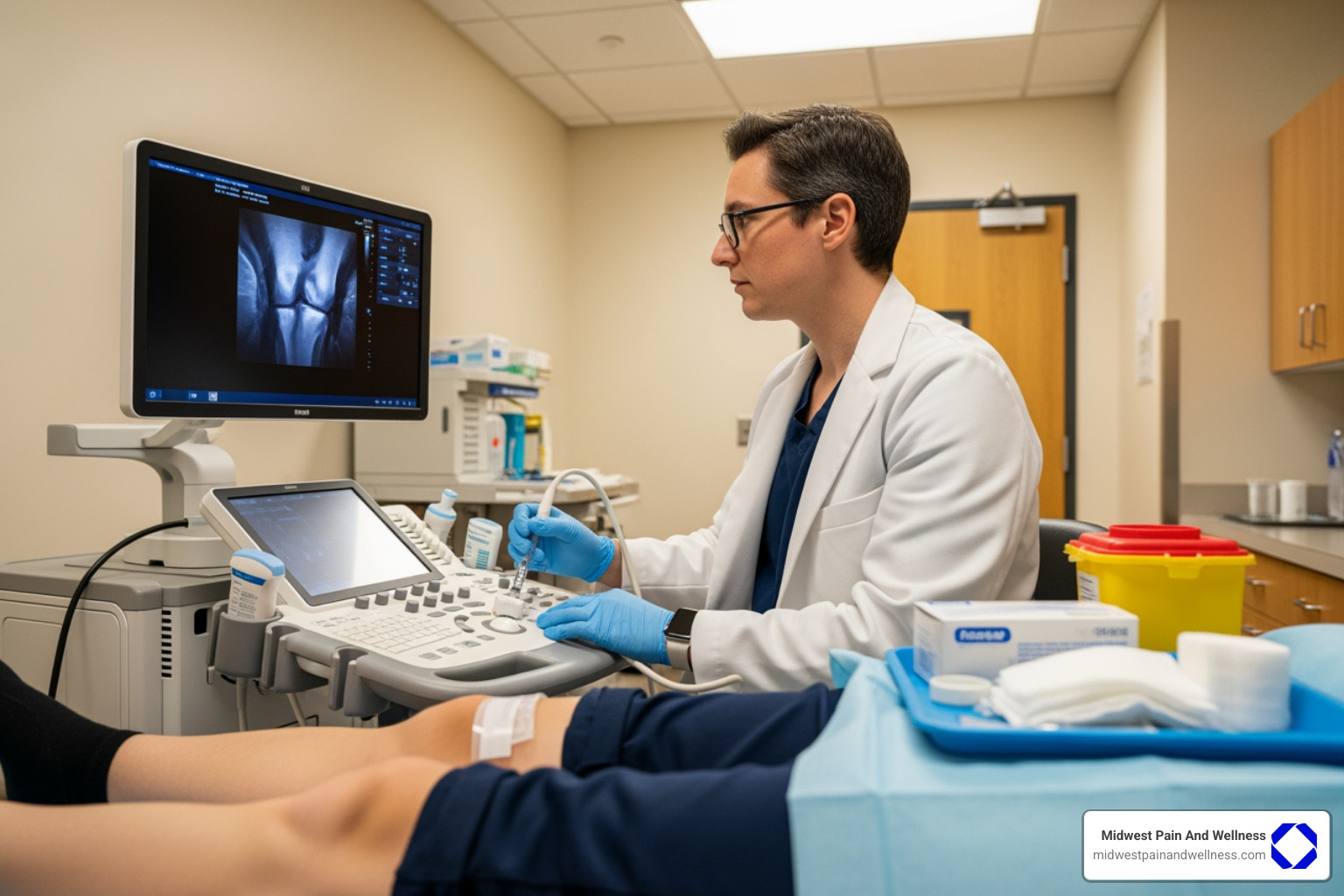
Here’s where our advanced approach really shines: we typically use ultrasound imaging to guide the needle’s placement. Think of it like having GPS for your knee joint. This real-time visualization lets us see exactly where we’re going, ensuring the hyaluronic acid reaches precisely where it needs to be. This accuracy not only maximizes the treatment’s effectiveness but also minimizes any risks.
If your knee has excess fluid causing swelling and pressure, we may perform what’s called an arthrocentesis first. This simply means we remove some of that built-up fluid before injecting the hyaluronic acid. Many patients find this step alone provides immediate relief from that uncomfortable pressure sensation. Plus, it creates the perfect environment for the HA gel to work its magic.
Once everything is positioned perfectly, we slowly inject the hyaluronic acid gel into your knee joint. After the injection is complete, we carefully remove the needle and apply a small bandage to the site. That’s it—you’re done!
What to Expect After Your Injection
After your hyaluronic acid injection for knee pain chicago, you’ll head home the same day. While this is a minimally invasive procedure, taking good care of yourself afterward helps ensure you get the best possible results.
For the first 48 hours to a week, your knee needs a bit of a break. Avoid activities that put significant stress on the joint—things like prolonged standing, heavy lifting, jogging, or intense workouts. That said, you can usually return to light, gentle activities on the same day. The key is listening to your body. If something feels like too much, it probably is.
If you notice any mild pain, warmth, or swelling at the injection site, ice packs are your friend. Apply them for about 10 minutes at a time, every couple of hours. This simple step can provide significant comfort. Resting with your leg liftd also helps manage any temporary discomfort or swelling.
Over-the-counter pain relievers can be used if needed—just follow your doctor’s recommendations. And while we want you to avoid strenuous activity, gentle range of motion exercises are actually beneficial. They keep the joint moving and help distribute the hyaluronic acid throughout the joint space.
Timeline for Relief
Now for the question everyone asks: “When will I feel better?” The answer varies slightly from person to person, but here’s what most patients experience.
You’ll likely notice an initial difference within about 48 hours after your injection. This might be subtle at first—perhaps a bit less pain when you stand up, or slightly less stiffness in the morning. These early signs are encouraging indicators that the treatment is working.
The full effects typically become apparent around a month after your procedure. If you’re receiving a multi-dose series, you’ll see the complete benefits several weeks after your final injection. This is when patients often tell us they’re getting back to activities they’d given up on.
As for how long this relief lasts, most patients experience significant pain reduction for 6 to 12 months. Some fortunate individuals find their relief extends even longer—up to three years in certain cases. When the effects begin to wear off, we can discuss repeat injections. We typically recommend waiting at least six months between treatment rounds to ensure optimal results.
Single-Dose vs. Multi-Dose Injections
When we talk about hyaluronic acid injections, you’ll encounter two main approaches: single-dose and multi-dose treatments. Understanding the difference helps you know what to expect.
The formulations themselves vary in several ways. Some hyaluronic acid preparations have different viscosity levels—some are thicker, others more fluid. The molecular structure differs too; certain products use single-chain HA molecules, while others employ multi-piece engineered versions. There’s also a difference in origin. Newer formulations are created through bacterial fermentation, which we call Bio-HA. These are generally preferred over older avian-derived versions because they’re less likely to trigger immune responses. Research suggests that single-chain HA formulations may offer superior effectiveness.
Single-dose injections deliver everything in one session. You come in once, receive a concentrated dose of hyaluronic acid, and you’re done. The convenience factor is undeniable—just one appointment to schedule, one recovery period to manage.
Multi-dose injections take a different approach. You’ll receive a series of 3 to 5 injections spread over several weeks. This gradual method allows the HA concentration to build up in your joint over time.
Here’s what the research—and our clinical experience—tells us about effectiveness: multiple injection regimens often provide better and more sustained pain relief compared to single injections. While the convenience of a one-and-done approach is appealing, the cumulative effect of a series typically yields superior outcomes for many patients.
During your consultation, we’ll discuss which approach makes the most sense for you. The decision depends on factors like the specific HA product we’re using, the severity of your osteoarthritis, and your individual needs and lifestyle. Our goal is always to create a treatment plan that fits your life while delivering the best possible relief.
Comparing Your Knee Pain Treatment Options
When knee pain starts interfering with your daily life, you deserve to know all your options. At Midwest Pain And Wellness, we believe in helping you find the right solution through comprehensive, opioid-free pain management—not just throwing treatments at the problem and hoping something sticks.
Most people start with conservative treatments before considering injections, and that’s exactly what we recommend too. These approaches include physical therapy with strengthening exercises and gait correction, activity modification to reduce stress on your knees, and weight management—even losing just a few pounds can make a huge difference since every pound of body weight puts three times the pressure on your joints with each step. Other conservative options include bracing for extra support, anti-inflammatory medications like NSAIDs, and good old-fashioned ice therapy to reduce swelling and numb pain.
These conservative measures work wonderfully for many people. But when they haven’t provided enough relief, or when your knee pain has become chronic and truly disabling, that’s when we talk about targeted interventional treatments like injections. They’re also worth considering when surgery seems too drastic or simply isn’t the right choice for your situation.
So how does hyaluronic acid injection for knee pain chicago compare to other injection options? Let’s break it down in plain terms.
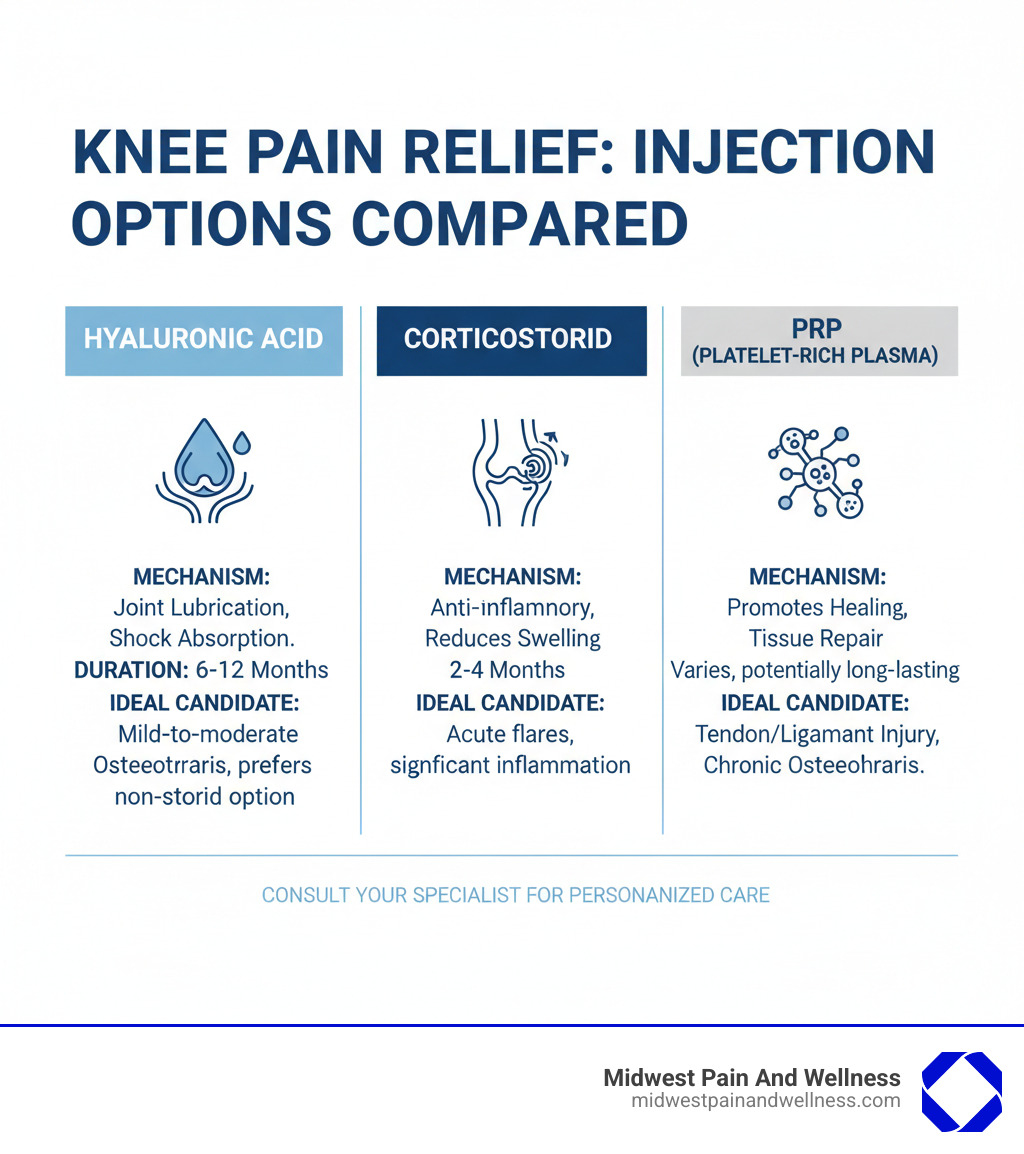
Hyaluronic acid injections work by restoring the natural lubricant your knee has lost, while also fighting inflammation. Think of it as refilling your knee’s oil reservoir. The mechanism focuses on supplementing your joint fluid and reducing inflammatory molecules. You can typically expect 6 to 12 months of relief, sometimes even longer. This treatment is ideal if you have mild to moderate osteoarthritis (Stage 2-3) and want to avoid surgery or can’t take NSAIDs.
Corticosteroid injections take a different approach—they’re powerful anti-inflammatory medications that quickly calm down an angry, inflamed joint. The relief can be dramatic but tends to be shorter-lived, usually lasting weeks to a few months. These work best for sudden flare-ups or more severe inflammation, though they’re not recommended for frequent, repeated use due to potential cartilage damage over time.
PRP (Platelet-Rich Plasma) injections use your body’s own healing factors. We draw a small amount of your blood, concentrate the platelets (which contain growth factors), and inject them into your knee to potentially stimulate healing and tissue regeneration. Relief can last 6 to 12 months or more, and it’s particularly appealing if you’re looking for a regenerative approach. However, PRP is still being studied and isn’t always covered by insurance.
Each of these treatments has its place in a comprehensive pain management plan. At Midwest Pain And Wellness, our double board-certified doctors use a multi-modal, interventional approach, which means we don’t just pick one treatment and call it a day. We collaborate with other practitioners and look at your whole situation—your activity level, your goals, your medical history—to create a custom care plan that makes sense for you. You can explore more about our full range of treatment options at our treatment procedures page.
The beauty of hyaluronic acid injections is that they address both the mechanical problem (lack of lubrication) and the inflammatory problem at the same time. They fit naturally into a long-term strategy because they’re safe to repeat, they don’t mask symptoms like opioids do, and they give you a window of relief to work on strengthening and lifestyle changes that support lasting improvement.
Who is a Good Candidate for Hyaluronic Acid Injection for Knee Pain in Chicago?
Not everyone needs hyaluronic acid injections, and that’s perfectly okay. These injections work best for specific situations, and being honest about who benefits most helps ensure you get the treatment that’s truly right for you.
You’re likely a good candidate for hyaluronic acid injection for knee pain chicago if you have mild to moderate osteoarthritis—typically classified as Stage 2 or Stage 3. This means you have noticeable cartilage breakdown and symptoms, but your joint hasn’t completely deteriorated. At this stage, viscosupplementation can still provide meaningful cushioning and lubrication because there’s enough joint structure left to benefit from it.
Another key factor is whether conservative treatments haven’t given you enough relief. If you’ve already tried physical therapy, activity modifications, weight management, bracing, and anti-inflammatory medications without adequate results, hyaluronic acid injections offer a logical next step. They bridge the gap between basic conservative care and major surgical intervention.
These injections are also excellent if you’re someone who’s actively trying to avoid or delay surgery. Maybe you’re not ready for knee replacement, or you’re too young for it to make sense long-term. Perhaps you have other health conditions that make surgery riskier. Hyaluronic acid injections can buy you valuable time—months or even years—while maintaining your quality of life and mobility.
Additionally, if you’re someone who cannot take NSAIDs due to stomach issues, kidney problems, heart conditions, or medication interactions, viscosupplementation provides pain relief without the systemic side effects of oral medications. The treatment stays localized right where you need it.
That said, hyaluronic acid injections may not be the best choice if you have severe, end-stage osteoarthritis with bone-on-bone contact and very little cartilage remaining. They also aren’t recommended if you have an active infection in or around the knee, or if you’re allergic to hyaluronic acid products (especially older avian-derived formulations if you have bird or egg allergies).
During your consultation at Midwest Pain And Wellness, we’ll thoroughly evaluate your condition, review your imaging, and discuss your goals to determine if this treatment aligns with what you’re hoping to achieve. We want you to feel confident and informed about every step of your care. Learn more about the comprehensive range of conditions we treat and how we tailor our approach at our conditions page.
How HA Compares to Other Options Offered at Midwest Pain And Wellness
At Midwest Pain And Wellness, we don’t believe in one-size-fits-all solutions. Your knee pain is unique to you, and your treatment should be too.
Hyaluronic acid injections shine particularly when your primary issues are lubrication loss and inflammation from osteoarthritis. They work mechanically by restoring the cushioning your joint needs, while simultaneously calming down inflammatory processes that contribute to pain. This dual action makes them especially valuable for patients who want sustained relief without constantly relying on medications.
But here’s what makes our approach different: we see hyaluronic acid as one tool in a comprehensive, non-surgical pain management toolkit. Sometimes it’s the perfect standalone treatment. Other times, it works best combined with other therapies. For example, some patients benefit from an initial corticosteroid injection to quickly calm severe inflammation, followed by hyaluronic acid for longer-lasting relief. Others might combine HA injections with physical therapy to maximize strength and function during their pain-free window.
We might also recommend regenerative treatments like PRP if your body needs an extra healing boost, or nerve blocks if there’s a significant nerve pain component. The key is that we’re not locked into any single approach—we’re interventional pain specialists who use current, evidence-based therapies and collaborate with other practitioners to build the right plan for you.
What ties everything together is our commitment to opioid-free pain management. We’re not interested in masking your pain with medications that come with dependency risks and don’t address underlying problems. Instead, we focus on targeted treatments that actually improve your joint environment and function, giving you real, lasting relief that lets you get back to living your life.
Choosing the right treatment comes down to understanding your specific condition, your lifestyle, your goals, and what your body responds to best. During your consultation, we’ll walk through all your options, explain how they work, discuss realistic expectations, and help you make an informed decision. Because at the end of the day, the “best” treatment isn’t the one that sounds most impressive—it’s the one that actually works for your knees and your life.