Understanding Targeted Pain Relief Through Medical Innovation
A nerve block is an injection of medication near specific nerves that interrupts pain signals traveling to your brain, providing targeted relief for both acute and chronic pain conditions.
Quick Answer: What You Need to Know About Nerve Blocks
- What it is: An injection of anesthetic and/or anti-inflammatory medication near a nerve or group of nerves
- How it works: Blocks pain signals from reaching your brain by numbing the targeted area
- Common uses: Post-surgical pain, chronic pain, arthritis, back pain, headaches
- Duration: Single-shot blocks last up to 24 hours; continuous catheters last 2-3 days; steroid injections can provide relief for weeks or months
- Safety: Very safe with serious complications occurring in less than 0.1% of cases
- Key benefit: Provides effective pain relief while reducing or eliminating the need for opioid medications
If you’re living with persistent pain that impacts your daily life, you’ve likely tried multiple treatments without finding lasting relief. Maybe you’re concerned about the risks of surgery or the side effects of long-term pain medications. Or perhaps you’re recovering from surgery and hoping to avoid opioids.
Nerve blocks offer a different approach. Instead of treating pain systemically throughout your entire body, they target the specific nerves sending pain signals. This means more effective relief with fewer side effects.
The procedure is minimally invasive, typically takes less than 10 minutes to administer, and can provide pain relief ranging from hours to months depending on the type. Modern techniques using ultrasound guidance have made nerve blocks safer and more precise than ever before, with nerve injury rates as low as 0.0037%.
Whether you’re dealing with chronic pain from arthritis, recovering from surgery, or seeking a diagnosis for unexplained pain, nerve blocks can be an important tool in your pain management strategy.
Understanding the Nerve Block Procedure
At Midwest Pain And Wellness, we understand that living with pain can be debilitating. That’s why we offer advanced, targeted solutions like nerve blocks to help you reclaim your life. But what exactly is a nerve block, and how does this clever little procedure work its magic?
What Is a Nerve Block and How Does It Work?
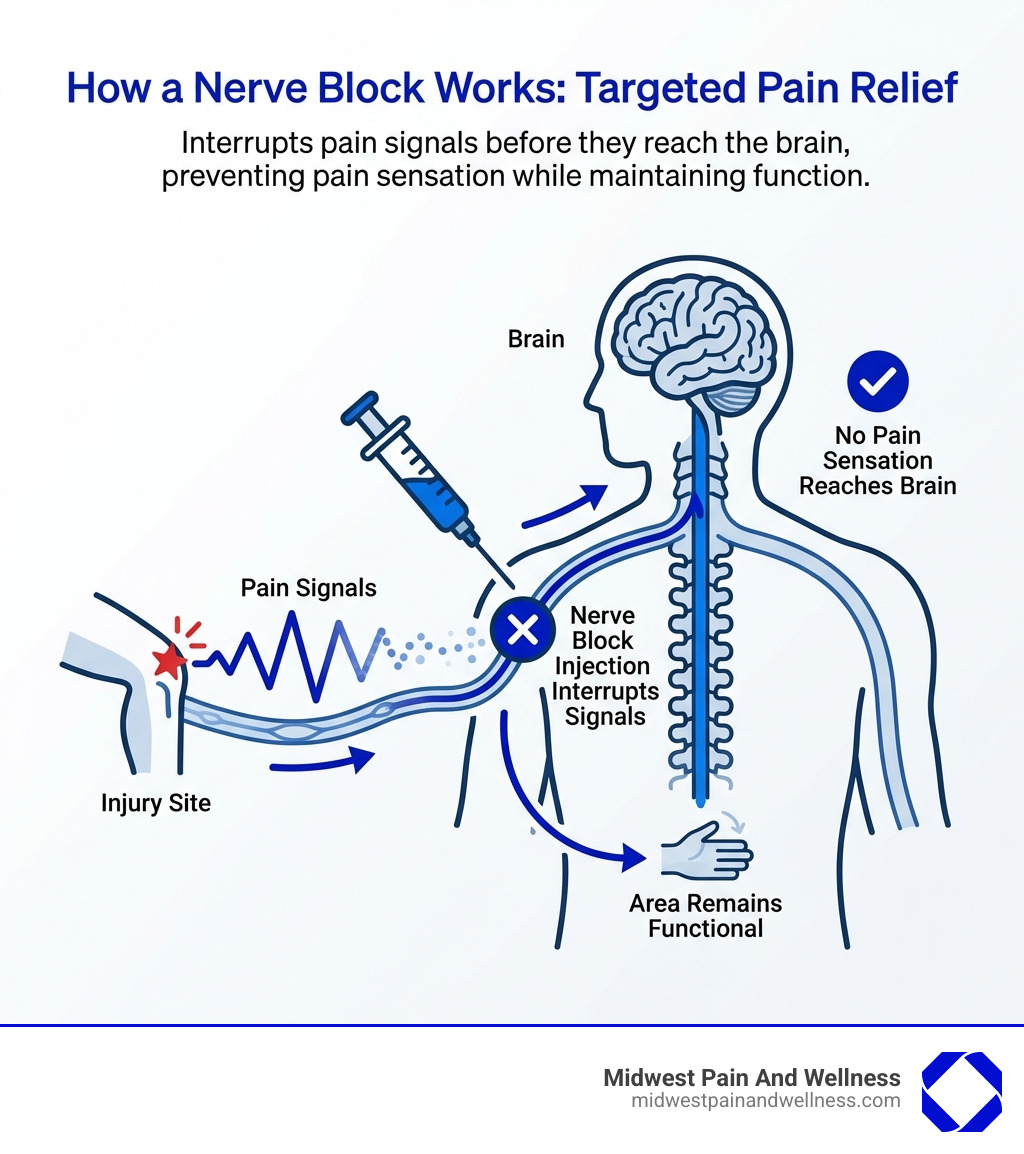
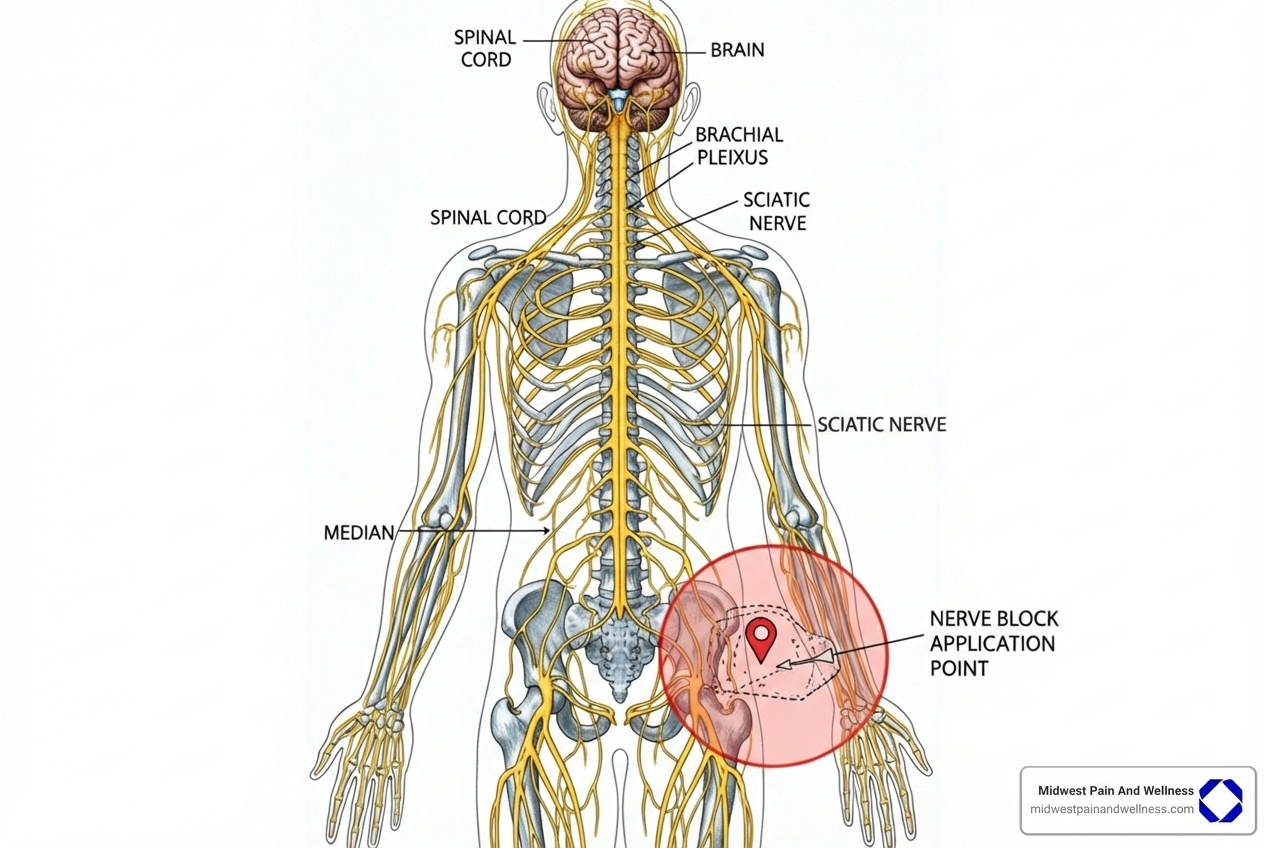
Imagine your body’s pain signals as tiny messages traveling along electrical wires (your nerves) to your brain. When you stub your toe, those “ouch!” messages zip right up to your brain, and you feel pain. A nerve block is like a temporary circuit breaker for those specific wires.
How does a nerve block work?
A nerve block works by introducing medication, typically a local anesthetic, near a specific nerve or group of nerves. This medication “bathes” the nerve, preventing it from transmitting electrical signals. When the nerve can’t send its pain messages, your brain doesn’t receive them, and you don’t feel the pain. In some cases, the medication might also include corticosteroids, which are powerful anti-inflammatory agents. These steroids help reduce inflammation around the nerve, allowing it to heal and potentially leading to longer-term pain reduction.
The fundamental mechanism behind local anesthetics involves blocking voltage-gated sodium channels in the nerve cells. These channels are crucial for generating and propagating electrical impulses (action potentials) along the nerve fiber. By blocking these channels, the local anesthetic effectively stops the nerve from “firing” and sending its signal. For more on this fascinating science, you can refer to Scientific research on the function of local anesthetics.
Nerve blocks aren’t just for pain relief; they can also serve as diagnostic tools. If a nerve block successfully relieves your pain, it helps your doctor pinpoint the exact nerve or group of nerves responsible for your discomfort. This diagnostic information is invaluable for planning further, more permanent treatments, if necessary. So, they can be both therapeutic (treating pain) and diagnostic (finding the source of pain).
Types of Nerve Blocks
There’s no one-size-fits-all approach to pain management, and nerve blocks is wonderfully diverse! We use various types, each custom to specific needs and pain conditions.
Nerve blocks can be broadly categorized in several ways:
- Surgical vs. Nonsurgical: Most commonly, when we talk about nerve blocks, we’re referring to nonsurgical procedures involving injections. However, in some severe cases, surgical options like neurectomy (cutting a nerve) or rhizotomy (damaging nerve roots) might be considered, though these are far less common due to the risk of more intense pain later. At Midwest Pain And Wellness, our focus is on comprehensive, opioid-free pain management using current therapies, primarily emphasizing nonsurgical, interventional approaches.
- Temporary vs. Long-lasting: The duration of relief depends heavily on the medication used and the type of nerve block.
- Temporary blocks: These typically use local anesthetics and provide relief for hours to days.
- Long-lasting blocks: When corticosteroids are included, the anti-inflammatory effects can provide relief for weeks or even months. Neurolytic blocks, which involve deliberately degenerating nerve fibers with chemicals or heat, can last for weeks, months, or indefinitely, but these are generally reserved for severe, chronic pain, often cancer-related.
- Single-Shot Injection vs. Continuous Catheter:
- Single-shot nerve block: This involves a single injection of medication. It may continue to provide pain relief for a few hours after surgery—up to 24 hours in some cases.
- Continuous catheter: For prolonged pain control, especially after surgery, a tiny plastic tube (catheter) can be placed next to the nerve. Medication is continuously delivered through this catheter, providing pain relief for 2-3 days, sometimes longer.
Here’s a list of some common nerve blocks we might use, depending on your condition:
- Peripheral Nerve Blocks: These target individual nerves or nerve bundles outside the spinal cord. Examples include:
- Femoral Nerve Block: Often used for hip, anterior thigh, and knee surgery pain.
- Interscalene Brachial Plexus Block: For shoulder, arm, and elbow surgery.
- Genicular Nerve Block: Specifically for chronic knee pain, often as a diagnostic step before radiofrequency ablation.
- Sciatic Nerve Block: For pain in the posterior thigh, lower leg, ankle, and foot.
- Erector Spinae Plane Block: Used for thoracic-related pain control, including breast surgery and rib fractures.
- Neuraxial Blocks: These involve injecting medication near the spinal cord.
- Epidural Block: Commonly used for labor pain or certain spinal conditions.
- Spinal Block: Used for surgery involving the lower abdomen, pelvis, and lower extremities.
We carefully select the most appropriate nerve block for your unique situation, always aiming for the most effective and least invasive solution.
The Benefits and Applications of Nerve Blocks
At Midwest Pain And Wellness, we’ve seen how nerve blocks can be a game-changer for individuals struggling with various forms of pain. These procedures offer a strategic advantage by targeting pain at its source, providing benefits that often surpass traditional pain management methods.
Common Uses for Pain Management and Surgery
Nerve blocks are incredibly versatile tools in our comprehensive pain management arsenal. They are employed for a wide array of conditions, providing both immediate relief and a pathway to long-term recovery.
- Post-Surgical Pain: One of the most significant applications of nerve blocks is in managing pain after surgery. By administering a nerve block before or during a procedure, we can significantly reduce postoperative pain, allowing for a more comfortable and faster recovery. This is particularly beneficial for orthopedic surgeries like hip and knee replacements or shoulder surgeries.
- Chronic Pain Conditions: For those battling persistent pain, nerve blocks can offer much-needed respite. They are effective in treating:
- Back Pain and Neck Pain: Often stemming from nerve compression or inflammation along the spine.
- Headaches and Migraines: Including occipital neuralgia, where specific nerve blocks can alleviate severe head pain.
- Arthritis: Especially in joints like the knee, where genicular nerve blocks can target the nerves transmitting pain signals from the arthritic joint.
- Complex Regional Pain Syndrome (CRPS): A chronic pain condition often involving nerve dysfunction.
- Cancer-Related Pain: For patients enduring severe pain from cancer, neurolytic blocks can provide sustained relief when other treatments fall short.
- Entrapment Neuropathies: Where nerves are compressed, causing pain and dysfunction.
- Diagnostic Purposes: As we mentioned earlier, nerve blocks can also be diagnostic. If we suspect a particular nerve is the source of your pain, a temporary nerve block can confirm this. If the pain subsides after the block, we know we’ve found the culprit, guiding us toward more definitive treatments.
Nerve blocks can offer immediate and longer-term pain relief, reduce irritation to nerves allowing them to heal, and help people with chronic pain function better in their daily lives. This means getting back to work, enjoying hobbies, and performing daily tasks with greater ease. For more insights into comprehensive pain treatment strategies, you can explore resources like More on comprehensive pain treatment.
A Key Tool in Reducing Opioid Use
One of the most profound benefits of nerve blocks aligns perfectly with our philosophy at Midwest Pain And Wellness: providing comprehensive, opioid-free pain management.
Nerve blocks are a powerful opioid-sparing strategy. By effectively controlling acute pain, especially after surgery, they significantly reduce or even eliminate the need for opioid medications. This is crucial for several reasons:
- Reduced Opioid Side Effects: Opioids come with a host of unpleasant side effects, including nausea, constipation, sedation, and respiratory depression. By using a nerve block, we can help you avoid these side effects, leading to a more comfortable recovery.
- Lower Addiction Risk: The opioid crisis is a serious concern, and we are committed to minimizing the risk of addiction for our patients. Nerve blocks provide robust pain control without the addictive properties of narcotics, offering a safer alternative for managing severe pain.
- Improved Postoperative Experience: Patients who receive nerve blocks often report better overall pain control than those relying solely on intravenous or oral pain medications. This improved pain control allows for earlier mobilization, faster participation in physical therapy, and a quicker return to normal activities.
Indeed, nerve blocks play a vital role in modern pain management, offering a pathway to effective relief while limiting reliance on opioid medications. Research consistently highlights the benefits of nerve blocks in managing postoperative pain, as detailed in studies like Research on nerve blocks for postoperative pain. This approach is central to our mission to provide long-term, sustainable pain relief for our patients in Chicago Ridge, Illinois, and surrounding areas.
What to Expect: From Preparation to Recovery
Understanding the journey from considering a nerve block to experiencing its relief can help ease any anxieties you might have. At Midwest Pain And Wellness, we prioritize clear communication and patient comfort every step of the way.
Preparing for Your Nerve Block
Proper preparation is key to a smooth and successful nerve block procedure. Our team will guide you through all necessary steps, but here’s a general overview of what to expect:
- Medical History Review: Before recommending a nerve block, we conduct a thorough review of your medical history. This helps us understand your overall health, any existing conditions, and previous experiences with medications or anesthesia.
- Medication Adjustments: It’s crucial to inform us about all medications you are currently taking, especially blood thinners (anticoagulants). We may advise you to temporarily stop certain medications, like blood thinners, a few days before the procedure to minimize the risk of bleeding. Never stop any prescribed medication without consulting your doctor first.
- Fasting Instructions: If we decide that sedation is appropriate for your procedure, you will likely need to fast for six to eight hours beforehand. This means no food or drink (not even water!) to ensure your safety during sedation.
- Arranging Transportation: If you receive sedation, you will not be able to drive yourself home. Please arrange for a responsible adult to pick you up and stay with you for a few hours after the procedure.
- Other Considerations: We might ask you to wear loose, comfortable clothing, leave jewelry at home, and use the restroom before the procedure. If there’s any possibility you are pregnant, please inform us immediately.
We believe an informed patient is an empowered patient. Don’t hesitate to ask us any questions you have about the preparation process.
During and Immediately After the Procedure
The actual nerve block procedure is typically quick and performed in an outpatient setting here at our Chicago Ridge clinic.
During the Procedure:
- Procedure Time: The administration of the nerve block itself usually takes less than 10 minutes, though the entire process from preparation to post-procedure observation might take 15-45 minutes until the medication takes full effect.
- Patient Positioning: You’ll be comfortably positioned on an exam table, either on your stomach, back, or side, depending on the specific nerve being targeted.
- Skin Sterilization: The injection site will be thoroughly cleaned with an antiseptic solution to prevent infection.
- Sedation Options: While some patients remain fully awake, we often offer a mild sedative to help you relax and feel more comfortable during the procedure. The injection site will also be numbed with a local anesthetic before the main injection.
- Injection Process: Using advanced imaging guidance (which we’ll discuss more below), our double board-certified doctors will carefully insert a thin needle to deliver the medication precisely around the targeted nerve. You might feel a brief “pinch” or pressure, but significant pain is rare, especially with local numbing and sedation. If you feel a sudden jolt of pain, it’s important to let us know, as this might indicate the needle is too close to a major nerve and needs slight repositioning.
Immediately After the Procedure:
- Post-Procedure Monitoring: After the injection, you will rest comfortably for 15 to 30 minutes in our observation area. Our team will monitor you closely for any unexpected side effects or reactions.
- Numbness and Weakness: It’s normal to experience numbness, tingling, and possibly some temporary weakness or heaviness in the area affected by the nerve block. This is a sign that the medication is working! This sensation can last for several hours. We’ll advise you on how to manage this temporary change in sensation and movement. For example, if you’ve had a block in your leg, we’ll ensure you don’t try to bear weight until the sensation returns.
How Long Does a Nerve Block Last and What’s Next?
The duration of pain relief from a nerve block varies significantly based on the type of block, the medications used, and your individual response.
- Single-Shot Duration: If you have a single-shot nerve block, it may continue to provide pain relief for a few hours after surgery—up to 24 hours in some cases. This is typically due to the local anesthetic.
- Continuous Catheter Duration: For more prolonged relief, medication continuously delivered through a tiny plastic tube (nerve catheter) placed next to the nerve can last for 2-3 days.
- Steroid Injection Duration: If corticosteroids were part of the injection, they are slower acting but longer lasting. You might experience initial relief from the anesthetic, followed by a period where some pain returns before the steroids kick in. Once they do, they can provide relief for weeks or even months by reducing inflammation around the nerve.
What happens when they wear off?
As the nerve block wears off, sensation will gradually return to the treated area. This might feel like a tingling or “pins and needles” sensation. It’s important to start taking your prescribed oral pain medications as directed by our team before the block fully wears off. This proactive approach helps manage any returning pain effectively and prevents it from becoming severe. We’ll provide you with a clear plan for managing your pain as the block dissipates, ensuring your comfort and continued recovery.
Safety, Risks, and Candidacy for a Nerve Block
Your safety is our utmost priority at Midwest Pain And Wellness. We employ the most advanced techniques and adhere to strict protocols to ensure that your nerve block procedure is as safe and effective as possible.
The Role of Imaging in Ensuring a Safe Nerve Block
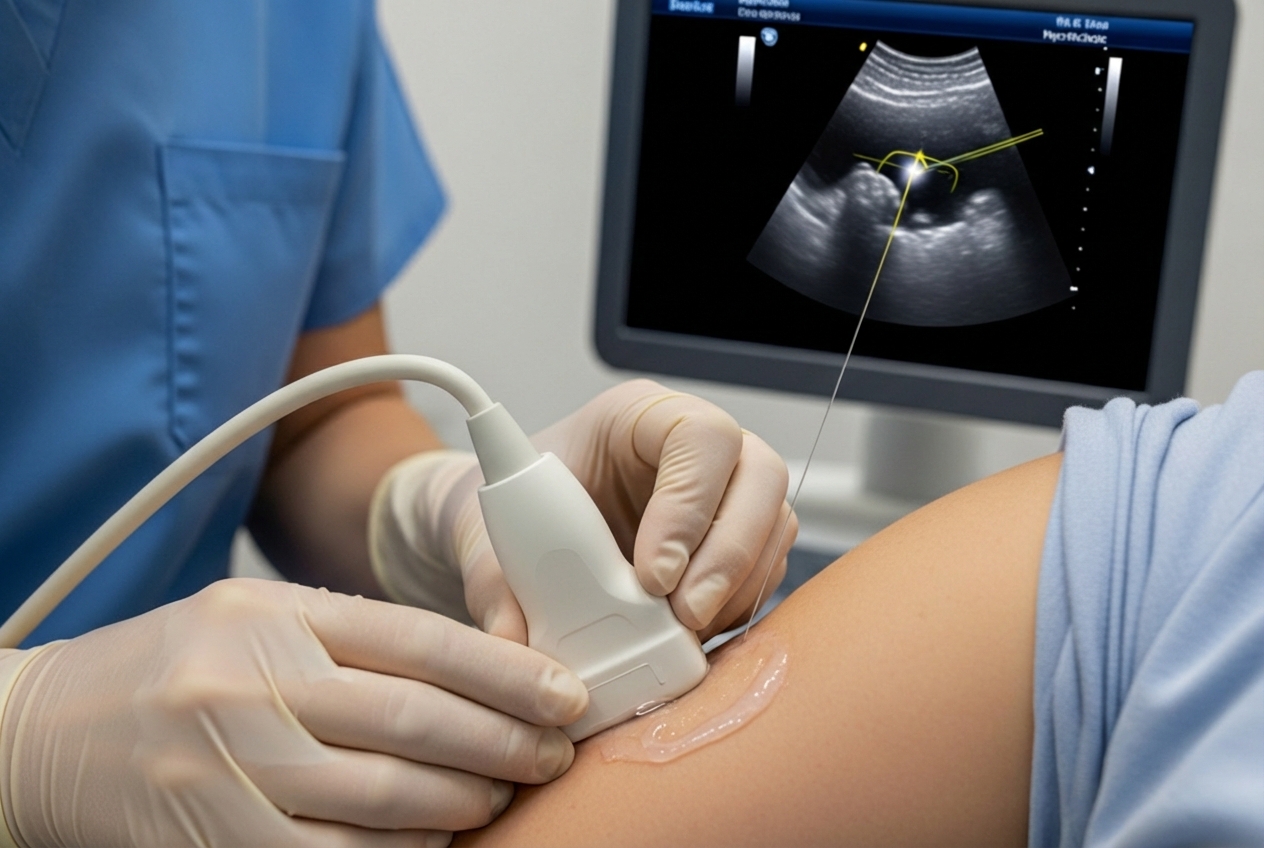
Gone are the days when nerve blocks relied solely on anatomical landmarks and subjective patient feedback. Modern pain management techniques, especially those we use in Chicago Ridge, Illinois, heavily depend on real-time imaging guidance.
- Ultrasound Guidance: This is our go-to method for many nerve block procedures. An ultrasound machine allows us to visualize the nerves, surrounding tissues, blood vessels, and the needle in real-time. This precision ensures that the medication is delivered exactly where it needs to be, maximizing effectiveness and minimizing risks. The use of ultrasound lowers the risk of nerve injury significantly, to as low as 0.0037%. A comprehensive Systematic review of ultrasound guidance further supports its benefits.
- Fluoroscopy (X-ray Guidance): For certain types of nerve blocks, particularly those targeting structures deep within the spine, we use fluoroscopy. This provides live X-ray images, helping us guide the needle accurately to the intended spot.
- CT Guidance: In complex cases, or for very specific nerve targets, a CT scan might be used to precisely plan and guide the needle placement.
Needle placement accuracy is paramount. By using these imaging modalities, we can avoid inadvertently puncturing blood vessels or other nerves, reducing the risk of complications and ensuring the safety of your procedure.
Potential Risks and Side Effects
While nerve blocks are generally considered very safe, like any medical procedure, they do carry some potential risks and side effects. We believe in transparency and will discuss these thoroughly with you during your consultation.
Common Side Effects (usually mild and temporary):
- Soreness or Bruising: You might experience some tenderness, soreness, or a small bruise at the injection site. This typically resolves within a few days.
- Temporary Numbness or Weakness: As the local anesthetic wears off, you’ll regain full sensation and muscle control. This is an expected part of the block’s effect.
Rare Complications (less than 0.1%):
- Infection: Although we use sterile techniques, there’s always a small risk of infection at the injection site.
- Bleeding: While rare, significant bleeding can occur, especially if you are on blood thinners. This is why we carefully review your medications beforehand.
- Allergic Reaction: An allergic reaction to the anesthetic or other medications used is possible but uncommon.
- Nerve Injury: Nerve injury is a rare side effect, occurring roughly 0.03–0.2% of the time. If it happens, it is temporary in most cases, and very rarely becomes permanent. Modern imaging guidance greatly reduces this risk.
- Local Anesthetic Systemic Toxicity (LAST): This occurs when the local anesthetic enters the bloodstream in high concentrations, potentially causing symptoms like numbness around the mouth, metallic taste, ringing in the ears, seizures, or, in very severe cases, cardiac issues. Our careful technique, aspiration before injection, and immediate availability of emergency medications (like lipid emulsion) are crucial safeguards against this.
- Unexpected Spread of Medication: Sometimes, the medication can spread to adjacent nerves, causing temporary numbness or weakness in an unintended area.
We continuously monitor you during and after the procedure to quickly identify and address any complications, ensuring your well-being.
Who Might Not Be a Good Candidate?
While nerve blocks are a fantastic option for many, they aren’t suitable for everyone. We carefully evaluate each patient to determine if a nerve block is the right choice for their specific situation. You might not be a good candidate if you have:
- Active Infection: An infection at the injection site or a systemic infection can increase the risk of spreading the infection to the nerve or surrounding tissues.
- Allergy to Anesthetic: If you have a known allergy to local anesthetics or any other medication used in the block, we would explore alternative pain management strategies.
- Bleeding Disorders or Anticoagulant Use: Patients with bleeding disorders or those taking certain blood-thinning medications may have an increased risk of bleeding at the injection site. We will assess this risk and may require temporary cessation of these medications.
- Patient Refusal: The decision is yours. While we might strongly recommend a nerve block due to its benefits, you always have the right to refuse the procedure after being fully informed of your options.
- Preexisting Neural Problems: If you have significant neurological deficits in the area where the block would be administered, we might reconsider to avoid exacerbating the condition or masking new symptoms.
Our double board-certified doctors at Midwest Pain And Wellness will conduct a thorough assessment to determine your eligibility and ensure the safest, most effective treatment plan for your pain in Chicago Ridge, Illinois.
Conclusion: Your Next Step Towards Pain Relief
Living with pain can feel like an uphill battle, but it doesn’t have to define your life. At Midwest Pain And Wellness, we are dedicated to providing you with innovative, targeted solutions that offer real relief. Nerve blocks stand out as a powerful tool in our comprehensive, opioid-free approach to pain management.
Throughout this guide, we’ve explored how nerve blocks work by precisely interrupting pain signals, offering a targeted approach that minimizes systemic side effects. We’ve seen the diverse types available, from temporary single-shot injections for immediate post-surgical comfort to longer-lasting steroid blocks that can provide weeks or months of relief.
The benefits are clear: effective pain relief for a wide range of acute and chronic conditions, from back pain and arthritis to post-surgical recovery. Crucially, nerve blocks are a key strategy in reducing reliance on opioid medications, helping you avoid their side effects and addiction risks. With modern imaging guidance like ultrasound, these procedures are safer and more precise than ever, with serious complications being exceptionally rare.
If you’re in Chicago Ridge, Illinois, or the surrounding areas, and you’re seeking a solution that targets your pain directly, reduces your need for opioids, and helps you get back to living your life, a nerve block might be your next step. Our double board-certified doctors are here to assess your unique situation, answer your questions, and design a custom care plan custom to your needs.
Don’t let pain hold you back any longer. Find how targeted pain relief can transform your well-being.