Why Living Pain-Free Without Opioids Matters More Than Ever
Opioid-free pain management offers effective relief through non-opioid medications, physical therapy, injections, and mind-body practices—without the risks of addiction or overdose that come with opioid use.
Key Options for Opioid-Free Pain Relief:
- Non-opioid medications: NSAIDs, acetaminophen, anticonvulsants, antidepressants
- Physical interventions: Physical therapy, acupuncture, massage therapy
- Mind-body practices: Cognitive behavioral therapy, meditation, yoga
- Advanced procedures: Nerve blocks, spinal cord stimulation, radiofrequency ablation
- New treatments: First-in-class medications like suzetrigine (Journavx)
If you’re among the 100 million Americans with chronic pain, you know the weight of difficult choices. For decades, opioids were a primary solution. But the opioid crisis—which cost the U.S. $1.5 trillion in 2020 alone—has shown us there’s a better way.
Research now confirms that nonopioid therapies are at least as effective as opioids for many types of acute pain, and they are the preferred option for chronic pain.
This isn’t about settling for less relief. It’s about choosing treatments that work without the risks of addiction, respiratory depression, and other side effects of long-term opioid use. Whether you’re recovering from surgery or managing chronic pain, this guide will walk you through what’s available and how to build a plan that puts you back in control.
Why Choose an Opioid-Free Path?
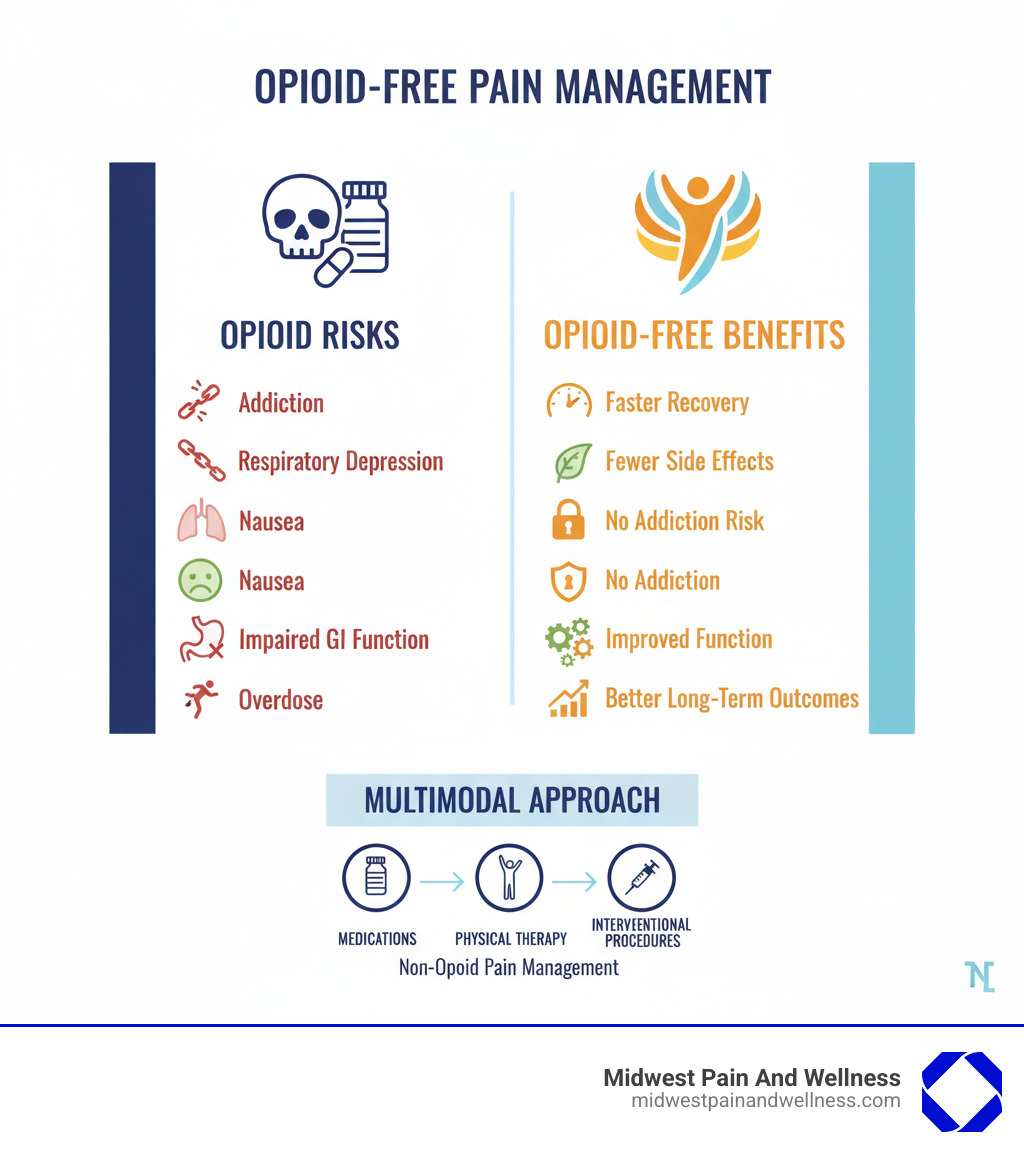
Choosing an opioid-free pain management approach is a smarter, safer, and often more effective path to lasting comfort. The reasons are clear when comparing the serious risks of opioids to the many benefits of alternatives.
The Dangers of Opioid-Based Pain Management
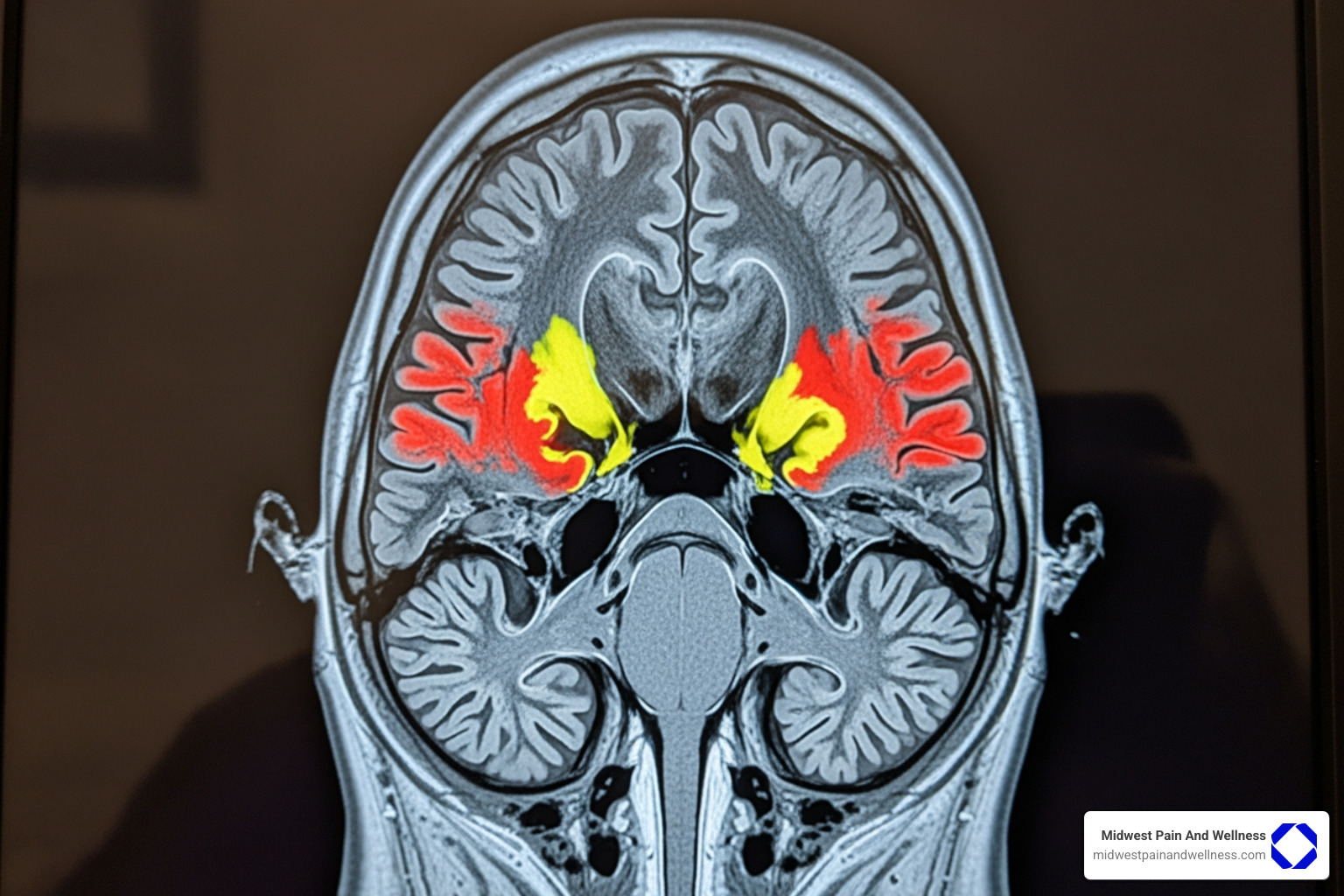
While opioids can offer strong pain relief, they come with a long list of serious risks. They work by slowing down your central nervous system, which can lead to life-threatening respiratory depression (slowed breathing). They also carry a high risk of addiction and dependency. Opioids can change your brain’s reward system, and the body can become physically reliant, leading to withdrawal. You can learn more about these changes in the brain that contribute to addiction.
The potential for overdose is a tragic reality of the opioid crisis, which has caused hundreds of thousands of deaths and cost the U.S. an estimated $1.5 trillion in 2020 alone.
Beyond these severe risks, opioids often cause side effects that impair quality of life, such as severe constipation, drowsiness, and mental fogginess. For surgical patients, opioids can cause postoperative complications like nausea, vomiting, and impaired GI function. Studies show that patients receiving opioid-based anesthesia often use more pain medicine later and take longer to recover.
The Advantages of a Non-Opioid Approach
Opioid-free pain management offers numerous benefits that lead to better overall health and a higher quality of life.
A major advantage is reduced side effects. Avoiding opioids eliminates the risk of slowed breathing, severe constipation, and mental fogginess. Perhaps the most significant benefit is the lower risk of dependency and addiction, which allows you to focus on healing without the worry of substance dependence.
Non-opioid therapies are remarkably effective for many pain types. For many kinds of acute pain, they work just as well as opioids. For subacute and chronic pain, they are the preferred and recommended choice.
This approach often leads to better functional outcomes. Without opioid side effects, you can participate more fully in physical therapy and rehabilitation. This often means faster recovery, improved movement, and better long-term results. Choosing an opioid-free path also promotes patient empowerment, as you make informed decisions about your health in partnership with your care team. The CDC strongly recommends nonopioid therapies because they are both effective and much safer.
At Midwest Pain And Wellness, we are dedicated to helping you find lasting relief through these safer, more effective strategies.
A Spectrum of Opioid-Free Pain Management Therapies
Pain is rarely simple, and neither are the solutions. That’s why we’re passionate about a multimodal approach to opioid-free pain management. This means combining different therapies that work together, each targeting pain from a different angle, to provide more comprehensive relief than any single treatment could.
Your pain is unique, and your treatment plan should be too. We look at your specific condition, lifestyle, and goals to build a plan that makes sense for you.
Pharmacological Approaches to Opioid-Free Pain Management
When medications are part of your plan, we focus on options that deliver relief without the risks of opioids.
- Nonsteroidal Anti-Inflammatory Drugs (NSAIDs) like ibuprofen (Advil®) and naproxen (Aleve®) reduce inflammation. They’re helpful for arthritis, sprains, and post-surgical pain. Long-term use requires monitoring for potential kidney or heart effects. You can learn more about how NSAIDs work here.
- Acetaminophen (Tylenol®) dulls pain and reduces fever. It’s often used with NSAIDs for greater effect.
- Anticonvulsants like gabapentin and pregabalin are invaluable for calming overactive nerves that cause shooting or burning pain.
- Antidepressants, specifically TCAs and SNRIs, affect brain chemicals involved in pain perception, making them helpful for chronic conditions like fibromyalgia.
- Topical agents like lidocaine patches or capsaicin creams deliver targeted relief with minimal side effects.
- Muscle relaxants can offer short-term relief for muscle spasms that contribute to pain.
At Midwest Pain And Wellness, medication management is just one piece of your comprehensive care plan.
The Power of Non-Pharmacological and Interventional Therapies
Beyond medications, we have an array of therapies that can provide powerful, lasting relief.
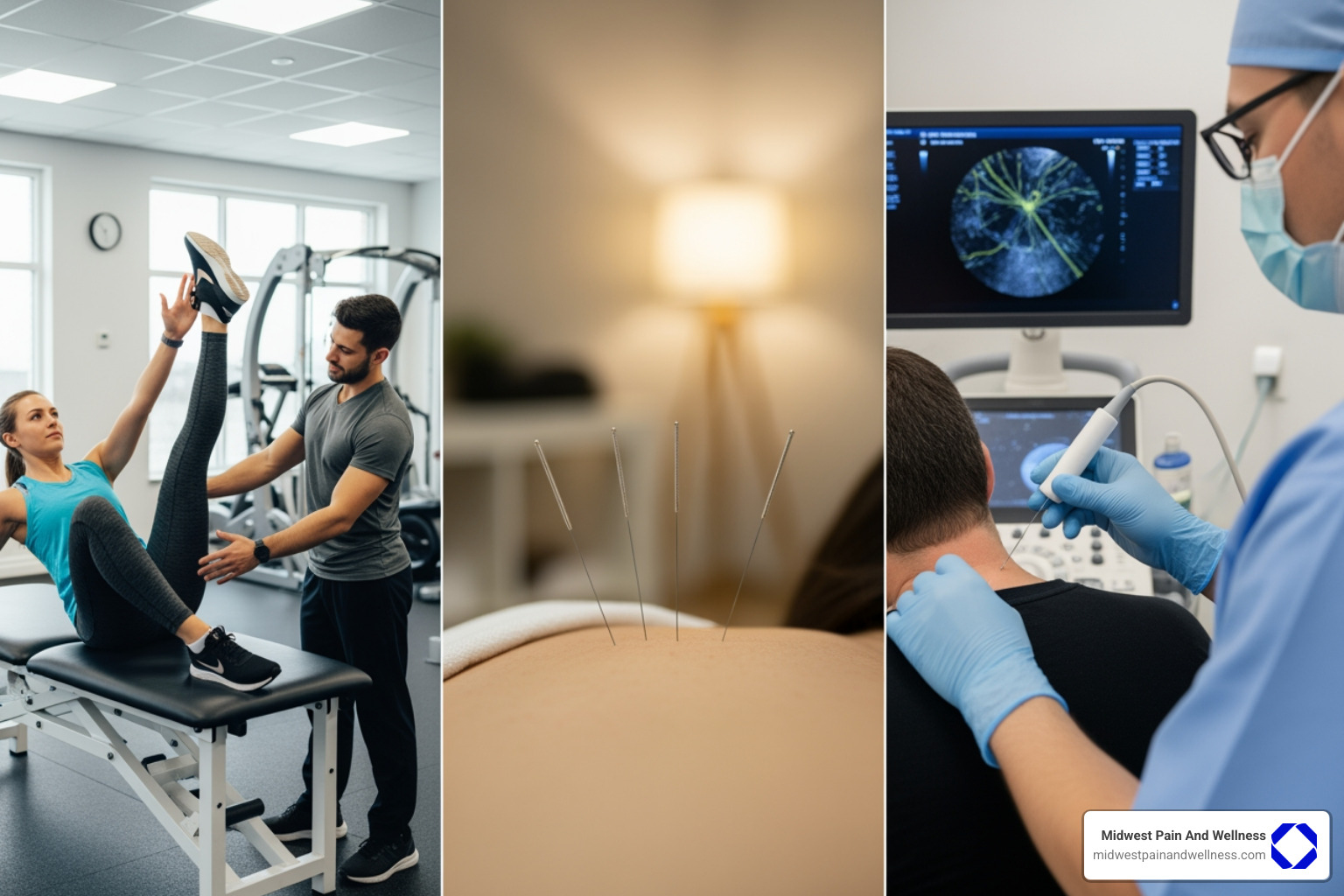
- Physical therapy is fundamental for building strength, improving flexibility, and correcting posture.
- Acupuncture uses thin needles to interrupt pain signals, reduce inflammation, and trigger the body’s natural pain-fighting systems.
- Massage therapy reduces muscle tension, improves blood flow, and eases pain in soft tissues.
- Mind-body practices like yoga and meditation reduce stress and change how the nervous system processes pain.
- Cognitive Behavioral Therapy (CBT) teaches practical strategies to identify and change thought patterns that worsen pain.
- Spinal Cord Stimulator Therapy uses a small device to deliver gentle electrical pulses to the spinal cord, interrupting pain signals. We offer Spinal Cord Stimulator Therapy right here in Chicago Ridge.
- Peripheral Nerve Stimulation works similarly but targets specific nerves outside the spinal cord for localized chronic pain. Learn more about Peripheral Nerve Stimulation for chronic pain.
- Regenerative Therapy uses your body’s own healing abilities. Platelet-Rich Plasma (PRP) therapy uses concentrated platelets to accelerate healing, while cell-based therapies can repair and regenerate injured areas. Find more about Regenerative Therapy options in Chicago Ridge.
- The Minimally Invasive Lumbar Decompression (MILD) procedure can be remarkably effective for lumbar spinal stenosis. Through a tiny incision, we remove small pieces of bone and ligament that are compressing nerves. Learn about the MILD procedure we perform.
- Injections and nerve blocks deliver medication directly where it’s needed. These include epidural steroid injections, joint injections, and radiofrequency ablation, which can provide months of relief.
Comparing Treatments for Acute vs. Chronic Pain
Understanding your pain type helps us choose the right opioid-free pain management strategies.
For acute pain (sudden, from injury or surgery), we focus on managing discomfort while your body heals. This often involves rest, ice/heat, short-term physical therapy, and medications like NSAIDs or acetaminophen.
Chronic pain (lasting three months or more) requires a long-term, multi-faceted approach to reduce pain and improve function. This usually means long-term exercise therapy, mind-body practices, and CBT. We might use anticonvulsants or antidepressants that work on chronic pain pathways. For stubborn pain, interventional procedures like injections, nerve blocks, radiofrequency ablation, or spinal cord stimulation become game-changers. We treat a comprehensive range of conditions using these advanced approaches.
The Future is Now: Innovations in Non-Opioid Treatments
The landscape of opioid-free pain management is changing faster than ever, driven by a better understanding of pain and a desperate need for safer alternatives. The U.S. pain therapeutics market was valued at $17.2 billion in 2023 and is projected to grow, reflecting real breakthroughs in how we treat pain.

How New Medications Like Suzetrigine (Journavx) Are Changing the Game
In January 2025, the FDA approved suzetrigine (brand name Journavx), the first drug in a new class of pain medications and the first novel non-opioid painkiller approved in over two decades. This is a major step forward for patients.
Unlike opioids that affect the entire central nervous system, Journavx is a precision tool. It selectively targets a specific sodium channel called Nav1.8, which is found almost exclusively in the nerve cells that transmit pain signals. By blocking these channels, Journavx stops pain at the source without causing respiratory depression, mental fog, or activating addiction pathways.
The FDA approval came with multiple fast-track designations, signaling its importance. Clinical trials showed no signs of addiction risk, with generally mild side effects. Currently, Journavx is approved for moderate to severe acute pain, such as after surgery. While more expensive than older opioids, the freedom from addiction risk and serious side effects is a significant benefit for many patients.
What’s on the Horizon for Pain Relief?
Journavx is just the beginning. Its manufacturer is already running clinical trials for diabetic nerve pain and sciatica, and other companies are developing similar drugs. Interventional technologies like spinal cord stimulators are also becoming more sophisticated.
Perhaps most exciting is the move toward personalized medicine. As we better understand individual pain mechanisms, we can tailor treatments with unprecedented precision. At Midwest Pain And Wellness, we stay at the forefront of these innovations, incorporating new evidence-based treatments as they become available. The future of pain relief is about finding effective, personalized solutions that let you live fully.
Creating Your Personalized Pain Management Plan
Pain relief isn’t something we do to you—it’s something we create with you. At Midwest Pain And Wellness, we believe the best opioid-free pain management plans are built on partnership. You are the expert on your pain, and we bring the medical expertise to help you find relief.
Building Your Collaborative Opioid-Free Pain Management Plan
Creating a plan that works starts with understanding you. Here’s our approach:
- Finding the right specialist is your first step. Our double board-certified doctors at Midwest Pain And Wellness in Chicago Ridge, Illinois, specialize in opioid-free pain management.
- Your comprehensive evaluation includes your medical history, lifestyle, and mental health to see the full picture of your pain.
- We discuss your goals—what does “better” look like for you?—and design a treatment plan around those personal priorities.
- We ensure you understand your diagnosis in plain English, so you can be a confident partner in your care.
- A multi-modal approach is key to success. We combine therapies like non-opioid medications, physical therapy, and interventional procedures to target pain from multiple angles.
- Regular follow-ups are essential. These check-ins let us monitor your progress and fine-tune your therapies as your needs change.
Overcoming Barriers to Access
We know that wanting relief and getting it can feel like two different things. Here are some common barriers and how we can help:
- Cost and Insurance: Cost is a real concern, and insurance coverage can be frustrating. We are transparent about costs and work to find effective solutions that fit your financial reality. We encourage you to check with your insurance provider, and our team can help you understand your plan. You can also find information on our Frequently Asked Questions page.
- Finding Qualified Providers: It isn’t always easy to find providers who specialize in opioid-free pain management. Our doctors are specifically trained in modern, interventional approaches and offer them right here in Chicago Ridge.
- Access to Care: We understand that getting to appointments can be a challenge due to mobility, transportation, or distance. Our staff works to accommodate your scheduling needs.
- Advocating for Your Care: You have the right to advocate for yourself. Don’t be afraid to ask questions or voice concerns. We’re here to listen and partner with you to overcome any obstacles to the relief you deserve.
Frequently Asked Questions about Opioid-Free Pain Management
It’s normal to have questions when exploring new ways to manage pain. Here are some of the most common things people ask us about opioid-free pain management:
Are non-opioid therapies as effective as opioids?
Yes. For many types of acute pain, such as low back pain or dental pain, evidence shows that non-opioid therapies are at least as effective as opioids. For subacute and chronic pain, they are the preferred option. They can improve your pain and help you regain function without the serious risks of addiction, slowed breathing, or other side effects associated with long-term opioid use.
Who is the best candidate for an opioid-free approach?
A wide range of people can benefit from opioid-free pain management. You might be an excellent candidate if you have a history of substance use disorder, suffer from respiratory conditions like COPD, are undergoing surgery, are dealing with chronic pain, or simply prefer to avoid the potential side effects of opioids.
Can I switch from opioids to a non-opioid treatment?
Yes, switching is possible, but it requires close medical supervision to avoid severe withdrawal symptoms. Your pain specialist will create a personalized tapering plan, gradually reducing your opioid dosage over time. As we reduce your opioid intake, we will introduce and fine-tune non-opioid medications and interventional procedures, such as spinal cord stimulators or nerve blocks, alongside therapies like physical therapy. A dedicated partnership with your pain management team is crucial for a successful transition to an opioid-free life.
Take Control of Your Pain, Without Opioids
You’re ready to take charge of your pain in a new way. Choosing opioid-free pain management isn’t about settling for less relief—it’s about choosing better, safer relief. It’s about a life where you are in control, not your pain.
The evidence is clear: a multi-modal, personalized plan that combines non-opioid medications, interventional procedures, and physical therapies offers faster recovery, fewer side effects, and better long-term outcomes than relying on opioids alone.
At Midwest Pain And Wellness, our double board-certified doctors partner with you to create a custom care plan. We use a multi-modal, interventional approach, combining the latest non-opioid treatments with advanced procedures like spinal cord stimulation and regenerative therapy. Long-term relief is happening every day for our patients in Chicago Ridge, Illinois.
Ready to start your journey toward lasting, opioid-free pain management? Explore our comprehensive treatment procedures and find which options might be right for you. Your pain-free future is waiting, and we’re here to help you reach it.