Why Opioid-Free Pain Management is Changing Lives
Opioid free pain management provides effective relief through non-addictive medications, physical therapies, behavioral techniques, and interventional procedures—without the risks of addiction, overdose, or dangerous side effects linked to opioid medications.
Quick Overview of Non-Opioid Pain Relief Options:
- Medications: NSAIDs, acetaminophen, antidepressants, anticonvulsants, topical agents
- Physical Therapies: Exercise, physical therapy, manual therapies, acupuncture, massage
- Behavioral Approaches: Cognitive behavioral therapy, mindfulness, stress reduction
- Interventional Procedures: Nerve blocks, injections, radiofrequency ablation, spinal cord stimulation
- Emerging Treatments: First-in-class medications like suzetrigine (Journavx)
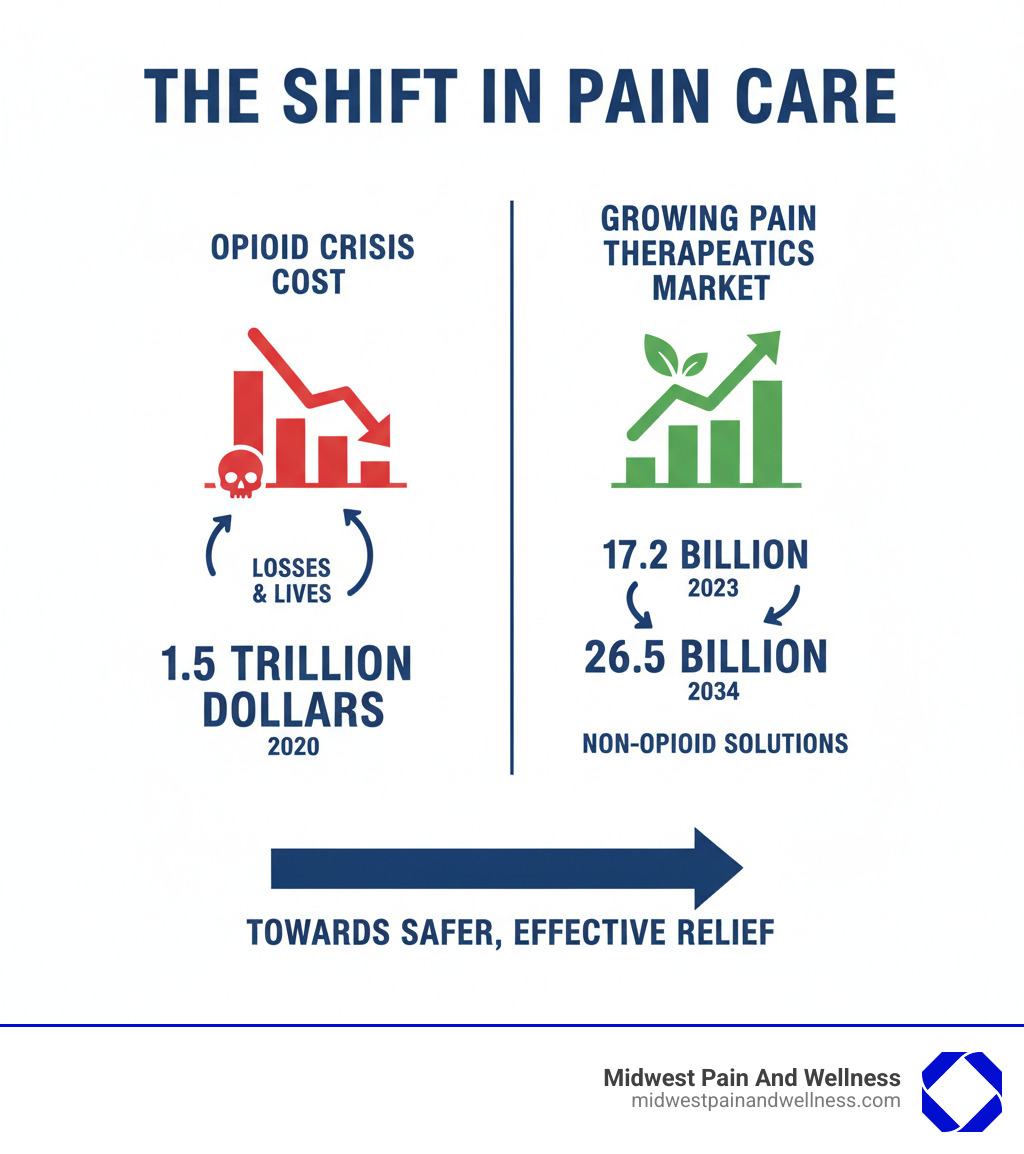
If you’re one of the 100 million Americans with chronic pain, you know the dangers of the opioid crisis, which cost the U.S. $1.5 trillion in 2020 alone. The encouraging truth is that research shows nonopioid therapies are at least as effective as opioids for many types of pain, with better long-term outcomes and fewer risks.
The landscape of pain management is shifting. The 2022 CDC Clinical Practice Guideline now recommends maximizing nonopioid therapies. This move toward safer treatments is driving growth in the U.S. pain therapeutics market, expected to reach $26.5 billion by 2034.
This is a smarter, comprehensive approach to pain relief that addresses the physical, psychological, and social factors of your pain. Known as the biopsychosocial model, it focuses on improving your function and quality of life, not just masking symptoms. Whether you’re recovering from surgery or managing chronic pain, an effective opioid-free path is available.
Understanding the Shift: Why Opioid-Free is the Future of Pain Care
Opioid free pain management is any approach to relieving pain that doesn’t involve opioid medications. At Midwest Pain And Wellness, our mission is to help you find lasting relief and get back to your life using safer, effective alternatives.
The shift away from opioids is a response to the opioid crisis and a deeper understanding of pain. Pain isn’t just a physical signal; it’s influenced by your emotions, stress, and sleep. The CDC’s 2022 Clinical Practice Guideline reflects this, urging doctors to maximize non-opioid therapies. Research shows these approaches work just as well—and often better—for long-term results. You can explore more in the CDC guidelines on nonopioid therapies.
The Dangers of Opioid Medications
Opioids don’t heal; they just turn down the volume on pain signals by depressing your central nervous system. This comes with serious dangers:
- Addiction: Opioids flood the brain’s reward circuit, quickly leading to physical dependence and compulsive use. Research shows how opioids can rewire the brain’s reward system, making it incredibly hard to stop.
- Respiratory Depression: The most frightening risk is that opioids can slow or even stop your breathing, leading to overdose and death.
- Debilitating Side Effects: Common issues include constant sedation, severe constipation, nausea, hormonal changes, and hyperalgesia—a condition where long-term use makes you more sensitive to pain.
- Tolerance and Withdrawal: Your body adapts, requiring higher doses for the same relief. Stopping can cause brutal withdrawal symptoms like sweating, shaking, severe pain, and anxiety.
Benefits of Choosing Non-Opioid Pathways
Opioid free pain management offers a better path forward for most people.
- No Addiction Risk: You can focus on healing without worrying about dependence or overdose.
- Milder Side Effects: You avoid severe issues like respiratory depression, constipation, and the mental fog that disrupts daily life.
- Addresses the Root Cause: Many non-opioid approaches, like physical therapy or nerve blocks, target the source of your pain instead of just masking it. These are solutions, not band-aids.
- Improved Long-Term Function: Without sedation or dependence, patients can return to hiking, gardening, and working. The goal is not just less pain, but more life.
Our double board-certified doctors use a multimodal approach, combining several treatment methods for better results. We create personalized care plans that consider your entire situation. You’re a person who deserves comprehensive care, not just a condition. Explore the conditions we treat to see how we can help.
The Three Pillars of Non-Opioid Treatment: A Multi-Modal Approach
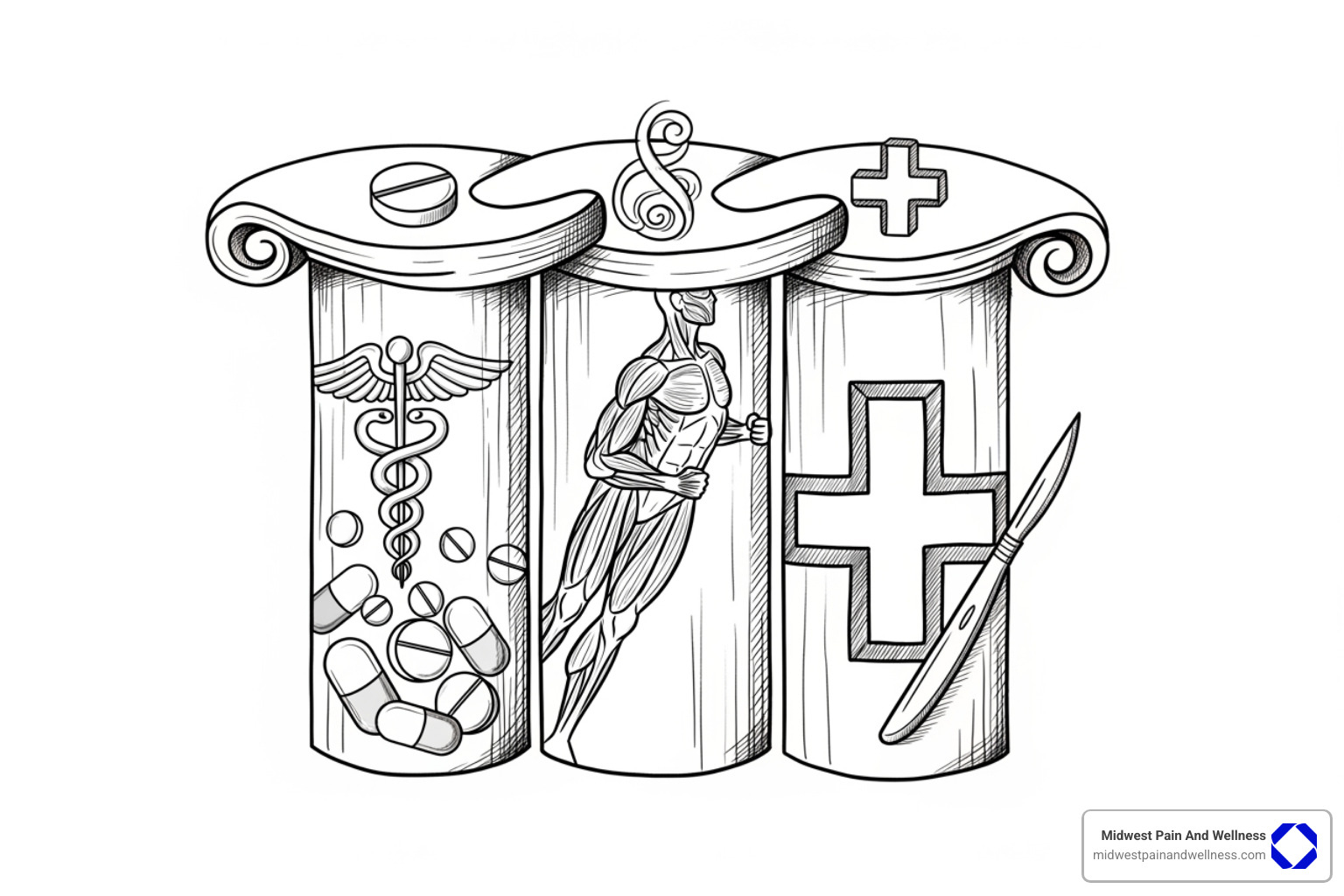
Effective pain management is like building a strong structure—it requires more than one support. That’s why we use a multi-modal approach at Midwest Pain And Wellness, combining three pillars of treatment to address your pain from every angle: pharmacologic (medication), non-pharmacologic (therapy), and interventional (procedure). This allows us to create a personalized plan that achieves better relief with fewer risks.
Pillar 1: Pharmacologic (Medication-Based)
There is a world of effective pain relievers that work without the addiction risks of opioids. These non-opioid analgesics use smarter, more targeted approaches to reduce pain.
- NSAIDs (ibuprofen, naproxen) reduce both pain and inflammation, making them effective for arthritis and musculoskeletal injuries. We monitor their long-term use to protect your kidneys and stomach.
- Acetaminophen (Tylenol) reduces pain and fever without affecting inflammation. It’s gentler on the stomach, but dosage must be watched to protect your liver.
- Antidepressants like duloxetine can be remarkably effective for pain, especially neuropathic (nerve) pain and fibromyalgia, by adjusting neurotransmitters that influence pain signals.
- Anticonvulsants such as gabapentin and pregabalin are go-to treatments for nerve pain. They work by calming overexcited nerves that are misfiring pain signals.
- Topical agents like creams, gels, and patches deliver localized relief with fewer systemic side effects.
Pillar 2: Non-Pharmacologic (Therapy-Based)
This pillar of opioid free pain management uses your body’s natural healing abilities and gives you active tools to manage pain.
- Physical therapy is a cornerstone of recovery. A therapist assesses your movement and creates a program to restore function, rebuild strength, and improve flexibility.
- Regular exercise, even gentle activities like walking or swimming, is proven to reduce pain and improve quality of life, as highlighted in the 2018 Physical Activity Guidelines Advisory Committee Scientific Report.
- Cognitive Behavioral Therapy (CBT) helps you identify and change thought patterns that amplify pain, giving you practical coping skills.
- Mindfulness-based stress reduction teaches you to observe pain without judgment, which can decrease the emotional suffering associated with it.
- Mind-body techniques like yoga, tai chi, and acupuncture are recommended for many conditions, including lower back pain. Massage therapy relieves muscle tension and improves circulation.
These approaches empower you to take an active role in your recovery and improve your overall well-being.
Pillar 3: Interventional (Procedure-Based)
When a specific anatomical problem causes persistent pain, interventional procedures can go straight to the source. These minimally invasive techniques are some of the most exciting advances in opioid free pain management.
- Nerve blocks involve injecting anesthetic near specific nerves to interrupt pain signals. They can be used to diagnose the source of pain or provide lasting relief.
- Epidural steroid injections deliver anti-inflammatory medication directly to the spinal area to reduce swelling from herniated discs or spinal stenosis.
- Joint injections with corticosteroids or hyaluronic acid can bring months of relief to arthritic knees, hips, and shoulders.
- Radiofrequency ablation uses controlled radio waves to disable specific nerves from sending pain signals, with relief that can last a year or more.
- Spinal cord stimulation uses a small implanted device to deliver mild electrical pulses that interfere with pain signals, changing lives for those with severe, chronic pain.
Our team at Midwest Pain And Wellness specializes in these advanced techniques, determining which might provide the breakthrough you need. You can explore more about the procedures we use for treatment on our website.
Your Guide to Opioid-Free Pain Management Options

Finding the right path forward starts with understanding your specific situation. At Midwest Pain And Wellness, we distinguish between acute pain (sudden, short-term) and chronic pain (lasting three months or more). This distinction shapes your treatment plan, as acute pain management focuses on immediate relief while chronic pain management aims for long-term function and quality of life.
Opioid free pain management is effective for both. We use shared decision-making to create a plan that fits your needs and goals.
Common Approaches for Acute Pain
For post-surgical pain or a recent injury, non-opioid options are highly effective. Evidence for non-opioids in acute pain shows they work as well as opioids for many conditions without the addiction risk. Common treatments include:
- NSAIDs (ibuprofen, naproxen) to reduce pain and inflammation.
- Acetaminophen, used alone or with NSAIDs.
- Muscle relaxants for short-term relief from spasms.
- Topical analgesics (creams, gels) for localized pain.
Specialized opioid free surgical pain management programs can manage pain before, during, and after surgery using techniques like regional anesthesia and non-opioid IV medications, helping you heal without the fog or risks of opioids.
A Deeper Dive into Opioid-Free Pain Management for Chronic Conditions
Chronic pain requires a sustainable, long-term strategy. Our double board-certified specialists excel at creating these comprehensive plans.
- Chronic low back pain: We may combine physical therapy with NSAIDs, nerve blocks, epidural steroid injections, or advanced procedures like radiofrequency ablation and spinal cord stimulation.
- Arthritis: A multi-pronged approach using NSAIDs, topical agents, physical therapy, and joint injections often works well. Radiofrequency ablation is also a proven option for chronic knee pain.
- Neuropathic pain: This nerve-related pain (burning, shooting sensations) often responds well to anticonvulsants (gabapentin) and certain antidepressants (duloxetine). Spinal cord stimulation can be life-changing for severe cases.
- Fibromyalgia: We use a combination of specific medications, gentle exercise, and behavioral therapies like CBT to address the widespread pain and fatigue.
Here’s how common non-opioid medications compare for chronic pain:
| Medication Category | Use Case | Benefits | Potential Side Effects |
|---|---|---|---|
| NSAIDs | Chronic musculoskeletal pain, arthritis | Reduces inflammation and pain | GI upset, kidney issues, cardiovascular risks |
| SNRIs (Duloxetine) | Neuropathic pain, fibromyalgia, chronic MSK | Pain relief, improves mood | Nausea, dry mouth, constipation, dizziness |
| Anticonvulsants (Gabapentin/Pregabalin) | Neuropathic pain, nerve compression | Calms overactive nerve signals | Drowsiness, dizziness, weight gain, swelling |
| Topical Agents (Lidocaine/Capsaicin) | Localized neuropathic or joint pain | Targeted relief, minimal systemic side effects | Skin irritation, numbness |
The Role of Physical and Behavioral Therapies in Opioid-Free Pain Management
Physical and behavioral therapies are central to effective opioid free pain management. They are not extras; they are foundational to your recovery. Physical therapy aims to improve strength, flexibility, and proper body mechanics to restore function and prevent re-injury. As the 2018 Physical Activity Guidelines confirm, regular movement is a powerful tool against pain.
Behavioral therapies like Cognitive Behavioral Therapy (CBT) and Mindfulness-Based Stress Reduction (MBSR) address the psychological aspects of pain. They provide coping strategies and help reduce the emotional suffering that often accompanies chronic pain, giving you a greater sense of control. By integrating these therapies, we help you build a more functional life.
On the Horizon: The Next Generation of Pain Relief

The landscape of opioid free pain management is more exciting than ever. Researchers are developing innovative treatments that target pain with precision, reducing discomfort without the systemic side effects of traditional medications. These breakthroughs offer hope for a safer, more effective future in pain relief.
A New Class of Painkiller: What to Know About Suzetrigine (Journavx)
Earlier this year, the FDA approved suzetrigine (Journavx), the first truly new type of painkiller in over two decades. This represents a major leap forward in opioid free pain management. The FDA announcement on suzetrigine approval highlights its potential as a novel non-opioid treatment.
How does it work? Journavx selectively targets the Nav1.8 sodium channel, which is found almost exclusively in peripheral nerves outside the brain and spinal cord. By blocking this channel, it stops pain signals before they reach the brain, avoiding the central nervous system and cardiac side effects of other drugs.
Crucially, clinical trials showed no signs of addiction risk, suggesting it won’t carry the devastating potential of opioids. Currently, Journavx is approved for moderate to severe acute pain in adults following certain surgeries. While not yet approved for chronic pain, its potential for conditions like diabetic nerve pain is being studied. As with any medication, it has specific side effects and contraindications that should be discussed with your doctor.
‘High-Tech’ Interventional Pain Treatments
Equally exciting advances are happening in interventional procedures. These high-tech approaches are some of the most sophisticated tools in modern opioid free pain management.
- Spinal Cord Stimulation (SCS) and Dorsal Root Ganglion (DRG) stimulation use mild electrical pulses to interrupt pain signals with increasing precision and success.
- Radiofrequency Ablation (RFA) continues to evolve, offering long-lasting relief (a year or more) for chronic back, neck, and joint pain by deactivating specific pain-transmitting nerves.
- Regenerative medicine approaches like stem cell therapy are being studied for their potential to repair damaged tissues, offering a future where we might heal the source of pain, not just manage it.
At Midwest Pain And Wellness, we are committed to staying at the cutting edge of these innovations. Our team of specialists ensures you have access to the most advanced, effective procedures available.
Creating Your Personalized Pain Management Plan
At Midwest Pain And Wellness, we believe effective opioid free pain management is a collaborative journey. Our double board-certified doctors work with you to develop a personalized care plan based on your diagnosis, lifestyle, and goals.
We start with a comprehensive assessment, discussing your medical history and the physical, psychological, and social factors influencing your pain. Together, we set concrete, functional goals. It’s not just about lowering a pain score; it’s about enabling you to walk your dog, sleep through the night, or return to gardening. These meaningful goals guide every treatment decision.
Regarding costs, while some newer treatments may seem expensive, investing in effective non-opioid therapies can prevent years of complications and lost quality of life associated with the opioid crisis. We work with you to steer insurance coverage and find solutions that are both medically and practically sound.
Who is a Good Candidate for Non-Opioid Management?
Almost everyone can benefit from opioid free pain management, but it is essential for certain individuals:
- Those with a history of substance use disorder, to protect their recovery.
- Older adults, who are more sensitive to opioid side effects like confusion and fall risk.
- Patients with medical conditions like sleep apnea or severe kidney/liver disease.
- Anyone wishing to avoid side effects like constipation, sedation, and mental fog.
- Post-surgical patients, who can benefit from opioid-free pathways to improve recovery.
Working With Your Doctor
Your active involvement is the foundation of successful pain management. Partnering with your care team is key.
- Find the right specialist: Look for a board-certified doctor who emphasizes a multi-modal, opioid-free approach, like our team at Midwest Pain And Wellness.
- Communicate openly: Be honest about your pain levels, how treatments are working, and any concerns. Your feedback is essential for adjusting your plan.
- Discuss your goals: Regularly share what “better” looks like for you. This helps us tailor treatments to achieve your specific outcomes.
- Understand your diagnosis: Ask questions until you grasp the cause of your pain and how each treatment works. An empowered patient is a more successful one.
Read patient testimonials to see how others have found relief and reclaimed their lives through opioid free pain management.
Conclusion
The path to effective opioid free pain management is about embracing a smarter, more sustainable approach that puts you back in control. We’ve seen that non-opioid approaches are not just safer—they are often more effective for long-term relief because they address the root causes of pain.
Our multi-modal approach provides a comprehensive toolkit. This includes pharmacologic treatments like the new drug Journavx, non-pharmacologic therapies that empower you with coping skills, and advanced interventional procedures like radiofrequency ablation that provide targeted, lasting relief. These pillars work together to create a personalized strategy for your unique situation.
Innovations in pain management offer genuine hope. These treatments are available now, helping people reclaim their lives from pain every day.
At Midwest Pain And Wellness, our double board-certified doctors understand that your pain is personal. We take the time to understand your condition and your goals. Whether you want to play with your grandchildren or simply sleep through the night, we are here to help you achieve it through comprehensive, evidence-based therapies.
You don’t have to live with pain or risk the dangers of opioids. A safer, more functional future is within reach. Our team in Chicago Ridge, Illinois, is ready to create a custom care plan that addresses your pain from every angle.
Take the first step. Explore our comprehensive treatment procedures and schedule a consultation with our expert team to start your personalized path to lasting relief.