
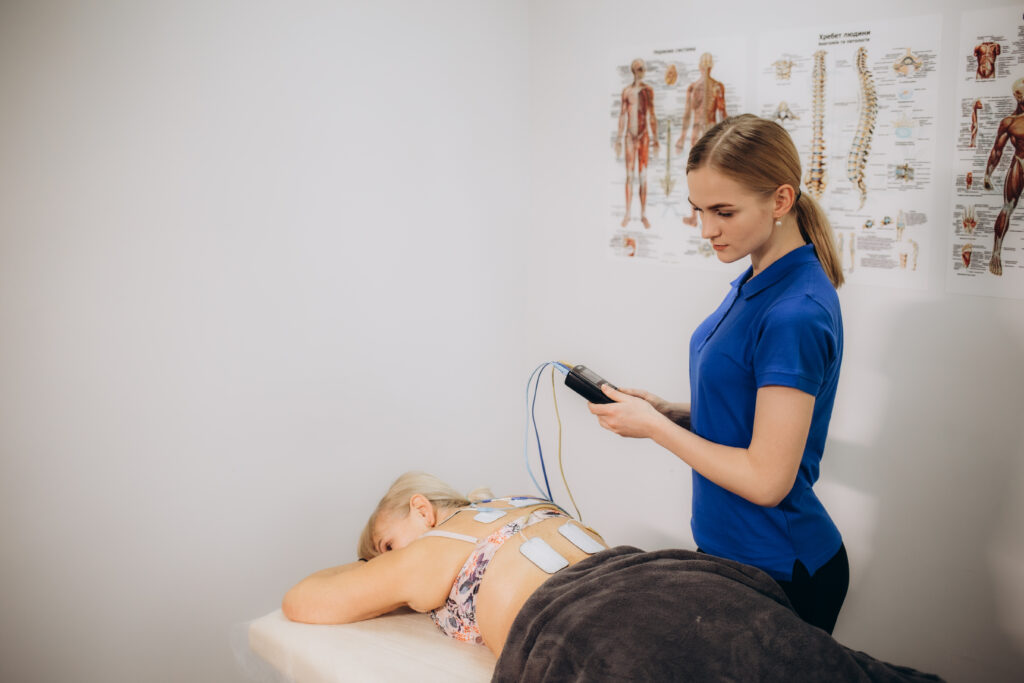
Precise, Opioid-Free Pain Modulation—Targeting the Nerve That Hurts
Peripheral nerve stimulation (PNS) uses tiny electrodes placed next to a specific peripheral nerve to deliver gentle electrical pulses that modulate pain signaling. We offer both temporary, 60-day percutaneous PNS and fully implantable PNS systems for appropriately selected patients who haven’t improved enough with conservative care. Our approach is opioid-free and coordinated with rehab to restore function.
Is PNS Right for You?
PNS may be considered for focal, nerve-related pain that persists despite targeted non-operative care (PT, activity modification, non-opioid meds, appropriate injections). Conditions include occipital neuralgia/headache, shoulder pain (suprascapular/axillary nerve), knee pain (genicular/saphenous), post-amputation pain, groin pain (ilioinguinal/iliohypogastric), and select low-back pain patterns via medial branch nerve targeting (axial back pain). Evidence and coverage vary by indication; candidacy is individualized.
How PNS Works (and the Types We Use)
-
60-day percutaneous PNS (lead removed after therapy): FDA-cleared for up to 60 days of use for relief of acute or chronic pain; many candidates value that it’s non-permanent and performed with ultrasound/fluoro guidance under local anesthesia.
-
Fully implantable PNS: Miniaturized implanted systems powered by a wearable transmitter or internal battery can provide longer-term therapy for chronic, focal peripheral nerve pain after a successful trial. Several systems carry FDA 510(k) clearance for peripheral nerve pain of peripheral origin.
Clinical guidance from major pain societies supports PNS for select chronic pain syndromes when conservative care fails, with moderate/fair overall evidence quality depending on the indication and device type.
What the Evidence Shows (Snapshot)
-
Low-back pain (medial branch PNS): Peer-reviewed studies report clinically meaningful improvements in pain/function; a large multicenter RCT (RESET) is underway for 60-day PNS in back pain.
-
Occipital neuralgia/headache: Reviews suggest occipital-nerve PNS is a promising option in refractory cases; further studies are encouraged.
-
Shoulder & knee pain: Anatomic/clinical reviews and recent clinical series show feasibility and benefit when targeting the suprascapular/axillary (shoulder) and genicular/saphenous (knee) nerves in carefully selected patients.
Bottom line: PNS is not for every pain problem, but it can be a practical, less-invasive alternative to repeat denervation or major surgery for well-localized neuropathic pain—especially when paired with rehab.
How We Help (3-Step Process)
1) Assess — Focused neurologic exam; review prior imaging and treatments. When appropriate, we use diagnostic nerve blocks to confirm the target nerve before recommending PNS.
2) Recommend — Written plan prioritizing conservative care; if criteria are met, we outline temporary 60-day PNS vs implanted PNS, expected outcomes, and aftercare. Guidance follows current ASPN/ASIPP recommendations.
3) Treat — Image-guided lead placement in an outpatient setting. Temporary systems are removed at day ~60; implanted systems follow a successful trial with long-term programming and follow-up.
Safety, Coverage & Follow-Up
PNS is generally well tolerated; potential risks include skin irritation, lead migration, infection, and inadequate relief. Coverage is payer-specific; many plans and Medicare LCDs require documentation of refractory pain, failure of conservative measures, and psychological/medical screening, with prior authorization. We’ll handle the paperwork and keep you informed.
Why Midwest Pain & Wellness
-
Opioid-free, interventional strategy with careful patient selection.
-
Specialist-led neuromodulation with coordinated PT and long-term follow-up.
-
Local & convenient: 10258 Southwest Hwy, Suite B, Chicago Ridge, IL 60415 • 708-571-3669.
Peripheral Nerve Stimulation FAQ's
What is peripheral nerve stimulation—and how is it different from spinal cord stimulation?
PNS places an electrode next to a named peripheral nerve (e.g., occipital, suprascapular, genicular) to modulate pain locally, whereas spinal cord stimulation targets the dorsal columns in the spine for broader neuropathic pain. PNS can be temporary (60-day) or implanted for ongoing therapy.
Who is a candidate for PNS?
Adults with focal, nerve-related pain that persists after guideline-based conservative care. We often confirm the target with a diagnostic nerve block and follow society guidance (ASPN/ASIPP) before recommending PNS.
What does the procedure involve and how long does it last?
For 60-day PNS, we place a fine percutaneous lead under image guidance; you go home the same day and the lead is removed at about 60 days. Implanted PNS follows a successful trial and uses a miniaturized implantable stimulator with an external power source or internal battery.
How effective is PNS?
Results vary by indication and device. Studies report clinically meaningful pain and function improvements in appropriately selected patients (e.g., medial-branch PNS for low-back pain; occipital-nerve PNS in refractory headaches). Ongoing trials (e.g., RESET) aim to strengthen the evidence base.
Will my insurance cover PNS?
Coverage varies. Many payers (and Medicare LCDs) require documentation of failed conservative care, appropriate psychological/medical screening, and prior authorization. We’ll verify your benefits and handle the submission.