
Opioid-Free Care for Chronic Pain—Including Select Uses in the Spine
At Midwest Pain & Wellness, we offer regenerative approaches—most commonly platelet-rich plasma (PRP)—to help reduce pain and improve function when standard therapies haven’t been enough. PRP is prepared from your own blood and injected to target painful tendons, joints, or carefully selected spine structures as appropriate.
What We Mean by “Regenerative”
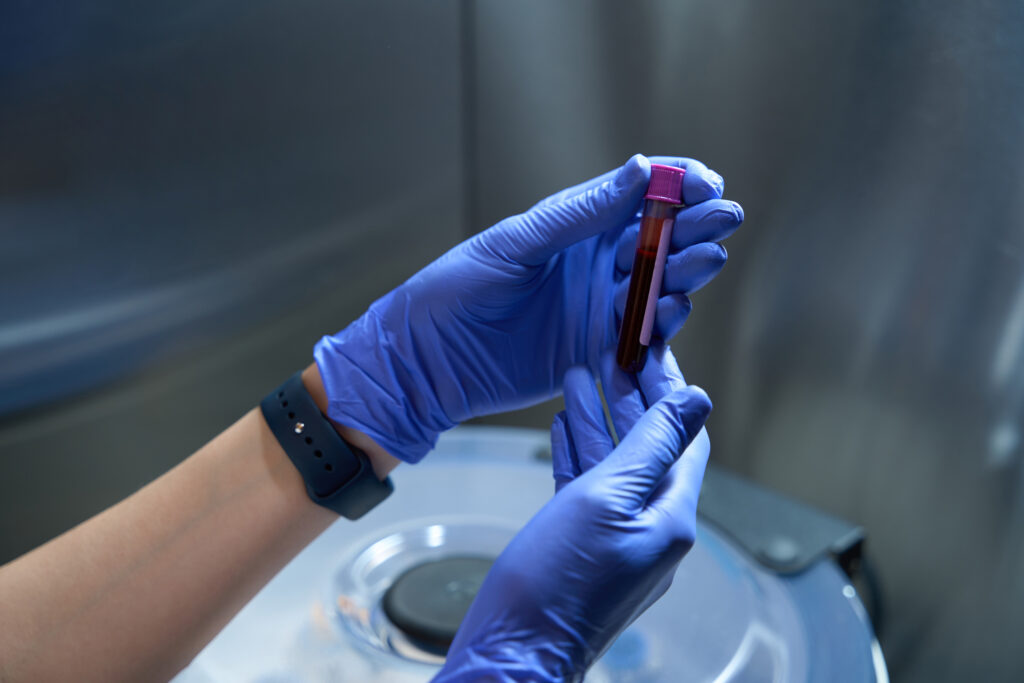
PRP (Platelet-Rich Plasma): Your blood is drawn and spun in a centrifuge to concentrate platelets, which contain growth factors; the solution is then injected into the target area.
Cell-based options (“stem cells”/bone-marrow concentrate): These are investigational for most orthopedic and spine pain indications in the U.S. and are not FDA-approved for these uses. Any consideration must follow current regulations and safety guidance.
Regulatory note: The FDA cautions patients about unapproved “stem cell” and exosome products marketed for pain. We discuss only options that align with current evidence and regulations.
Where PRP May Fit
Joints & Soft Tissue: As part of a multimodal plan for knee osteoarthritis and select tendinopathies (evidence mixed and protocol-dependent).
Spine (selected cases): Evidence is emerging for targeted applications (e.g., intradiscal or facet injections in carefully selected patients); data quality varies and these uses remain investigational.
How We Help (3-Step Process)
1) Assess — Focused exam and review of prior imaging; order new studies only when they change decisions.
2) Recommend — Written plan starting with conservative care; if appropriate, discuss PRP (and the regulatory status of any cell-based options).
3) Treat — Image-guided injections when indicated, with clear post-procedure rehab to protect gains—always within an opioid-sparing framework.
What to Expect
Visit length: Blood draw + processing + injection (PRP) typically completed in one visit.
Downtime: Usually brief activity modification; return to progressive loading as advised.
Course: Some conditions need a series of injections; intervals vary by site and diagnosis.
Coverage: Insurance policies differ. Many plans do not cover PRP or cell-based injections for spine/joint pain; we provide a transparent estimate before you decide. (Check your plan’s policy.)
Why Midwest Pain & Wellness
Opioid-free, interventional philosophy with careful patient selection.
Specialist-led, image-guided procedures + coordinated rehab.
Local & convenient: 10258 Southwest Hwy, Suite B, Chicago Ridge, IL 60415 • 708-571-3669.
Regenerative Therapy FAQ's
What is PRP and how is it prepared?
PRP is made by drawing your blood and spinning it to concentrate platelets, then injecting that solution into the target tissue under guidance.
Are “stem cell” injections FDA-approved for spine or joint pain?
No. In the U.S., most stem-cell/exosome products marketed for orthopedic or spine pain are not FDA-approved; the FDA has issued consumer cautions about these unapproved uses.
Does PRP help knee arthritis or tendon problems?
Evidence is mixed but promising in some settings (e.g., knee osteoarthritis), and depends on preparation and protocol; national guidance reviews this as an option with variable strength of recommendation.
Can PRP be used for spine pain?
There’s emerging evidence (including RCTs and systematic reviews) for specific targets like intradiscal or facet injections in carefully selected patients, but these remain investigational and are not universally covered.
How many injections will I need and what’s the downtime?
Many patients need a series (varies by condition); most resume light activity quickly with a staged return to loading. Your plan and timeline are individualized.