Understanding the Journey from Chronic Pain to Restored Function
Rehabilitation pain management is a comprehensive, multidisciplinary approach focused on restoring physical function and improving quality of life for people with chronic pain. Rather than solely trying to eliminate pain, it combines physical therapy, behavioral strategies, patient education, and medical interventions to help you reclaim the activities that matter most. This approach emphasizes function over pain scores, active patient participation, non-opioid therapies, and treating the whole person—addressing the physical, psychological, and social impacts of pain.
Approximately 20 percent of U.S. adults experience chronic pain lasting more than six months. This is pain that disrupts physical abilities, mood, relationships, and work. For decades, treatment focused on pain scores and medication, but this often falls short, as complete elimination of pain is rarely obtainable for any substantial period.
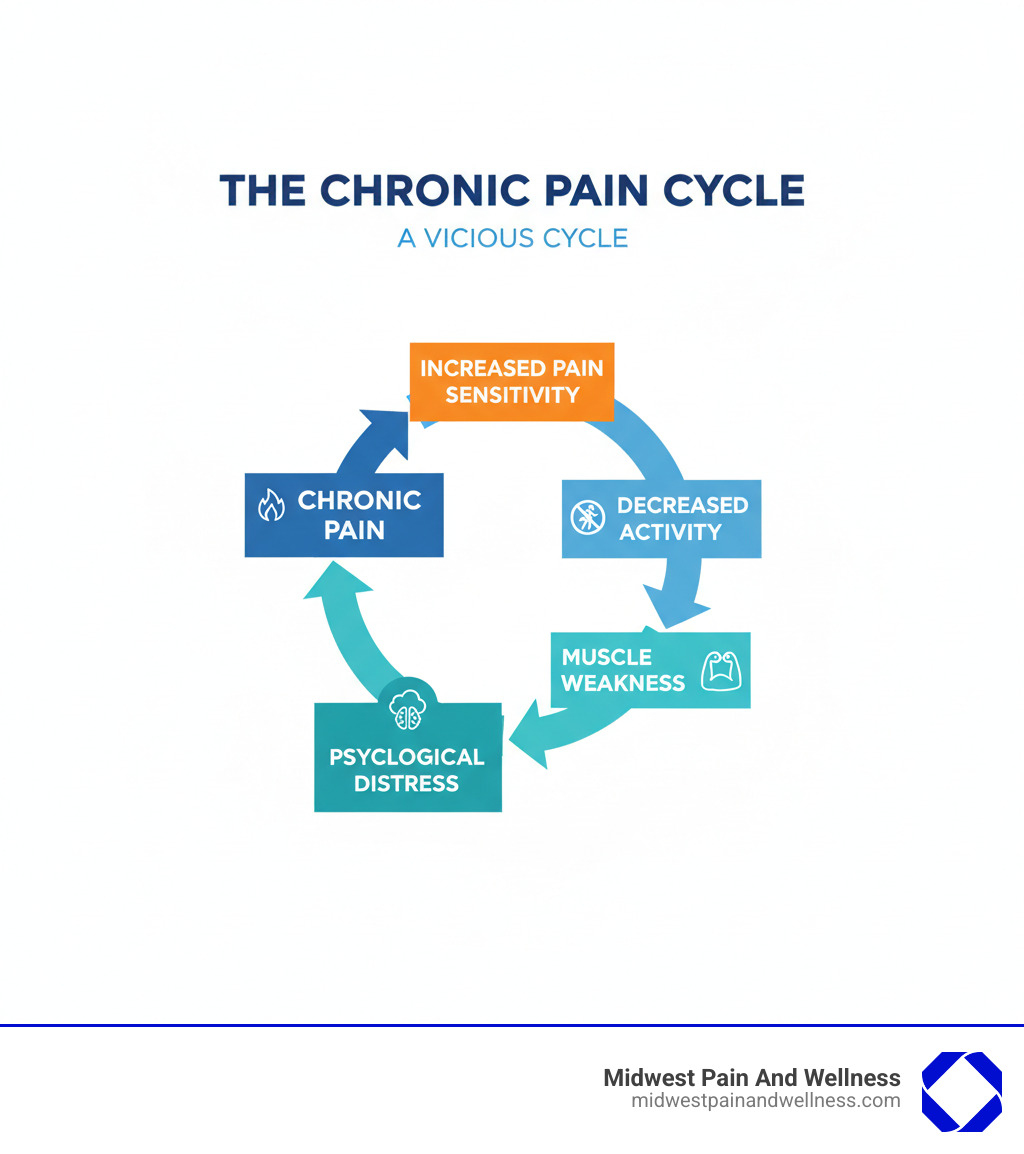
Today’s rehabilitation approach recognizes chronic pain as a multidimensional experience. It requires a shift in thinking from “How do I make this pain go away?” to “How can I live a full, active life despite this pain?” This is where the biopsychosocial model comes in. It acknowledges that chronic pain involves biological factors (tissue damage), psychological factors (thoughts and emotions), and social factors (relationships and activities). Persistent pain can create a destructive cycle of decreased activity, muscle weakness, and psychological distress, which in turn increases pain sensitivity.
The Philosophy of Pain Rehabilitation: More Than Just Pain Scores
When living with chronic pain, it’s natural to focus on the 1-to-10 pain scale. But what if there’s a better way to measure success?
At Midwest Pain And Wellness, our philosophy of rehabilitation pain management isn’t about chasing a zero on the pain scale. It’s about helping you reclaim your life—getting back to work, playing with your kids, or enjoying your hobbies. We focus on what you can do, not just how much it hurts.
We use a biopsychosocial approach that addresses the physical factors (like muscle weakness), psychological aspects (like stress or fear of movement), and social elements (like isolation or work challenges). Our goal is patient empowerment. We teach you self-management strategies that put you in control, rather than having you depend on passive treatments. A key part of this journey is reducing reliance on medication, especially opioids, by building strength and resilience from the inside out.
Here’s how our approach compares to traditional pain management:
| Feature | Traditional Pain Management | Rehabilitation Pain Management |
|---|---|---|
| Primary Focus | Reducing pain intensity (pain score) | Restoring function and improving quality of life |
| Patient Role | Passive recipient of treatments | Active participant in self-management |
| Treatment Modalities | Often singular (e.g., medication, injections) | Multidisciplinary, integrated approach |
| Medication Emphasis | Often primary solution, includes opioids | Non-opioid focus, medication reduction/elimination |
| View of Pain | Primarily a physical symptom | Biopsychosocial phenomenon |
| Goal | Pain elimination | Functional restoration despite pain |
What is the Scope of Rehabilitation in Pain Management?
Rehabilitation pain management treats chronic pain as its own medical condition, not just a symptom. Our first priority is preserving residual function—making the most of what your body can do right now. We also focus on preventing secondary complications like muscle weakness, anxiety, and depression that arise from inactivity and frustration. By addressing the physical, psychological, and social impacts, we break the chronic pain cycle. We recognize chronic pain as an independent clinical entity that changes how the nervous system works, allowing us to create more effective treatment plans.
Core Principles: A Holistic Approach
Our care is guided by several fundamental principles:
- Functional restoration is our cornerstone. Success is measured by what you can accomplish in daily life. Scientific research on pain management programs confirms this is key to effective chronic pain management.
- We treat the patient and family as a unit. We educate loved ones on how to support your recovery and reinforce healthy behaviors.
- Goal setting is a collaborative process centered on what matters most to you, whether it’s picking up a grandchild or returning to a hobby.
- We help you unlearn pain behaviors—protective habits that may actually be holding you back—and replace them with healthier movement patterns.
- We focus on improving mood and function together. Addressing the common depression and anxiety that accompany chronic pain creates a positive cycle of recovery.
Your Expert Care Team: The Multidisciplinary Approach to Rehabilitation Pain Management
Chronic pain is a complex puzzle. Solving it requires more than one specialist. At Midwest Pain And Wellness, we use a multidisciplinary approach to rehabilitation pain management, where a coordinated team works together on your behalf.
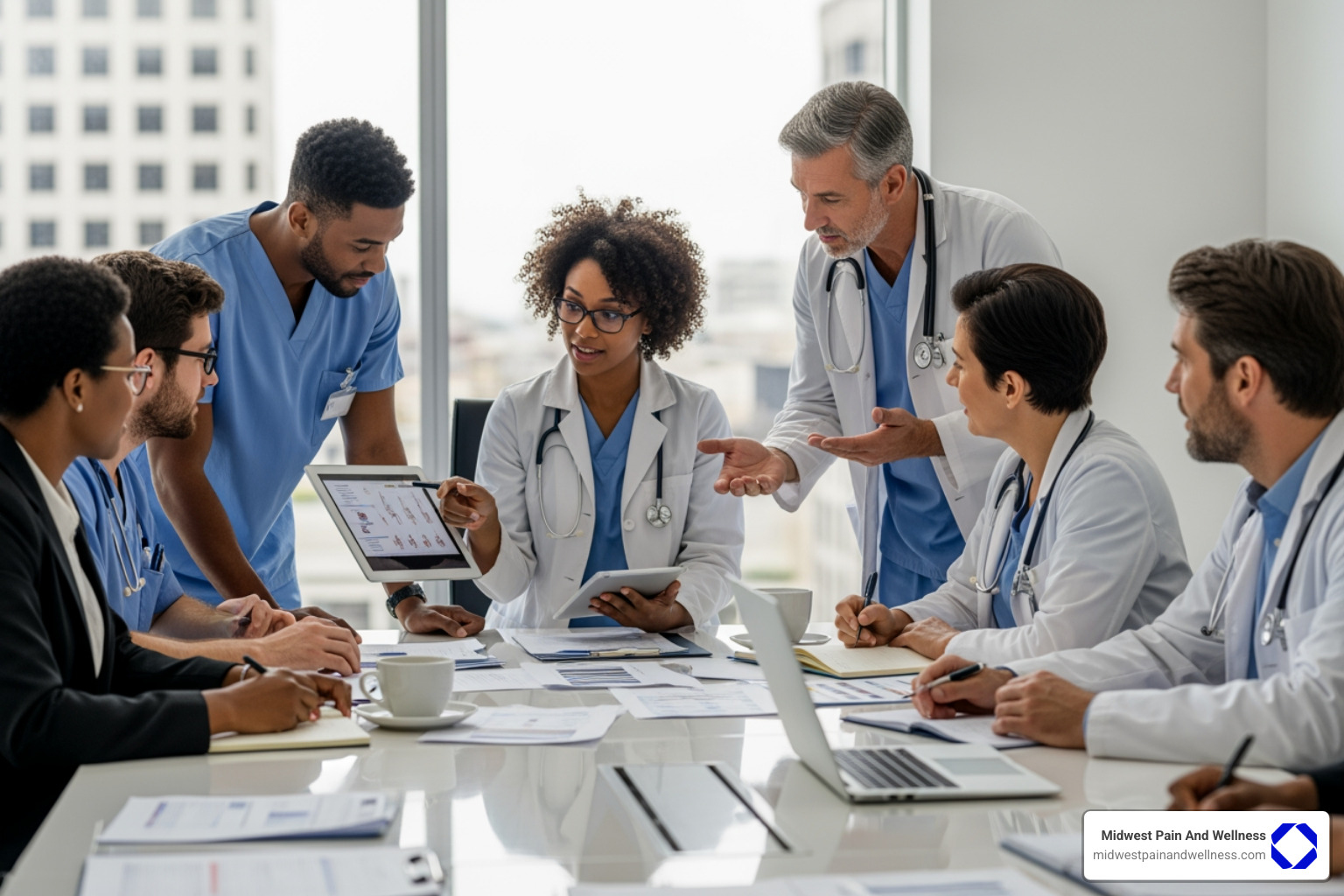
This collaborative care model means your experts regularly meet to discuss your progress and adjust your treatment plan. This integrated approach ensures nothing falls through the cracks.
Key Professionals and Their Roles
Your care team brings together specialists who are essential to your recovery:
- Pain Medicine Physicians: Our double board-certified physiatrists act as the quarterbacks of your care, diagnosing the root causes of your pain and coordinating your entire treatment program.
- Physical Therapists: Your partners in movement, they design personalized exercise programs to build strength, improve mobility, and help you trust your body again.
- Occupational Therapists: These specialists focus on daily living, teaching you activity pacing and practical strategies to perform tasks like cooking or working without aggravating your pain.
- Psychologists and Behavioral Health Specialists: They address the emotional weight of chronic pain, teaching coping strategies like Cognitive Behavioral Therapy (CBT), stress management, and relaxation techniques.
- Nurses: Providing consistent day-to-day support, they monitor your progress, help manage medications, and answer your questions.
- Vocational Counselors: When pain affects your job, they help you develop strategies to return to work, explore accommodations, or consider new career paths.
- Social Workers: They connect you with community resources, help with insurance challenges, and support your family through the recovery process.
This is a true integrated team working from a coordinated plan that puts you at the center. To learn more about our philosophy, visit our team-based approach page.
A Multi-Modal Toolkit for Restoring Function
Rehabilitation pain management involves creating a personalized treatment plan from a comprehensive toolkit of therapies. Our approach is rooted in evidence-based medicine and innovative treatments, with a commitment to maximizing non-opioid therapies as recommended by the CDC. For more on this, see the Non-Opioid Therapies for Pain: A Clinical Reference. The synergy between different therapies is what creates lasting change.
Physical and Occupational Therapy
Physical and occupational therapies are the active foundation of our programs. They empower you to take control of your recovery.
- Physical therapists provide individualized exercise programs focused on strengthening and conditioning, improving mobility, and building endurance. You’ll also learn proper body mechanics instruction to protect yourself from further injury.
- Occupational therapists focus on daily activities. Through activity pacing, they teach you to balance activity with rest. They help you find safe ways to perform daily tasks, rebuilding your confidence and proving your body is more capable than you thought. Explore our physical interventions on our Treatment Procedures page.
Psychological and Behavioral Strategies
Chronic pain changes the brain, but the brain can change back. These strategies are essential for successful rehabilitation.
- Cognitive Behavioral Therapy (CBT) helps you reshape negative thought patterns that amplify pain.
- Stress management and relaxation techniques like deep breathing calm your nervous system and turn down the volume on pain.
- Biofeedback provides real-time data on your body’s responses, empowering you to control them.
- We also address the anxiety and depression that often accompany chronic pain. By retraining your brain and modifying pain behaviors, we shift your focus from pain to a meaningful life.
Interventional Pain Management
When pain levels are too high to make progress in rehabilitation, interventional pain management can provide the necessary relief to engage more fully.
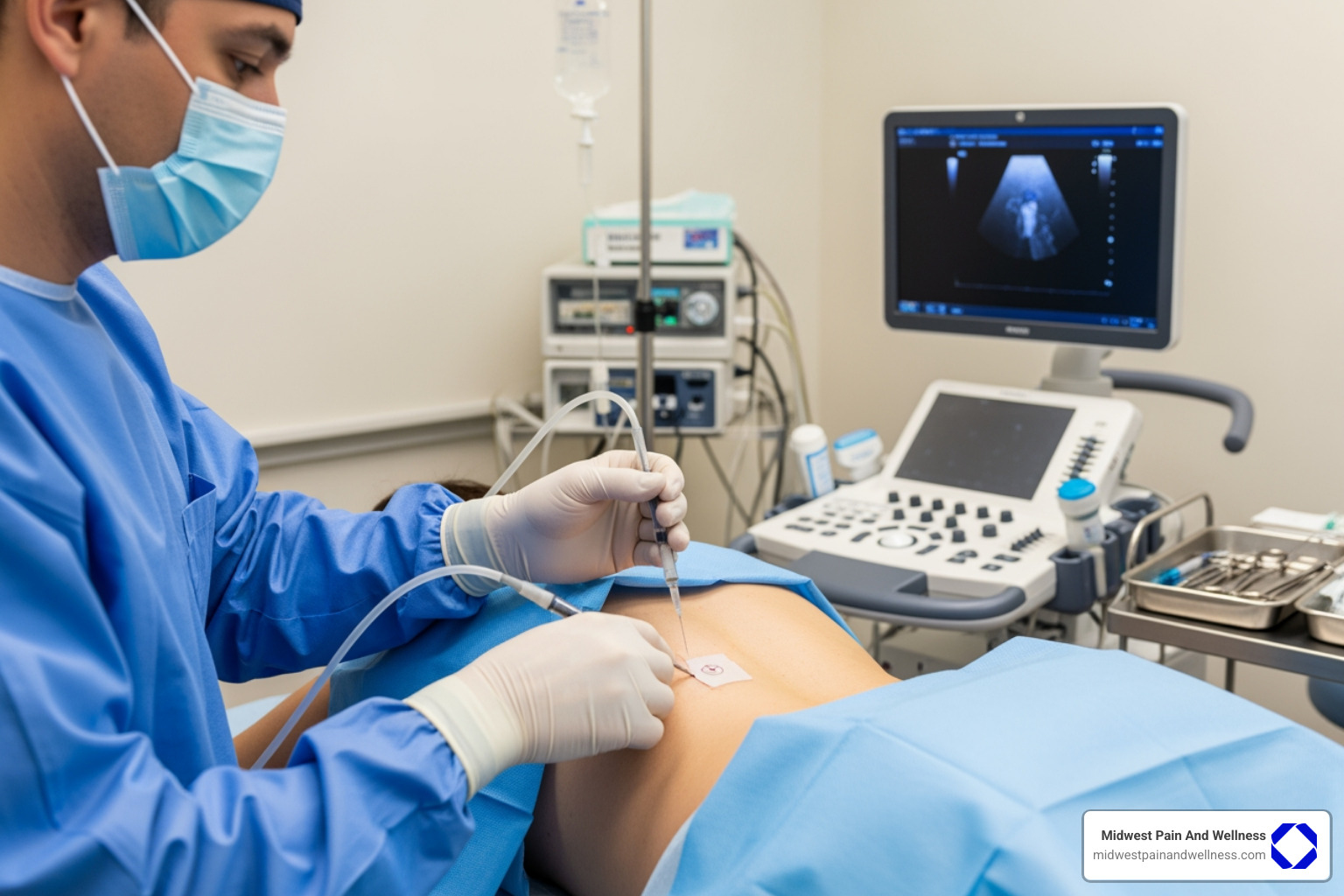
Our double board-certified doctors specialize in minimally invasive techniques that precisely target the source of your pain. These interventions create a window of opportunity for rehabilitation.
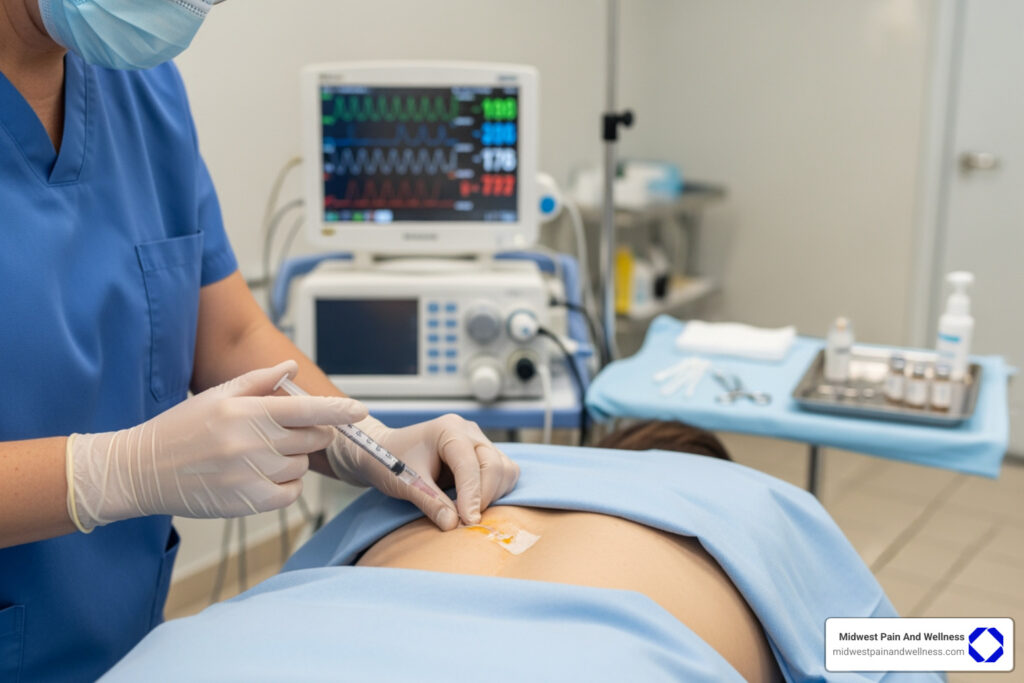
- Nerve blocks and epidural steroid injections deliver medication directly to the source of pain.
- Advanced options include Spinal Cord Stimulator Therapy, which you can learn about here: Spinal Cord Stimulator Therapy in Chicago Ridge.
- For spinal stenosis, Minimally Invasive Lumbar Decompression (MILD) can relieve pressure on nerves. More info: Minimally Invasive Lumbar Decompression (MILD) in Chicago Ridge.
- Regenerative Therapy (PRP & Cell-Based Options) uses your body’s own healing mechanisms. Explore these options here: Regenerative Therapy (PRP & Cell-Based Options) in Chicago Ridge.
Patient and Family Education
Knowledge is power. Comprehensive patient and family education is woven throughout our program.
We teach you about pain neurophysiology (how pain works), medication management, nutrition, and proper body mechanics. Crucially, we educate your family on their role in reinforcing ‘well behaviors’, creating a supportive environment that promotes recovery. For more on the conditions that benefit from this approach, visit our Conditions We Treat page.
The Path to Recovery: Conditions, Outcomes, and Your Role
Starting a journey of rehabilitation pain management is a proactive step towards reclaiming your life. It’s about shifting your mindset, engaging in your recovery, and refinding joy in activities you may have given up.

At Midwest Pain And Wellness, we’ve witnessed remarkable changes in patients who go from being limited by pain to cooking meals, walking comfortably, and enjoying life again. Recovery is possible when you combine active patient participation with family involvement and realistic goal setting. We’re here to help you write your own success story.
Rehabilitation isn’t something that happens to you—it’s something you do with us. Your commitment to setting realistic goals and your daily effort are crucial for achieving long-term success.
Common Conditions That Benefit
Our comprehensive approach offers hope for a wide range of chronic pain conditions that haven’t responded to traditional treatments.
- Chronic back and neck pain
- Spinal stenosis and degenerative spine disease: Our specialized care focuses on improving mobility and reducing pain. Learn more at Spinal Stenosis & Degenerative Spine Disease.
- Fibromyalgia: This condition responds well to our multidisciplinary approach combining physical conditioning and psychological support.
- Osteoarthritis and inflammatory arthritis: We help manage joint pain and maintain an active lifestyle.
- Nerve pain conditions like peripheral neuropathy and Complex Regional Pain Syndrome (CRPS).
- Post-laminectomy pain: We focus on targeted rehabilitation after back surgery. See our approach to Post Laminectomy Pain Treatment in Chicago Ridge.
- Chronic migraines: We use behavioral therapies and specialized treatments like Botox for Chronic Migraine, Cervical Dystonia in Chicago Ridge.
- Facial and pelvic pain: These complex conditions benefit from our integrated therapies.
For a complete overview, visit our Conditions We Treat page.
Measuring Success in Rehabilitation Pain Management
Success is about more than just pain scores. We measure it by your ability to re-engage with life.
- Improved physical activity: Walking further, standing longer, or playing with grandchildren.
- Returning to work or hobbies: Regaining activities that bring you joy and purpose.
- Reducing medication use: Decreasing or eliminating reliance on pain medications, especially opioids.
- Better mood and sleep: These are crucial indicators of improved overall well-being.
What matters most is functional improvement over pain scores. Success means living a more fulfilling life, even if some pain remains. Studies of multidisciplinary programs consistently show positive effects, with many patients achieving significant functional improvement and reduced pain impact.
Challenges and Future Directions
The field of pain rehabilitation is constantly evolving. We’ve moved from purely medical interventions to a holistic, multidisciplinary model that treats the whole person. Current trends emphasize non-opioid and interventional approaches, aligning with national health guidelines. While challenges like insurance reimbursement have made these comprehensive programs scarce, their proven effectiveness means expansion is necessary. At Midwest Pain And Wellness, we are committed to staying at the forefront of these advancements, offering the most effective and compassionate care possible.
Frequently Asked Questions about Rehabilitation Pain Management
We know that choosing the right treatment approach raises many questions. Here are some of the most common concerns about rehabilitation pain management:
How is this different from just going to physical therapy?
While physical therapy is a valuable component, rehabilitation pain management is a far more comprehensive approach. Think of it as a whole workshop, not just a single tool. You’ll work with an entire multidisciplinary team—pain physicians, occupational therapists, psychologists, and nurses—who collaborate on your care. We address the whole person, including the psychological and social impacts of pain, not just the physical limitations. This integrated strategy is why patients who haven’t found relief with a single-modality treatment often achieve breakthrough results with us.
Is the goal to be completely pain-free?
The honest answer is that complete elimination of pain is rarely obtainable for chronic conditions. However, being 100% pain-free isn’t always necessary to reclaim your life. Our primary goal is functional restoration and improved quality of life. This means helping you get back to the activities that matter, reducing your pain to a manageable level, and giving you the self-management tools to stay in control. Success is living a full and productive life, even if some residual pain remains.
How does this approach help reduce or eliminate opioid use?
Reducing reliance on opioids is a cornerstone of our philosophy. We do this by building your body’s resilience and providing effective alternatives. We maximize non-opioid therapies, from physical conditioning to behavioral strategies. As you get stronger and gain better coping skills, your perceived need for opioids decreases naturally. For patients currently taking opioids, we provide structured tapering programs supervised by our medical team. This gradual, supported reduction, combined with powerful non-medication strategies, helps you improve function without the risks of long-term opioid use.
Conclusion: Reclaim Your Life from Chronic Pain
Living with chronic pain can feel like it has taken over your life, but there is hope. Through rehabilitation pain management, you can find your way back to an active, meaningful life—not by chasing an impossible pain-free promise, but by learning to function and thrive again.
This guide has outlined a different approach to chronic pain, one that emphasizes restoring function and improving quality of life. It puts you in the driver’s seat through patient empowerment, teaching you skills that last a lifetime.
At Midwest Pain And Wellness in Chicago Ridge, this is our daily commitment. Our double board-certified doctors lead an integrated team to create comprehensive, opioid-free, and multi-modal treatment plans that address your pain from every angle. We develop custom, long-term care plans because your pain, goals, and journey are unique.
The path to restored function requires commitment, but we’ve seen what’s possible. We’ve watched patients return to work, hobbies, and family activities they thought were lost forever.
You don’t have to let pain write your story. The next chapter can be one of more movement, independence, and joy. Our team is ready to guide you with expertise and compassion.
Take the first step today. Find out how our comprehensive approach can help you build a life beyond pain.