
Relief for Chronic Neuropathic Pain—After Conservative Care Falls Short
Spinal cord stimulation uses a thin lead placed near the spinal cord to deliver small electrical pulses that modulate pain signaling. Modern systems include both paresthesia-based (tingling you can feel) and paresthesia-free, high-frequency or burst waveforms. Every candidate completes a temporary trial before any permanent implant. Our approach is opioid-free, interventional, and coordinated with rehabilitation.
Is SCS Right for You?
SCS may be considered for chronic, focal neuropathic pain that limits function despite guideline-based care. Common scenarios include persistent leg or back pain after spine surgery (often called post-laminectomy pain), complex regional pain syndrome (CRPS), and chronic radicular pain from nerve injury or scarring. Candidacy requires clinical correlation, realistic goals, and readiness to engage in a movement-based plan.
How We Help (3-Step Process)
1) Assess – Focused exam; review of imaging, prior procedures, and medications; screening for red flags and psychosocial barriers; discussion of goals and expectations.
2) Recommend – A written plan prioritizing non-operative care. If criteria are met, we review SCS options (paresthesia-free vs paresthesia-based), trial logistics, and aftercare.
3) Treat – Image-guided SCS trial (typically 3–7 days). If you achieve meaningful pain and function gains, we coordinate permanent implant with a spine specialist. Ongoing programming fine-tunes your therapy as you progress in PT and daily activity.
What to Expect
-
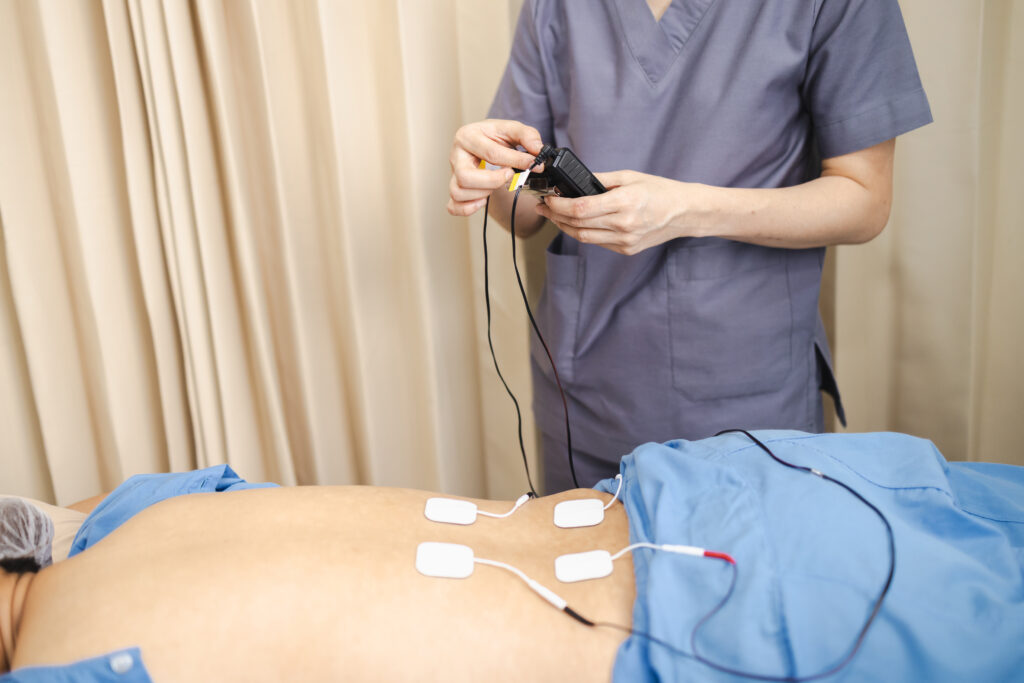
Trial first: A temporary lead connects to an external generator; you test normal activities and track pain, function, and medication changes.
-
Implant: For successful trials, a small generator is placed under the skin (rechargeable or non-rechargeable), connected to one or two leads. Outpatient settings are common.
-
Daily use: You control programs with a handheld device. Many systems are MRI-conditional under specific conditions—your team will review details.
-
Goals: Reduce pain, improve walking/standing/sleep, increase activity tolerance, and potentially reduce reliance on medications in a comprehensive plan.
Safety & Coverage
Possible risks include infection, lead migration, pocket discomfort, dural puncture headache, and inadequate relief. Device checks and occasional reprogramming are part of routine follow-up. Most insurers require documentation of persistent pain despite conservative therapy, psychological/medical screening, and a successful trial before approving permanent implantation. Prior authorization is typical.
Why Midwest Pain & Wellness
-
Opioid-free, interventional philosophy with careful patient selection.
-
Specialist-led neuromodulation integrated with physical therapy and long-term follow-up.
-
Convenient Chicago Ridge location with straightforward scheduling: 10258 Southwest Hwy, Suite B, Chicago Ridge, IL 60415 • 708-571-3669.
Spinal Cord Stimulator FAQ's
What is a spinal cord stimulator and how does it work?
A thin lead near the spinal cord delivers electrical pulses that alter how pain signals are processed, helping reduce the perception of pain while you move, stand, and sleep.
Who is a good candidate for SCS?
Adults with chronic neuropathic pain (such as leg/back pain after spine surgery, CRPS, or radicular pain) who have tried appropriate conservative care and have clear, functional goals.
Will I feel tingling—or can therapy be paresthesia-free?
Both options exist. Paresthesia-based programs create a gentle tingling; newer high-frequency or burst programs are typically paresthesia-free. We tailor this during your trial and follow-ups.
What are the risks and how long do generators last?
Risks include lead movement and inadequate relief. Batteries can be rechargeable (longer life, regular charging) or non-rechargeable (eventual replacement). Routine programming optimizes results.
Will insurance cover SCS?
Coverage varies, but many plans approve SCS after documentation of failed conservative care, appropriate screening, and a successful trial. We verify benefits and handle authorizations.