Understanding That Pain in the Rear
Tailbone pain relief starts with understanding what you’re dealing with and knowing your immediate options. If you’re experiencing that persistent ache at the base of your spine, you’re not alone—and there are proven ways to ease your discomfort.
Quick Relief Options for Tailbone Pain:
- Sit smart: Use a coccyx cushion or donut pillow to reduce pressure
- Apply therapy: Alternate ice packs (20-30 minutes) and heat packs on the area
- Adjust position: Lean forward while sitting or lie on your side
- Take medication: NSAIDs like ibuprofen can reduce pain and swelling
- Stay loose: Avoid tight clothing around your lower back and hips
- Keep moving: Don’t sit for long periods—stand and walk regularly
Tailbone pain, medically known as coccydynia, affects the small, triangle-shaped bone at the very bottom of your spine. This pain can feel dull and achy most of the time, with occasional sharp stabs that make sitting, standing up, or even going to the bathroom uncomfortable.
Women experience this condition five times more often than men, and the pain typically worsens when you’re sitting down, transitioning from sitting to standing, or bending forward. You might describe it as feeling like you’re “sitting on a marble” or experiencing tenderness at the top of your bottom.
The good news? In 90% of cases, people find relief with home remedies and self-care measures. Whether your tailbone pain came from a fall, childbirth, prolonged sitting, or seemingly out of nowhere, understanding your options for relief is the first step toward feeling better.
Why Does My Tailbone Hurt? Uncovering the Common Causes
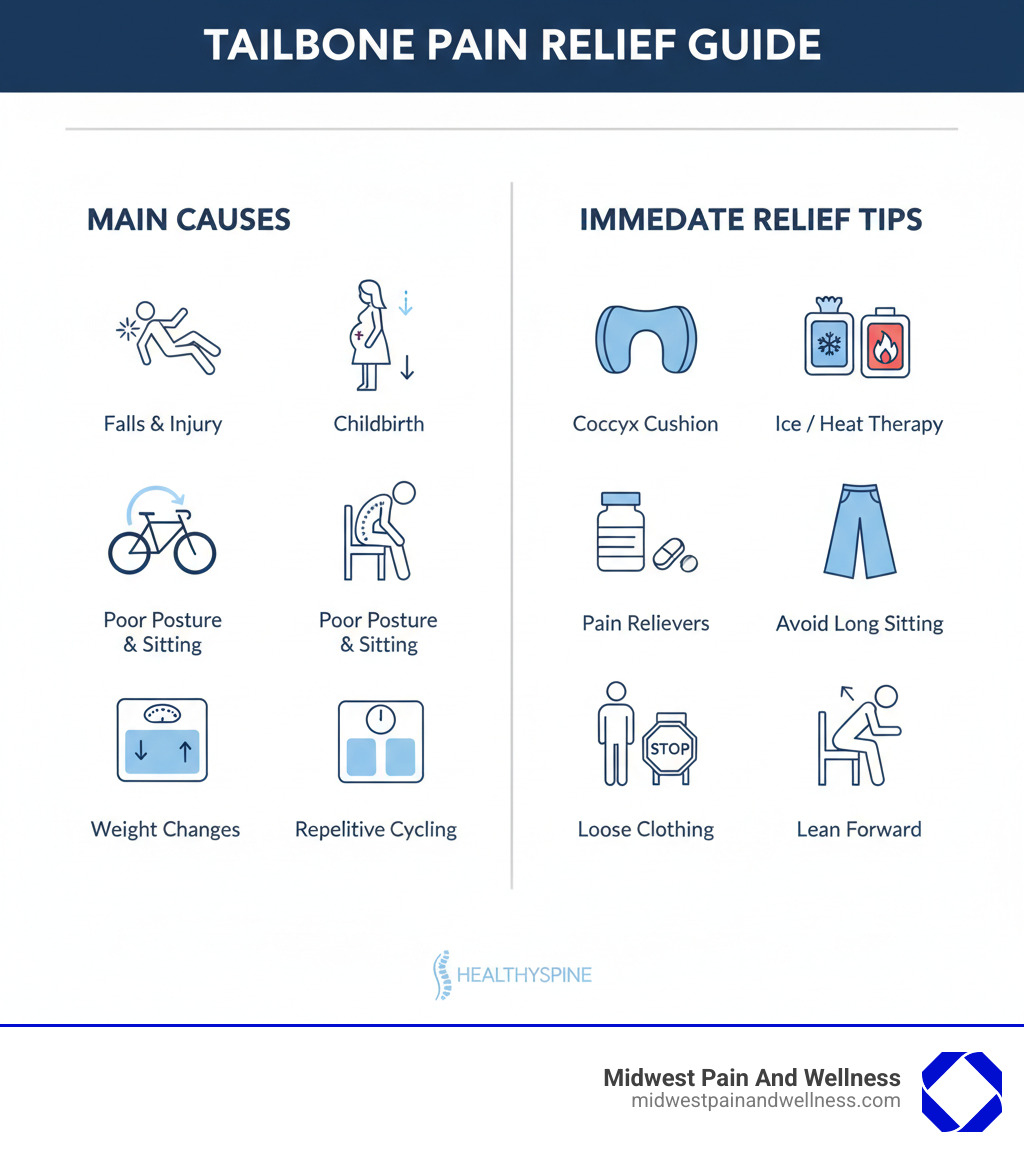
That small bone at the very bottom of your spine, the coccyx, might seem tiny, but when it hurts, it can certainly feel like a giant problem! Understanding why your tailbone is giving you grief is the first big step toward finding effective tailbone pain relief.

Often, the most obvious culprit behind coccydynia is a direct injury or trauma. Think about it: a slip on the ice, missing a chair, or a clumsy fall directly onto your bottom. Ouch! These backward tumbles can bruise, fracture, or even dislocate your coccyx. While most tailbone incidents result in bruising and tenderness, a fracture is less common but definitely possible.
But it’s not always a dramatic fall that causes the trouble. Sometimes, the cause is a more subtle, yet powerful, life event like childbirth. During pregnancy, special hormones, especially relaxin, soften and relax ligaments. This is super helpful for delivery, but it can also strain the soft tissues around your coccyx. The pressure and movement during a vaginal delivery can further injure the tailbone, making postpartum tailbone pain relief a very common need for new moms.
Beyond sudden impacts or life-changing events, our daily habits can significantly contribute to tailbone pain. Repetitive strain on the coccyx is a major factor. Imagine long road trips, regular cycling adventures, or simply prolonged sitting at your desk day after day. These activities put continuous pressure on your tailbone, which can lead to inflammation and pain. Cyclists and rowers, for example, often experience this due to repeated motion and direct pressure on the area. Even poor posture, like slouching or sitting with a rounded back, can throw your spine out of alignment and increase stress on that little bone.
Our bodies are wonderfully complex, and several other factors can also play a role:
Weight changes can impact your tailbone. Carrying extra weight can increase pressure on your coccyx, leading to pain and alignment issues. On the flip side, being underweight might mean you have less natural cushioning, making the coccyx more vulnerable to pressure and injury.
As we get older, age-related degeneration can also set in. The cartilage that cushions our joints can wear down, and we might lose some of that protective fat. These changes can reduce the natural protection around your coccyx, making it more susceptible to pain.
Sometimes, issues like joint hypermobility (where the joint connecting your coccyx to the sacrum is extra flexible) can lead to instability and discomfort. Conditions like arthritis can also affect the tiny joints around the coccyx, causing chronic pain. Even muscle imbalances in your pelvic floor, hips, or lower back can pull on the tailbone, contributing to your pain.
In very rare cases, tailbone pain without a clear injury can be a sign of something more serious, like certain types of cancer or an infection near the coccyx. These instances are usually accompanied by other symptoms, such as numbness, tingling, or difficulty with urination or bowel movements, and require immediate medical attention.
The good news? Even if the exact cause of your tailbone pain isn’t immediately clear, it doesn’t mean your pain isn’t real or treatable. We simply focus on managing your symptoms and exploring various effective tailbone pain relief strategies.
For more in-depth information about the causes and relief strategies for tailbone pain, you can visit Tailbone pain causes and relief.
Your First Steps: Immediate Relief at Home
When that familiar ache in your tailbone flares up, you want relief—and you want it now. The good news? You don’t need to wait for a doctor’s appointment to start feeling better. Many effective tailbone pain relief strategies can be done right at home, and research shows that 90% of people with tailbone pain find relief with these simple self-care measures.
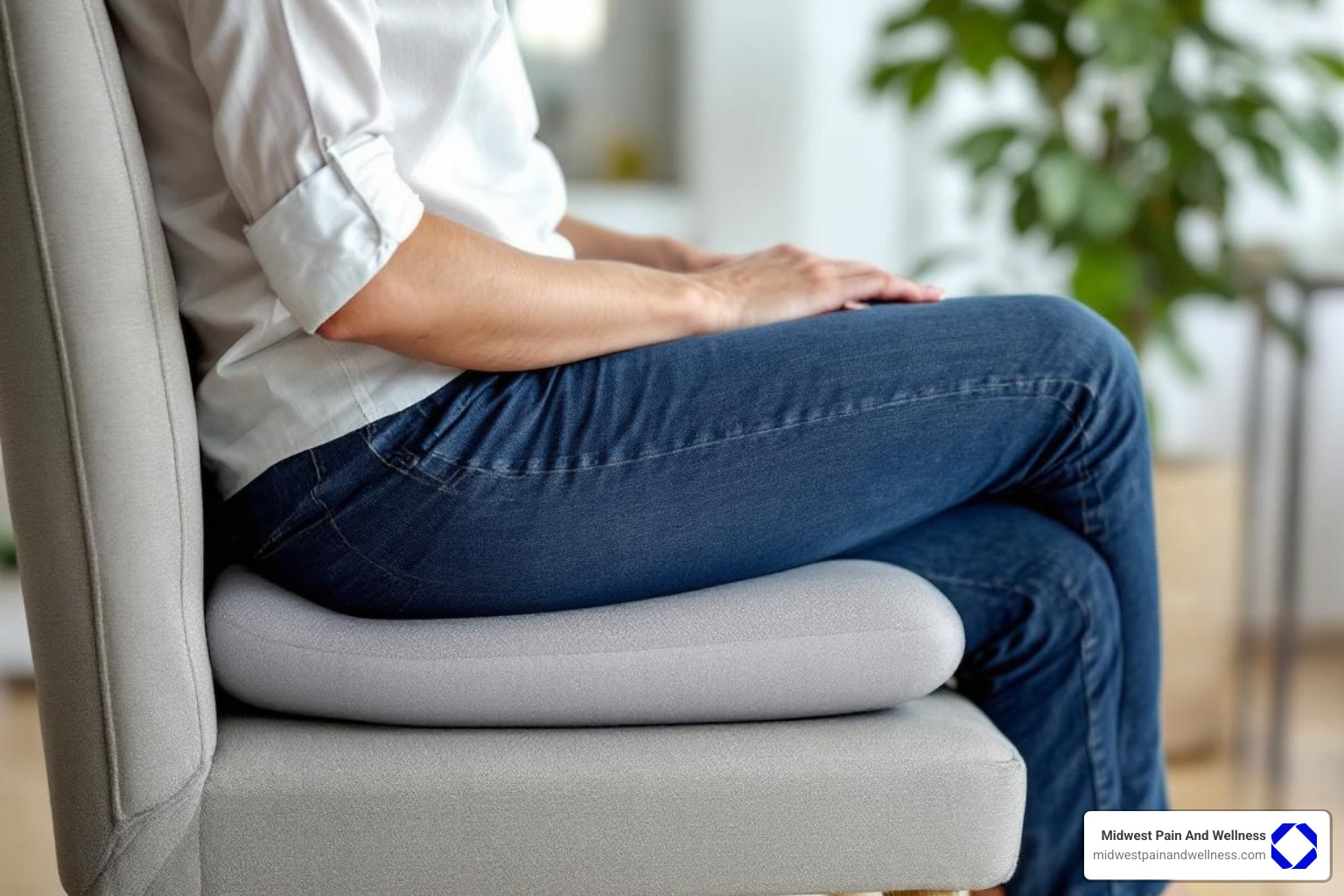
Let’s start with the most obvious culprit: sitting. That chair you’re in right now might be making things worse. Direct pressure on your coccyx is often what triggers the most pain, so your first mission is to reduce that pressure however you can.
A specialized coccyx cushion or donut pillow can be a game-changer. These cushions have a cutout at the back specifically designed to keep pressure off your tailbone. Some people even find relief sitting on an exercise ball, which allows for more movement and better weight distribution. When you do sit, try leaning forward slightly—this simple adjustment shifts your weight onto your thighs instead of your tailbone.
Do’s and Don’ts for Sitting with Tailbone Pain:
- Do use a coccyx cushion or donut pillow to relieve pressure
- Do lean forward while sitting to shift weight to your thighs
- Do maintain good posture with lower back support
- Do alternate between each buttock, gently shifting your weight
- Don’t sit for long periods, especially on hard surfaces
- Don’t slouch or sit with a rounded back
- Don’t sit on ‘one cheek’ as it strains other body parts
Getting up and moving around frequently is crucial. Even if you have a desk job, set a timer to remind yourself to stand and stretch every 30 minutes. Your tailbone will thank you.
When it’s time to sleep, position matters too. Lying on your belly takes pressure off the tailbone entirely. If you’re a side sleeper, try placing a small firm cushion between your knees to keep your hips aligned and reduce strain on your lower back and tailbone.
Heat and ice therapy is another powerful tool in your home relief arsenal. For the first 48 hours after an injury, ice is your friend. Apply an ice pack wrapped in a towel (never directly on skin!) for about 20 minutes every hour while you’re awake. After those initial two days, you can switch to either heat or cold—whichever feels better. Heat relaxes tight muscles and increases blood flow, while ice reduces inflammation and numbs the area. Apply either for 20 to 30 minutes several times throughout the day.
Over-the-counter pain relievers can provide significant relief as well. Non-steroidal anti-inflammatory drugs (NSAIDs) like ibuprofen (Advil, Motrin IB) or naproxen work double duty by reducing both pain and inflammation. Acetaminophen (Tylenol) is another option if you can’t take NSAIDs. Always follow the dosage instructions on the package, and check with a healthcare provider if you have any pre-existing conditions or concerns. You can find more detailed information about NSAIDs like ibuprofen here. Topical pain relievers, such as diclofenac gel, can also be applied directly to the affected area for localized relief without affecting your whole body.
Here’s something you might not expect: constipation can make tailbone pain worse. Straining during bowel movements puts extra pressure on the coccyx, which is the last thing you need. Keep things moving smoothly by eating plenty of fiber and drinking enough water throughout the day. If you’re struggling with constipation, ask your pharmacist for a stool softener to make things easier.
Finally, take a look at your wardrobe. Loose clothing around your bottom and lower back prevents unnecessary pressure and allows better circulation. Those tight jeans might look great, but they’re not doing your tailbone any favors right now.
These home remedies work remarkably well for most people. Give them a fair try for a few weeks. However, if your pain persists beyond that or gets worse despite your best efforts, it’s time to bring in professional help.
Professional Tailbone Pain Relief Treatments
When home remedies aren’t quite cutting it, or if your tailbone pain is persistent and severe, it’s time to explore professional avenues for tailbone pain relief. At Midwest Pain And Wellness in Chicago Ridge, Illinois, we understand how frustrating chronic pain can be. We specialize in comprehensive, opioid-free pain management, utilizing a multi-modal, interventional approach to create custom care plans designed for long-term relief.
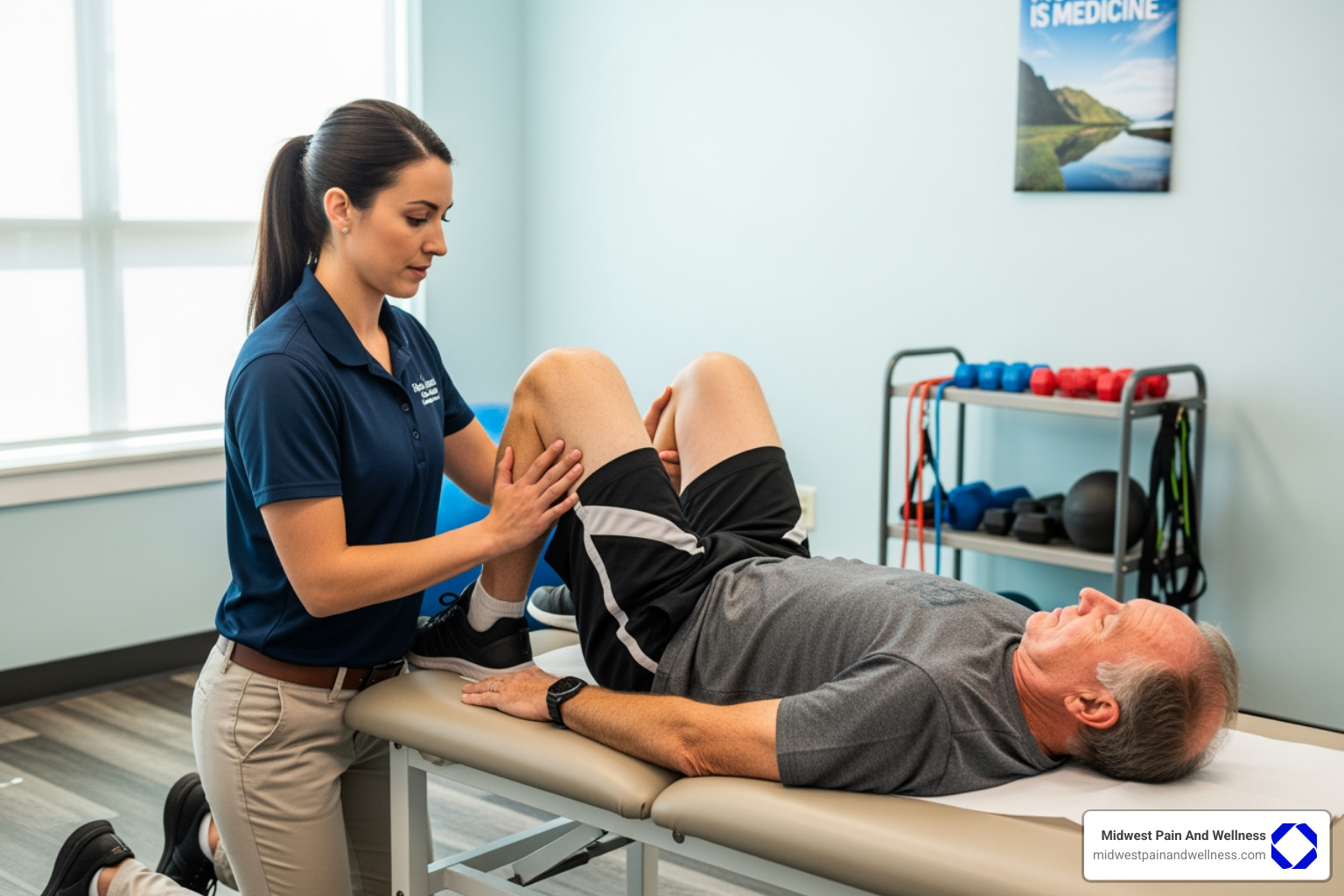
Our double board-certified doctors don’t believe in one-size-fits-all solutions. Instead, we collaborate with other practitioners to ensure you receive the most effective and personalized treatment strategy. This might involve a combination of physical therapy, targeted injections, and in rare cases, surgical considerations. You can learn more about our treatment procedures here: More info about our treatment procedures.
When to See a Doctor for Your Pain
It’s natural to try managing pain at home first, and honestly, that works for many people. But there are clear signals that your body is asking for professional help. Don’t hesitate to reach out to us if your tailbone pain has not improved after a few weeks of trying home treatments, or if the discomfort is severe enough to interfere with your daily life—making it difficult to sleep, work, or move comfortably.
Pay special attention to any sudden numbness, tingling, or weakness in one or both of your legs. These neurological symptoms need prompt evaluation. Similarly, if you experience a sudden increase in pain or swelling around the tailbone, it’s time to get checked out.
Fever is another red flag. If you develop a high temperature (103°F/39.4°C or higher) alongside your tailbone pain, especially if it’s accompanied by pain in another area like your tummy or lower back, this could indicate an infection. You should also seek medical attention if you notice skin changes, drainage of fluid from the crease of your buttocks, prolonged constipation, or trouble controlling your bladder or bowels.
If your tailbone pain stems from a work-related injury, our team in Chicago Ridge can also assist with Workers Compensation for injuries in Chicago Ridge.
Non-Surgical Tailbone Pain Relief Options
The good news? For many individuals, tailbone pain relief can be achieved through a variety of non-surgical treatments custom to their specific needs. These options aim to reduce inflammation, alleviate pressure, and restore proper function—without going under the knife.
Physical therapy is often the cornerstone of treatment, and for good reason. A skilled physical therapist can assess your posture, identify muscle imbalances, and evaluate your movement patterns. They might use manual manipulation techniques on the muscles around your coccyx, combined with targeted stretching and strengthening exercises. What many people don’t realize is that pelvic floor physical therapy can be incredibly effective. Since tight or imbalanced pelvic floor muscles attach directly to the tailbone, releasing tension in these muscles often provides significant relief. Your therapist can guide you through pelvic floor relaxation techniques and exercises designed to ease this tension.
In some cases, a physical therapist or osteopath might perform manual manipulation to gently mobilize the coccyx itself. This can be done externally or, when necessary, internally through the rectum to massage the muscles attached to the tailbone. While it might sound uncomfortable, this technique can help release tension and improve alignment.
When pain is persistent despite therapy, injections can provide targeted relief. Corticosteroid and local anesthetic injections involve delivering a numbing medication and a steroid directly into the joint attaching the coccyx to the spine, or into the surrounding soft tissues. The steroid reduces inflammation, while the anesthetic provides immediate pain relief. Another option is nerve blocks, which specifically target the nerves transmitting pain signals from the tailbone. This can offer significant relief, especially for chronic pain that hasn’t responded to other treatments.
Our approach at Midwest Pain And Wellness is to explore all appropriate non-surgical avenues first. We also offer advanced interventional procedures like Spinal Cord Stimulator Therapy in Chicago Ridge for complex chronic pain conditions, though this is typically considered for broader neuropathic pain rather than isolated tailbone issues.
Surgical Tailbone Pain Relief and Recovery
For a small percentage of individuals who do not find adequate tailbone pain relief through conservative or non-surgical treatments, surgery may be considered as a last resort. This procedure is called a coccygectomy, which involves the partial or total surgical removal of the coccyx.
Let’s be clear: coccygectomy is a significant surgical intervention. It’s only recommended when all other treatment options have failed to provide relief for severe, persistent pain, typically after 6 months or more of trying everything else. Recovery from coccygectomy can be prolonged, often taking several months, and there’s no guarantee that the surgery will completely alleviate the pain. That’s why it truly is a last resort.
The recovery time for tailbone injuries in general varies greatly depending on the severity. If your tailbone injury is a bruise, healing typically takes about 4 weeks. If you have a fracture, healing can take 8 to 12 weeks. During the healing process, whether from an injury or after surgery, it’s crucial to follow your healthcare provider’s instructions for rest, activity modification, and pain management.
Our goal at Midwest Pain And Wellness is always to help you achieve the best possible outcome with the least invasive methods, reserving surgery only for when it is absolutely necessary. We believe in working with you, not just treating you—finding the right combination of therapies that gets you back to living your life without constant pain.
Exercises and Stretches for Lasting Comfort
Once you’ve mastered the basics of tailbone pain relief through cushions and ice packs, it’s time to think about the long game. The real magic happens when you start moving your body in ways that address the root causes of your discomfort. Think of it as building a protective shield around your tailbone—one made of strong, flexible muscles that actually know what they’re doing.
Your coccyx doesn’t exist in isolation. It’s connected to a whole network of muscles and ligaments, especially those in your pelvic floor, hips, and lower back. When these muscles get tight, they can literally pull on your tailbone like an overzealous puppy on a leash. When they’re weak, they can’t provide the support your spine needs, leaving your tailbone to bear more stress than it should.
That’s where a thoughtful exercise program comes in. Pelvic floor exercises help create balance in those deep muscles that attach directly to your coccyx. Core strengthening gives your entire midsection the stability it needs to take pressure off your tailbone. And glute and hip stretches release the tension that builds up from sitting, poor posture, or just living life.
The benefits are real and lasting. You’ll notice improved mobility as stiffness melts away and healthy blood flow returns to the area. You’ll feel reduced muscle tension as those tight spots finally let go of their death grip on your tailbone. Your daily movements will become easier, and that constant nagging ache will start to fade.
A word of caution: if something hurts, don’t push through it. Your body is smart, and pain is its way of telling you to ease up. Start slowly, be patient with yourself, and gradually increase intensity as your comfort improves. And if you’re pregnant or dealing with particularly stubborn pain, working with a physical therapist—especially one who specializes in pelvic floor health—can make all the difference.
Stretches to Loosen Tight Muscles
Tight muscles in your hips, glutes, and lower back are often the hidden culprits behind tailbone pain. These stretches help release that tension and give your coccyx some breathing room.
Child’s Pose is your gentle friend when everything feels tight and uncomfortable. This classic yoga position stretches your lower back and hips while giving your spine a chance to decompress. It’s also a perfect opportunity to practice deep, diaphragmatic breathing, which naturally relaxes your pelvic floor muscles. You can watch a demonstration here: Child’s Pose.
The Figure 4 Stretch targets your piriformis muscle and glutes—two areas that love to get tight and make your tailbone miserable. Lie on your back with your knees bent and feet flat on the floor. Cross one ankle over the opposite knee (it looks like the number 4, hence the name), then gently pull the uncrossed thigh toward your chest until you feel a good stretch in your hip and glute. Hold it there and breathe. Here’s how it looks: Figure 4 Stretch.
Cobra Pose offers a mild backbend that improves spinal mobility and gently stretches your abdominal muscles. Lie on your stomach, place your hands under your shoulders, and gently lift your chest off the floor while keeping your hips down. Think of it as peeking over a fence rather than launching yourself over it.
Exercises to Build Support
Stretching feels good, but building strength is what creates lasting change. These exercises strengthen the muscles that support your tailbone, creating a stable foundation that reduces stress on your coccyx.
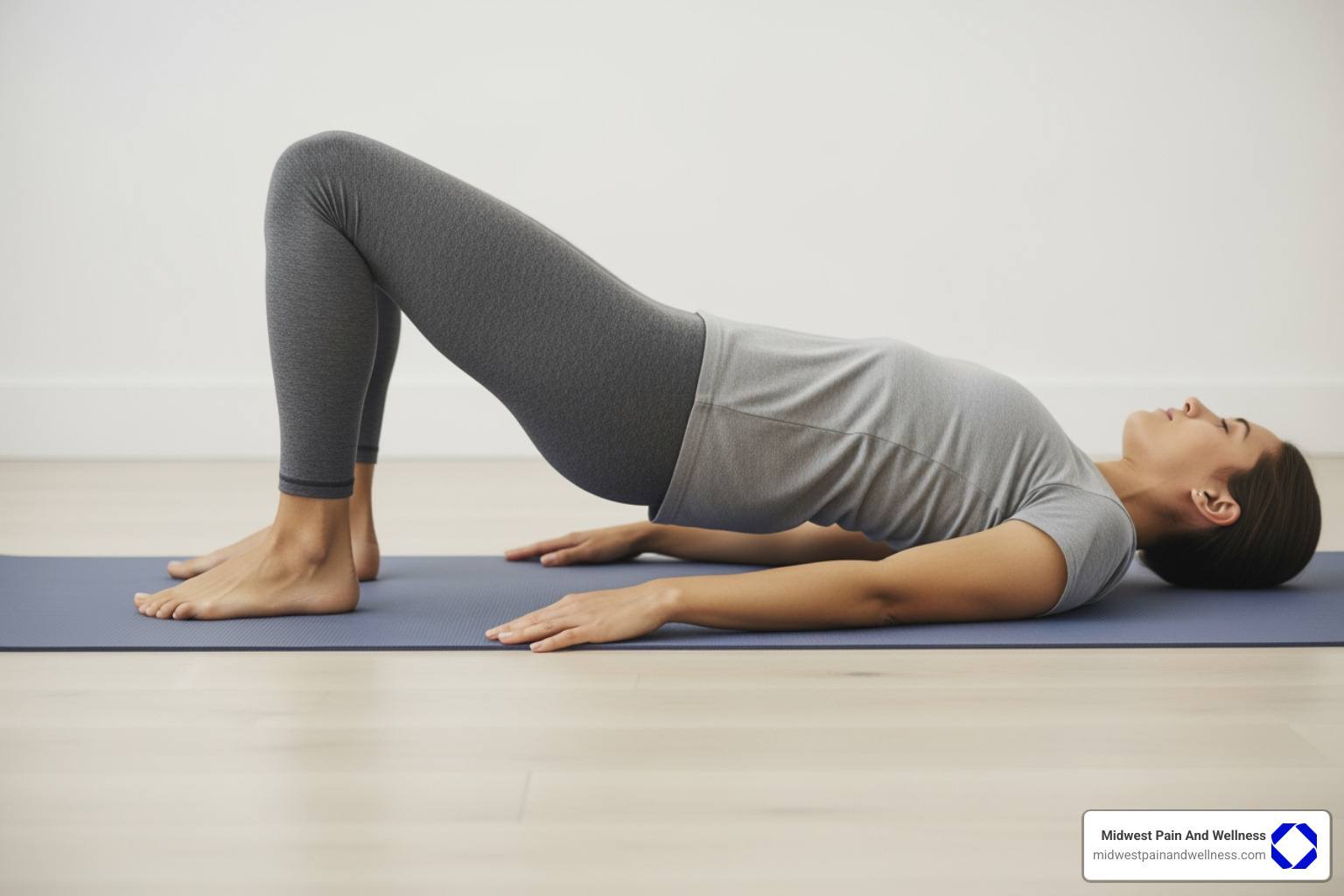
Glute Bridges are simple but powerful for strengthening your glutes and hamstrings—the muscles that keep your pelvis stable. Lie on your back with knees bent and feet flat on the floor, then lift your hips until your body forms a straight line from shoulders to knees. Squeeze those glutes at the top, then lower back down with control. Watch the proper form here: Glute Bridges.
The Bird Dog exercise builds core stability and strengthens your lower back without putting any direct pressure on your tailbone. Start on your hands and knees, then extend one arm forward and the opposite leg straight back, keeping your core engaged and your spine neutral. It’s trickier than it looks, but that’s what makes it effective. See it in action: Bird Dog.
Dead Bug is another excellent core strengthener that protects your spine while building stability. Lie on your back with arms extended toward the ceiling and knees bent at 90 degrees. Slowly lower one arm and the opposite leg toward the floor without arching your back. The key is moving with control and keeping your lower back pressed to the floor. Learn the technique here: Dead Bug.
Here’s something you might not have heard of: the Reverse Kegel. Unlike a standard Kegel that squeezes your pelvic floor, this one focuses on relaxation. This is especially important if tight pelvic floor muscles are pulling on your tailbone. Imagine gently pushing down as if you’re starting to urinate or have a bowel movement, then fully relaxing. It’s subtle, and a physical therapist can help you master the correct technique.
The secret to success isn’t doing these exercises once and expecting miracles. It’s consistency. Even short sessions several times a week can create real, lasting tailbone pain relief. Your body will thank you for it.
Conclusion: Take the Next Step Towards a Pain-Free Life
Living with tailbone pain doesn’t have to be your reality. Throughout this guide, we’ve walked through the journey of understanding tailbone pain relief—from recognizing those first uncomfortable symptoms to finding what might be causing your discomfort in the first place.
You now know that immediate relief often starts at home. Simple changes like using a coccyx cushion, adjusting how you sit, applying heat or ice therapy, and taking over-the-counter pain relievers can make a real difference for many people. In fact, 90% of individuals find relief with these self-care measures alone.
But we also understand that sometimes, home remedies aren’t enough. That’s where professional care comes in. At Midwest Pain And Wellness in Chicago Ridge, Illinois, our double board-certified doctors specialize in comprehensive, opioid-free pain management. We don’t believe in one-size-fits-all solutions. Instead, we take a multi-modal, interventional approach, working collaboratively with other practitioners to create a custom care plan that addresses your unique situation.
Whether you need physical therapy to strengthen supporting muscles, targeted injections to reduce inflammation, or guidance on the right exercises and stretches for lasting comfort, we’re here to help. We explore all appropriate non-surgical options first, reserving surgical interventions only for when they’re truly necessary. Our goal is always to help you achieve long-term relief, not just temporary fixes.
The path to lasting comfort is rarely just about treating symptoms. It’s about understanding your body as a whole—recognizing how your posture, daily habits, muscle strength, and even stress levels all play a role in your pain. When you take a comprehensive approach that combines immediate relief strategies with professional treatment and ongoing self-care practices, you’re setting yourself up for real, sustainable improvement.
You deserve to sit comfortably, move freely, and live without that constant reminder of pain at the base of your spine. If your tailbone pain has been persisting despite your best efforts at home, or if it’s severe enough to interfere with your daily activities, don’t wait any longer. Our team is ready to listen, diagnose the root cause of your discomfort, and guide you toward the relief you’ve been searching for.
To learn more about how we can help you find lasting tailbone pain relief and to understand the full range of conditions we address, please visit: Explore the conditions we treat. Let’s work together to get you back to living your life—comfortably and confidently.