Why Tennis Elbow Relief Matters (Even If You’ve Never Held a Racket)
Tennis elbow relief is possible. Most people recover within 6-18 months using conservative treatments like rest, ice, stretching, and over-the-counter pain medication.
Quick Relief Options:
- Rest: Stop or modify activities that worsen pain.
- Ice: Apply cold packs for 15-20 minutes, 3-4 times daily.
- Pain Relievers: Use NSAIDs like ibuprofen or naproxen.
- Bracing: Wear a forearm strap to reduce tendon stress.
- Stretching: Perform gentle wrist and forearm stretches.
- Strengthening: Begin eccentric exercises once acute pain subsides.
Here’s a surprise: you don’t need to play tennis to suffer from tennis elbow. In fact, over 90% of people with this condition are not tennis players. Any repetitive wrist and forearm motion—from plumbing and painting to typing or gardening—can trigger this painful overuse injury.
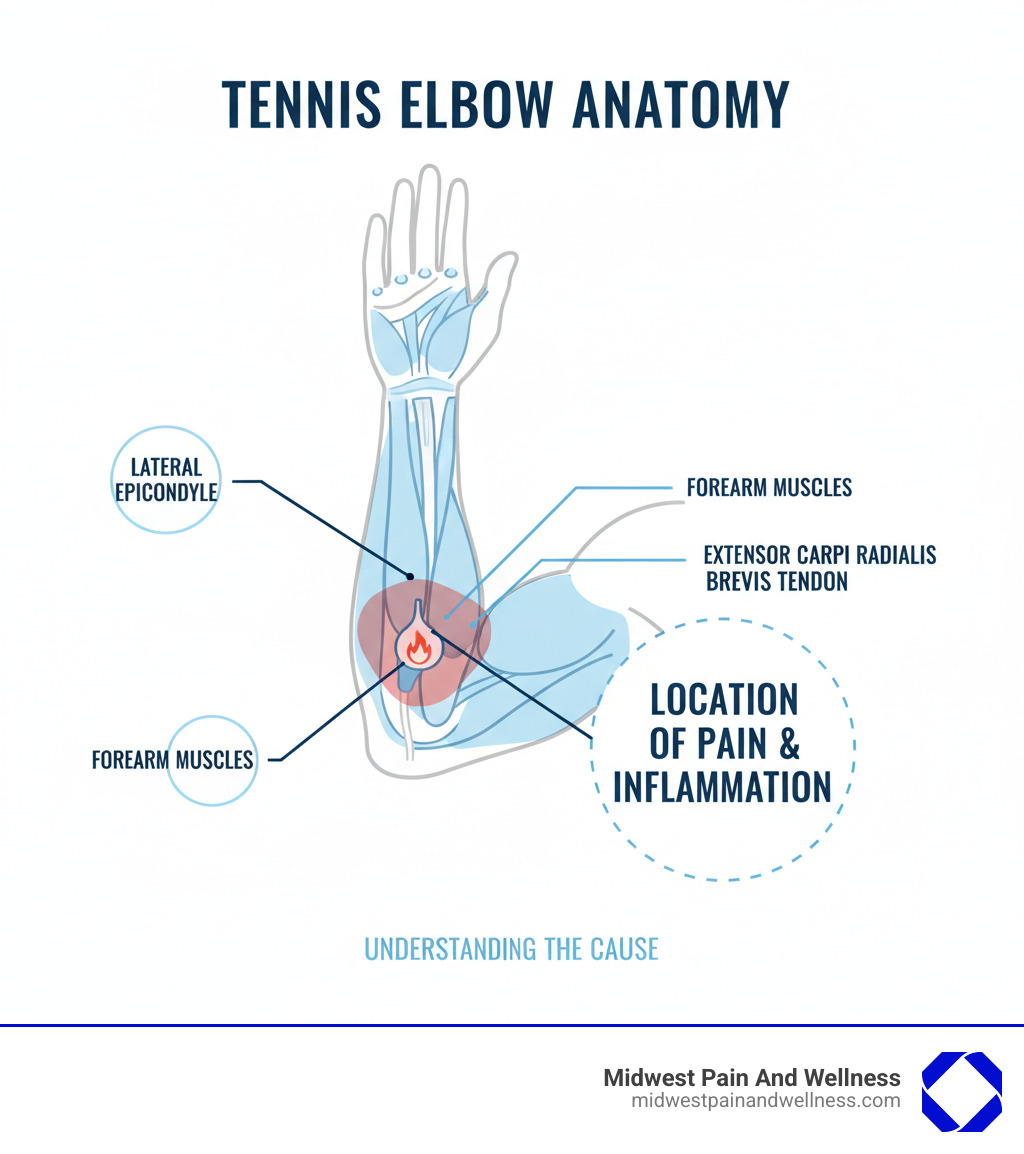
Tennis elbow, or lateral epicondylitis, is a tendinopathy where the tendons connecting your forearm muscles to your outer elbow develop microscopic tears. This causes burning pain, a weak grip, and difficulty with simple tasks like lifting a coffee cup. The good news is that this condition responds well to treatment. This guide will walk you through everything you need for relieving tennis elbow pain, from at-home strategies to professional treatments.
Understanding the Injury: What is Tennis Elbow?
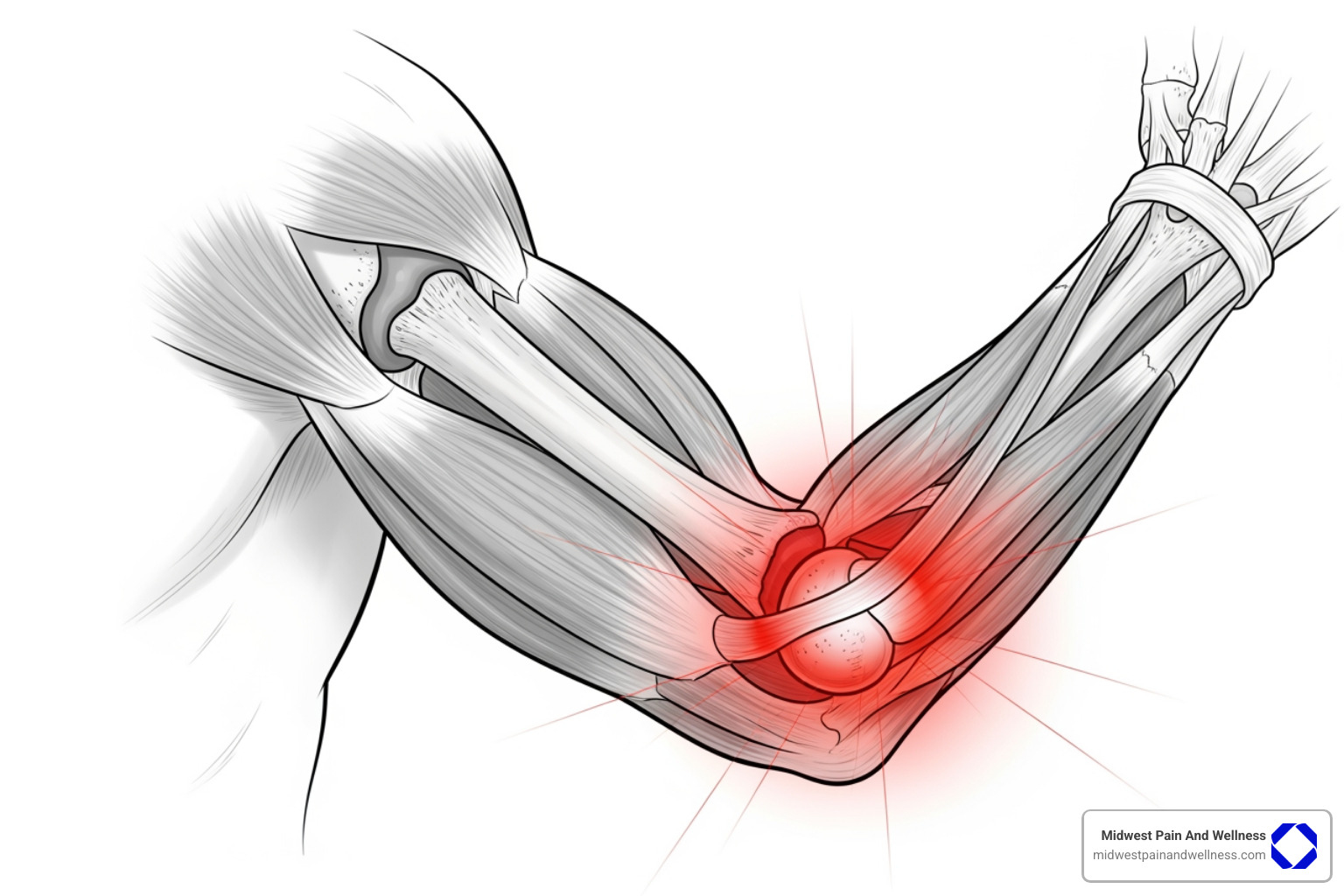
Tennis elbow, or lateral epicondylitis, is the nagging pain on the outside of your elbow that occurs when the tendons connecting your forearm muscles to your upper arm bone get overworked and damaged. The main culprit is the extensor carpi radialis brevis tendon, which helps you extend your wrist and fingers.
While some inflammation can be present, tennis elbow is primarily a tendinopathy—a breakdown of the tendon tissue from tiny tears. This distinction is important because tennis elbow relief focuses on helping the damaged tendon heal and rebuild, not just fighting inflammation.
What Causes Tennis Elbow?
Despite its name, tennis is rarely the cause. The real villain is repetitive motion. Any activity where you constantly grip, twist, or swing your forearm can strain the extensor tendons until they develop microscopic tears.
- Sports: Tennis, pickleball, and golf can be problematic, often due to poor technique, weak shoulder strength, or improper equipment.
- Occupations: Plumbers, painters, carpenters, butchers, and dentists face a higher risk due to constant, repetitive arm and wrist movements.
- Hobbies: Gardening, knitting, playing an instrument, or long computer sessions can all lead to tennis elbow.
The biggest risk factors are being between ages 30 and 50, using improper technique in sports or at work, and regularly lifting heavy objects.
Common Symptoms to Watch For
Tennis elbow usually starts as a mild ache that gradually worsens. Catching it early is key for quick tennis elbow relief.
The signature sign is pain on the outside of your elbow, often described as a burning sensation. The pain frequently radiates down your forearm toward your wrist.
Everyday tasks become difficult as your grip strength weakens. A simple handshake, opening a jar, or turning a doorknob can become painful. Some people also notice stiffness, especially in the morning. If ignored, the pain can become constant and disrupt your sleep.
Tennis Elbow vs. Golfer’s Elbow
Both are overuse injuries, but the key difference is location.
- Tennis elbow (lateral epicondylitis) affects the outside of your elbow. It involves the extensor tendons used to bend your wrist back.
- Golfer’s elbow (medial epicondylitis) causes pain on the inside of your elbow. It affects the flexor tendons used to bend your wrist forward.
If the pain is on the thumb side of your elbow (palm up), it’s tennis elbow. If it’s on the pinky side, it’s golfer’s elbow. A correct diagnosis is crucial for targeting treatment to the right area.
Your First Serve: At-Home Tennis Elbow Relief Strategies
For most people, recovery from tennis elbow begins at home. Simple, consistent self-care can make a significant difference, especially if you catch the condition early. The goal is to reduce strain on the injured tendons and create the right conditions for healing.
The R.I.C.E. Method and Bracing
The R.I.C.E. method (Rest, Ice, Compression, Elevation) is a proven approach for musculoskeletal injuries.
- Rest: This is crucial. Stop or significantly reduce any activity that hurts your elbow. This doesn’t mean total immobilization, but avoiding the specific movements that caused the injury.
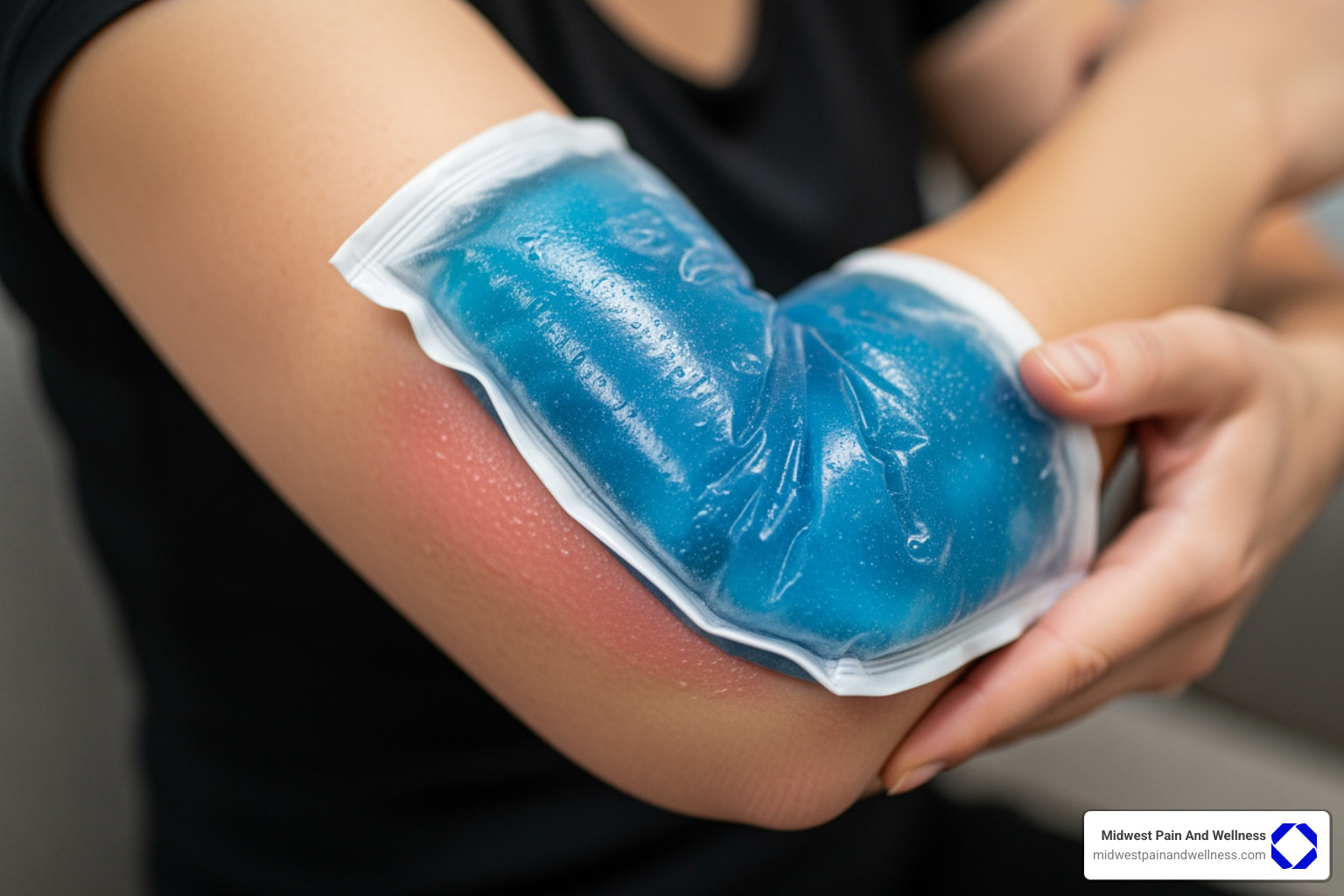
- Ice: To manage pain and inflammation, apply an ice pack wrapped in a towel to the painful area for 15-20 minutes, 3 to 4 times a day.
- Compression: A forearm strap or brace provides excellent tennis elbow relief by applying counter-force to your muscles, which reduces the load on damaged tendons. Position the strap about two finger-widths below the painful spot.
- Elevation: While less critical for elbows than ankles, propping your arm on a pillow can help reduce any swelling.
Stretches and Exercises for Lasting Tennis Elbow Relief
Once the sharp pain subsides, gentle stretches and strengthening exercises are key for long-term tennis elbow relief. These movements encourage the tendon to heal with stronger, more organized tissue.
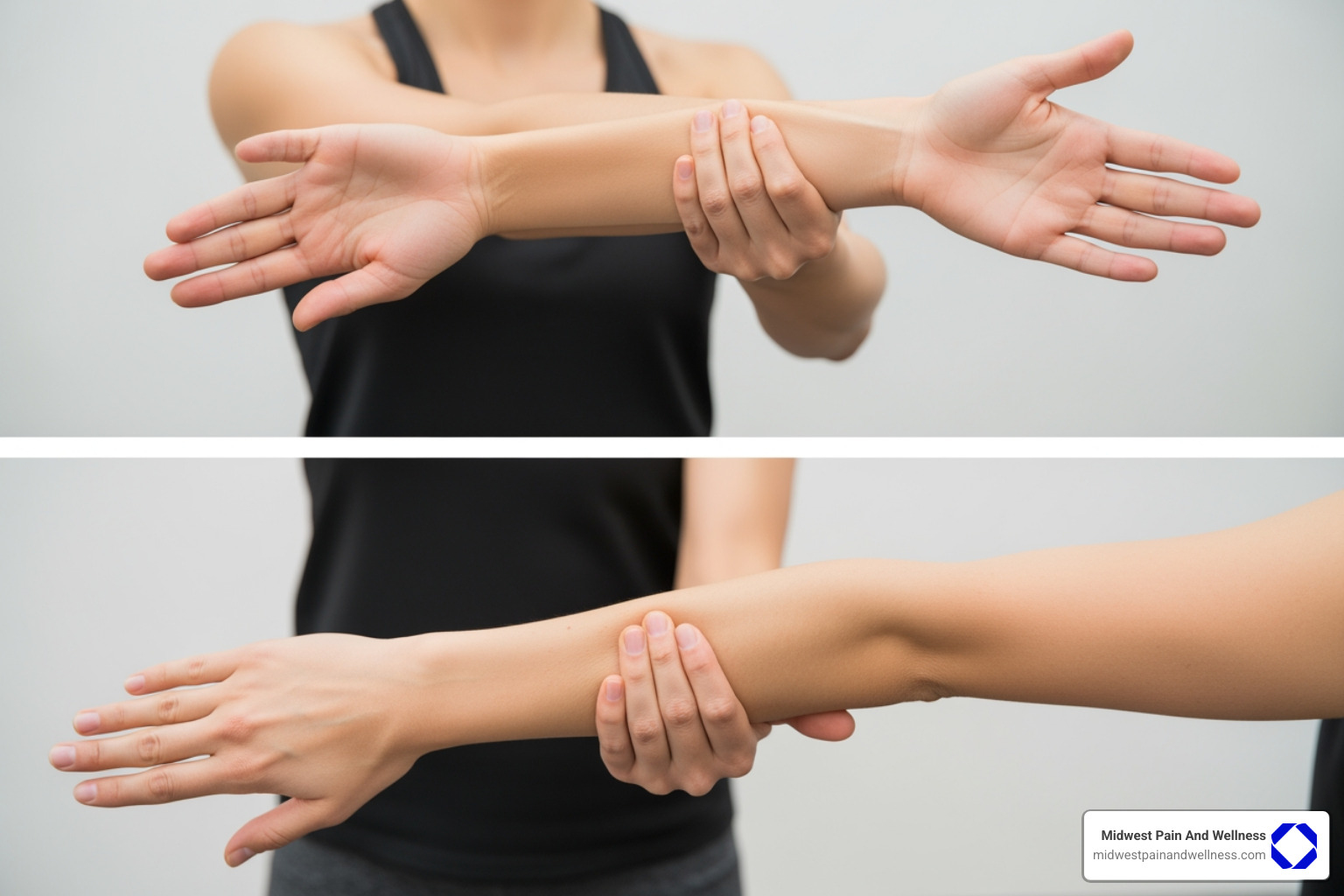
- Wrist Extensor Stretch: Straighten your arm, palm down. With your other hand, gently bend your wrist downward, feeling a stretch on top of your forearm. Hold for 30 seconds and repeat 3 times.
- Wrist Flexor Stretch: Straighten your arm, palm up. Gently pull your fingers downward, bending your wrist. Hold for 30 seconds and repeat 3 times.
- Eccentric Strengthening: Sit with your forearm on your thigh, holding a light dumbbell (1-2 lbs) with your palm down. Slowly lower the weight, then use your other hand to lift it back up. This controlled lowering motion stimulates tendon healing.
For visual guidance, see these Chartered Society of Physiotherapy: video exercises for elbow pain.
Over-the-Counter Pain Management
While your tendon heals, over-the-counter (OTC) medications can manage pain.
NSAIDs like ibuprofen (Advil) or naproxen (Aleve) reduce both pain and inflammation. Topical anti-inflammatory gels containing diclofenac offer localized relief with fewer side effects. If you can’t take NSAIDs, acetaminophen (Tylenol) can help with pain but not inflammation.
These medications are for short-term use. If you need them for more than 10 days, consult a healthcare provider for a better long-term strategy for tennis elbow relief.
Advancing Your Game: When to Seek Professional Treatment
At-home care is effective, but sometimes professional help is necessary. It’s time to call a professional if:
- You see no improvement after two or more weeks of diligent self-care.
- The pain interferes with daily activities like working, cooking, or sleeping.
- The pain is disrupting your sleep, which is essential for healing.
At Midwest Pain and Wellness, we specialize in comprehensive, non-opioid approaches to pain management. You can find more info about our treatment procedures on our website.
How is Tennis Elbow Professionally Diagnosed?
A diagnosis often starts with a physical exam and a review of your medical history. Your doctor will gently press on the tender spot on your elbow and ask you to perform movements that recreate the pain, like lifting your hand against resistance. We’ll discuss when the pain started and what activities make it worse.
Occasionally, imaging tests are used to rule out other issues or assess the damage. An X-ray can check for arthritis, while an MRI or Ultrasound can provide detailed images of the tendon damage.
Non-Surgical Treatments for Tennis Elbow Relief
At Midwest Pain and Wellness, we use a multi-modal approach, combining therapies for the best outcome. Our team, including Dr. Donkoh, prioritizes non-opioid treatments that address the root cause of your pain.
- Physical Therapy: A physical therapist creates a personalized program of stretches and exercises. They also help you modify movements at work or during sports to reduce stress on the tendon and may use ice therapy, muscle stimulation, or taping.
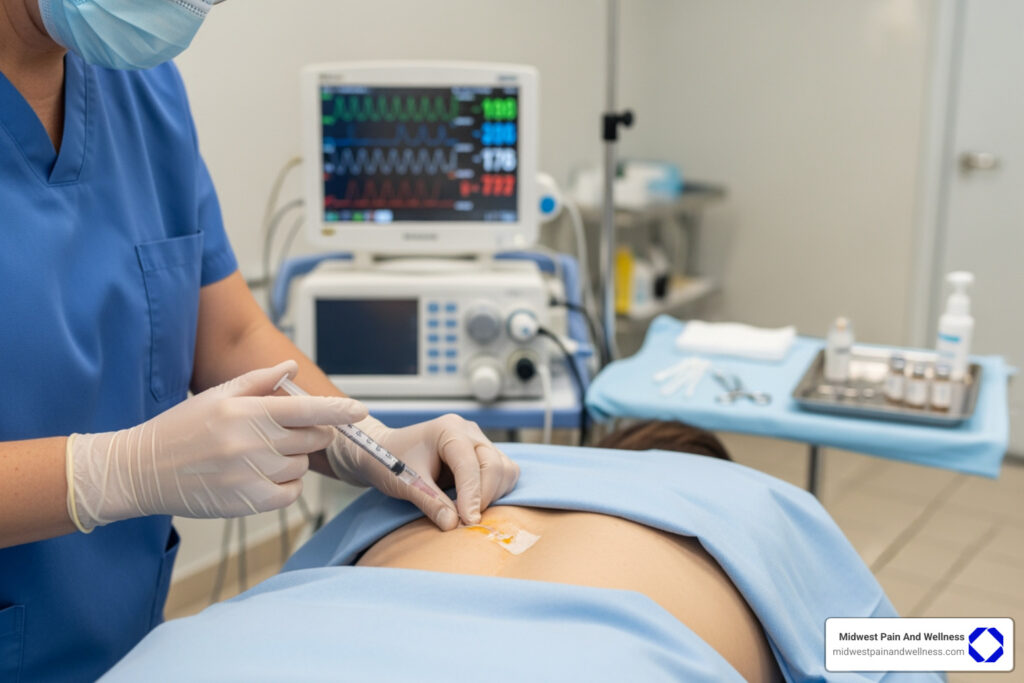
- Corticosteroid Injections: These injections deliver powerful anti-inflammatory medication for significant short-term relief. We’ll discuss the pros and cons with you, as they may affect long-term outcomes.
- Platelet-Rich Plasma (PRP) Injections: This innovative therapy uses a concentration of your own blood platelets, which are rich in growth factors, to accelerate natural tendon healing.
- Dry Needling: A fine needle is used to gently pierce the damaged tendon, triggering your body’s natural healing response and stimulating new tissue growth.
- Shockwave Therapy: Targeted sound waves are used to break up scar tissue, increase blood flow, and activate your body’s healing mechanisms, often accelerating recovery.
Understanding the Recovery Timeline
Healing from tennis elbow requires patience. While most people see improvement within a few months of nonsurgical treatment, complete recovery often takes six to 18 months. The encouraging news is that people almost always make a full recovery.
Recovery speed depends on the injury’s severity, your age, and, most importantly, your consistency with rest, exercises, and activity modification. Think of it as a marathon, not a sprint. Steady progress is the key to lasting tennis elbow relief.
Preventing a Rematch: How to Prevent Tennis Elbow
Once you’ve achieved tennis elbow relief, the goal is to prevent its return. Prevention focuses on addressing the root cause: repetitive strain. Small adjustments to your technique, equipment, and physical conditioning can make a world of difference.
Key prevention strategies include using proper form, improving workplace ergonomics, warming up before activities, and taking regular breaks to avoid overuse. Always listen to your body’s early warning signals.
Equipment and Technique Adjustments
The right tools, used correctly, can protect your tendons.
- For Sports: If you play racquet sports, ensure your racket grip size and tension are correct. A grip that’s too small or large can strain your forearm. Looser strings absorb more shock.
- At the Office: Use ergonomic keyboards and mice to keep your wrists in a neutral position. Position your equipment to avoid awkward reaching or bending.
- For Lifting: Whenever possible, lift objects with your palm facing up. This engages different muscles and takes pressure off the vulnerable extensor tendons. Use both hands for heavier items.
Strengthening and Conditioning
A strong, resilient body is your best defense against tennis elbow.
- Forearm Strengthening: Regularly perform the eccentric exercises mentioned earlier. Strong forearm muscles handle stress better.
- Shoulder and Core Stability: A strong core and stable shoulders provide a solid foundation for arm movements, reducing the strain on your elbow.
- Flexibility: Daily stretching, especially for your forearm muscles, maintains a healthy range of motion and reduces stiffness. This keeps muscles from pulling on tendons.
Frequently Asked Questions about Tennis Elbow Relief
Here are answers to some of the most common questions we hear from patients seeking tennis elbow relief.
How long does it take for tennis elbow to go away?
The recovery timeline varies. While many people feel better within a few months, complete tennis elbow relief can take anywhere from 6 months to 2 years. The good news is that with consistent, nonsurgical treatment, a full recovery is very common. Your adherence to rest, exercises, and activity modification is the most critical factor in speeding up your recovery.
Can you get tennis elbow without playing tennis?
Yes, absolutely. This is a common misconception. Over 90% of people who develop tennis elbow are not tennis players. The condition is caused by any repetitive wrist and forearm motion, making it common among office workers, painters, plumbers, carpenters, and people with hobbies like gardening or knitting.
What is the fastest way to cure tennis elbow?
There is no “fast cure” or magic bullet for tennis elbow. The most effective and reliable approach is a combination of rest, activity modification, and targeted exercises. This strategy addresses both the symptoms and the underlying tendon damage, leading to lasting healing.
Early diagnosis and proper treatment are the best ways to shorten your recovery time. If at-home strategies don’t provide relief after a couple of weeks, professional treatments can help accelerate the healing process. For more information, the Mayo Clinic provides excellent resources on Tennis elbow – Diagnosis and treatment. The goal is complete healing, not just a temporary fix.
Claiming Your Victory Over Pain
You are now equipped with the knowledge to take control of your recovery and achieve tennis elbow relief. The path isn’t always quick, but finding the right combination of treatments for your unique situation—whether it’s consistent home care, physical therapy, or advanced treatments like PRP injections—is the key to success.
A personalized approach makes all the difference. At Midwest Pain and Wellness, we are committed to being your partner on this journey. Our double board-certified doctors use a multi-modal, interventional approach to create custom, opioid-free care plans designed for long-term recovery.
Whether you’re a carpenter, a gardener, or an office worker, we’re here to help you get back to what matters most, free from elbow pain. You don’t have to manage this alone.
Take the first step toward reclaiming your life. Explore the conditions we treat to see how our comprehensive approach works. Ready to start your personalized path to tennis elbow relief? Contact us today to schedule a consultation at our Chicago Ridge, Illinois location.
Your victory over pain is waiting.