Understanding Nerve Block for Pain: A Modern Solution for Chronic Suffering
A nerve block for pain is a minimally invasive procedure where a pain specialist injects medication near specific nerves to interrupt pain signals traveling to your brain. This modern approach offers powerful relief for chronic or acute pain, often without surgery or a heavy reliance on opioid medications. When standard treatments don’t provide adequate relief, a nerve block offers an effective alternative.
Quick Answer: What You Need to Know
- What it is: An injection of anesthetic and/or anti-inflammatory medication near targeted nerves.
- How it works: Blocks pain signals from reaching your brain, providing numbness and relief.
- Duration: Can last from hours to months, depending on the type and medication used.
- Purpose: Therapeutic (pain relief), diagnostic (identifying pain source), or anesthetic (for surgery).
- Common uses: Back pain, arthritis, migraines, post-surgical pain, sciatica, and chronic conditions.
- Safety: Generally safe when performed by trained specialists, with minimal risks.
While nerve blocks aren’t new, technological advances like ultrasound guidance have made them safer and more precise than ever. They work by targeting the specific nerves responsible for your pain, rather than flooding your entire system with medication. This means better pain control with fewer side effects for many people.
Whether you’re dealing with chronic back pain, recovering from surgery, or living with conditions like arthritis or migraines, understanding how nerve blocks work can help you make informed decisions about your pain management options.
What is a Nerve Block and How Does It Work?
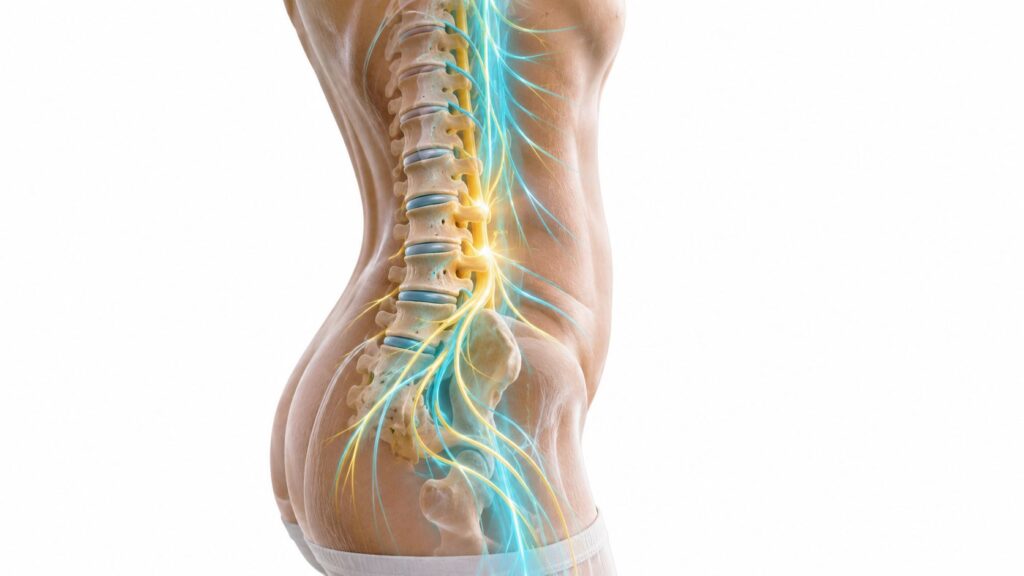
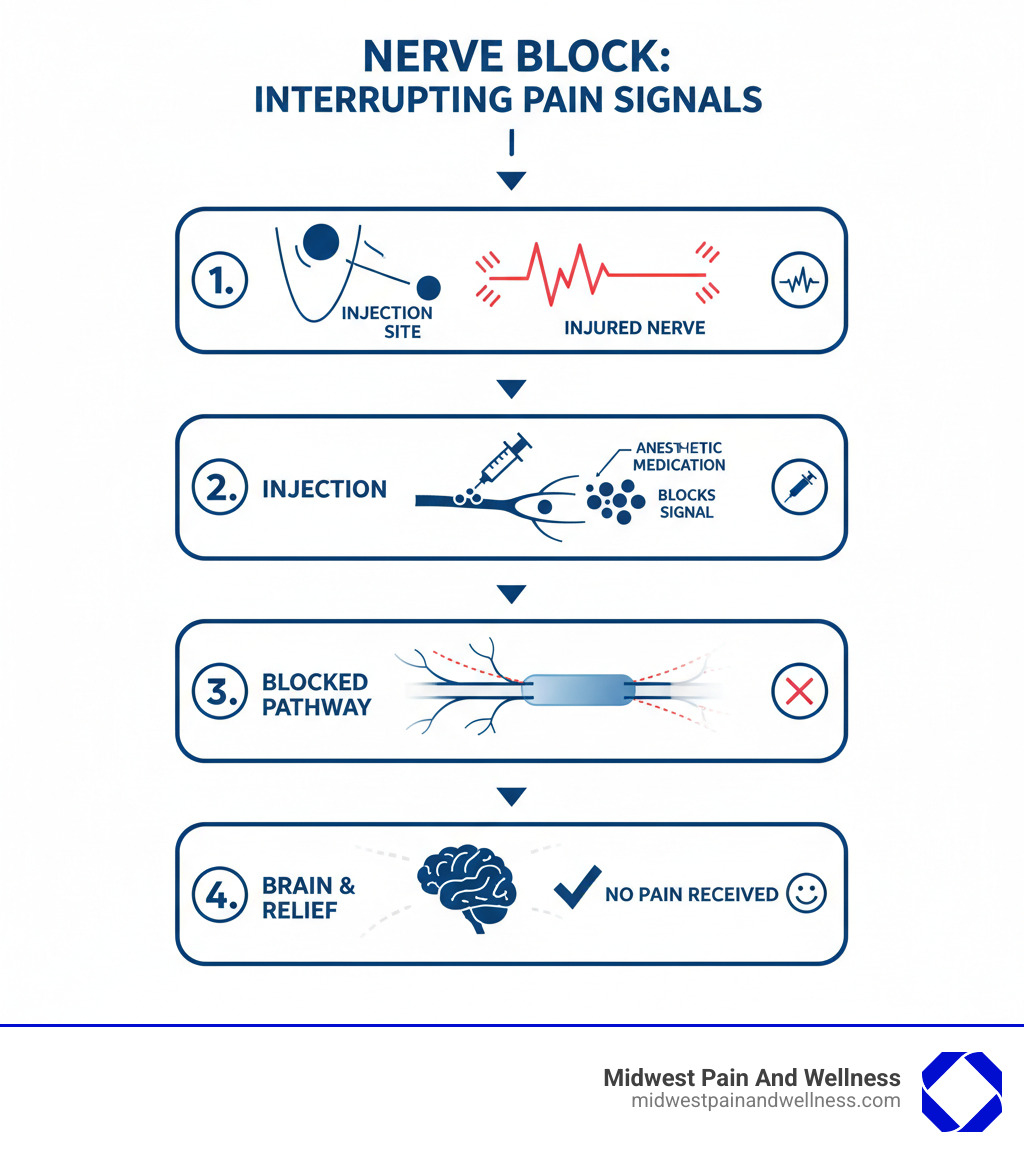
Think of your nerves as a highway system carrying pain messages to your brain. A nerve block for pain works by setting up a roadblock on that highway, stopping those signals before they reach their destination. During the procedure, a doctor injects medication near a specific nerve or group of nerves, treating the exact source of your pain instead of masking symptoms with systemic medications.
This injection typically contains two key ingredients:
- A local anesthetic (like lidocaine or bupivacaine) provides immediate relief by numbing the nerve and blocking its ability to send electrical pain signals. This is what stops the pain right away.
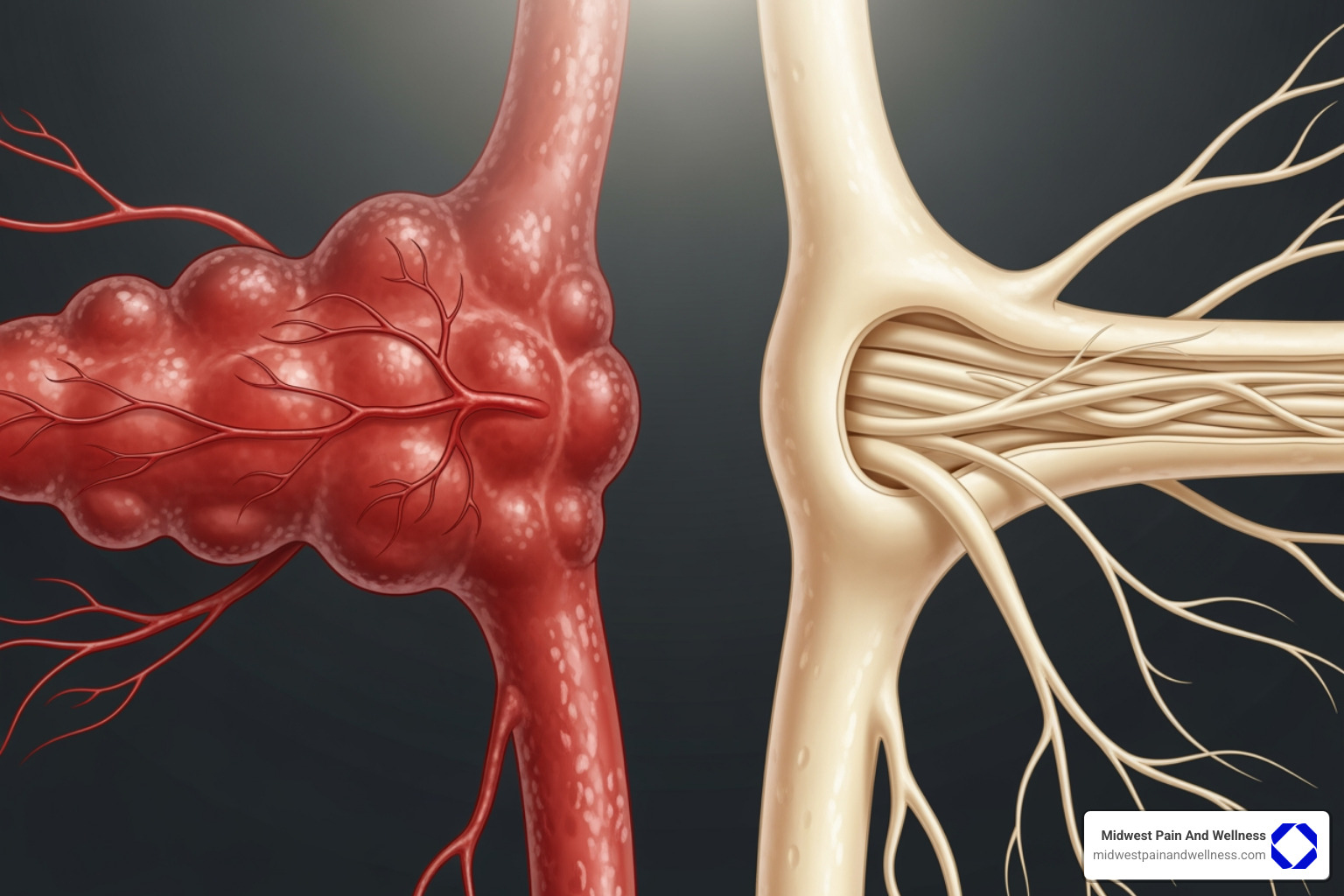
- An anti-inflammatory steroid (a corticosteroid) reduces swelling and irritation around the nerve. This calms the inflammation that often worsens pain and prevents healing, which is why relief can last long after the anesthetic wears off.
How long the relief lasts depends on the medication, the nerve treated, and your body’s response. Some patients feel better for hours, while others experience relief for months. In some severe cases, such as cancer-related pain, neurolytic agents like alcohol or phenol may be used to provide more permanent relief. At Midwest Pain And Wellness, our double board-certified doctors work with you to find the approach that gives you the best, most lasting results. Learn more about our comprehensive treatment procedures and how we create custom care plans for each patient.
The Triple Purpose of Nerve Blocks
Nerve blocks are a versatile tool in pain management, serving three distinct functions. At Midwest Pain And Wellness, we use them to create personalized treatment plans that address your specific needs.

1. Therapeutic: For Lasting Pain Relief
The primary goal of a therapeutic nerve block for pain is to provide meaningful, lasting comfort. By reducing pain from conditions like arthritis, cancer, or post-surgical recovery, these blocks can help you reclaim your life. The relief allows you to participate more fully in physical therapy, return to work, and improve your overall quality of life. Explore our treatment procedures to see how we can help you find lasting relief.
2. Diagnostic: To Identify the Pain Source
Sometimes, the exact source of pain is a mystery. A diagnostic nerve block acts like a detective tool. We inject a short-acting anesthetic near a suspected nerve; if your pain disappears, we’ve found the culprit. As noted by Johns Hopkins Medicine, this diagnostic capability is invaluable. This “test block” confirms we’re on the right track and helps predict how you’ll respond to longer-lasting treatments, saving you time and frustration.
3. Anesthetic: For Surgical Procedures
Nerve blocks can also serve as a primary anesthetic for surgeries, particularly on arms, legs, hands, or feet. This regional anesthesia allows you to remain awake but comfortable during procedures like knee or carpal tunnel surgery. Key benefits include:
- Superior post-operative pain control with less need for opioids.
- Faster recovery by avoiding the side effects of general anesthesia.
- Reduced risks for patients who may not tolerate general anesthesia well.
Our doctors carefully evaluate if a nerve block is appropriate for your surgical needs, always prioritizing your safety and comfort.
Common Types of Nerve Blocks and Conditions They Treat
Effective nerve block for pain treatment is about precision. We match the type of block to your unique pain pattern, targeting the specific source of discomfort for better relief with fewer side effects.
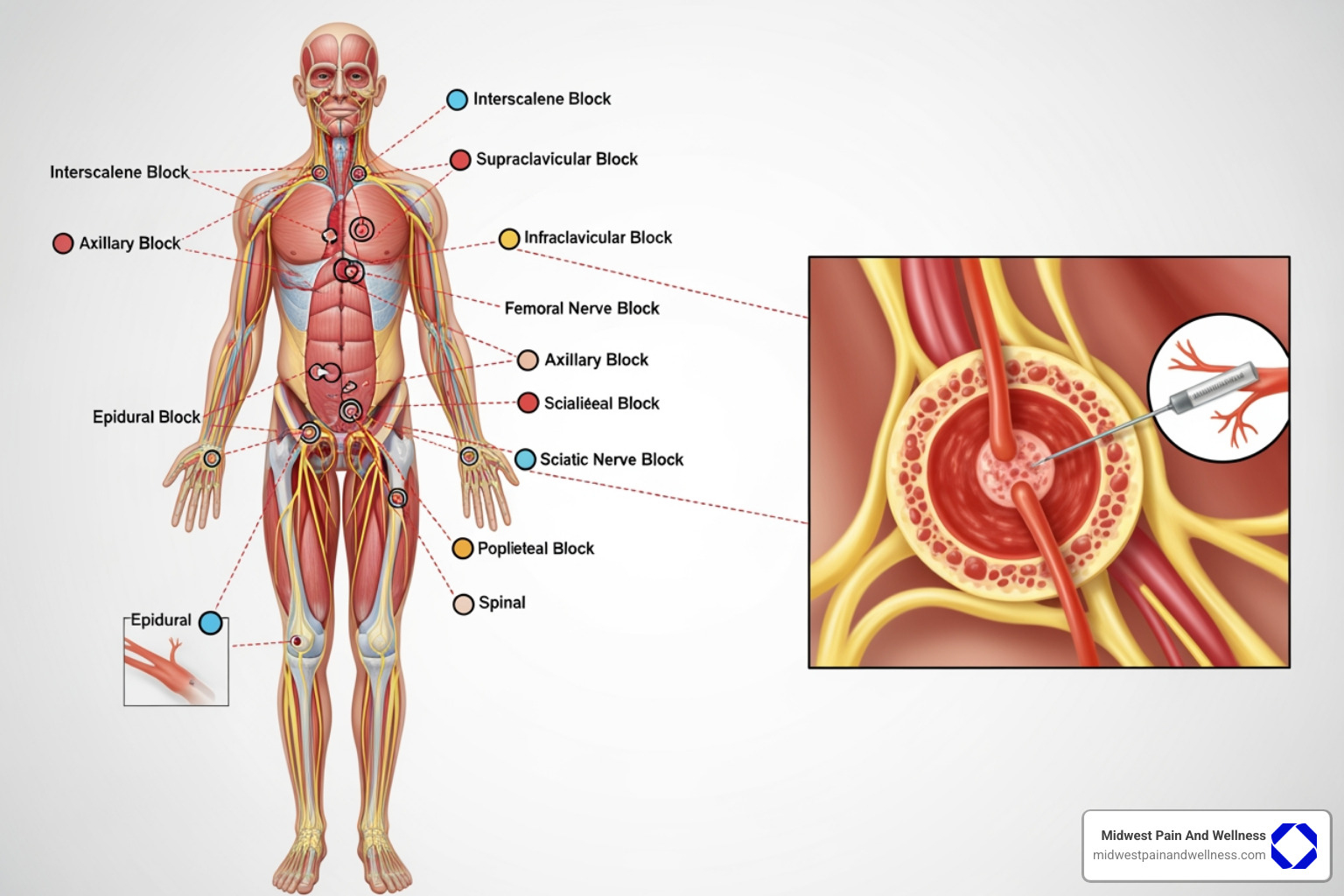
Spinal and Epidural Blocks
These blocks target pain originating from the spine and are among the most common procedures we perform.
- Epidural Nerve Blocks: Medication is injected into the epidural space around the spinal cord to treat neck, middle back, and low back pain from pinched or inflamed nerves.
- Facet Joint Blocks: Medication is delivered into the small joints of the spine to relieve pain from arthritis or injury, which can radiate through the neck, back, and legs.
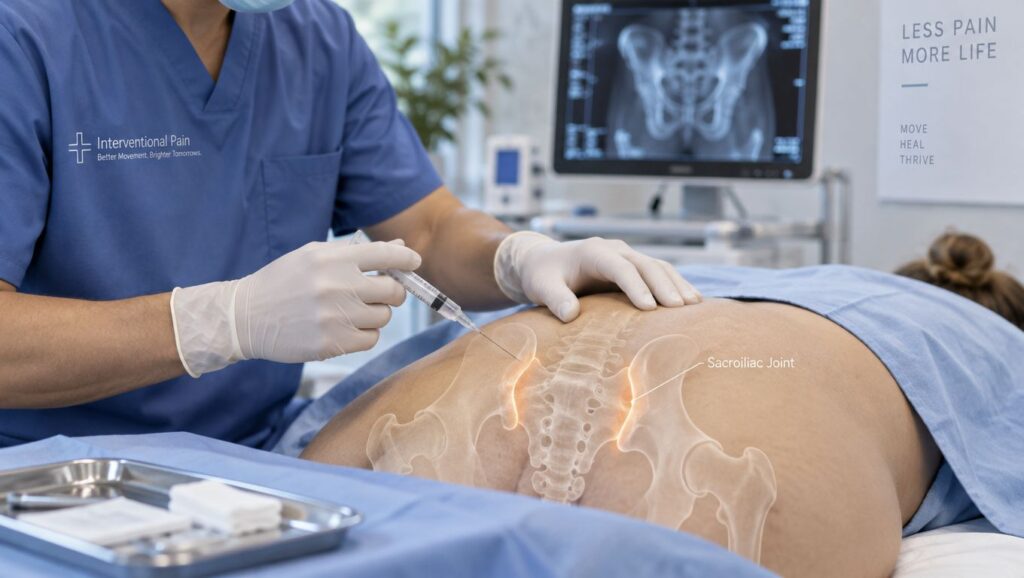
- Sacroiliac (SI) Joint Blocks: This targets the joint where the spine meets the pelvis, a common source of low back and buttock pain that can mimic sciatica.
These are highly effective for conditions like sciatica, chronic low back pain, and neck pain. You can find More info about conditions we treat on our website.
Peripheral and Extremity Blocks
When pain originates outside the spine, peripheral blocks target individual nerves or nerve networks.
- For Shoulder/Arm Pain: A brachial plexus block targets the nerve network running from the neck down the arm.
- For Knee Pain: Femoral and genicular nerve blocks target the major nerves supplying the knee, ideal for arthritis or post-surgery pain.
- For Headaches/Migraines: An occipital nerve block can relieve certain types of chronic headaches by targeting nerves at the back of the head.
- For Facial Pain: A trigeminal nerve block can treat severe conditions like trigeminal neuralgia.
Common Conditions We Treat with Nerve Blocks
The versatility of nerve blocks allows us to treat a wide range of conditions, including:
- Arthritis in the spine, knees, or shoulders
- Post-Laminectomy Syndrome (persistent pain after back surgery) – see our Post Laminectomy Pain Treatment in Chicago Ridge page
- Complex Regional Pain Syndrome (CRPS)
- Chronic Headaches and Migraines
- Sciatica and Low Back Pain
- Post-Surgical Pain
- Cancer-Related Pain
- Neuralgia (nerve pain), including trigeminal, intercostal, and pudendal neuralgia
The Nerve Block for Pain Procedure: What to Expect
A nerve block for pain is a straightforward outpatient procedure that typically takes only a few hours from arrival to departure. Our trained specialists perform these injections regularly, ensuring you are in expert hands.
Before the Procedure
Preparation begins with a thorough consultation. We will review your medical history, discuss your current medications (especially blood thinners), and answer all your questions. You will need to arrange for a driver to take you home, and we will provide any necessary fasting instructions. Our goal is to ensure you feel completely informed and comfortable.
During the Procedure
On the day of your appointment, you’ll be positioned comfortably to give us the best access to the treatment area. We’ll clean the skin and apply a local anesthetic to numb the spot, so the injection itself causes minimal discomfort—most patients report only a brief pinch or pressure. Using advanced imaging like ultrasound or fluoroscopy (a real-time X-ray), we guide a fine needle with absolute precision to the target nerve. Once in place, we inject the medication. The injection itself usually takes less than 10 minutes. For a technical overview, see this Detailed overview of Nerve Block Anesthesia.
After the Procedure
Following the injection, you’ll rest in a recovery area for 15-30 minutes for observation. It’s normal for the treated area to feel numb, heavy, or tingly—this means the block is working. We will provide detailed home-care instructions, including activity restrictions. The numbness will fade over several hours, and you should be cautious with the affected limb until sensation fully returns. While the anesthetic provides immediate relief, the full anti-inflammatory benefit of the steroid may take a few days to develop.
Weighing the Benefits Against the Risks
Making an informed decision about a nerve block for pain means understanding both the powerful advantages and the potential risks. We believe in transparent communication to help you feel confident in your care.
Significant Benefits of Nerve Blocks
For many people, nerve blocks are transformative. Key benefits include:
- Effective Pain Relief: Many patients experience rapid relief that allows them to function again.
- Reduced Need for Opioids: By targeting pain at the source, nerve blocks are a powerful alternative to narcotic medications, aligning with our opioid-free approach.
- Faster Recovery: With pain controlled, you can engage more fully in physical therapy, leading to quicker healing and better outcomes.
- Diagnostic Clarity: They help us pinpoint the exact source of your pain, guiding a more effective long-term treatment strategy.
- Improved Quality of Life: Reduced pain means a return to work, hobbies, and daily activities that once seemed impossible.
For those exploring comprehensive strategies, Peripheral Nerve Stimulation for chronic pain is another advanced option we offer.
Understanding Candidacy and Potential Risks
While highly beneficial, nerve blocks aren’t for everyone. We carefully evaluate each patient to determine if this is the right choice.
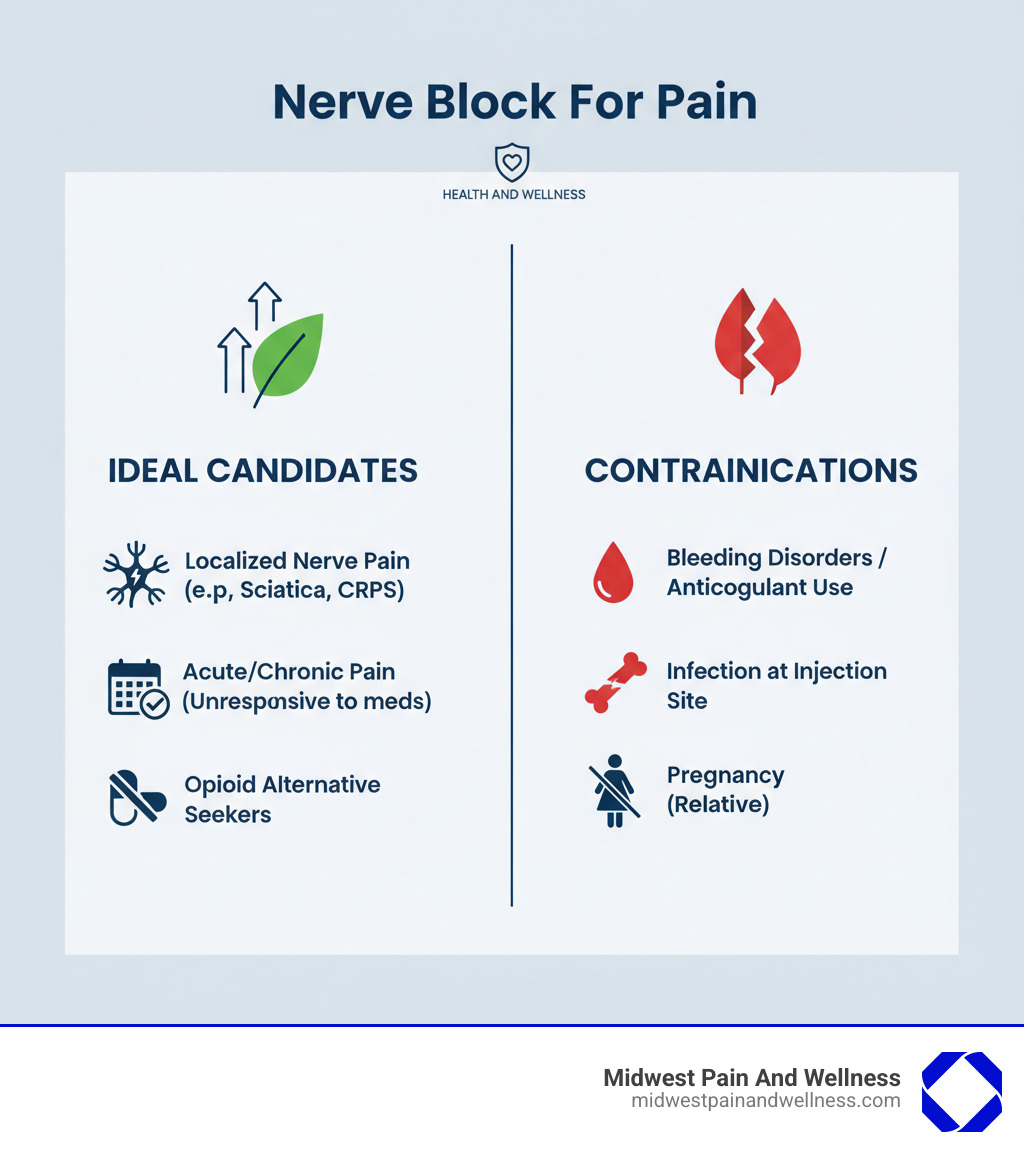
Good candidates often have pain related to a specific nerve and are seeking alternatives to oral medications. However, the procedure may not be suitable for those with an active infection at the injection site, certain bleeding disorders, or known allergies to the medications used. We will conduct a thorough review to ensure your safety.
Serious complications are rare, especially when performed by experienced specialists using imaging guidance. Potential risks include bleeding, infection, or allergic reaction. Nerve damage is the most feared complication, but it is extremely rare, and any injury is typically temporary. We will discuss your specific risk profile with you in detail before any procedure.
Frequently Asked Questions About Nerve Blocks
It’s natural to have questions when considering a nerve block for pain. Here are answers to some of the most common concerns.
How long does the pain relief from a nerve block last?
The duration of relief varies. A diagnostic block with only local anesthetic may last for a few hours. A therapeutic block that includes a steroid can provide relief for several days, weeks, or even months. Everyone responds differently; some people get long-lasting relief from one injection, while others may need a series of injections as part of a comprehensive pain management plan.
Is a nerve block procedure painful?
We take every step to ensure your comfort. First, we numb the skin with a local anesthetic. During the injection, most patients feel only a mild pressure or pinching sensation. The procedure is quick, and we can offer light sedation to help you relax. Post-procedure soreness at the injection site is typically mild and resolves within a day or two.
Can nerve blocks be repeated?
Yes. For many chronic pain conditions, repeating a nerve block for pain is an important part of an ongoing management strategy. If your first block provided significant relief, a repeat injection can often restore that comfort and function. We integrate these procedures into your custom care plan, which may also include physical therapy and other interventions. For more information, visit our page on treatment procedures or trusted sources like Nerve Blocks | Johns Hopkins Medicine and this Detailed overview of Nerve Block Anesthesia.
Your Path to an Opioid-Free Life Starts Here
Living with pain is overwhelming, but you don’t have to face it alone. At Midwest Pain And Wellness in Chicago Ridge, Illinois, we are dedicated to helping you find real, lasting relief without relying on opioid medications.
Modern treatments like a nerve block for pain allow us to interrupt pain signals and reduce inflammation by addressing the source of your discomfort. Our double board-certified doctors are experts in these advanced, interventional techniques. We reject one-size-fits-all solutions, instead creating a custom, multi-modal care plan for you that may combine nerve blocks with physical therapy and other cutting-edge treatments.
Our goal is to help you eliminate dependence on risky pain medications and get back to the life you love. If you’re tired of living with pain and are ready to explore safe, effective alternatives, we are here to help.
Take the first step toward an opioid-free life. Schedule an appointment to discuss our treatment procedures and find how our personalized approach can make a real difference.