Understanding the FDA-Approved Solution for Chronic Headaches
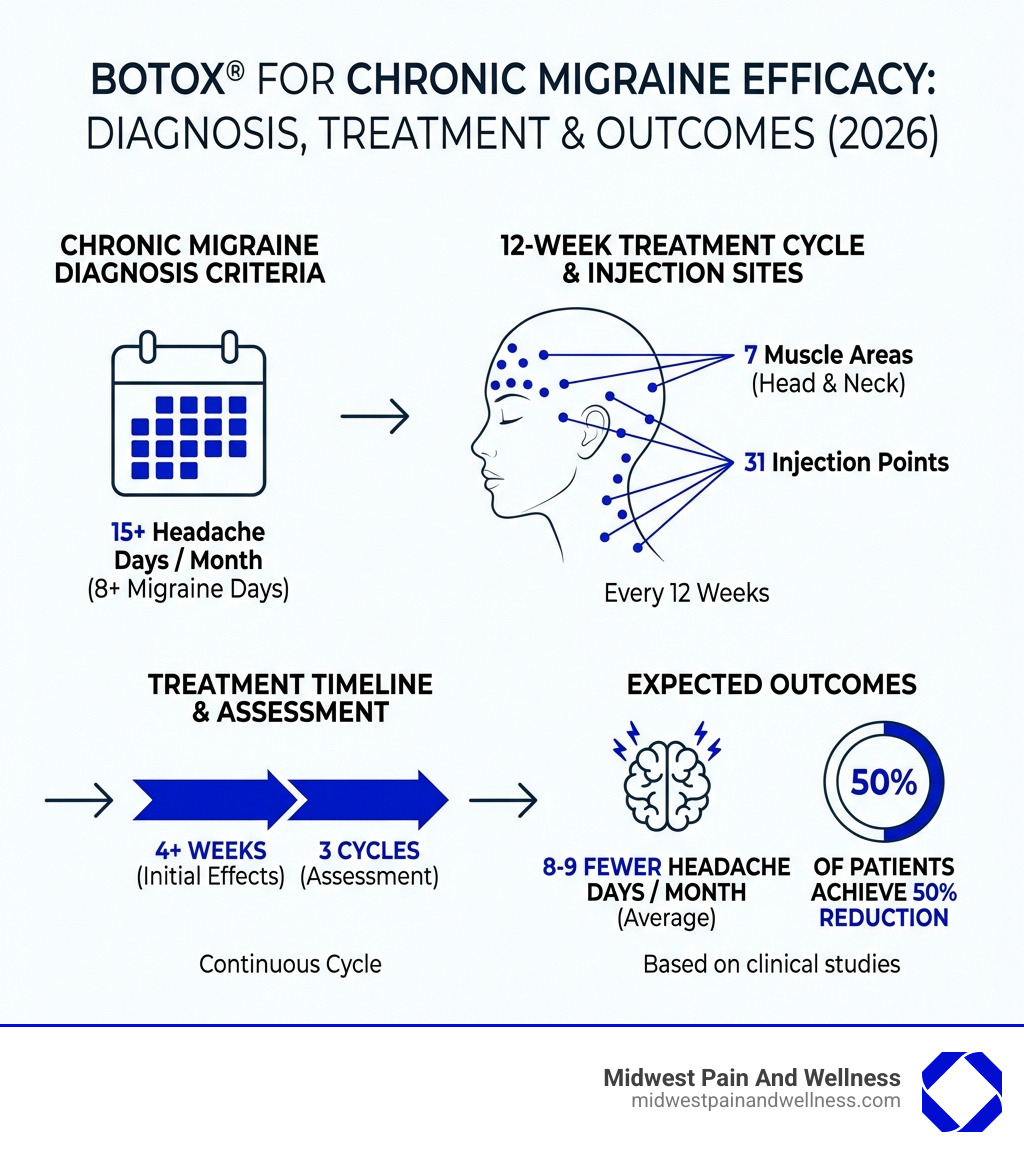
Botox® for Chronic Migraine is an FDA-approved preventive treatment that reduces headache frequency in adults experiencing 15 or more headache days per month. It works by blocking pain signals from nerves in the head and neck, and clinical studies show it prevents an average of 8 to 9 headache days per month compared to placebo.
Key Facts About Botox® for Chronic Migraine:
- FDA Approved: First approved in 2010 for chronic migraine prevention
- Treatment Schedule: Injections every 12 weeks at 31 specific sites
- Dosage: 155 Units total per treatment session
- Response Rate: Nearly 50% of patients achieve 50% or greater reduction in headache days after 6 months
- Eligibility: Adults with 15+ headache days per month (lasting 4+ hours each)
- Not for Episodic Migraine: Only approved for chronic migraine, not for patients with 14 or fewer headache days monthly
Living with chronic migraine means spending at least half your month dealing with debilitating headaches. The pain impacts work, relationships, and basic daily activities. Many patients try multiple oral medications before finding relief—or never find adequate relief at all.
The treatment involves small injections into muscles around the forehead, temples, back of the head, and neck. While it may take four weeks or more to see results, and some patients need multiple treatment cycles before experiencing significant improvement, the evidence shows meaningful benefits for many who’ve struggled with other preventive options.
I’m Dr. Yaw Donkoh, a double board-certified physician specializing in anesthesiology and interventional pain management. Through my work at Midwest Pain and Wellness, I’ve helped numerous patients explore Botox® for Chronic Migraine as part of a comprehensive, non-opioid approach to managing their persistent headache symptoms.
Understanding Chronic Migraine and Diagnosis
Before we dive into the specifics of Botox® for Chronic Migraine, it’s crucial to understand what chronic migraine is and how it’s diagnosed. Many people experience migraines, but “chronic” indicates a specific, more severe form.
Chronic migraine is defined as experiencing headaches on 15 or more days per month, with at least 8 of those days having migraine features, for a period of at least three months. This isn’t just a bad headache every now and then; it’s a persistent, often debilitating condition that can significantly impact daily life. In contrast, episodic migraine involves fewer than 15 headache days per month.
The prevalence of chronic migraine in the population is significant, affecting about 1% to 2% of people. It’s a condition that can be challenging to live with, often leading to a reduced quality of life and increased healthcare utilization, including more primary care visits and emergency room visits.
Diagnosing chronic migraine typically involves a thorough review of a patient’s headache history, often utilizing a headache diary to track headache frequency, severity, and associated symptoms over several months. This helps us differentiate between chronic and episodic forms and ensures we meet the diagnostic criteria outlined by organizations like the International Headache Society. The International Classification of Headache Disorders provides detailed criteria for this diagnosis, helping clinicians accurately identify patients who could benefit from targeted treatments. You can learn more about managing migraine pain in general through our Migraine Pain Management: The Ultimate Guide.
How Botox® for Chronic Migraine Works
The mechanism by which Botox® for Chronic Migraine provides relief is fascinating and distinct from its cosmetic uses. While many associate Botox with smoothing wrinkles, its role in migraine prevention is rooted in its ability to interrupt pain signaling pathways.
Botox, or onabotulinumtoxinA, is a purified protein that works by preventing nerves from communicating with their targets. When injected into specific muscles around the head and neck, it’s thought to be taken up by sensory nerves. These nerves play a crucial role in pain transmission, especially within the trigeminal system, which is a major pathway for migraine pain.
Instead of just relaxing muscles, Botox is believed to interfere with the release of neurotransmitters and other molecules, such as calcitonin gene-related peptide (CGRP), that are involved in inflammation and hypersensitivity during a migraine attack. By blocking these pain signals at their source, Botox effectively “calms” the overactive pain network in the head and neck, preventing migraines before they even start. This is a key difference from acute migraine treatments, which aim to stop a migraine once it has begun. For a visual explanation of how Botox works, you can Watch this video for more information on how Botox works.
Our approach at Midwest Pain and Wellness, as highlighted in our Effective Pain Management Strategies, often involves understanding these intricate mechanisms to provide targeted, effective relief.
The Science of OnabotulinumtoxinA Efficacy
The journey of onabotulinumtoxinA from a cosmetic treatment to an FDA-approved preventive for chronic migraine is backed by robust clinical evidence, primarily from the PREEMPT (Phase 3 Research Evaluating Migraine Prophylaxis Therapy) clinical program. These pivotal studies involved a large number of patients and demonstrated the efficacy and safety of Botox® for Chronic Migraine.
The PREEMPT studies showed that onabotulinumtoxinA significantly reduced the frequency of headache days and migraine days for patients with chronic migraine. This wasn’t just about reducing the number of headaches; it also translated into a significantly higher quality of life for treated patients throughout both the double-blind and open-label phases of the trials. Patients reported less disability and an overall improvement in their daily functioning. For a deeper dive into the clinical evidence, we recommend reviewing this Clinical evidence and experience.
These findings paved the way for the U.S. Food and Drug Administration to approve Botox for migraine treatment in 2010, specifically for adults aged 18 and older who experience 15 or more migraine days per month. This approval marked a significant milestone, offering a new hope for individuals who had exhausted other preventive options. At Midwest Pain and Wellness in Chicago Ridge, we are proud to offer Botox® for Chronic Migraine, Cervical Dystonia in Chicago Ridge as part of our advanced treatment options.
Assessing Results of Botox® for Chronic Migraine
Patience is a virtue, especially when it comes to assessing the effectiveness of Botox® for Chronic Migraine. Unlike acute treatments that offer immediate relief, Botox works preventively, and its full benefits can take time to manifest.
It’s common for patients to not see a significant reduction in migraine frequency for four weeks or more after their first treatment. In fact, many individuals may require more than one set of injections before experiencing optimal relief. We typically look for a substantial improvement: a reduction of more than 50% in both the frequency and intensity of migraines. For example, if you typically experience 20 headache days per month, a 50% response would mean a reduction to 10 headache days.
Some patients respond even more dramatically, earning the title of “super responders.” Approximately 23% of patients in studies achieved a 75% improvement. Imagine going from 20 headache days to just 5—that’s life-changing!
Given this gradual onset and cumulative effect, a trial of three cycles, which equates to about nine months of treatment, is considered a reasonable period to truly assess the effectiveness of Botox® for Chronic Migraine. This allows enough time for the medication to build up its effect and for us to accurately gauge your individual response. Long-term studies, such as this Long-term effectiveness study, continue to support the sustained benefits for those who respond well to treatment.
The Treatment Protocol: What to Expect
Receiving Botox® for Chronic Migraine involves a standardized injection protocol designed to maximize effectiveness and minimize discomfort. As experts in interventional pain management, we ensure that each treatment session is precise and custom to your needs.
The recommended dosage for Botox® for Chronic Migraine is 155 units, administered across 31 specific injection sites. These sites are strategically located in seven key areas of the head and neck, targeting muscles that are believed to be involved in migraine pain pathways. These areas include the forehead, temples, back of the head, neck, and upper back/shoulders. The injections are small, shallow, and delivered with a fine needle, often described as feeling like tiny pinpricks.
The treatment schedule typically involves injections every 12 weeks. This consistent schedule helps maintain the preventive effect and ensures continuous relief.
Here’s a general comparison between Botox® for Chronic Migraine and common oral preventive medications:
| Feature | Botox® for Chronic Migraine | Oral Preventive Medications (e.g., Topiramate, Amitriptyline) |
|---|---|---|
| Mechanism of Action | Blocks pain signals in nerves; prevents neurotransmitter release. | Modifies brain chemistry, nerve excitability; varies by drug. |
| Administration | Injected into head/neck muscles every 12 weeks. | Taken daily by mouth. |
| Side Effects | Localized (neck pain, eyelid ptosis, injection site pain); rare systemic. | Systemic (drowsiness, weight changes, mood changes, cognitive issues); varies by drug. |
| Target Population | Chronic migraine (15+ headache days/month). | Chronic and episodic migraine (can be used for both, depending on drug). |
| Onset of Effect | 4 weeks or more, full effect after 2-3 cycles (6-9 months). | Weeks to months, typically assessed after 2-3 months of consistent use. |
| Medication Overuse | Effective even with medication overuse headache. | Can be complicated by or contribute to medication overuse headache if not managed carefully. |
During your treatment session at Midwest Pain and Wellness, our team, including specialists like Dr. Donkoh, will guide you through the process. We understand that injections can be daunting, but we prioritize your comfort and ensure a smooth experience. The entire procedure usually takes about 10-15 minutes. While the standard protocol covers fixed sites, we also consider individualizing treatment by addressing “trigger points” where your pain originates, if appropriate.

Safety, Side Effects, and Candidate Selection
While Botox® for Chronic Migraine offers significant relief for many, it’s important to be aware of potential risks and side effects, as well as who is an appropriate candidate for this treatment. Patient safety is always our top priority at Midwest Pain and Wellness.
The most common adverse events reported in the PREEMPT studies were generally mild and temporary. These included neck pain (4.3%), injection site pain (2.1%), eyelid ptosis (drooping eyelid) (1.9%), and muscular weakness (1.6%). Other less common side effects can include headache (a cruel irony, we know, but usually temporary), musculoskeletal stiffness, bronchitis, and facial paresis. It’s crucial to discuss all potential side effects with your doctor. For detailed safety information, we always refer patients to the official Medication Guide and Safety Information.
Serious side effects, though rare, can occur if the toxin spreads beyond the injection site. These can be life-threatening and include problems with swallowing, speaking, or breathing due to muscle weakening. If you experience any of these symptoms hours to weeks after your injection, seek immediate medical help. You are encouraged to Report side effects to the FDA if you have concerns.
Contraindications and Precautions:
- Allergies: You should not receive Botox if you are allergic to any of its ingredients or have had an allergic reaction to other botulinum toxin products.
- Infection: Avoid injections at sites with skin infection.
- Neuromuscular Disorders: Patients with certain muscle or nerve conditions, such as ALS (Lou Gehrig’s disease), myasthenia gravis, or Lambert-Eaton syndrome, are at increased risk of serious side effects and should avoid Botox.
- Pregnancy and Breastfeeding: The effects of Botox on pregnant or breastfeeding women are not fully known. It’s essential to discuss this with your doctor if you are pregnant, planning to become pregnant, or breastfeeding.
- Medication Interactions: Inform your doctor about all medications, vitamins, and herbal supplements you are taking, as some can interact with Botox and increase the risk of side effects. This includes certain antibiotics, muscle relaxants, and blood thinners.
Who is a candidate? Botox® for Chronic Migraine is specifically approved for adults aged 18 and older who experience 15 or more headache days per month, with at least 8 of those days being migraine days. Typically, candidates have also tried and failed other preventive migraine treatments. We carefully review your medical history and current condition to determine if this treatment is right for you, as part of our comprehensive Chronic Pain Treatment services.
Frequently Asked Questions about Botox® for Chronic Migraine
We understand that you may have many questions about this innovative treatment. Here, we address some of the most common inquiries we receive at Midwest Pain and Wellness.
Can Botox help with medication overuse headache (MOH)?
Yes, it can! Medication overuse headache (MOH) is a common and complex issue for individuals with chronic migraine, often complicating treatment. MOH occurs when acute headache medications are used too frequently, paradoxically leading to more headaches.
The good news is that Botox® for Chronic Migraine has shown effectiveness in patients with chronic migraine, regardless of whether they also have medication overuse headache. The PREEMPT analysis, which included patients with MOH, demonstrated that Botox was effective in reducing headache days. While some severe cases of medication overuse, especially involving opioids, may benefit from a detoxification period, Botox can be an integral part of a treatment plan to break the cycle of MOH. This research on MOH response supports its use in these challenging situations. For many, it offers a pathway to reducing reliance on acute medications while simultaneously preventing migraines.
Is Botox different from other botulinum toxins?
This is an excellent question, and the answer is yes. While there are several botulinum toxin products available, onabotulinumtoxinA (which is the active ingredient in Botox®) is unique.
OnabotulinumtoxinA is the only botulinum toxin preparation that has been approved by the FDA specifically for the treatment of chronic migraine. Other botulinum toxin products, such as Myobloc (rimabotulinumtoxinB), Dysport (abobotulinumtoxinA), and Xeomin (incobotulinumtoxinA), are approved for other medical conditions, like muscle spasticity or cervical dystonia, but not for chronic migraine prophylaxis.
The potency units of different botulinum toxin products are not interchangeable. This means that 100 units of Botox are not equivalent to 100 units of Dysport or Xeomin. Each product has its own specific manufacturing process and biological activity. Therefore, using the precise onabotulinumtoxinA product and following its specific dosing and injection protocol, as outlined in the Prescribing Information, is essential for effective and safe treatment of chronic migraine.
Who is the ideal candidate for this therapy?
The ideal candidate for Botox® for Chronic Migraine is an adult patient who meets specific criteria, as established by the FDA and supported by clinical evidence. At Midwest Pain and Wellness, we carefully assess each patient to determine if this treatment is appropriate.
You might be an ideal candidate if you:
- Are 18 years of age or older.
- Experience chronic migraine, meaning you have 15 or more headache days per month, with at least 8 of those days having migraine features, for at least three months.
- Have tried and not found adequate relief from, or could not tolerate, other conventional preventive migraine treatments (such as certain oral medications).
We consider your complete medical history, including any neuromuscular disorders, allergies, or other health conditions that might contraindicate the treatment. Our goal is to ensure that Botox® for Chronic Migraine is not only effective but also safe for you. If you’re struggling with persistent headaches in Chicago Ridge, Illinois, and think you might fit these criteria, we encourage you to explore our Chronic Pain Treatment options and schedule a consultation with our specialists.
Conclusion
Living with chronic migraine can feel like an endless battle, severely impacting your quality of life and ability to engage in daily activities. However, breakthroughs in pain management, such as Botox® for Chronic Migraine, offer a proven and effective preventive solution for many adults.
At Midwest Pain and Wellness, located in Chicago Ridge, Illinois, we are dedicated to providing comprehensive, opioid-free pain management using the most current and evidence-based therapies. Our double board-certified physicians use a multi-modal, interventional approach, collaborating with you to create custom care plans aimed at achieving long-term pain relief and improving your overall well-being.
If you’re experiencing 15 or more headache days a month and have struggled to find relief with other treatments, Botox® for Chronic Migraine might be the answer you’ve been searching for. We invite you to explore how this FDA-approved treatment can help reduce your migraine frequency and severity, helping you reclaim your life from chronic pain.
Ready to take the first step towards a life with fewer migraines? Schedule an Appointments with us today to discuss if Botox® for Chronic Migraine is right for you. Learn more about our specialized services for Botox® for Chronic Migraine and Cervical Dystonia Treatment in Chicago Ridge. We’re here to help you find lasting relief.