When hip pain is constant, it doesn't just hurt—it reshapes your entire life. For our patients in Oak Lawn, Palos Hills, and the surrounding Illinois communities, even simple things like walking the dog or getting a good night's sleep can become a daily struggle.
If you’re looking for alternatives to steroid shots or aren't ready for major surgery, Platelet-Rich Plasma (PRP) therapy may be an option. This guide will walk you through what hip arthritis PRP is, how it works, and what the process looks like at Midwest Pain & Wellness.
Your Guide to Hip Arthritis PRP Therapy in Illinois
Chronic hip pain often leads patients down a path of temporary fixes. You might have tried injections that wear off or been told that a hip replacement is your only long-term solution. But for many, there's a middle ground.
Platelet-Rich Plasma (PRP) therapy is a minimally invasive treatment that uses a concentrated solution of your own blood platelets to help calm inflammation and support tissue repair. Instead of just masking pain, the goal is to create a better healing environment inside the joint itself. It's becoming a key part of the plan for patients who need lasting relief without major surgery.
Understanding Your Options
When you're facing hip arthritis, it’s important to see the whole picture. Knowing where PRP fits among the other common treatments will help you have a more productive conversation with your doctor about what’s right for you.
The real aim is to find effective pain relief that fits your life. PRP therapy offers a different approach, focusing on long-term healing rather than just managing symptoms. It sits between temporary injections and a full joint replacement.
To see how these choices compare, here’s a quick overview. The table below breaks down the main differences between PRP, steroid injections, and hip replacement surgery.
Hip Arthritis Treatment Options at a Glance
This table offers a straightforward comparison to help you understand the key differences between your primary options for hip arthritis.
| Treatment | Approach | Primary Goal | Typical Recovery |
|---|---|---|---|
| PRP Therapy | Regenerative Medicine | Promote tissue healing and reduce inflammation long-term | Minimal, a few days of modified activity |
| Steroid Injections | Anti-Inflammatory | Provide powerful but temporary pain relief | Minimal, 1-2 days of rest |
| Hip Replacement | Major Surgery | Completely replace the damaged joint with a prosthesis | Extensive, several months for full recovery |
This comparison sets the stage for a deeper look into hip arthritis PRP therapy. Now, let’s explore how PRP works, who makes a good candidate, and what you can expect from the procedure right here at our Chicago Ridge, Illinois clinic.
How Arthritis Affects Your Hip and How PRP Can Help
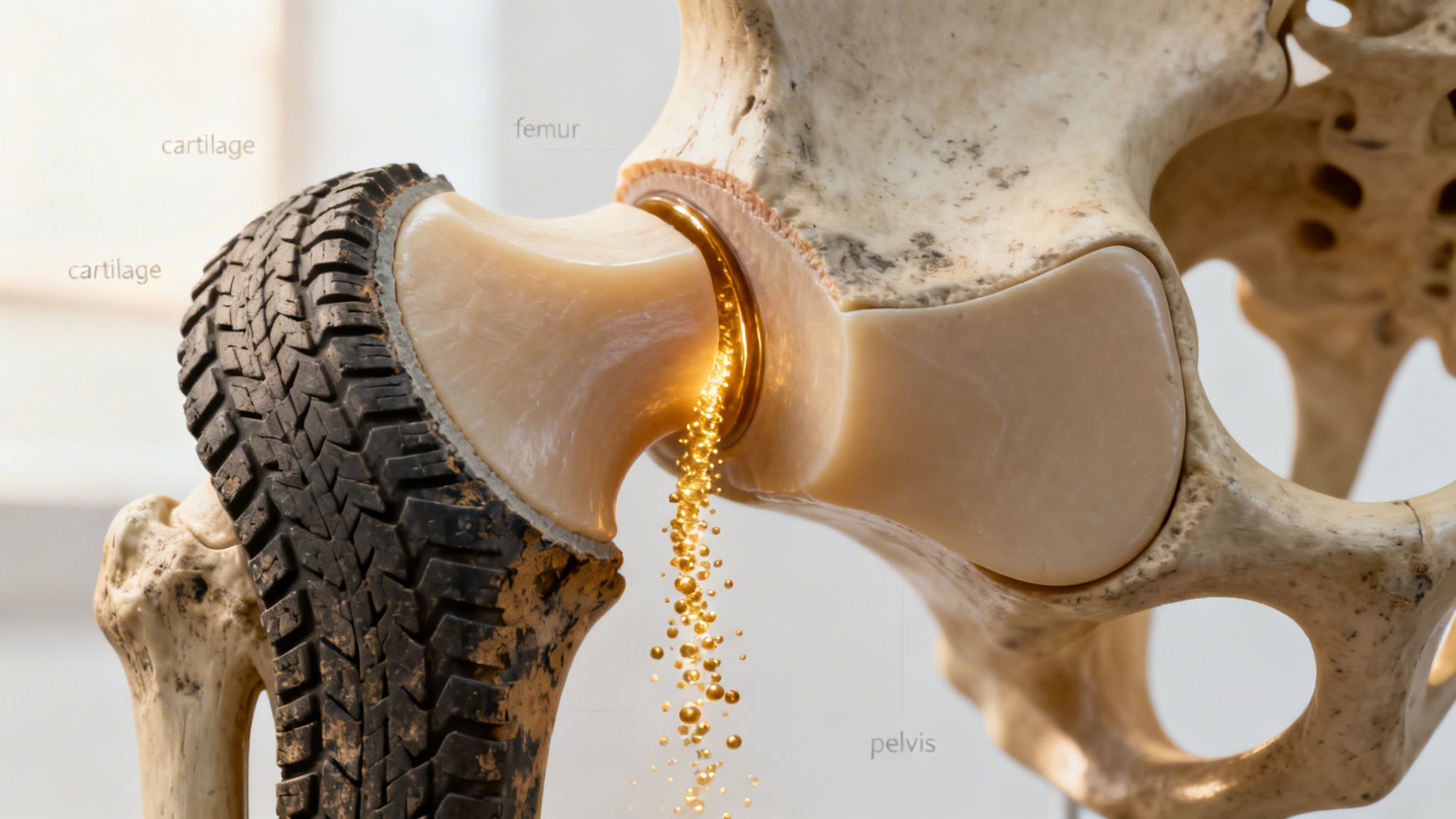
To really get how Platelet-Rich Plasma (PRP) can help your hip, we first need to look at what’s going wrong inside the joint. Hip osteoarthritis isn’t just a matter of age; it's a mechanical problem where the joint's surfaces physically wear down over time.
Think of the slick, smooth cartilage in your hip joint like the brand-new tread on a tire. It’s there to provide a nearly frictionless surface, letting the ball and socket of your hip glide without any trouble. It’s also a natural shock absorber, protecting the bones from grating against each other.
The Breakdown Process of Hip Arthritis
When osteoarthritis starts, that smooth tire tread begins to wear thin, becoming frayed and rough. This progressive breakdown is what causes the symptoms we hear about every day from our patients in Oak Lawn and Palos Hills, Illinois.
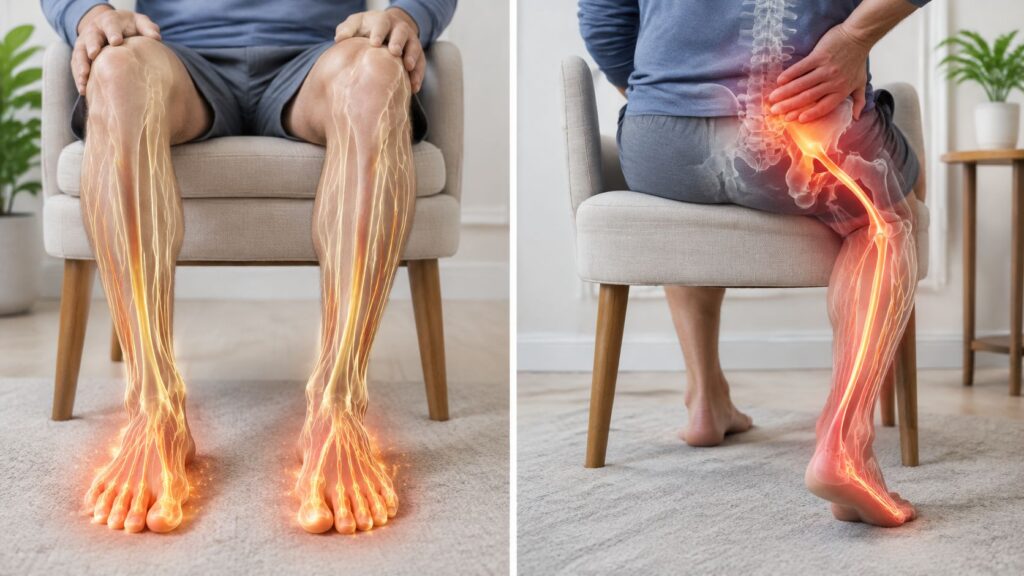
This wear-and-tear sets off a chain reaction. As the cartilage disappears, your body’s inflammatory response kicks into high gear, causing the familiar pain, swelling, and stiffness. Without that protective cushion, the bones can start rubbing directly together. That creates a painful, grinding sensation—what doctors call crepitus—and is the source of that deep groin pain that makes walking, climbing stairs, or even just sleeping so difficult.
The end result is a vicious cycle of pain and declining function that can sideline life for people in Palos Heights, Worth, and other surrounding Illinois communities. It’s frustrating when you have to start avoiding activities you love, losing your independence along the way. You can learn more about the specific joint and pain conditions we treat at Midwest Pain & Wellness on our site.
PRP as a Biological Repair Crew
Now, think of PRP as a specialized repair team sent right to the source of the damage. Unlike treatments that just cover up symptoms, hip arthritis PRP therapy is designed to work with your body's own healing systems. It’s a type of regenerative medicine that gives your body the raw materials it needs to start repairing itself.
The process is remarkably straightforward. We begin by drawing a small amount of your own blood, just like a standard lab test. This is a huge advantage—since we’re using your body’s own biological material, the risk of a negative reaction is extremely low.
The core idea behind PRP is concentration. By isolating and concentrating the platelets from your blood, we create a powerful healing solution that is many times richer in growth factors than whole blood.
We place this blood sample into a centrifuge, a machine that spins it at high speed. The spinning action separates the blood into its different components by density. This lets us isolate the platelets and a small amount of plasma, creating the golden, platelet-rich liquid.
This PRP solution is a powerhouse of growth factors and other signaling proteins. These are the exact same biological tools your body uses to heal a cut or mend a broken bone. They act like a foreman on a construction site, telling cells what to do and where to go.
Delivering Healing Where It Counts
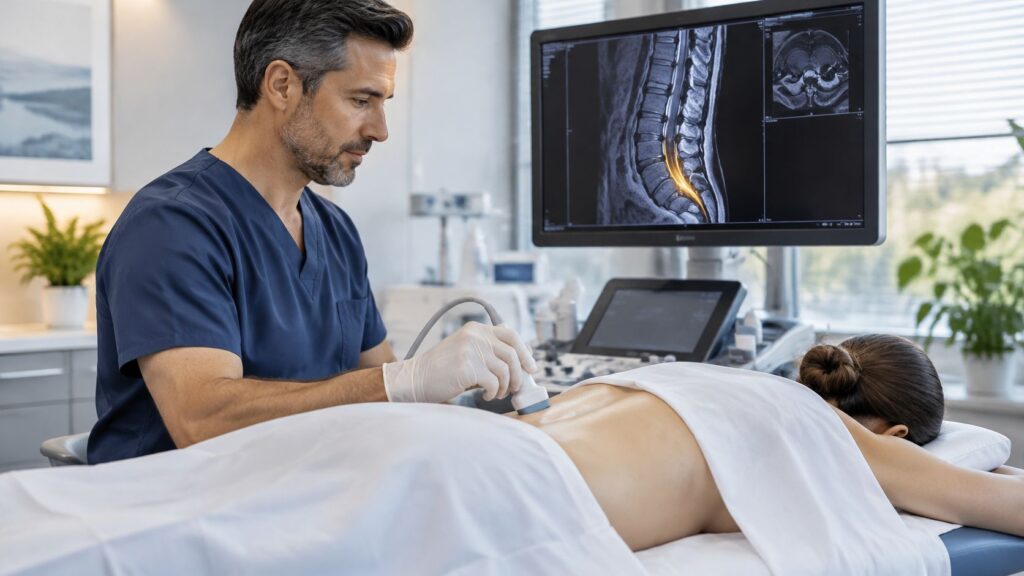
The final step is getting this healing solution exactly where it needs to be. For our patients from Bridgeview and Hickory Hills, Illinois, Dr. Donkoh uses advanced ultrasound imaging to see inside the hip joint in real-time. This precision is non-negotiable; it ensures the concentrated PRP is delivered right into the hip joint capsule, where the cartilage is damaged and the inflammation is worst.
Once injected, those growth factors get to work immediately. They send out signals that can:
- Reduce inflammation: They help calm down the inflammatory process that causes so much of the pain and swelling.
- Stimulate cell repair: They can encourage your existing cartilage cells (chondrocytes) to become more active and productive.
- Recruit healing cells: They act like a beacon, drawing other restorative cells from your body to the site of the injury.
This biological boost helps create a healthier environment inside the joint, aiming to slow down the degenerative process and improve tissue stability. For many of our patients with mild-to-moderate hip arthritis, this offers a path toward reducing pain and improving function—not just for a few weeks, but for many months or even longer.
Could You Be a Candidate for Hip PRP Therapy?
While the science behind hip arthritis PRP is exciting, it’s not a one-size-fits-all solution for hip pain. The most important question we have to answer together is whether it’s the right solution for you. Finding the answer means looking at the stage of your arthritis, what you’ve already tried, and what your goals are for getting back to life.
The best results are consistently seen in patients with mild-to-moderate hip osteoarthritis. In these cases, there is still a good amount of cartilage left in the joint. Since PRP works by giving your existing tissue a powerful boost to heal itself, having some cartilage to work with is a key ingredient for success.
When PRP Becomes the Next Logical Step
For many of our patients coming from Palos Heights, Worth, and Bridgeview, Illinois, the path to our clinic follows a familiar story. They have tried a number of conservative treatments but just haven’t found the lasting relief they need to live comfortably.
If this sounds like your situation, you might be a strong candidate:
- Physical Therapy: You’ve put in the work with physical therapy, which may have helped with strength and movement, but it didn't get rid of that deep, underlying joint pain.
- Anti-Inflammatory Medications: NSAIDs (like ibuprofen) used to take the edge off, but now they’re not as effective, or you’re worried about the long-term side effects of taking them every day.
- Steroid Injections: You may have had a corticosteroid shot that gave you powerful, but temporary, relief for only a few weeks or months before the pain came roaring back.
When these first-line treatments aren't cutting it anymore, hip arthritis PRP therapy becomes a compelling, minimally invasive next step. It’s an especially good option for people here in Illinois who want to put off—or even avoid—a major surgery like a total hip replacement.
PRP therapy is most effective for those caught in the gap—where conservative treatments are no longer enough, but the joint damage isn't so severe that it requires immediate surgery. It can act as a crucial bridge to preserve your joint.
Who Might Not Be a Good Candidate
It's just as important to be honest about when PRP is unlikely to work. Part of responsible, ethical care is setting realistic expectations. At Midwest Pain & Wellness, we always perform a thorough evaluation to make sure you’re a suitable candidate before we even consider moving forward.
Generally, we don’t recommend PRP for individuals with:
- Severe 'Bone-on-Bone' Arthritis: When the cartilage is completely worn away, there’s very little tissue left for the growth factors in PRP to stimulate. In these advanced cases, a hip replacement is often a more realistic and effective solution.
- Active Infections: Any infection in your body, especially if it’s near the hip joint, is a definite reason to hold off on PRP.
- Certain Blood Disorders: Conditions that affect how your platelets function, like platelet dysfunction syndromes or severe anemia, can compromise the quality of the PRP we can prepare from your blood.
- Specific Cancers: PRP may not be appropriate for people with certain cancers, particularly those involving the blood or bone.
The Power of Early Intervention
The clinical evidence we have today strongly points to using PRP in the earlier stages of hip osteoarthritis. By addressing the inflammation and damage before it becomes severe, we see more significant and longer-lasting results.
For patients with early-stage hip arthritis, a treatment like PRP can deliver meaningful pain relief and functional improvements that last for up to a year or more. This helps people stay active and pushes the need for more invasive procedures further down the road. In fact, a large-scale analysis confirmed that patients saw significant functional gains that were maintained at the 12-month mark, showing just how durable this therapy can be. You can read more about the clinical evidence supporting PRP for hip OA and its effectiveness.
The most critical first step is a complete evaluation. During your consultation at our Chicago Ridge clinic—where we see patients from Alsip, Burbank, and Evergreen Park, Illinois—Dr. Donkoh will review your medical history, listen to your story, and look at your imaging (like X-rays or an MRI). This detailed assessment is the only way to truly determine if hip arthritis PRP therapy is the right choice to help you reach your goals for less pain and better mobility.
Your PRP Procedure Step-by-Step at Our Illinois Clinic
Walking into any new medical procedure can feel a little daunting. We get it. That’s why we make the entire process for hip arthritis PRP clear and straightforward for our patients in Oak Lawn, Palos Hills, and the greater Chicago Ridge area. Everything—from the initial blood draw to the final injection—is handled right here in a single visit at our Illinois clinic.
It all starts with a thorough consultation. Dr. Donkoh will sit down with you to go over your medical history, listen to your symptoms, and review any imaging you have, like X-rays or an MRI. This is a crucial first step to make sure you’re a good candidate and to set realistic expectations for what PRP can do for you. Once we confirm it’s the right path, we’ll get your treatment day on the calendar.
The Three Main Steps of Your PRP Treatment
On the day of your appointment, you can expect a smooth and efficient process that usually takes less than an hour. We’ll make sure you’re comfortable and know what’s happening every step of the way.
This simple infographic shows the three key stages of the procedure we perform right here in our clinic.
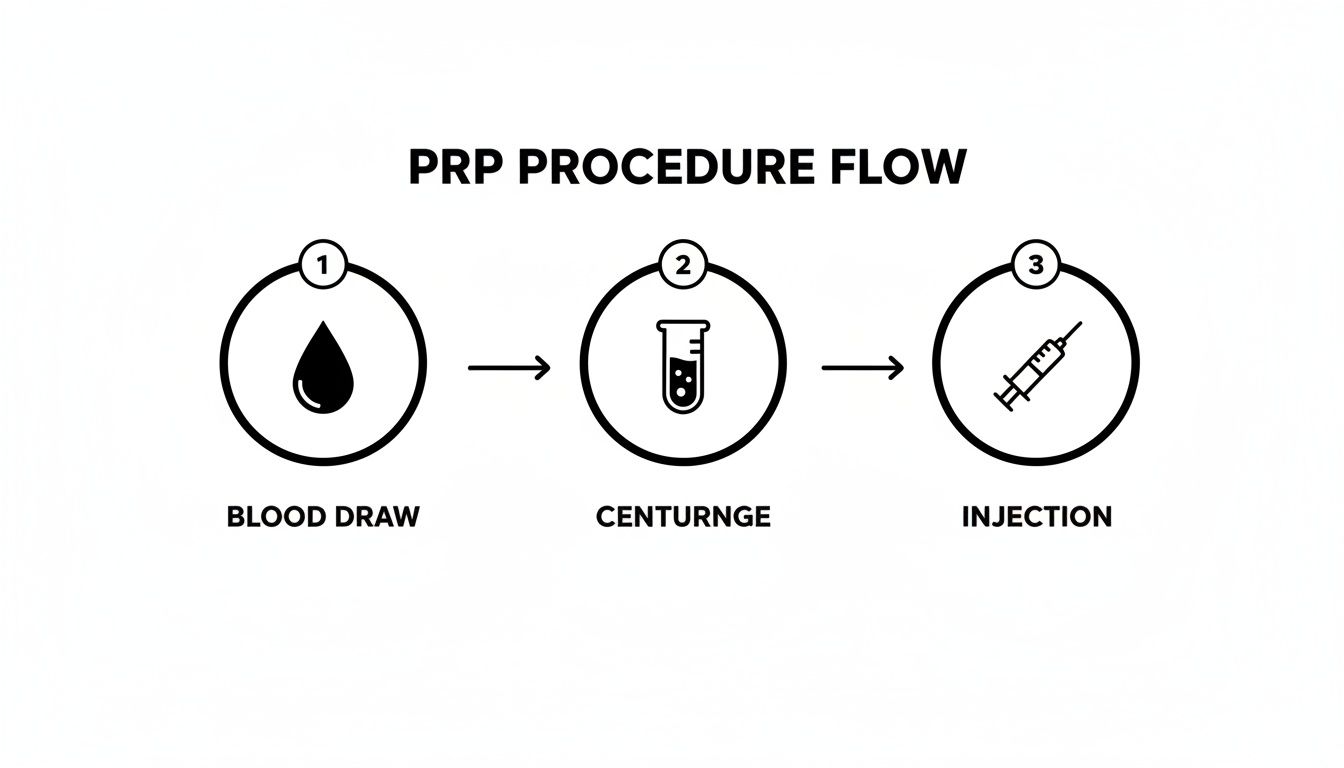
As you can see, we use your own blood to create a powerful, concentrated healing solution that we deliver exactly where it needs to go.
Here’s a closer look at what to expect during each step.
1. The Blood Draw
We start with a simple blood draw, just like any routine lab test. Our medical staff will take a small sample of blood from a vein in your arm. It’s a quick process that causes minimal discomfort.
2. The Centrifugation Process
Next, that blood sample goes into a special machine called a centrifuge. It’s essentially a high-speed spinner that separates your blood into different layers based on density. The heavier red blood cells settle at the bottom, while the valuable, lighter platelets and plasma concentrate at the top. This step isolates the powerful growth factors that are the entire point of PRP therapy, creating the golden liquid we use for your injection.
3. The Ultrasound-Guided Injection
This is the most critical part of the whole procedure. For the treatment to work, the PRP has to be delivered with absolute precision into the hip joint capsule—that tiny space where inflammation and cartilage damage are causing your pain. For our patients from Palos Heights, Worth, and Bridgeview, Illinois, we don’t leave this to guesswork.
Dr. Donkoh uses advanced ultrasound imaging to guide the needle in real-time. This allows him to watch the needle’s path on a screen and confirm it’s positioned perfectly inside the joint, ensuring the entire healing solution gets right to the source of the problem.
Before the injection, we’ll thoroughly clean the area and use a local anesthetic to numb your skin and the deeper tissues. This makes the injection much more comfortable. Most of our patients report feeling a bit of pressure, but not sharp pain. You can learn more about the different types of image-guided procedures we use for treatment at our clinic.
What to Expect Immediately After the Injection
Once the injection is finished, you’re free to go home the same day. No hospital stay is required. It’s completely normal to feel some soreness or even an increase in aching in your hip for the first few days. This is actually a good sign—it means the growth factors are kicking off the inflammatory response needed for healing to begin.
We’ll send you home with detailed aftercare instructions, which will include:
- A short period of rest: You’ll need to take it easy for a few days and steer clear of any strenuous activities.
- Pain management: We recommend using ice packs and over-the-counter pain relievers like acetaminophen. It's very important to avoid anti-inflammatory medications (NSAIDs) like ibuprofen or naproxen, as they can work against the healing process PRP is meant to trigger.
- Gradual return to activity: We’ll give you a clear plan for slowly getting back to your normal routine, often in coordination with a physical therapy program designed just for you. This helps you safely rebuild strength and flexibility as your hip heals.
For our patients in Hickory Hills, Alsip, and Burbank, Illinois, following this structured recovery plan is key to getting the best possible outcome from your hip arthritis PRP therapy. It’s all about setting the stage for lasting pain relief and getting you back to moving with confidence.
Comparing PRP to Other Common Hip Treatments
When you’re dealing with hip arthritis, you’ve probably heard about the usual options. For our patients in Hickory Hills and Alsip, Illinois, the conversation often revolves around steroid shots, gel injections, and eventually, hip replacement surgery. So where does hip arthritis PRP therapy fit in?
It’s not just another item on the list. PRP represents a completely different philosophy. While other treatments are designed to mask pain or replace the joint, PRP is meant to work with your body, creating a healthier environment inside the hip to slow damage and encourage repair. Understanding this difference is key to choosing the right path for your long-term joint health.
PRP vs. Corticosteroid Injections
Corticosteroid injections are often the first thing people try for significant hip pain. They’re powerful anti-inflammatories, and they can deliver fast, dramatic relief. If you’re in the middle of a bad flare-up, a steroid shot can feel like a lifesaver, calming the joint down so you can move again.
But that relief is almost always temporary. Steroids quiet the inflammation, but they don’t do anything to fix the underlying cartilage damage. The pain typically creeps back in a few weeks or months, and you can’t keep getting shots indefinitely. In fact, there’s growing concern that frequent steroid use might actually harm cartilage over the long haul.
PRP works on a different clock with a totally different goal. Instead of just silencing inflammation, it delivers a flood of your body's own growth factors directly to the joint. The aim is to trigger a natural healing response, giving you a chance at longer-lasting relief by actually improving the health of the tissue itself.
PRP vs. Viscosupplementation
Another common option is viscosupplementation, or "gel shots." This involves injecting hyaluronic acid (HA) into the hip. You can think of HA as a synthetic joint lubricant, designed to restore the slick, cushioning fluid that a healthy joint needs to move smoothly.
While gel shots can help some people, particularly in the knee, the results in the hip have been less consistent. PRP, in contrast, is proving to be a more dynamic and biologically active treatment. It isn’t just adding lubrication; it’s sending a powerful signal to your body to start a repair cycle.
The research is backing this up. A major meta-analysis covering 1,176 patients found that hip arthritis PRP led to significant pain relief that could last up to 12 months. When put head-to-head, PRP frequently outperforms hyaluronic acid for improving both pain and function. You can see how PRP compares to other injectables for hip arthritis in the published data.
PRP vs. Hip Replacement Surgery
Finally, there’s the ultimate comparison: total hip replacement. For our patients in Burbank, Evergreen Park, and Orland Park, Illinois, surgery is often presented as the definitive, final fix for severe, end-stage arthritis. And in many cases, it is. A new joint can eliminate pain and restore mobility.
But it’s a major, irreversible operation that comes with serious trade-offs:
- Invasive Procedure: Surgery means a hospital stay, anesthesia, and a significant recovery period.
- Months of Rehab: You'll need months of dedicated physical therapy to get your strength and mobility back.
- Surgical Risks: Like any major operation, it carries risks of infection, blood clots, and issues with the implant itself.
PRP acts as a critical bridge. It’s a minimally invasive option that can help you put off—and sometimes even avoid—the need for surgery. For those with mild to moderate arthritis, PRP can preserve your natural joint, reduce pain, and get you back to your life without the risks and downtime of a major operation. It’s about healing the joint you were born with, not replacing it.
Schedule Your Hip Arthritis Consultation in Illinois

When every step is a negotiation with your hip pain, it’s time to look at solutions that work with your body, not just mask the symptoms. PRP therapy is a safe, minimally invasive option that uses your body's own healing components to target the inflammation and damage in your hip joint.
If you live in Oak Lawn, Evergreen Park, Orland Park, or nearby Illinois communities, expert care for hip arthritis PRP is right around the corner. You don't have to let joint pain sideline you from the activities you love.
Expert Care in the Chicago Ridge Area
Dr. Yaw Donkoh and the team at Midwest Pain & Wellness are focused on providing modern, evidence-based regenerative treatments. From our clinic in Chicago Ridge, Illinois, we are dedicated to helping patients find meaningful relief and get back to their lives.
We’re proud to serve our neighbors in:
- Palos Hills
- Palos Heights
- Worth
- Bridgeview
- Hickory Hills
- Alsip
- Burbank
Our entire philosophy centers on creating personalized pain management plans that don’t rely on opioids and instead prioritize your long-term function. Our first job is to understand your specific condition so you can make a fully informed choice about your health.
Taking that first step is often the hardest part. A consultation is simply a conversation—a chance to get your questions answered by an expert and see clearly whether a regenerative approach like PRP is the right move for you.
Reclaim Your Mobility and Your Comfort
The path to less pain starts with a conversation. By exploring hip arthritis PRP therapy, you’re taking a proactive step toward regaining comfort and mobility without committing to the risks and recovery of major surgery. We believe in empowering our patients with knowledge and the most appropriate, state-of-the-art treatments available.
Don’t spend another day watching from the sidelines. The team at Midwest Pain & Wellness is here to help you understand all your options.
Contact our Chicago Ridge, Illinois clinic to schedule your comprehensive evaluation and find out if PRP therapy is the answer for your hip pain. Let’s work together on a plan to get you back to living your life fully.
Frequently Asked Questions About Hip PRP Therapy
It’s normal to have questions when you’re considering a new treatment like hip arthritis PRP. For our patients in Oak Lawn, Palos Hills, and the surrounding Illinois communities, we believe clear answers are the first step toward making a confident decision about your health.
Here are some of the most common questions we hear at our Chicago Ridge clinic.
How Long Does Pain Relief from a Hip PRP Injection Last?
This is often the first thing patients ask, and the truth is, it varies. How much relief you get and how long it lasts depends on factors like the severity of your arthritis and your overall health.
Unlike a steroid injection that provides a temporary fix, PRP is designed to create a healing environment in the joint. Many patients experience meaningful pain reduction and better function for anywhere from six months to well over a year. The goal isn't to mask pain; it's to support your body's own repair work for more durable results. A personal consultation with Dr. Donkoh will help set realistic expectations for your specific situation.
Is the PRP Injection Procedure for Hip Arthritis Painful?
Most patients find the procedure very tolerable. We take a few key steps to make sure you’re comfortable. Before the injection, we use a local anesthetic to thoroughly numb the skin and the deeper tissues around your hip, which minimizes most of the discomfort.
You might feel a sensation of pressure when the PRP solution is injected, but it’s not typically a sharp pain. It’s normal to have some soreness or aching in your hip for a few days afterward—this is actually a good sign that the healing process is starting. Our team at Midwest Pain & Wellness will give you detailed aftercare instructions, including how to use ice and rest to manage this initial soreness.
Does Insurance Cover Hip Arthritis PRP Injections in Illinois?
This is a critical, practical question for our patients in Palos Heights, Worth, and Bridgeview, Illinois. Right now, most insurance providers in Illinois still consider hip arthritis PRP an investigational treatment for osteoarthritis.
As a result, PRP injections are typically not covered by insurance and are an out-of-pocket expense. We always recommend that patients check directly with their insurance carrier for the most up-to-date policy information, as coverage can change.
Our clinic staff can provide you with a transparent breakdown of the procedure costs and discuss potential financing options that may be available.
If you're ready to explore a different approach to managing your hip pain, the team at Midwest Pain & Wellness is here to help. Visit us online to learn more and schedule your consultation.