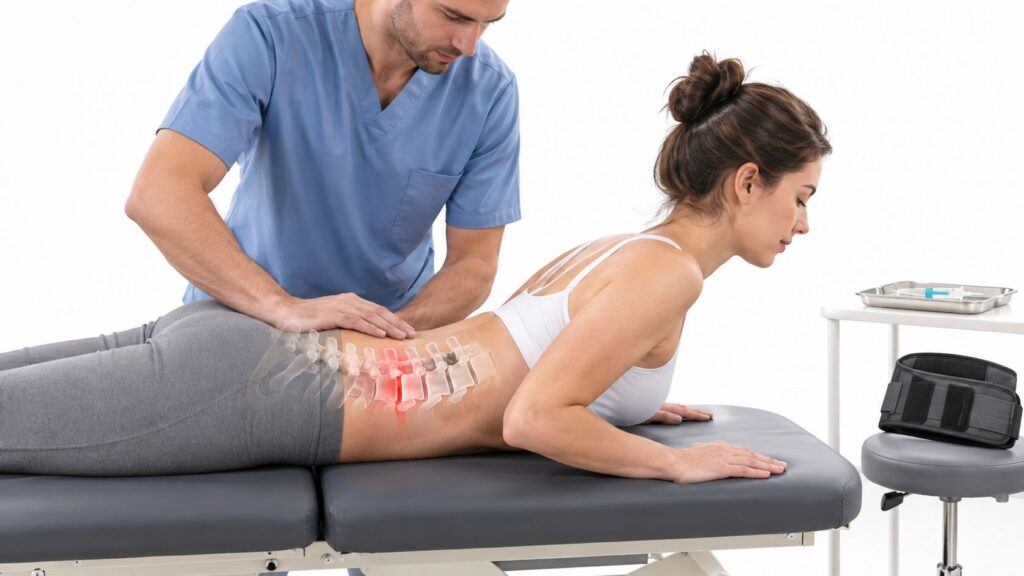
Chronic pain often starts with a story that sounds ordinary.
A resident in Oak Lawn tweaks a knee years ago playing softball. Someone in Orland Park lifts a heavy box, rests for a few days, and assumes the back pain will settle down. A parent in Palos Hills strains a shoulder coaching a weekend game, then keeps working through it until sleep becomes difficult. Months later, the injury no longer feels “sports-related,” but it also doesn’t feel simple.
That’s where a lot of people get stuck. They search for midwest sports medicine physicians, but they aren’t competitive athletes. They’re working adults, retirees, caregivers, or people trying to get through a normal day without limping, burning nerve pain, or a headache that won’t let up. They wonder whether a sports medicine doctor is still the right fit, or whether they’ve moved into a different kind of problem entirely.
That confusion is reasonable. Acute injury care and chronic pain care overlap, but they are not the same thing. One specialty often focuses on diagnosing structural injury, restoring joint function, and getting a patient back to activity. The other focuses on identifying why pain keeps firing long after the first injury, surgery, or flare should have settled.
If you live in Oak Lawn, Palos Heights, Worth, Bridgeview, Hickory Hills, Alsip, Burbank, Evergreen Park, or Orland Park, the key isn’t finding the “best” specialist in the abstract. It’s finding the right specialist for the stage of pain you’re in now.
Navigating Pain in the Chicago Suburbs
A common scenario looks like this.
You hurt your knee years ago. Maybe it happened in a rec league, maybe at work, maybe stepping off a ladder wrong. You got checked, were told it was a sprain or “wear and tear,” did some therapy, and pushed forward. Now you live in Worth or Evergreen Park, and the problem isn’t dramatic enough for the emergency room, but it’s present every day.
When the old injury stops behaving like an old injury
The pain changes character over time. It may start as soreness with activity. Then it becomes stiffness after sitting, swelling after errands, or pain that wakes you up when you roll over in bed.
That shift matters. Old orthopedic injuries can evolve into chronic pain problems, especially when joint irritation, nerve sensitivity, post-surgical changes, or spinal mechanics begin driving symptoms.
Most patients don’t need more toughness. They need a clearer diagnosis of what’s still hurting and why.
A person in Alsip may think, “My MRI already showed arthritis, so that must be the whole story.” Sometimes it is. Often it isn’t. The pain generator may be a facet joint in the spine, sacroiliac irritation, inflamed nerves, or a painful joint pattern that needs targeted treatment rather than another round of generic advice.
Why the label matters less than the pain pattern
“Sports medicine” can sound like it’s only for runners, football players, or younger patients. That isn’t quite true. Many sports medicine doctors also treat active adults and overuse injuries.
But if you’re in Burbank or Hickory Hills with persistent back, neck, joint, or nerve pain, the question shifts from “Who handles injuries?” to “Who treats pain that stayed after the injury?”
That’s the gap many patients feel. They aren’t freshly injured, but they aren’t well either. They’ve finished the obvious part of treatment, yet they still can’t walk comfortably, sleep normally, or get through work without flaring.
That gap is where careful specialty matching becomes important.
What a Sports Medicine Physician Typically Does
Sports medicine physicians play a valuable role, especially early in the course of an injury.

Their focus is function, recovery, and return to activity
Traditional sports medicine usually centers on musculoskeletal injuries tied to movement. That includes sprains, tendon injuries, cartilage problems, shoulder instability, rotator cuff issues, ACL injuries, and stress-related overuse conditions.
A group like Midwest Sports Medicine reflects that traditional model. It was founded in 1990 and uses a multidisciplinary protocol that combines orthopedic surgery and physical therapy for sports injuries. Its phased approach has been reported to reduce recovery time by 25 to 40 percent compared with surgery alone on its website at Midwest Sports Medicine.
That model makes sense when the goal is getting a patient back to sport or activity after a defined injury.
Training and treatment style
Many sports medicine doctors come from orthopedic surgery, family medicine, or another musculoskeletal track, then build added expertise in sports-related care. If you’re trying to understand the broader range of painful conditions that can eventually outlast the original injury, it helps to review the kinds of conditions pain specialists commonly treat.
Typical tools in sports medicine may include:
- Physical exam and imaging: They look for structural injury, instability, swelling, and motion loss.
- Rehab planning: Treatment often starts with guided physical therapy, movement correction, and graded return to activity.
- Injections or procedures: Depending on the physician, this may include certain joint or soft tissue injections.
- Surgery when needed: Arthroscopic techniques are commonly used for problems like meniscal tears, rotator cuff pathology, or ligament injuries.
What works well in this model
Sports medicine is often the right entry point when pain is tied to a clear injury event, especially if the patient needs diagnosis, bracing, imaging, rehab direction, or surgical evaluation.
It tends to work best when the main problem is still structural and activity-based.
What it often doesn’t fully address is the patient whose pain has become persistent, diffuse, recurrent, post-surgical, or nerve-driven. That patient may no longer need a return-to-play protocol. They may need a chronic pain workup.
Sports Medicine vs Interventional Pain Management
When patients compare midwest sports medicine physicians with pain specialists, they often assume one has to be “better.” That’s the wrong frame.
The better question is: What problem are you trying to solve right now?

Two specialties, two different jobs
Sports medicine usually asks, “What was injured, and how do we restore function?”
Interventional pain management asks, “What structure is generating pain now, and how can we quiet it in a targeted, minimally invasive way?”
That difference becomes obvious in patients from Bridgeview or Palos Heights who say things like:
- “My surgery healed, but the pain didn’t.”
- “The MRI shows arthritis, but that doesn’t explain the burning down my leg.”
- “Physical therapy helped some, but I still can’t stand long enough to cook.”
- “I’m not trying to return to sports. I’m trying to sleep and work.”
Side by side comparison
| Aspect | Sports Medicine Physician | Interventional Pain Specialist |
|---|---|---|
| Primary focus | Acute injury, overuse injury, biomechanics, return to activity | Chronic pain source identification and targeted relief |
| Typical patients | Athletes, active adults, recent injuries | Patients with persistent back, neck, joint, nerve, headache, or post-surgical pain |
| Main tools | Exam, imaging, rehab, bracing, injections, surgical referral or surgery | Image-guided injections, nerve blocks, radiofrequency ablation, neuromodulation, minimally invasive spine procedures |
| Treatment goal | Restore performance and function after injury | Reduce pain signaling, improve daily function, and avoid overreliance on opioids |
| Best fit | New shoulder injury, ACL sprain, tendon overload, return-to-play planning | Failed back surgery pain, facet pain, sciatica, spinal stenosis, complex chronic pain |
Where interventional pain changes the conversation
Interventional pain management is often most useful when the pain has lasted beyond the expected healing window, or when conservative care helped only partially.
One clear example is facet-mediated chronic back pain. According to the physician information associated with Midwest Sports Medicine, facet joint problems account for 15 to 45 percent of chronic back pain cases, and radiofrequency ablation can provide 12-month pain reduction of 50 to 70 percent in appropriate patients, as described at their physicians page.
That’s a very different approach from surgical reconstruction. Instead of fixing a torn structure, the procedure targets the pain-carrying nerves serving an arthritic joint.
Practical rule: If the main problem is a fresh injury, sports medicine is often the right first stop. If the main problem is pain that keeps returning, spreading, or lingering after treatment, interventional pain deserves a close look.
What doesn’t work well
What usually fails patients is getting stuck in a half-step. They’re no longer acute, but they’re still being managed as if rest, time, and basic rehab should eventually solve everything.
That’s when progress stalls.
Advanced Treatments for Chronic Pain
Patients often hear “pain management” and think it means medication. Good interventional pain care is much more precise than that.

Procedures that target the source, not just the symptoms
The right procedure depends on the pain generator. If you want to understand the range of targeted options available in this field, review the interventional procedures used for treatment.
A few examples matter for patients in Oak Lawn, Orland Park, and nearby communities.
Radiofrequency ablation
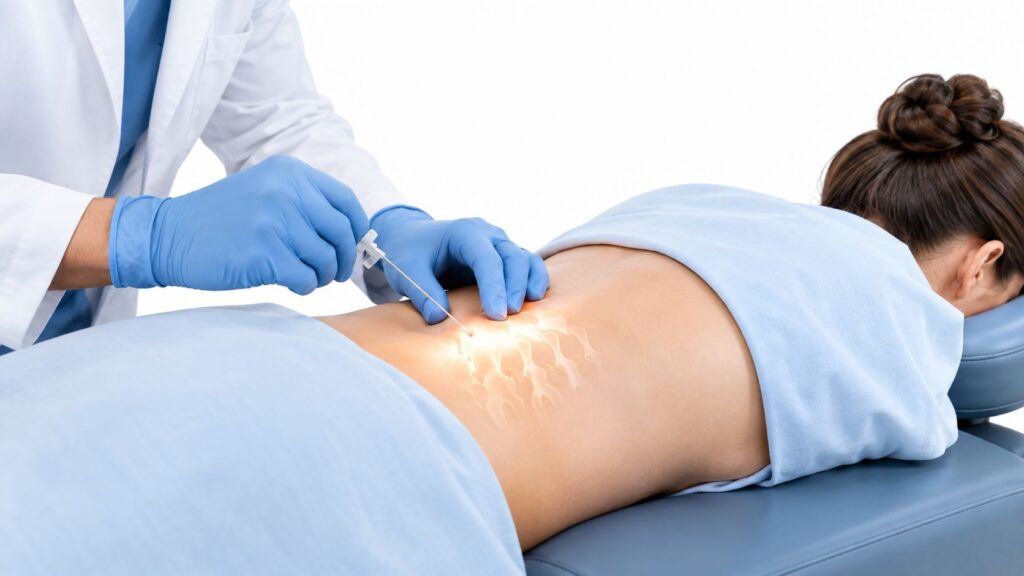
This is commonly used for pain arising from arthritic facet joints in the neck or low back. Before ablation, physicians usually confirm the pain source with diagnostic blocks.
If the blocks clearly match the patient’s pain pattern, radiofrequency ablation can interrupt those pain signals for a longer interval than a temporary injection.
That’s often a good fit for patients who say, “My back pain is worst when I stand, twist, or lean backward,” especially when imaging shows age-related changes but surgery isn’t the right answer.
Epidural and selective nerve treatments
When pain radiates into the arm or leg, the target may be an irritated spinal nerve rather than the joint itself. In those cases, carefully placed epidural or nerve-focused injections can calm inflammation and help determine what’s driving symptoms.
This is especially useful when the complaint is not just pain, but also numbness, tingling, or electric discomfort.
MILD and Vertiflex for lumbar spinal stenosis
Some older adults don’t describe their pain as sharp. They say their legs get heavy, their back tightens, and they can’t walk far before needing to stop.
That pattern often points toward lumbar spinal stenosis. Minimally invasive options such as MILD and Vertiflex Superion may help selected patients who want an option between repeated conservative care and larger spine surgery.
Not every problem is a spine problem
Chronic pain clinics also treat conditions beyond low back pain.
- Sacroiliac and facet interventions: Helpful when the issue comes from mechanical joints rather than discs.
- Peripheral nerve and spinal cord stimulation: Considered when pain is persistent, neuropathic, or post-surgical.
- Kyphoplasty: Used for painful vertebral compression fractures in appropriate patients.
- PRP and regenerative approaches: Sometimes used when tissue healing support is part of the strategy.
- Botox for chronic migraine or cervical dystonia: Important for patients whose pain affects the head, neck, or specialized activities.
A useful pain plan should tell you exactly what structure is being treated, why that structure fits your symptoms, and what success would look like if the diagnosis is correct.
What tends to work best
The strongest plans are multimodal. They combine precise procedures with rehab, activity modification, and realistic pacing. A shot alone rarely fixes a complex pain pattern forever. But a targeted procedure can create the window a patient needs to move, strengthen, sleep, and recover function.
What usually works poorly is repeating the same generic injection without a clear diagnostic reason.
When to See Which Specialist
Patients don’t need more theory. They need a practical rulebook.
Start with sports medicine when the problem is fresh and mechanical
If you twist an ankle playing basketball in Bridgeview, feel a pop in the shoulder lifting overhead in Evergreen Park, or develop knee swelling after a new running program in Orland Park, sports medicine is a strong first stop.
That’s also true if you need:
- An injury diagnosis: You need someone to sort out tendon, ligament, cartilage, or fracture concerns.
- Return-to-activity guidance: You want a structured recovery plan.
- Surgical evaluation: There may be a meniscal tear, rotator cuff tear, or instability issue.
Shift toward interventional pain when the pain outlasts the injury
A key gap shows up in non-athletic and post-surgical pain. Content from traditional sports medicine groups often leaves out opioid-sparing interventional options for chronic conditions, which can leave patients in places like Alsip and Burbank without clear guidance after the initial orthopedic phase. That concern is reflected in the Midwest Sports Medicine specialist content PDF at this page.
If any of these sound familiar, a pain specialist becomes more relevant:
- You had surgery, but still hurt: The structural repair may be complete, but nerve pain or joint pain remains.
- The injury healed, but function didn’t return: You’re still limiting errands, work, or sleep months later.
- Pain is spreading or changing: Burning, tingling, or radiating symptoms often need a different workup.
- You keep repeating the same cycle: Rest, therapy, short-term improvement, then another flare.
A simple decision filter
| Situation | Better first fit |
|---|---|
| New sports or overuse injury | Sports medicine physician |
| Suspected ligament, tendon, or cartilage injury | Sports medicine physician |
| Chronic back or neck pain with no clear new injury | Interventional pain specialist |
| Persistent pain after orthopedic surgery | Interventional pain specialist |
| Nerve pain, sciatica, chronic migraine, or cervical dystonia | Interventional pain specialist |
If your question is “What did I tear?”, start with orthopedics or sports medicine. If your question is “Why do I still hurt?”, pain medicine usually has more to offer.
Choosing a Provider in Your Illinois Community
The right specialist in Oak Lawn, Palos Hills, Palos Heights, Worth, Bridgeview, Hickory Hills, Alsip, Burbank, Evergreen Park, or Orland Park should be able to explain your problem clearly and match the treatment to the stage of care you’re in.

Training matters more than branding
A polished website doesn’t tell you whether a physician has advanced specialty training.
In a 2024 study of team physicians across major U.S. professional sports leagues, 75.5 percent of all primary care team physicians were sports medicine fellowship-trained, underscoring how important subspecialty preparation is when evaluating expertise. That figure appears in the published analysis at PMC.
The same logic applies in pain medicine. Fellowship training matters because these fields rely on pattern recognition, procedure selection, and knowing when not to intervene.
Questions worth asking at the visit
Use the consultation to test how the physician thinks.
- What’s the most likely pain generator? A good answer should be specific.
- What are my non-surgical options? If every path leads too quickly to a major procedure, be cautious.
- How do you confirm the diagnosis before treatment? In pain medicine, diagnostic blocks and image guidance often matter.
- How do you coordinate with my other doctors? The best outcomes usually involve primary care, rehab, and surgical teams working together.
- What happens if the first treatment helps only partially? Strong clinicians already have a stepwise plan.
Signs you’re in the right office
You’re more likely in good hands when the physician:
- Explains trade-offs clearly: Not every procedure is right for every patient.
- Uses a multimodal approach: Rehab, targeted procedures, and medication strategy should fit together.
- Doesn’t oversell one solution: Chronic pain rarely has a single universal fix.
- Listens for function loss: Walking, sleep, work tolerance, and daily activities matter as much as pain scores.
What you want is not just technical skill. You want judgment.
Your Next Step for Pain Relief in Chicago Ridge
By the time most patients search for midwest sports medicine physicians, they’re really trying to answer a different question.
They want to know who can help now.
If you have a new injury, sports medicine may be the best starting point. If you have chronic pain, nerve pain, post-surgical pain, headache disorders, or symptoms that never fully resolved, then the next step may need to come from interventional pain care instead.
That distinction matters in the southwest suburbs of Illinois, where many adults aren’t training for a race or recovering from a varsity injury. They’re trying to get through a workday in Alsip, drive comfortably from Orland Park, stand long enough to cook in Evergreen Park, or sleep without pain in Oak Lawn.
The right specialty can shorten that search.
If you’re dealing with pain that has moved beyond the original orthopedic problem, schedule a focused evaluation with a specialist who treats persistent pain directly. You can request a visit through Midwest Pain & Wellness appointments.
The clinic is in Chicago Ridge and serves nearby communities across this part of Illinois. Dr. Yaw Donkoh is a double board-certified interventional pain specialist focused on opioid-sparing care for chronic spine, nerve, joint, injury, post-surgical, and headache conditions.
A good consultation should leave you with a clearer diagnosis, realistic options, and a plan that fits your life. That’s the standard patients should expect.
Frequently Asked Questions
Do I need to be an athlete to see a sports medicine doctor
No. Sports medicine doctors often treat active adults and people with overuse or joint injuries who aren’t competitive athletes. The question is whether your problem is still mainly an injury problem, or whether it has become a chronic pain problem.
Can a pain specialist help if I’ve already had surgery
Yes. Persistent pain after surgery is one of the most common reasons to see an interventional pain specialist. The issue may involve irritated nerves, facet joints, scar-related sensitivity, sacroiliac pain, or a pain generator that wasn’t the original surgical target.
Are interventional pain treatments only injections
No. The field includes diagnostic blocks, epidural treatments, radiofrequency ablation, spinal cord stimulation, peripheral nerve stimulation, minimally invasive lumbar decompression, kyphoplasty, and other targeted procedures. The goal is to match the tool to the pain source.
What if my pain isn’t from sports at all
That’s common. Many adults in Illinois seek this kind of care for degenerative back and neck pain, post-surgical pain, arthritis-related joint pain, nerve pain, chronic migraine, and pain after work or daily-life injuries.
Can pain clinics help people outside traditional athletic care
Yes. Emerging trends show sports medicine principles being applied to underserved groups such as performing artists, while pain clinics offering varied treatments often fill gaps left by traditional orthopedic content. One example is cervical dystonia, which can affect musicians and may be treated with Botox, as noted in material available from Midwest Clinic.
What should I bring to my first consultation
Bring prior imaging reports if you have them, a medication list, procedure history, surgical records, and a short timeline of when the pain started and how it changed. The more clearly you describe the pain pattern, the easier it is to identify the likely source.
If chronic pain is limiting your day in Oak Lawn, Palos Hills, Palos Heights, Worth, Bridgeview, Hickory Hills, Alsip, Burbank, Evergreen Park, Orland Park, or Chicago Ridge, Midwest Pain & Wellness offers opioid-sparing care specific to the actual source of pain. Schedule a consultation with Dr. Yaw Donkoh to discuss targeted options for spine, nerve, joint, post-surgical, injury-related, migraine, and complex chronic pain conditions.