Why Understanding Personal Injury Matters for Your Recovery
What is personal injury? It is a legal term for harm to your body, mind, or emotions caused by another’s negligence or intentional act. Unlike property damage, personal injury focuses on the individual’s well-being, encompassing:
- Physical harm: Fractures, soft tissue injuries, and chronic pain.
- Emotional distress: Anxiety, depression, and trauma.
- Psychological injury: PTSD and loss of enjoyment of life.
- Reputational harm: Defamation or false imprisonment.
Claims typically arise from negligence (car accidents), intentional acts (assault), or strict liability (defective products). The goal is financial compensation to restore the victim’s quality of life.
As Dr. Yaw Donkoh, a double board-certified physician specializing in interventional pain management, we treat many patients whose chronic pain stems from personal injury. Understanding this field from both medical and legal perspectives is vital for securing proper treatment and compensation.
Why this knowledge affects your care
Many injured people focus only on the immediate diagnosis (for example, a strain, sprain, or whiplash) and miss how the injury can evolve over weeks or months. From a medical standpoint, early evaluation and a structured plan can reduce the chance that acute pain becomes chronic pain. From a legal standpoint, consistent treatment and clear documentation can help connect the timeline between the incident and your symptoms.
In practice, personal injury cases often overlap with pain management because symptoms can include:
- Pain that persists after the expected tissue healing window
- Reduced range of motion or functional limitations (trouble sitting, standing, lifting, or sleeping)
- Headaches, neck and back pain, or radiating pain into the arms or legs
- Stress responses that worsen pain sensitivity and recovery
A quick view of the personal injury claim lifecycle
While every case is different, most follow a similar path: the incident occurs, medical evaluation begins, a claim is opened, and the case resolves through negotiation or court. Knowing the general lifecycle can help you avoid common mistakes like delaying care, skipping follow-ups, or underreporting symptoms.
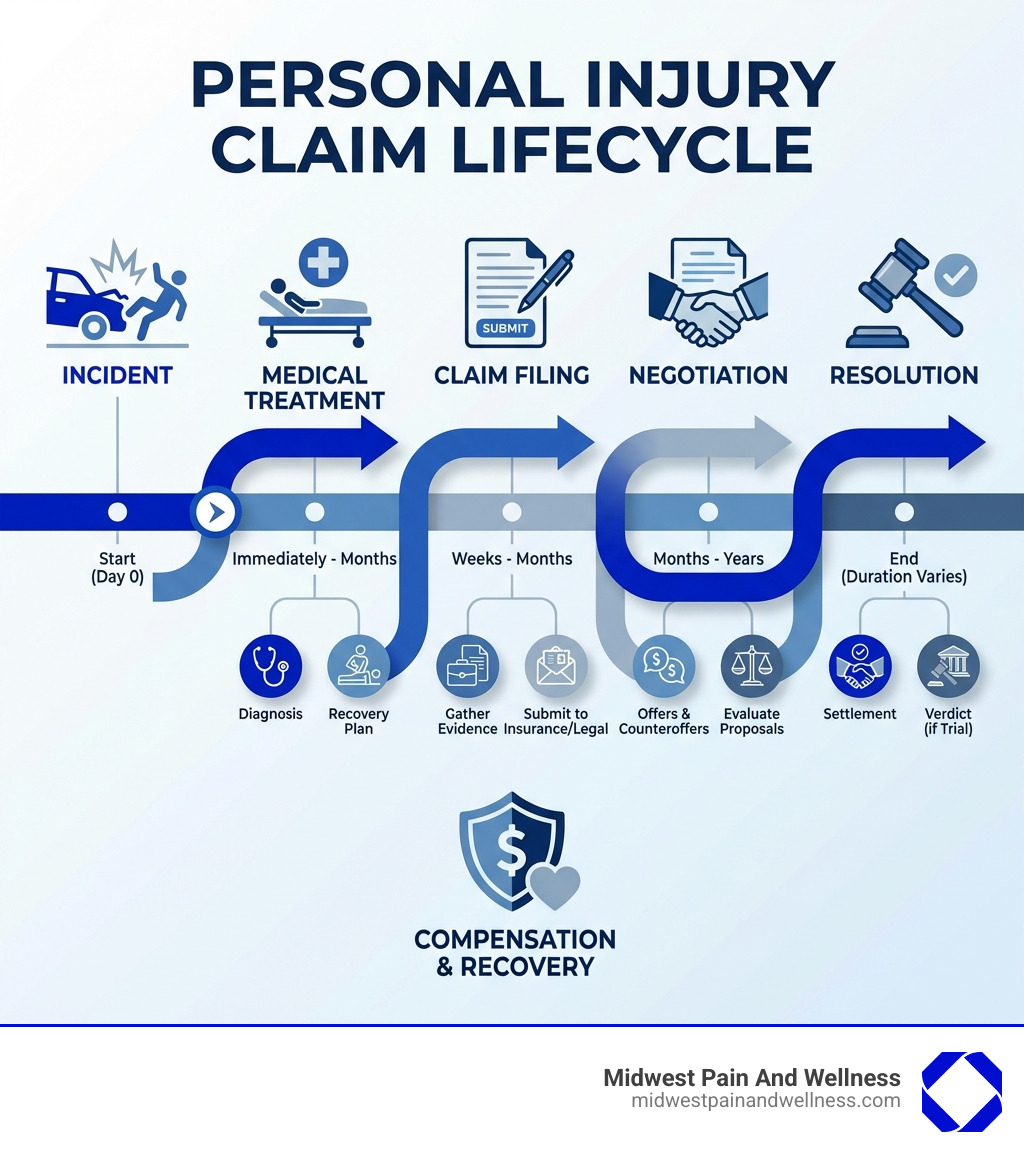
The key takeaway is simple: your recovery is both a health journey and (sometimes) a legal process. Protecting your well-being means taking symptoms seriously, following a consistent treatment plan, and keeping thorough records of how the injury affects your daily life.
What is Personal Injury?
At its core, what is personal injury refers to any harm to a person’s body, mind, or emotions, distinct from property damage. This falls under tort law, which addresses civil wrongs that cause loss or harm. The law recognizes that incidents impact a person’s entire well-being, including mental anguish and disability.
Personal Injury vs. Bodily Injury
While used interchangeably, these terms have distinct legal and insurance meanings.
Bodily injury refers specifically to physical harm, such as broken bones or head injuries. In insurance, it often covers medical bills and lost wages for others when you are at fault.
Personal injury is broader. It includes physical harm plus emotional distress, psychological trauma, and reputational damage. For example, chronic pain leading to depression is part of a personal injury claim.
| Feature | Bodily Injury | Personal Injury |
|---|---|---|
| Scope | Physical harm | Physical, emotional, psychological, reputational |
| Insurance | Often specific to auto liability | Broader, covering various incidents |
| Examples | Broken bones, whiplash | PTSD, anxiety, chronic pain, defamation |
| Compensation | Medical bills, rehab | All of the above, plus pain and suffering |
Categories of Harm Covered
- Physical Trauma: Direct injuries like fractures, spinal cord damage, or internal injuries. At Midwest Pain And Wellness, we treat the resulting chronic pain through specialized approaches.
- Emotional Distress: The psychological aftermath, including anxiety, depression, and grief following a traumatic event.
- Psychological Injury: Long-term conditions like PTSD or severe phobias that affect work and relationships.
- Loss of Reputation: Harm from defamation or false imprisonment.
Our approach to Conditions We Treat addresses the intersection of physical and mental suffering to ensure holistic healing.
Negligence: The Foundation of Most Claims
Most personal injury claims in Illinois are based on negligence—the failure to act with reasonable care. To establish negligence, four elements must be proven:
- Duty of Care: The defendant owed a legal duty to act safely (e.g., a driver’s duty to follow traffic laws).
- Breach of Duty: The defendant failed that duty (e.g., distracted driving).
- Causation: The breach directly caused the injury.
- Damages: The plaintiff suffered actual harm, such as medical bills or pain.
Understanding these is fundamental to Establishing liability.
Proving Fault
Proving fault involves showing the “tortfeasor” failed to exercise “reasonable care.” Evidence is critical and includes:
- Medical Records: Linking injuries to the incident.
- Accident Reports: Police or incident reports.
- Witness Statements: Accounts from observers.
- Visual Evidence: Photos of the scene and injuries.
Documenting everything supports both your legal claim and our Non-Surgical Pain Relief strategies.
Intentional Acts and Strict Liability
Intentional Torts: These occur when harm is deliberate, such as assault, battery, or intentional infliction of emotional distress.
Strict Liability: Liability exists regardless of fault or intent. This applies to:
- Defective Products: Manufacturers are liable for dangerous goods.
- Animal Attacks: Illinois dog bite laws often hold owners strictly liable. Dog bite injuries are a common example.
- Ultrahazardous Activities: Inherently dangerous tasks like blasting.
Calculating Compensation: Economic and Non-Economic Damages
Damages aim to restore the injured party financially. They are split into two categories:
-
Economic Damages: Quantifiable financial losses.
- Medical Expenses: Costs for surgeries, therapy, and Rehabilitation Pain Management.
- Lost Wages: Past and future income loss.
- Property Damage: Repair costs for vehicles or belongings.
-
Non-Economic Damages: Intangible losses.
- Pain and Suffering: Physical discomfort.
- Emotional Distress: Mental anguish and trauma.
- Loss of Enjoyment: Inability to pursue hobbies or daily joys.
Quantifying Pain and Suffering
There is no fixed price for anguish. Courts evaluate the intensity and duration of pain, the severity of emotional trauma, and the disruption to daily life. Often, a “multiplier” is applied to economic damages to determine this value. Our Chronic Pain Treatment documentation helps illustrate the depth of these intangible losses.
Factors Affecting Compensation
- Comparative Negligence: Illinois uses a modified rule. If you are partially at fault, your compensation is reduced by that percentage. If you are 50% or more at fault, you recover nothing.
- Insurance Limits: Compensation is often capped by the at-fault party’s policy limits.
- At-Fault System: Illinois is an at-fault state, meaning the responsible party pays. This differs from no-fault insurance systems where your own insurance pays regardless of blame.
- Evidence Quality: Strong medical documentation and clear liability increase claim value.
The Legal Process and Timelines

- Consultation: A lawyer assesses the case viability.
- Demand Letter: Sent to the insurer once injuries stabilize.
- Negotiation: Most cases settle here.
- Litigation: Filing a lawsuit if negotiations fail.
- Findy: Exchanging evidence via interrogatories and depositions.
- Mediation: Neutral third-party settlement attempts.
- Trial: A judge or jury renders a verdict.
In Illinois, the statute of limitations is generally two years from the injury date. Missing this deadline bars you from recovery. Throughout this, we provide Effective Pain Management Strategies to support your health and legal case.
What to do early (without disrupting your claim)
The early phase after an injury is often the most important for both recovery and documentation. If you’re able, consider these practical steps:
- Get evaluated promptly: Early assessment helps identify injuries that may worsen over time (for example, back pain that becomes radiating leg pain).
- Follow a consistent treatment plan: Gaps in care can slow recovery and may also make it harder to explain symptom progression later.
- Keep a symptom and function log: Track pain levels, sleep disruption, limitations at work, and activities you can no longer do comfortably.
- Save records: Appointment summaries, imaging results, prescriptions, and referral notes can all help establish a clear medical timeline.
These steps are not about “creating” a case. They are about protecting your health and ensuring your medical story is accurately recorded.
Settlement vs. Trial
Settlements are faster, private, and offer certain outcomes, though payouts might be lower than a potential jury award. Trials offer the chance for higher damages and public accountability but are risky, time-consuming, and expensive. The choice impacts your ability to fund Treatment Procedures.
The Role of a Personal Injury Lawyer
A lawyer provides case evaluation, legal expertise, and handles aggressive insurance adjusters. Most work on contingency fees, meaning they only get paid (usually 33-40%) if you win. This allows you to focus on recovery while they secure resources for your long-term health. Learn more About Dr. Donkoh and our collaborative approach.
How medical care supports the legal timeline
In many cases, legal decisions depend on whether the medical record clearly shows:
- Diagnosis and causation: What was diagnosed, and whether the provider connected it to the incident.
- Treatment response: Whether symptoms improved, stayed the same, or worsened despite conservative care.
- Functional impact: Documented restrictions, work limitations, and changes to daily activities.
At Midwest Pain And Wellness, our goal is always clinical: reduce pain, restore function, and support long-term health with opioid-free, multi-modal care. As a practical benefit, thorough documentation can also help your attorney or insurer understand the true impact of the injury over time.
Frequently Asked Questions
Are personal injury settlements taxable?
Generally, IRS rules state that compensation for physical injuries, medical expenses, and related pain and suffering is not taxable. However, lost wages and punitive damages are typically subject to income tax. Always consult a tax professional for your specific case.
What is the statute of limitations?
In Illinois, you usually have two years from the date of the incident to file a lawsuit. Exceptions exist for minors or cases where the injury was not immediately findable (the findy rule). Consult an attorney in Chicago Ridge immediately to protect your rights.
Can I claim compensation if I was partially at fault?
Yes, under Illinois’ “modified comparative negligence” rule. Your compensation is reduced by your percentage of fault. However, if you are 50% or more at fault, you cannot recover any damages. Our medical documentation helps establish the true extent of your needs to support your claim.
Conclusion
Understanding what is personal injury empowers you to seek the justice and care you need. Whether your harm resulted from negligence or an intentional act, the legal system provides a path to financial recovery for physical, emotional, and psychological trauma.
At Midwest Pain And Wellness, we support patients in Chicago Ridge and beyond who are recovering from personal injuries. Our double board-certified doctors provide opioid-free, multi-modal care plans designed for long-term relief. We collaborate with other practitioners to ensure your recovery is comprehensive and documented.
If you are suffering from persistent pain due to an injury, seek both legal and medical guidance to protect your future.