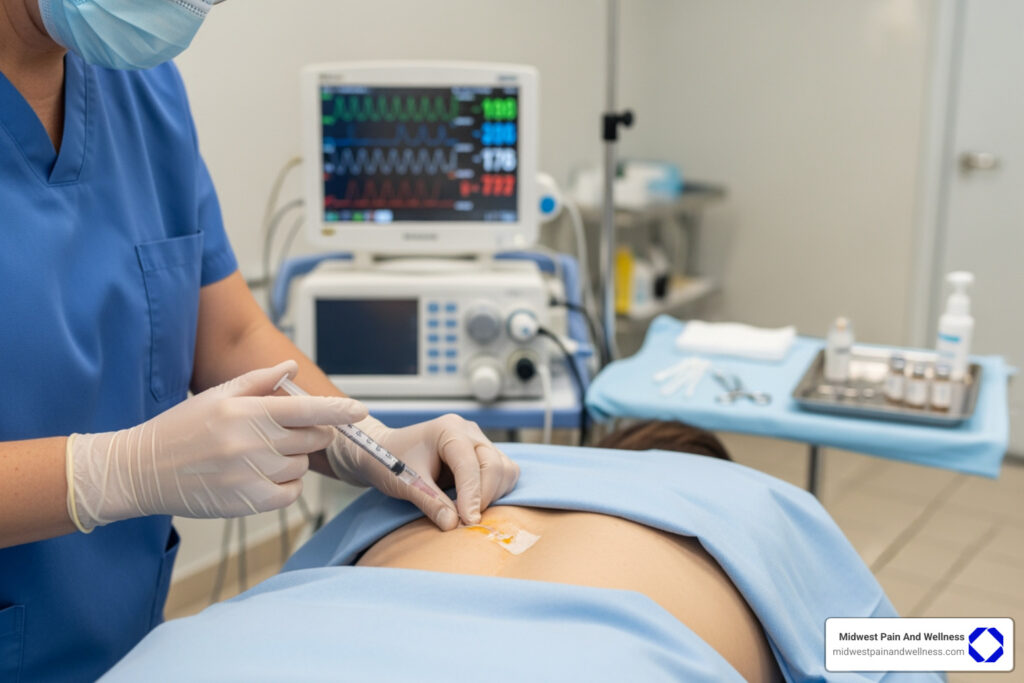
Why Understanding Back Pain, Sciatica, and Spinal Stenosis Matters
Back pain / sciatica / spinal stenosis are among the most common reasons people seek medical care. If you have lower back discomfort that radiates down your leg, or pain that worsens when you stand, you’re not alone. Understanding the difference between these conditions is the first step toward relief.
Here’s what you need to know right away:
Quick Guide to Understanding Your Pain:
- Back Pain (General) – Discomfort in your lower, middle, or upper back that may come from muscles, discs, or joints
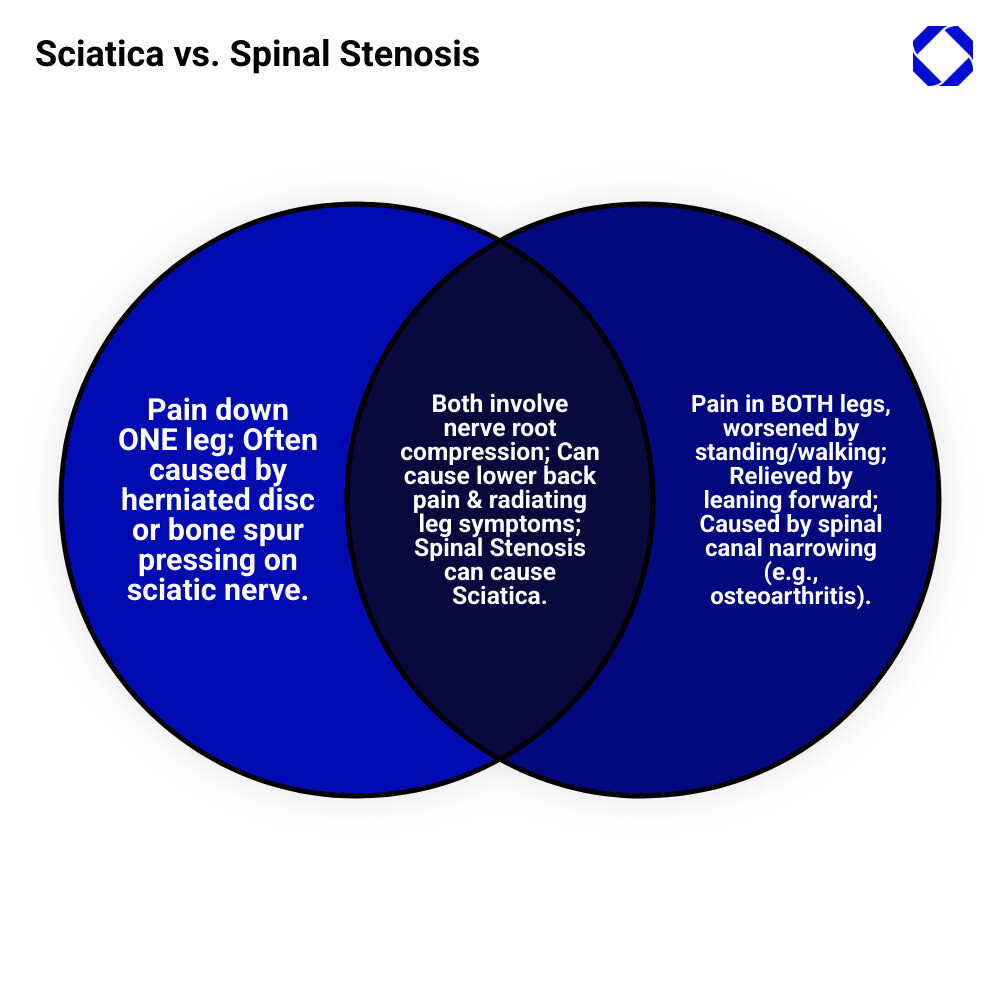
- Sciatica – Sharp, radiating pain that travels from your lower back through your buttocks and down one leg, caused by pressure on the sciatic nerve
- Spinal Stenosis – A narrowing of the spinal canal that puts pressure on nerves, typically causing pain in both legs that worsens with standing or walking and improves when leaning forward
The confusion is understandable, as all three can cause lower back pain and make daily activities challenging. However, they have different causes, symptoms, and require different treatments.
Sciatica occurs when something like a herniated disc or bone spur presses on the sciatic nerve, the longest nerve in your body. This creates the characteristic shooting pain down one leg.
Spinal stenosis is a narrowing of the spaces in your spine, often from osteoarthritis or age-related wear. This compresses the spinal cord or nerve roots, typically affecting both legs.
Interestingly, spinal stenosis can cause sciatica. When the spinal canal narrows and puts pressure on sciatic nerve roots, you may experience sciatica-like symptoms as part of your stenosis.
At Midwest Pain And Wellness, we see patients daily who are uncertain about the cause of their chronic pain. The good news is that an accurate diagnosis opens the door to effective, non-surgical, and opioid-free treatments.
What is Sciatica? Understanding That Radiating Leg Pain
Sciatica is a specific type of nerve pain originating from the sciatic nerve roots in your lower spine. The sciatic nerve is the body’s longest and thickest, running from the spine base down the legs. When this nerve is irritated or compressed, it causes distinct pain.
The hallmark of sciatica is a sharp, shooting pain that starts in the lower back and travels through the buttock down the back of one leg. A key distinction is that sciatica typically affects only one leg.
Other symptoms can include:
- Numbness: A loss of sensation along the path of the nerve, making parts of your leg or foot feel “asleep.”
- Tingling: A “pins and needles” sensation that can be quite bothersome.
- Muscle weakness: Difficulty moving your leg or foot, or a feeling of heaviness.
Several common causes lead to sciatica:
- Herniated Disc: This is the most frequent culprit. When a spinal disc ruptures or bulges, it can press directly on the sciatic nerve roots.
- Bone Spurs: These bony growths can develop on your vertebrae and reduce space for the nerves, leading to compression.
- Piriformis Syndrome: The piriformis muscle, located deep in the buttock, can spasm or tighten, irritating the nearby sciatic nerve.
- Spinal Stenosis: The narrowing of the spinal canal can also directly impinge on the sciatic nerve roots.
- Traumatic injury: Accidents or falls can lead to nerve compression.
- Other conditions: Rarely, compression is caused by tumors or diseases like diabetes.
Risk factors include heavy lifting, an inactive lifestyle, being overweight, older age, and pregnancy.
Understanding the causes of back pain / sciatica / spinal stenosis is vital for finding the right path to relief. You can learn more about general back pain causes and how they might relate to your symptoms by visiting authoritative sources like this one: More about back pain causes.
What is Spinal Stenosis? When Your Spinal Canal Narrows
Spinal stenosis is a structural condition involving the narrowing of the spinal canal. This canal protects your spinal cord and nerve roots. When it narrows, it puts pressure on these delicate structures, unlike sciatica, which is a symptom of nerve compression.
This narrowing is most common in the lower back (Lumbar Stenosis) and neck (Cervical Stenosis). We will focus on lumbar stenosis due to its symptom overlap with sciatica.
The narrowing is often a natural part of aging. Spinal stenosis is frequently caused by:
- Osteoarthritis: This “wear and tear” arthritis is the most common cause. As cartilage breaks down with age, the body may form bone spurs or thicken ligaments, which reduces space in the spinal canal.
- Aging process: General age-related changes, like the flattening of intervertebral discs, can contribute to narrowing.
- Thickened ligaments: Ligaments holding the spine together can thicken over time, encroaching on the spinal canal.
- Herniated discs: A significant herniated disc can contribute to the overall narrowing of the spinal canal.
- Spondylolisthesis: This condition, where one vertebra slips forward over another, can also narrow the canal.
- Other conditions: Less commonly, it can be caused by tumors, injuries, or inherited conditions.
The symptoms of lumbar spinal stenosis have a characteristic pattern:
- Pain that worsens with standing or walking: Especially for long periods or distances.
- Pain that lessens when leaning forward, walking uphill, or sitting: This is a crucial diagnostic clue, as leaning forward temporarily opens the spinal canal.
- Localized pain: Often felt in the lower back, buttocks, and down both legs.
- Numbness, tingling, or weakness: These sensations can affect both legs.
- Heavy feeling in legs: A sensation of dragging the legs.
- Balance problems: Difficulty with stability, particularly during walking.
Not everyone with anatomical narrowing on an MRI will have symptoms, but when they do arise, they can significantly impact daily life.
To better visualize this condition, here’s an image illustrating the narrowing that occurs:
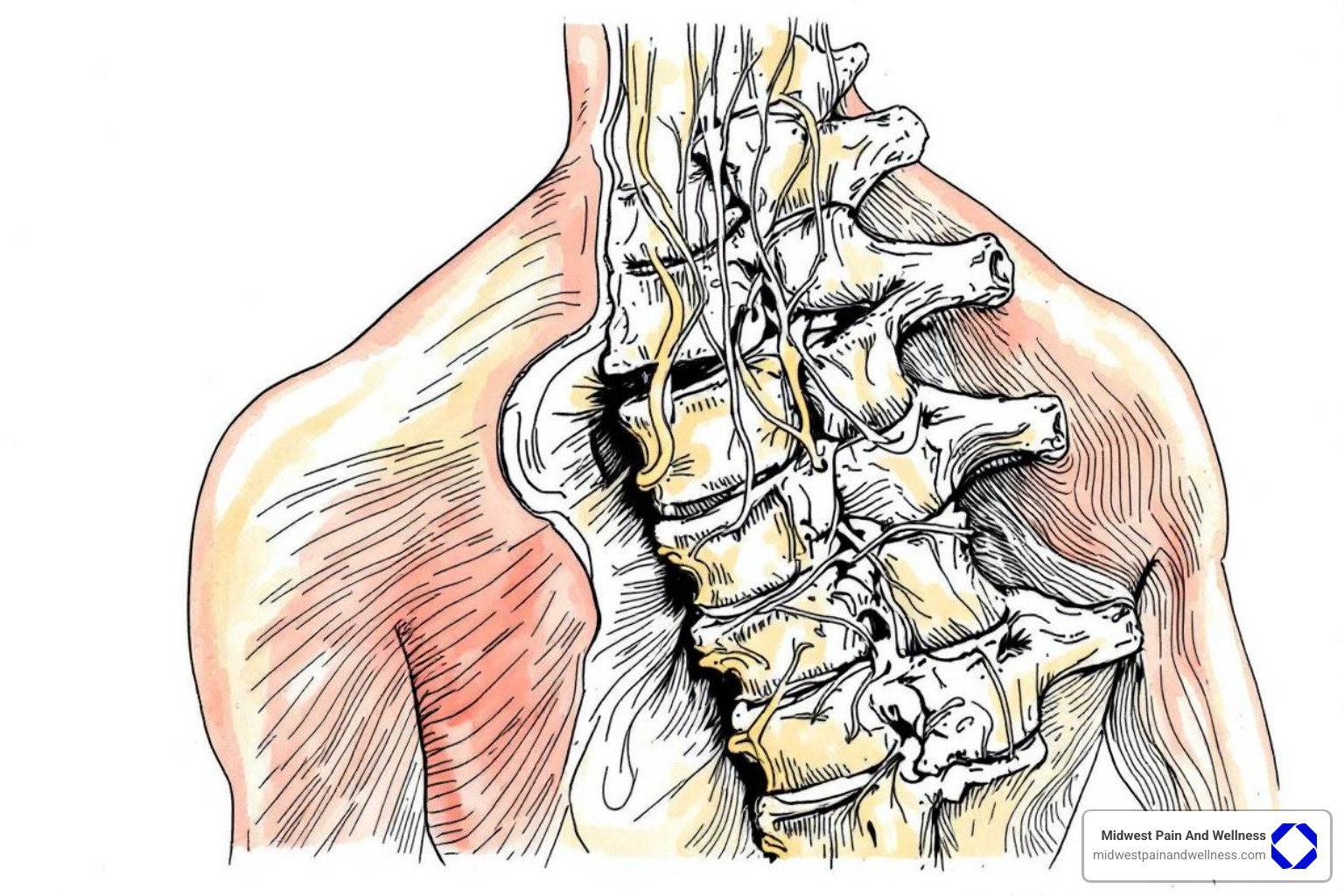
For a deeper dive into spinal stenosis, including its symptoms and causes, we recommend consulting reputable sources like the Mayo Clinic: Authoritative info on Spinal Stenosis.
Sciatica vs. Spinal Stenosis: A Head-to-Head Comparison
While both sciatica and spinal stenosis cause back pain and leg discomfort, they are distinct conditions. Understanding these differences is crucial for an accurate diagnosis and effective treatment. Let’s compare them side-by-side:
| Feature | Sciatica | Spinal Stenosis |
|---|---|---|
| Pain Pattern | Sharp, shooting, radiating pain, often described as electric or burning. Typically affects one leg (unilateral). | Aching, cramping, heaviness, or numbness in the legs. Often affects both legs (bilateral), though sometimes more pronounced on one side. |
| Pain Location | Originates in the lower back/buttock, travels down the back of the thigh, calf, and sometimes to the foot. | Lower back, buttocks, and extends into the legs. Can also cause back pain itself. |
| Positional Relief | Often worse with prolonged sitting, standing, or bending forward. Less predictable relief from specific positions. | Relieved by leaning forward (flexion), sitting, or walking uphill. Worsens with standing upright, walking downhill, or extending the back (extension). |
| Activity Impact | Standing, sitting, and walking can all be painful. | Pain worsens with standing and walking (especially long distances or downhill). Improves with rest, sitting, or leaning forward. |
| Common Causes | Herniated disc, bone spurs, piriformis syndrome, traumatic injury, tumors, and sometimes spinal stenosis. | Osteoarthritis (wear and tear), thickened ligaments, bone spurs, herniated discs, spondylolisthesis, inherited narrow spinal canal. Most common cause is osteoarthritis. |
| Age of Onset | Can occur at any age, often associated with specific injury or disc herniation. | Typically develops after age 50 due to degenerative changes. |
Key Symptom Differences in back pain / sciatica / spinal stenosis
The table highlights the key differences. Here are some nuances we look for during evaluation:
- One leg vs. both legs: Symptoms in one leg strongly suggest sciatica. If both legs are affected, spinal stenosis is a primary suspect.
- Postural triggers: Sciatica pain can be aggravated by many positions. In contrast, spinal stenosis pain is characteristically relieved by leaning forward (the “shopping cart sign”), which temporarily widens the spinal canal.
- Neurogenic claudication: This term is specific to spinal stenosis. It describes leg pain or cramping that comes on with walking and is relieved by sitting or leaning forward.
The Underlying Cause: Can Spinal Stenosis Cause Sciatica?
To add to the confusion, spinal stenosis can indeed cause sciatica.
This happens when the narrowing in the lumbar spinal canal irritates or compresses the specific nerve roots that form the sciatic nerve. Therefore, sciatica can be a symptom of underlying spinal stenosis, not just a result of a herniated disc.
- Nerve root irritation: Constant pressure or inflammation around the nerve roots can cause them to send pain signals down the leg.
- Nerve compression: In severe stenosis, the restricted space directly compresses the nerve, leading to pain, numbness, and weakness.
Not all patients with spinal stenosis will experience sciatica, and not all sciatica is caused by spinal stenosis. However, understanding their potential interplay is key to an accurate diagnosis.
A common cause of both conditions is the degeneration of spinal discs. You can explore this further by understanding Degenerative Disc Disease.
From Diagnosis to Treatment for back pain / sciatica / spinal stenosis
Navigating back pain / sciatica / spinal stenosis is overwhelming, but an accurate diagnosis is the critical first step. A thorough evaluation is essential to pinpoint the cause of your discomfort.
Our approach at Midwest Pain And Wellness begins with a comprehensive assessment, including:
- Physical exam: We assess your range of motion, muscle strength, reflexes, and sensation to look for signs of nerve compression.
- Medical history: We ask detailed questions about your symptoms, their triggers, and their impact on your daily life.
- Imaging tests: These tools visualize your spine.
- X-rays: Show bone alignment, fractures, and signs of arthritis.
- MRI (Magnetic Resonance Imaging): The gold standard for viewing soft tissues like discs and nerves, clearly showing herniations or the extent of spinal stenosis.
- CT scan (Computed Tomography): Provides detailed images of bone, useful for identifying bone spurs.
An accurate diagnosis is crucial. Without it, treatment may be ineffective. Our double board-certified doctors use their expertise to differentiate between sciatica and spinal stenosis, creating the foundation for an effective, personalized care plan. Many patients find relief through the Non-Surgical Pain Relief options we offer.
Conservative and Interventional Treatments for Sciatica
For sciatica, our goal is to reduce inflammation, alleviate nerve pressure, and restore function. We often start with highly effective conservative treatments:
- Physical therapy: A cornerstone of treatment, using exercises to strengthen core muscles, improve flexibility, and teach proper body mechanics.
- Anti-inflammatory medication: NSAIDs can help reduce pain and inflammation.
- Epidural Injections: Targeted injections of corticosteroids around irritated nerve roots can provide significant pain relief. We offer advanced Epidural Injections Chicago for acute pain.
- Nerve Blocks: An injection of anesthetic and a steroid near a specific nerve can interrupt pain signals. Learn more: Nerve Block for Pain.
- Chiropractic care: Adjustments can improve spinal alignment and reduce nerve irritation.
Advanced, Opioid-Free Options for Spinal Stenosis
If conservative treatments aren’t enough for spinal stenosis, we offer advanced, minimally invasive, and opioid-free procedures in Chicago Ridge. These treatments directly address nerve compression without extensive surgery.

Our advanced options include:
- Minimally Invasive Lumbar Decompression (MILD) Procedure: This innovative procedure removes small pieces of bone and ligament pressing on nerves through a tiny incision, allowing for a much faster recovery than traditional surgery. Learn more about the Minimally Invasive Lumbar Decompression (MILD) Procedure in Chicago Ridge.
- Spinal Cord Stimulator Therapy: For chronic pain, this therapy uses a small implanted device to send mild electrical pulses to the spinal cord, interrupting pain signals. It’s a reversible treatment you can trial first. We are experts in Spinal Cord Stimulator Therapy in Chicago Ridge.
- Facet Joint Injections: Injections into the small, arthritic joints between vertebrae can reduce inflammation and pain. See our Facet Joint Injections Chicago – Complete Guide.
These advanced therapies are part of our commitment to providing comprehensive, opioid-free pain management and creating custom care plans for long-term relief.
Proactive Management: Lifestyle and Exercises for Lasting Relief
While professional care is essential for back pain / sciatica / spinal stenosis, you can do a lot to manage symptoms and promote spinal health. Proactive management combines lifestyle modifications and targeted exercises.
Lifestyle Modifications for Spine Health
Small lifestyle changes can significantly reduce stress on your spine:
- Weight management: Maintaining a healthy weight reduces strain on your lower back, easing symptoms.
- Ergonomics and Proper Posture: Good posture while sitting, standing, and moving minimizes nerve compression.
- Smoking cessation: Quitting smoking can slow disc degeneration, reducing your risk of herniated discs and spinal stenosis.
- Anti-inflammatory diet: Eating anti-inflammatory foods (fruits, vegetables, healthy fats) can help manage pain.
- Stay active: Gentle activity improves blood flow, strengthens muscles, and keeps joints mobile.
Here are 3 simple ergonomic tips for office workers in Chicago Ridge:
- Adjust your chair height: Ensure your feet are flat on the floor with your knees at or slightly below hip level.
- Position your monitor at eye level: This prevents neck strain.
- Take regular breaks: Stand and stretch every hour to prevent stiffness.
Recommended Exercises for back pain / sciatica / spinal stenosis
Exercise is a powerful tool for managing these conditions. The right exercises strengthen muscles, improve flexibility, and can alleviate nerve compression. Always consult your doctor or physical therapist before starting a new program.
For sciatica caused by spinal stenosis, flexion-based (forward bending) exercises are often recommended to open joint spaces and relieve pressure.
- Back flexion stretch (Knee-to-chest): Lie on your back and gently pull one or both knees towards your chest, holding for 20-30 seconds.
- Seated forward bend: Sit on a chair’s edge and slowly lean forward from your hips.
- Standing back flexion: Stand and gently bend forward at your hips, going only as far as is comfortable.
These exercises can provide significant pain relief, especially for spinal stenosis, a benefit supported by scientific reviews. Scientific review on exercise for stenosis.
Core strengthening is also vital. A strong core supports your spine like a natural corset. Exercises like gentle planks, bird-dog, and pelvic tilts are beneficial. Focus on consistency and proper form, and stop if you feel pain.
When to See a Back Pain Specialist
While many cases can be managed conservatively, it’s crucial to seek professional help if you experience:
- Chronic pain: Pain that persists for more than a few weeks or significantly impacts your daily activities.
- Pain not improving: Symptoms that don’t get better with rest or initial therapy.
- Progressive weakness: Increasing weakness in your leg or foot (foot drop).
- Numbness in the saddle region: Numbness around your inner thighs, groin, or buttocks is a serious red flag.
- Loss of bladder or bowel control: This is a medical emergency requiring immediate attention.
- Cauda equina syndrome: This rare but severe condition involves the above red flag symptoms and requires urgent care to prevent permanent damage.
Don’t hesitate to seek expert advice. Early diagnosis and intervention can improve your long-term outcomes. If you’re looking for specialized care in Chicago Ridge, we’re here to help. Find your Back Pain Specialist Near Me.
Conclusion: Your Path to a Pain-Free Life
Living with back pain / sciatica / spinal stenosis is challenging, and the confusion between these conditions can feel hopeless. However, understanding the nuances of your condition is the first step toward relief. An accurate diagnosis is key, as what seems like general back pain could be sciatica or a symptom of spinal stenosis, each requiring a custom approach.
The good news is there is hope for recovery and a positive long-term prognosis with proper care. At Midwest Pain And Wellness, we provide comprehensive, opioid-free pain management. Our double board-certified doctors in Chicago Ridge use a multi-modal approach, combining advanced procedures with conservative therapies to create custom care plans for lasting relief and an improved quality of life.
If you’re struggling with persistent back pain / sciatica / spinal stenosis symptoms, don’t let discomfort define your life. Take the proactive step to seek expert evaluation. We’re here to guide you on your path to a more comfortable, active future.
To learn more about how we can help, especially with advanced treatments for spinal stenosis and degenerative spine issues, we invite you to explore our services: Learn more about advanced treatments for Spinal Stenosis and Degenerative Spine Disease.