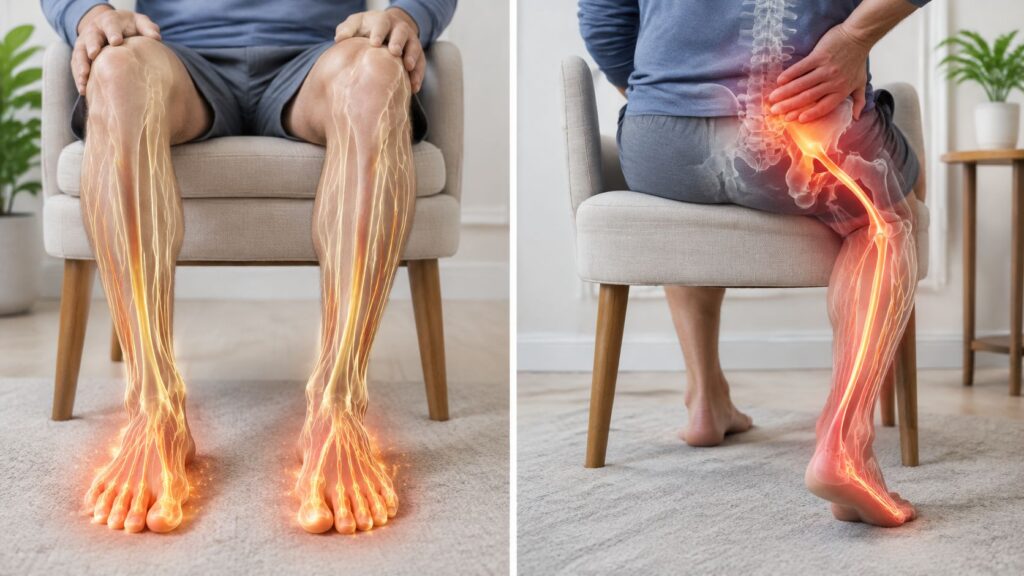
A lot of people who ask about dorsal root ganglion stimulation are in the same place emotionally. They've tried medications, rest, injections, time, and sometimes even surgery. Yet one very specific spot still burns, aches, stabs, or feels electrically wrong.
Often, they can point to it with one finger. The top of the foot. The inner knee. The groin after hernia surgery. The ankle that never settled down. That kind of pain is different from broad back pain or all-over body pain. It's focused, stubborn, and hard to ignore because it follows you into walking, sleeping, driving, and work.
For patients in Illinois communities such as Oak Lawn, Palos Hills, Palos Heights, Worth, Bridgeview, Hickory Hills, Alsip, Burbank, Evergreen Park, and Orland Park, dorsal root ganglion stimulation is worth understanding because it was designed for that exact problem: chronic pain with a specific map.
When Chronic Pain Has a Specific Target
A patient from the south suburbs might describe it this way. “It is not my whole leg. It is this one spot.” They point to the inside of the knee, the top of the foot, or the groin after surgery. That detail matters, because pain with a clear map often needs a treatment plan with the same level of precision.
Localized chronic pain can be especially frustrating. You know where it hurts, yet many treatments act broadly. Medication affects the whole body. Therapy can improve movement and strength, but it may not quiet an irritated pain pathway. Even advanced procedures can miss the mark if the painful area is small and sharply defined.
A common pattern appears in clinic. The original injury, operation, or nerve problem has technically healed, but the pain does not fade the way everyone expected. Shoes feel unbearable because the foot is hypersensitive. Stairs trigger a burning knee. Sitting becomes difficult because the groin or pelvis stays irritated.
Why focal pain needs a focal solution
DRG stimulation is a form of neuromodulation built for that kind of problem. It targets a nerve relay point linked to a specific body region, rather than spreading stimulation across a broader area.
That narrower focus is why DRG stimulation gets attention for pain in places that have historically been harder to treat well with broader stimulation patterns, including the foot, ankle, knee, groin, and parts of the pelvis. The FDA first approved a DRG neurostimulation system in the United States in February 2016 for lower-extremity complex regional pain syndrome, types I and II. Since then, pain specialists have used it as a targeted option when the pain pattern is small, consistent, and anatomically specific.
The practical idea is simple. If the pain behaves like it comes from one neighborhood, the treatment should not have to cover the whole city.
For patients seen at Midwest Pain & Wellness, that is often the turning point in the conversation. The goal is not to “treat everything.” The goal is to match the therapy to the exact shape of the pain.
Understanding the Dorsal Root Ganglion
A patient from Orland Park may point to one exact spot and say, "It is right here. My foot. My groin. My knee." That kind of precision matters, because the nervous system is organized by region.
The dorsal root ganglion, or DRG, is one reason pain can stay so sharply localized. It is a small cluster of sensory nerve cell bodies located near the spine, where incoming signals from a specific part of the body are sorted before they continue toward the spinal cord and brain.

Why this small structure can drive persistent pain
The DRG works like a junction box for sensory traffic. Each DRG is tied to a particular nerve territory, so it helps explain why one body region can stay painful even when the rest of the area feels normal.
After an injury, surgery, or nerve irritation, that relay point can become overly reactive. When that happens, ordinary input can be treated like a threat. A sock may feel unbearable. Light pressure on the knee may burn. Sitting may trigger pelvic pain that seems out of proportion to what imaging shows.
That often causes confusion for patients and referring doctors. The problem is not "all in the head," and it is not necessarily a sign that the original tissue damage is still getting worse. In some cases, the signaling system itself has become too sensitive.
What makes the DRG different from the spinal cord
The DRG is not the entire nerve, and it is not the spinal cord itself. It is a smaller, more specific relay point along the pathway.
That distinction matters if the pain map is small and consistent. A treatment aimed at the DRG is designed to influence signals from one defined zone rather than provide broader coverage. Patients who want a clearer picture of how implanted pain therapies change signaling can also review how spinal cord stimulation works.
Why pain specialists pay close attention to it
Published reviews of DRG stimulation describe meaningful pain relief in carefully selected patients with focal neuropathic pain, particularly in hard-to-cover areas such as the foot, groin, knee, and parts of the pelvis. That does not mean every person with localized pain needs this procedure. It means the anatomy gives us a specific target to evaluate.
For patients in Oak Lawn, Orland Park, and nearby Chicago suburbs who have already tried medications, injections, surgery, or physical therapy without enough relief, this is often the point where the conversation becomes more concrete. If the pain follows a clear nerve territory, the DRG may be relevant.
Practical rule: The more clearly pain stays confined to one nerve region, the more reasonable it is to ask whether the DRG is part of the problem and part of the solution.
At Midwest Pain & Wellness, that evaluation starts with mapping the pain carefully, matching it to the underlying anatomy, and deciding whether a targeted option makes sense.
DRG Stimulation vs Traditional Spinal Cord Stimulation
Both DRG stimulation and spinal cord stimulation belong to the same family of treatment. They use implanted leads and a pulse generator to change how pain signals are processed. But they are not interchangeable.
Traditional spinal cord stimulation places leads along the spinal cord itself. That approach can be useful when pain covers a broader area. DRG stimulation aims at a smaller sensory relay tied to a more defined body region.

The simplest way to compare them
| Therapy | Main target | Best fit |
|---|---|---|
| DRG stimulation | Specific dorsal root ganglion | Focal, anatomically restricted pain |
| Traditional spinal cord stimulation | Spinal cord pathways | Broader pain coverage |
The difference is less about which therapy is “better” in general and more about which one matches the pain pattern.
Where DRG has a clear advantage
For small, hard-to-cover regions such as the foot, ankle, groin, or knee, precision can make a major difference. In a randomized comparative trial, DRG stimulation had 74.2% treatment success at 12 months versus 53.0% with conventional spinal cord stimulation in adults with lower-limb CRPS or causalgia, according to this summary of the comparative trial.
Why might that happen? Because the DRG is a narrower anatomical target. That can reduce off-target stimulation and may also reduce the postural variation that some patients notice with older stimulation approaches.
For readers who want a broader overview of how spinal cord stimulation works as a category, this explanation of spinal cord stimulation can help place DRG in context.
What patients usually notice
People often ask whether DRG stimulation feels different from traditional spinal cord stimulation. Sometimes it does. Educational materials often describe DRG as more targeted and sometimes as a way to avoid unwanted stimulation in neighboring areas.
Still, the important conversation isn't just comfort. It's fit.
- If your pain is sharply localized, DRG may line up better with the anatomy.
- If your pain is broad or migratory, a highly focused target may be less suitable.
- If your pain pattern changes often, a precision therapy may become harder to match over time.
A good device choice starts with a good pain map. The technology has to fit the geography of the pain.
Could You Be a Candidate for DRG Stimulation
A patient from Oak Lawn or Orland Park will often describe this kind of pain with one finger, not a sweeping gesture. They point to a spot on the foot, the groin, the knee, or one side of the leg and say, “It burns right here,” or “Even my sock touching this area sets it off.”
That pattern gets our attention because DRG stimulation is designed for focal neuropathic pain. In plain terms, it tends to fit pain that stays in a defined nerve territory, rather than pain that is widespread, shifting, or hard to map.
Signs the pain pattern may fit
A good candidate often has a pain story with a clear outline. The map matters as much as the severity.
You may be worth evaluating for dorsal root ganglion stimulation if several of these sound familiar:
- One clear location: The pain stays centered in a specific area such as the foot, ankle, knee, groin, or part of the leg.
- Nerve-type symptoms: Burning, stabbing, electric, hypersensitive, or painfully numb sensations often suggest neuropathic pain.
- Persistence despite treatment: Conservative care, medications, or other interventions have not provided enough relief.
- Function is shrinking: Walking, sleep, shoes, sitting, driving, or daily tasks keep getting shaped around the pain.
Earlier sections discussed outcome data for well-selected patients. The practical takeaway is simpler. DRG stimulation tends to make the most sense when the pain is both nerve-based and geographically specific.
Situations where caution is important
A focused pain area alone does not automatically make someone a strong match.
A careful evaluation matters more when:
- Pain is diffuse: Widespread symptoms may not match a narrow stimulation target.
- The main problem is mechanical: Severe instability or another structural issue may call for a different treatment plan.
- The pain keeps moving: DRG works best when the painful territory is stable enough to target consistently.
- Diagnosis is uncertain: Good results depend on matching the therapy to the right pain generator.
If you are sorting out whether your symptoms sound more like nerve pain than joint or muscle pain, this guide to relieving nerve pain is a helpful place to start.
For referring clinicians, the key question is whether the pain distribution follows a believable dermatomal or focal peripheral nerve pattern and has remained resistant to appropriate conservative care. For patients, the question is easier to phrase. Can you point to the pain clearly and consistently, and does it behave like irritated nerve tissue rather than routine soreness or arthritis stiffness?
The best question is not “Do I hurt enough for this?” It is “Does my pain pattern match what this therapy was designed to treat?”
At Midwest Pain & Wellness, that evaluation starts with careful mapping, a review of prior treatments, and a discussion of your goals for daily function. For patients across the Chicago suburbs, including Oak Lawn, Orland Park, and nearby communities, that means DRG stimulation is not just a theory you read about. It is a treatment option you can assess locally, with clear next steps if your pain pattern fits.
Your Path to Relief The Trial and Implant Process
A patient from Oak Lawn might tell us, “I can point to the pain with one finger, but I still do not know whether this procedure is too big a step.” That concern is common, and the process is designed to answer it in a careful way.
DRG stimulation starts with a short trial before anyone commits to a permanent implant. That matters because scans, exams, and pain maps help guide treatment, but your day-to-day function is the ultimate test. The goal is to see how the therapy performs in your actual routine, at home, in the car, at work, and during the small tasks pain tends to disrupt first.

Stage one is the trial
The trial is a temporary placement of thin leads near the dorsal root ganglion that matches your painful area. Your pain specialist uses imaging guidance to position them accurately. The leads connect to an external device that you wear for a short period.
Then you go home and test the therapy against real life.
That means paying attention to practical changes, not chasing a perfect pain score. Can you walk with less hesitation? Do you sleep longer before pain wakes you? Are stairs, shoes, driving, or sitting less draining? Do you reach for rescue medication less often?
The trial gives patients and referring clinicians something more useful than theory. It shows whether a very specific signal change at the nerve level translates into better function in the places that matter most.
Stage two is the permanent implant
If the trial gives clear, meaningful relief, the next step is a permanent implant. This is usually an outpatient procedure done through small incisions. The leads are connected to a compact implanted battery placed under the skin.
Patients often ask whether the permanent system works automatically once it is in place. A better way to picture it is as a therapy that needs tuning, much like adjusting a hearing aid until the signal is helpful instead of distracting. Programming helps match the stimulation to your pain pattern, and patients receive a handheld controller to use within the settings prescribed by their physician.
At Midwest Pain & Wellness, patients from Orland Park, Oak Lawn, and nearby Chicago suburbs are guided through this in plain language. You are not expected to sort out the process alone or guess what each step means.
Questions patients often ask before the procedure
- Will I be asleep for the procedure? The anesthesia plan depends on the procedure details, your health history, and your physician's judgment.
- Will I feel the implant under the skin? You may notice the battery area at first, especially early in healing, and your care team will explain what is expected.
- Can the settings be changed later? Yes. Programming is a routine part of treatment.
- What happens if the trial does not help enough? In that case, a permanent implant usually does not make sense, and your physician will discuss other options.
“The trial is a real-world test with your normal routine, not a guess based on theory.”
That two-step process gives patients room to decide based on lived results. For someone in the Chicago suburbs who wants a local, structured way to assess DRG stimulation, it creates a clear next step instead of a leap.
Recovery Outcomes and Long Term Success
A week or two after implantation, many patients ask a more personal question than, "Did the procedure go well?" They ask, "Will I trust this area of my body again?"
That is the heart of recovery.
The first phase is usually about healing and protecting the leads while scar tissue forms around them and helps hold them steady. Bending, lifting, and twisting limits matter for that reason. They are not arbitrary rules. They are more like protecting a newly planted stake in the ground until it has time to set firmly.
Recovery also has a second phase that patients sometimes do not expect. The device may need programming adjustments as your care team learns how your pain responds in day-to-day life. Relief is often a process of fine-tuning, not a single moment where everything changes at once.
What long-term success usually means
Long-term success is usually measured in daily function, not just in a pain diary.
For some patients, success means they can walk through a grocery store in Oak Lawn or Orland Park without planning every step around a painful foot, groin, knee, or pelvic area. For others, it means sleep becomes less interrupted, clothing feels less irritating, or the workday no longer revolves around protecting one small but very sensitive spot.
Those details matter because DRG stimulation is designed for pain that has a clear map. When the treatment matches that map well, patients often describe life becoming less restricted and less dominated by the same trigger over and over.
A realistic view of durability
Many patients continue to do well over time, especially when the original pain pattern was specific and the trial gave a clear signal that the therapy fit. But long-term success is not only about the implant itself. It also depends on follow-up visits, programming, healing, and whether the pain remains in the same targeted distribution.
A published review of DRG stimulation for non-CRPS pain reported meaningful improvement in pain, function, and medication use in several studies, while also noting that long-term high-level evidence is still limited for some pain conditions and uses outside the best-studied groups, according to this review of evidence gaps in DRG stimulation.
That balanced message is important. A treatment can be promising and still require careful patient selection.
What patients should plan for after implant
The best results usually come from patients who stay engaged with care after the procedure. That includes:
- Following early activity restrictions so the system has time to settle
- Attending programming visits if coverage needs adjustment
- Reporting changes in the pain pattern because new pain areas may need a different plan
- Keeping goals practical and personal, such as driving, sleeping, working, or walking with less limitation
For patients in the Chicago suburbs, local follow-up makes this easier. Ongoing care through an interventional pain management clinic at Midwest Pain & Wellness gives patients a nearby place to return for rechecks, programming discussions, and decisions about whether the therapy is continuing to match the pain problem well.
A good DRG outcome is not perfection. It is a meaningful reduction in suffering, paired with better function and a treatment plan that still makes sense months and years later.
Begin Your Pain Relief Journey in Illinois
If you live near Chicago Ridge or in surrounding communities such as Oak Lawn, Palos Hills, Palos Heights, Worth, Bridgeview, Hickory Hills, Alsip, Burbank, Evergreen Park, or Orland Park, you don't need to search far outside Illinois to explore this option.
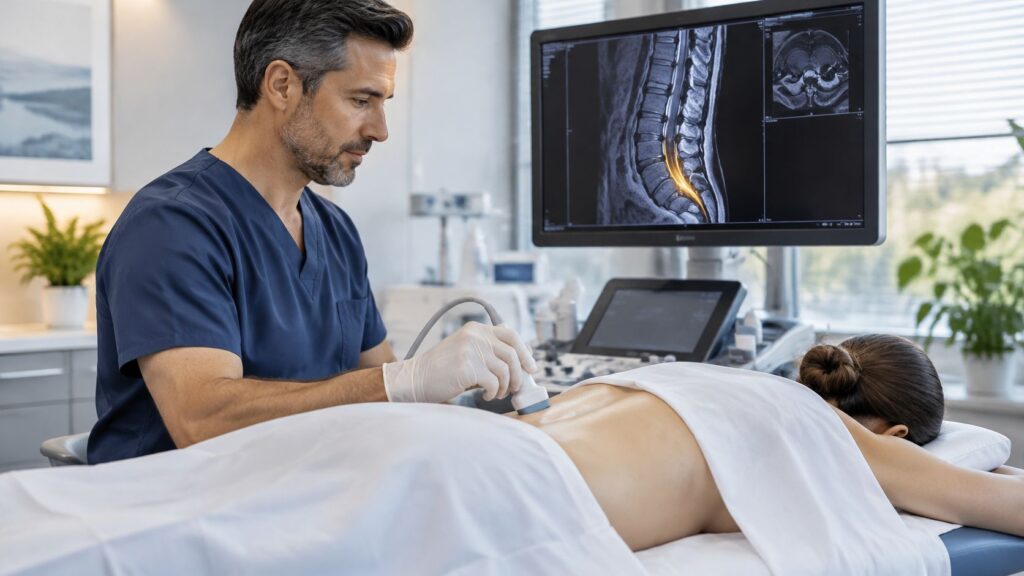
The first step is a consultation with an interventional pain specialist who can map the pain carefully, review prior treatments, and decide whether the pattern fits dorsal root ganglion stimulation. That evaluation should include your history, imaging or operative background when relevant, a physical exam, and a practical discussion about what you want to get back to doing.

What to bring to the first visit
A productive visit usually starts with a clear timeline. Patients often help the process by bringing:
- Procedure history: Surgeries, injections, and prior pain treatments
- Imaging records: If you have them available
- Medication list: Current and recent pain medicines
- Pain map notes: Where it hurts, what makes it worse, and what you can't do because of it
For patients seeking a local option, Midwest Pain & Wellness interventional pain management clinic provides evaluation for advanced pain procedures in Illinois. In this setting, the practical question isn't whether DRG stimulation sounds impressive. It's whether your symptoms, diagnosis, and goals line up with the therapy.
What happens after the evaluation
If the pain pattern fits, the next steps usually involve candidacy review, discussion of the trial process, and insurance authorization planning. If it doesn't fit, a good specialist should say so plainly and recommend a different path.
That honesty matters. Precision procedures work best when they're used precisely.
If focal nerve pain is limiting your walking, sleep, work, or recovery after surgery, Midwest Pain & Wellness is one place to start the conversation. A thorough evaluation can help you understand whether dorsal root ganglion stimulation fits your pain pattern and what realistic next steps look like.