
Non-Surgical, Opioid-Sparing Care for Joint, Spine, Tendon, and Injury-Related Pain
When pain does not improve with rest, medication, physical therapy, or traditional injections, many patients start looking for a different kind of answer. They do not necessarily want surgery. They do not want to rely on opioids. They want to know whether their body still has the ability to heal, repair, and function better with the right medical support.
At Midwest Pain & Wellness, regenerative medicine is used as part of a comprehensive, diagnosis-first approach to pain management. These treatments are designed to support the body’s natural repair process by using biologic materials such as platelet-rich plasma, also called PRP, and carefully selected cell-based options when appropriate.
Regenerative medicine is not a miracle cure, and it is not the right treatment for every patient. The goal is to identify the actual source of pain, determine whether that tissue may respond to a regenerative approach, and build a treatment plan that fits the patient’s condition, function, goals, and medical history.
If you are dealing with chronic pain in Chicago, Chicago Ridge, Oak Lawn, Palos Hills, Palos Heights, Worth, Bridgeview, Hickory Hills, Alsip, Burbank, Evergreen Park, Orland Park, or nearby Illinois communities, Midwest Pain & Wellness can help evaluate whether regenerative medicine belongs in your care plan.
Schedule a consultation or call 708-571-3669 to get started.
What Is Regenerative Medicine?
Regenerative medicine is a branch of medicine focused on helping injured, irritated, or degenerative tissue repair and function better. Instead of only blocking pain signals or temporarily reducing inflammation, regenerative treatments aim to support the body’s own healing response at the source of the problem.
In pain management, regenerative medicine may involve treatments such as:
Platelet-rich plasma, also called PRP
Cell-based therapies, sometimes discussed as stem cell or bone marrow-derived options
Growth factor-based approaches
Other biologic treatments used in selected musculoskeletal conditions
At Midwest Pain & Wellness, regenerative treatment is considered within a larger pain management framework. That matters because pain can come from many different structures, including joints, tendons, ligaments, discs, nerves, muscles, and inflamed soft tissue. A treatment that helps one type of pain may not help another.
For example, someone with mild to moderate knee arthritis may be evaluated differently than someone with severe spinal stenosis, advanced nerve compression, or post-surgical nerve pain. The best treatment starts with an accurate diagnosis, not with a generic injection.
Learn more about the conditions Midwest Pain & Wellness evaluates on the Conditions We Treat page.
How Is Regenerative Medicine Different From Regular Pain Management?
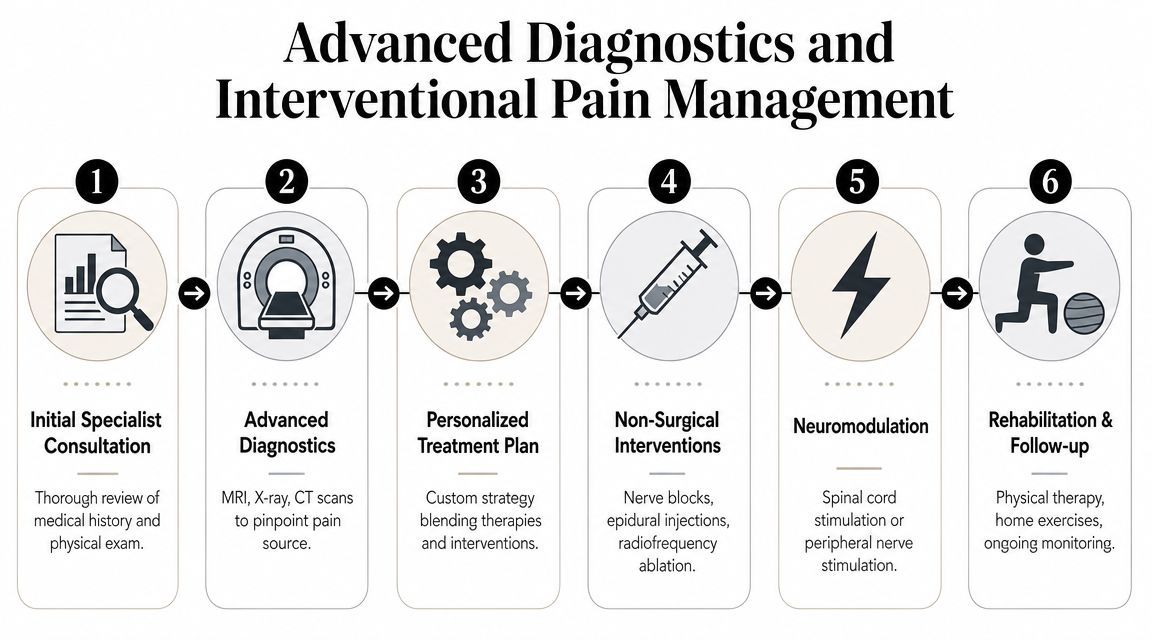
Traditional pain management often focuses on reducing pain signals, calming inflammation, improving mobility, and helping patients avoid unnecessary surgery or opioid dependence. This can include physical therapy, medication management, epidural steroid injections, nerve blocks, radiofrequency ablation, spinal cord stimulation, Botox for migraine, and other interventional procedures.
Regenerative medicine is different because the goal is not simply to numb pain or suppress inflammation for a short period. The goal is to stimulate or support a healing response in tissue that may be damaged, irritated, weakened, or slow to recover.
That difference can be understood in a simple way:
Traditional pain management often asks, “How can we reduce this patient’s pain?”
Regenerative medicine asks, “Can we help the painful tissue recover, repair, or function better?”
Both approaches can be valuable. In fact, many patients benefit from combining regenerative care with other evidence-based pain treatments. A patient may need diagnostic injections first to confirm the pain source. Another patient may benefit from PRP, but also need physical therapy, posture retraining, activity modification, or additional interventional care.
Midwest Pain & Wellness offers a broad range of treatment procedures, allowing regenerative medicine to be considered alongside other non-surgical and minimally invasive options.
Why a Diagnosis-First Approach Matters
Regenerative medicine works best when the target is clear. “Back pain,” “knee pain,” “neck pain,” and “joint pain” are symptoms, not complete diagnoses.
A careful evaluation may include:
A review of your symptoms and how long they have been present
A physical examination
Review of imaging, such as X-rays, MRI, or prior records when available
Assessment of prior treatments and how you responded
Discussion of your goals, activity level, work demands, and lifestyle
Consideration of whether another treatment may be more appropriate
This diagnostic process helps determine whether pain may be coming from a tendon, ligament, joint, facet joint, sacroiliac joint, disc, nerve, or another structure. It also helps identify situations where regenerative care may not be the best first step.
For patients with spine-related pain, Midwest Pain & Wellness also evaluates conditions such as spinal stenosis and degenerative spine disease, which may require a different interventional strategy.
Which Conditions Can Be Treated With Regenerative Medicine?
Regenerative medicine may be considered for selected musculoskeletal and pain conditions, especially when the problem involves tissue irritation, degeneration, inflammation, or incomplete healing.
Common conditions that may be evaluated for regenerative treatment include:
Joint Pain and Arthritis
PRP and other regenerative approaches may be considered for mild to moderate osteoarthritis or degenerative joint pain. This may include pain in the knees, hips, shoulders, or other joints, depending on the patient’s diagnosis and severity.
Regenerative care is not meant to reverse severe arthritis or replace a joint that is structurally beyond repair. However, for selected patients, it may help reduce pain, improve function, and delay the need for more invasive treatment.
Tendon Injuries and Tendinopathy
Tendons often heal slowly because they receive less blood flow than many other tissues. PRP may be considered for chronic tendon irritation or tendinopathy, including conditions such as:
Tennis elbow
Golfer’s elbow
Achilles tendinopathy
Patellar tendinopathy
Rotator cuff-related tendon pain
Hip tendon irritation
Other chronic tendon pain patterns
The goal is to deliver concentrated healing signals directly to the irritated or damaged tendon area.
Ligament and Soft Tissue Injuries
Some ligament sprains and soft tissue injuries can remain painful long after the initial injury. When conservative care is not enough, regenerative treatment may be considered to support tissue repair and improve stability.
This can be especially relevant for patients with lingering pain after sports injuries, personal injuries, or work-related injuries. Midwest Pain & Wellness also treats patients through Workers’ Compensation and Personal Injury Care.
Neck Pain and Whiplash-Related Pain
Some cases of chronic neck pain involve irritated facet joints, joint capsules, ligaments, or supporting soft tissue. PRP may be considered when a careful evaluation suggests that these structures are contributing to pain.
Patients with persistent neck pain after whiplash, poor response to standard care, or pain that appears mechanical rather than purely nerve-related may benefit from a regenerative medicine consultation.
Midwest Pain & Wellness has a related guide on PRP for neck pain for Chicago-area patients.
Low Back Pain
Some types of low back pain may involve facet joints, sacroiliac joints, ligaments, discs, or supporting soft tissue. Regenerative treatment may be considered when the pain source is appropriate and when the patient’s condition does not require a different intervention.
However, not all back pain is a good fit for PRP or cell-based treatment. If pain is caused by severe nerve compression, advanced spinal stenosis, progressive weakness, or an unstable spine, other options may be more appropriate.
Sports and Activity-Related Injuries
Regenerative medicine is often discussed by patients who want to stay active without depending on repeated steroid injections or long-term medication. PRP may be considered for selected sports-related tendon, ligament, joint, or soft tissue injuries.
This can include active adults, recreational athletes, workers with physically demanding jobs, and patients who want to return to walking, lifting, exercise, or daily movement with less pain.
Post-Surgical or Persistent Pain
Some patients continue to have pain after surgery or after an injury has technically “healed.” Regenerative medicine may be considered in certain situations, but it depends heavily on the pain generator. For some patients, the better option may be nerve-focused care, spinal cord stimulation, diagnostic blocks, or another interventional procedure.
A full evaluation helps determine whether regenerative medicine is appropriate or whether another treatment path offers a better chance of relief.
What Is PRP?
PRP stands for platelet-rich plasma. It is a concentrated portion of your own blood that contains platelets and growth factors involved in the body’s healing response.
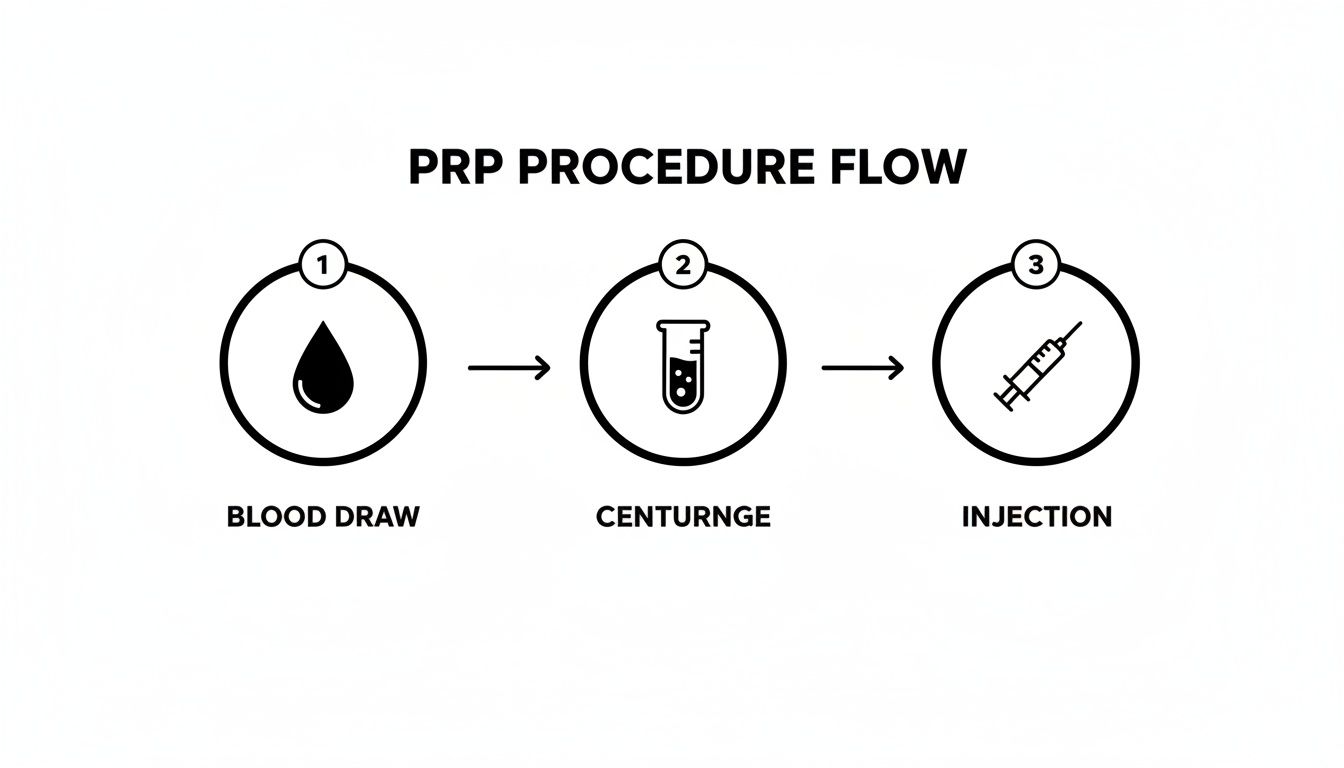
A PRP treatment usually involves three basic steps:
First, a small sample of your blood is drawn.
Second, the blood is processed in a centrifuge to separate and concentrate the platelet-rich portion.
Third, the PRP is injected into the target area, such as a painful tendon, joint, ligament, or selected spine-related structure.
Platelets are widely known for their role in clotting, but they also contain growth factors and signaling proteins that help coordinate tissue repair. PRP does not work like a numbing medication. It does not usually provide instant relief. Instead, it is intended to support a healing process that unfolds over time.
For patient-friendly background, the American Academy of Orthopaedic Surgeons provides an overview of platelet-rich plasma.
How Is PRP Used in Regenerative Medicine?
PRP is one of the most commonly used regenerative treatments because it comes from the patient’s own blood and can be placed directly into the painful or damaged area.
At Midwest Pain & Wellness, PRP may be considered for patients whose pain appears to come from tissue that may still have healing potential. This may include tendons, joints, ligaments, and selected spine-related structures.
PRP may be used to help:
Support tissue repair
Reduce pain related to chronic irritation or degeneration
Improve function over time
Encourage a more organized healing response
Reduce reliance on repeated anti-inflammatory injections in selected cases
Support recovery when standard conservative care has not been enough
The exact plan depends on the diagnosis. PRP is not used as a one-size-fits-all treatment. It should be placed precisely, often with image guidance, so the treatment reaches the intended target.
What Are Stem Cells?
Stem cells are early-stage cells with the ability to develop into certain specialized cell types and participate in repair processes. In pain management and orthopedics, patients often hear the term “stem cell therapy” used to describe cell-based treatments derived from sources such as bone marrow or other biologic tissue.
However, this topic requires careful explanation. Stem cell and cell-based treatments for many orthopedic, spine, and chronic pain conditions remain investigational or are used off-label in the United States. Patients should be cautious of clinics that promise guaranteed cures, cartilage regrowth, permanent pain relief, or FDA-approved stem cell treatment for broad pain conditions.
The American Academy of Orthopaedic Surgeons provides a patient resource on the use of stem cells in orthopaedics. The FDA also provides important consumer information about regenerative medicine therapies.
How Are Stem Cells Used in Pain Management?
In pain management, cell-based options may be discussed for selected musculoskeletal conditions where the goal is to support repair, reduce inflammation, or improve function. These treatments may involve concentrated cells or biologic signaling components placed near a painful joint, tendon, ligament, or other target.
That said, cell-based therapy should be approached with realistic expectations. It is not a guaranteed cure. It is not appropriate for every patient. It may not be covered by insurance. It should not be marketed as a replacement for every surgery, injection, or evidence-based pain treatment.
At Midwest Pain & Wellness, the safer and more responsible approach is to evaluate whether the patient’s diagnosis, imaging, symptoms, and treatment history make regenerative medicine reasonable. If another option is more appropriate, such as radiofrequency ablation, epidural injection, spinal cord stimulation, or another interventional treatment, that should be discussed honestly.
Patients can explore more about the broader interventional toolkit on the Treatment Procedures page.
Are Regenerative Medicine Treatments FDA Approved?
This is one of the most important questions patients can ask.
Some regenerative medicine products and devices have FDA clearance or approval for specific uses. However, many biologic therapies used in pain management, including PRP and many cell-based treatments, may be considered investigational or used off-label depending on the condition, product, and clinical setting.
The FDA has warned patients about the marketing of unapproved regenerative medicine products for a wide range of diseases and medical conditions. In particular, patients should be cautious of broad claims that a regenerative product is FDA approved for arthritis, back pain, joint pain, disc disease, sports injuries, or chronic pain unless that specific claim can be clearly supported.
A responsible regenerative medicine consultation should explain:
What treatment is being considered
Whether it is FDA approved, cleared, investigational, or off-label for the condition
What evidence supports its use
What results are realistic
What risks or limitations apply
What alternatives are available
What costs may be involved
Patients can read more from the FDA’s consumer resource on regenerative medicine therapies.
What Happens During a Regenerative Medicine Consultation?
A regenerative medicine consultation at Midwest Pain & Wellness is designed to determine whether the treatment fits the patient, not simply whether the patient is interested in the treatment.
Your visit may include:
A discussion of where your pain is located
Review of how long symptoms have been present
Review of prior treatments, injections, surgery, therapy, or medications
A physical examination
Review of imaging or medical records when available
Discussion of your activity goals and daily limitations
Explanation of regenerative and non-regenerative treatment options
Review of risks, benefits, expected timeline, and cost considerations
This is also the time to ask direct questions about FDA status, expected results, insurance coverage, recovery, activity restrictions, and how many treatments may be needed.
How Many Regenerative Medicine Treatments Do I Need?
The number of treatments depends on the diagnosis, severity of the condition, treatment area, prior response to care, and the patient’s goals.
Some patients may need only one PRP treatment. Others may benefit from a series of treatments spaced over time. A patient with a chronic tendon problem may have a different plan than someone with joint arthritis or spine-related pain.
There should not be a universal package for every patient. A good plan should be based on:
The tissue being treated
How severe the problem is
How long the pain has been present
Whether there is arthritis, degeneration, instability, or nerve involvement
How the patient responds after the first treatment
Whether other therapies are being combined with regenerative care
Patients should be cautious of clinics that recommend the same number of treatments for everyone before completing a meaningful evaluation.
How Long Do Regenerative Medicine Results Last?
Results vary from patient to patient. Some people notice improvement for months or longer, while others may have a more modest response. The durability of results depends on the condition being treated, the extent of degeneration, the patient’s overall health, activity level, and whether the painful tissue is repeatedly stressed after treatment.
PRP and regenerative medicine generally do not work instantly. Patients may experience soreness after treatment, then gradual improvement over several weeks or months as the body responds.
Factors that may affect how long results last include:
Severity of arthritis or tissue damage
Whether the condition is acute or chronic
Whether the pain source was accurately identified
Quality of injection placement
Rehabilitation and activity modification after treatment
Weight, metabolic health, smoking status, and inflammation levels
Whether the patient has ongoing repetitive strain or injury exposure
Regenerative medicine works best when it is part of a larger plan. That may include physical therapy, strengthening, mobility work, posture changes, ergonomic changes, weight management, sleep improvement, and other medical treatments when needed.
Are There Side Effects From Regenerative Medicine Treatments?
Like any medical procedure, regenerative medicine treatments can have side effects and risks.
Common temporary side effects may include:
Soreness at the injection site
Temporary increase in pain or stiffness
Bruising
Swelling
Mild bleeding
Temporary activity limitation
Less common risks may include:
Infection
Nerve irritation
Tissue injury
Allergic reaction to materials used during the procedure
No meaningful improvement
Worsening pain
Need for additional treatment
Because PRP uses a patient’s own blood, the risk of certain reactions may be lower than with some other injected materials, but it is still a procedure and should be performed carefully. Patients should discuss their medications, medical history, bleeding risk, immune conditions, and prior reactions before treatment.
Who May Be a Good Candidate for Regenerative Medicine?
You may be a candidate for regenerative medicine if:
You have chronic joint, tendon, ligament, or soft tissue pain
Conservative care has not provided enough relief
You want to avoid or delay surgery when medically reasonable
You want an opioid-sparing treatment plan
Your imaging and exam suggest a target that may respond to regenerative treatment
You understand that results are gradual and not guaranteed
You are willing to follow post-treatment instructions and rehabilitation guidance
You may not be a good candidate if:
Your pain is mainly caused by severe nerve compression
You have advanced joint destruction requiring surgical evaluation
You have an active infection
You have certain blood disorders or immune conditions
You cannot safely stop certain medications if required
You need immediate pain relief rather than gradual improvement
Your diagnosis does not match the treatment mechanism
The best way to know is to schedule a consultation and have the pain source evaluated.
Why Choose Midwest Pain & Wellness for Regenerative Medicine in Chicago?
Regenerative medicine requires more than a syringe. It requires accurate diagnosis, careful patient selection, safe technique, realistic counseling, and a broader understanding of pain.
Midwest Pain & Wellness is led by Dr. Yaw Donkoh, a double board-certified interventional pain specialist. The practice focuses on comprehensive, opioid-sparing pain care for patients with chronic pain, spine conditions, nerve-related pain, injuries, post-surgical pain, headaches, migraines, and degenerative conditions.
Patients choose Midwest Pain & Wellness because the care model emphasizes:
A diagnosis-first evaluation
Non-surgical and minimally invasive options
Opioid-sparing pain management
Image-guided interventional procedures when appropriate
Regenerative options such as PRP for selected patients
Coordination with referring providers, therapists, surgeons, and other specialists
Honest discussion of benefits, risks, limitations, and alternatives
If regenerative medicine is appropriate, it can become part of your treatment plan. If it is not the right fit, Midwest Pain & Wellness can discuss other options through its interventional pain management approach.
You can also review patient experiences on the Testimonials page.
Regenerative Medicine Near Chicago Ridge, IL
Midwest Pain & Wellness is located at:
10258 Southwest Highway, Suite B
Chicago Ridge, IL 60415
The clinic serves patients throughout Chicago Ridge and nearby communities, including Oak Lawn, Palos Hills, Palos Heights, Worth, Bridgeview, Hickory Hills, Alsip, Burbank, Evergreen Park, Orland Park, and surrounding areas.
If pain is limiting your ability to work, walk, sleep, exercise, drive, or enjoy daily life, a consultation can help clarify whether regenerative medicine is an appropriate next step.
Contact Midwest Pain & Wellness or call 708-571-3669 to schedule a consultation.