Understanding Radiofrequency Ablation: A Non-Surgical Path to Pain Relief
Radiofrequency ablation (RFA) is a minimally invasive medical procedure that uses heat generated from radio waves to destroy specific nerve tissue, blocking pain signals from reaching your brain. This technique offers lasting relief for chronic pain conditions, particularly in the spine, joints, and peripheral nerves, without the need for surgery or long-term opioid use.
Quick Overview: What You Need to Know About RFA
- What it treats: Chronic back pain, neck pain, knee arthritis, sacroiliac joint pain, and other nerve-related pain conditions
- How it works: A thin needle delivers radiofrequency energy to targeted nerves, creating a heat lesion that stops pain signals
- Duration of relief: Typically 6-18 months, though some patients experience relief for multiple years
- Recovery time: Most patients return to normal activities within 24 hours
- Success rate: Over 80% of patients achieve significant long-term pain relief
- Repeatability: The procedure can be safely repeated when pain returns
If you’ve been living with persistent pain for more than six months and haven’t found relief through medications, physical therapy, or other conservative treatments, RFA might offer the breakthrough you’ve been seeking. The procedure specifically targets the sensory nerves responsible for transmitting pain signals—such as the medial branch nerves feeding facet joints in your spine—while leaving surrounding healthy tissue intact.
As Dr. Yaw Donkoh, a double board-certified physician in anesthesiology and interventional pain management, I’ve helped countless patients find lasting relief through radiofrequency ablation and other advanced pain management techniques. My fellowship training at the University of Iowa Hospitals and years of clinical experience have shown me that radiofrequency ablation can be a game-changer for patients seeking alternatives to surgery and opioid medications.
Relevant articles related to radiofrequency ablation:
What is Radiofrequency Ablation (RFA)?
Radiofrequency ablation (RFA), often referred to as radiofrequency neurotomy, is a sophisticated medical procedure designed to alleviate chronic pain by interrupting pain signals. At its core, RFA uses a high-frequency alternating current to generate heat, which is then precisely delivered to specific nerve tissue. This controlled heat causes intentional protein denaturation and tissue damage within the targeted nerve, effectively creating a lesion that prevents it from transmitting pain signals.
The premise behind using radiofrequency ablation for intractable pain is to interrupt nociceptive pathways—the routes pain impulses travel. The thermal energy associated with RFA leads to tissue destruction, specifically targeting the nerves responsible for sensing and relaying pain. This means we’re not just masking the pain; we’re addressing the nerve’s ability to send those pain messages to your brain.
This minimally invasive technique is a cornerstone of our comprehensive pain management approach at Midwest Pain And Wellness. We believe in exploring all effective avenues to help our patients achieve long-term relief and improve their quality of life. For more information on the various treatments we offer, you can explore our treatment procedures page.
How Radiofrequency Ablation Works to Treat Pain
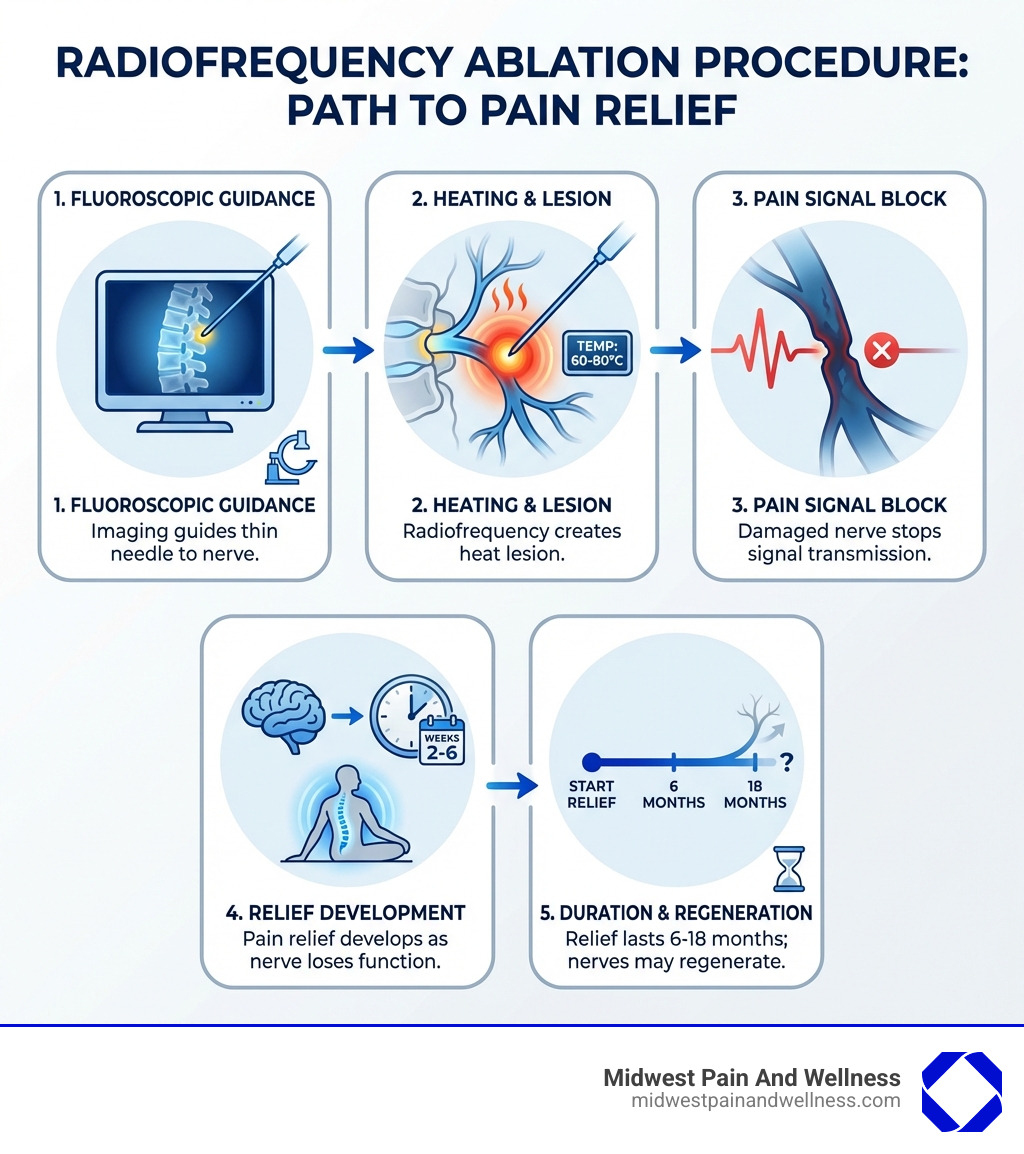
The mechanism of radiofrequency ablation is quite ingenious in its simplicity and effectiveness. Once we identify the specific nerve causing your pain, a thin, hollow needle is carefully inserted into the area. This process is always guided by advanced imaging techniques, such as fluoroscopy, to ensure pinpoint accuracy and minimize discomfort.
Once the needle is in place, an electrode is passed through it, and radio waves are sent through this electrode. These radio waves create a current that heats a very small area of the nerve tissue, typically to temperatures between 55 and 70 degrees Celsius. This precise heating destroys that small section of the nerve, forming what is known as a lesion.
This lesion effectively “turns off” or “disconnects” the nerve’s ability to send pain signals. RFA primarily targets sensory nerves—those responsible for sending pain messages. The procedure is designed to be highly selective, aiming to interrupt the pain signal without significantly affecting motor nerves (which control movement) or other healthy tissues nearby. This selective destruction of nerve tissue is why RFA can provide significant and lasting pain relief for many patients.
Conditions Treated and Ideal Candidates
Radiofrequency ablation is a versatile treatment option that can address a range of chronic pain conditions, particularly those stemming from joint and nerve issues. At Midwest Pain And Wellness, we specialize in utilizing RFA to provide targeted relief for patients in Chicago Ridge, Illinois, and the surrounding areas.
Common Conditions Managed with Radiofrequency Ablation
We frequently use RFA to treat various forms of chronic pain that haven’t responded to more conservative treatments. Some of the most common conditions we manage with this procedure include:
- Facet Joint Pain: This is a very common cause of chronic back and neck pain, often resulting from arthritis of the spine (spondylosis). The facet joints are small joints located between the vertebrae that allow your spine to bend and twist. When these joints become inflamed or arthritic, the medial branch nerves that transmit pain signals from them can be targeted with RFA.
- Sacroiliac (SI) Joint Pain: The sacroiliac joints are located at the base of your spine, connecting the sacrum to the pelvis. Inflammation or dysfunction in these joints can cause significant lower back and buttock pain. RFA can effectively target the lateral branch nerves associated with the sacroiliac joints to alleviate this pain.
- Knee Osteoarthritis: For patients suffering from chronic knee pain due to osteoarthritis, RFA can be a game-changer. By targeting the genicular nerves around the knee, we can significantly reduce pain signals, offering relief that can last for many months. This is especially beneficial for those who are not candidates for knee replacement surgery or are seeking to delay it.
- Hip Pain: Chronic hip pain, often due to arthritis or other joint issues, can also be addressed with RFA by targeting specific nerves in the hip region.
- Other Nerve-Related Pain: While our primary focus is musculoskeletal pain, RFA has broader applications. For instance, some forms of peripheral neuropathy, facial pain (like trigeminal neuralgia), and even certain types of cancer pain (to improve quality of life) can be managed with RFA in specific circumstances. The goal is always to provide an effective nerve block for pain that offers lasting relief.
For patients dealing with chronic lumbar pain, we also offer advanced solutions like minimally invasive lumbar decompression (MILD), which can be considered in conjunction with or as an alternative to RFA depending on the underlying cause of pain.
Who is a Good Candidate for RFA?
Determining if you are a good candidate for radiofrequency ablation involves a thorough evaluation of your medical history, symptoms, and previous treatments. We believe in a personalized approach to pain management, and RFA is often considered when specific criteria are met:
- Chronic Pain Duration: You should have been experiencing chronic pain for at least six months or longer. RFA is typically reserved for persistent pain that hasn’t resolved on its own or with initial treatments.
- Failure of Conservative Treatments: You should have tried and not found adequate relief from more conservative treatment options. This often includes medications (e.g., anti-inflammatories, muscle relaxants), physical therapy, chiropractic care, or other non-interventional approaches.
- Positive Diagnostic Nerve Block: This is a crucial indicator. Before performing RFA, we often conduct a diagnostic nerve block. This involves injecting a local anesthetic near the nerve we suspect is causing your pain. If you experience significant, temporary pain relief from this injection, it strongly suggests that the targeted nerve is indeed the source of your pain. This “diagnostic success” confirms that the nerve is an appropriate target for the more permanent effects of RFA. For example, for facet joint pain, a facet joint injection or medial branch block would be performed first.
- Overall Health: Generally, candidates should be in reasonably good health. However, RFA can be an excellent option for individuals who may not be suitable for surgery due to other health concerns.
- Specific Pain Location: RFA is most effective for pain that originates from specific, identifiable nerve pathways, such as those around the spine, hip, or knee joints.
There are also some contraindications. For instance, RFA is generally not recommended if you are pregnant, have an active infection, or have certain bleeding disorders. Our team will carefully review all these factors to ensure RFA is a safe and appropriate treatment option for you.
The RFA Procedure: What to Expect
Understanding what to expect during your radiofrequency ablation procedure can help ease any anxieties you might have. We strive to make the experience as comfortable and straightforward as possible, typically performed in an outpatient setting right here at our Chicago Ridge clinic.
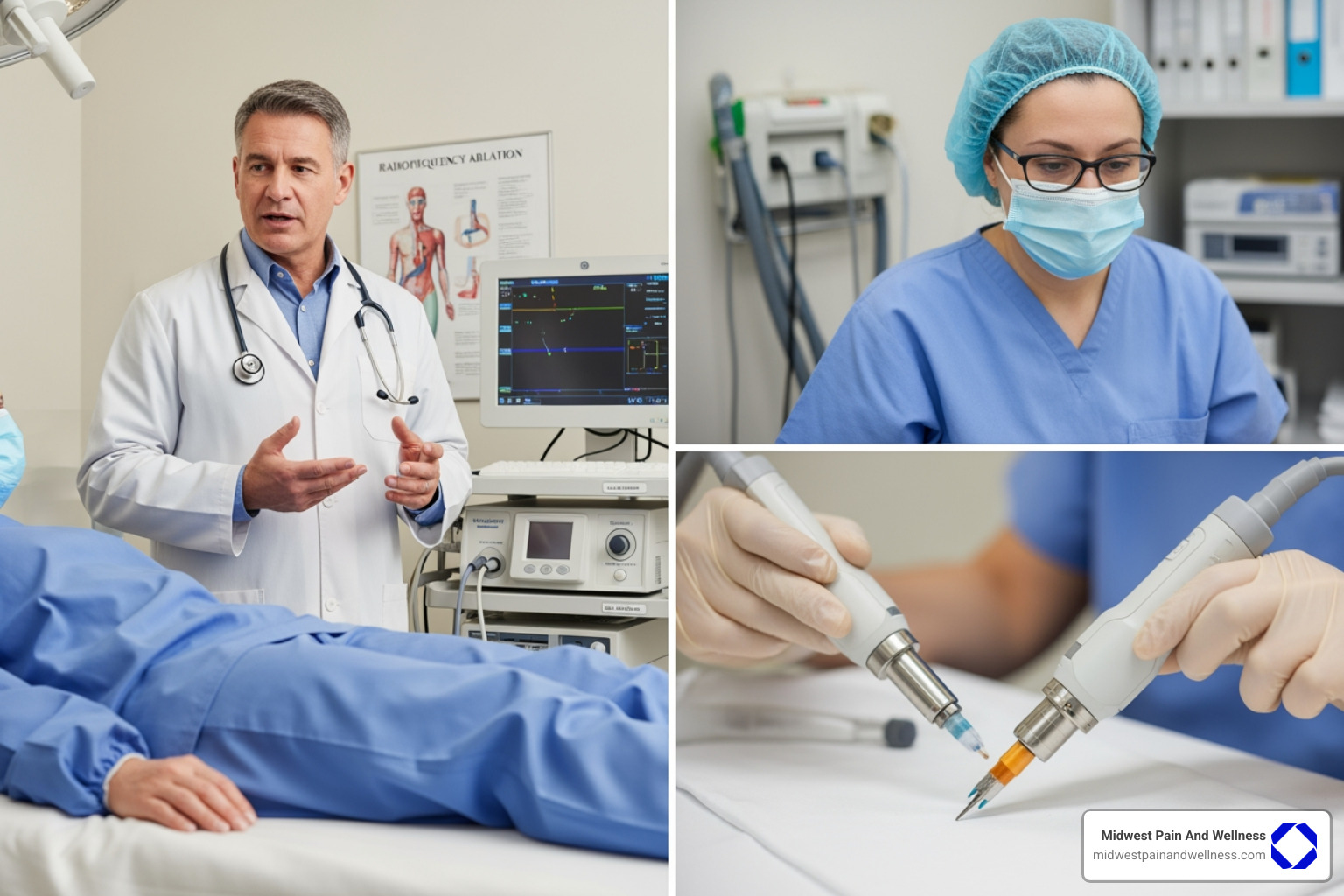
When you arrive for your RFA procedure, our team will guide you through each step. We’ll start by making sure you’re comfortable. You’ll typically receive a mild to moderate sedative to help you relax, and an intravenous (IV) line will be placed. We’ll also numb the skin at the injection site with a local anesthetic, so you’ll feel minimal discomfort during the needle insertion.
The core of the procedure involves the precise placement of a thin, hollow needle near the targeted nerve. To ensure this accuracy, we use real-time imaging, most commonly a fluoroscope (a type of X-ray guidance). This allows us to visualize your anatomy and guide the needle to the exact location of the pain-transmitting nerve. Once the needle is correctly positioned, an electrode is advanced through it. Before delivering the radiofrequency energy, we often perform a quick test by sending a small electrical current through the electrode. This might cause a tingling sensation or a muscle twitch, which helps us confirm that the needle is indeed next to the correct sensory nerve and not too close to a motor nerve.
Once confirmed, radiofrequency energy is delivered through the electrode, heating the nerve tissue and creating a small lesion. This process typically takes only a few minutes per nerve. We generally focus on treating one painful area during each procedure to maximize effectiveness and minimize recovery time.
The entire procedure usually lasts under an hour, and you can typically go home the same day. Because of the sedation, you’ll need to arrange for someone to drive you home.
Recovery and Results Timeline
One of the significant advantages of radiofrequency ablation is its relatively quick recovery period. Most of our patients are able to return home the same day as their treatment in Chicago Ridge and can resume their normal, light activities within 24 hours.
After the procedure, it’s common to experience some minor soreness, bruising, or a sunburn-like sensation at the injection site. This is usually manageable with over-the-counter pain relievers, ice packs, or topical gels like Voltaren. We advise avoiding strenuous activities, heavy lifting, and driving for the first 24 hours. You should also avoid baths, hot tubs, and pools for 48 hours to minimize any risk of infection. If you’re undergoing physical therapy, you can typically resume it after about a week, being mindful of your comfort levels and communicating with your therapist about the procedure.
While some patients may feel immediate relief, it’s more common for the full effects of RFA to develop gradually. The pain might even feel slightly worse for the first one to two weeks as the nerve tissue heals and the ablation takes full effect. It can take up to one month for the nerve to completely lose its function and for you to experience the maximum pain relief.
The duration of pain relief from RFA is one of its most compelling benefits. Over 80% of patients will receive long-term pain relief, typically lasting anywhere from 6 to 18 months. Some patients are fortunate enough to experience multiple years of relief. This variability depends on individual factors and how quickly your nerves regenerate.
This extended period of relief can significantly improve your quality of life, reduce your reliance on pain medications, and allow you to engage in activities you once enjoyed. Our team at Midwest Pain And Wellness is dedicated to helping you achieve this freedom from pain, often through targeted interventions like pain injections in Chicago.
Potential Risks and Safety Considerations
While radiofrequency ablation is considered a safe and effective procedure, like any medical intervention, it does carry some potential risks and complications. We believe in fully informing our patients at Midwest Pain And Wellness about these possibilities so you can make an educated decision about your care.
The most common side effects are generally mild and temporary, including soreness, swelling, or bruising at the injection site. However, more significant, though rare, complications can include:
- Thermal Injury: Despite precise imaging guidance, there’s a very small risk of thermal injury to adjacent healthy structures, such as blood vessels or other nerves.
- Infection: Any time the skin barrier is broken, there’s a minimal risk of infection at the injection site. We follow strict sterile protocols to minimize this risk.
- Bleeding: Minor bleeding or hematoma formation at the needle insertion site can occur, but significant hemorrhage is very rare.
- Nerve Damage: While the goal is to ablate specific pain-transmitting nerves, there’s a remote chance of unintended damage to other nerves, which could lead to temporary or, in extremely rare cases, permanent weakness or numbness.
- Post-Ablation Syndrome: Some patients may experience a self-limited condition known as post-ablation syndrome. This typically begins about three days after the procedure and can present with flu-like symptoms such as a low-grade fever, body aches, and fatigue. It usually lasts about five days but can occasionally persist for two to three weeks.
- Cardiac Device Dysfunction: For patients with pacemakers or implanted defibrillators, there’s a theoretical risk of radiofrequency waves interfering with these devices. It’s crucial to inform our team if you have any implanted electronic devices so we can take appropriate precautions.
- Voice Changes: In very specific applications of RFA (such as for thyroid nodules, as highlighted in research on thyroid RFA safety), there’s a rare risk of temporary or permanent voice changes. This is not typically a concern for RFA procedures targeting spinal or joint pain.
To mitigate these risks, our double board-certified physicians use advanced imaging, adhere to rigorous procedural techniques, and maintain a sterile environment. We also conduct thorough pre-procedural screenings to identify any factors that might increase your risk. Our priority is always your safety and achieving the best possible outcome.
For patients exploring various options for chronic pain, it’s also worth noting other advanced interventional treatments available, such as spinal cord stimulator therapy, which can be considered for different types of pain that RFA may not address.
Frequently Asked Questions about Radiofrequency Ablation
We understand that you may have many questions about radiofrequency ablation. Here, we address some of the most common inquiries our patients have at Midwest Pain And Wellness.
How long does pain relief typically last after RFA?
The duration of pain relief following radiofrequency ablation is one of its most appealing aspects. While individual results can vary, statistics indicate that over 80% of patients experience significant, long-term pain relief lasting between 6 and 18 months. We’ve also had patients who report relief extending for multiple years. The primary reason the pain eventually returns is that nerves have a remarkable ability to regenerate over time. As the ablated nerve tissue regrows, its ability to transmit pain signals may gradually return. However, the period of relief can provide a valuable window for improved function, physical therapy, and a reduction in reliance on pain medications.
Can RFA be repeated if it is effective?
Yes, absolutely! One of the key benefits of radiofrequency ablation is its repeatability. If you experienced adequate long-term relief from a previous RFA procedure, and your pain returns due to nerve regeneration, the procedure can often be safely repeated. We will conduct a thorough re-evaluation, including diagnostic nerve blocks if necessary, to confirm that the same nerve is once again the source of your pain. Many patients find that repeating RFA is an excellent strategy for long-term pain management, allowing them to maintain a good quality of life without the need for more invasive treatments or continuous medication.
What is the recovery process like after RFA?
The recovery process after radiofrequency ablation is generally quick and straightforward. Most patients are able to go home the same day as the procedure. We recommend taking it easy for the first 24 hours, avoiding strenuous activities, heavy lifting, and driving. You can usually return to your normal, light daily activities within 24 hours.
It’s common to experience some mild discomfort, soreness, or bruising at the injection site for a few days. This can be managed with over-the-counter pain relievers, ice packs, or topical pain creams. You should also avoid baths, hot tubs, and swimming pools for about 48 hours to prevent infection. While some patients feel immediate relief, it can take one to two weeks, and sometimes up to a month, for the full pain-relieving effects to become noticeable as the nerve completely loses its function. Our team will provide you with detailed post-procedure instructions and will be available to answer any questions during your recovery.
Conclusion
At Midwest Pain And Wellness, we are committed to providing comprehensive, opioid-free pain management solutions custom to your unique needs. Radiofrequency ablation stands out as a highly effective, minimally invasive procedure that can offer significant and lasting relief for many chronic pain conditions, particularly those affecting the spine and joints. Our double board-certified doctors, like Dr. Yaw Donkoh, use a multi-modal, interventional approach, collaborating with other practitioners to create custom care plans for long-term pain relief.
If you’ve been struggling with chronic pain and are seeking an alternative to surgery or medications that haven’t provided sufficient relief, we encourage you to explore whether RFA might be the right option for you. Our team in Chicago Ridge, Illinois, is here to guide you through every step, from initial consultation to recovery, helping you regain function and improve your quality of life.
Take the first step towards a pain-free future. Schedule a consultation for pain injections with our experts today and find how radiofrequency ablation could be your path to healing.