Why Understanding Stem Cells Matters for Your Health
What is stem cell for? Stem cells are the body’s natural repair system—specialized cells that can renew themselves and transform into different cell types to fix damaged tissues and organs. They serve as a living internal maintenance crew, replacing worn-out cells and healing injuries throughout your lifetime.
Primary uses of stem cells include:
- Tissue repair and regeneration – Replacing damaged cells in organs and tissues
- Blood cell production – Creating red blood cells, white blood cells, and platelets continuously
- Disease treatment – Treating over 80 conditions including leukemia, lymphoma, and sickle cell disease
- Medical research – Testing new drugs and studying disease mechanisms
- Future therapies – Developing treatments for heart disease, diabetes, spinal injuries, and chronic pain conditions
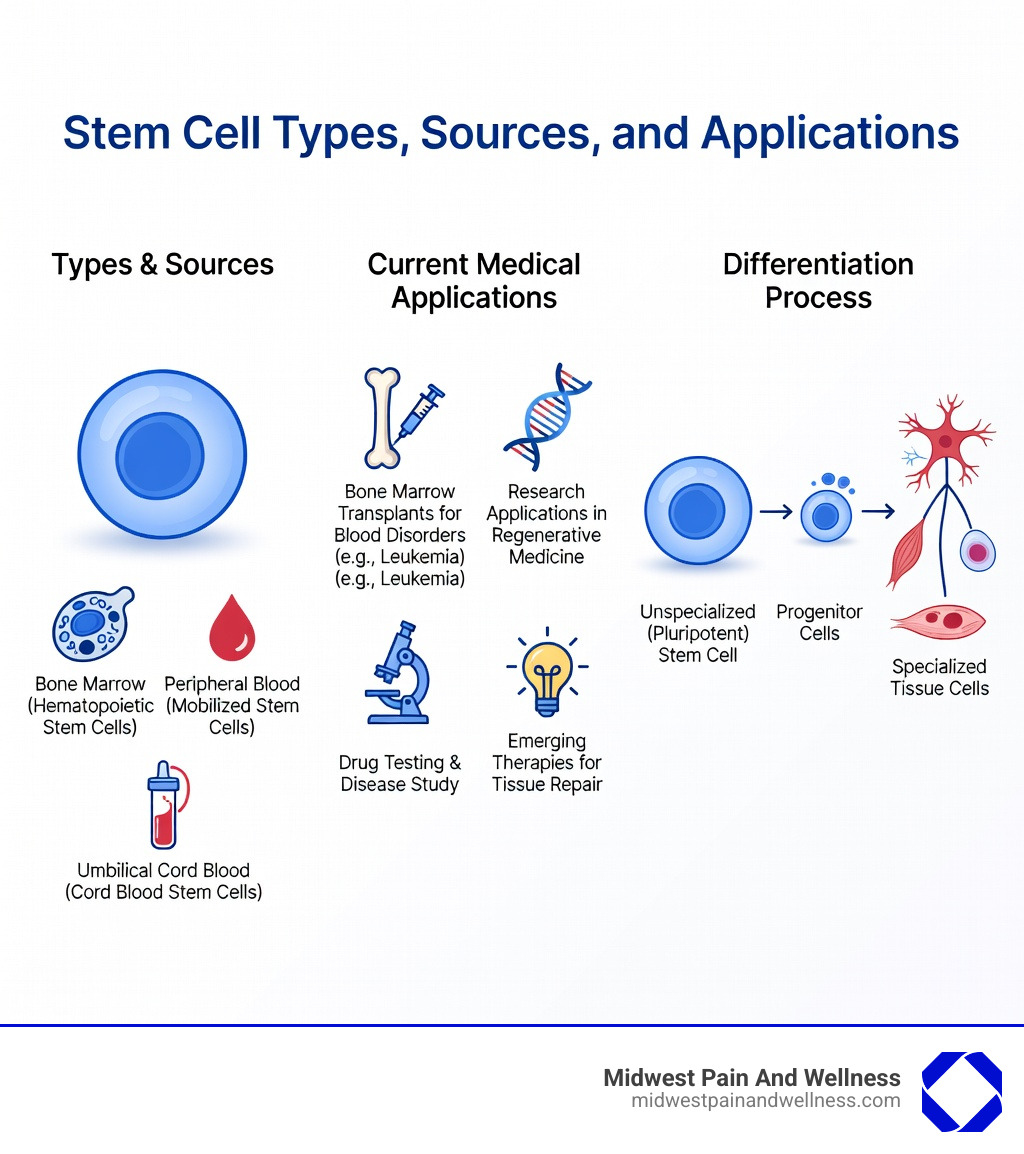
Right now, more than 50,000 stem cell transplants happen worldwide every year. The only FDA-approved stem cell therapy uses hematopoietic (blood-forming) stem cells from bone marrow, peripheral blood, or umbilical cord blood to treat blood disorders and certain cancers.
For people living with chronic pain, understanding stem cells matters because regenerative medicine is advancing rapidly. Researchers are exploring how stem cells might repair damaged tissues that cause persistent pain—without surgery or opioids.
As Dr. Yaw Donkoh, a double board-certified physician in anesthesiology and interventional pain management, I’ve dedicated my career to helping patients find effective, minimally invasive solutions for chronic conditions, which increasingly includes understanding what is stem cell for in pain management and tissue repair. At Midwest Pain And Wellness, we stay current on emerging therapies that offer real hope for long-term relief.
Understanding the Science: What is Stem Cell For?
To truly grasp the potential of these biological marvels, we have to look at what makes them different from every other cell in your body. Most cells have a “day job”—a skin cell protects you from the elements, a heart cell pumps blood, and a nerve cell carries signals. These are specialized cells.
Stem cells, however, are the “blank slates” of the biological world. They are unspecialized, meaning they don’t have a specific job yet. This unique state allows them to respond to the body’s needs by transforming into whatever cell type is required. According to Scientific research on stem cell definitions, stem cells are defined by two primary properties: self-renewal and differentiation.
- Self-Renewal: This is the ability of a stem cell to divide and produce more stem cells of the same type. This ensures that the body never “runs out” of its repair kit.
- Differentiation: This is the process where an unspecialized stem cell matures into a specialized cell, like a muscle cell or a red blood cell.
Defining Characteristics: What is a Stem Cell For in the Body?
Inside your body right now, stem cells are working quietly behind the scenes. Their main goal is homeostasis—a fancy word for keeping your body in a stable, healthy state. When you skin your knee or your body needs to replace old red blood cells, stem cells are activated.
When a stem cell divides, it can create “daughter cells.” These daughter cells either become new stem cells (self-renewal) or become specialized cells (differentiation) with a specific function. This internal repair system is what allows us to heal. Without stem cells, our bodies wouldn’t be able to replace the billions of cells that naturally die every day or repair the damage caused by injury and aging.
Clinical Reality: What is a Stem Cell For in Modern Medicine?
In the clinical world, we look at stem cells as a way to “reboot” a damaged system. Modern medicine uses these cells to replace tissues that the body can’t fix on its own. For example, in bone marrow transplants, we use stem cells to replace a patient’s entire blood-making system after it has been destroyed by disease or high-dose chemotherapy.
At Midwest Pain And Wellness, we are particularly interested in the “regenerative” aspect of these cells. While the most established use of stem cells is for blood disorders, the “Clinical Reality” is that we are moving toward a future where stem cells could potentially repair joints, tendons, and even nerves. This offers a custom care approach that focuses on healing the root cause of pain rather than just masking the symptoms with medication.
The Primary Types and Sources of Stem Cells
Not all stem cells are created equal. Depending on where they come from, they have different levels of “potency”—which is just a scientist’s way of saying how many different types of cells they can become.
| Stem Cell Type | Potency | Common Sources | Primary Use |
|---|---|---|---|
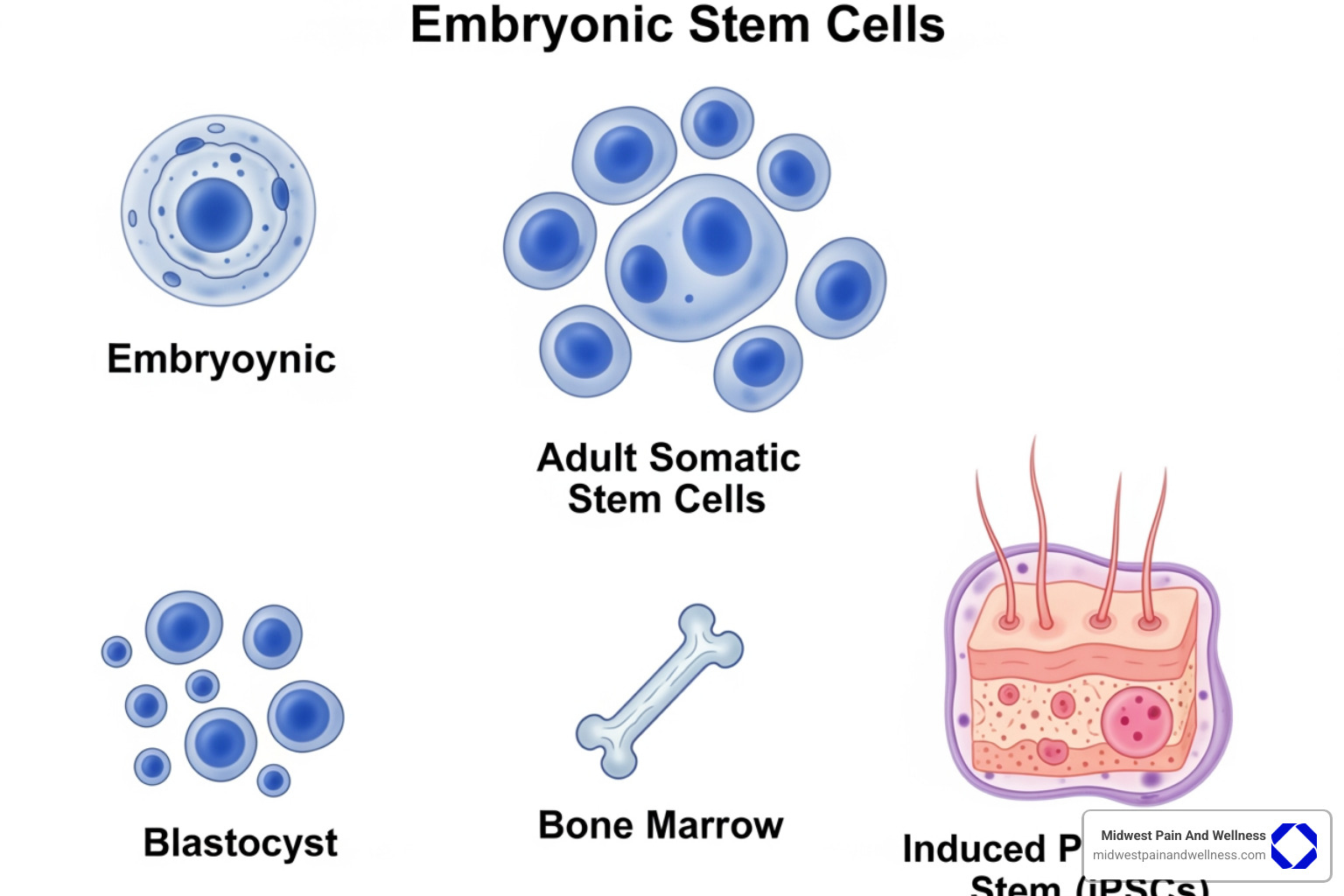
| Embryonic | Pluripotent | 3-5 day old blastocysts | Research, disease modeling |
| Adult (Somatic) | Multipotent | Bone marrow, fat, liver | Transplants, tissue repair |
| Induced Pluripotent (iPSCs) | Pluripotent | Reprogrammed skin/blood cells | Drug testing, personalized medicine |
| Perinatal | Multipotent | Amniotic fluid, cord blood | Transplants, clinical trials |
Embryonic and Adult Stem Cells
Embryonic Stem Cells come from embryos that are usually three to five days old. At this stage, the embryo is called a blastocyst and contains about 150 cells. These cells are “pluripotent,” meaning they can become absolutely any cell type in the human body. This incredible flexibility is why they are so highly valued in research, though their use is subject to strict ethical guidelines.
Adult Stem Cells, also known as somatic stem cells, are found in small numbers in most adult tissues, such as bone marrow or fat. Unlike embryonic cells, adult stem cells are usually “multipotent.” This means they are more limited; for example, a stem cell found in the bone marrow typically makes blood cells, while a stem cell in the liver makes liver cells. However, researchers are finding ways to “coax” these cells into becoming other types through specialized lab techniques.
Induced Pluripotent and Perinatal Sources
One of the biggest breakthroughs in recent years is the development of Induced Pluripotent Stem Cells (iPSCs). In 2006, scientists discovered how to take regular adult cells—like skin or blood cells—and “reprogram” them back into an embryonic-like state. This allows us to have the benefits of pluripotent cells without the ethical concerns surrounding embryos. You can learn more about these distinctions through Scientific research on stem cell types.
Perinatal Stem Cells are found in the amniotic fluid and umbilical cord blood. These cells are harvested after birth and are often “banked” by parents. They are rich in immature stem cells that haven’t yet been exposed to the “wear and tear” of the environment, making them highly effective for certain transplants.
Current Medical Uses and Approved Therapies
While the news often talks about the future of stem cells, they are already a standard of care for many conditions today. The most common and established use is the bone marrow transplant.
Every year, more than 50,000 of these transplants are performed worldwide. They are used to treat over 80 diseases and disorders. According to Scientific research on FDA-approved stem cell products, the only stem cell-based products currently approved by the FDA in the United States consist of blood-forming stem cells (hematopoietic progenitor cells) derived from cord blood.
These therapies are lifesavers for patients with:
- Leukemia and Lymphoma: Cancers that affect the blood and immune system.
- Sickle Cell Disease: A painful genetic blood disorder.
- Aplastic Anemia: A condition where the body stops producing enough new blood cells.
- Multiple Myeloma: A cancer of the plasma cells.
Sourcing and Donation Statistics
The logistics of stem cell therapy are quite fascinating. Because a transplant requires a very specific genetic match, finding a donor can be difficult. Here are some eye-opening statistics from the research:
- 80% of Canadian patients receive stem cells from donors in other countries because the search for a match is global.
- Fewer than 25% of patients in need find a stem cell match within their own family.
- Platelet Counts: A normal platelet count is between 150,000 and 450,000 per cubic mm. If the count drops below this, it’s called thrombocytopenia, a condition often treated with stem cell-related therapies.
- Six-Week Recovery: For those who donate stem cells, the body is incredibly resilient—it replaces the donated stem cells within just six weeks.
The Future of Regenerative Medicine and Drug Testing
The horizon for stem cell research is incredibly bright. Beyond transplants, scientists are using stem cells to revolutionize how we develop medicine. Instead of testing a new drug on a human volunteer right away, researchers can create “organoids”—tiny, lab-grown versions of human organs—using stem cells.
This allows for toxicity screening to see if a drug might damage the liver or heart before it ever enters a clinical trial. This is a huge leap forward for patient safety. You can find more about ongoing studies at Scientific research on stem cell clinical trials.
Advancing Disease Understanding
Stem cells also help us understand why diseases happen. By growing stem cells from a patient with a genetic defect, scientists can watch the disease develop in a petri dish. This helps identify the cellular “triggers” that cause conditions like Alzheimer’s, Parkinson’s, or Type 1 diabetes.
This path leads to personalized medicine. Imagine a world where we can grow your own healthy cells in a lab and then inject them back into your body to repair a damaged heart or a worn-out knee joint. While some of this is still in the research phase, the progress is undeniable.
Ethical Controversies and Treatment Risks
It wouldn’t be a complete guide without discussing the “elephant in the room.” The use of embryonic stem cells has been a subject of intense ethical debate for decades. The controversy centers on the fact that these cells are harvested from human embryos at the blastocyst stage.
While these embryos are typically sourced from fertility clinics (unused embryos from IVF), the moral status of the embryo is a point of contention for many. This is why the discovery of iPSCs (reprogrammed skin cells) was such a game-changer—it provided a way to move forward with pluripotent research without using embryos. For a deeper dive into these nuances, see Scientific research on ethical issues in stem cell research.
Limitations and Stem Cell Tourism
We also have to talk about the risks. Stem cell therapy is not a “magic wand,” and it does come with potential downsides:
- Immune Rejection: If the stem cells come from a donor, the recipient’s body might attack them.
- Genomic Instability: In rare cases, stem cells grown in a lab can develop genetic mutations, which could potentially lead to tumors.
- Unproven Treatments: This is a major concern. Many clinics offer expensive, “unproven” stem cell treatments for everything from autism to anti-aging. These are often not FDA-regulated and can be dangerous. This phenomenon is sometimes called “stem cell tourism,” where patients travel abroad for risky, unregulated procedures.
At Midwest Pain And Wellness, we advocate for evidence-based medicine. We believe in Regenerative Therapy PRP Cell-Based Options in Chicago Ridge that are grounded in clinical safety and proven results.
Frequently Asked Questions about Stem Cells
How long does it take for the body to replace donated stem cells?
The human body is remarkably efficient at regenerating its own “repair kit.” If you donate peripheral blood stem cells or bone marrow, your body will completely replenish its supply within six weeks. Most donors feel back to their normal routine within a few days, though full cellular recovery takes a bit longer.
How many diseases can currently be treated with stem cell transplants?
Currently, stem cell transplants are used to treat over 80 diseases and disorders. This includes various blood cancers like leukemia and lymphoma, metabolic disorders, and immune system deficiencies. As research continues, this list is expected to grow, particularly in the fields of neurology and orthopedics.
What is the main difference between embryonic and adult stem cells?
The main difference is their potency. Embryonic stem cells are pluripotent, meaning they can become any of the 200+ types of cells in the human body. Adult stem cells are multipotent, meaning they are more specialized and generally only create cells for the tissue in which they are found (like bone marrow making blood cells). There is also the ethical distinction, as adult stem cells do not require the use of embryos.
Conclusion
The question “What is stem cell for?” has a simple answer with profound implications: they are for healing. Whether they are being used today to save lives through bone marrow transplants or being studied for the future of pain management, stem cells represent the cutting edge of medicine.
At Midwest Pain And Wellness, we believe that the best healthcare is comprehensive and forward-thinking. We provide opioid-free pain management using current, evidence-based therapies. Our double board-certified doctors utilize a multi-modal, interventional approach, collaborating with other practitioners to create custom care plans for long-term pain relief.
If you’re in Chicago Ridge and looking for a path to wellness that avoids the cycle of heavy medication, we invite you to explore our Regenerative Therapy PRP Cell-Based Options in Chicago Ridge. Your body has an incredible capacity to heal—sometimes it just needs a little help from modern science to get back on track.