A lot of people start in the same place. The pain begins in the low back or buttock, then it starts traveling. It shoots down the leg in a way that feels wrong, unfamiliar, and hard to ignore. Sitting in the car hurts. Getting up from a chair hurts. Sleeping becomes awkward because there isn’t a comfortable side.
That’s usually when the search for how to diagnose sciatica begins. Some people assume any pain down the leg must be sciatica. Others worry it’s something much worse. The truth sits in the middle. Sciatica has recognizable patterns, but a reliable diagnosis comes from a careful clinical exam, not guesswork and not a single internet test.
For people in Chicago Ridge and nearby Illinois communities such as Oak Lawn, Palos Hills, Palos Heights, Worth, Bridgeview, Hickory Hills, Alsip, Burbank, Evergreen Park, and Orland Park, the most useful first step is understanding what symptoms matter, what you can safely observe at home, and what a specialist looks for during the exam.
Recognizing the Telltale Signs of Sciatica
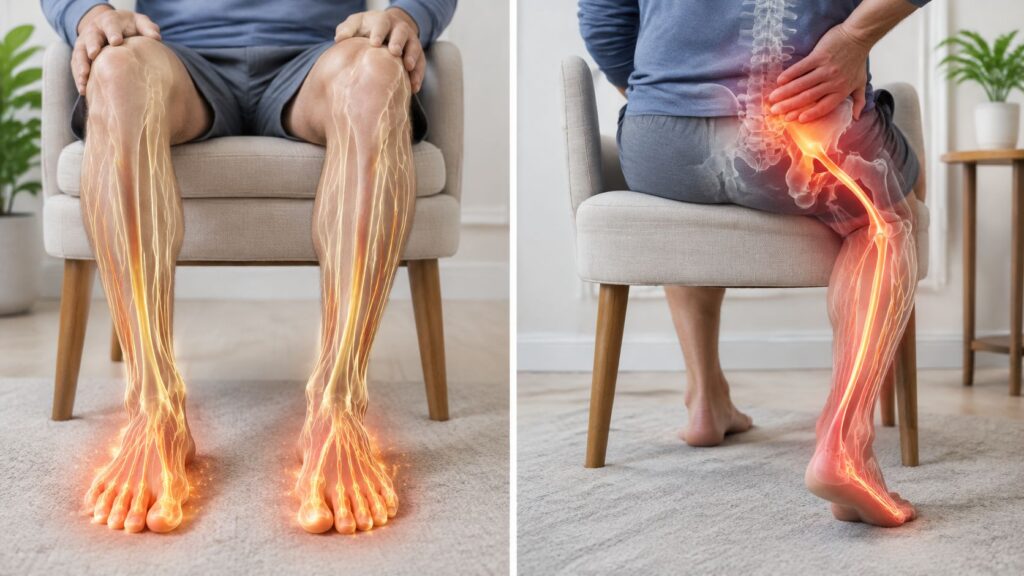
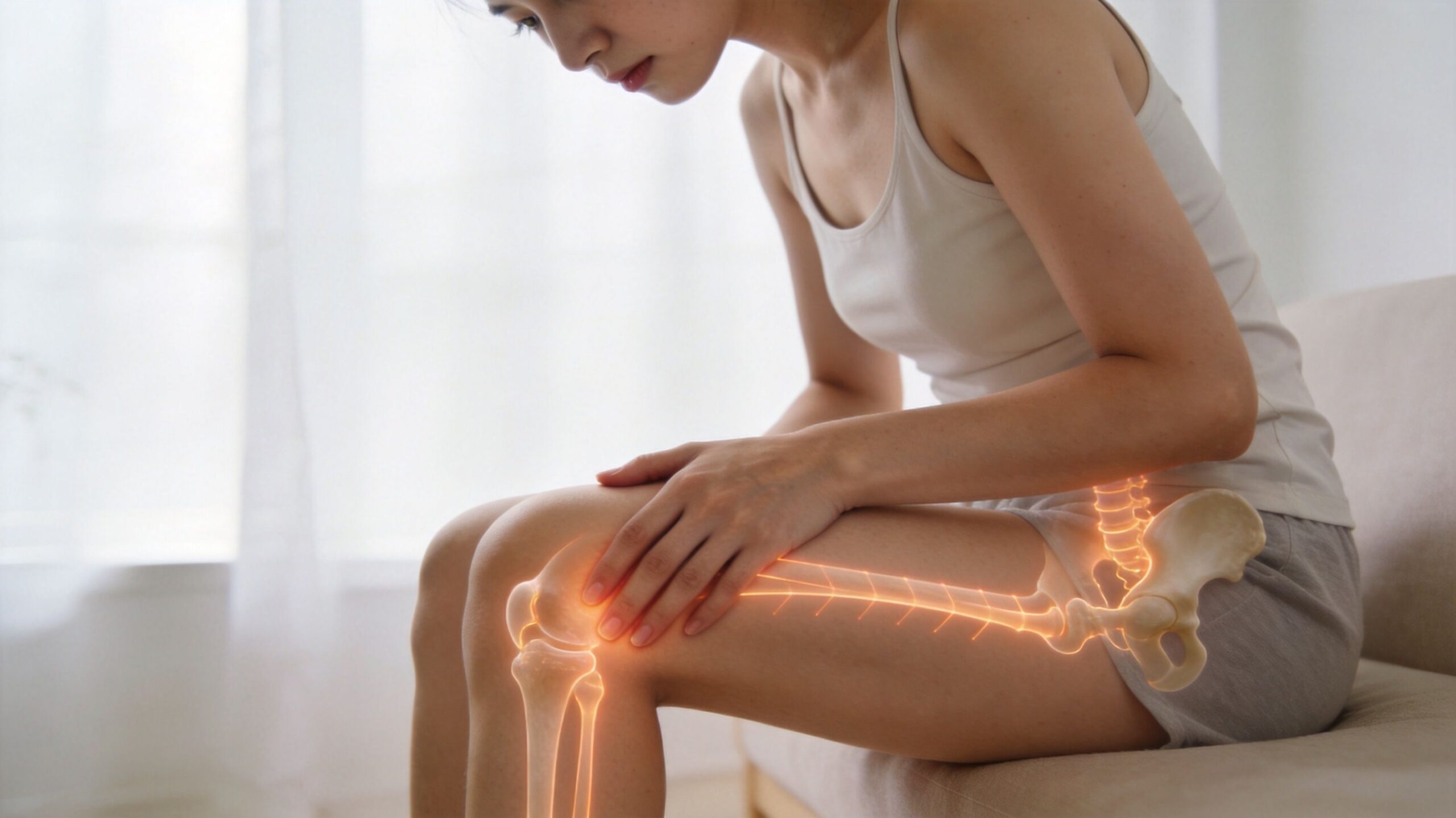
Sciatica doesn’t usually behave like ordinary back strain. Patients often describe it as pain with a path. It starts in the low back or buttock and then tracks down one leg. Sometimes it burns. Sometimes it stabs. Sometimes it feels like an electric jolt that catches you when you stand, pivot, or sit too long.
The pattern matters as much as the intensity. A sore lower back can come from many structures, but sciatica usually announces itself with radiating leg pain, often on just one side. That’s the detail many people struggle to put into words until they hear it described clearly.
What sciatic pain often feels like
One patient might say, “My back hurts, but the leg pain is the primary problem.” Another says the calf feels tight and the foot tingles. Another notices that coughing or sneezing sends a streak of pain downward. Those details are clinically useful.
Common descriptions include:
- Shooting pain that runs from the low back or buttock into the thigh, calf, or foot
- Burning pain that feels hot, raw, or searing along the leg
- Electric shock sensations with certain movements
- Numbness or tingling in part of the leg or foot
- Weakness that makes walking, climbing stairs, or lifting the front of the foot feel harder
The symptoms also tend to interfere with ordinary routines in very specific ways.
- Sitting intolerance often shows up first, especially during commuting or desk work
- Position-related worsening can happen when bending, reaching, standing up, or twisting
- Night discomfort may make it hard to find a sleeping position that doesn’t pull on the nerve
Sciatica is often less about how bad the back pain is and more about where the pain travels.
One-sided pain is a clue, not a conclusion
A classic sciatic pattern affects one side. You may feel pain in the right buttock and down the right leg, or the same on the left. That one-sided pattern raises suspicion for nerve root irritation, but it still doesn’t prove the diagnosis by itself.
That’s important because patients in Oak Lawn, Bridgeview, or Palos Heights often arrive after trying to label the problem on their own. Some are right. Many are only partly right. Leg pain can come from the spine, but it can also come from the hip, sacroiliac joint, or other structures that mimic sciatica surprisingly well.
Why timing matters
Many cases improve, but waiting too long to sort out the diagnosis can turn a manageable problem into a lingering one. Most acute sciatica cases improve without surgery, around 80 to 90 percent, yet about 20 to 30 percent of people still have persisting problems after one to two years, as summarized in this review of sciatica prognosis and persistence.
That long tail of persistent pain is why an early, accurate diagnosis matters. It helps separate a short-lived flare from a problem that needs targeted care.
If your symptoms sound familiar, it helps to compare them with the broader range of pain conditions commonly evaluated in clinical practice. The key is not to force your symptoms into a label too early. Good diagnosis starts with pattern recognition, then moves quickly to confirmation.
What You Can Safely Check at Home
Home checks are useful if you treat them as information gathering, not as proof. That distinction prevents a lot of confusion. A home test can tell you what movement reproduces symptoms. It cannot tell you with confidence why it happens.
That’s especially true with the straight leg raise.
A cautious version of the straight leg raise
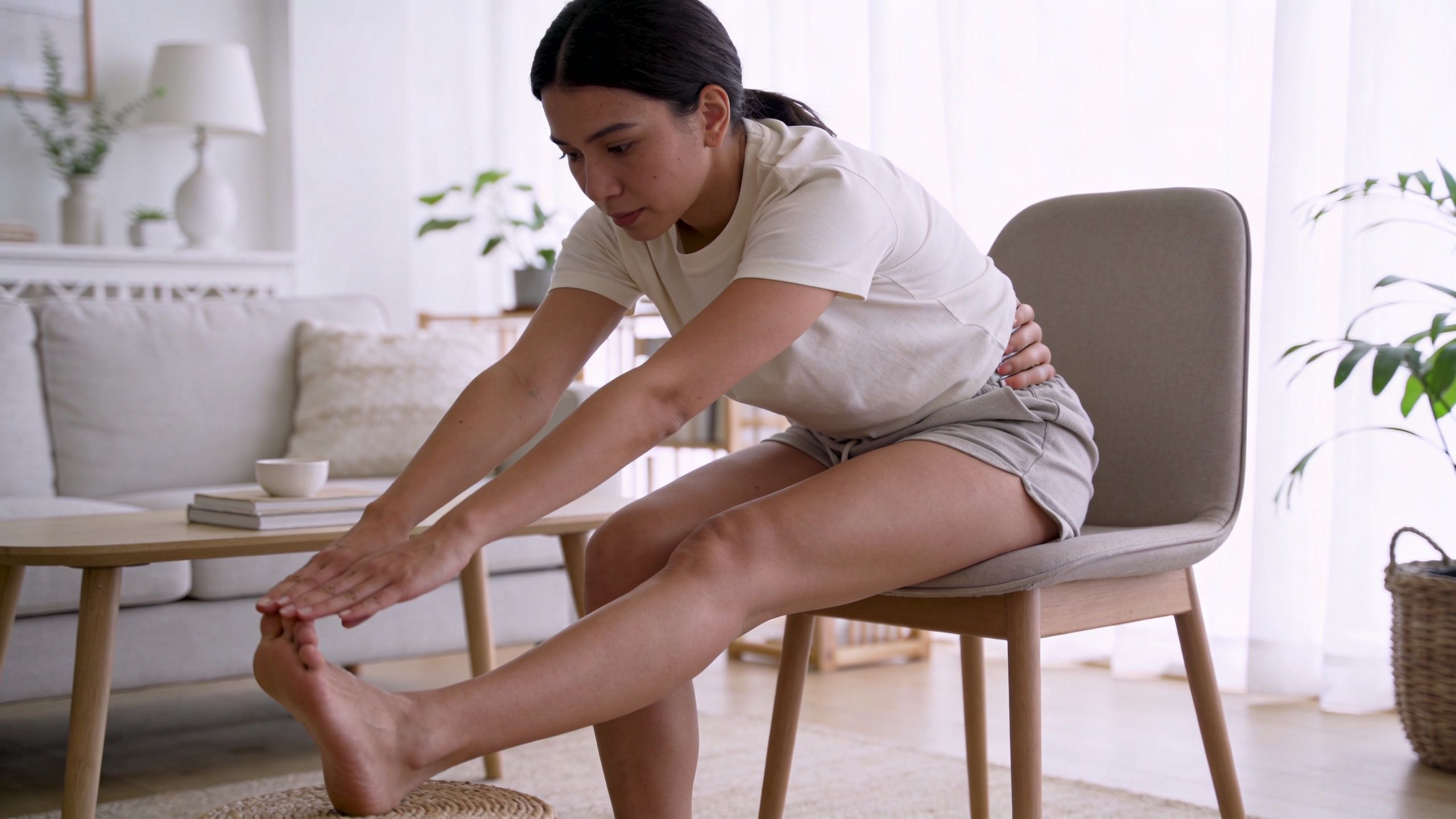
If your pain isn’t severe and you’re not having emergency symptoms, you can try a gentle version of this maneuver to observe what happens.
- Lie flat on your back on a firm surface.
- Keep one leg straight and slowly raise it.
- Stop as soon as pain starts to travel down the leg, or if the movement sharply increases pain.
- Notice where the pain goes. Back of the thigh is different from pain that shoots below the knee.
- Repeat only if it’s tolerable. If it flares symptoms, stop.
Don’t force the leg up. Don’t bounce. Don’t try to “push through” the pain. A useful exam finding comes from controlled movement, not from provoking a major flare.
What the result does and does not mean
A lot of people overread this test. They assume a positive result means they’ve diagnosed themselves correctly. It doesn’t work that way.
The Straight Leg Raise test is highly sensitive at 91% but has low specificity at 26%, which means it catches many possible cases but also produces many false positives, including from issues such as tight hamstrings, according to this discussion of self-checking for sciatica and SLR limitations.
That’s why the home version is best used to record details, not draw conclusions.
Practical rule: If a home test gives you more fear than clarity, stop using it as a diagnosis tool and start using it as a symptom log.
What to track before your appointment
The most helpful thing you can bring to a specialist visit isn’t a self-diagnosis. It’s a clean description of your pattern.
Write down:
Where the pain starts
Low back, buttock, side of the hip, back of the thigh, calf, or footHow far it travels
Whether it stays above the knee or goes below it matters clinicallyWhat the pain feels like
Burning, stabbing, aching, tingling, numb, or electricWhat makes it worse
Sitting, walking, coughing, bending, getting out of bed, or standing from a chairWhat eases it
Lying down, changing position, short walks, leaning forward, or restAny weakness you notice
Trouble lifting the foot, pushing off the toes, or climbing steps
A short symptom diary is often more valuable than a long explanation. Patients from Alsip, Evergreen Park, and Worth who arrive with those details tend to get to a working diagnosis faster because the history is clearer from the start.
What not to do at home
There are also times when self-checking stops being appropriate.
Avoid repeated testing if:
- The pain is severe and each attempt causes a prolonged flare
- You feel increasing weakness rather than just pain
- You notice numbness spreading into new areas
- You have bowel or bladder changes, which is not a home-care situation
The safest way to use home observations is simple. Gather facts. Don’t declare a verdict.
The Professional Diagnostic Exam What to Expect
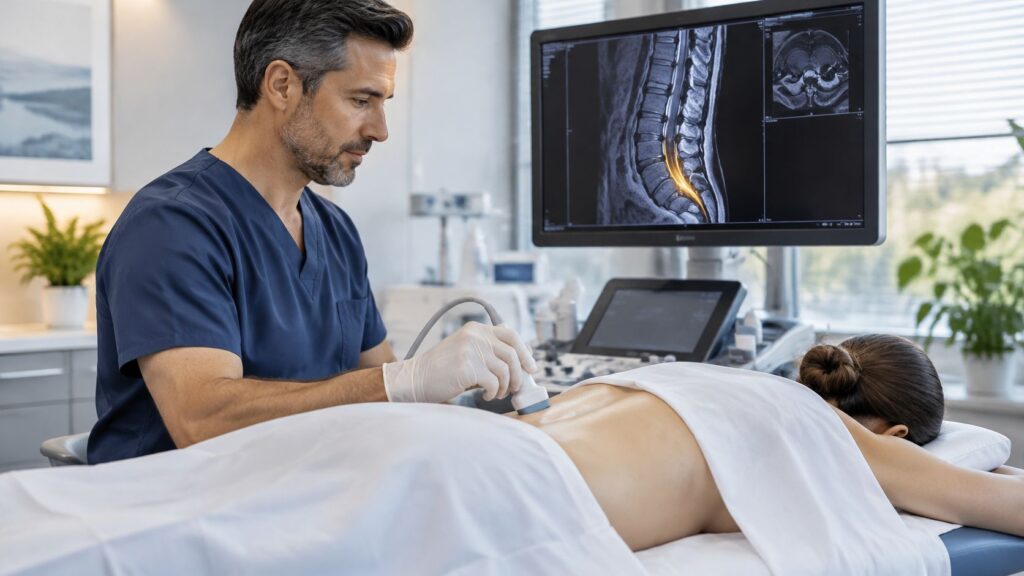
A proper sciatica evaluation is systematic. It isn’t one quick stretch test and it isn’t an automatic MRI order. The strongest diagnosis usually comes from three parts working together: the history, the physical exam, and the neurological exam.
That’s why a specialist visit often feels more detailed than patients expect. Each question and each movement test is trying to answer a different diagnostic question.
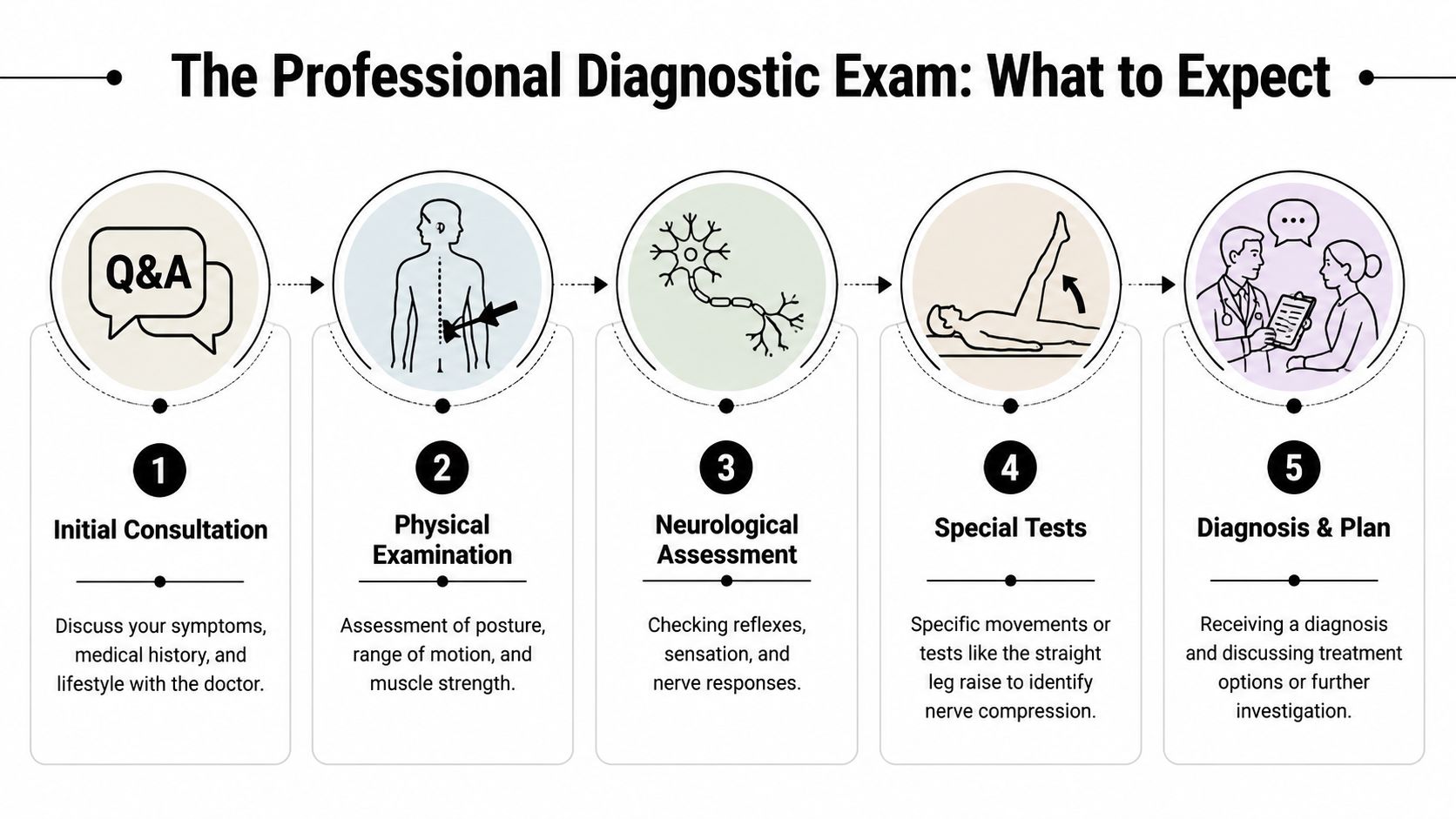
The history often points the way
Before any hands-on exam, the conversation matters. A clinician wants to know when the pain started, whether it came on after lifting, whether it radiates below the knee, and whether numbness or weakness came with it. The exact story often narrows the diagnosis quickly.
Questions may include:
- When did it start
- Was there a triggering event
- Is the leg pain worse than the back pain
- Does it stay on one side
- Are there sensory changes or weakness
- What have you already tried
Those questions aren’t filler. They help distinguish likely nerve root irritation from muscle strain, hip pathology, sacroiliac pain, or another mimic.
The physical exam is the core of diagnosis
A clinical diagnosis of sciatica is justified when a patient has typical radiating leg pain combined with positive neurological tests, and the physical exam remains the gold standard. In that same evidence review, the straight leg raise showed 91% sensitivity, while the crossed straight leg raise showed 88% specificity, making it especially helpful when positive for confirming the diagnosis, as described in this review of sciatica diagnosis and imaging limits.
That combination is what makes the exam powerful. One test screens broadly. Another helps confirm. Neither should stand alone.
A good exam doesn’t ask only, “Can I reproduce the pain?” It asks, “Does the pattern fit a compressed or irritated nerve root?”
What the specialist is looking for during movement testing
During the exam, you may be asked to bend forward, lean backward, rotate, sit, stand, and walk. Those movements help reveal whether mechanical loading of the spine changes symptoms.
Then come the more targeted maneuvers:
Straight leg raise
The leg is lifted while straight to see whether this reproduces radiating leg pain in a classic pattern.Crossed straight leg raise
The unaffected leg is lifted to see whether it triggers pain on the symptomatic side. This test is less sensitive, but when it’s positive, it carries more diagnostic weight.Functional walking checks
You may be asked to walk on your heels or toes. That gives quick information about certain muscle groups and nerve pathways.
The neurological exam in plain language
This part is often the most reassuring because it turns vague symptoms into objective findings. The clinician checks reflexes, muscle strength, and sensation in a structured way.
A neurological exam may include:
| Exam element | What you do | What the clinician learns |
|---|---|---|
| Reflex testing | Relax while a tendon is tapped | Whether nerve signaling is reduced |
| Strength testing | Push, pull, lift, or resist pressure | Whether a muscle group is weaker than expected |
| Sensory testing | Report areas that feel different | Whether numbness follows a nerve pattern |
Patients sometimes worry that this means something dramatic is wrong. Usually it means the examiner is being thorough. That’s a good thing.
If you’re getting ready for an in-office evaluation, it helps to request a consultation in advance and bring a medication list, prior imaging if you have it, and a short symptom timeline. That preparation makes the visit more efficient and the diagnosis more precise.
Advanced Diagnostics When Imaging and Nerve Studies Are Needed
Many patients come in expecting that diagnosis starts with an MRI. In reality, that’s often not the best first move. Imaging can be useful, but only when the clinical question is clear enough to make the scan meaningful.
That’s one of the most important trade-offs in sciatica care. More testing isn’t always better testing.
Why an early MRI often doesn’t help
Guidelines recommend against routine early MRI in many sciatica cases because up to 85% resolve with conservative care, and incidental findings such as disc bulges appear in 30 to 50% of people without pain, as outlined by Cleveland Clinic’s overview of sciatica diagnosis and testing.
That matters in practice. If a scan shows an abnormality that isn’t causing the symptoms, patients can end up focusing on the wrong problem. That can lead to anxiety, overtreatment, and a treatment plan aimed at the image instead of the patient.
When imaging becomes the right next step
Imaging is helpful when it answers a specific question. A clinician may order MRI or other imaging when symptoms and exam findings suggest the need for a closer look at the anatomy.
Common reasons include:
Red flag concerns
Symptoms that suggest something more urgent than routine nerve irritationPersistent symptoms despite initial care
If pain doesn’t improve after a period of conservative treatment, imaging may help refine the next stepPlanning an interventional procedure
If an epidural injection or minimally invasive spine procedure is being considered, imaging can guide strategyDiagnostic mismatch
When the history and exam don’t line up cleanly, imaging may help sort out competing possibilities
Where EMG and nerve conduction studies fit
MRI shows structure. EMG and nerve conduction studies help assess function. That distinction is useful in complicated cases.
If symptoms raise the possibility that the problem isn’t coming from the spine alone, nerve studies can help separate lumbar radiculopathy from conditions such as peripheral neuropathy. They can also clarify the extent of nerve involvement when weakness, numbness, or longstanding symptoms make the picture less straightforward.
The right advanced test answers a focused question. The wrong test just adds more information without improving the diagnosis.
For patients with injury claims, workers’ compensation cases, prior surgery, or overlapping symptoms, those studies can be especially valuable because they help define what part of the nervous system is involved.
Identifying Red Flags and Sciatica Mimics
Some symptoms point toward ordinary sciatica. Others point away from it. The difference matters because one group can be evaluated in a routine specialist setting, while the other may require urgent emergency care.
Patients are often relieved to learn that a thorough diagnosis doesn’t just ask, “Is this sciatica?” It also asks, “What else could this be?”
Red flags that need urgent action
Certain symptoms should not wait for a routine office visit. If you develop bowel or bladder dysfunction, saddle numbness, or progressive leg weakness, seek emergency evaluation right away. Those findings raise concern for serious nerve compression.
This is one of the biggest limitations of self-diagnosis. A home test cannot screen safely for urgent neurological change.
Why sciatica gets confused with other problems
Not every pain that travels into the leg is coming from a lumbar nerve root. Hip osteoarthritis can refer pain into the thigh. Sacroiliac dysfunction can create buttock pain that feels deceptively similar. Piriformis-related irritation can also mimic a sciatic pattern.
Clinicians sort this out by combining the symptom story with targeted exam findings rather than relying on one positive stretch test.
The Stein’s probability criteria helps quantify likelihood by assigning points to clinical features. Five or more points yields an 83% probability of sciatica, which is useful because it pushes diagnosis beyond a simple yes-or-no reading of one exam maneuver, as described in this overview of Stein’s probability criteria for sciatica.
Distinguishing urgent conditions from look-alikes
| Condition | Primary Pain Location | Key Differentiating Symptoms | Action to Take |
|---|---|---|---|
| Possible cauda equina pattern | Low back with leg symptoms | Bowel or bladder changes, saddle numbness, progressive weakness | Go to the ER immediately |
| Typical sciatica | Low back, buttock, one leg | Radiating pain, numbness, tingling, weakness in a nerve-like pattern | Schedule specialist evaluation |
| Piriformis-related pain | Buttock, back of leg | Often centered more deeply in the buttock, may vary with sitting and hip movement | Get a formal exam |
| Sacroiliac joint dysfunction | Low back, buttock | Pain often stays more regional and may relate to standing transitions or load transfer | Get a formal exam |
| Hip osteoarthritis | Groin, thigh, buttock | Stiffness and pain with hip rotation or weight-bearing can dominate the picture | Get a formal exam |
What an expert does differently
A careful examiner doesn’t stop after hearing “pain down my leg.” The next questions matter. Does the pain go below the knee. Is the leg pain worse than the back pain. Is there true weakness or only pain-limited movement. Does the sensory change fit one nerve distribution or not.
That’s how overdiagnosis gets avoided. It’s also how patients from Burbank, Hickory Hills, and Orland Park avoid being sent down the wrong treatment path for months.
If the symptoms don’t fit cleanly, the answer isn’t to force the diagnosis. It’s to widen the differential and test it carefully.
Your Path to Relief After a Sciatica Diagnosis
A diagnosis should do more than put a name on the pain. It should point toward the next useful step. This is the essential value of learning how to diagnose sciatica correctly. Once the source is clearer, treatment becomes more targeted and less frustrating.
Some patients improve with time, activity modification, and conservative care. Others don’t. That second group is the reason precision matters. A persistent nerve problem, a structural narrowing issue, a pain generator in the sacroiliac joint, and a mimic from the hip don’t belong in the same treatment bucket.
When symptoms continue, modern pain management offers options that go far beyond medication alone. Depending on the diagnosis, the plan may include image-guided epidural steroid injections, radiofrequency ablation for related pain generators, spinal cord stimulation, or minimally invasive procedures such as MILD® and Vertiflex™ Superion. These kinds of interventional pain procedures and treatment options are built around function, nerve-specific targeting, and opioid-sparing care.
For people in Worth, Bridgeview, Evergreen Park, Oak Lawn, and surrounding Illinois communities, the goal isn’t only to confirm sciatica. It’s to identify the true pain source, rule out urgent problems, and build a treatment plan that fits the anatomy, the symptoms, and the pace of recovery.
A good diagnosis brings relief in two ways. It explains what’s happening, and it shows what to do next.
If pain is running from your back into your leg and you’re tired of guessing, Midwest Pain & Wellness can help you get a precise evaluation and an opioid-sparing treatment plan specific to your condition. Dr. Yaw Donkoh and the team serve patients from Chicago Ridge and nearby Illinois communities with advanced interventional care focused on restoring movement, comfort, and daily function.