Understanding Your Options for Chronic Spinal Pain
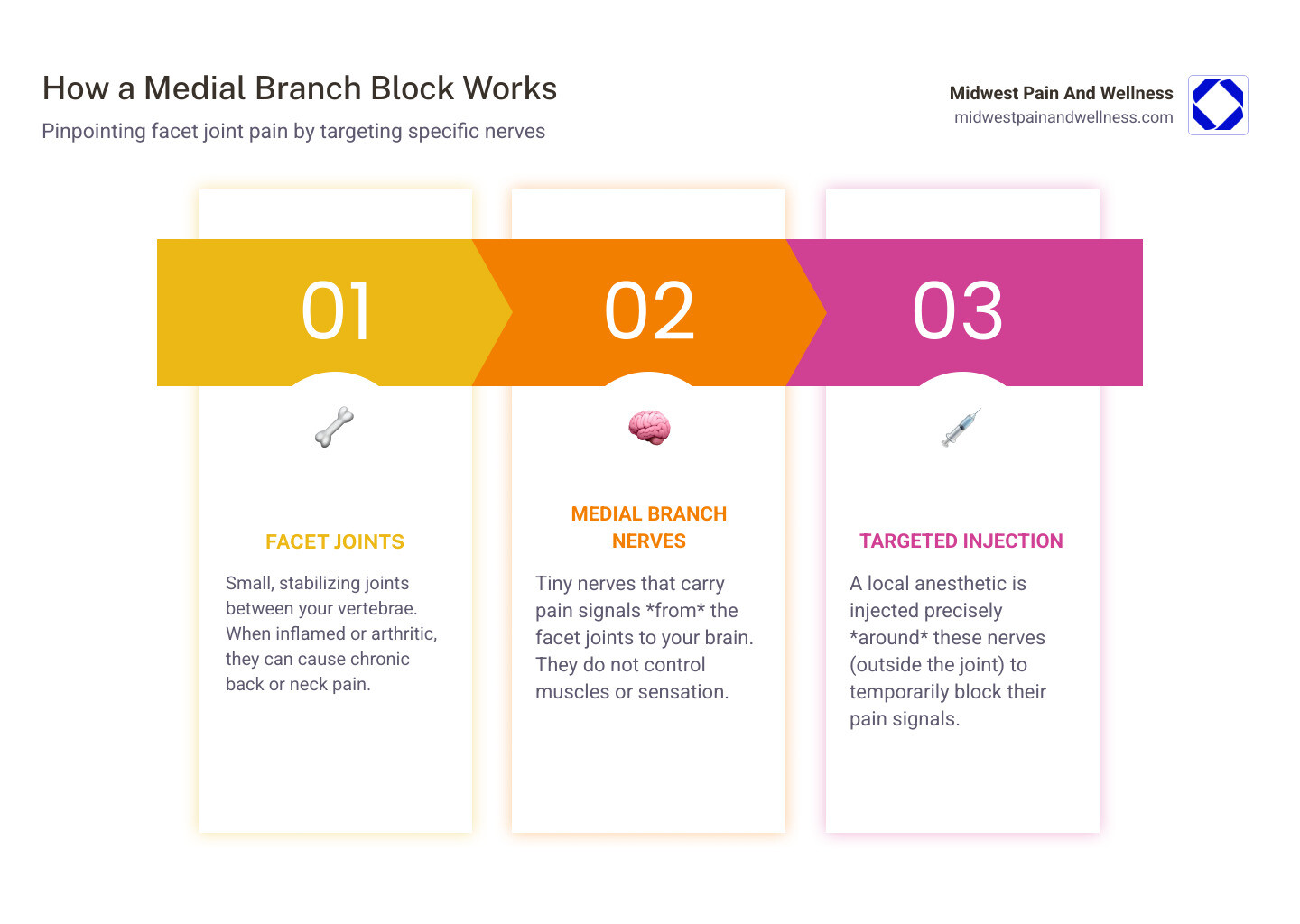
A medial branch block is a minimally invasive diagnostic injection used to determine if your chronic neck or back pain originates from facet joints in your spine. During this outpatient procedure, a pain management specialist injects a small amount of local anesthetic near the medial branch nerves—tiny nerves that carry pain signals from your facet joints to your brain.
What You Need to Know About Medial Branch Blocks:
- Purpose: Primarily diagnostic, helping pinpoint whether facet joints are your pain source
- Procedure Time: 15-30 minutes as an outpatient
- Pain Relief Duration: 4-12 hours from the anesthetic (diagnostic blocks)
- Success Indicator: If you experience significant pain relief (80%+ improvement), your facet joints are likely the problem
- Next Steps: Positive results may qualify you for radiofrequency ablation (RFA), which can provide relief lasting up to a year
- Safety: Generally safe with minimal risks when performed by trained specialists
If you’re one of the millions of Americans dealing with chronic back or neck pain that hasn’t responded to physical therapy or medications, a medial branch block can provide crucial answers. More than half of patients who undergo this procedure experience at least 80% pain improvement, confirming that their facet joints are the culprit.
The procedure targets the medial branch nerves outside the facet joint itself, which differentiates it from other spinal injections. These small nerves don’t control muscles or sensation in your arms or legs—they only transmit pain signals from the facet joints, also called zygapophysial joints. By temporarily numbing these specific nerves, your doctor can definitively tell whether your facet joints are causing your discomfort.
Who Can Benefit from a Medial Branch Block?
At Midwest Pain And Wellness, we understand that living with chronic spinal pain can be incredibly challenging, impacting every aspect of your life. A medial branch block is a specialized tool we use to diagnose pain originating from the facet joints—the small, stabilizing joints located between your vertebrae. These joints, also known as zygapophysial joints, allow for smooth spinal movement, but when they become inflamed or arthritic, they can cause significant discomfort.
We often recommend a medial branch block for individuals experiencing persistent back or neck pain that hasn’t improved with conservative treatments like medication or physical therapy. This procedure is particularly effective in identifying if your pain stems from conditions such as:
- Facet joint arthritis: Wear and tear on the cartilage of the facet joints, leading to inflammation and pain.
- Spinal stenosis: Narrowing of the spinal canal which can sometimes irritate nearby facet joints.
- Degenerative spondylolisthesis: A condition where one vertebra slips forward over another, often involving facet joint instability.
- Post-whiplash pain: Trauma from accidents can injure facet joints, leading to chronic neck or back pain.
- Rheumatoid arthritis or Ankylosing Spondylitis: Inflammatory conditions that can affect the facet joints.
- Scoliosis: Abnormal curvature of the spine that can place undue stress on facet joints.
If you’re seeking relief from these or other persistent spinal conditions, exploring a medial branch block with a pain management specialist in Chicago Ridge, Illinois, could be your next step. You can learn more about the various Conditions We Treat at our clinic. We’re dedicated to helping you find effective solutions for your pain, and our team includes expert Back Pain Specialist Near Me who are ready to help.
Understanding the Goals of a Medial Branch Block
The primary goal of a medial branch block is diagnostic. Think of it as a detective’s magnifying glass, helping us pinpoint the exact source of your pain. When you come to us with chronic spinal pain, it can sometimes be tricky to determine if the facet joints are indeed the culprits. By temporarily numbing the medial branch nerves that transmit signals from these joints, we can see if your pain significantly decreases. If it does, we’ve found our suspect!
This diagnostic clarity is incredibly valuable because it helps us predict the success of further, longer-lasting treatments. For example, if a medial branch block provides significant, albeit temporary, relief, it indicates that you might be an excellent candidate for radiofrequency ablation (RFA)—a procedure designed for more sustained pain relief. Our research shows that if two medial branch blocks independently confirm facet joint pain at the same spinal level, there’s approximately a 60% chance of achieving significant and lasting pain relief with RFA.
While primarily diagnostic, a medial branch block can sometimes offer temporary therapeutic relief as well. The local anesthetic itself will numb the area, providing a short window of comfort. This temporary relief can be a welcome break from chronic pain and allow you to confirm that the treated area is indeed the source of your discomfort. For more insights into nerve blocks for pain, visit our Nerve Block for Pain page.
How It Differs from Other Spinal Injections
It’s easy to get lost in the alphabet soup of spinal injections! To clarify, let’s look at how a medial branch block stands apart from other common spinal injections like facet joint injections and epidural steroid injections. The key differences lie in their target, primary purpose, and the medications used.
| Feature | Medial Branch Block | Facet Joint Injection | Epidural Steroid Injection |
|---|---|---|---|
| Target Location | Nerves outside the facet joint (medial branch nerves) | Inside the facet joint capsule | Epidural space (around spinal cord nerves) |
| Primary Purpose | Primarily diagnostic (to identify pain source) | Primarily therapeutic (to reduce inflammation) | Primarily therapeutic (to reduce nerve root inflammation) |
| Medication Used | Local anesthetic (sometimes with steroid) | Local anesthetic + corticosteroid | Corticosteroid + local anesthetic |
| Typical Relief | 4-12 hours (diagnostic); 2-4 months (therapeutic) | 2-4 months | 1-3 months |
As you can see, the medial branch block is a unique player because its main job is to diagnose. We use it to confirm that the facet joint is indeed the source of your pain. If successful, it opens the door to more targeted, longer-lasting treatments like radiofrequency ablation. In contrast, facet joint injections directly treat the joint itself, aiming to reduce inflammation and pain directly within the joint capsule. Epidural steroid injections, often used for radiating pain, target the epidural space around the spinal cord to calm inflamed nerve roots.
At Midwest Pain And Wellness, we offer a range of interventional pain management solutions. You can dig deeper into specific procedures by visiting our Facet Joint Injections Chicago Complete Guide and Epidural Injections Chicago pages.
The Medial Branch Block Procedure: A Step-by-Step Guide
Undergoing a medical procedure can feel daunting, but we want to assure you that a medial branch block is a straightforward, minimally invasive outpatient procedure. Our double board-certified doctors at Midwest Pain And Wellness in Chicago Ridge, Illinois, are highly experienced in performing these injections with precision and care. You can learn more about our comprehensive approach to pain management on our Treatment Procedures page and meet Our Team of specialists.
Preparation Before the Injection
Proper preparation ensures your safety and the accuracy of the procedure. Here’s what you can expect and what we’ll ask you to do:
- Medical Review: We’ll conduct a thorough review of your medical history, current medications, and any allergies. Please be open with us about everything!
- Medication Adjustments: If you’re taking blood-thinning medications (like aspirin, clopidogrel, warfarin, or newer anticoagulants), we’ll provide specific instructions on when to adjust or temporarily stop them. This is crucial to minimize the risk of bleeding. For example, aspirin often needs to be stopped 6 days prior, and warfarin 5 days prior. Always consult with your prescribing physician before making any changes. The general Guidance on preparing for ablative procedures often applies to these diagnostic blocks as well, especially concerning blood thinners.
- Arranging a Driver: For your safety, you must arrange for a responsible adult to drive you home after the procedure, especially if we use any anti-anxiety medication. Our goal is to get you home safely and comfortably.
- Light Meal & Clothing: We generally recommend a light meal before the procedure. Wear loose, comfortable clothing that is easy to remove or adjust.
- Neck vs. Low Back Injections: If your injection is in the neck, we might ask you not to eat or drink for six hours beforehand. For low back injections, you can usually eat, drink, and take your regular medications as usual, unless otherwise instructed.
During the Procedure
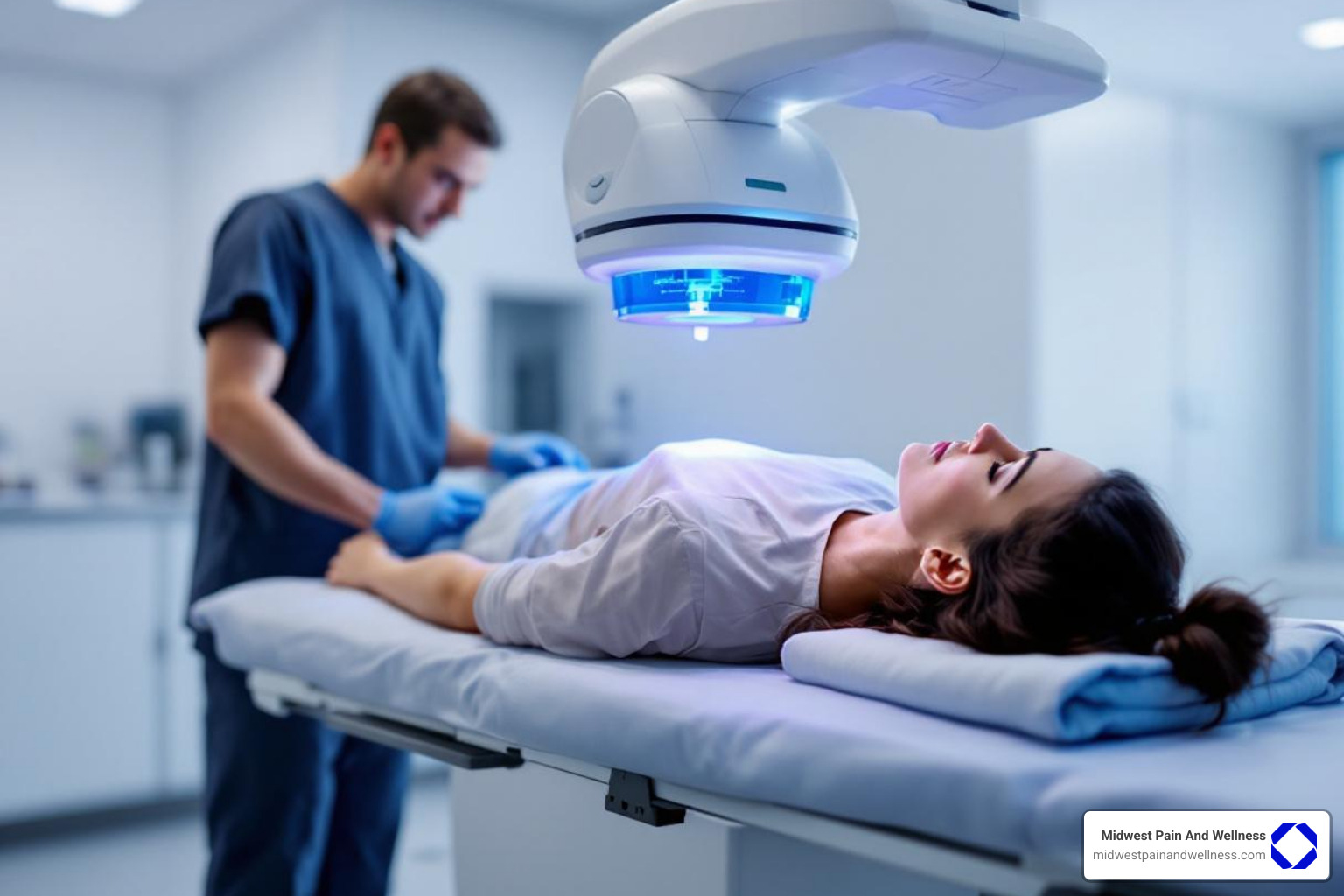
The medial branch block typically takes about 15 to 30 minutes, and we perform it in our clinic in Chicago Ridge, Illinois. We strive to make you as comfortable as possible throughout.
- Patient Positioning: You’ll lie on your stomach on an X-ray table. We’ll make sure you’re in a relaxed and stable position.
- Skin Preparation: The injection area on your back or neck will be thoroughly cleansed with an antiseptic solution, and sterile drapes will be placed to maintain a sterile field.
- Local Anesthetic: We’ll numb your skin and superficial tissues with a small injection of local anesthetic. This might feel like a brief stinging or burning sensation, but it’s usually the most uncomfortable part of the procedure.
- Fluoroscopy Guidance: This is where precision comes in! Using real-time X-ray guidance (fluoroscopy), our physician will carefully advance a thin needle toward the medial branch nerves. This imaging ensures accurate needle placement and minimizes risks.
- Contrast Dye: Before injecting the main medication, a small amount of contrast dye is often injected. This helps us confirm that the needle is in the correct spot and not in a blood vessel.
- Injecting Medication: Once confirmed, a small amount of local anesthetic is slowly injected onto each targeted medial branch nerve. Sedation is typically avoided during this diagnostic procedure, as your feedback on pain relief is crucial for interpreting the results.
For a detailed visual and procedural guide, you can refer to the Medial Branch Injection Procedure Details.
After the Injection: Recovery and Home Care
The good news is that recovery from a medial branch block is generally quick.
- Observation Period: After the injection, you’ll rest in a recovery area for about 30 to 60 minutes. We’ll monitor your vital signs and assess your comfort level.
- Pain Diary: We’ll provide you with a pain diary or ask you to carefully track your pain levels and any changes you experience in the hours and days following the injection. This information is vital for us to interpret the results accurately.
- Resuming Normal Activities: You can usually resume most of your normal activities the day after the procedure. However, we advise against strenuous activities and heavy lifting for at least 24 hours.
- Strenuous Activity Restrictions: To avoid any undue strain on the injection site and to allow the anesthetic to work its diagnostic magic, avoid strenuous activities. Think of it as a mini-vacation for your spine!
- Post-Procedure Soreness: It’s normal to experience some local tenderness or mild soreness at the injection site for a day or two.
- Ice Pack Application: An ice pack or cold compress applied for 15 minutes at a time, a few times a day, can help alleviate any local tenderness.
- Bathing: Avoid tub baths, hot showers, swimming, or soaking in water for the remainder of the day (or up to 48 hours to be extra safe) to reduce the risk of infection. Showering is fine.
- When to Call a Doctor: While complications are rare, please contact us or seek medical attention if you experience:
- Significant weakness or numbness in your legs.
- A fever above 101°F (38.5°C).
- Increased redness, swelling, or pus at the injection site.
- Severe or worsening pain.
Interpreting Results and Planning Your Next Steps
The hours and days following your medial branch block are crucial for gathering information. We’re looking for a significant reduction in your typical pain.
Our diagnostic success criteria typically involve experiencing at least 80% improvement in your pain during the first 4-12 hours after the injection. This short-term relief, while temporary, tells us volumes. It strongly suggests that your facet joints are indeed the primary source of your pain. More than half of patients who undergo a successful diagnostic medial branch block experience this level of improvement, providing clear direction for their treatment plan. You can read more about this statistic here: More than half of patients experience at least 80% improvement in pain.
Because there’s always a small chance of a “false-positive” result (meaning you feel better for reasons unrelated to the block), we often recommend a second, confirmatory medial branch block. This second injection, performed a few weeks after the first, helps us ensure the diagnosis is accurate and that we’re targeting the right pain generators.
The Path to Long-Term Relief: Radiofrequency Ablation (RFA)
If your medial branch block successfully identifies your facet joints as the source of your pain, and especially if your pain returns after the temporary relief wears off, you’ve likely found your pathway to more sustained relief: Radiofrequency Ablation (RFA).
What is RFA?
RFA, sometimes called radiofrequency neurotomy or radiofrequency lesioning, is a minimally invasive procedure that uses heat to temporarily disable the medial branch nerves. It’s like gently “turning down the volume” on the pain signals your nerves are sending.
How RFA Works:
During RFA, we use a specialized needle, guided by fluoroscopy (X-ray), to precisely target the medial branch nerves. Once in place, a small electrical current creates a heat lesion on the nerve. This heat temporarily disrupts the nerve’s ability to transmit pain signals from the facet joint to your brain. Crucially, these nerves do not control muscle movement or sensation in your arms or legs, so there’s no risk of affecting those functions.
RFA Candidacy:
If your diagnostic medial branch block provided significant, though temporary, pain relief, you are considered a good candidate for RFA. As mentioned earlier, if two blocks confirm the pain at the same spinal level, there’s a strong likelihood of achieving lasting relief with RFA.
Pain Relief Duration:
The beauty of RFA is its potential for prolonged pain relief. While the anesthetic from a medial branch block lasts hours, RFA can provide relief for up to a year, and sometimes even longer. The nerves eventually regenerate, which is why the pain relief is not permanent, but it offers a substantial window of comfort and improved function. Our research indicates that the most significant benefits are often seen within the first 4 weeks, with relief extending up to a year. For more in-depth information about this advanced procedure, you can explore Ablative Nerve Block Information.
Safety Profile: Risks, Side Effects, and Contraindications
At Midwest Pain And Wellness, patient safety is our top priority. We consider medial branch blocks to be a minimally invasive and generally safe procedure when performed by our experienced, double board-certified pain management specialists in Chicago Ridge, Illinois. We adhere to the highest standards of care and use advanced imaging guidance to ensure precision and minimize risks. You can learn more about our commitment to safe and effective treatments on our Procedures We Use For Treatment page.
Potential Risks of a Medial Branch Block
While generally safe, like any medical procedure, there are potential risks and side effects, though serious complications are rare:
- Soreness or Bruising: It’s common to experience some mild soreness, tenderness, or bruising at the injection site for a day or two. This is usually easily managed with ice and over-the-counter pain relievers.
- Infection: Any time a needle breaks the skin, there’s a small risk of infection. We use strict sterile techniques to minimize this risk.
- Bleeding: There’s a rare risk of bleeding, especially if you are on blood-thinning medications. This is why we carefully review your medications beforehand.
- Nerve Damage: Although extremely rare with fluoroscopic guidance, there’s a theoretical risk of nerve damage. The medial branch nerves are sensory and do not control movement, so motor nerve damage is highly unlikely.
- Allergic Reaction: A rare allergic reaction to the anesthetic or contrast dye is possible. Please inform us of any known allergies.
- Temporary Numbness or Weakness: If the local anesthetic spreads slightly to nearby nerves, you might experience temporary numbness or weakness in an area not directly related to your pain. This usually resolves within a few hours.
- Increased Pain: Some patients may experience a temporary increase in pain for a few days after the injection before any relief is felt.
- Blood Sugar Elevation: For individuals with diabetes, there might be a short-term, temporary elevation in blood sugar levels, especially if a corticosteroid is included in the injection.
- Fluid Retention: People prone to fluid retention might experience a slight increase for a week or two after the injection.
When a Medial Branch Block May Not Be Recommended
While a medial branch block can be a game-changer for many, it’s not suitable for everyone. We carefully evaluate each patient to ensure the procedure is appropriate and safe. Here are some situations where a medial branch block may not be recommended:
- Active Systemic Infection or Local Infection: If you have an active infection anywhere in your body, especially near the injection site, we will postpone the procedure to prevent the spread of infection.
- Bleeding Disorders or Anticoagulant Use: If you have a bleeding disorder or are unable to temporarily stop taking blood-thinning medications, the risk of bleeding is too high.
- Pregnancy: Due to the use of X-ray guidance, medial branch blocks are generally not performed during pregnancy.
- Uncontrolled High Blood Pressure: Severely uncontrolled high blood pressure can increase procedural risks. We will work with you to ensure your blood pressure is managed before proceeding.
- Allergy to Contrast Dye or Anesthetics: If you have a known allergy to any of the medications or dyes used in the procedure, we will explore alternative options.
- Lack of Pain Relief from Prior Diagnostic Blocks: If previous diagnostic blocks have not provided significant relief, it suggests that the facet joints are likely not the primary source of your pain, and therefore, another block would not be beneficial.
We will always discuss all potential risks and contraindications with you thoroughly, ensuring you have a complete understanding before moving forward with any treatment plan.
Frequently Asked Questions about Medial Branch Blocks
We know you might have more questions, and that’s perfectly normal! Here are some of the most common inquiries we receive about medial branch blocks:
Will the injection hurt?
It’s a common concern, and we completely understand! Most patients describe the initial part of the procedure as the most uncomfortable: the stinging or burning sensation when we inject the local anesthetic to numb your skin. After that, the area is typically numb, and while you might feel some pressure as the needle is advanced, actual sharp pain is usually minimal.
We generally avoid sedation for diagnostic medial branch blocks so your feedback on pain relief is accurate. This means you’ll be awake and aware, but we do everything we can to ensure your comfort. Think of it like a dental filling—the numbing shot is the worst part, and then it’s smooth sailing.
How many injections will I need?
The number of injections can vary depending on your specific situation and the purpose of the block:
- Single Diagnostic Block: Initially, we might perform one medial branch block to see if it provides significant pain relief.
- Confirmatory Second Block: To minimize the chance of false-positive results, we often recommend a second diagnostic medial branch block, typically performed 2-3 weeks after the first. If both blocks confirm pain relief at the same spinal level, it strongly indicates that the facet joint is your pain source.
- Multiple Spinal Levels: If your pain stems from facet joints at multiple levels of your spine, we might inject nerves at 2 to 3 levels in a single session. This is often done for convenience and efficiency.
- Two Adjacent Nerves Per Joint: Each facet joint is typically innervated by two medial branch nerves (from the same level and the level above). So, for each painful facet joint we’re investigating, we’ll target two adjacent medial branch nerves. This ensures comprehensive coverage and accurate diagnosis.
How long does the pain relief from a medial branch block last?
The duration of pain relief from a medial branch block largely depends on whether it’s a diagnostic or therapeutic block, and the type of medication used:
- Diagnostic Block Relief: For purely diagnostic blocks, which primarily use local anesthetic, the pain-relieving effects are felt quickly but are temporary, typically lasting only 4 to 12 hours. This brief window is precisely what we need to determine if your facet joints are the pain source.
- Therapeutic Block with Steroid: Sometimes, a corticosteroid might be added to the anesthetic. While therapeutic medial branch blocks with corticosteroids are generally not considered more effective than placebo in the long run, they might provide pain relief for a few weeks to a few months in some cases.
- RFA Relief: If your medial branch block successfully identifies your pain source, the next step is often radiofrequency ablation (RFA), which offers much longer-lasting relief. RFA can help relieve pain for up to a year, and sometimes even longer, providing a significant break from chronic discomfort. The most substantial benefits are often observed within the first 4 weeks following RFA, with significant relief potentially lasting up to a year.
Take the Next Step Towards Pain Relief in Chicago
We hope this extensive guide has helped you understand the role of a medial branch block in diagnosing and treating chronic spinal pain. At Midwest Pain And Wellness in Chicago Ridge, Illinois, we view the medial branch block as a powerful diagnostic tool—a crucial first step toward accurately identifying if your facet joints are the source of your discomfort.
Our approach is rooted in providing comprehensive, opioid-free pain management. We believe in getting to the root cause of your pain, not just masking the symptoms. By precisely identifying the pain generator, we can then guide you toward more definitive and long-lasting solutions, such as radiofrequency ablation (RFA), which can offer sustained relief for many months.
Our double board-certified doctors use a multi-modal, interventional approach, collaborating with other practitioners to create custom care plans custom to your unique needs. We are committed to helping you achieve long-term pain relief and improve your quality of life.
If you’re tired of living with chronic back or neck pain and are ready to explore effective solutions, we invite you to schedule a consultation with our expert team in Chicago Ridge, Illinois. Let us help you take the next step toward a life with less pain. You can learn more about our dedication to Chronic Pain Treatment and how we can help you Find lasting relief with advanced pain injections in Chicago. We’re here to listen, diagnose, and guide you on your journey to wellness.