Why Chicago Residents Are Turning to Epidural Injections for Back Pain Relief
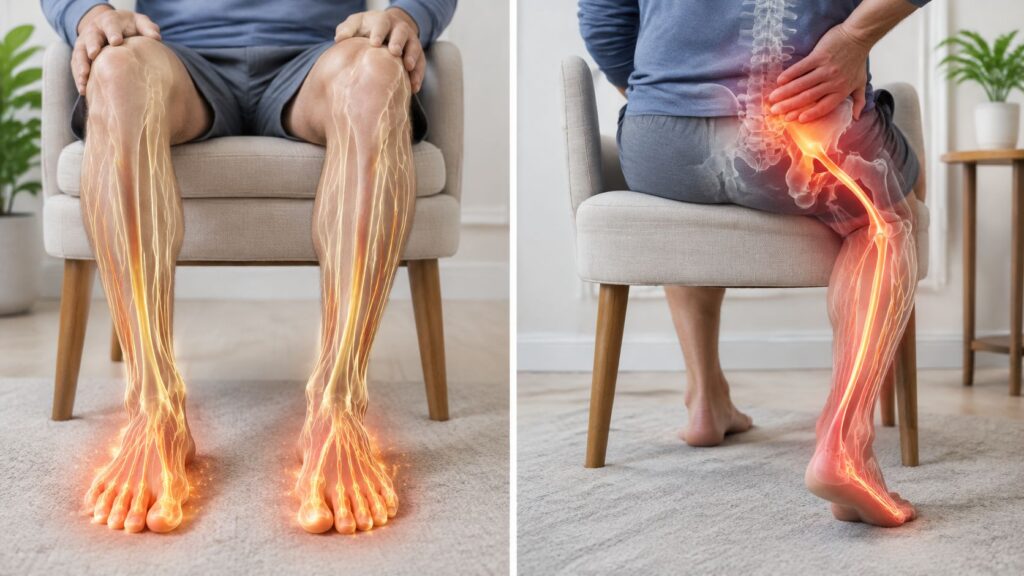
Epidural injections Chicago residents rely on are a proven, non-surgical treatment for back and leg pain. If chronic pain from conditions like sciatica or spinal stenosis is impacting your life, here’s what you need to know about this option.
Quick Guide to Finding a Provider:
- Seek board-certified pain specialists who use X-ray guidance (fluoroscopy).
- Verify they treat your condition (e.g., herniated discs, spinal stenosis).
- Ensure they offer a multi-modal approach with physical therapy.
- Confirm they accept your insurance.
- Schedule a consultation to see if you’re a candidate.
Epidural steroid injections (ESIs) offer hope without surgery. These minimally invasive procedures deliver anti-inflammatory medication directly to the epidural space around your spinal nerves. About 70-90% of patients experience significant pain relief lasting from weeks to a year.
ESIs serve a dual purpose: they provide diagnostic information to pinpoint the pain’s source while delivering therapeutic relief by reducing inflammation. This often allows patients to engage in physical therapy, reduce oral medications, and potentially avoid surgery. The procedure takes just 15-30 minutes, and patients typically resume normal activities within 24 hours.
Understanding Epidural Steroid Injections
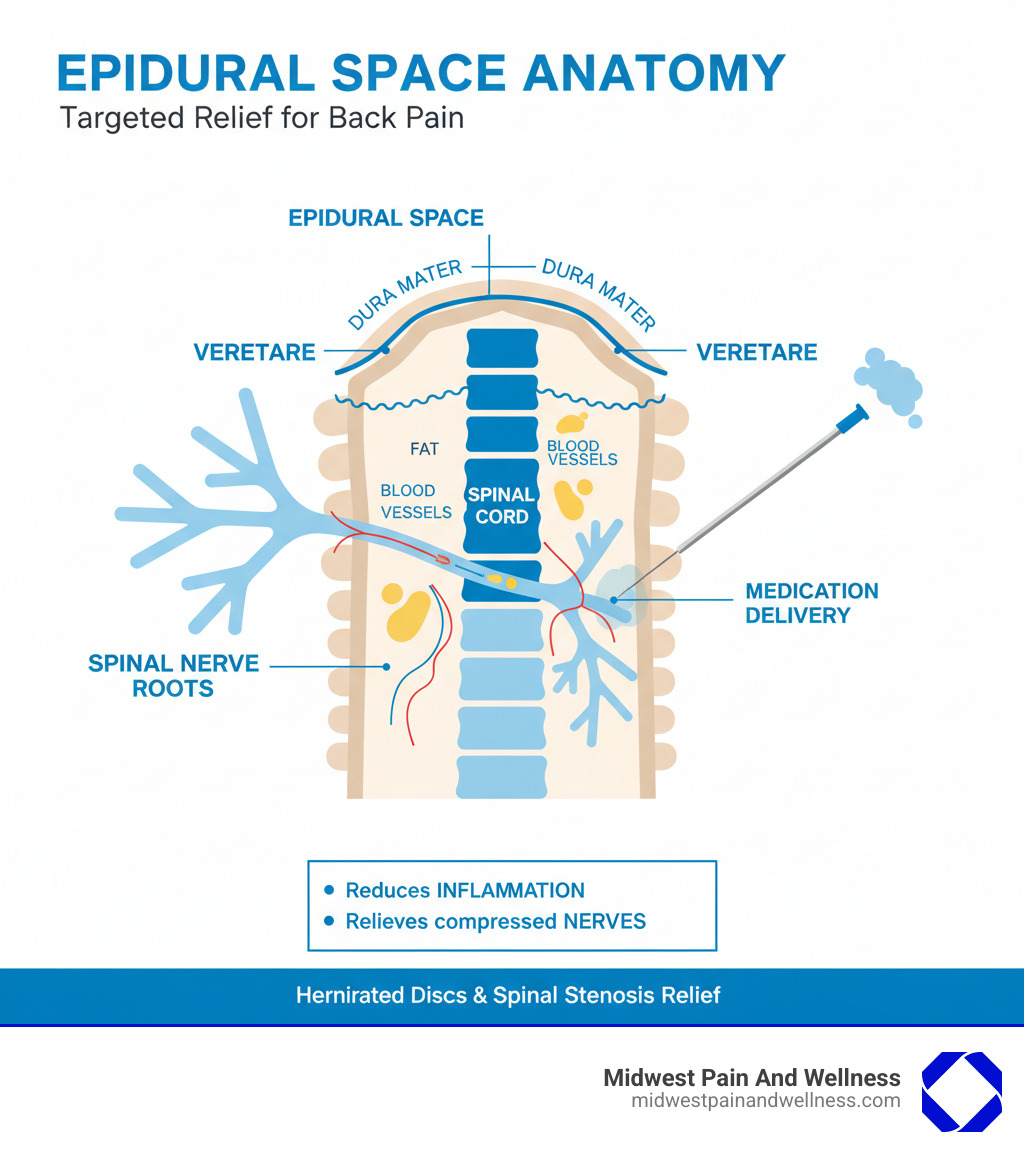
At Midwest Pain and Wellness, epidural steroid injections are a cornerstone of our opioid-free approach to pain management. When spinal nerves are compressed or irritated, they become inflamed, causing pain that can radiate down the arms or legs. The epidural space is a protective area around the spinal cord containing nerve roots, fat, and blood vessels.
An epidural steroid injection delivers a powerful anti-inflammatory corticosteroid and a local anesthetic (numbing agent) directly into this space. The anesthetic provides immediate but temporary relief, while the corticosteroid reduces inflammation and swelling around the nerves. This inflammation reduction is key to alleviating your pain.
Beyond providing therapeutic relief, these injections are a valuable diagnostic tool. By observing your pain response, we can often pinpoint the exact nerve root causing your discomfort, which helps us tailor a more effective long-term treatment plan. Our double board-certified doctors use a multi-modal approach to find the root cause of your pain and create custom care plans for lasting relief. You can find more info about our approach to pain management.
What Conditions Warrant Epidural Injections in Chicago?
Many Chicago residents seek epidural injections Chicago providers offer for relief from conditions caused by compressed spinal nerves. These include:
- Lumbar disc herniation: When a spinal disc’s soft center pushes out and presses on a nerve.
- Sciatica: Not a condition itself, but a symptom describing pain that travels from the lower back down the leg. It is often caused by a herniated disc or other issues affecting the sciatic nerve. You can learn more about sciatica from various online resources.
- Spinal stenosis: A narrowing of the spinal canal that compresses the spinal cord and nerves, causing pain, numbness, or weakness.
- Degenerative disc disease: The natural wear-and-tear of spinal discs over time, which can lead to pain and nerve compression.
- Spondylolisthesis: A condition where one vertebra slips forward over another, pinching nerves.
- Radiculopathy: The general term for pain, numbness, or weakness caused by a compressed nerve root in the spine.
Epidural injections can provide substantial relief by reducing inflammation at the source of irritation. For a comprehensive list of conditions we treat, please visit our website.
The Different Types of Epidural Injections
The type of injection we recommend depends on your pain’s location and nature.
- An interlaminar ESI is a more general approach, used when pain is widespread or involves multiple nerve roots.
- A transforaminal ESI is highly targeted, placing the needle where a specific nerve root exits the spinal canal. This is ideal for diagnosing and treating pain from a single nerve, such as in sciatica.
- A caudal ESI is administered near the tailbone and is useful for widespread lower back pain radiating into both legs.
Injections are also categorized by spinal region: cervical (neck/arm pain), thoracic (mid-back pain), and lumbar (lower back/leg pain). Our physicians determine the most appropriate injection to ensure medication reaches the exact source of your pain. For further details on our approach to epidural injections, explore our treatment procedures.
The Patient Journey: From Consultation to Recovery
Your journey to relief with epidural injections Chicago patients trust begins with a thorough consultation. We listen to your story to understand your pain and determine if you’re an ideal candidate. We typically recommend injections after conservative treatments like physical therapy or oral medication have not provided enough relief. An injection can reduce pain enough to allow you to participate more effectively in physical therapy, opening a door to further healing. This outpatient procedure means you’ll be home the same day. You can learn more about our approach to pain management and how we integrate therapies.

What to Expect During Your Epidural Injections in Chicago
The procedure is straightforward and takes about 15 to 30 minutes. Here’s what happens:
- Positioning and Prep: You’ll lie on your abdomen on a procedure table, and we’ll clean the injection site with an antiseptic.
- Numbing: We apply a local anesthetic to numb the skin and tissue. You may feel a small pinch, but this minimizes discomfort during the procedure.
- Guided Placement: Our doctors use fluoroscopy (real-time X-ray) to guide the needle precisely into the epidural space. This ensures safety and effectiveness.
- Confirmation: We inject a small amount of contrast dye to confirm the needle is correctly positioned before delivering the medication.
- Medication Delivery: We slowly inject the corticosteroid and anesthetic. Most patients feel some pressure but minimal discomfort.
Afterward, you’ll rest in our recovery area for 30 to 40 minutes for post-procedure monitoring. You will need someone to drive you home. For more details, visit our page on Epidural Steroid Injections for Back and Neck Pain in Chicago Ridge.
Recovery and Post-Procedure Care

Recovery is typically quick. You may experience temporary numbness in the treated area for a few hours. It’s normal for your original pain to return briefly after the anesthetic wears off; the steroid’s anti-inflammatory effects take two to seven days to fully develop.
For the first 24 hours, take it easy. You can begin resuming normal activities the next day but should be avoiding strenuous activity for a day or two. To manage injection site soreness, use ice packs for 15-20 minutes at a time. Keeping a pain diary can be helpful for tracking your progress before your follow-up appointment. This appointment is crucial for us to evaluate the injection’s effectiveness and plan the next steps in your comprehensive pain management strategy.
Evaluating the Outcomes: Benefits, Risks, and Efficacy
For epidural injections Chicago patients receive, the results are compelling: approximately 70-90% of patients experience meaningful pain relief. This relief translates to real-world benefits, including:
- Improved mobility and function for daily activities.
- Reduced need for oral pain medications, avoiding their side effects and risks.
- Postponing or even avoiding surgery by managing pain non-invasively.
- Enabling effective physical therapy by reducing acute pain to a manageable level.
By breaking the pain cycle, epidural injections give you a window to build strength, improve flexibility, and work toward lasting relief.

How Long Does Relief Last and How Often Can I Get Injections?
The duration of relief varies, typically ranging from a few weeks to a full year. The local anesthetic provides immediate relief for a few hours, but the steroid’s full effect takes two to seven days to develop. Don’t be discouraged if you don’t feel better right away.
To minimize potential side effects from steroid exposure, we follow evidence-based guidelines that recommend a maximum of 3 to 4 injections per year. Since individual results vary, we monitor your progress closely to determine the optimal timing for any additional treatments. For More information on Epidural Steroid Injections, visit our treatment procedures page.
Potential Risks and Side Effects
While epidural steroid injections are generally very safe, it’s important to understand the potential risks. Serious complications are rare (less than 1%), and include infection, bleeding, or nerve damage. We use strict sterile techniques and careful review of your medical history to minimize these risks.
More common side effects are temporary and mild, usually resolving in 1-3 days. These may include facial flushing, insomnia, a mild headache, or a temporary increase in blood sugar levels (an important consideration for diabetic patients).
When weighing the options, ESIs present a favorable balance of risk and reward for many patients.
| Feature | Epidural Injections | Oral Painkillers (NSAIDs, Opioids) | Surgery (Laminectomy, Fusion) |
|---|---|---|---|
| Pain Relief | Direct, targeted, lasting weeks to months | Temporary, systemic side effects | Can be curative but invasive |
| Invasiveness | Minimally invasive | Non-invasive | Highly invasive |
| Side Effects | Temporary, mostly mild (flushing, insomnia) | GI problems, addiction risk with opioids | Infection, bleeding, nerve damage, lengthy recovery |
| Recovery Time | Same day, normal activities next day | Immediate use | Weeks to months |
| Addiction Risk | None | High with opioids | None (though may need pain meds after) |
| Rehabilitation | Helps you engage in PT | May mask pain without healing | Requires extensive PT |
During your consultation, we will discuss your specific risk factors to help you make an informed decision.
Frequently Asked Questions about Epidural Injections
We want you to feel informed and comfortable. Here are answers to the questions we hear most often from our Chicago-area patients.
Are epidural injections painful?
We take every step to minimize discomfort. We use a local anesthetic to thoroughly numb the injection site. Most patients report feeling a pressure sensation rather than sharp pain during the procedure. Our use of fluoroscopic (X-ray) guidance also helps ensure a smooth and comfortable experience. For patients who are particularly anxious, sedation options are available to help you relax. The minimal pain during the procedure is typically far outweighed by the relief that follows.
When should I consider an epidural injection for my back pain?
Epidural injections are generally considered when chronic pain, especially radiating pain (like sciatica), persists despite several weeks or months of conservative treatments. If you’ve tried rest, oral medication, and physical therapy without success, and your pain is significantly impacting your quality of life, it may be time to discuss an injection. A formal doctor’s recommendation based on a clear diagnosis is crucial. When you’re ready to explore your options, we encourage you to Schedule an Appointment to discuss options with our team.
Who is an ideal candidate for this procedure?
An ideal candidate typically has:
- Nerve-based pain from a confirmed diagnosis like a herniated disc, spinal stenosis, or sciatica.
- Pain that has not responded adequately to conservative treatments like physical therapy.
- No contraindications, such as an active infection or an uncontrolled bleeding disorder.
- Realistic expectations and a willingness to participate in a multi-modal treatment plan that may include ongoing physical therapy.
Our lead physician, Dr. Donkoh, is double board-certified and assesses each patient’s unique situation to determine the best course of action. You can Learn more about our lead physician and our commitment to personalized care.
Take the Next Step Towards a Pain-Free Life in Chicago
You don’t have to live with chronic back or neck pain. Epidural injections Chicago residents trust offer a powerful, non-surgical solution to reclaim your life. With a 70-90% success rate in providing significant pain relief, these injections can improve mobility, reduce the need for oral medications, and help you avoid surgery.
Choosing a qualified provider is essential. At Midwest Pain and Wellness, our double board-certified doctors use advanced fluoroscopic guidance for precise, safe treatment. Our multi-modal, interventional approach focuses on long-term wellness, not just temporary fixes. We create custom treatment plans and are proud advocates of opioid-free pain management, offering effective alternatives that treat pain at its source.
Ready to reclaim your life from chronic pain? Our team is ready to develop a treatment plan that works for you.
Explore Our Treatment Procedures to learn more, or reach out directly to schedule your consultation. Your pain-free life is within reach—let’s take the first step together.