Living with Pain After Back Surgery? There’s Hope

Spinal cord stimulator for post laminectomy pain Chicago Ridge is a treatment option that can help when your back surgery didn’t deliver the relief you expected. If you’re still experiencing chronic pain after a laminectomy, you’re not alone—and you don’t have to settle for a life limited by discomfort.
Quick Answer: What You Need to Know
- What it is: A spinal cord stimulator (SCS) is a small device that sends mild electrical pulses to block pain signals before they reach your brain
- Success rate: 50-75% of patients experience significant relief (typically 50-70% pain reduction)
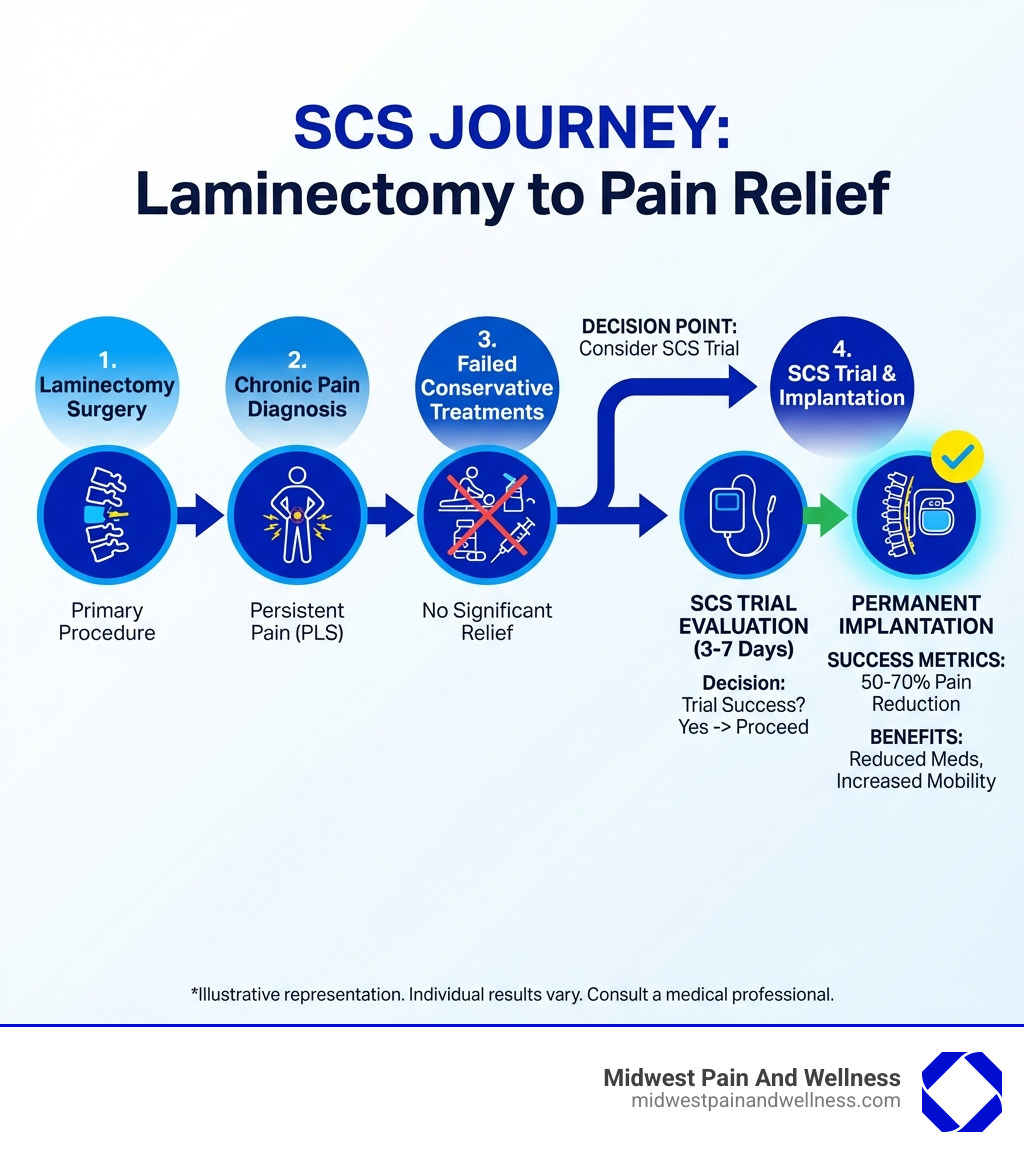
- The process: Start with a 3-7 day trial period before deciding on permanent implantation
- Recovery: 2-6 weeks with specific activity restrictions
- Benefits: Reduced pain medication, increased mobility, customizable therapy
- Availability: Offered at Midwest Pain & Wellness in Chicago Ridge with double board-certified doctors
Post-Laminectomy Syndrome (PLS)—also called Failed Back Surgery Syndrome—is chronic pain that continues after spine surgery. This pain can be debilitating, but modern neuromodulation techniques like spinal cord stimulation offer real hope for managing it without opioids or more surgery.
At Midwest Pain & Wellness in Chicago Ridge, we take an opioid-free, interventional approach to treating post-laminectomy pain. Our team understands that your journey through chronic pain has been challenging, and we’re here to help you explore whether SCS might be your path to a better quality of life.
Understanding Post-Laminectomy Pain Syndrome
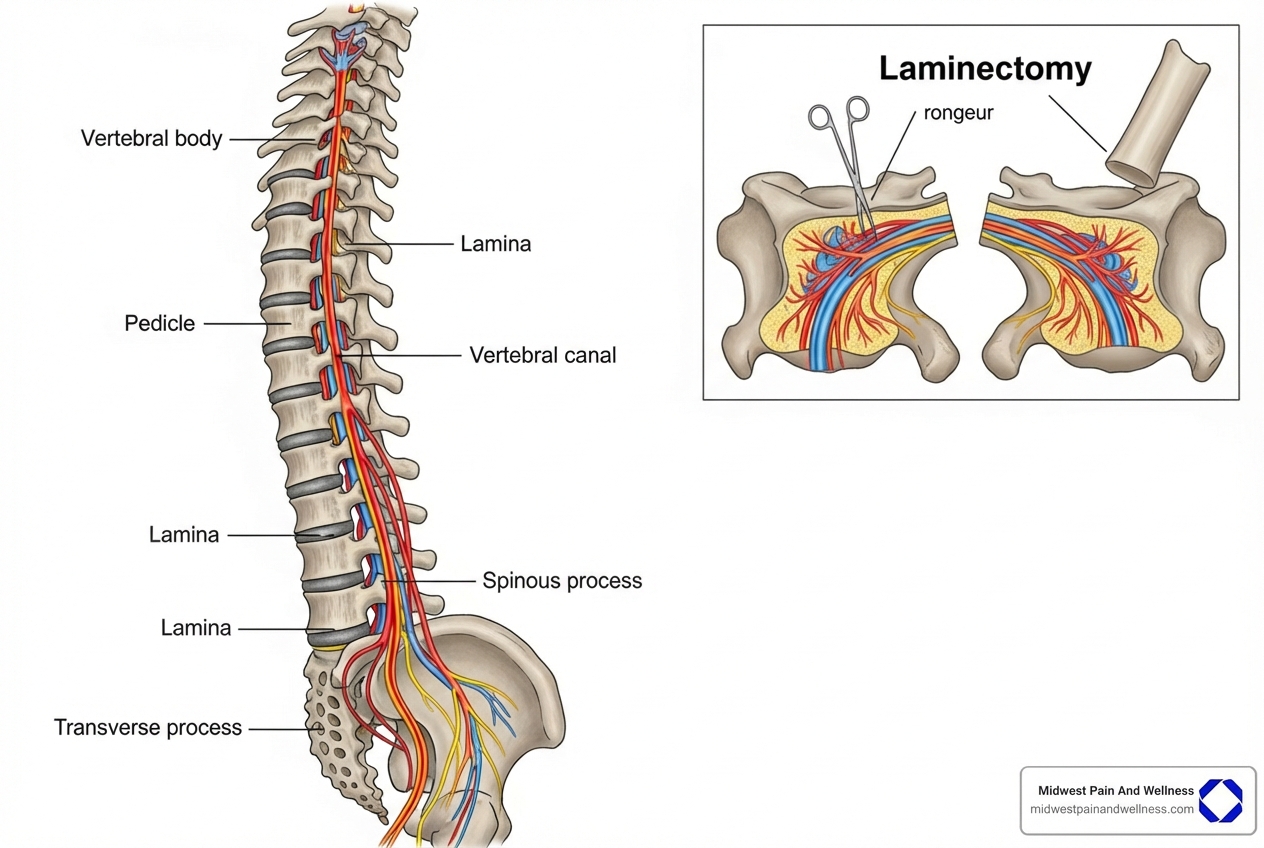
A laminectomy is a type of spine surgery where a section of the vertebra (lamina) is removed to relieve pressure on the spinal cord or nerves. While often successful, for some, the pain persists or even worsens. This condition is known as Post-Laminectomy Syndrome (PLS).
Post-Laminectomy Syndrome, also called Failed Back Surgery Syndrome (FBSS), is chronic pain that continues or develops after spinal surgery. This persistent pain, lasting more than three months, can severely limit daily activities and mobility. It’s frustrating to undergo surgery hoping for relief, only to find yourself still struggling.
What Causes Persistent Pain After Back Surgery?
Why does pain linger after a laminectomy? Several factors can contribute to PLS, often related to the body’s response to surgery or issues not fully addressed by the procedure. Common causes include:
- Epidural fibrosis (scar tissue): This is one of the most common culprits. After surgery, scar tissue can form around the nerve roots, compressing them and causing pain. Think of it like a sticky web tightening around a nerve.
- Nerve damage: Sometimes, nerves can be damaged during the surgical procedure itself, or they may not fully recover from previous trauma even after the pressure is relieved.
- Spinal instability: The removal of a portion of the lamina can, in some cases, lead to instability in the spine, causing pain and discomfort.
- Incomplete decompression: The original problem—nerve compression—might not have been fully resolved during surgery, leaving residual pressure on the nerves.
- Recurrent disc herniation: A new disc herniation can occur at the same or an adjacent level, bringing back familiar pain.
- Surgical errors: Although rare, errors such as operating at the wrong spinal level can contribute to persistent pain.
- Infection: Post-surgical infections, though uncommon, can cause chronic pain.
- Structural changes: The spine is a dynamic structure. Changes in its alignment or mechanics post-surgery can lead to new pain generators.
- Facet joint problems: The small joints connecting your vertebrae can become inflamed or arthritic, contributing to pain.
- Failure of back surgery: Sometimes, despite the surgeon’s best efforts, the surgery simply doesn’t achieve its intended outcome of pain relief.
For more information on spinal issues that can lead to chronic pain, you can explore our resources on Degenerative Disc Disease.
Common Symptoms of Post-Laminectomy Syndrome
The symptoms of PLS can vary widely, but they often include a combination of localized pain and radiating nerve pain. Patients in Chicago Ridge often describe feeling:
- Dull back or leg pain: This can be a constant, nagging ache in the lower back or legs.
- Sharp, stabbing pain: Many describe sudden, intense, electric-shock-like pain that shoots down an extremity.
- Numbness or tingling: This sensation, often described as “pins and needles,” can occur in the legs, feet, arms, or hands.
- Muscle weakness: You might notice a decrease in strength in the affected limbs.
- Reduced mobility: The pain can make it difficult to move, walk, stand, or even sit comfortably, severely limiting daily activities.
- Altered posture: You might unconsciously adopt new postures or walking patterns to try and alleviate the pain, which can lead to other issues.
If these symptoms sound familiar, know that we are here to help. At Midwest Pain & Wellness, we specialize in comprehensive pain management. Learn more about our general approaches to Chronic Pain Treatment.
How Spinal Cord Stimulation (SCS) Works to Alleviate Pain
When other treatments fail to relieve post-laminectomy pain, a spinal cord stimulator (SCS) offers new hope. SCS is a form of neuromodulation, an advanced procedure using technology to alter nerve activity and “re-tune” your body’s pain signals.
SCS is based on the “gate control theory” of pain. It sends mild electrical impulses to electrodes near your spinal cord, disrupting pain signals before they reach your brain. This “closes the gate” on pain. Instead of pain, patients may feel a gentle tingling (paresthesia) or, with newer systems, no sensation at all (paresthesia-free).
Our modern SCS systems offer flexibility in how these electrical impulses are delivered. Paresthesia-based programs create a gentle tingling that masks the pain. However, for those who prefer to not feel any sensation, newer high-frequency or burst programs are typically paresthesia-free. We tailor these options during your trial and follow-up appointments to ensure maximum comfort and effectiveness.
One of the significant benefits of SCS is its potential to reduce your dependence on opioid medications. By directly addressing the pain signals, SCS can help many patients achieve substantial pain relief without the systemic side effects and risks associated with long-term opioid use. This aligns perfectly with our opioid-free philosophy at Midwest Pain & Wellness.
For a deeper dive into how this technology works, you can explore external resources like Treating Pain with Spinal Cord Stimulators | Northwestern Medicine and our own page on Spinal Cord Stimulator Therapy in Chicago Ridge.
The Key Benefits of SCS for Post-Laminectomy Pain
Choosing a spinal cord stimulator for post laminectomy pain Chicago Ridge can be a life-changing decision, offering several compelling advantages for those who have struggled with chronic discomfort:
- Significant pain reduction (50-70%): The primary goal of SCS is to reduce your pain. Studies show that the goal for SCS is often a 50 to 70% reduction in pain, with long-term success rates ranging from 50 to 75%. Imagine cutting your pain in half or more!
- Increased mobility: With reduced pain, you’ll likely find it easier to move, walk, and participate in activities that were once too painful. This means getting back to daily routines and enjoying life more fully.
- Reduced reliance on pain medication: SCS can be a way to lessen or even eliminate the need for strong pain medications, including opioids. This not only improves your overall health but also frees you from potential side effects and dependency. We are committed to Opioid-Free Pain Management at Midwest Pain & Wellness.
- Customizable therapy: SCS systems are highly programmable. We can adjust the intensity, frequency, and location of the electrical impulses to provide optimal relief for your specific pain, even as your needs change over time. It’s like having a personalized pain relief remote control!
- Minimally invasive procedure: Compared to open back surgeries, the implantation of an SCS is considered minimally invasive. This typically means smaller incisions and a shorter recovery period.
- Reversible treatment: One of the most reassuring aspects of SCS is that it’s reversible. If it’s not the right fit for you, the wires can be removed with no resulting damage to the spinal cord or nerves. It’s truly a “try before you buy” approach to pain relief.
The Journey to a Spinal Cord Stimulator for Post Laminectomy Pain Chicago Ridge
Starting on the journey to get a spinal cord stimulator for post laminectomy pain Chicago Ridge is a thoughtful process, guided by our experienced team. We believe in a comprehensive, multi-modal, interventional approach to pain management, ensuring that SCS is the right choice for you.

Your journey begins with a thorough evaluation. Our double board-certified doctors will review your medical history, assess your symptoms, and discuss your pain experience to determine if SCS is suitable. Our team also helps steer insurance coverage and authorizations, as many plans cover SCS after failed conservative therapy and proper screening.
Who is a Good Candidate for SCS Therapy?
SCS isn’t for everyone, but it can be incredibly effective for the right candidates. We look for individuals who meet specific criteria to maximize the chances of a successful outcome:
- Failed conservative care: You’ve tried other appropriate treatments like medications, physical therapy, or injections, and they haven’t provided lasting relief.
- Chronic neuropathic pain > 3 months: Your pain, such as the persistent leg or back pain after spine surgery (post-laminectomy pain), has lasted for at least three months.
- No contraindications: You don’t have medical conditions that would prevent the implantation or safe use of the device.
- Successful psychological screening: Chronic pain can take a toll on mental health. A psychological evaluation helps ensure you’re emotionally ready for the procedure and have realistic expectations. Patients with untreated depression or drug addiction are generally not ideal candidates.
- Realistic goals: You understand that SCS aims to significantly reduce pain (50-70%), not necessarily eliminate it entirely, and you’re ready to engage in a movement-based plan to improve function.
At Midwest Pain & Wellness, we treat a wide range of conditions, and we are adept at identifying if SCS is the best option for your specific needs. Learn more about the Conditions We Treat.
The SCS Trial: A “Test Drive” for Your Pain Relief
A key benefit of SCS is the trial period, or “test drive.” This crucial step lets you experience SCS benefits before committing to a permanent implant.
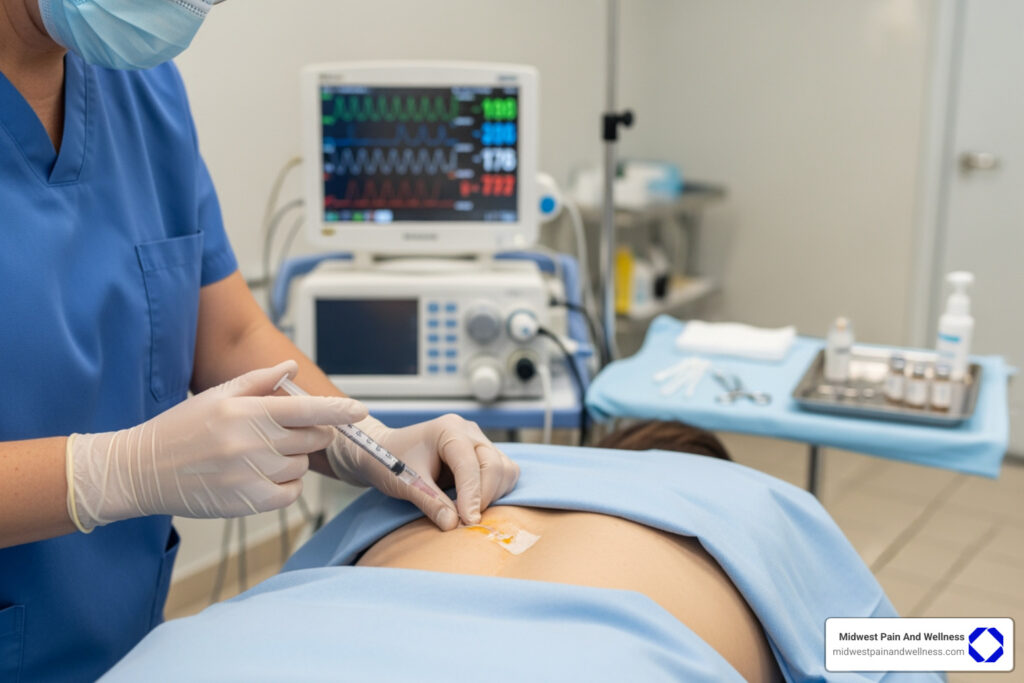
During the SCS trial, our pain specialists will carefully place temporary leads (thin wires) in the epidural space near your spinal cord, typically under local anesthetic. These leads are connected to an external generator that you wear outside your body. The trial period usually lasts between 3 to 7 days.
During the trial, you’ll use the external generator and track your pain levels and function. The goal is a 50% or greater improvement in pain. Significant relief during the trial is a strong indicator that a permanent system will be beneficial.
The beauty of the trial is its reversibility. If the SCS doesn’t provide the desired relief or if you find the sensations unpleasant, the temporary leads are easily removed with no resulting damage to your spinal cord or nerves. It’s a low-risk way to explore a potentially high-reward treatment.
This “try before you buy” approach is a best practice in pain management, ensuring that you and your medical team are confident in moving forward with a permanent solution. For more details on this and other procedures, visit our page on Procedures We Use for Treatment.
Permanent Implantation: The Final Step
If your SCS trial is successful and you experience significant pain relief, the next exciting step is the permanent implantation of the device. This procedure is typically performed as an outpatient surgery, meaning you can often go home the same day.
During the permanent implantation, our surgeon will place the leads in the epidural space, similar to the trial. These leads are then connected to a small, battery-powered device called an Implantable Pulse Generator (IPG). The IPG, which is similar in size to a pacemaker, is usually implanted discreetly under the skin, often in the buttocks or abdomen.
The procedure is performed under light general anesthesia or twilight anesthesia, ensuring you are comfortable and relaxed throughout. The incisions for the permanent leads and generator are typically small, often described as being about the length of a driver’s license.
SCS systems come with different battery options:
- Rechargeable IPGs: These batteries last longer and can be recharged by the patient at home using a special charging device. They are often preferred for widespread pain that requires higher energy settings.
- Non-rechargeable IPGs: These have a finite battery life and will eventually require a minor surgical procedure to replace the battery, but they don’t require regular charging by the patient.
Our team at Midwest Pain & Wellness in Chicago Ridge will discuss the best type of system for your lifestyle and pain management needs. We coordinate closely with spine specialists for the permanent implant to ensure a seamless experience. For more detailed information, please refer to our dedicated page on Spinal Cord Stimulator Therapy in Chicago Ridge.
Life After SCS: Recovery, Risks, and Realistic Outcomes
Getting a spinal cord stimulator for post laminectomy pain Chicago Ridge is a significant step toward reclaiming your life from chronic pain. After implantation, many patients enjoy activities they thought were impossible, but it’s important to have realistic expectations about recovery and long-term management.
With your new SCS, you’ll have a patient remote control, allowing you to manage your pain relief by adjusting the stimulation settings within parameters set by your doctor. This empowers you to fine-tune your therapy to suit different activities or times of day. While SCS aims to improve your quality of life, some lifestyle adjustments and ongoing management will be part of your routine.
What to Expect During Recovery
Recovery after permanent SCS implantation typically lasts two to six weeks. During this time, it’s crucial to follow our specific care instructions to ensure proper healing and device integration.
Here’s what you can generally expect:
- Activity restrictions: You’ll need to avoid certain movements like excessive bending, lifting heavy objects, or twisting your torso. This helps prevent the leads from migrating out of position.
- Incision care: Keeping your incision sites clean and dry is vital to prevent infection. We’ll provide detailed instructions on how to care for them.
- Follow-up appointments: Regular visits to our clinic in Chicago Ridge are essential. We’ll monitor your progress, check the device’s functionality, and make any necessary programming adjustments to optimize your pain relief.
- Programming adjustments: The initial programming might not be the final setting. Over time, we’ll work with you to fine-tune the stimulation to best manage your pain.
We believe in a holistic approach to recovery, often integrating physical therapy and rehabilitation to help you regain strength and mobility. Learn more about our approach to Rehabilitation Pain Management.
Understanding the Risks and Success Rate of a spinal cord stimulator for post laminectomy pain chicago ridge
While a spinal cord stimulator for post laminectomy pain Chicago Ridge offers significant benefits, like any medical procedure, it comes with potential risks. It’s important to be fully informed so you can make the best decision for your health.
Potential risks, though generally rare, can include:
- Infection: As with any implantable device, there’s a small risk of infection at the surgical site.
- Lead migration: The leads can sometimes move from their initial position, leading to reduced effectiveness or requiring repositioning.
- Hardware issues: Components of the system, though durable, can sometimes malfunction or break.
- Neurological complications: Serious neurological complications, such as paralysis, are extremely rare but a possibility.
Success Rate: The good news is that SCS has a strong track record. The long-term success rate of SCS ranges from 50 to 75%. Our goal for SCS is typically a 50 to 70% reduction in pain, which can dramatically improve your quality of life.
MRI Safety: Many modern SCS devices are “MRI-conditional,” meaning they can be safely used during an MRI under specific conditions. However, not all devices are compatible, so it’s crucial to inform your doctor and MRI technicians about your SCS before any imaging procedure. If an MRI is important for your medical care, talk to us about what device would be best for you.
Security Checkpoints: Your SCS device contains metal components, which may trigger alarms at airport security or anti-theft systems. We recommend carrying your Implant Device ID card and informing security personnel about your device.
To put SCS in perspective with other treatments we offer, here’s a brief comparison:
| Treatment Option | Mechanism | Pain Relief Target | Reversibility | Opioid-Free Potential |
|---|---|---|---|---|
| Spinal Cord Stimulator | Electrical impulses block pain signals | Chronic neuropathic pain (50-70% reduction goal) | Yes | High |
| Medication Management | Systemic relief (oral medications) | Varies by medication (e.g., NSAIDs, muscle relaxants) | Yes | Varies (can be opioid-free) |
| Facet Joint Injections | Anti-inflammatory medication directly into joint | Localized joint pain | Yes | High |
| Epidural Nerve Blocks | Steroids/anesthetics near compressed nerves | Radicular pain | Yes | High |
For comprehensive information regarding SCS therapy, you can visit our page on Spinal Cord Stimulator Therapy in Chicago Ridge.
Frequently Asked Questions about SCS
We understand you likely have many questions about living with a spinal cord stimulator for post laminectomy pain Chicago Ridge. Here, we address some of the most common inquiries we receive at Midwest Pain & Wellness.
How does a spinal cord stimulator for post laminectomy pain chicago ridge compare to other treatments available at Midwest Pain & Wellness?
At Midwest Pain & Wellness, we offer a wide array of pain management solutions, and SCS is a specialized option for specific types of chronic pain, particularly neuropathic pain that hasn’t responded to other methods.
- SCS vs. medication management: Unlike oral medications that act systemically throughout your body and can have widespread side effects (like drowsiness or digestive issues), SCS provides targeted relief. It directly disrupts pain signals in your spinal cord, offering a more focused approach to pain control and significantly reducing the need for medications, including opioids.
- SCS vs. other interventional procedures: While injections like epidural nerve blocks or facet joint injections target inflammation or specific nerve irritation, SCS offers continuous neuromodulation. It’s a longer-term solution for chronic nerve pain where other interventions might provide only temporary relief.
- Reversibility: A key advantage of SCS over many other treatments is its reversibility. If it doesn’t meet your expectations, the device can be surgically removed without permanent changes to your anatomy.
Our goal is always to find the most effective and least invasive path to pain relief. We prioritize Non-Surgical Pain Relief options whenever possible.
Can I live a normal life with a spinal cord stimulator?
Yes, for most patients, a spinal cord stimulator for post laminectomy pain Chicago Ridge allows them to return to a more normal and active life. With programmable settings and a handheld remote control, you can adjust the stimulation to suit various activities or situations.
- Driving: You can drive with an SCS, but we recommend turning the device off first. This prevents any potential distraction from changes in electrical impulses or interference with your vehicle’s electronics.
- Showering: After the initial recovery period (typically 72 hours post-implantation), you can shower normally. During the trial period, showering is not permitted.
- Travel: You can travel with your SCS. It’s advisable to carry your Implant Device ID card, especially when going through security checkpoints, as the device may trigger metal detectors.
- Sports and activities: Many patients return to hobbies, sports, and other physical activities they had to give up due to pain. We’ll work with you to gradually reintroduce activities and ensure your device settings support your lifestyle.
- Using the remote control: You’ll be taught how to use your remote control to adjust stimulation settings (frequency, pulse width, amplitude) to maximize your pain relief throughout the day.
- Programmable settings: Your SCS can be programmed with different settings for various activities, allowing for highly personalized pain management.
Is the SCS procedure painful?
The thought of any procedure can be daunting, but we assure you that measures are taken to minimize discomfort during the SCS process.
- Trial procedure: The insertion of temporary leads during the trial is typically performed using a local anesthetic. You might feel some pressure, but significant pain is usually avoided. Temporary discomfort might be experienced over the final implant site.
- Permanent implant: The surgery for permanent implantation is usually performed under light general anesthesia or twilight anesthesia. This means you will be asleep or heavily sedated and comfortable throughout the procedure.
- Post-operative discomfort: It’s normal to experience some soreness or discomfort at the incision sites after the permanent implant. We will prescribe appropriate pain management to keep you comfortable during your two to six-week recovery period.
- Pain management during recovery: Following our post-operative instructions, including medication and activity restrictions, is key to a smooth and comfortable recovery.
Finding Your Path to Relief in Chicago Ridge
Living with chronic pain after a laminectomy can be disheartening, but it doesn’t have to be your permanent reality. At Midwest Pain & Wellness in Chicago Ridge, we are dedicated to helping you find lasting relief and regain control of your life.
Our double board-certified doctors specialize in comprehensive, opioid-free pain management. Using a multi-modal, interventional approach, we collaborate with other practitioners to create care plans customized to your unique needs. We believe in treating the whole person, not just the pain. You can learn more about our commitment and team expertise, including About Dr. Donkoh.
If you’re struggling with chronic pain after a laminectomy, a comprehensive evaluation can determine if a spinal cord stimulator for post laminectomy pain Chicago Ridge is your next step toward a better quality of life. We are here to guide you through every step of the process, from initial consultation and trial to permanent implantation and long-term support.
Don’t let post-laminectomy pain define your days. Reach out to us today to explore how we can help you turn the page on chronic pain and refind a more active, fulfilling life.
Learn more about Post Laminectomy Pain Treatment in Chicago Ridge