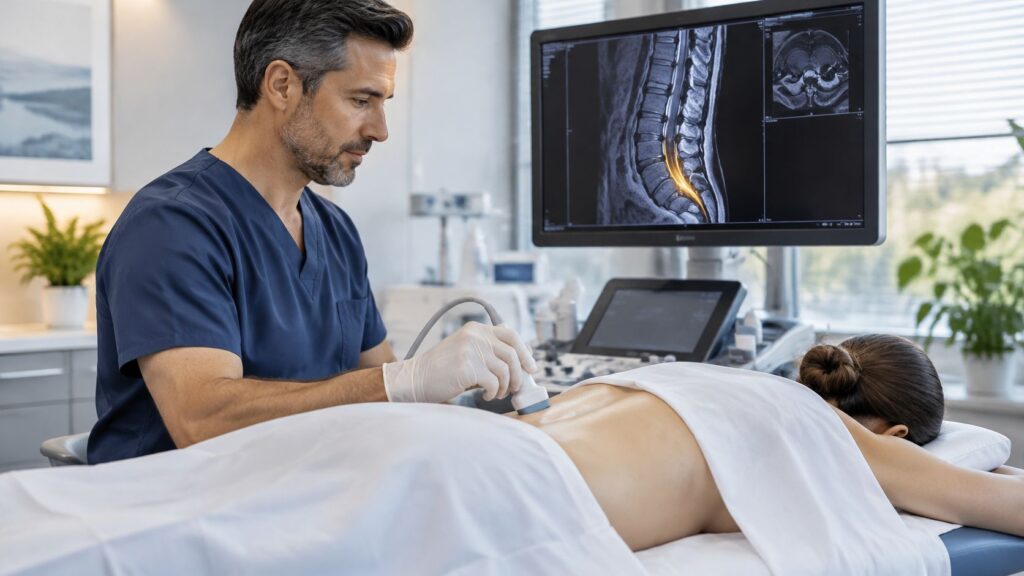
When you’re staring down the pain of spinal stenosis, it can feel like surgery is your only option. But it’s not. In fact, effective spinal stenosis treatment without surgery is not only possible—it’s highly successful for many people.
For our patients in Illinois communities from Oak Lawn to Orland Park, the path to relief starts here. It’s a journey built on smart, conservative care, precisely targeted injections, and advanced, minimally invasive procedures that can restore your mobility without the risks and long recovery of major surgery.
Finding Relief From Spinal Stenosis Without Surgery
Living with the constant pain, numbness, and weakness of spinal stenosis can turn your world upside down. Simple things you once took for granted, like a walk through a local park in Palos Heights or a quick grocery run in Evergreen Park, can suddenly feel like monumental tasks.
If you’ve been told surgery is the only way out, it’s important to know there is another path. At Midwest Pain & Wellness, Dr. Yaw Donkoh’s entire philosophy is built around creating personalized, patient-focused plans that get to the root of your pain, not just mask it. This modern, evidence-based approach is helping people across Illinois—including in Palos Hills, Worth, and Bridgeview—get back to their lives with lasting results.
A Modern Path to Pain Relief
The journey to effective relief is a step-by-step process. It's not about jumping straight to the most aggressive option, but about finding the right combination of solutions that work for you, building on each success.
This modern strategy focuses on several key areas working together:
- Conservative Care: This is the strong foundation of any treatment plan. We focus on physical therapy and smart activity modification to help create more space in the spine and build support.
- Targeted Injections: These are advanced, image-guided procedures that deliver powerful anti-inflammatory medication directly to the source of your pain with incredible precision.
- Minimally Invasive Procedures: We also offer groundbreaking options like the MILD® Procedure that address the physical cause of nerve compression with just a tiny incision and minimal downtime.
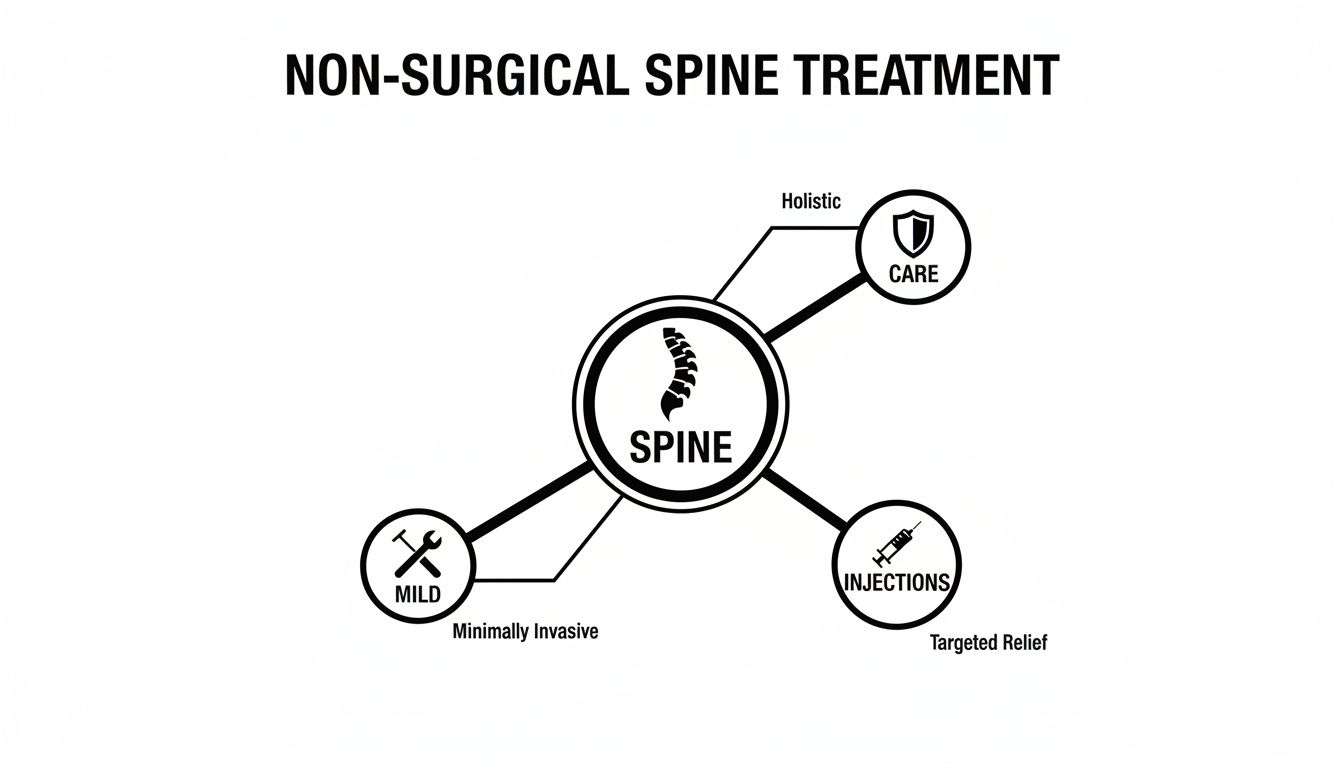
As you can see, a comprehensive plan often involves more than one strategy. By combining therapies, we can target your pain from multiple angles for a better, more durable outcome.
To make these options clearer, here’s a quick overview of how we categorize non-surgical treatments.
Your Non-Surgical Treatment Options at a Glance
| Treatment Category | What It Involves | Primary Goal |
|---|---|---|
| Conservative Care | Physical therapy, activity modification, anti-inflammatory medications. | To reduce inflammation, build core strength, and improve posture to create more space for nerves. |
| Image-Guided Injections | Epidural steroid injections, medial branch blocks. | To deliver targeted anti-inflammatory medicine directly to the compressed nerves and painful joints. |
| Minimally Invasive Procedures | MILD® Procedure, Vertiflex Superion implant. | To physically decompress nerves by removing ligament overgrowth or creating space, without major surgery. |
This table gives you a framework, but your actual plan will be customized to your specific diagnosis and goals.
Evidence Supports a Non-Surgical First Approach
Choosing to start with non-operative care isn’t just a preference—it’s a decision strongly backed by clinical evidence. This should give our patients in Hickory Hills, Alsip, and Burbank, Illinois, confidence that they are on a medically sound path.
A landmark randomized clinical trial published in 2021 followed 259 patients through three different non-surgical treatments. Within just two months, every single group showed significant gains in both self-reported pain and function.
What’s really telling is that the group combining manual therapy with individualized exercise showed the best results. They had a 20% higher rate of meaningful improvement in both symptoms and physical ability compared to the others.
This is powerful proof that a structured, non-surgical plan can produce outstanding outcomes. You can learn more about these powerful non-surgical findings and their implications for patients.
What Spinal Stenosis Actually Feels Like
Before we talk about non-surgical treatments, let’s get real about what living with spinal stenosis feels like. Medical definitions can be cold and impersonal, but the day-to-day reality of this condition is anything but. Understanding why a spinal stenosis treatment without surgery can be so effective starts with understanding the problem from your perspective.
Think of your spinal canal—the tunnel that protects your spinal cord and all the nerves branching from it—as a busy highway. For our neighbors in Illinois towns from Oak Lawn to Palos Hills, this highway is vital, carrying messages from the brain to every part of the body. Spinal stenosis is like a slow, creeping lane closure on that highway.
Over time, things like thickened ligaments, arthritic bone spurs, or bulging discs start to narrow that highway. This creates a nerve "traffic jam," pinching and crowding the nerves that need to pass through. The result isn't just a dull ache; it's a frustrating set of symptoms that can steadily wear away at your quality of life.
The Hallmark Sign of Spinal Stenosis
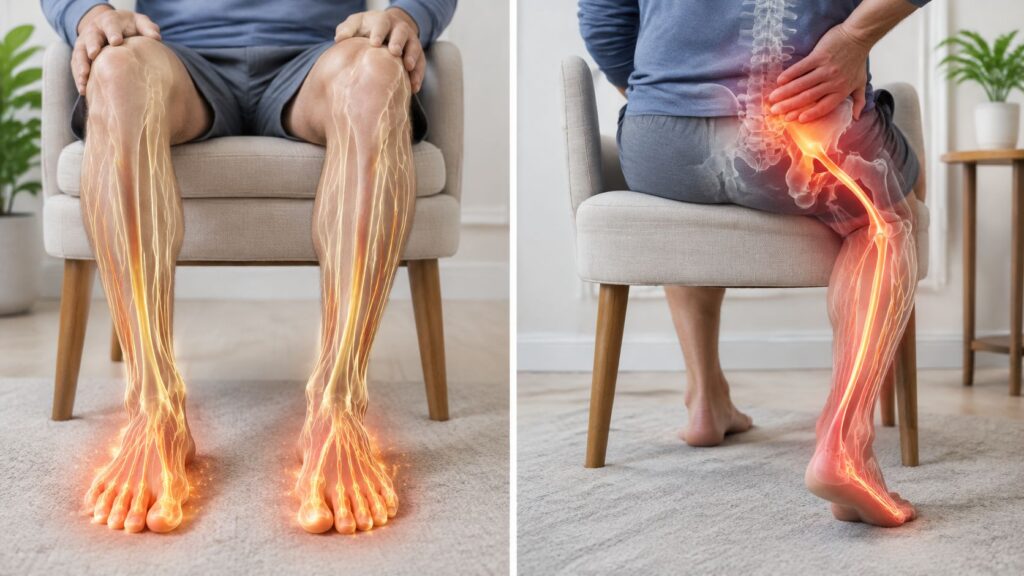
The most classic symptom of lumbar spinal stenosis has a name: neurogenic claudication. This isn't just random pain. It’s a predictable pattern that many people in Palos Heights and Worth, IL, know all too well. It’s that deep ache, cramping, heaviness, or weakness that starts in your lower back, buttocks, or legs after you've been standing or walking for only a short while.
You might feel fine starting a walk through a park in Burbank, Illinois, but a few hundred feet in, your legs start to feel heavy and painful, forcing you to stop and sit down. This can turn a simple trip to the grocery store in Alsip into a strategic mission, where you're constantly scanning for the next bench or ledge to get a moment of relief.
This pattern—pain that gets worse with standing and walking but feels better when you sit or bend forward—is the defining feature of lumbar spinal stenosis. This is key because it shows us the problem is mechanical, which is exactly why mechanical, non-surgical solutions can work so well.
Finding Relief in the Shopping Cart Aisle
Ever notice how you get almost instant relief when you lean forward over a shopping cart? That's not a coincidence. It's such a common experience that doctors even call it the "shopping cart sign," and it’s a huge diagnostic clue.
Leaning forward flexes your spine, which temporarily opens up the spinal canal just enough to give those pinched nerves a little breathing room. This simple act explains why sitting down helps, too—it’s the physical change in your posture that eases the nerve compression. This very observation is the foundation for how advanced non-surgical treatments are designed. They aim to create that same space, but in a more lasting way. Many of the conditions we treat at Midwest Pain & Wellness share these kinds of mechanical and nerve-related symptoms.
Recognizing these real-world signs—the leg pain that cuts a walk short, the numbness that creeps in while standing in line, the sweet relief of leaning over a counter—is the first step. It shifts your understanding from a textbook definition to your lived experience. This "why" behind your symptoms is precisely what guides our approach to spinal stenosis treatment without surgery, allowing us to target the root cause and help you get your life back in motion.
Building Your Foundation with Conservative Care
When you first get a spinal stenosis diagnosis, it's easy for your mind to jump to the worst-case scenario: surgery. But the truth is, the most effective path to relief doesn’t start in an operating room. It begins by building a strong, solid foundation with conservative care—the proven first step in managing stenosis pain.
For our patients here in Illinois communities like Alsip, Burbank, and Evergreen Park, this foundational approach is often all they need. It’s a smart, targeted plan that combines specialized physical therapy, simple activity changes, and the right medications to address the root of the problem. Think of it as creating a natural support system for your spine, one that eases pressure on those crowded nerves and helps you get back to your life.

Specialized Physical Therapy to Create Space
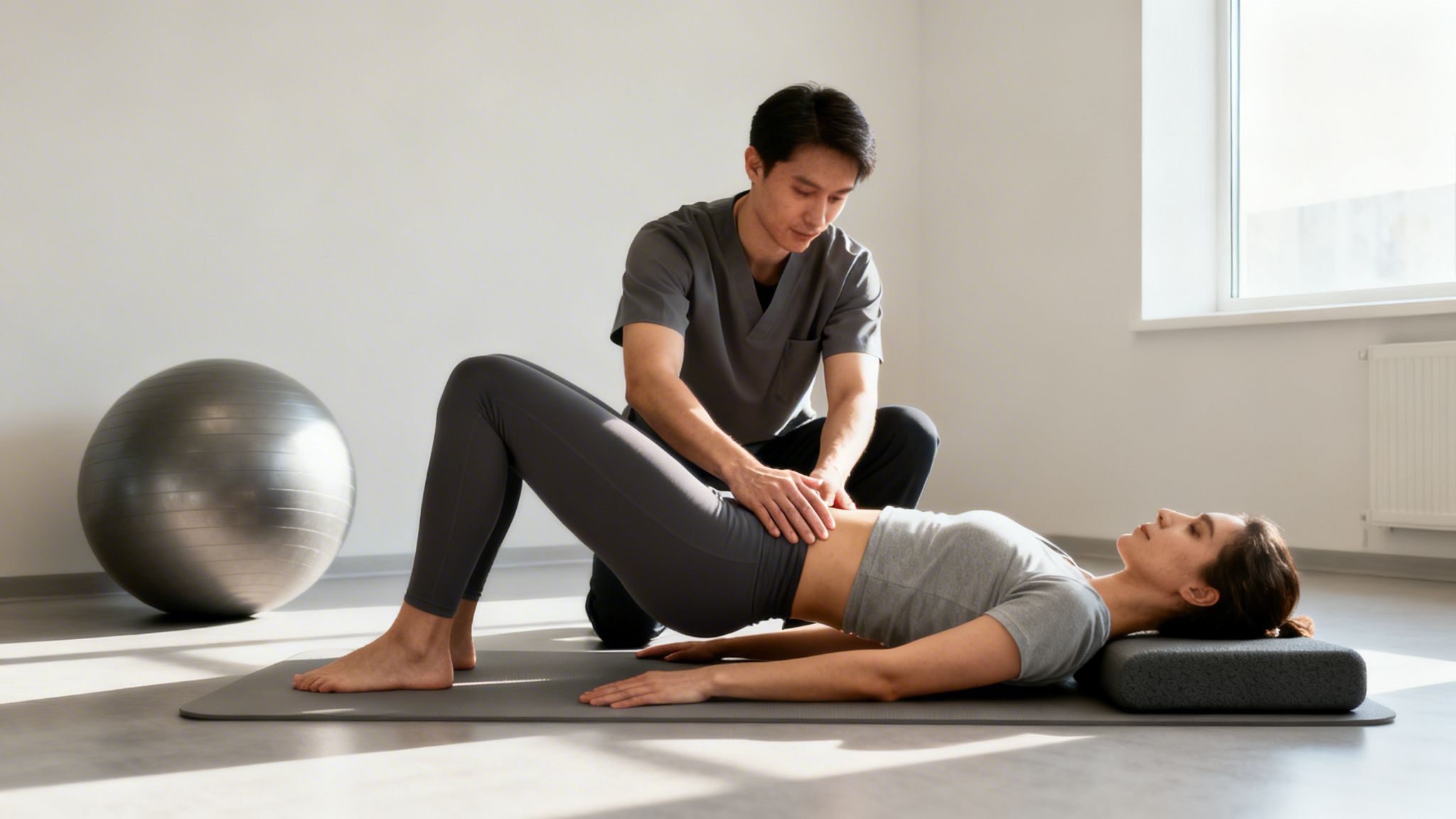
Physical therapy for spinal stenosis isn't just a set of generic exercises. It’s a specific program with one main goal: creating more room for the nerves in your spinal canal. A skilled physical therapist, working closely with a pain specialist like Dr. Donkoh, will guide you through movements designed to gently decompress the spine.
Much of the focus is on flexion-based exercises—movements that involve bending forward slightly. This is designed to give you the same kind of relief you might feel when leaning over a shopping cart, but in a way that creates lasting change.
These programs typically include:
- Core Strengthening: Building up your abdominal and back muscles creates a "natural corset." This internal brace helps support your spine and takes a significant amount of pressure off your vertebrae and discs.
- Targeted Stretching: Gently stretching your hamstrings and hip flexors can dramatically improve your posture. This helps reduce the forward pelvic tilt that so often makes lumbar stenosis symptoms worse.
- Positional Relief Techniques: You’ll learn specific, simple movements—like pelvic tilts or bringing your knees to your chest—that you can do anytime during the day to get instant relief from nerve pressure.
Smart Activity Modifications for Daily Life
A huge part of conservative care is learning how to work with your body instead of fighting against it. This isn't about giving up the things you love; it’s about learning how to tweak your activities to prevent pain. This is especially important for our patients in active communities like Orland Park and Palos Heights, Illinois, who want to keep their independent lifestyles.
Small adjustments can have a massive impact. For example, if walking through the grocery store in Oak Lawn is painful, we might suggest using a stationary bike for cardio. Biking naturally puts you in a forward-leaning position, which helps keep the spinal canal open and is much better tolerated than upright walking for many people with stenosis.
Other simple yet powerful changes include:
- Pacing Yourself: Instead of one long stretch of standing or walking, take short sitting breaks. This simple strategy can stop pain before it has a chance to build up.
- Using Assistive Devices: A cane or a walker does more than just help with balance. It encourages that slight forward lean that provides the same kind of relief as the well-known "shopping cart sign."
The Role of Anti-Inflammatory Medications
When nerves are pinched, they get inflamed. That inflammation is what screams pain signals to your brain. Breaking that cycle is a critical step that makes other treatments, especially physical therapy, far more effective.
Over-the-counter nonsteroidal anti-inflammatory drugs (NSAIDs) can be very helpful for getting a flare-up under control. We use them as a strategic tool, not a permanent fix. The goal is simply to reduce the inflammation enough so that you can participate comfortably in your physical therapy—the work that will build the strength and stability for true, lasting relief.
The power of this foundational approach isn’t just talk; it's backed by serious research. This is a legitimate long-term strategy, not just a way to buy time.
One robust study followed patients for more than 7 years and found that a non-surgical plan focused on physical therapy and NSAIDs helped 46.4% of patients achieve and maintain meaningful, long-term relief. This shows that for nearly half of all people diagnosed, conservative care is all they ever need. You can see the details of this long-term patient outcome study here. For many of our patients in Bridgeview and Hickory Hills, Illinois, this foundation is enough to manage their spinal stenosis and get them back to living well.
Pinpointing Pain with Advanced Image-Guided Injections
When conservative care builds a good foundation but doesn't get you all the way to relief, the next step is often a more direct one. For our patients in Illinois communities from Bridgeview to Evergreen Park, advanced image-guided injections are a powerful, precise way to manage pain and get back to living. These procedures are a key part of spinal stenosis treatment without surgery, providing the kind of relief that makes physical therapy and other efforts truly effective.
At Midwest Pain & Wellness, Dr. Donkoh uses these procedures not just to mask pain, but to strategically break the cycle of inflammation that’s holding you back. These are safe, outpatient procedures that let you go home the same day, often with a significant reduction in your pain.
Epidural Steroid Injections: Calming Inflamed Nerves
Think of an Epidural Steroid Injection (ESI) as a way to deliver potent, anti-inflammatory medicine directly to the source of the problem. When spinal stenosis pinches nerves, they become intensely inflamed and send out constant pain signals. An ESI places that medication right into the epidural space—the area surrounding those irritated nerves.
This is a precision procedure. Dr. Donkoh uses fluoroscopy, a type of live X-ray, to guide the needle with pinpoint accuracy. This ensures the medication goes exactly where it’s needed, maximizing its effect. For someone in Worth or Alsip, Illinois, this can mean a dramatic drop in the leg pain, numbness, and sciatica that disrupt daily life, often within days.
Creating a Window for Recovery
The main goal of an ESI is to create a crucial window of relief. By calming that severe inflammation, the injection interrupts the pain-inflammation-pain cycle. This reduction in pain is what allows you to fully engage in your physical therapy, building the core strength and flexibility needed for long-term stability.
It’s this partnership between injections and therapy that produces the best results. The injection provides the immediate relief needed to do the work, and the therapy builds the foundation to make that relief last.
Research confirms both the short-term and long-term value of this approach. A 2020 study tracked patients for 5-7 years after transforaminal epidural steroid injections for spinal stenosis. It found that 15% achieved complete pain resolution, while 50% experienced significant relief lasting 2-6 months per injection.
These results show how targeted injections can improve function and provide lasting success without major complications. You can read more about how this milder therapy can lead to lasting results for lumbar spinal stenosis.
Radiofrequency Ablation: Silencing Pain Signals
For pain that comes from the small, arthritic facet joints in the spine—a frequent contributor to stenosis symptoms—we have another advanced option. Radiofrequency Ablation (RFA) offers a way to essentially “turn off” the specific pain signals coming from those joints.
The process involves two distinct steps:
- Diagnostic Block: First, we perform a diagnostic medial branch block. Dr. Donkoh injects a local anesthetic near the tiny nerves that supply the facet joints. If your pain vanishes, we’ve confirmed those joints are the source.
- Ablation Procedure: Once confirmed, we perform the RFA procedure. A specialized needle delivers radiofrequency waves to gently heat the nerve, creating a lesion that interrupts its ability to send pain signals to your brain.
For a patient in Burbank or Hickory Hills, Illinois, dealing with chronic back pain from facet arthritis, RFA can provide relief that lasts for 6 to 18 months. This gives you an extended period of comfort to focus on strengthening your back and improving your overall spinal health, making it an invaluable tool for durable spinal stenosis treatment without surgery.
Innovative Relief with MILD and Vertiflex Procedures
For many people in Illinois, the most impactful advancements in spinal stenosis treatment without surgery fall into a special category—more definitive than injections, but far less involved than a major operation. These are FDA-approved, minimally invasive procedures designed to fix the physical cause of nerve compression.
At Midwest Pain & Wellness, we specialize in two of the most effective options available today: the MILD® Procedure and the Vertiflex™ Superion™ implant.
These aren't just temporary fixes. They are outpatient procedures that create a path to lasting mobility, with a recovery often measured in days, not months. For our patients in Hickory Hills, Worth, and surrounding Illinois communities, this means a faster return to the activities that make life enjoyable.
The MILD Procedure: Debulking the Ligament
Often, the root cause of lumbar spinal stenosis is an overgrowth of a specific ligament in your spine known as the ligamentum flavum. As this ligament gets thicker over time, it begins to bulge into the spinal canal, crowding and pinching the delicate nerves inside. The MILD® (Minimally Invasive Lumbar Decompression) Procedure is designed to correct this problem directly.
Think of it like using a tiny, specialized sculpting tool to carefully remove the excess, overgrown ligament tissue. This isn't major surgery; it's a precise “debulking” that removes the source of nerve compression through an incision the size of a baby aspirin. By clearing out this extra tissue, we can restore space in the spinal canal, giving your nerves the room they need to function without pain.
The MILD Procedure is specifically for patients whose stenosis is caused by a thickened ligamentum flavum. An MRI can clearly show if this is the cause of your symptoms, making it easy to identify ideal candidates for this highly effective treatment.
Vertiflex Superion: The Tiny Car Jack for Your Spine
The Vertiflex™ Superion™ Indirect Decompression System offers another brilliant solution, but it works in a completely different way. It’s perfect for patients who experience that classic "shopping cart sign"—pain and numbness while standing or walking that vanish the moment they sit or lean forward.
Imagine a tiny car jack. The Vertiflex implant acts on a similar principle. It’s a small, H-shaped device that Dr. Donkoh places between two vertebrae in your lower back through a very small tube. When you stand up, the implant gently holds those vertebrae apart, preventing them from collapsing onto each other and pinching the nerves.
This simple, mechanical fix preserves the space in your spinal canal, giving your nerves more room precisely when you need it most—while you are upright and active. For a resident in Palos Hills or Palos Heights, Illinois, this can mean the difference between a painful, short walk and a comfortable stroll through the neighborhood.
Who Is a Good Candidate for These Procedures?
While both MILD and Vertiflex are excellent options for treating spinal stenosis without surgery, they are designed for slightly different situations. The ideal candidates are often individuals in communities like Burbank, Alsip, and Orland Park, Illinois, who have moderate lumbar spinal stenosis and fit a specific profile.
- You experience significant relief when you sit or bend forward. This is the most important sign. It demonstrates that creating space in your spine is very likely to relieve your symptoms.
- Conservative care provided some, but not enough, relief. If physical therapy, medications, and injections helped but didn't provide lasting results, these procedures are the logical next step.
- You want to avoid or are not a candidate for major surgery. Both MILD and Vertiflex are outpatient procedures with low complication rates and a quick recovery, preserving your natural spinal anatomy.
At Midwest Pain & Wellness, we offer a full spectrum of advanced, evidence-based options. You can discover more about the procedures we use for treatment and see how they fit into a comprehensive, opioid-free care plan. Dr. Donkoh will perform a thorough evaluation, including a detailed review of your imaging, to determine which—if any—of these advanced procedures is the right choice for restoring your mobility and quality of life.
Your Patient Journey at Midwest Pain & Wellness
Taking the first step toward treatment is a big deal. We know that feeling of uncertainty. That’s why we’ve designed our entire process to be clear, supportive, and focused on one thing: making sure you feel heard and confident in your path forward.
From the moment you connect with us, you’re not just a case file. You’re our partner in your own recovery, whether you’re coming from Worth, Bridgeview, Hickory Hills, or right here in Illinois.
Your Comprehensive Consultation
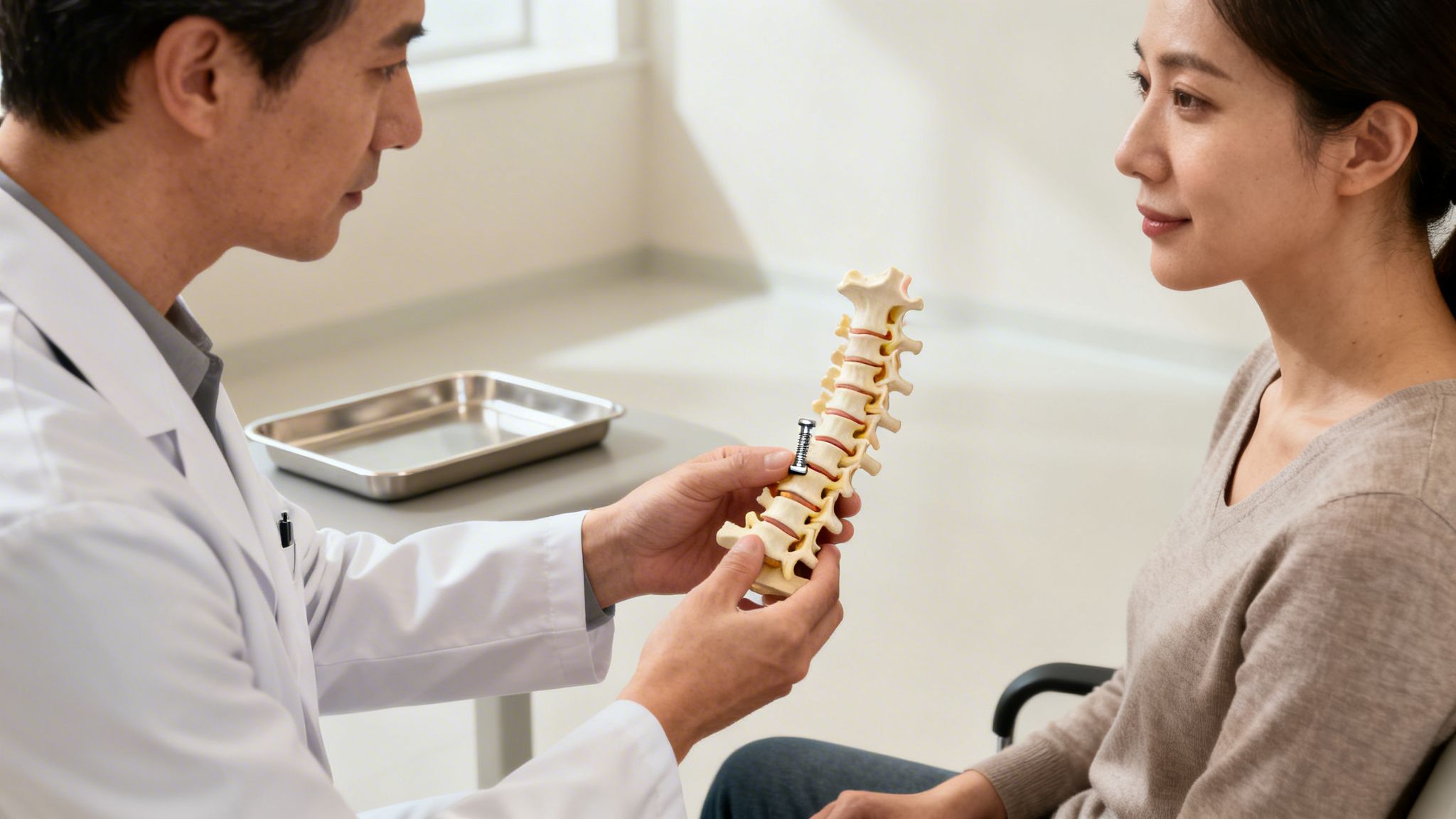
Your first visit with Dr. Yaw Donkoh is a real conversation, not a rushed, five-minute check-in. This is our time to listen to your story—to understand your symptoms, how they’re affecting your life in places like Burbank or Evergreen Park, Illinois, and what getting better truly means to you.
This initial meeting is thorough. Here’s what it involves:
- A Detailed History: We’ll talk about your pain, what you’ve tried before, and your overall health.
- A Physical Examination: Dr. Donkoh will assess your movement, strength, and reflexes to pinpoint how the stenosis is affecting your nerves.
- A Review of Imaging: We will personally review any MRIs or X-rays you have. This isn’t about just reading a report; it’s about seeing the problem for ourselves to get the full picture.
This complete evaluation gives us the information we need to build a plan that actually works.
Building Your Personalized Treatment Plan
After your evaluation, we’ll work together to create your plan for spinal stenosis treatment without surgery. We believe in a multimodal, opioid-sparing approach. This just means we combine different strategies to attack your pain from multiple angles, without relying on addictive medications.
Your treatment plan is a living document, not a rigid prescription. We start with the least invasive options that will be most effective for you. Then, we adjust based on your progress and feedback, always keeping your goals front and center.
We’ll walk you through every recommendation, from foundational care like physical therapy to more advanced procedures, making sure you understand the "why" behind each step. This partnership is what builds confidence and leads to the best results. Ready to begin? You can easily schedule your initial consultation with our team and start your journey.
Coordinated Care and Support
Lasting relief doesn't happen in a silo. That's why we coordinate directly with your primary care provider and physical therapist in Oak Lawn, Orland Park, or Palos Hills, Illinois, ensuring everyone on your team is on the same page.
We also know that pain can stem from different situations. Our team has deep experience helping patients with workers’ compensation and personal injury cases. We handle the paperwork and communication so you can focus on healing, not on navigating a complex system. We’re here to support you at every turn.
Common Questions About Non-Surgical Treatments
It’s completely normal to have questions when you're exploring treatments for spinal stenosis without surgery. You want to make the right choice for your health, especially when pain is getting in the way of your life here in Illinois, whether you're in Oak Lawn or Orland Park.
Here are the answers to some of the most common questions we hear from our patients.
How Long Does Relief Last?
This is a great question, and the answer really depends on the treatment we choose together.
Think of foundational care like physical therapy and smart lifestyle changes as your long-term strategy for stability and pain management. For flare-ups, image-guided treatments like epidural steroid injections can provide powerful relief for several months and can be safely repeated when needed.
Minimally invasive options like the MILD® and Vertiflex™ procedures are different—they are designed from the ground up for durable, lasting relief that can work for years. Our goal at Midwest Pain & Wellness is always to find the most sustainable solution that helps you stay active, whether you're in Palos Hills, Palos Heights, or anywhere you call home in Illinois.
Am I a Good Candidate for the MILD or Vertiflex Procedure?
The best candidates for these advanced procedures usually have lumbar spinal stenosis and experience that classic "shopping cart sign"—where you feel relief when you sit down or lean forward. This is a huge clue that creating just a little more space in the spine could make a big difference.
A full evaluation is essential. Dr. Donkoh will perform a comprehensive assessment, including a careful review of your MRI scans, to determine if your specific anatomy and symptoms make you a good candidate for one of these powerful procedures.
Are There Red Flags That Mean I Might Need Surgery?
Yes, and it is crucial for everyone in our Illinois communities—from Worth and Bridgeview to Hickory Hills—to know these warning signs. Certain "red flag" symptoms are a signal that you need an immediate surgical evaluation.
Seek emergency medical care if you experience:
- Progressive or severe weakness in your legs.
- Loss of bladder or bowel control (incontinence).
- Numbness in the "saddle" area (the groin and inner thighs).
These symptoms can point to a serious neurological issue. We maintain strong relationships with the top surgeons in the Chicago Ridge, Illinois area and will personally coordinate a fast referral if surgery ever becomes the necessary path for you.
Does Insurance Cover These Treatments?
In most cases, yes. The vast majority of insurance plans, including Medicare, cover conservative care and established treatments like image-guided injections for spinal stenosis.
And because of their proven safety and effectiveness, innovative procedures like MILD® and Vertiflex™ are also widely covered. Our team at Midwest Pain & Wellness is here to help our patients from Alsip, Burbank, and Evergreen Park, Illinois, navigate this. We will verify your benefits and make sure you have clear, upfront financial information before we begin any treatment plan.
Don't let spinal stenosis dictate your life. At Midwest Pain & Wellness, Dr. Donkoh and our dedicated team are ready to create a personalized, effective plan to help you find relief and get back to what you love. Learn more about our comprehensive approach by visiting us at https://midwestpainandwellness.com.