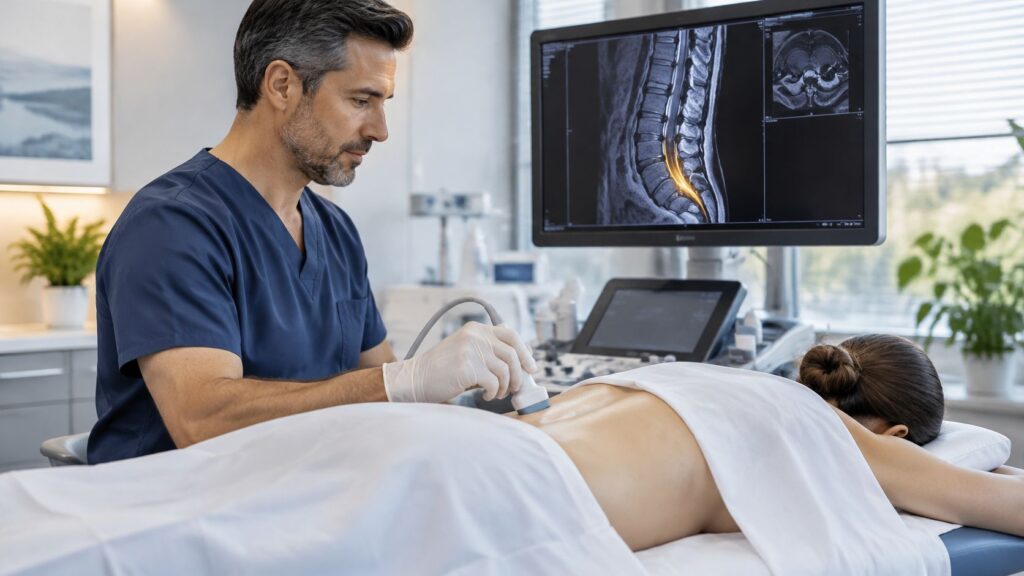
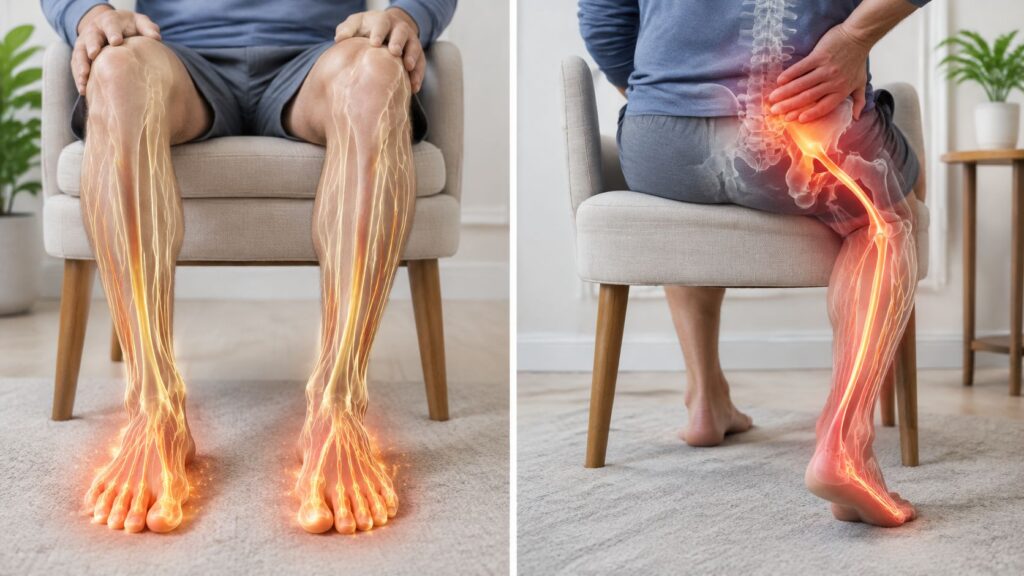
That sharp pain that starts in the low back or buttock and shoots down the leg can change your whole day fast. Sitting becomes hard. Sleeping turns into constant repositioning. Even getting in and out of the car can feel like a negotiation with your own body.
Individuals searching how to get sciatica relief want two things. They want something that helps now, and they want to know whether this is a problem they can manage at home or one that needs a specialist. That distinction matters, especially if you're in Illinois and trying to decide whether to keep stretching through it or get a proper workup.
What Is Sciatica and Why Is It Happening
Sciatica describes a pattern of symptoms, not a final diagnosis. The pain usually travels from the lower back or buttock into the leg because a lumbar nerve root is irritated or compressed. That irritation might come from a herniated disc, spinal stenosis, or another structural problem. As noted in this consumer guide on sciatica as a symptom rather than a diagnosis, the cause determines what treatment makes sense.
That's the first mindset shift I want patients to make. Don't stop at “I have sciatica.” Ask, “What is causing these sciatica symptoms?”
What sciatica usually feels like
Sciatica doesn't present the same way in every person. Some people feel a deep ache through the buttock and thigh. Others get burning, tingling, numbness, or electrical pain that runs below the knee.
A few patterns raise suspicion for nerve-root involvement:
- Pain that travels into the buttock, thigh, calf, or foot
- Numbness or pins and needles in part of the leg
- Pain with sitting that eases when standing or walking, or the reverse
- Weakness when lifting the foot, pushing off, or climbing stairs
Why the cause matters
A person in Oak Lawn might have sciatica from a fresh disc herniation after lifting. A person in Orland Park might have leg pain from narrowing around the nerves that built up over time. The symptoms can sound similar, but the treatment path may differ a lot.
Generic advice becomes a problem when it delays the right diagnosis. Stretching may help one patient and irritate another. Rest may calm things briefly but also stiffen the spine and prolong recovery. In clinic, the goal isn't just to reduce pain. It's to identify the pain generator and match treatment to it.
Sciatica that keeps coming back, spreads farther down the leg, or starts bringing numbness or weakness with it deserves a more precise evaluation.
If you want a broader overview of spine, nerve, and pain conditions commonly evaluated in this setting, review the conditions we treat at Midwest Pain & Wellness.
Your First 72 Hours of Sciatica Relief
You wake up, swing your legs out of bed, and the pain shoots from the low back into the buttock or down the leg. That first day matters. The goal is not to “fix” sciatica in 24 hours. The goal is to calm the flare, protect the irritated nerve, and avoid the common mistakes that turn a short episode into a longer one.
Early care works best when it is controlled and boring. Sudden heavy stretching, marathon bed rest, and trying five internet remedies in one afternoon often make patients feel worse, not better.
Yale Medicine recommends a practical home approach that includes staying active, using ice packs during the first 2 days, then switching to a heating pad after 2 to 3 days as tolerated, in its overview of sciatica symptoms and relief strategies. That advice matches what I tell patients in clinic. Quiet the irritation first. Then build motion back in.
What to do right away
Start with a short, repeatable plan for the first 48 to 72 hours.
Stop the motion that triggered the flare
If symptoms started after lifting, twisting, yard work, or a long drive, stop repeating that exact stress for now. This is activity modification, not bed rest.Use ice early
Cold can help during the first phase, especially when the pain feels hot, sharp, or newly inflamed around the low back or buttock.Walk in small doses
A few minutes at a time is enough. Short walks spread through the day are often better tolerated than one long walk.Change positions before pain builds
If sitting increases leg pain, stand up sooner. If standing in one place ramps up symptoms, sit briefly or lie down with support. Frequent position changes usually help more than trying to find one perfect posture.Watch the pattern of pain
Pain that begins to pull out of the foot or calf and settle closer to the buttock is often a better sign than pain that keeps traveling farther down the leg.
How to use ice and heat correctly
Harvard Health advises using ice for no more than 15 to 20 minutes at a time, with at least a 15- to 20-minute break between sessions, then trying heat later as symptoms settle, in its article on getting relief from sciatica.
Use that guidance in a simple way:
- First 48 hours: ice in short sessions, with a cloth barrier between the pack and your skin
- After that: try heat if stiffness and muscle guarding become the bigger problem
- Stop either one: if it makes the leg pain spread, intensify, or trigger new numbness
Practical rule: If home treatment is driving pain farther down the leg instead of pulling it back, change course.
What to avoid in the acute phase
The first mistake is staying in bed too long. A day of relative rest may be reasonable for some patients, but prolonged inactivity usually stiffens the back, weakens support muscles, and makes it harder to settle the nerve.
The second mistake is forcing stretches through sharp, electrical, or radiating pain. In practice, that is one of the fastest ways to irritate an already sensitive nerve root.
The third mistake is assuming every case of leg pain should be handled the same way. A fresh disc herniation, spinal stenosis, and piriformis-related pain can sound similar at home. They do not always respond to the same plan.
Where over-the-counter medication fits
For some patients, a non-opioid over-the-counter anti-inflammatory or pain reliever can reduce symptoms enough to make walking and sleep possible. Use these only as directed on the label and only if they are appropriate for your medical history. Kidney disease, stomach ulcers, blood thinner use, uncontrolled high blood pressure, and some heart conditions all change that decision.
This is also the point where judgment matters. Home care is reasonable for a mild flare that is improving day by day. It is not the right plan for rapidly worsening pain, progressive weakness, new foot drop, numbness in the groin, or any loss of bowel or bladder control. Those symptoms need urgent medical evaluation.
If the first 72 hours pass and the pain is still intense, keeps running below the knee, or starts limiting sleep, walking, or work, self-treatment has reached its limit. That is when a specialist evaluation becomes useful, especially if you need a precise diagnosis and options beyond medications alone.
Safe Stretches and Core Exercises for Sciatica
A patient will often tell me, “I was trying to stretch it out, and the pain shot farther down my leg.” That pattern matters. The right exercise settles irritated tissue and improves control. The wrong one increases nerve tension, reinforces guarding, and turns a manageable flare into a longer one.
Start with movements that are low-force, easy to stop, and unlikely to provoke symptoms. During a sciatica flare, the goal is not flexibility for its own sake. The goal is to improve motion and trunk support without increasing leg pain.
Three gentle options to start with
These are reasonable starting exercises if symptoms are stable, strength is intact, and each movement can be done without reproducing sharp, radiating pain.
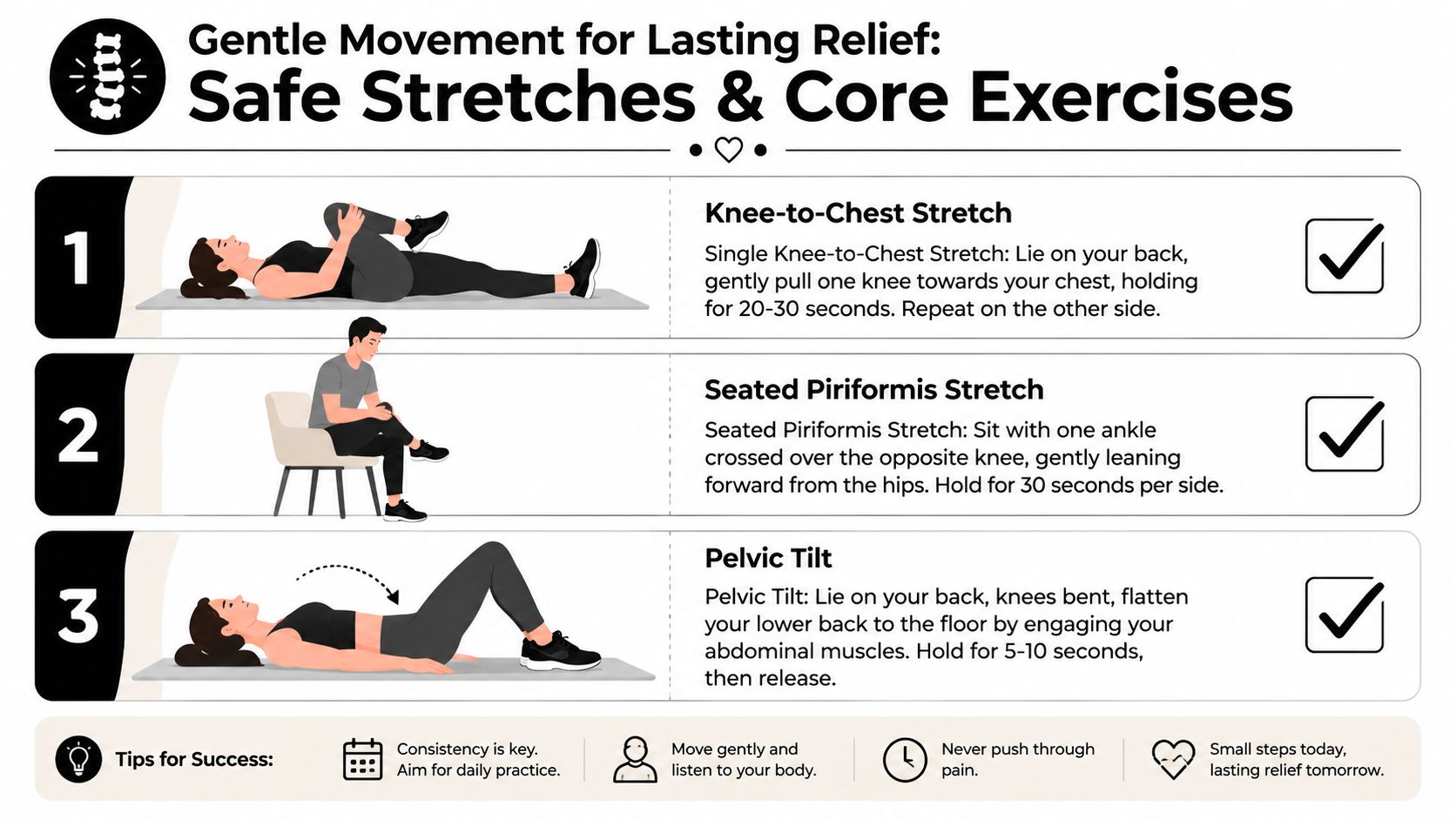
Single knee-to-chest stretch
Lie on your back with both knees bent. Bring one knee toward your chest until you feel a light stretch in the low back or buttock. Hold briefly, then return to the starting position.
Keep the range modest. If pulling the knee higher sends pain into the calf or foot, reduce the motion or stop.
Seated piriformis stretch
Sit upright in a chair. Cross one ankle over the opposite knee, then hinge forward slightly from the hips until you feel a stretch deep in the buttock.
This can help when the hip and gluteal muscles are tight, especially after long periods of sitting. It should feel local. Sharp, burning, or traveling pain means the position is too aggressive for that stage.
Pelvic tilt
Lie on your back with knees bent. Gently tighten the abdominal wall and flatten the low back toward the floor or bed. Hold for a moment, then relax.
This is a control drill, not a strength test. Small, repeatable motion is more useful here than effort.
What you should feel and what you should not
Use response, not willpower, to judge whether an exercise belongs in your plan. I tell patients to watch two things. What happens during the movement, and what happens later that day.
| Sensation | Usually acceptable | Stop and reassess |
|---|---|---|
| Mild stretch in buttock or back | Yes | No |
| Temporary muscular effort in abdomen or hips | Yes | No |
| Sharp, shooting pain down the leg | No | Yes |
| Increasing numbness or weakness | No | Yes |
| Pain that lingers worse afterward | No | Yes |
A helpful rule is simple. If a stretch repeatedly pushes symptoms farther below the knee, it is the wrong stretch for you right now.
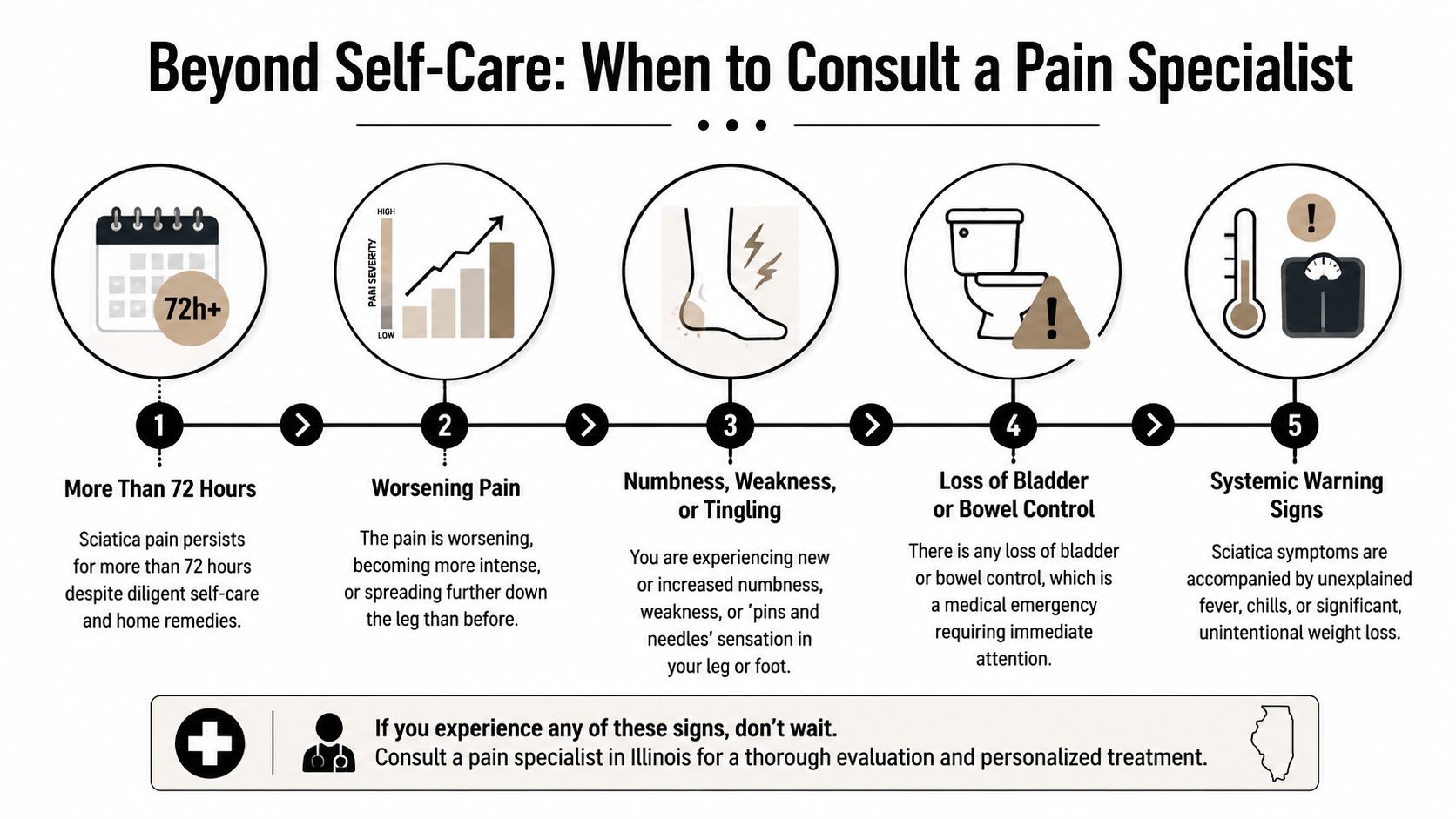
The image below highlights warning signs that should shift you away from self-directed exercise and toward professional evaluation.
Why core work matters
Early core work helps restore the support system around the spine after pain has disrupted normal movement. That usually means better control when rolling in bed, standing up from a chair, or walking short distances without tensing the low back and hip muscles.
Patients often assume core exercise means sit-ups, planks, or hard workouts. In an active sciatica flare, those choices are often poorly timed. Low-load stability work is usually the better starting point because it builds tolerance without asking the irritated area to do too much.
Useful early goals include:
- Better position control when rolling in bed or rising from a chair
- Less guarding through the low back and gluteal muscles
- More tolerance for walking and light household activity
Progression matters. If symptoms calm and function improves, exercises can advance gradually. If every attempt at stretching or core work worsens leg pain, causes new numbness, or exposes weakness, stop treating it like a simple exercise problem. That is the point where a specialist evaluation becomes more valuable than adding another stretch from the internet.
Modify Your Daily Routine to Prevent Flare-Ups
A lot of sciatica management happens between appointments, not during them. The chair you sit in, the way you get groceries from the trunk, and the position you sleep in can either calm the nerve or keep irritating it.
In Bridgeview, that often means a commute. In Palos Heights or Evergreen Park, it may mean a work-from-home setup that looked fine at first but turns out to be loading the low back all day. The details matter.
At your desk in Burbank or Evergreen Park
If you're working at a kitchen table or laptop station, the usual pattern is easy to spot. The screen sits too low, the chair is too deep, and you spend hours in a slumped position with the hips tucked under.
Try these adjustments:
- Raise the screen so you're not folding your neck and upper back forward all day.
- Sit all the way back in the chair with support behind the low back.
- Keep both feet grounded instead of crossing one leg under you.
- Stand up on purpose every so often, even if you only walk a short distance.
The goal isn't perfect posture. It's reducing the amount of time your spine stays in one loaded position.
During the drive from Oak Lawn or Alsip
Car seats can aggravate sciatica because they combine hip flexion, vibration, and prolonged sitting. If driving makes the leg pain worse, change the setup before you assume nothing helps.
A better driving position usually includes:
Seat closer than you think
You shouldn't have to reach with your foot and round your back to use the pedals.Seatback slightly upright
Too much recline can shift more load into the low back.Wallet out of the back pocket
That small tilt can irritate the buttock and create asymmetry during a long drive.
When lifting at home in Palos Hills or Worth
Most flare-ups don't happen because someone lifted something impossibly heavy. They happen because the lift combined bending, twisting, and poor control.
Use this sequence instead:
- Get close to the object.
- Face it squarely.
- Tighten the trunk before you lift.
- Turn your whole body instead of twisting through the spine.
- Set it down the same way you picked it up.
At night in Hickory Hills or Orland Park
Sleep position can either unload the area or keep the nerve irritated for hours. The right position varies, but a few common adjustments help.
Side sleepers
Put a pillow between the knees to reduce rotation through the pelvis and low back.Back sleepers
A pillow under the knees can decrease stress on the lumbar spine.Stomach sleepers
This position often keeps the back extended and rotated. Many patients do better when they transition away from it.
Small mechanical changes don't look dramatic, but they often decide whether symptoms settle down or keep repeating.
When to See a Pain Specialist in Illinois
Many cases of sciatica improve with time and conservative care. StatPearls reports that most cases resolve in less than 4 to 6 weeks without long-term complications, and one prospective multicenter study of 406 patients found overall treatment success of 54.4%, with 69.2% success in the surgically treated group and 48.3% in the non-surgical group at follow-up, in its review of sciatica and treatment outcomes. Those numbers support a conservative start, but they also show that not every case follows the same path.
The mistake is waiting too long when the pattern says this is no longer simple home-care sciatica.
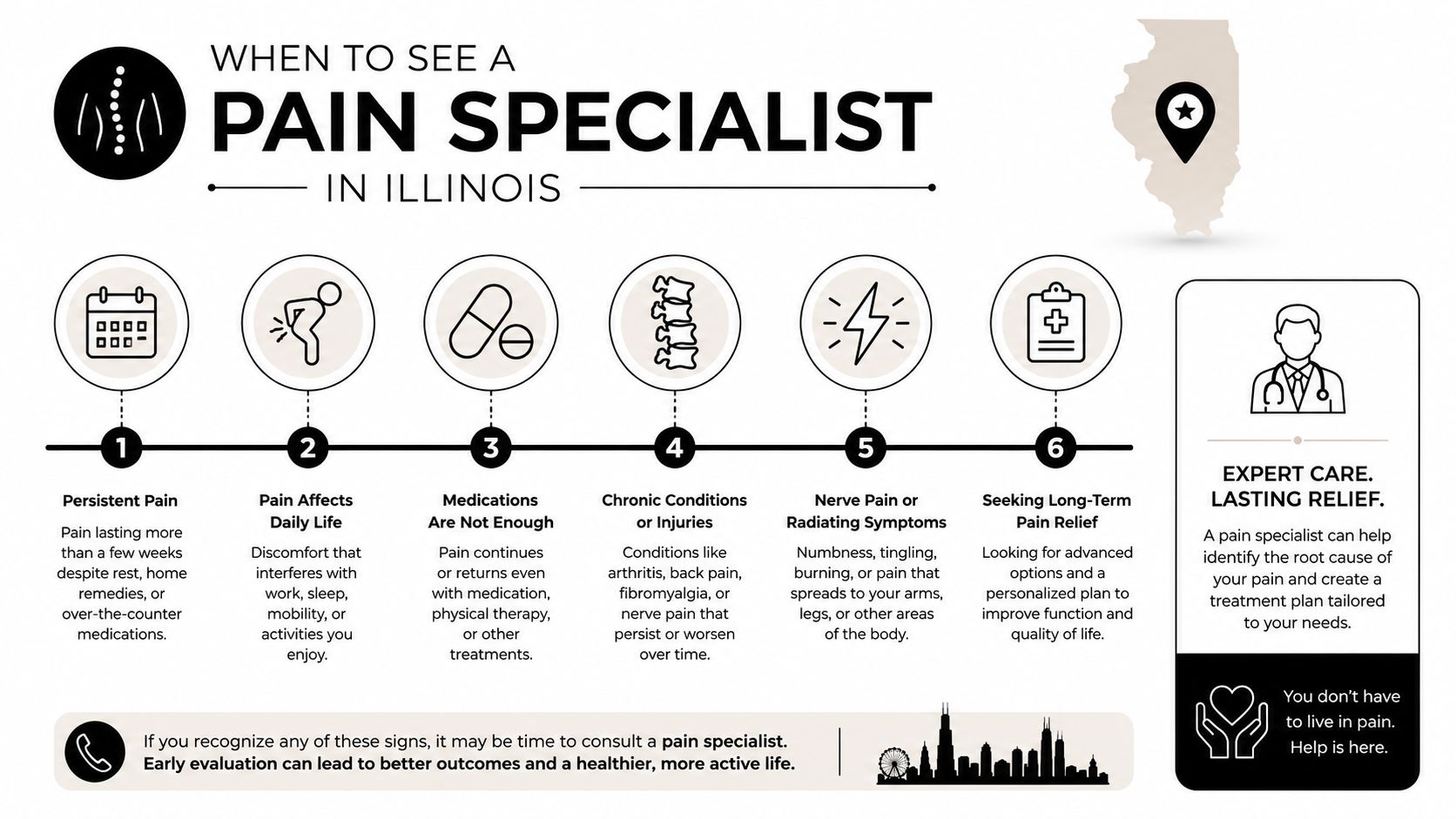
Signs you shouldn't ignore
If you're in Illinois and dealing with persistent leg pain, numbness, or weakness, specialist evaluation is the right next step when any of these apply:
The pain isn't improving over weeks
A flare that lingers despite activity modification, medication, and movement needs a better explanation.The pain is getting more intense
Escalating pain, especially if it's traveling farther down the leg, suggests ongoing nerve irritation.You notice weakness
Trouble lifting the foot, pushing off, or climbing stairs is different from pain alone.Numbness keeps spreading
Expanding numbness or more persistent pins and needles deserves attention.Bladder or bowel changes appear
That is urgent. Don't wait on an office appointment if that happens.
Why specialist evaluation changes the plan
Sciatica is a symptom pattern. A pain specialist's job is to decide whether the driver is likely disc-related, stenotic, inflammatory, joint-mediated, or something else entirely. That evaluation may include a physical exam and, when symptoms are severe, persistent, or not improving, imaging and other testing as clinically indicated.
That matters because the next step may not be “more stretching.” It may be an image-guided injection, a targeted rehab plan, or referral for surgical assessment if neurologic loss is progressing.
Here is a visual summary of when self-care should end and formal evaluation should begin.
Why local evaluation helps
If you live in Oak Lawn, Palos Hills, Palos Heights, Worth, Bridgeview, Hickory Hills, Alsip, Burbank, Evergreen Park, or Orland Park, seeing a specialist close to home makes it easier to move quickly from symptom management to diagnosis. That usually means less guesswork and a more coherent plan.
For background on the physician leading this kind of interventional evaluation, you can review Dr. Yaw Donkoh's clinical profile.
Advanced Opioid-Sparing Sciatica Treatments
Once the cause of sciatica is better defined, treatment becomes much more precise. Such precision distinguishes a pain and wellness clinic from generic online advice. The goal is to reduce pain, improve function, and avoid reflexively defaulting to opioids when targeted options exist.
When conservative care fails, epidural steroid injection is a common interventional treatment that can rapidly reduce inflammation enough to restore movement and create a window for rehabilitation. For selected herniated disc cases, surgery can be more successful than nonoperative care in some cohorts, with one study reporting 77.1% satisfaction with surgery versus 44.7% without surgery at 1 year, as summarized in this discussion of successful treatment options for sciatica.
Epidural steroid injection
This is often the first benchmark procedure when nerve-root inflammation is a major driver. Under imaging guidance, medication is delivered near the irritated nerve. The purpose is not to “cure the spine” in one step. The purpose is to reduce inflammation and make walking, sleeping, and exercise possible again.
A good response can help in two ways:
- It can provide therapeutic relief.
- It can also support the diagnosis by showing that the inflamed level identified on exam or imaging is likely part of the pain source.
This is most useful when pain is severe enough that the patient can't participate in the movement-based part of recovery.
Targeted blocks and related interventions
Not every patient with leg pain has pain coming only from a disc pressing on a nerve. Some have mixed pain generators. Facet-related back pain, sacroiliac pain, and muscle guarding can complicate the picture.
In that setting, a physician may consider other targeted interventions depending on the exam and imaging findings. The point is precision. Procedures should answer a question or treat a known target. They should not be repeated mechanically without a reason.
Radiofrequency ablation and neuromodulation
Radiofrequency ablation is typically used for certain back pain generators rather than classic nerve-root sciatica itself, but it can matter in patients whose symptoms overlap with other spinal pain patterns. It works by disrupting pain signaling from specific nerves that supply painful joints.
Neuromodulation, including peripheral nerve stimulation or spinal cord stimulation, is a different category. These approaches are generally considered when pain has become more persistent or when surgery is not appropriate, has already been done, or hasn't produced the desired relief. They don't remove a disc or widen stenosis directly. They change how pain signals are processed.
Minimally invasive options for spinal stenosis
If the main driver is lumbar spinal stenosis rather than an acute disc herniation, treatment may shift. Some patients do better with minimally invasive decompression-oriented procedures when anatomy and symptoms match.
Examples in interventional pain practice can include:
MILD
A minimally invasive lumbar decompression approach used in selected stenosis patterns.Vertiflex Superion
An interspinous spacer option used in selected cases of lumbar stenosis.
These are not interchangeable with epidural injections. They serve different purposes for different causes.
Regenerative and multimodal care
Regenerative treatments such as PRP may be considered in selected musculoskeletal pain settings, but they are not a universal answer for sciatica. Expectations need to stay realistic. If the problem is a compressed nerve root from a sizable structural issue, regenerative therapy isn't a substitute for decompression or targeted anti-inflammatory care.
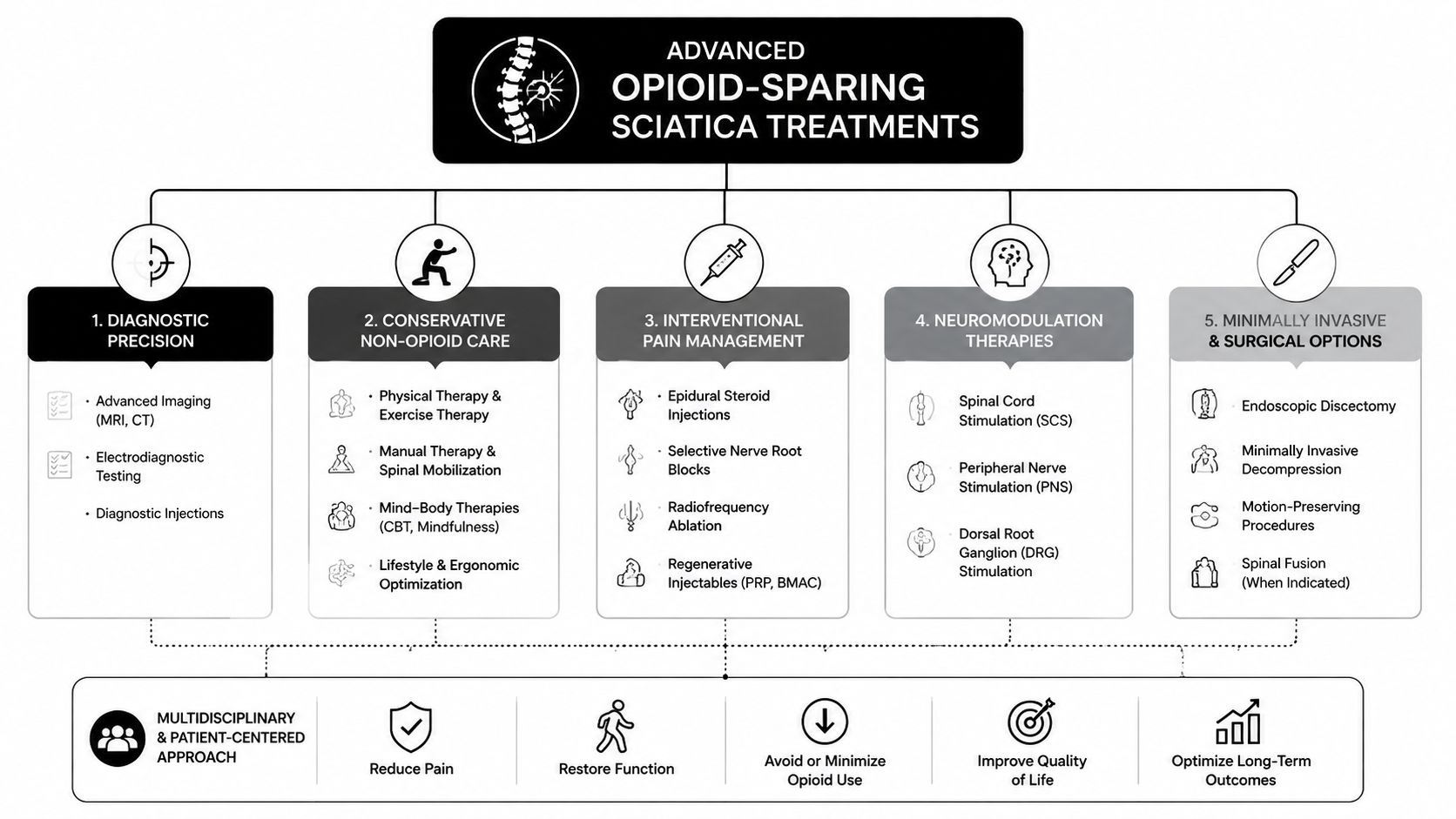
A complete opioid-sparing plan often combines several elements:
| Treatment category | Main role | Best fit |
|---|---|---|
| Epidural steroid injection | Reduce nerve-root inflammation | Disc-related or inflammatory radicular pain |
| Diagnostic or therapeutic blocks | Clarify source and reduce targeted pain | Mixed or overlapping pain generators |
| Radiofrequency techniques | Reduce selected pain signaling | Certain non-radicular spinal pain sources |
| Neuromodulation | Modify pain signaling | Persistent or complex pain states |
| Minimally invasive decompression | Address selected stenosis patterns | Confirmed narrowing with matching symptoms |
Below is a visual overview of how advanced care can progress after diagnosis.
What good interventional care looks like
A thoughtful clinic doesn't treat every patient with the same injection or the same script. It asks better questions.
- Is the pain radicular?
- Is there progressive neurologic loss?
- Is the anatomy more consistent with disc herniation, stenosis, or another cause?
- Is this a case for injection, rehabilitation, decompression, or surgical referral?
Midwest Pain & Wellness offers image-guided injections, radiofrequency ablation, neuromodulation, and minimally invasive lumbar procedures as part of a broader interventional approach. You can review those options on its procedures used for treatment page.
The best non-opioid treatment is not a single procedure. It's the right procedure for the right diagnosis, at the right time.
Your Path to Lasting Sciatica Relief in the Chicago Area
The fastest way to get sciatica relief isn't always the most aggressive step. Early on, smart self-care often means brief activity modification, a cold-to-heat sequence, short walks, and careful movement. That approach works for many people.
But persistent pain should not be treated like a character test. If symptoms keep going, worsen, or bring numbness and weakness with them, the next step is a proper diagnosis. That's especially important if you live in Oak Lawn, Palos Hills, Palos Heights, Worth, Bridgeview, Hickory Hills, Alsip, Burbank, Evergreen Park, Orland Park, or near Chicago Ridge and want care close to home in Illinois.
Lasting relief usually comes from matching treatment to cause. Sometimes that means time and movement. Sometimes it means an injection, a minimally invasive procedure, or surgical evaluation. The key is knowing when to stop guessing.
If your back and leg pain isn't settling down, schedule an evaluation with Midwest Pain & Wellness. A focused assessment can help determine whether you're dealing with a self-limited flare or a condition that needs targeted, opioid-sparing treatment.