If you're reading this while shifting from one hip to the other, avoiding hard chairs, or dreading the drive from Oak Lawn or Orland Park because sitting has become miserable, you're in the right place. Tailbone pain has a way of disrupting ordinary life. Work meetings feel longer. Car rides feel rougher. Even getting up from a chair can become a small event you plan around.
That condition is called coccydynia, which means pain at the tailbone. For some people it starts after a fall. For others, it shows up after childbirth, long hours of sitting, or with no obvious injury at all. What matters most is this. Persistent tailbone pain usually has a logical path forward, and it doesn't start with opioids or surgery.
Introduction The Challenge of Tailbone Pain
A common story goes like this. Someone slips on ice in Illinois, lands hard, and assumes the soreness will fade. Another person notices the pain after weeks of long desk days in Evergreen Park or Bridgeview. Someone else feels sharp pain only when sitting back in a chair, then slowly realizes the problem is no longer occasional. By the time they look for help, they've already tried a cushion, changed how they sit, and started avoiding activities they used to do without thinking.
Coccydynia can feel deceptively small because the painful area is small. In practice, it can interfere with work, sleep, travel, exercise, and bowel movements. It also tends to create a frustrating cycle. You sit differently to avoid pressure, that changes how your pelvis and lower back move, nearby muscles tighten, and the pain lingers longer than expected.
Tailbone pain is real, mechanical, and often treatable without escalating straight to surgery.
The most useful way to approach coccydynia pain treatment is step by step. Start with pressure relief, posture changes, and simple anti-inflammatory measures. If that doesn't settle things down, a pain specialist can sort out whether the source is the coccyx itself, the surrounding ligaments, irritated nerves, or tight pelvic floor muscles. From there, treatment can progress to targeted rehabilitation, image-guided injections, ganglion impar blocks, or radiofrequency procedures that reduce pain without relying on opioids.
For patients around Chicago Ridge and nearby communities such as Palos Hills, Palos Heights, Worth, Hickory Hills, Alsip, Burbank, and Orland Park, the goal is clarity. You need to know what's likely causing the pain, what usually works first, and when it's time to move beyond home care.
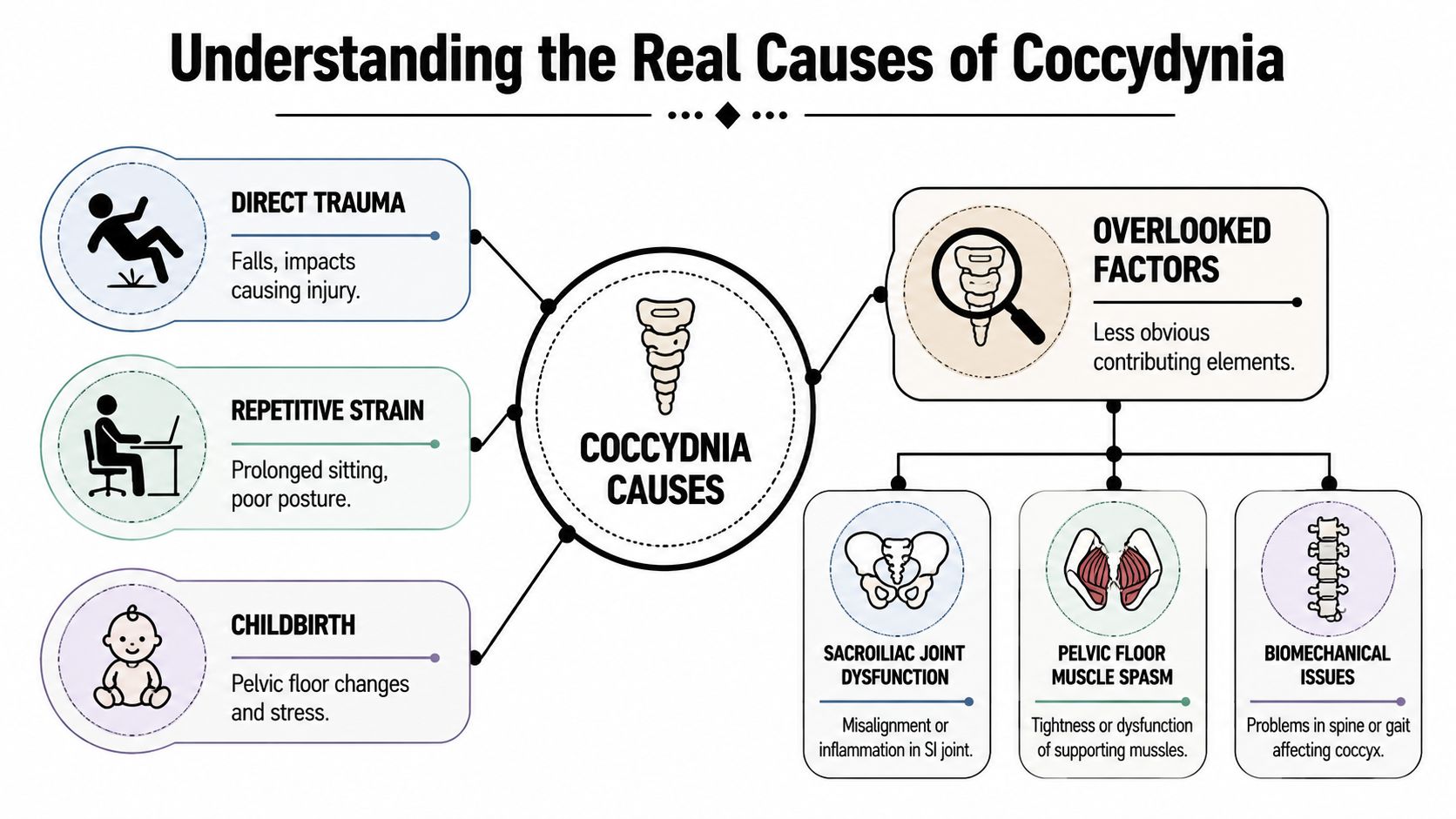
Understanding the Real Causes of Coccydynia
It's often assumed that tailbone pain means the bone itself is bruised, cracked, or out of place. Sometimes that's true. Acute trauma is the most common cause, especially after landing directly on the coccyx during a fall or slip, as described in this clinical discussion of traumatic tailbone pain. Childbirth can also stress the area, and long periods of sitting on hard surfaces can keep pressure focused on the tailbone.
But persistent coccydynia often involves more than the bone.
The overlooked driver
One of the biggest reasons tailbone pain becomes chronic is pelvic floor dysfunction. Recent data indicates that up to 60% of chronic coccydynia cases are linked to hypertonic, or overly tight, pelvic floor muscles rather than structural bone damage, according to this discussion of pelvic floor involvement in chronic coccydynia.
That matters because muscles can "guard" an injured area, much like a fist that never fully unclenches. The body tries to protect the tailbone region, but the ongoing tension starts creating its own pain. In that setting, a cushion may reduce pressure, but it won't fully address the driver if the pelvic floor stays tight.
What patients usually notice
The symptoms are often more specific than people expect:
- Sitting pain: Hard chairs, bleachers, church pews, and long drives usually make symptoms worse.
- Pain when rising: The move from sitting to standing can trigger a sharp catch.
- Point tenderness: Pressing near the tailbone often reproduces the pain.
- Positional discomfort: Leaning backward is often harder than sitting upright.
- Secondary muscle tension: Some patients feel aching through the buttock floor or deep pelvic region rather than just at the tip of the tailbone.
When tailbone pain lasts, the right question isn't only "Did I injure the bone?" It's also "What else is keeping the area irritated?"
Why the cause matters
A fall-related bruise, a ligament strain, coccygeal joint irritation, and pelvic floor spasm don't behave the same way. They may feel similar to a patient, but they don't respond the same way to treatment. That's why people sometimes get stuck. They keep repeating generic stretches or buying different cushions when the pain generator is a tight pelvic floor, an inflamed joint, or a sensitized nerve pathway.
For patients in Oak Lawn, Palos Hills, or Worth, this is usually the turning point. Relief starts once treatment matches the actual source of pain rather than the most obvious assumption.
Foundational Coccydynia Pain Treatment at Home
Most patients should begin with non-surgical care, and that's not a weak option. It's the standard starting point because it works for many people. Conservative treatment achieves clinical success in approximately 90% of cases, according to this summary of coccydynia management).
That success comes from doing the basics correctly and consistently.
Start with pressure control
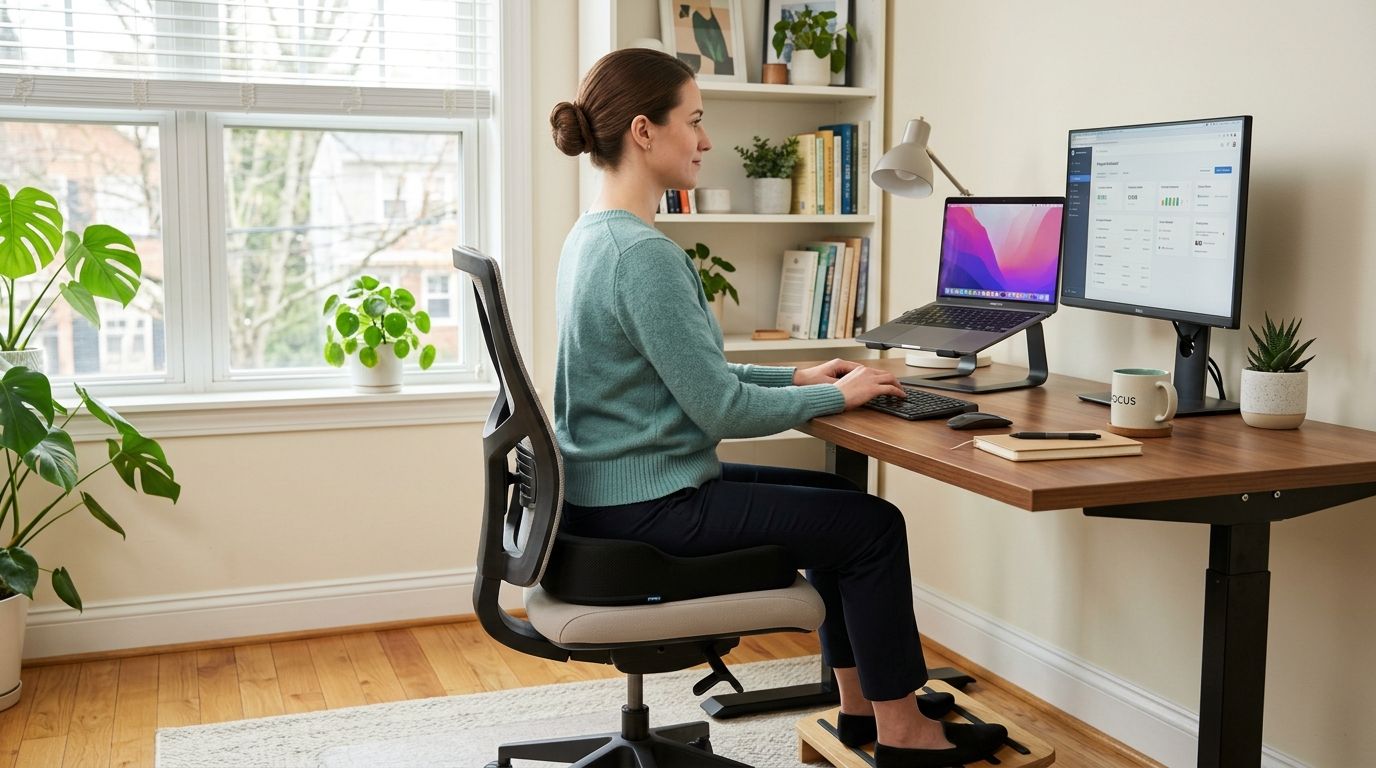
The first job is to reduce direct loading on the coccyx. A wedge-shaped or coccyx-relief cushion is typically more useful than a standard soft seat because it offloads pressure from the tailbone. This guidance on tailbone cushions emphasizes using that support consistently during seated activities, not just occasionally.
A few practical rules help:
- Choose the right seat: Firm support with a cutout or wedge usually works better than sinking into a plush couch.
- Sit more upright: A more erect posture shifts weight toward the sitting bones and thighs instead of the coccyx.
- Break up seated time: Stand, walk, or reset your position before irritation builds.
Use cold first, then heat
If the pain followed a recent injury, timing matters. During the first 48 hours, use cold therapy for 10 to 15 minutes at a time, 3 to 4 times daily, then transition to warm compresses afterward, as outlined in this tailbone pain self-care protocol.
A simple way to think about it:
| Time period | Best tool | Why |
|---|---|---|
| First 48 hours | Cold packs | Helps reduce swelling and calm early inflammation |
| After that early phase | Warm compresses | Helps relax sore muscles and reduce guarding |
Use medication carefully and fix the sitting mechanics
Over-the-counter NSAIDs can be reasonable when they're medically appropriate for you, but medication alone usually isn't enough. Tailbone pain often persists because the pressure pattern and muscle tension don't change.
Small posture habits hold significance. People who sit all day often need a reset that they can repeat at work. A short set of quick posture routines for office workers can help reduce the slumped positions that keep loading the coccyx.
Practical rule: If a self-care plan isn't changing how you sit, stand, and unload the tailbone, it probably isn't doing enough.
What home care should look like in real life
For patients in Burbank, Alsip, or Palos Heights, effective home treatment usually looks less dramatic than people expect:
- At work: Bring the cushion with you and don't save it for the worst days.
- In the car: Limit long, uninterrupted sitting when possible.
- At home: Avoid collapsing backward into soft furniture.
- During recovery: Don't keep testing the pain by sitting through it.
Foundational care isn't glamorous, but it's often what settles the problem before more advanced treatment is needed.
When to See a Pain Specialist in Illinois
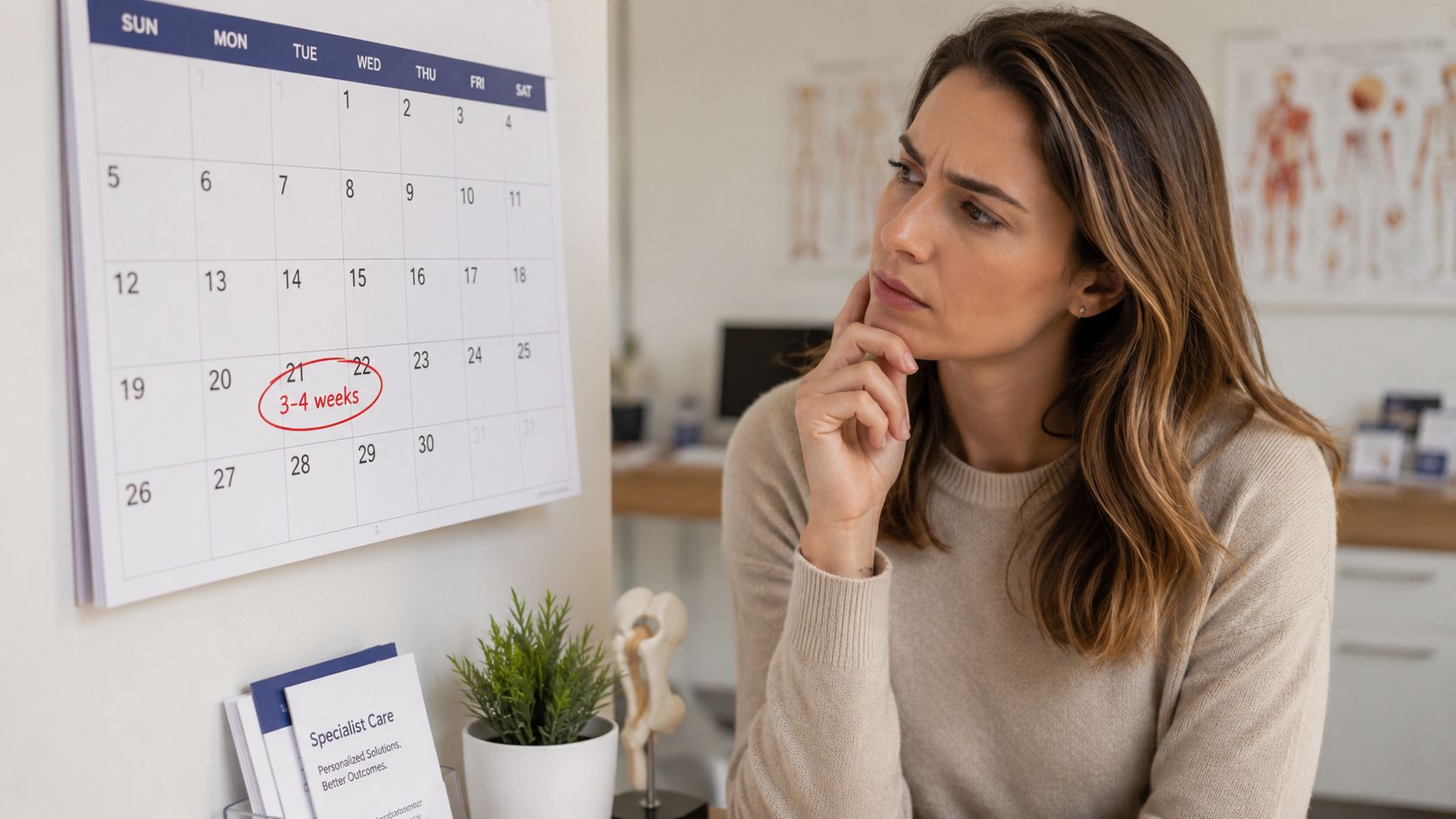
There comes a point when waiting stops being useful. If home remedies such as NSAIDs, ice or heat, and cushioning haven't resolved the pain after 3 to 4 weeks, it's time to seek medical evaluation for imaging and to consider options such as injections or manual coccyx treatment, as noted in this guideline on persistent coccydynia care.
What a specialist adds
A pain specialist doesn't just prescribe something stronger. The job is to identify the pain generator. That may involve the coccygeal joint, sacrococcygeal ligaments, inflamed soft tissue, pelvic floor tension, or nerve-related pain. Those are very different problems with very different solutions.
A focused visit usually helps answer questions like these:
- Is this still a simple post-injury irritation, or has it become persistent pain?
- Does the exam suggest bone, ligament, muscular, or nerve involvement?
- Would imaging clarify the next step?
- Would targeted treatment be more useful than continued trial and error?
Why earlier evaluation can save time
Patients often wait because tailbone pain feels too minor to justify specialty care. Then they spend weeks avoiding chairs, changing workouts, and getting nowhere. That's where an interventional clinic can help by matching the treatment to the anatomy involved rather than treating every case the same way.
For people across Hickory Hills, Evergreen Park, Burbank, and nearby communities, an interventional pain management clinic can evaluate whether you're dealing with straightforward coccydynia or a more stubborn pattern that calls for targeted procedures and coordinated rehabilitation.
If sitting is still dictating your day after several weeks of doing the basics well, you shouldn't have to keep guessing.
Advanced Medical and Rehabilitative Therapies
Persistent tailbone pain often changes after the first few weeks. The original injury may have settled down, but the body keeps protecting the area. Patients then describe pain with sitting, rising from a chair, bowel movements, or even a constant sense of tension deep in the pelvis. In that stage, treatment has to address the structures still driving symptoms, not just the coccyx itself.
One of the most commonly missed contributors is pelvic floor dysfunction.
Pelvic floor treatment is different from generic stretching
The pelvic floor can become overactive after a fall, childbirth, prolonged sitting, or months of guarding around the tailbone. That pattern can keep coccydynia going long after bruising or inflammation should have improved. In the right patient, treatment aimed at relaxing the pelvic floor is more useful than adding more strengthening or pushing through aggressive stretches.
A review of coccydynia diagnosis and treatment describes conservative care that may include pelvic floor rehabilitation, levator ani stretching and massage, ergonomic changes, and manual techniques. That review also notes better results from levator ani massage and stretching than from coccygeal joint mobilization in selected patients.
This matters in practice. If the main problem is muscular guarding, a standard exercise sheet rarely fixes it.
What a focused rehab plan may include
A stronger rehabilitation plan usually targets the reason pain persists:
- Pelvic floor downtraining: reduces overactivity, spasm, and protective clenching
- Breathing retraining: improves diaphragm and pelvic floor coordination, which can lower resting tension
- Postural and sitting mechanics: limits repeated pressure on the coccyx during work, driving, and meals
- Manual therapy: helps identify whether nearby muscles, ligaments, or soft tissue restrictions are contributing
- Graded return to activity: restores movement without repeatedly flaring the same tissue
Trade-offs matter here. Pelvic floor therapy can feel slow at first, and internal treatment is not appropriate for every patient. But when exam findings point to muscle overactivity, it is often far more productive than cycling through random stretches, repeated rest, or stronger pain medication.
Medical management without leaning on opioids
Medication still has a role, but it should support recovery, not replace a diagnosis. Short courses of anti-inflammatory treatment may help when there is still a localized inflammatory component. Muscle relaxants are sometimes considered if pelvic floor or surrounding soft tissue spasm is prominent, though they can cause sedation and do not correct the underlying movement or tension pattern. Opioids are rarely a good long-term answer for coccydynia because they do not address the source and carry clear risks.
Some patients also ask whether regenerative treatment belongs in the discussion, especially if tailbone pain overlaps with nearby low back or sacroiliac symptoms. A review of PRP injection options for back pain can help place that treatment in context, although coccyx pain still requires a targeted diagnosis before deciding whether any injection-based option makes sense.
For patients who need gentle movement work outside the clinic, Pittsburgh personal training for mobility reflects a useful principle. Mobility work should improve movement quality and tissue tolerance, not force a painful area to do more before it is ready.
Advanced rehab works best when it is specific to the pain generator. In Oak Lawn and Orland Park, that often means looking beyond the coccyx itself and treating the pelvic floor, sitting mechanics, and surrounding soft tissues that keep tailbone pain active.
Interventional Coccydynia Pain Treatment Options
A common turning point in coccydynia care is this: a patient can sit a little better with a cushion, has done the exercises, has tried medication, and still avoids car rides, restaurants, work meetings, or church because tailbone pain keeps flaring. That is when image-guided procedures become worth discussing.
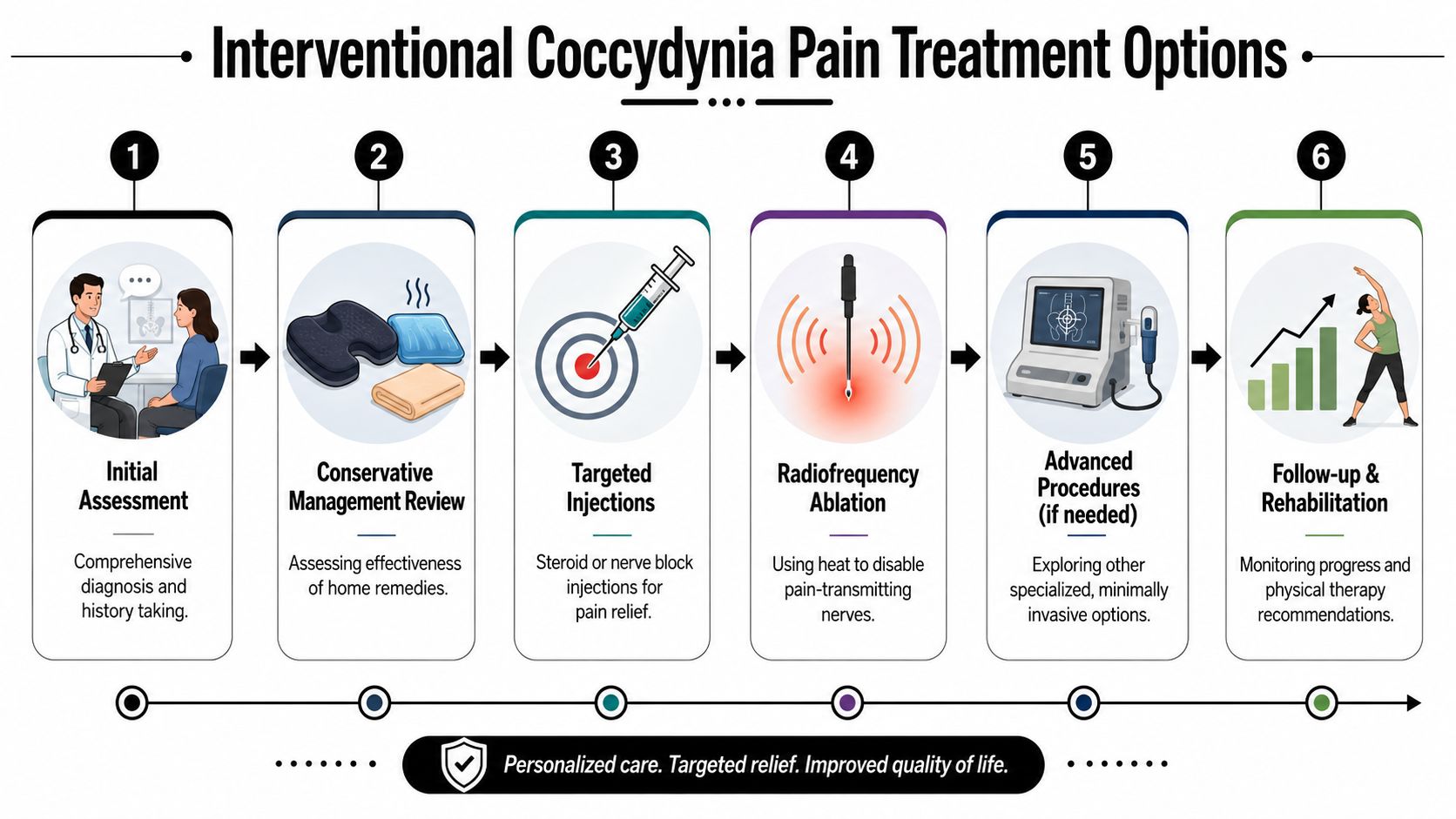
These treatments are opioid-sparing. They are also selective. The goal is not to mask pain broadly. The goal is to target the structure or nerve pathway that is keeping pain active, especially in patients whose symptoms suggest more than simple pressure sensitivity over the coccyx.
Fluoroscopy-guided injections
A fluoroscopy-guided injection places medication at the painful sacrococcygeal or intercoccygeal region with much better accuracy than a blind injection. In practice, that matters for two reasons. It may reduce inflammation, and it may answer a diagnostic question.
If a patient gets meaningful but temporary relief after a precisely placed injection, that result helps confirm the coccyx region is a true pain generator. If the response is weak or absent, I start looking harder at nearby contributors such as pelvic floor tension, referred sacroiliac pain, or nerve-mediated pain.
The trade-off is straightforward. These injections can help a lot, but they do not usually fix ongoing sitting mechanics, muscular guarding, or pelvic floor dysfunction on their own.
Ganglion impar block
For persistent tailbone pain, especially pain that feels deep, burning, or disproportionate to light pressure, a ganglion impar block is often the most informative next step. The ganglion impar is part of the sympathetic pain pathway serving the coccyx, perineal region, and nearby pelvic structures.
That is one reason this block can be so useful in stubborn coccydynia. It reaches beyond the simple idea of “the tailbone is bruised” and addresses a pain pathway that may stay irritated long after the original injury or strain. In patients from Oak Lawn and Orland Park, this is often the procedure that finally makes the pattern make sense.
If you want a plain-language explanation before deciding, this overview of what a nerve block injection is explains how these procedures work and what to expect.
A successful ganglion impar block can do two things at once. It can bring relief, and it can show that the pain has a sympathetic or nerve-mediated component. That distinction matters when standard joint or soft tissue treatment has not been enough.
Radiofrequency treatment
Radiofrequency treatment is usually considered after a diagnostic block has shown that the targeted nerve pathway is involved. The aim is longer-lasting pain reduction by disrupting pain signaling rather than relying on a short-lived anesthetic effect.
This option is not the starting point for every patient. It fits best when pain has become chronic, prior injections helped but wore off, and the exam supports a focused nerve-based approach. In carefully selected patients, it can reduce the cycle of severe sitting pain and repeated flares without escalating to chronic opioid use.
How these options compare in practice
The best procedure depends on what the history, exam, imaging, and prior treatment response suggest.
| Option | Main purpose | Best use |
|---|---|---|
| Steroid injection | Reduce local inflammation and clarify whether the coccyx joint or nearby tissue is the source | Focal pain at the sacrococcygeal or intercoccygeal region |
| Ganglion impar block | Reduce pain signaling from the tailbone and pelvic region, and help identify sympathetic involvement | Persistent pain with severe sitting intolerance, burning pain, or poor response to simpler care |
| Radiofrequency treatment | Provide longer pain relief after a helpful diagnostic block | Chronic coccydynia with a confirmed nerve-mediated component |
One procedure is not automatically better than another. The right choice depends on the pain generator.
For patients in Worth, Bridgeview, Oak Lawn, and the surrounding Chicago Ridge area, a pain clinic can add real value when conservative care has stalled. Midwest Pain & Wellness, led by a double board-certified interventional pain specialist, provides image-guided, opioid-sparing care for pain conditions that include coccydynia when conservative treatment has not been enough.
What procedures can and cannot fix
Interventional treatment works best as part of a plan. If the coccyx is the main source, a targeted procedure may provide substantial relief. If pelvic floor overactivity is still pulling on the tailbone region, or sitting posture continues to overload the coccyx, the benefit may fade unless those drivers are treated too.
That is the practical point patients often miss. Persistent coccydynia is not always just a cushion problem. In many cases, the path to real improvement comes from matching the procedure to the true pain source, then following through with the rehab or movement changes that keep the pain from returning.
Considering Surgery A Final Option
A small group of patients do reach the point where surgery becomes a reasonable discussion. The operation is called coccygectomy, which involves removing part or all of the coccyx. I consider it only after the diagnosis is clear and a patient has already worked through the lower-risk steps in the right order.
That sequence matters because persistent tailbone pain is not always a simple bone problem. In the Chicago area, I routinely see patients from Oak Lawn and Orland Park who were told their only options were to sit on a cushion or consider surgery, yet the underlying driver turned out to be pelvic floor dysfunction, ligament irritation, nerve-related pain, or a combination of factors. If those contributors are still active, removing the coccyx may not fully solve the problem.
Why surgery is usually late in the process
Surgery can help carefully selected patients, especially when symptoms remain focused at the coccyx and the history, exam, imaging, and response to earlier treatment all point in the same direction. It also carries real trade-offs. Recovery takes time, sitting can remain uncomfortable for a while, and no operation can reliably correct pain coming from surrounding muscles, irritated nerves, or ongoing pelvic floor overactivity.
For that reason, a good pre-surgical workup does more than confirm that the tailbone hurts. It asks a harder question. What is generating the pain now?
If pain improved only briefly after treatment aimed at the coccyx, but pelvic tension, rectal pressure, or pain with prolonged sitting persists, I would be cautious about sending that patient straight to surgery.
The practical takeaway
Surgery is a final option, not the next automatic step. Patients usually do better when the plan moves from home care, to focused rehabilitation, to image-guided procedures, and only then to a surgical opinion if pain remains disabling and clearly localized.
If tailbone pain is making it hard to sit, drive, work, or rest, Midwest Pain & Wellness offers evaluation and opioid-sparing treatment options for patients in Chicago Ridge and nearby Illinois communities including Oak Lawn, Palos Hills, Palos Heights, Worth, Bridgeview, Hickory Hills, Alsip, Burbank, Evergreen Park, and Orland Park. A focused consultation can help identify whether your pain is coming from the coccyx, surrounding ligaments, pelvic floor dysfunction, or nerve irritation, and map out the next step that fits your condition.