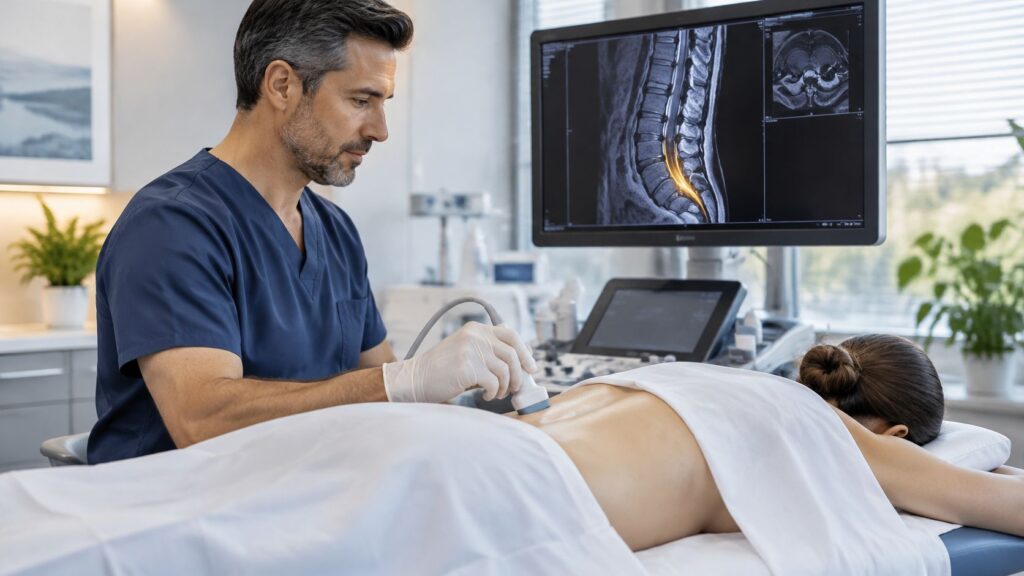
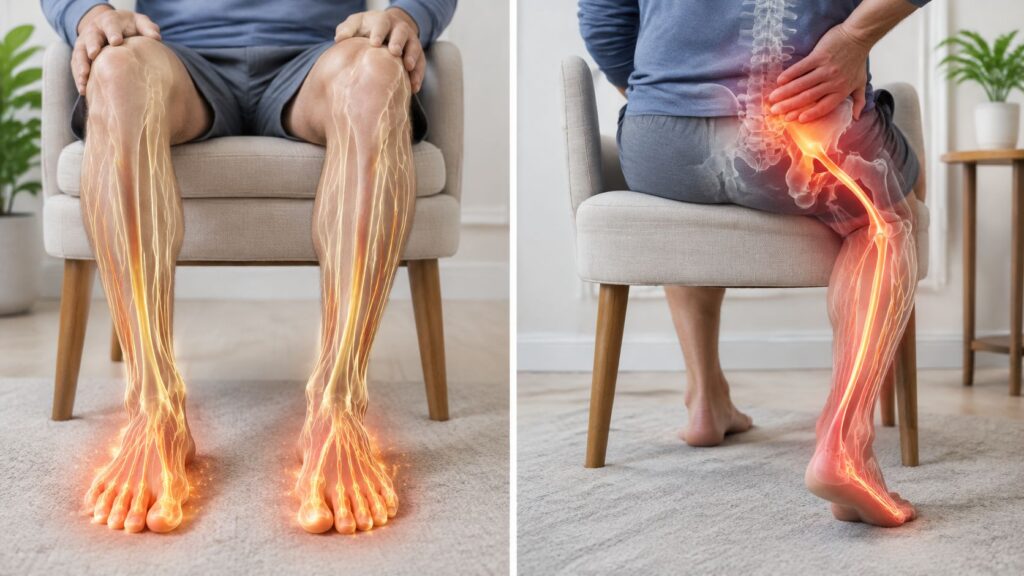
Some people reading this are already in the same routine every day. You wake up with neck stiffness, turn your head and feel a sharp pull, then spend the rest of the day adjusting your posture, stretching, heating, icing, and trying to get through work without aggravating it again. By evening, the pain may travel into the upper shoulder or sit at the base of the skull and leave you wondering whether this is just your new normal.
That cycle wears people down. Temporary relief can help for a few days or a few weeks, but it doesn't change the fact that something in the neck may still be irritated, unstable, or degenerative. When pain has lasted for months, many patients start asking a different question. Not “What can numb this?” but “What might help this heal?”
That's where a PRP injection neck treatment enters the conversation. It isn't a cure-all, and it isn't right for every type of neck pain. But for the right patient, it offers a regenerative option that aims to support tissue repair instead of only suppressing symptoms. For people in Illinois communities around Chicago Ridge, including Oak Lawn, Palos Hills, Palos Heights, Worth, Bridgeview, Hickory Hills, Alsip, Burbank, Evergreen Park, and Orland Park, that distinction matters.
Living with Chronic Neck Pain
Chronic neck pain rarely stays in one lane. It can start as morning stiffness, then become pain when you check blind spots while driving, then progress to soreness during desk work, phone use, or sleep. Many people I evaluate have already tried a long list of reasonable treatments. Rest. Exercise. Medications. Massage. Sometimes an injection that helped briefly, then wore off.
For some, the pain is mechanical. It hurts with rotation, extension, or holding the head in one position too long. For others, it follows a car accident, sports injury, or years of wear in the cervical joints. If that sounds familiar, it helps to understand common causes of chronic neck pain before choosing the next step.
When temporary fixes stop feeling acceptable
A short-lived improvement can still be useful. It can get someone through a flare, travel, or a demanding work stretch. But when pain keeps coming back, repeating the same strategy over and over starts to feel less like treatment and more like maintenance of a problem that never resolved.
Patients often describe a few familiar frustrations:
- Pain with routine movement: looking up, reversing the car, carrying groceries, or working at a screen.
- Interrupted sleep: neck position becomes a nightly issue instead of a minor annoyance.
- Activity loss: workouts shrink, yard work gets delegated, and even social plans get filtered through pain.
- Medication fatigue: people get tired of relying on pills that may dull symptoms without fixing the source.
Chronic neck pain changes behavior long before it changes imaging. People stop moving normally, and that loss of confidence becomes part of the problem.
Regenerative medicine offers a different framework. Instead of asking only how to calm inflammation today, it asks whether the painful tissue can be supported in a way that improves function over time. That doesn't mean every painful neck structure can regenerate. It means the treatment strategy shifts from short-term suppression toward biologic repair where appropriate.
What Is PRP and How Does It Heal Neck Injuries
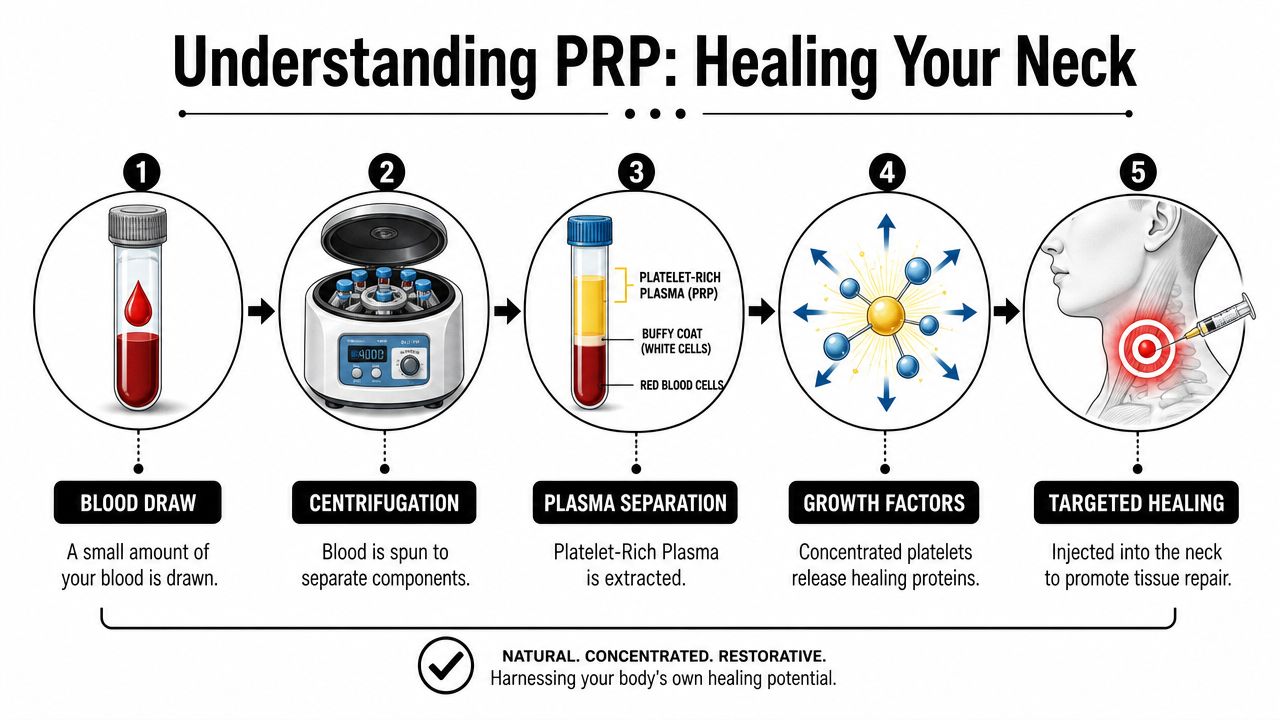
PRP, or platelet-rich plasma, is made from your own blood. A small sample is drawn, processed, and separated so the platelet-rich portion can be concentrated and used for injection. Platelets are best known for helping blood clot, but they also carry signaling proteins that help coordinate tissue repair.
A simple way to think about PRP is this. It's a concentrated repair crew built from your own biology. Instead of adding a foreign medication, the physician prepares a focused dose of your body's own healing components and places it where the tissue problem is believed to be.
For a closer look at the broader science behind this approach, regenerative medicine and tissue engineering is a useful starting point.
What PRP targets in the neck
Neck pain isn't one diagnosis. A patient may have pain from cervical facet joints, strained ligaments, irritated tendons, or other soft-tissue structures that haven't healed well. In the right case, PRP is used to target the structure that's generating pain.
That matters because a good PRP plan starts with anatomy, not with branding or hype. If the painful structure hasn't been identified, even a well-prepared PRP sample can miss the mark.
Common pain generators that may be evaluated for regenerative treatment include:
- Facet joints: these small joints in the back of the cervical spine often produce pain with extension or rotation.
- Supporting ligaments: chronic strain or instability can keep the neck painful even after the original injury has passed.
- Tendinous attachments and soft tissue: some patients develop persistent pain around the muscular support system of the cervical spine.
Why the injection site matters
PRP doesn't “float around” looking for trouble. It has to be placed at the intended target. In practical terms, the outcome depends on two basic questions. Was the diagnosis right, and did the PRP reach the painful tissue?
Practical rule: The best PRP injection neck treatment is the one matched to the right diagnosis and delivered to the right structure.
Because PRP is autologous, it comes from the patient's own blood rather than an outside drug. That's one reason it has become an appealing option for people seeking non-surgical, opioid-sparing care for chronic musculoskeletal pain.
Who Is an Ideal Candidate for a PRP Neck Injection
The best candidate usually isn't someone with brand-new soreness after sleeping wrong for one night. PRP tends to make more sense when pain has lingered, conservative care hasn't solved it, and the pattern suggests a structure that may respond to regenerative treatment.
People who often deserve a closer evaluation include those with chronic mechanical neck pain, cervical facet-related pain, lingering whiplash symptoms, and persistent soft-tissue injury that hasn't settled with standard care. Some also seek evaluation after they've tried medications, exercise-based treatment, or prior injections and still feel limited.

Signs you may be a reasonable candidate
You may be a candidate for a PRP injection in the neck if several of these are true:
- Your pain has become chronic: it keeps returning or never fully settles.
- Movement reproduces symptoms: turning, extending, or holding posture brings the pain on consistently.
- Conservative care helped only partly: therapy, home exercise, or medication reduced symptoms but didn't restore normal function.
- You want an opioid-sparing option: you'd prefer to avoid escalating medication use if a targeted procedure is appropriate.
A 2022 review in the Spine Journal concluded that PRP injections for cervical degenerative conditions show “promising pain reduction” with minimal adverse events, and because PRP is autologous, the risk of allergic reaction is negligible while serious complications are rare when performed by a specialist under sterile, image-guided conditions, as summarized in this review discussion of PRP safety for cervical pain.
When PRP may not be the right move
A balanced discussion matters here. PRP isn't appropriate for every patient or every diagnosis. If someone has an active infection, certain blood disorders, or a medical condition that changes whether blood-derived biologic treatment is safe or useful, the plan may need to change. If the symptoms point more toward a surgical problem, severe nerve compression, or a diagnosis that hasn't been clarified, the priority is a better workup first.
A few practical questions often help:
- Is the pain source clearly identified?
- Has basic conservative care already been given a fair trial?
- Is there a medical reason to avoid blood-based regenerative treatment?
- Would another interventional option fit the anatomy better?
For patients from Oak Lawn to Orland Park, the right next step often isn't jumping straight into PRP. It's a careful spine and pain evaluation to determine whether PRP fits the diagnosis.
The PRP Injection Process What to Expect at Our Clinic
Patients are less worried about the idea of PRP than they are about the unknowns around the procedure. They want to know what the visit feels like, how long it takes, and whether the physician is targeting the correct area with precision.
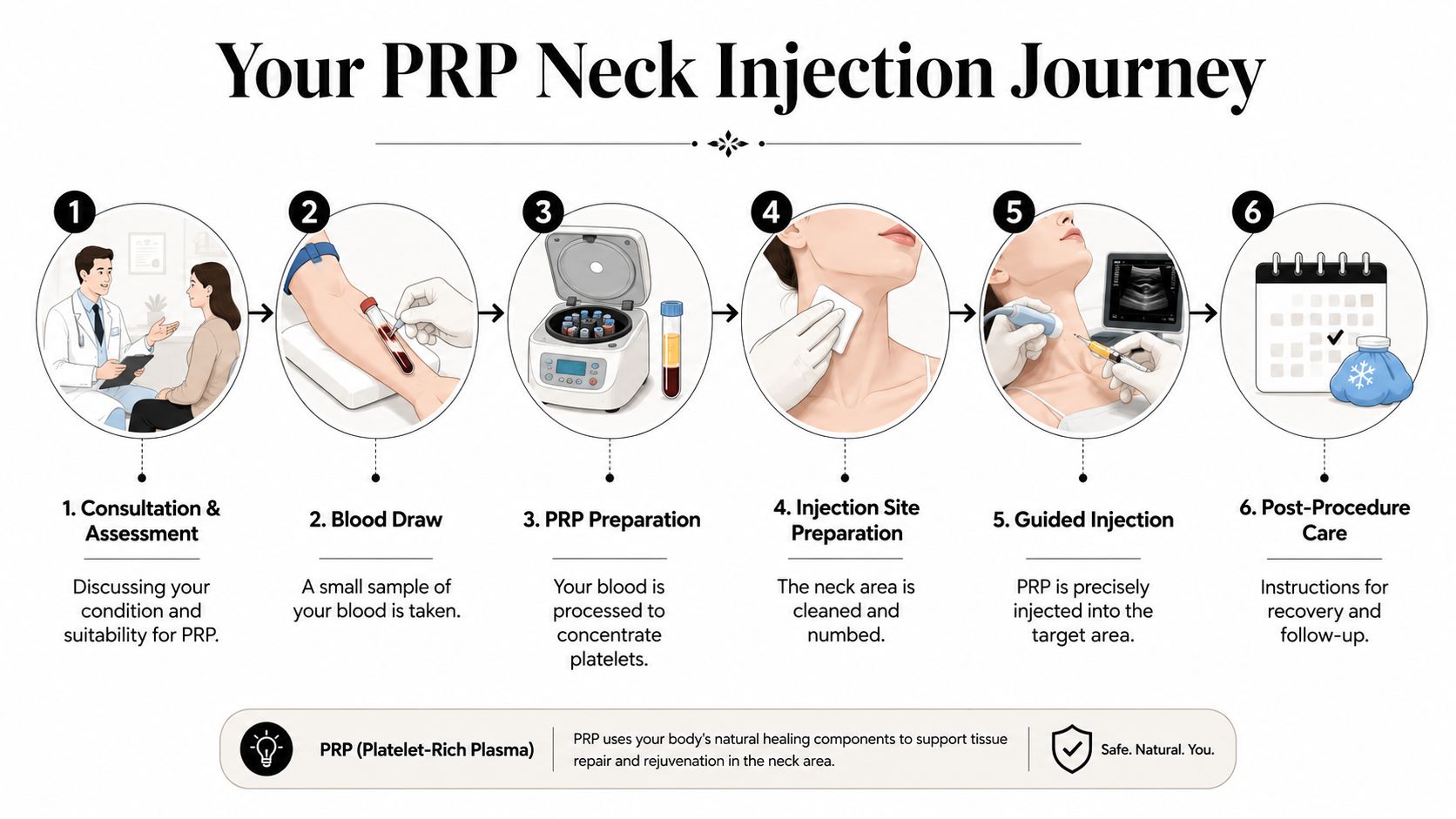
The process is straightforward and performed in-office. It starts with a blood draw and ends with a guided injection into the intended neck structure. The details matter because this isn't a blind shot.
Step by step through the visit
Evaluation and planning
The physician confirms that PRP matches the suspected pain generator. A good candidate selection process is part of the treatment, not a formality.Blood draw
A small amount of blood is collected from your arm, much like standard lab work.Processing the sample
The blood is placed in a centrifuge to separate and concentrate the platelet-rich portion.Preparing the neck
The skin is cleaned carefully, and the target area is identified. Comfort measures are used as appropriate.Image-guided injection
The physician uses imaging to place the PRP accurately. If you want to understand why that matters, this overview of ultrasound guidance for nerve blocks and precision procedures explains the value of visual targeting in interventional care.
What patients usually notice during and after
The blood draw is simple. The injection itself can create pressure, soreness, or an ache at the treatment site. That doesn't mean something is wrong. PRP often creates a brief inflammatory response because the goal is to stimulate a healing cascade, not to numb tissue on contact.
Afterward, many patients feel localized soreness rather than instant relief. That's expected. The point of PRP isn't immediate anesthetic benefit. It's biologic signaling and gradual tissue response.
The procedure should feel controlled and deliberate. If the setup looks casual or unguided, that's a reason to ask more questions.
Why precision matters in the neck
The cervical spine is not a place for guesswork. Facet joints are small. Ligament targets can be narrow. Important nerves and vascular structures are nearby. The physician's job is to pair the diagnosis with the exact tissue target and deliver the injectate where it's intended to go.
That's one reason pain specialists approach a PRP injection neck procedure differently from a generic wellness service. In the neck, precision is part of safety and part of efficacy.
How Effective Is PRP for Neck Pain Evidence and Outcomes
The question patients ask most often is fair and direct. Does it work? The honest answer is that PRP helps some patients meaningfully, helps others partially, and won't solve every neck pain problem. What matters is whether there's clinical evidence for durable improvement in the right diagnosis.
For chronic neck pain arising from the cervical facet joints, a study found that 60% of participants maintained at least 50% pain relief at the 6-month mark, and 33% reported continued 50% improvement at 12 months, showing meaningful longer-term benefit in a subset of patients treated with cervical facet PRP, according to the published cervical PRP study.
What those numbers mean in real life
That study matters because it speaks to durability. Many treatments in pain medicine can calm symptoms briefly. Fewer maintain benefit over many months. If someone has been living in a loop of flare, injection, partial relief, and recurrence, longer follow-through is clinically important.
It also helps set realistic expectations:
- Some patients improve substantially
- Some improve, but not dramatically
- Some do not respond enough to call it a success
PRP shouldn't be sold as a miracle. It should be discussed as a targeted regenerative option with evidence of meaningful benefit in selected cervical pain conditions.
Why people compare it with steroid injections
Steroid injections still have a role in pain management. They can reduce inflammation and may provide faster symptom relief in the right setting. The trade-off is that their benefit is often temporary, especially when the underlying issue is ongoing joint degeneration or chronic tissue dysfunction.
That difference is why PRP has become so appealing to patients trying to avoid the cycle of repeated short-term interventions. The treatment philosophy is different. Steroids suppress inflammation. PRP aims to support healing biology.
If your main goal is lasting function rather than the quickest possible temporary relief, PRP deserves a serious discussion.
A separate review and meta-analysis summarized in a physician-facing patient education source also described cervical PRP as showing promising pain reduction and functional improvement with minimal adverse events, while emphasizing its role as an evidence-based regenerative option rather than a fringe therapy. I view that as supportive, but the most useful conversation still comes back to diagnosis, targeting, and treatment quality.
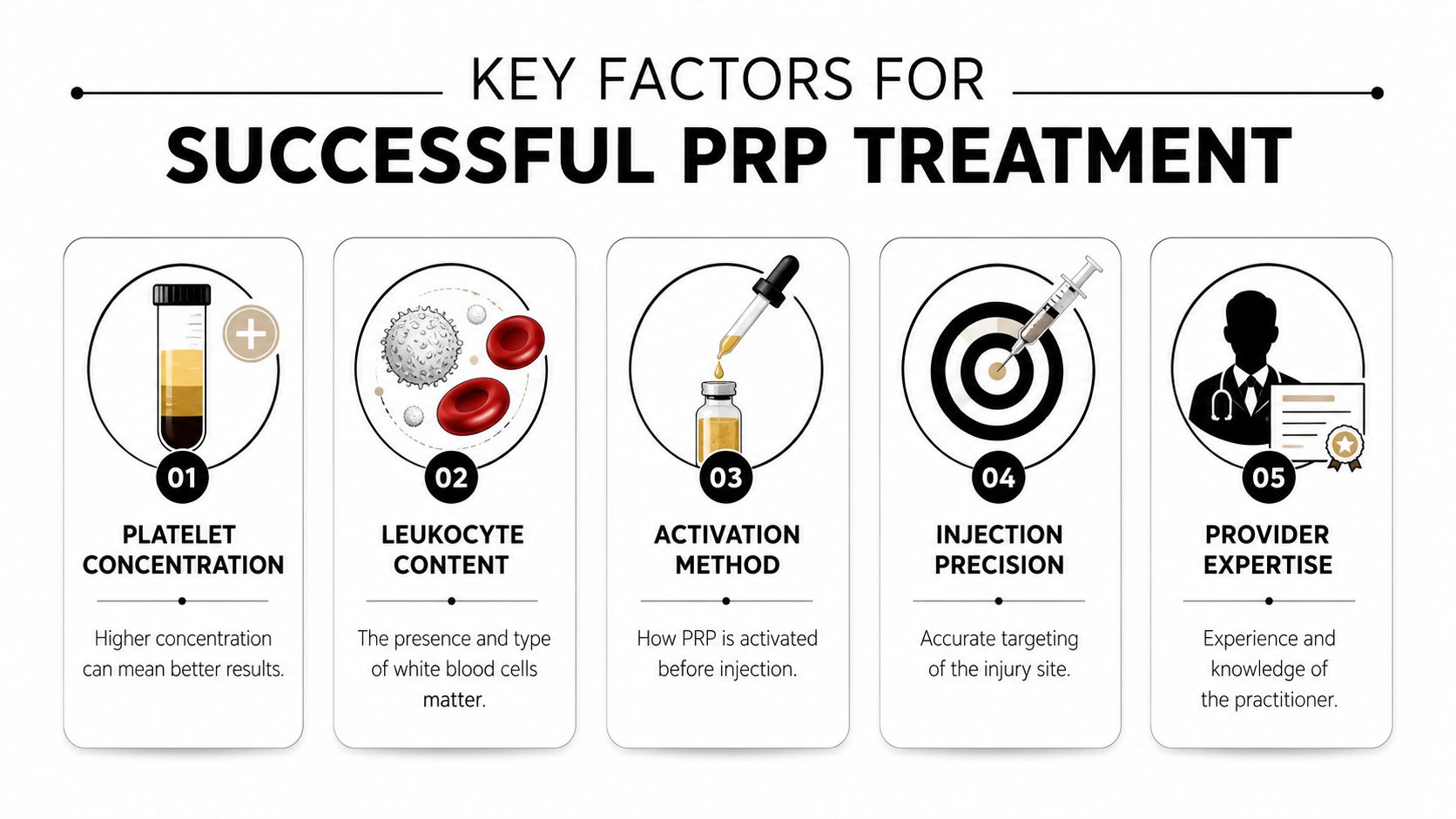
Not All PRP Is Equal Key Factors for Success
This is the part many patients never hear. Not all PRP is the same. Two clinics can both say they offer PRP, yet the final product, the platelet dose, and the way it's delivered may be very different. That difference can shape whether the treatment performs well or disappoints.
One overlooked issue is platelet dosing. A source discussing dose thresholds notes that sub-therapeutic platelet levels can lead to poor outcomes, while higher absolute platelet counts have been associated with better symptom relief in osteoarthritis models used as a proxy for spinal degeneration. It highlights 5 to 10 billion platelets as a clinically important range, with references to 7 billion and 10 billion thresholds in different joints, as discussed in this educational review on platelet dosing and PRP effectiveness.
The questions patients should ask
If you're considering a PRP injection neck procedure, ask practical questions. Not marketing questions.
- How is the PRP prepared? The preparation system affects concentration and composition.
- What platelet dose are you aiming for? Dose matters. “We do PRP” isn't enough information.
- Is the formulation leukocyte-poor when appropriate? White blood cell content can influence how inflammatory the injection is.
- How do you confirm placement? Precision in the neck is not optional.
Why formulation matters
Leukocyte-poor PRP has been shown in multiple clinical trials to be more effective than placebo, steroid, and gel injections for mild to moderate symptomatic osteoarthritis, with better outcomes in earlier disease stages, according to this summary of leukocyte-poor PRP findings in osteoarthritis care.
That doesn't mean every neck problem should get the same formulation. It does mean that PRP quality isn't a minor technicality. It's one of the core determinants of outcome.
Patients sometimes assume PRP failed when the actual issue was one of these:
- Insufficient platelet concentration
- The wrong formulation for the target tissue
- Poor candidate selection
- Inaccurate injection targeting
Those are avoidable problems. A thoughtful PRP plan treats them as central, not secondary.
Alternatives Costs and Recovery
Most patients compare PRP with what they already know. Usually that means therapy, medication, or steroid injections. That comparison is useful, as long as it stays honest.
Recovery after a PRP injection in the neck is usually not dramatic, but it does require patience. The common pattern is early soreness, then a gradual shift over the following weeks as the tissue response develops. Some people feel uncertain at first because they don't get instant relief. That doesn't automatically mean the treatment isn't working.
Comparing common options
| Comparing Neck Pain Treatment Options | |||
|---|---|---|---|
| Treatment | Mechanism | Relief Timeline | Typical Durability |
| PRP injection | Uses concentrated platelets from your own blood to support tissue healing and biologic repair | Usually gradual rather than immediate | May offer longer-lasting improvement in selected patients |
| Corticosteroid injection | Suppresses inflammation around the painful structure | Often faster symptom relief | Often shorter-term relief |
| Physical therapy | Improves strength, mobility, posture, and movement mechanics | Gradual and activity-dependent | Often foundational, especially when paired with the right diagnosis and home program |
Trade-offs patients should understand
Physical therapy remains important. This is a pain and wellness clinic, not a physical therapy office, but any responsible pain specialist will say the same thing. Better tissue support and better movement mechanics often work best together, not in competition.
Steroid injections also still have a place. They can be useful when inflammation control is the near-term priority. But patients should understand the philosophical difference. PRP aims to encourage healing. Steroids primarily calm irritation.
A few practical recovery points:
- Expect soreness first: the treatment area can feel more irritated before it improves.
- Avoid judging too early: PRP is not designed to act like a numbing shot.
- Follow aftercare closely: activity progression should match the tissue treated and your physician's plan.
- Use a broader plan: posture, sleep setup, home exercise, and work ergonomics still matter.
What about cost and insurance
Cost is a real factor, and patients deserve clarity. PRP therapy is generally not covered by most insurance plans because it is not yet FDA-approved for most musculoskeletal conditions, so patients should expect to pay out of pocket, as explained in this overview of PRP coverage and FDA status.
That doesn't automatically make it the wrong choice. It does mean the decision should be thoughtful. When a treatment is self-pay, the quality of evaluation, diagnosis, formulation, and image-guided technique becomes even more important.
Regenerative Neck Pain Relief in the Chicago Area
For adults in Illinois dealing with persistent neck pain, the most useful next step isn't chasing the newest trend. It's getting a careful diagnosis and an honest discussion of what fits your anatomy, your goals, and your tolerance for downtime, cost, and uncertainty.
That matters across the communities surrounding Chicago Ridge. Patients from Oak Lawn, Palos Hills, Palos Heights, Worth, Bridgeview, Hickory Hills, Alsip, Burbank, Evergreen Park, and Orland Park often ask the same core questions. Is this pain coming from a joint, a nerve, or soft tissue? Do I need another temporary fix, or is there a better strategy? Is there a non-surgical option that aligns with an opioid-sparing plan?
Common patient questions
How many injections will I need?
That depends on the diagnosis, the PRP formulation, the severity of degeneration or injury, and how you respond after the first treatment. A careful physician won't promise a standard number to everyone.
Is the procedure painful?
Most patients describe it as manageable. The blood draw is simple. The injection can cause pressure or soreness, and the area may ache afterward.
When can I return to work?
That depends on your job and the structure treated. Desk work may be easier to resume quickly than physically demanding work that requires lifting, repeated head movement, or prolonged posture.
Can PRP replace every other neck treatment?
No. Some conditions respond better to other interventional treatments, structured rehabilitation, medication management, or surgical evaluation. PRP is one tool, not the whole toolbox.
The right use of PRP is specific. It works best when the diagnosis is clear, the patient is well selected, and the technical details are handled carefully.
If you're looking for an evidence-based evaluation of chronic neck pain in the Chicago Ridge area, Midwest Pain & Wellness offers opioid-sparing pain care led by double board-certified interventional pain specialist Dr. Yaw Donkoh. The clinic serves patients across Oak Lawn, Palos Hills, Palos Heights, Worth, Bridgeview, Hickory Hills, Alsip, Burbank, Evergreen Park, Orland Park, and nearby Illinois communities with personalized treatment plans that may include image-guided procedures, regenerative options such as PRP, and other advanced non-surgical pain solutions.