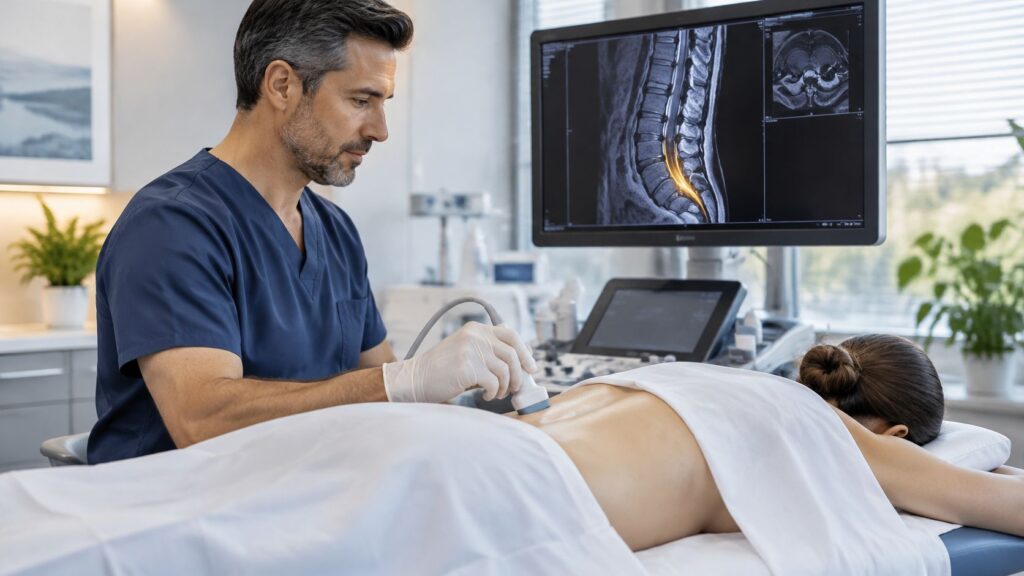
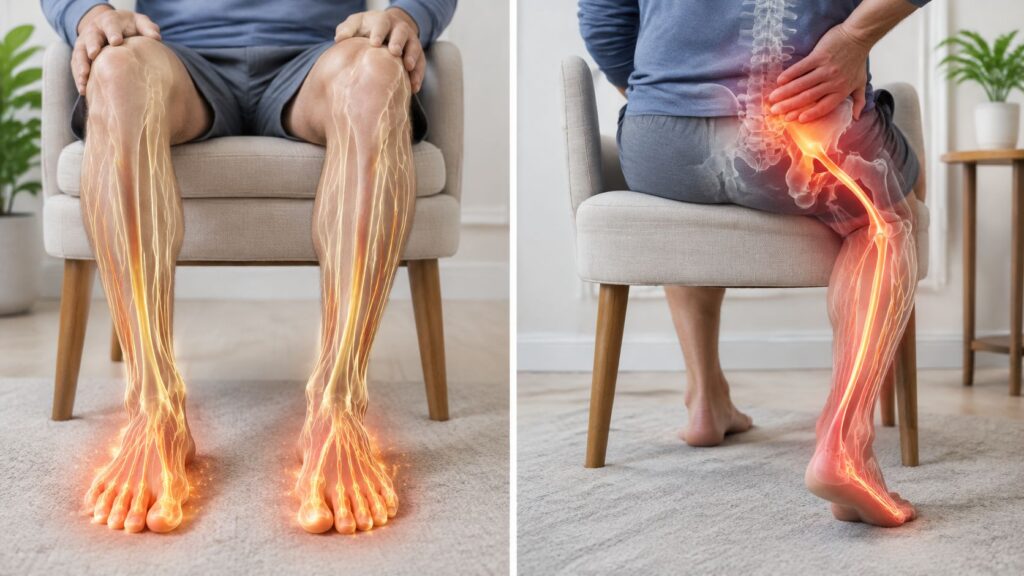
Persistent pain changes ordinary life in quiet, stubborn ways. In the Chicago Ridge area, that often means a short drive to Oak Lawn feels longer than it should, grocery shopping in Palos Heights becomes a calculation, and getting out of bed in Orland Park takes a minute of preparation before your feet even hit the floor.
Many people who ask about stem cell therapy for pain aren't looking for hype. They're asking three direct questions. Is this real? Is it safe? Am I a candidate? Those are the right questions. They matter more than marketing language, and they matter more than a promise that sounds too clean for a condition that's been affecting your back, knee, neck, or nerves for months or years.
In a pain and wellness clinic, the job isn't to sell one procedure. The job is to identify the pain generator, review what you've already tried, and decide whether regenerative treatment belongs in the plan at all. For some patients in Oak Lawn, Palos Hills, Bridgeview, Hickory Hills, Worth, Alsip, Burbank, Evergreen Park, Orland Park, and nearby Illinois communities, stem cell therapy may be a reasonable option. For others, it isn't the right tool.
Living with Chronic Pain in the Chicago Suburbs
A typical patient story doesn't start with regenerative medicine. It starts with limitation.
Someone in Palos Hills has low back pain that began as a nuisance and slowly took over daily decisions. They stopped taking longer walks. They sit through work meetings by shifting positions every few minutes. Sleep gets lighter. Driving through Bridgeview or Burbank becomes uncomfortable. They've tried medications, maybe an injection, maybe therapy, maybe home exercises, and they still feel stuck.
Another patient in Orland Park may have knee pain that isn't dramatic enough for an emergency visit but is constant enough to wear them down. Stairs hurt. Getting up from a chair hurts. Standing at a family event hurts. They don't want opioids, and they don't want surgery unless it's clearly necessary.
Why patients start asking about regenerative care
Patients often reach this point after standard treatments have given only partial relief or short-lived relief. They want something that addresses more than pain masking. They also want an honest answer about whether newer options are meaningful medicine or just a trend.
That skepticism is healthy.
Stem cell therapy for pain shouldn't be presented as a miracle cure. It belongs in a careful discussion about diagnosis, stage of disease, prior treatment response, and realistic goals.
In the pain clinic setting, the conversation usually centers on a few practical goals:
- Reduce pain enough to restore function so walking, working, or sleeping becomes easier
- Avoid unnecessary escalation to stronger medications when better-targeted options exist
- Delay or avoid surgery when appropriate, but not when surgery is clearly the better answer
- Build a plan around the person, not around one fashionable procedure
What patients in Illinois usually want to know first
Local patients from Evergreen Park, Oak Lawn, or Worth often ask for the same kind of clarity. They want to know whether the treatment is based on actual evidence, whether the procedure is done safely and precisely, and whether they're being evaluated by a pain specialist or being funneled into a cash-pay service.
Those concerns are justified. Stem cell therapy for pain is promising in some settings, limited in others, and still surrounded by confusion. The useful way to approach it is the same way a board-certified interventional pain specialist approaches any procedure. Start with diagnosis. Match the treatment to the problem. Be candid about what it can and can't do.
How Stem Cell Therapy Works for Pain Management
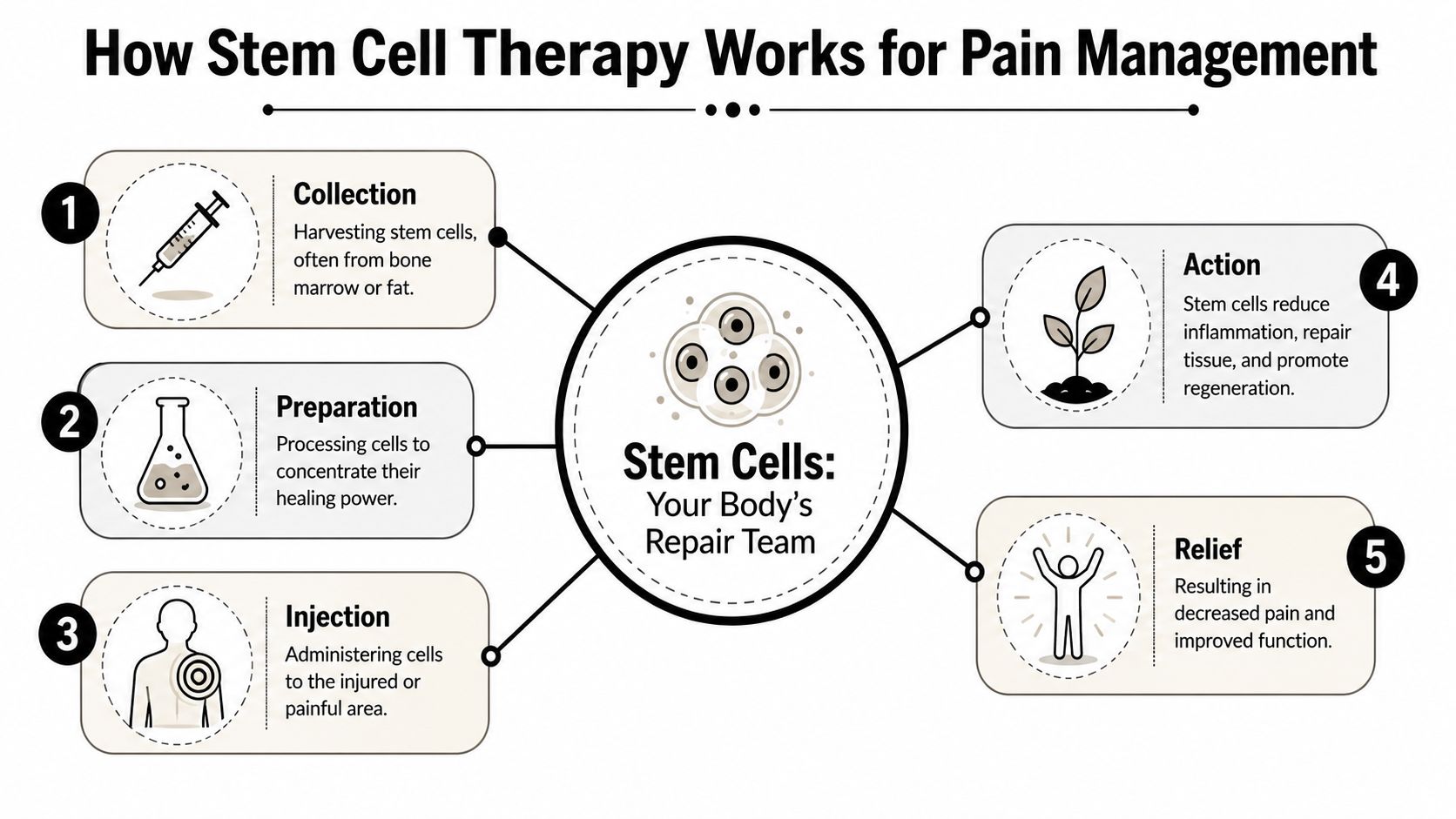
Stem cell therapy for pain is easier to understand when you stop thinking of it as a magic rebuild and start thinking of it as a repair coordinator.
Mesenchymal stem cells, often called MSCs, are used in many pain-focused regenerative applications. Their main role isn't limited to turning into brand-new tissue on command. Their more important function is to influence the local environment. They help calm inflammation, support extracellular matrix repair, and release signaling molecules such as IGF-1 and TGF-beta that affect healing activity in damaged tissue, as described in this review of MSC-based pain management evidence.
The practical mechanism
A useful analogy is a construction foreman at a damaged job site. The foreman doesn't personally lay every brick. The foreman organizes the response, reduces chaos, and helps the right repair crews work in the right place. That's closer to how these cells function in pain management.
In real terms, that means the treatment may help by:
- Reducing inflammatory signaling in painful degenerative tissue
- Supporting tissue repair activity rather than only blocking pain signals
- Modulating the local environment around structures such as discs, joints, and soft tissue
- Working gradually, because biologic healing doesn't happen overnight
Where the cells come from
For pain management, the discussion usually involves either autologous cells, meaning cells derived from the patient's own body, or certain birth-tissue-based products discussed in the broader regenerative space. In a pain and wellness clinic, the details matter. Source, preparation, handling, regulatory status, and injection accuracy all affect whether the treatment is being approached responsibly.
Patients who want a grounded overview of autologous approaches can review this page on autologous cell therapy.
Practical rule: If a clinic talks more about “healing everything” than about diagnosis, imaging, target anatomy, and image-guided delivery, slow down and ask harder questions.
One more point matters. This isn't about embryonic stem cells. In orthopedic and pain conversations, patients are usually asking about mesenchymal cell-based regenerative treatment, not the controversial concepts they may have heard about in unrelated medical fields.
What Pain Conditions May Respond to Stem Cell Therapy
A better question than “Does stem cell therapy work for pain?” is “Which pain problem are we trying to treat?” Outcomes depend on the tissue involved, how advanced the damage is, and whether the pain generator has been identified with reasonable confidence. In practice, the most reasonable discussions are usually about localized orthopedic or spine pain, not diffuse pain without a clear source.
Spine pain
Disc-related low back pain has some of the most studied regenerative data in pain medicine. A 2025 systematic review and meta-analysis reported statistically significant improvement in pain and disability scores after intradiscal stem cell therapy for discogenic low back pain, with some imaging changes in disc morphology as well, in this review of discogenic low back pain outcomes.
That finding needs context. Discogenic pain is only one subtype of back pain. Patients with marked spinal instability, severe stenosis, progressive neurologic loss, fracture, tumor, infection, or end-stage collapse usually need a different plan. A biologic injection does not correct every structural problem, and it should not delay surgery when surgery is clearly indicated.
Radiating leg pain also needs careful sorting out. True sciatica from nerve-root irritation is different from referred pain from the facet joints, sacroiliac joint, hip, or surrounding muscles. While that evaluation is underway, some patients review conservative options such as effective sciatica remedies along with physical therapy, medication strategies, and image-guided procedures.
Back and neck pain data that helps set expectations
Early clinical studies suggest some patients with chronic back or neck pain can improve after mesenchymal cell-based treatment. One Phase I trial reported meaningful pain reduction in a substantial portion of treated patients over follow-up, with improvement in average pain scores as summarized in the Phase I clinical trial on chronic back and neck pain.
I would still present those results cautiously. Phase I studies are useful for feasibility and safety signals, but they do not settle who benefits most, how durable benefit will be, or whether outcomes outperform other image-guided treatments in broader practice.
Joint and soft tissue pain
Joint pain is a separate category. Knee, hip, shoulder, and other arthritic joints may be considered when symptoms remain significant, imaging shows degeneration that is not yet end-stage, and the goal is to improve pain and function rather than promise cartilage regrowth. The same careful thinking applies to tendon and ligament problems.
Soft-tissue conditions may respond in selected cases, especially chronic tendinopathy that has not improved with loading programs, therapy, and time. In a five-year study of chronic patellar tendinopathy, investigators reported sustained improvement in pain, function, and ultrasound findings in most treated patients, based on the five-year patellar tendinopathy study.
For patients in Illinois trying to separate legitimate regenerative care from marketing, diagnosis matters more than broad claims. A focused review of regenerative medicine and tissue engineering can help frame what may be reasonable to discuss in clinic, and what remains investigational.
Determining If You Are a Good Candidate
A patient walks into clinic with an MRI report in hand, months of failed treatment behind them, and one direct question. Is stem cell therapy for pain a real option, or another treatment that sounds better online than it performs in practice?
Candidacy starts there. The right question is not whether regenerative treatment is available. The right question is whether your diagnosis, imaging, pain pattern, and treatment goals make it reasonable to consider.
The patients I consider strongest candidates usually have a defined pain generator, symptoms that have persisted despite appropriate conservative care, and imaging that shows degeneration but not complete structural failure. In practical terms, that often means moderate disease rather than end-stage collapse. It also means the pain complaint matches the exam and the scan. If those pieces do not line up, I do not treat based on hope alone.
Signs you may be a reasonable candidate
A careful evaluation usually favors patients with several of these features:
- A specific diagnosis supported by history, exam, and imaging
- Pain that has lasted for months, despite physical therapy, medications, activity modification, or other standard care
- Degeneration that is present but not end-stage
- Realistic goals, such as sitting longer, walking farther, sleeping better, or returning to work or recreation
- A willingness to accept uncertainty, because results vary and no regenerative injection can guarantee repair
For disc-related back pain, formal study criteria have been fairly selective. One clinical trial enrolled patients with ongoing pain, MRI evidence of degeneration in a limited number of lumbar discs, and less advanced structural loss, as described in the discogenic back pain trial criteria. That reflects how this field works in real practice. Better candidates are usually chosen, not recruited broadly from every patient with chronic pain.
When it is probably not the right fit
Some patients should hear “no,” or at least “not now.”
Stem cell procedures are usually a poor fit for widespread pain without a clear source, severe spinal instability, major neurologic compression, active infection, uncontrolled bleeding risk, or end-stage joint destruction. A bone-on-bone joint, a collapsed disc space, or advanced mechanical instability often points toward other treatments, including surgery in some cases.
This is also where the hype can get ahead of the evidence. Early-stage or moderate degeneration makes more biologic sense than late-stage structural failure. If the anatomy is too far gone, an injection may do little even if the procedure itself is performed correctly.
If your imaging shows severe collapse, instability, or advanced end-stage degeneration, the more appropriate plan may be decompression, reconstruction, joint replacement, or another established intervention.
The questions patients in Illinois should ask
Patients deserve straight answers before they consent to any regenerative procedure.
Ask whether the diagnosis is clear. Ask what standard treatments have already been tried, and whether any remain reasonable. Ask whether the proposed injectate is autologous and used in a manner that fits current regulatory boundaries, or whether the clinic is making claims that go beyond what is proven or FDA-approved. Ask what outcome would count as success. Less pain, better function, lower medication use, or delay of surgery are all different goals.
A good candidate is not merely someone who wants to avoid surgery. A good candidate is someone whose condition, exam, imaging, and expectations all support a trial of treatment with an honest understanding of the limits.
The Treatment Process from Consultation to Recovery
Patients usually feel more comfortable once they know what the process looks like. In a legitimate pain practice, it isn't rushed and it isn't improvised.
Step one through three
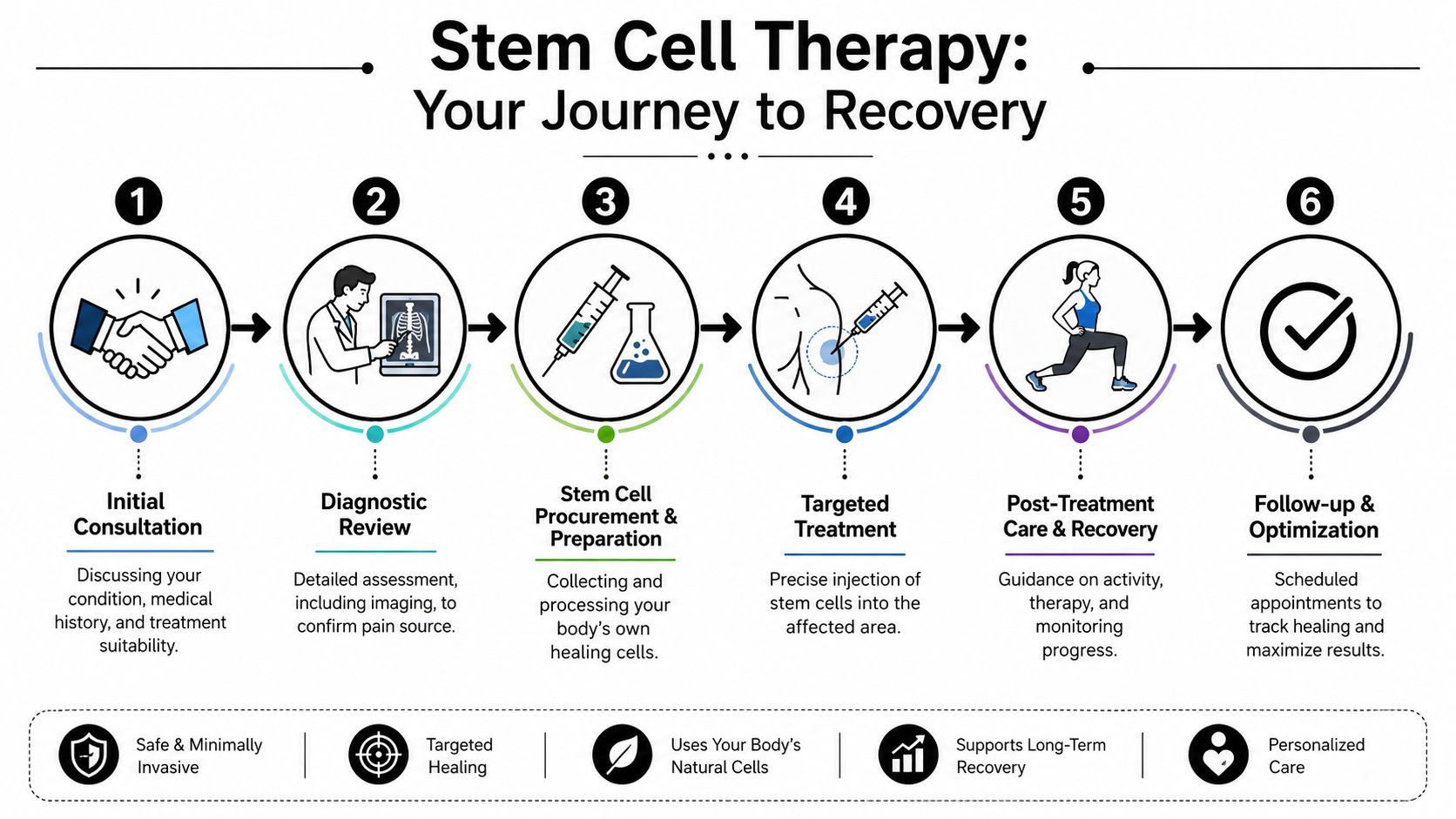
The first stage is a consultation and diagnostic review. The pain history, prior treatment response, imaging, medication profile, and physical exam all need to align. If they don't, no injection should be recommended just because the patient asks for one.
If an autologous procedure is appropriate, the next step is cell procurement and preparation. That may involve collecting the patient's own biologic material and processing it according to the treatment plan. The exact method depends on the indication and the physician's protocol.
Then comes the most technical part. The treatment has to be delivered to the correct target, typically with image guidance. In pain management, accuracy matters because “near the problem” is not the same thing as “in the pain generator.”
Recovery and the timeline patients should expect
The recovery phase often surprises patients because it isn't an instant-relief procedure. Most patients begin noticing improvement between four and eight weeks after stem cell treatment for joint pain, and the benefits may continue developing for up to six months post-procedure, according to this summary of post-procedure improvement timing.
That timeline makes biologic sense. The goal isn't to numb tissue for a weekend. The goal is to influence a healing environment over time.
A reasonable post-procedure plan often includes:
- Activity modification early on so the treated area isn't overloaded immediately
- Follow-up assessment to track pain, function, and any adverse response
- Rehabilitation when appropriate to support mobility, strength, and movement quality
- Adjustment of the larger pain plan based on response, not on hope alone
Early soreness doesn't always mean something went wrong. Lack of overnight change doesn't mean the treatment failed. Biologic treatments usually need time to declare themselves.
Navigating Risks Regulations and Costs
Many stem cell therapy discussions become misleading. The science may be promising. The marketplace is often much less disciplined.
What is and isn't established
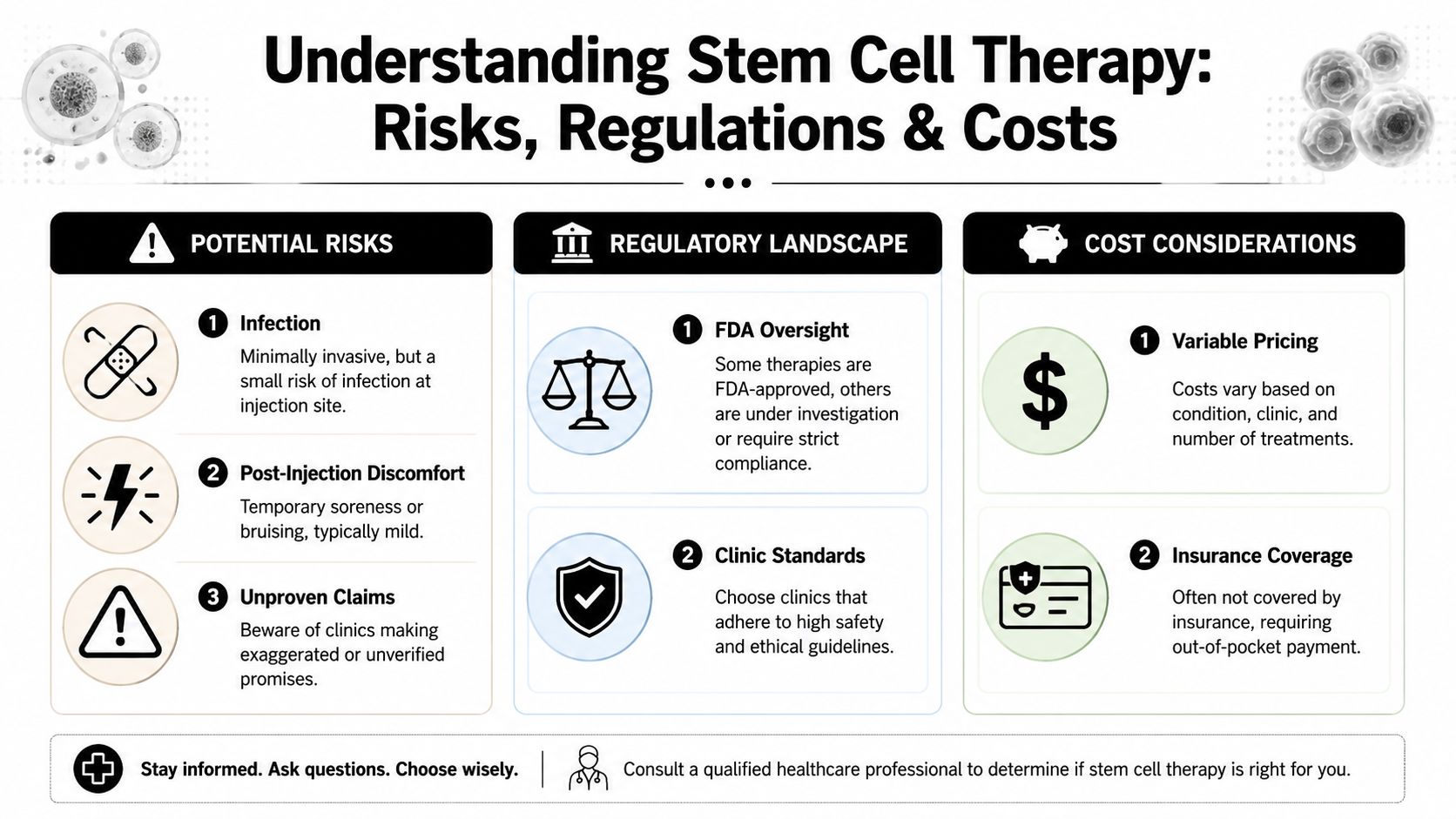
Most stem cell treatments for chronic orthopedic or nerve pain in the United States are not FDA-approved, many clinics function in a regulatory gray area, and real risks include infection, variable quality, and high out-of-pocket costs, according to this review of regulatory status and experimental risks.
That single point answers two common patient questions.
Is it real? Yes, there is a real scientific and clinical basis for regenerative treatment in selected pain conditions.
Is it fully established standard care? Often, no. For many orthopedic and pain indications, it remains investigational or selectively used rather than guideline-first therapy.
Risks and trade-offs patients should hear plainly
A careful consent discussion should include more than optimism.
- Procedure-related risk includes infection, soreness, swelling, bruising, and sometimes worsening pain after injection.
- Outcome uncertainty matters. Some patients improve meaningfully. Others improve partially. Some don't improve enough.
- Financial exposure is real because these treatments are often cash-pay.
- Quality variation across clinics can be significant. That includes differences in evaluation, product handling, sterility, and injection precision.
Concerns about avoiding long-term opioid escalation are also valid. Patients and families who want to understand the broader legal and medical context around prescribing harms may find this resource on medical negligence for opioid abuse helpful.
How stem cell therapy compares in practical terms
| Option | Main purpose | Invasiveness | Typical role in pain care | Key limitation |
|---|---|---|---|---|
| Stem cell therapy for pain | Support repair signaling and modulate inflammation | Minimally invasive injection procedure | Selected cases after proper evaluation | Evidence is promising but not definitive for many conditions |
| PRP | Deliver concentrated growth factors | Minimally invasive injection procedure | Tendon, joint, and soft tissue applications | Not ideal for every pain generator |
| Corticosteroid injection | Suppress inflammation quickly | Minimally invasive injection procedure | Short-term symptom control and diagnostic value | Relief may fade and doesn't aim to regenerate tissue |
| Surgery | Correct structural pathology directly | Most invasive | Severe instability, compression, deformity, or end-stage disease | Recovery is larger and candidacy is narrower |
For patients asking about pricing, insurance, and the financial side of treatment, this page on how much stem cell treatment may cost helps frame the questions to ask before committing.
When to Consult a Pain Specialist in Illinois
Patients in Chicago Ridge and the surrounding Illinois suburbs usually reach the right point for specialist evaluation when pain has become persistent, function is slipping, and the diagnosis still isn't clear enough to guide next steps.
That applies whether you live in Oak Lawn, Palos Heights, Hickory Hills, Worth, Alsip, Burbank, Bridgeview, Evergreen Park, Orland Park, or Palos Hills. If you've tried medications, rest, therapy, or basic injections and you're still limited, the next step shouldn't be guessing. It should be a focused pain evaluation.
What a specialist should help you answer
A strong consultation should clarify:
- What structure is causing the pain
- Whether the problem is inflammatory, mechanical, neurologic, or mixed
- Which options are evidence-based for your stage of disease
- Whether regenerative medicine belongs in the plan at all
A pain and wellness clinic differs from a one-treatment model. Midwest Pain & Wellness, led by double board-certified interventional pain specialist Dr. Yaw Donkoh, evaluates regenerative medicine as one option within a broader opioid-sparing strategy that may also include image-guided injections, radiofrequency ablation, neuromodulation, minimally invasive procedures, rehabilitation coordination, and medication management when appropriate.
A practical reason not to wait too long
Pain that lingers doesn't just affect comfort. It can alter movement, sleep, mood, work capacity, and confidence in your body. Earlier specialist review may also help identify when a patient is a better fit for targeted nonsurgical care rather than waiting until the condition becomes harder to treat.
Insurance questions often come up at the same time, especially for people already managing chronic medical issues. If you're sorting through coverage concerns beyond pain care itself, a guide on getting covered with pre-existing medical conditions may help you organize the right questions for your insurer or broker.
The right consultation doesn't end with “yes” or “no” to stem cells. It ends with a diagnosis, a treatment sequence, and a realistic plan.
If you're living with ongoing back, neck, joint, or nerve pain in the Chicago Ridge area, schedule a consultation with Midwest Pain & Wellness to get a clear diagnosis and a treatment plan built around your condition, goals, and options, whether that includes regenerative care or a different evidence-based path.