Pain changes ordinary days in very ordinary places. A drive from Oak Lawn to work feels longer because your neck tightens at every stoplight. Grabbing groceries in Orland Park becomes a calculation about how far you can walk before the burning in your leg starts again. Sleep gets lighter. Patience gets shorter. You may have already tried rest, pills, heat, stretching, or injections that felt too broad and not targeted enough.
For many people in the southwest suburbs of Illinois, the next step isn't “more medication.” It's a more precise treatment plan. That's where ultrasound guidance for nerve blocks can make a real difference.
Living with Pain in Illinois? A Better Solution Exists
A lot of patients in places like Palos Hills, Evergreen Park, and Worth arrive feeling stuck. They're tired of living around pain. They're also tired of treatments that either don't last, leave them foggy, or don't clearly target the structure that's causing the problem.

A nerve block is often a practical answer when pain is being driven by an irritated or inflamed nerve. Instead of treating your whole body to reach one painful area, a nerve block places medication near the specific nerve involved. That can calm pain, reduce inflammation, and help confirm the true pain source.
Why older approaches often leave people frustrated
Older nerve block methods relied more heavily on surface anatomy, feel, and estimation. Experienced physicians could perform them well, but the process still involved more guesswork than many patients realize. If your anatomy is slightly different, if tissues are inflamed, or if the painful structure sits close to a blood vessel, “close enough” isn't good enough.
That matters when you're hoping to get back to work, care for family, or move around Chicago Ridge and nearby communities without constantly planning around pain.
A targeted procedure should feel targeted from the physician's side too. That means seeing the anatomy, not just inferring it.
A more modern standard for patients from Alsip to Hickory Hills
Ultrasound changed the procedure in a meaningful way. It lets a pain specialist watch the nerve, nearby vessels, surrounding soft tissue, and the spread of medication in real time. That gives patients a more precise, opioid-sparing option that fits the way modern interventional pain medicine should work.
People searching for help in Bridgeview, Burbank, Palos Heights, or Orland Park often want the same thing. They want relief that makes medical sense. They want a procedure performed with care. And they want a plan that supports an active life, not long-term dependence on pain pills.
If you want to understand how image-guided interventional care fits into a broader treatment strategy, this overview of an interventional pain management clinic is a useful starting point.
Seeing Inside Your Body for Pinpoint Pain Relief
The easiest way to understand ultrasound guidance for nerve blocks is to compare it to walking through a dark room. You can move carefully, use memory, and still get where you're going. But if you turn on the lights, the job becomes safer and more exact.
That's what ultrasound does during a nerve block. It uses sound waves to create a live image of the structures under the skin. Instead of estimating where a nerve should be, the physician can identify the target and guide the needle with real-time visual feedback.
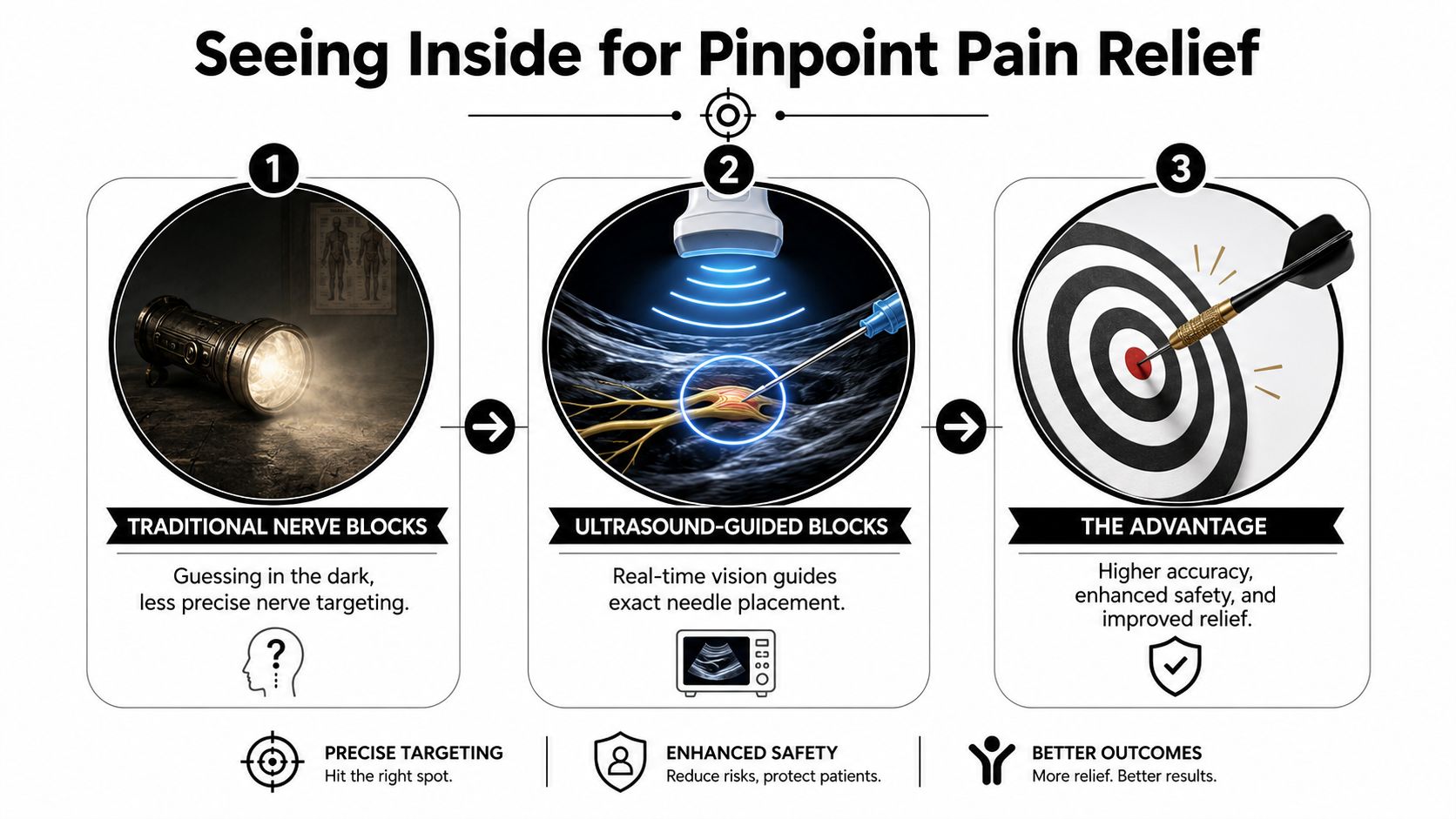
What the physician can actually see
During the procedure, ultrasound can show:
- The nerve itself so the target is identified directly rather than guessed from landmarks
- Blood vessels nearby so the needle path can avoid them
- Muscles and fascial planes that affect how the medication spreads
- The needle tip in motion as it advances toward the intended area
- The medication spread once injected, confirming delivery where it's meant to go
This last point matters more than is commonly understood. A nerve block isn't just about getting the needle into the general region. It's about placing medication where it can do its job effectively without drifting where it isn't needed.
Why this can mean less medication, not more
One of the practical advantages of seeing the needle tip and the injectate spread is that the physician can work more efficiently. A review on ultrasound-guided deep peripheral nerve blocks reported that ultrasound guidance can reduce local anesthetic volume by 30 to 50 percent while maintaining equivalent or superior block efficacy and duration because of real-time visualization of the needle tip and anesthetic spread (deep peripheral nerve block review).
That doesn't mean every patient gets the same dose or the same type of block. It does mean precision often allows a more thoughtful use of medication.
Practical rule: The best image-guided procedure is not the one that uses the most medicine. It's the one that places the right medicine in the right place.
Why patients usually find this reassuring
Most patients feel less anxious once they understand that the procedure is built around direct visualization. They're not being asked to trust a blind shot. They're being treated with a technique designed to show the anatomy as it is that day, in that body, in real time.
That's especially helpful in pain medicine, where small differences in placement can shape whether a procedure feels incomplete or beneficial.
Why Precision Matters for Your Safety and Results
Precision matters because a nerve block is performed in crowded anatomy. Nerves often sit near blood vessels, muscle layers, tendons, and other sensitive structures. If a physician can see those structures in real time, the procedure becomes more controlled.
A direct comparison with electrical neurostimulation found that ultrasound guidance reduced the risk of vascular puncture by 84 percent during peripheral nerve blockade (meta-analysis summary on vascular puncture reduction). That's one of the clearest reasons many specialists prefer ultrasound when it's appropriate for the block being performed.
Safety is not abstract in a procedure room
For patients in Bridgeview, Burbank, and nearby Illinois communities, “safer” shouldn't be marketing language. It should mean something practical. In this setting, it means the physician can actively avoid blood vessels, verify the needle path, and watch the medication spread before completing the injection.
It also means the procedure can be adjusted in the moment. If tissue planes don't open as expected, if anatomy looks different from textbook diagrams, or if the target appears deeper than expected, the physician isn't committed to a guess.
Accuracy and effectiveness go together
When medication is delivered closer to the intended nerve, the block is more likely to do what it's supposed to do. Better targeting can improve diagnostic clarity and therapeutic relief. It can also help answer an important question in pain medicine: “Is this really the structure causing your pain?”
For some patients, that answer guides the next treatment step. A successful diagnostic block can point toward a longer-term intervention. An incomplete block can signal that the original pain generator may be elsewhere.
Here's a practical comparison.
| Technique | What It Sees | Key Advantage | Key Limitation |
|---|---|---|---|
| Landmark-based guidance | Surface anatomy only | Simple concept and no imaging required | Less precise soft tissue targeting |
| Fluoroscopy | Bones and contrast patterns | Useful for many spine procedures | Doesn't show soft tissues and nerves the way ultrasound does |
| Ultrasound guidance | Nerves, vessels, muscles, soft tissues, needle movement, medication spread | Real-time soft tissue visualization and precise targeting | Image quality can vary based on anatomy and block depth |
Why many pain specialists choose ultrasound first
This isn't about using technology for its own sake. It's about choosing the imaging method that best matches the clinical problem. For many peripheral nerve blocks, ultrasound offers something older methods can't. It shows the structures that matter most for the procedure itself.
If you're also comparing treatments that use anti-inflammatory medication, this plain-language explanation of how a steroid injection works can help you understand where a nerve block may fit.
Common Conditions We Treat with This Technique
A lot of people hear “nerve block” and think of one narrow use. In practice, ultrasound guidance for nerve blocks can help in several very different situations. The same imaging principle applies, but the goal may be pain relief, diagnosis, or both.
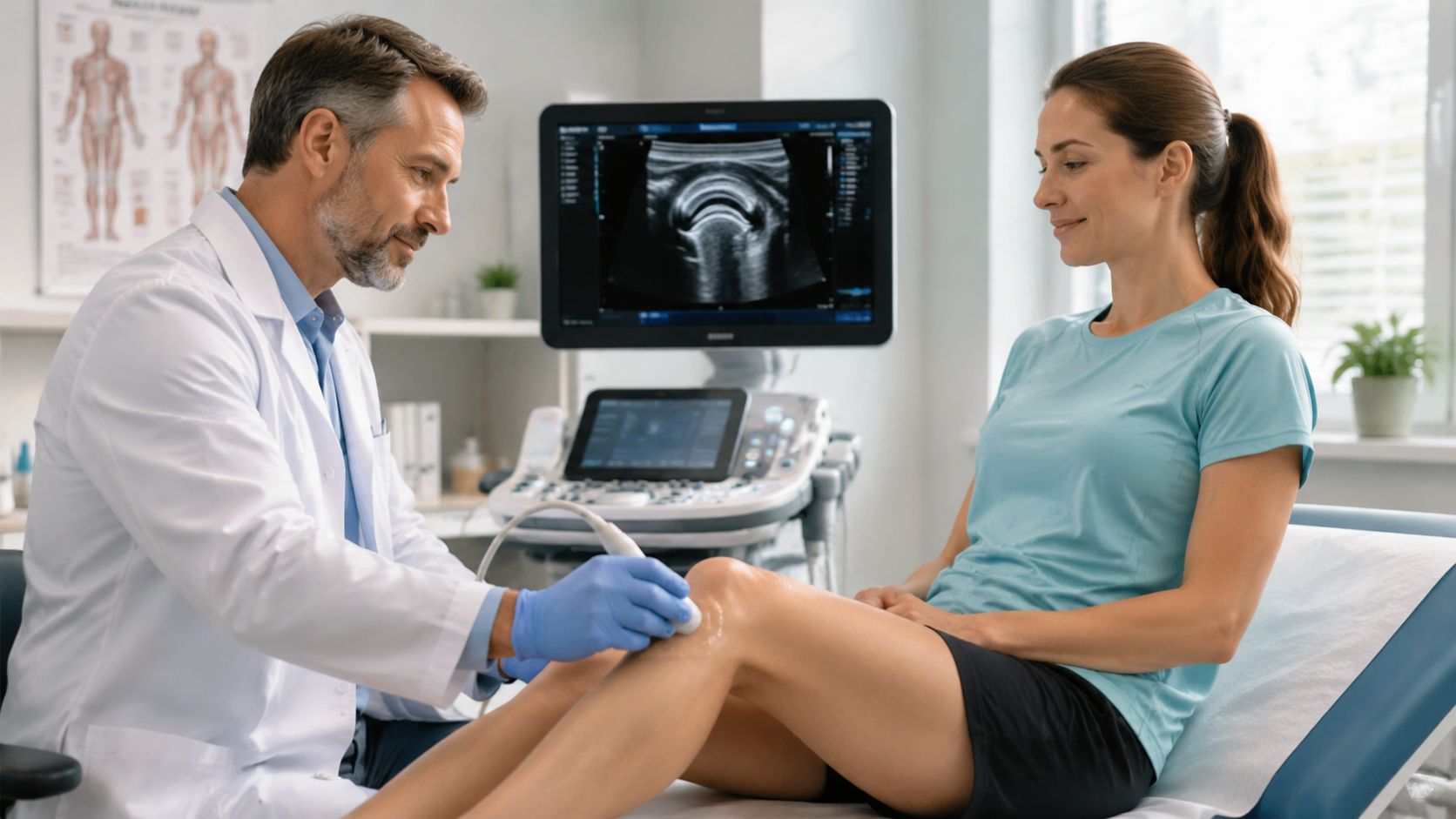
Peripheral nerve pain in the arms and legs
Some patients have pain tied to a specific peripheral nerve after surgery, injury, entrapment, or chronic irritation. In these cases, the block can place numbing medicine and sometimes anti-inflammatory medication near the involved nerve to calm the area and break a cycle of ongoing irritation.
Examples often include:
- Carpal tunnel symptoms in the hand and wrist, where ultrasound-guided injections have shown more favorable results than landmark-guided injections for symptom severity and function in the CMS Medicare Coverage Database (CMS coverage review for ultrasound-guided injections)
- Post-surgical knee or leg pain when a peripheral nerve remains sensitized
- Focal nerve irritation after trauma, where a more targeted block can be both therapeutic and diagnostic
For practices trying to understand the coding side of wrist and hand procedures, resources on managing carpal tunnel injection claims can be useful alongside the clinical discussion.
Chronic shoulder pain
Shoulder pain is common, but not all shoulder pain responds well to the same treatment. When the pain pattern fits, a suprascapular nerve block can reduce pain and help restore movement. The CMS Medicare Coverage Database notes that ultrasound-guided suprascapular nerve blocks provide pain relief and improve range of motion for chronic shoulder pain in the evidence reviewed at that coverage page.
That's important for patients who aren't just looking for a lower pain score. They want to reach overhead, dress without wincing, and sleep on the affected side again.
When a block is used well, the goal is not simply numbness. The goal is function.
Diagnostic blocks before a longer-lasting procedure
Sometimes the most valuable role of a nerve block is diagnostic. If a patient has complex neck, back, joint, or limb pain, a carefully targeted block can help isolate the exact pain generator. That information can guide the next step, such as a more durable intervention.
This matters in real life. A patient from Worth or Evergreen Park may not want a broad treatment plan based on assumptions. A diagnostic block can narrow the field and make the next decision more confident.
Chronic neuropathic pain
Burning, tingling, shooting, or electric pain may point to a neuropathic component. In selected cases, image-guided nerve blocks can reduce that irritation enough to improve sleep, walking tolerance, or participation in rehabilitation. They're not a cure-all, but in the right patient they can be a very useful part of a broader, opioid-sparing plan.
Your Procedure at Midwest Pain & Wellness
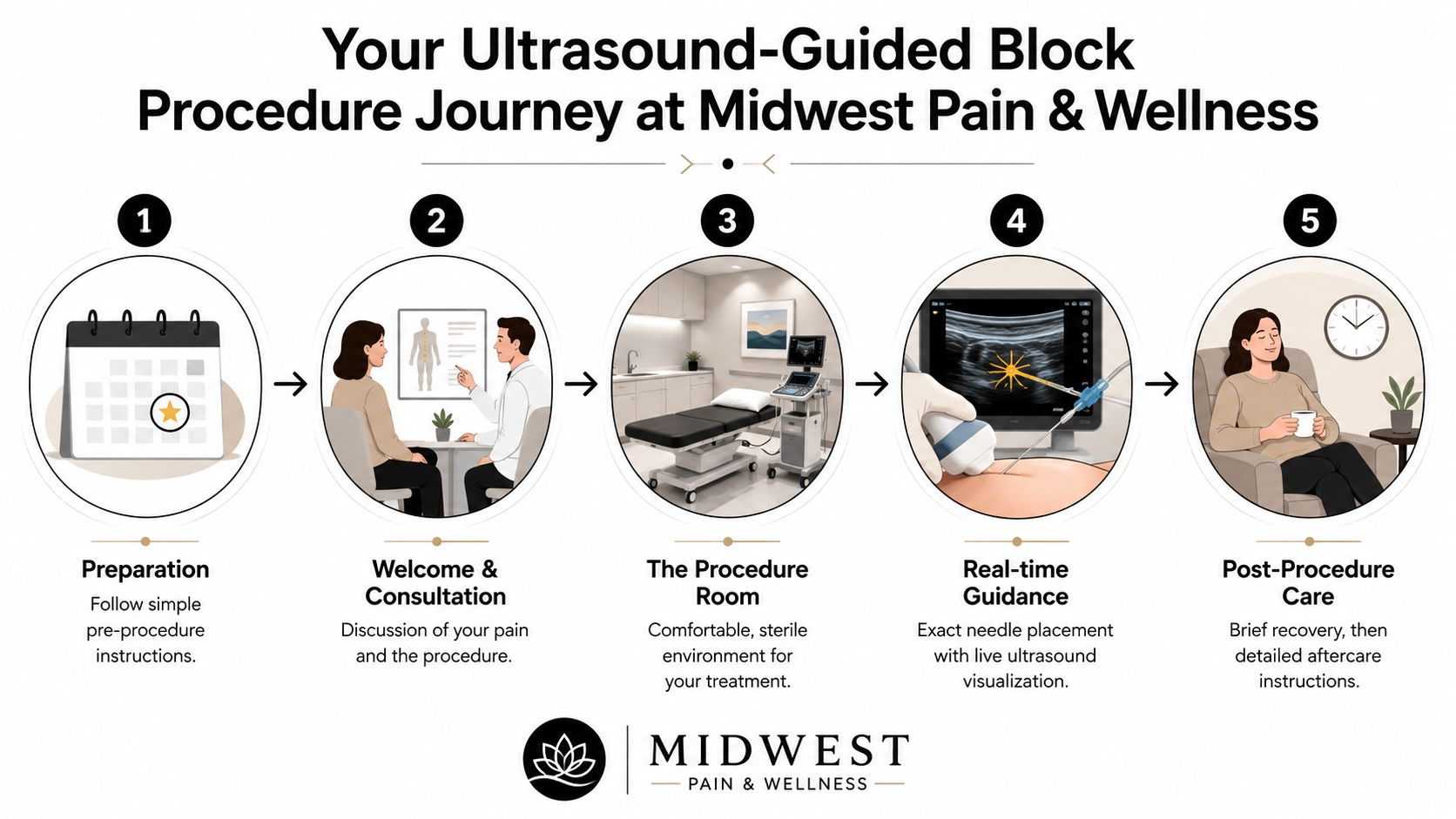
Most patients feel calmer when they know what the day will look like. An ultrasound-guided nerve block is usually straightforward, organized, and focused on comfort as well as precision.
Before the injection
You'll receive instructions specific to the procedure and your medical history. That may include guidance on medications, eating and drinking, and whether you should arrange a ride. The details can vary, so it's important to follow the clinic's instructions rather than assume every injection is handled the same way.
When you arrive, the physician reviews your symptoms, confirms the target area, and answers last-minute questions. This is also the time to discuss prior reactions, allergies, blood thinners, or any change in symptoms.
In the procedure room
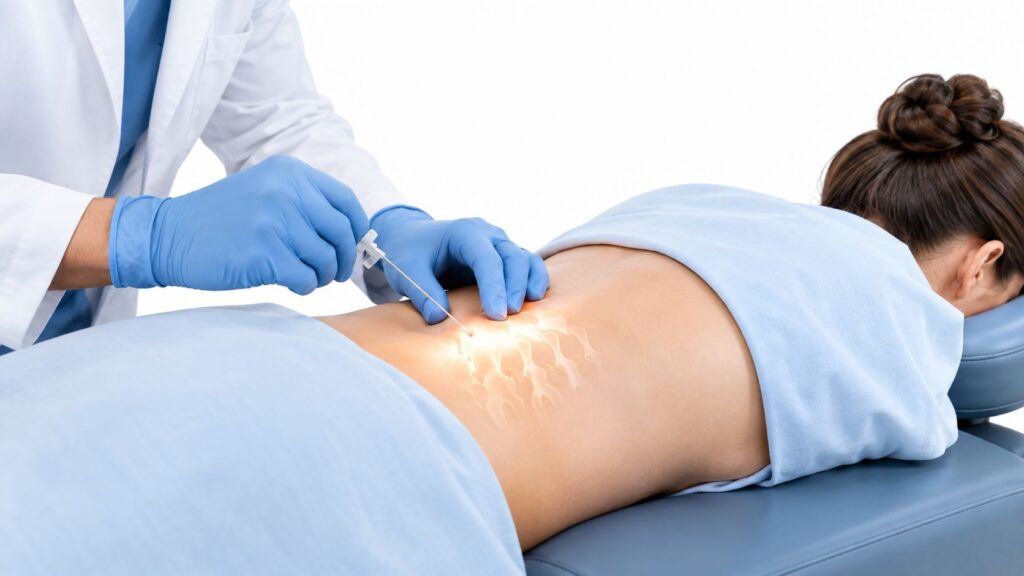
The room is set up for clean, image-guided care. You'll be positioned comfortably so the painful area is accessible and the physician has a clear ultrasound view. The skin is cleaned, and ultrasound gel is applied so the probe can create a clear image.
Then the physician identifies the target nerve and surrounding anatomy on the screen. A small amount of local anesthetic may be used to numb the skin first. After that, the needle is guided carefully under live ultrasound to the planned location, and the medication is delivered while the physician watches its spread.
Many patients are surprised by how methodical the process feels. It's not rushed, and you can usually communicate throughout the procedure.
After the block
You'll spend a short period in recovery so the team can monitor how you feel before discharge. In a multicenter cohort study of 2,742 ultrasound-guided nerve blocks across 11 emergency departments, the overall complication rate was 0.4 percent, with no cases of permanent nerve injury or significant long-term sequelae reported (NURVE Block Registry study).
That kind of safety data is reassuring, but aftercare still matters. You may notice immediate numbness, gradual pain relief, temporary heaviness, or no full effect until later depending on the medication used and the purpose of the block.
A typical visit often includes:
- Observation after the procedure so the team can confirm you're stable and comfortable
- Activity instructions based on the treated area and expected numbness
- A pain diary recommendation if the block is being used diagnostically
- A follow-up plan to review how much relief you had and for how long
If you want a more focused overview of this treatment option, this page on nerve blocks for targeted pain relief gives additional context.
Your Questions About Nerve Blocks Answered
Is the procedure painful?
Most patients describe the procedure as tolerable. You may feel pressure, brief stinging from the numbing medicine, or a temporary sensation as the needle is positioned. Because the physician can see the anatomy in real time, the procedure is usually more controlled than patients expect.
If you're anxious, say so. Good procedural care includes explaining what you'll feel before it happens.
How long will relief last?
That depends on why the block is being done, which medication is used, and how your body responds. Some blocks are mainly diagnostic and are expected to provide short-term information. Others are intended to reduce inflammation and provide relief that lasts longer.
The length of benefit can vary widely. What matters most is matching the procedure to the diagnosis and using your response to guide the next step.
Will I need to limit activity afterward?
Usually, you'll be asked to take it easy for the rest of the day, especially if the treated area feels numb or heavy. Specific restrictions depend on the body region treated. If the block affects strength or sensation temporarily, protecting that area matters until normal function returns.
Patients should ask for clear return-to-work and driving instructions before leaving the office. That's especially important if you're heading back to Oak Lawn, Palos Heights, or another nearby suburb on your own.
Why do pain specialists prioritize ultrasound guidance for nerve blocks?
Because success in pain medicine often comes down to accuracy. A meta-analysis of peripheral nerve blocks found that for every 6 patients treated with ultrasound guidance, one additional successful block is achieved compared with non-ultrasound techniques (meta-analysis on block success).
That doesn't mean ultrasound is the answer for every pain condition. It does mean that when a peripheral nerve block is the right procedure, many specialists view live ultrasound guidance as the most sensible way to perform it. For patients in Oak Lawn, Palos Hills, Palos Heights, Worth, Bridgeview, Hickory Hills, Alsip, Burbank, Evergreen Park, and Orland Park, that often translates into a treatment that is more precise, more reassuring, and more aligned with the goal of getting back to daily life without leaning on opioids.
If you're looking for an evidence-based, opioid-sparing plan for chronic pain in the Chicago Ridge area, Midwest Pain & Wellness offers advanced interventional care led by double board-certified pain specialist Dr. Yaw Donkoh. Patients from Oak Lawn, Palos Hills, Palos Heights, Worth, Bridgeview, Hickory Hills, Alsip, Burbank, Evergreen Park, and Orland Park can schedule an evaluation to learn whether ultrasound-guided nerve blocks or another targeted treatment may help restore comfort, function, and daily activity.