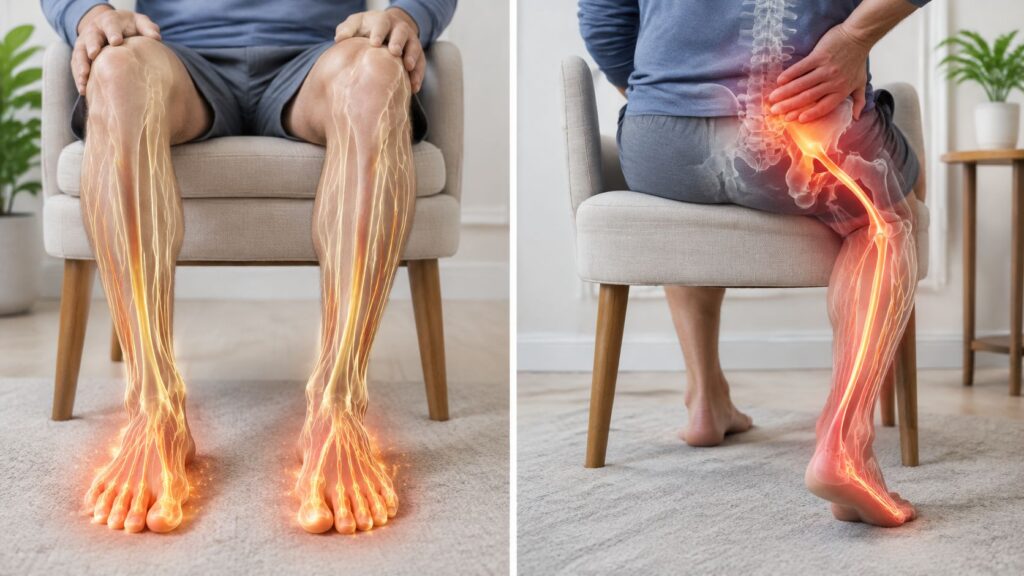
Some people in Orland Park, Oak Lawn, or Palos Heights are reading this after another disrupted day. You pushed through work with the lights turned low, skipped dinner plans, or drove home with that familiar pressure building behind your eyes. You may have tried over the counter medication, extra coffee, less coffee, more water, better sleep, or waiting it out. And still, the headaches keep coming back.
That cycle is exhausting. It also makes people doubt themselves. If you're still showing up to work, still getting kids to school, still answering texts, it's easy to think the problem isn't serious enough for specialized care. In reality, many people with migraine, tension headache, facial pain, or cervicogenic headache spend months or years trying to function around pain that deserves a proper medical plan.
For many adults in the Chicago Ridge area and nearby Illinois suburbs like Palos Hills, Worth, Bridgeview, Hickory Hills, Alsip, Burbank, Evergreen Park, and Orland Park, the hardest part isn't just the pain. It's figuring out where to go for real help. Downtown hospital systems can feel hard to access. Community patients often want a practical answer closer to home, especially if they're looking for advanced, opioid-sparing treatment rather than another round of pills.
Chicago is a major regional center for headache care. There are approximately 1,000 doctors in Chicago Ridge, Illinois who specialize in migraine and chronic headache care, and many offer minimally invasive office-based procedures that typically take 15 to 30 minutes with a return to routine shortly after discharge, according to U.S. News headache specialist listings for Chicago Ridge. That matters because specialized headache care isn't some rare option. It's available in Illinois, and for the right patient, it can change the trajectory of day-to-day life.
Your Life Interrupted by Headaches
A common story starts subtly. Someone in Evergreen Park begins getting “bad headaches” a few times a month. Then they start planning around them. They avoid loud restaurants. They keep medication in the car, desk, and nightstand. They leave family events early because the noise feels sharp. They stop promising they'll be there, because they never know what their head will do by late afternoon.
In Burbank or Alsip, it may look different. A person makes it to work but loses focus by noon. They reread the same email three times. Their neck tightens. Light from the monitor feels harsher than it should. By the time they get home, they're too drained to be present with the people they love.
That's the part many people underestimate. Headache disorders don't only hurt when pain peaks. They take over scheduling, concentration, mood, sleep, and confidence.
When headaches stop being “just headaches”
Some headaches are occasional and straightforward. Others become a chronic pattern that needs a different level of care. A headache specialist in Chicago or the surrounding Illinois suburbs looks beyond the label of “migraine” or “tension headache” and asks better questions:
- How often does this happen
- What part of the pain pattern is nerve-driven, muscular, inflammatory, or trigger-related
- What have you already tried, and why didn't it work
- Are you relying on rescue medication so often that it's making the cycle harder to break
Headache care works best when treatment is built around your pattern, not around a generic medication list.
That's why specialist care shouldn't be seen as a last resort only after years of frustration. It's often the step that helps patients reclaim predictability. In communities like Oak Lawn, Palos Hills, and Bridgeview, that can mean getting access to focused diagnosis, interventional options, and a realistic plan that offers more than enduring the next flare.
What relief often requires
Long-term headache relief usually isn't about one perfect pill. It's about identifying the driver of pain and matching it to the right treatment path. For one patient, that may mean migraine prevention. For another, it may mean addressing occipital nerve irritation, facial pain pathways, stress loading, or neck-related triggers that keep the head pain cycle active.
If headaches are interrupting your work, home life, or ability to think clearly, that's enough reason to take them seriously.
When to See a Headache Specialist in Illinois
You miss another morning because the pain started behind one eye before sunrise. By lunch, you are deciding whether to cancel the rest of the day, drive through it, or take one more dose of medication and hope it holds. That is usually the point when the question changes. It is no longer, “Can I push through?” It is, “Do I need a specialist who treats this every day?”
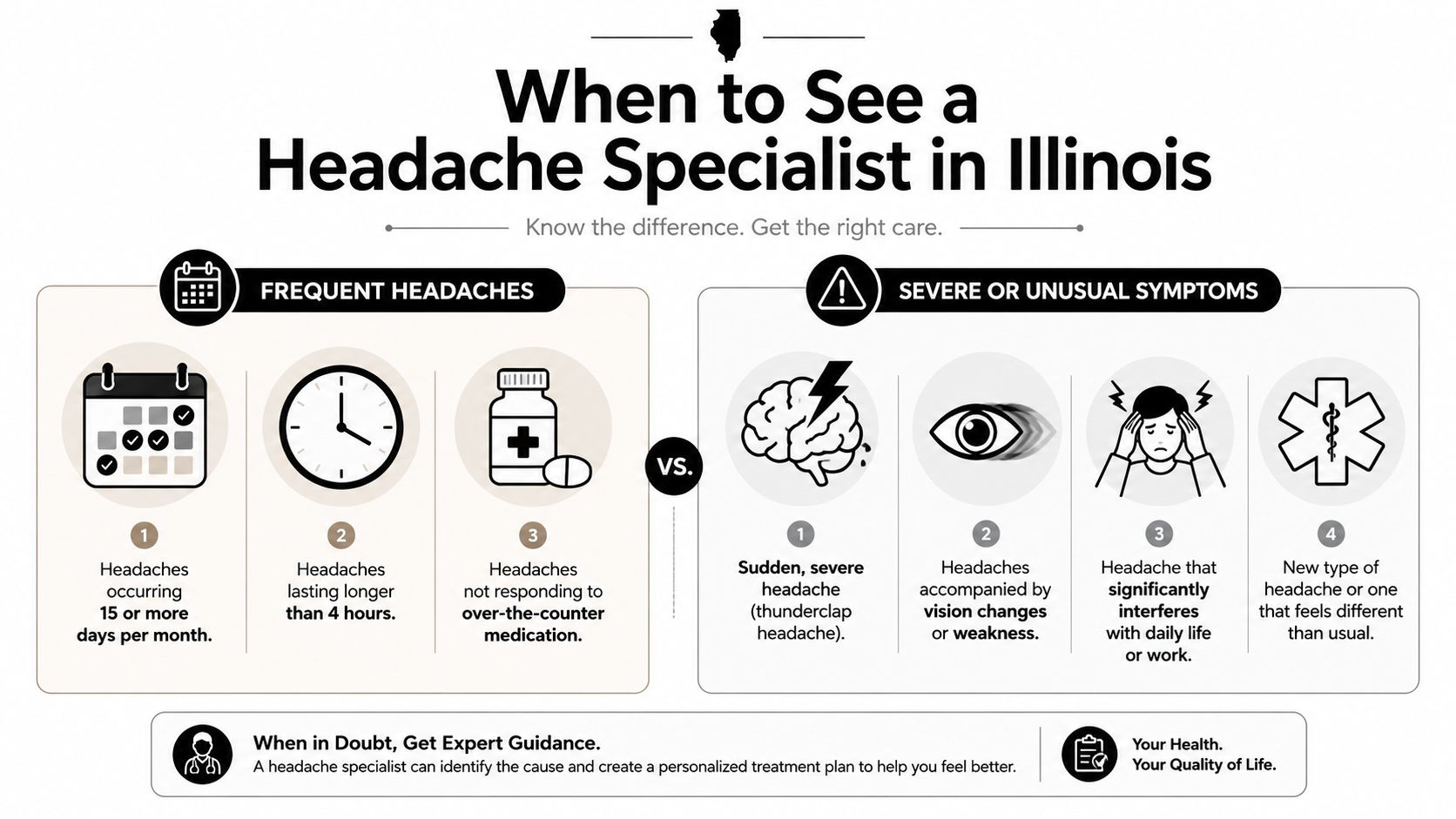
In Illinois, that answer often comes sooner than patients expect, especially for people living outside downtown Chicago. If you are in Oak Lawn, Palos Hills, Worth, Hickory Hills, Orland Park, or nearby suburbs, specialist care may be closer and more practical than another long cycle of urgent care visits, primary care follow-ups, and medication changes that never fully settle the pattern.
Patterns that should prompt specialty evaluation
Specialists still sort headaches into familiar categories, but the decision to refer usually comes down to frequency, disability, and treatment response.
- Tension headache often causes pressure or tight, band-like pain.
- Cluster headache is usually severe, often one-sided, and commonly centers around the eye.
- Migraine often includes throbbing or disabling pain with light sensitivity, sound sensitivity, nausea, or trouble thinking clearly.
The American Migraine Foundation notes that chronic migraine means headache on 15 or more days each month for more than three months, with migraine features on at least 8 of those days. That pattern often needs a more focused treatment plan than occasional self-care can provide, as explained by the American Migraine Foundation's overview of chronic migraine.
If you are not sure whether what you are having fits a migraine pattern, this guide on how to identify a migraine can help you organize your symptoms before your visit.
Signs it is time to stop guessing
Patients across the southwest suburbs often wait because the pain comes and goes. Intermittent symptoms can still be serious if they keep returning in the same disruptive pattern.
A specialist visit makes sense if:
- Headaches are becoming frequent. If they show up most weeks or start shaping your schedule, they deserve a closer look.
- You are losing function. Missing work, avoiding driving, cancelling family plans, or struggling to think clearly during attacks matters clinically.
- Over-the-counter treatment keeps failing. Repeated short-term relief usually means the plan is not matching the pain generator.
- You are taking rescue medication often. Frequent use can sometimes feed medication-overuse headache and make the cycle harder to break.
- The pattern has changed. New location, new intensity, longer duration, or a different symptom mix should be evaluated.
- You have warning symptoms. Sudden severe pain, weakness, numbness, confusion, or vision loss needs urgent medical care.
Practical rule: If headaches are dictating your work hours, family plans, or driving decisions, specialist care is appropriate.
Why specialty care can help sooner
A headache specialist does more than assign a label. The job is to figure out whether the pain is coming from migraine pathways, neck structures, occipital nerves, facial pain patterns, medication overuse, or a combination of problems. Those distinctions matter because the treatments are different.
That is also where suburban access matters. Patients in Oak Lawn, Palos Hills, and surrounding communities often want advanced care without adding a long downtown trip, parking stress, or a hospital-based process for every visit. An interventional pain clinic with headache experience can offer a more workable path for people who need evaluation, procedures, and follow-up close to home.
Earlier evaluation does not mean every patient needs injections or advanced procedures. It means getting a clear diagnosis before the condition becomes more disruptive, more medication-heavy, and harder to calm down.
What to Expect from Your First Consultation
Most patients walk into the first appointment worried they'll be rushed or told to “just manage stress better.” A good consultation shouldn't feel like that. It should feel methodical.
What the visit usually includes
A headache consultation starts with your story. Not just where it hurts, but how the pattern behaves.
Expect questions about:
- Frequency and duration. How often headaches occur, how long they last, and whether they're changing.
- Location and quality. Behind the eye, back of the head, neck to temple, one-sided, pressure-like, stabbing, throbbing.
- Associated symptoms. Light sensitivity, nausea, dizziness, facial pain, brain fog, vision changes.
- Triggers and timing. Sleep disruption, stress, posture, menstrual changes, screen use, skipped meals, exertion.
- What you've already tried. Over the counter medication, triptans, preventive medications, injections, lifestyle changes.
Bring a written timeline if you can. Patients who want a clearer picture before their visit often find this overview of how to get a migraine diagnosis useful.
What the specialist is actually trying to determine
The first visit isn't about checking a box for “migraine” and handing you a prescription. It's about building a map.
A pain and wellness clinic that treats headache conditions will usually look for several things at once:
The headache type
Is this migraine, tension, cluster, cervicogenic headache, occipital neuralgia, facial pain, or a mixed presentation?The pain generator
Are irritated nerves involved. Is the neck contributing. Are trigger points or cervical structures amplifying the pain pattern?The treatment gap
Did prior treatment fail because the diagnosis was incomplete, because the medication wasn't a fit, or because no interventional option was considered?
The first appointment should leave you with a working plan, not just a label.
What you may be asked to track after the visit
Sometimes the most useful next step is better data. You may be asked to keep a headache diary that tracks:
| What to track | Why it matters |
|---|---|
| Days with headache | Helps define the true frequency pattern |
| Medication use | Shows whether rescue treatment may be part of the problem |
| Triggers | Helps identify repeatable factors |
| Functional impact | Shows how much the condition affects real life |
That process is collaborative. The goal is to move from “I get headaches all the time” to a plan based on pattern, anatomy, and response.
Evidence-Based Headache Treatments Beyond Pills
A patient from Oak Lawn or Palos Hills often reaches this stage after months of the same loop. Another refill. Another missed family event. Another morning spent wondering whether the headache is coming from migraine activity, the neck, irritated nerves, or all three.
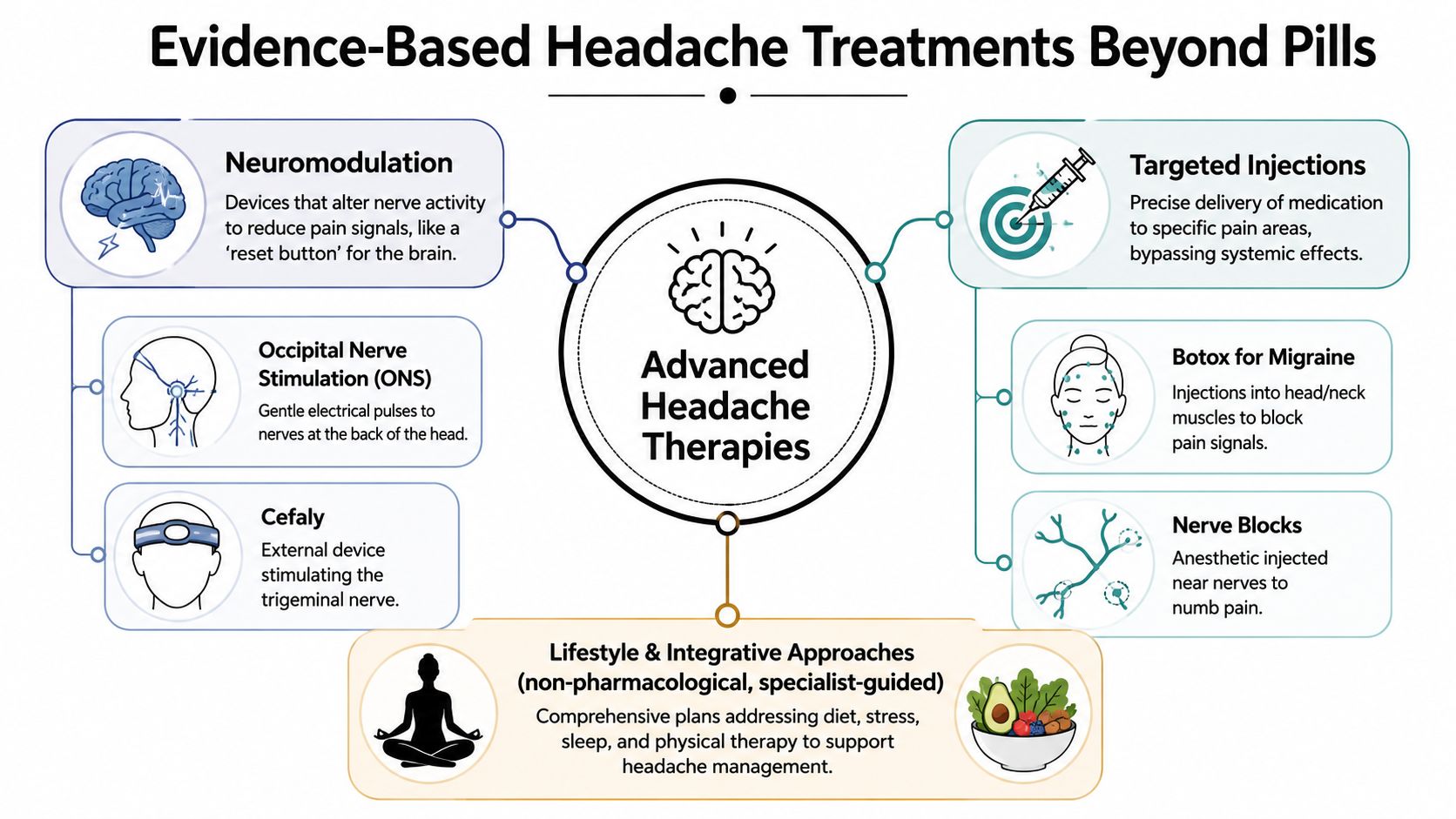
That is why advanced headache care has to go beyond pills alone. A modern headache specialist in Chicago may use targeted, opioid-sparing treatments that address how the pain is being generated, not just how it feels in the moment.
Botox for chronic migraine
Botox is one of the best-known non-pill options for chronic migraine prevention. In practice, it works by reducing pain signaling in selected muscle and nerve regions around the head and neck.
It is a preventive treatment, not a same-day rescue. That distinction matters. Patients who are having frequent migraine days may do well with Botox, but they still need a plan for flare-ups while the preventive treatment has time to work.
For many suburban patients, access matters almost as much as the treatment itself. Getting recurring care closer to home can make it easier to stay on schedule every 12 weeks. If you want a clearer medical explanation, this article on how Botox helps migraines explains the treatment in plain language.
Nerve blocks and pain pathway treatment
Nerve blocks are often useful when the headache pattern suggests a specific pain pathway. Occipital pain, scalp sensitivity, pain that starts in the upper neck, and tenderness at the base of the skull can all point in that direction.
A nerve block works like a temporary circuit breaker. A carefully placed injection may calm an irritated nerve, reduce the pain cycle, and give the clinician better diagnostic information. In some cases, the response helps confirm that the back of the head or upper cervical region is playing a larger role than standard migraine treatment alone would suggest.
Patients who want to explore nerve block options can review how greater occipital nerve blocks are used in migraine care.
Neuromodulation and non-drug support
Some patients need a treatment plan that changes how pain signals are processed. Neuromodulation aims to do that in a targeted way. It is not the right option for every headache disorder, but it can be helpful when medication has not provided enough control or when side effects have limited what a patient can tolerate.
Headache care also improves when the plan includes more than procedures and prescriptions. The American Headache Society describes headache medicine as a field that often benefits from coordinated care across disciplines, including behavioral support, physical therapy, and other non-drug strategies that match the patient's headache pattern and disability level, as described by the American Headache Society's description of headache medicine.
That does not mean every patient needs every service. It means chronic headache often responds better when treatment matches the mechanism. Some people need a procedure. Some need better sleep and trigger control. Some need both.
What tends not to work well
Several patterns commonly stall progress:
- Repeating the same medication plan after it has already failed.
- Using one label for every headache day when the pattern may include migraine, neck-driven pain, and nerve irritation together.
- Relying on opioids for chronic headache control, which can worsen long-term management and create new problems.
- Skipping the neck exam and nerve evaluation when the pain starts in the back of the head or upper cervical area.
Headache treatment works best when it is specific. Covering pain for a few hours is different from reducing the frequency, intensity, and disruption that keep taking over your week.
The Midwest Pain & Wellness Approach to Headache Care
A parent in Oak Lawn misses another school pickup because the light sensitivity started at noon. A warehouse supervisor in Palos Hills keeps ibuprofen in the truck and hopes to get through the shift. Many suburban patients are not looking for a complicated system. They want skilled headache care close to home, with a plan that looks beyond another refill.
Why the clinic model matters
A clinic led by a double board-certified interventional pain specialist evaluates headache in a more detailed way than a brief general visit often allows. The goal is to find the pain generator, or generators, behind the pattern. Migraine may be part of the story. Neck joints, occipital nerves, muscle tension, jaw issues, and sleep disruption may also be contributing.
That matters in suburbs like Chicago Ridge, Evergreen Park, Orland Park, and nearby communities where patients often want advanced care without multiple downtown transfers, long parking delays, or months of back-and-forth before a treatment plan starts. Local access changes follow-through. If care is closer, people are more likely to come back for reassessment, complete a procedure series when appropriate, and stay engaged long enough to see whether the plan is working.
An opioid-sparing philosophy with real-world logic
For chronic headache, opioid-sparing care is not about withholding treatment. It is about choosing treatments that fit headache medicine better over time. Opioids can cloud the picture, trigger medication overuse problems in some patients, and make it harder to tell whether the underlying pain source has been addressed.
Migraine is a major cause of disability worldwide, according to the World Health Organization page on headache disorders. In practice, that disability shows up in missed work, missed family responsibilities, and a week built around the next headache day. Patients with that level of disruption usually need more than a rotating list of medications.
A better plan may combine targeted procedures, preventive medication adjustments, physical therapy, sleep and trigger review, and coordination with neurology or primary care when needed. The trade-off is that this approach takes more careful evaluation up front. The benefit is a treatment plan built around function, not temporary masking.
What patients should look for locally
Patients choosing a suburban Illinois clinic for headache care should look for practical signs that the office can handle complex cases well:
- Interventional options on site. Some headache patterns improve with injections or nerve-focused procedures, especially when the pain starts in the neck or back of the head.
- A careful exam. Headache, cervical pain, scalp nerve irritation, and facial pain often overlap. A useful visit sorts them out instead of giving them one label.
- Access that fits real life. Location, scheduling, and follow-up matter more than people think. Treatment only helps if patients can access it.
- Clear opioid-sparing planning. The clinic should explain what it is treating, why that treatment fits your pattern, and how progress will be measured.
If your headaches come with tenderness at the base of the skull or pain that shoots upward from the neck, it may help to explore nerve block options before your visit so the conversation is more concrete.
Navigating Appointments and Insurance in the Chicago Area
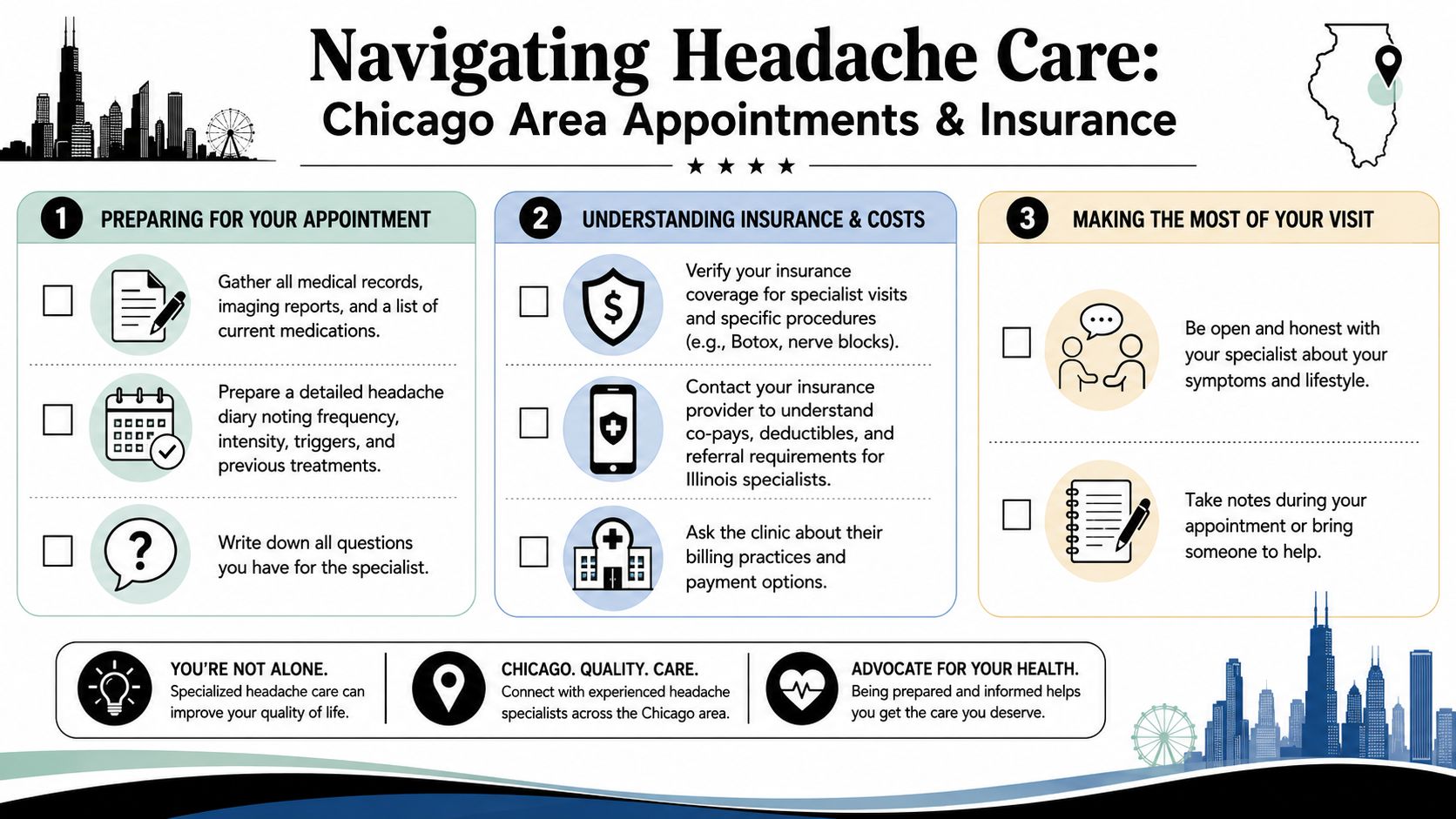
Even motivated patients get stuck on logistics. They know they need help, but they aren't sure whether they need a referral, whether a procedure is covered, or what to bring. A little preparation saves time and usually leads to a more useful first visit.
What to ask before you book
Call the clinic and your insurance plan before the appointment. Ask direct questions.
- Is a referral required for a headache or pain specialist visit in Illinois?
- Is the specialist in network under my specific plan?
- Do procedures need prior authorization if the doctor recommends them?
- What records should I send ahead of time?
If you run a busy household or medical office and want to reduce missed calls while patients are trying to schedule care, tools like Chicago AI receptionist solutions show how some practices streamline first contact and callback handling.
What to bring with you
Bring the information that shortens the detective work.
- Medication list. Include current and recent headache medications, even if they didn't help.
- Previous records. Office notes, imaging reports, ER paperwork, and prior procedure records if you have them.
- Headache diary. Frequency, intensity, triggers, and the impact on work or home life.
- Question list. Write it down. People forget once the visit starts.
Bring failed treatments to the conversation. Knowing what didn't work is often just as valuable as knowing what did.
Be ready to ask about access and cost
Many patients remain too polite. Don't. Ask how the clinic handles prior authorizations, procedure approvals, and scheduling delays. If you're interested in Botox, nerve blocks, biofeedback, or other non-drug options, ask specifically whether the office can explain the process before treatment is scheduled.
Patients often struggle to find clear answers about insurance coverage, self-pay details, and wait times for non-pharmacological or opioid-sparing options. That lack of clarity is one reason cost and access become major barriers in real headache care.
Your Headache Questions Answered
Will insurance cover treatments like Botox or nerve blocks
Sometimes yes, sometimes no. Coverage usually depends on your specific plan, your diagnosis, and whether you have already tried other treatments first.
Ask the office two direct questions before you book or before a procedure is ordered. Is the visit covered? Does the treatment need prior authorization? Those are separate steps, and patients in the south and southwest suburbs often save time by getting both answers early instead of finding out after the visit.
Botox for chronic migraine often has stricter insurance rules than a nerve block. Some plans require documentation of headache frequency, prior medication trials, or notes showing how much the headaches interfere with work and daily life. A clinic that handles these requests regularly should be able to tell you what paperwork is usually needed and how long approval may take.
What should I do during a migraine emergency
A sudden, severe headache needs urgent medical evaluation, especially if it comes with weakness, trouble speaking, fainting, fever, confusion, or new vision loss.
For recurrent migraine flares, the next step depends on whether this feels like your usual pattern or something clearly different. If it is different, get checked right away. If it is your usual migraine but the pain is escalating and you do not yet have a headache specialist, call a local clinic and ask a practical question: do you see new headache patients from Oak Lawn, Palos Hills, Chicago Ridge, or nearby suburbs, and how do you handle acute flare calls?
That question matters. Some patients assume advanced headache care is only available through large downtown hospital systems, then wait longer than they should. Suburban interventional pain clinics can often offer a more direct path for selected patients, especially when the headache overlaps with neck pain, occipital nerve irritation, or facial pain.
What credentials should I look for
Look for a physician who treats headache disorders regularly, not occasionally.
Board certification matters. So does experience with procedure-based care when pills have not solved the problem. The best fit is often a clinician who can explain the diagnosis in plain language, outline the likely next steps, and tell you why a treatment does or does not make sense for your pattern of pain.
A good headache specialist should also be careful with opioids. Chronic headache usually needs targeted treatment, not long-term masking.
Finding a qualified headache specialist
| What to look for | Why it matters |
|---|---|
| Board-certified physician | Shows formal specialty training and certification |
| Regular headache treatment experience | Headache patterns can be subtle, and routine experience improves diagnostic accuracy |
| Interventional pain training | Gives access to options such as nerve blocks or other procedure-based treatments when appropriate |
| Opioid-sparing approach | Keeps the focus on treatments that match the cause and reduce long-term risk |
| Clear communication about logistics | Helps patients understand timing, approvals, follow-up, and realistic expectations |
If headaches are interfering with work, driving, sleep, family time, or concentration, seeing a specialist is a reasonable next step.
If you are trying to find that care outside downtown Chicago, start local and ask specific questions. Do you treat migraine, cervicogenic headache, occipital neuralgia, and facial pain? Do you offer procedure-based options in the clinic? How long is the wait for a new patient visit? Can your staff explain insurance steps before treatment is scheduled? Those answers tell you a lot about whether a clinic is set up to provide practical care, not just a name on a directory.
If you're ready for a more precise, opioid-sparing plan for migraine, chronic headache, neck-related head pain, or facial pain, Midwest Pain & Wellness offers interventional headache care in Chicago Ridge with a focus on accessible treatment, clear guidance, and restoring day-to-day function.