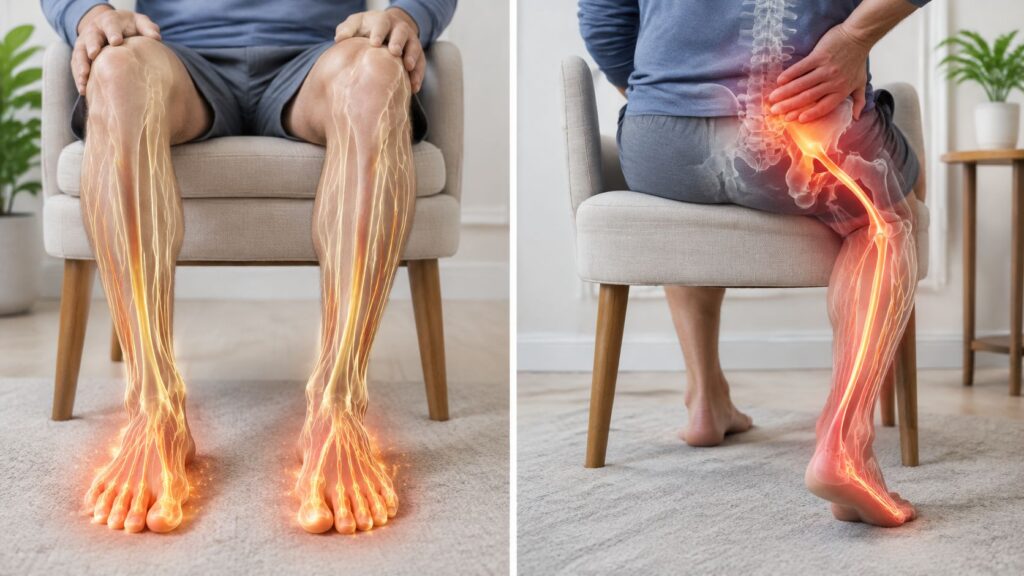
Roughly 4 in 10 people living with chronic pain also meet criteria for clinically significant depression or anxiety, based on a 2024 review of 376 studies and 347,468 people across 50 countries 2024 systematic review in chronic pain. That number changes the conversation right away. If you're hurting every day, your mood, sleep, stress load, and trauma history aren't side issues. They're part of the pain problem.
People in the south suburbs of Chicago often come to a pain clinic looking for a fix to a back, neck, joint, or nerve problem. They're usually surprised when the visit includes questions about panic, sleep, grief, safety at home, or whether pain has made them pull away from family. Those questions aren't a detour. They're how a careful clinician finds the drivers of suffering.
Why Mental Health and Chronic Pain Travel Together
Chronic pain and mental health symptoms travel together because the nervous system handles both at once. Pain changes how you sleep, move, work, and connect with other people. Over time, the strain of living that way can make pain feel louder, less predictable, and harder to settle.
The overlap is common enough to be a clinical fact, not a coincidence. In a large 2024 review, 39.3% of people with chronic pain had clinically significant depression and 40.2% had clinically significant anxiety 2024 systematic review in chronic pain. The same review found especially high burden in fibromyalgia, younger adults, and women.
Practical rule: if pain has taken over your sleep, patience, focus, or hope, that is not “just stress.” It is part of the pain picture.
A lot of patients wait until they feel “strong enough” to mention mood. That instinct usually delays care. If anxiety is making you guard every movement, or depression is making you stop the walks, stretches, or appointments that used to help, the pain plan is already incomplete.
A pain and wellness clinic should therefore ask about mental health chronic pain at the same time it asks about the body. Treating only the disc, joint, or nerve can leave the larger loop untouched. Treating both the pain generator and the emotional load gives you a better shot at durable relief.
The Biopsychosocial Model in Plain Language
The biopsychosocial model sounds academic, but the idea is simple. Biology, thoughts and emotions, and social context all shape the pain signal at the same time. Your body is one part of the story, not the whole story.
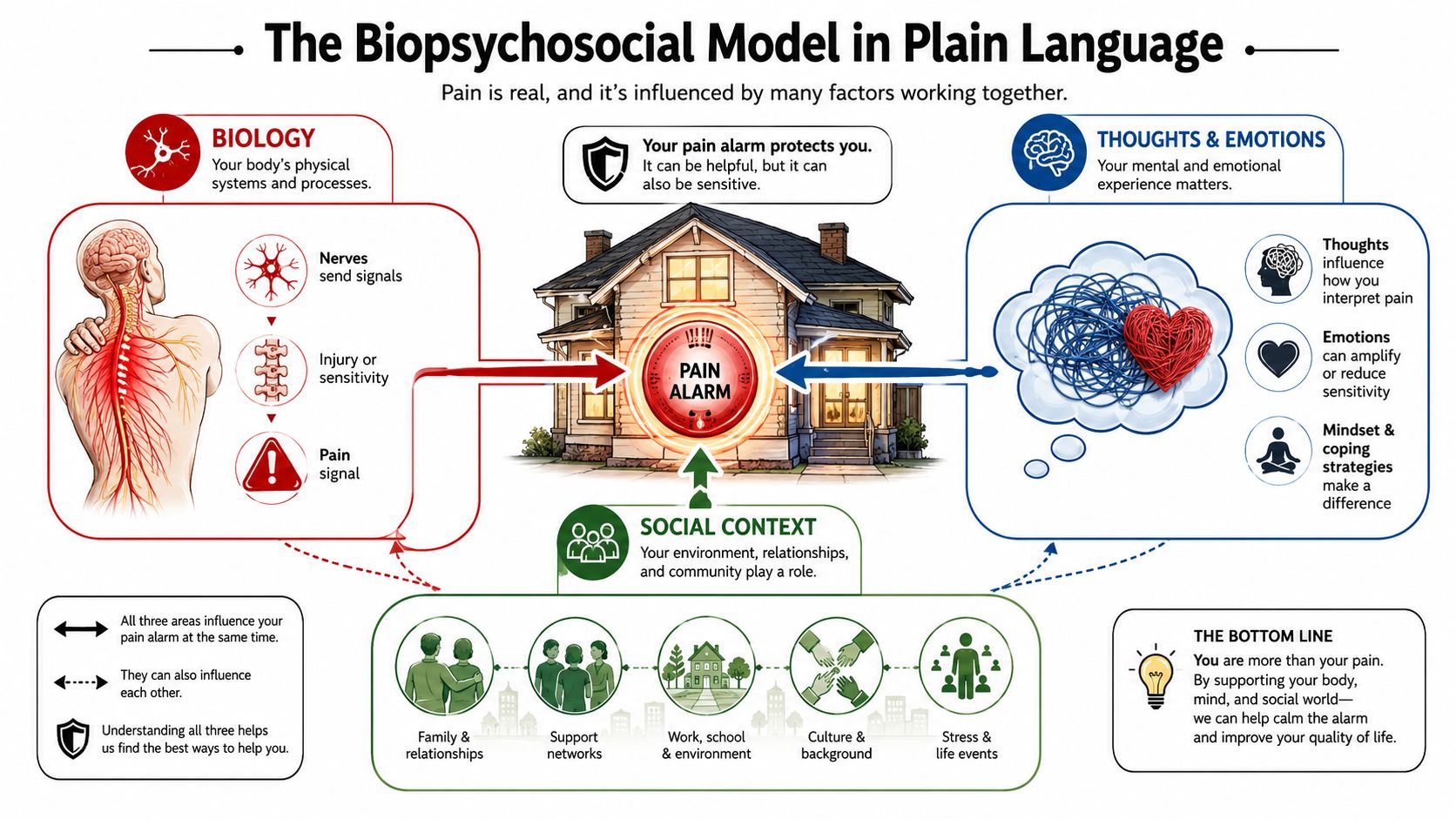
Why pain can keep firing
A useful way to think about chronic pain is a fire alarm that keeps ringing after the smoke has cleared. The alarm may have started because of a real injury, arthritis, surgery, or nerve irritation. But over time, the nervous system can become more reactive, so normal movement, stress, or lack of sleep feels dangerous.
That helps explain why back pain can flare during a rough week at work or after an argument at home. It's not that the pain is fake. It's that the alarm system has become easier to trigger. The brain starts predicting danger before your body has even moved.
Why mood and pain share biology
Pain and mood also share processing pathways in the brain. Reviews of chronic pain note that the relationship is bidirectional, meaning each one can worsen the other through shared neural mechanisms rather than living in separate boxes expert review on pain and mood. That same review also notes overlap with depression, anxiety, substance use disorder, suicide risk, and smoking expert review on pain and mood.
So when someone says, “My pain gets worse when I'm anxious,” that's not weakness or poor coping. It's the nervous system doing what nervous systems do under stress. Pain care works better when the plan respects that biology instead of arguing with it.
Conditions That Commonly Co-Occur With Chronic Pain
Depression and anxiety get the most attention, but they are only part of the picture. Chronic pain often shows up alongside other psychiatric conditions, and that overlap changes how care should be planned. An umbrella review found that pain is common across psychiatric populations, with rates ranging from 23.7% in bipolar disorder to 96% in PTSD umbrella review of pain in psychiatric populations. It also found that depression and pain influence each other in both directions, which means each one can make the other harder to control.
What each overlap can change
- Depression: lowers energy, motivation, and follow-through. It can make pacing, rehab, and sleep routines harder to sustain.
- Anxiety: increases guarding and catastrophic thinking. It can make movement feel risky even when the body is safe enough to begin.
- PTSD: raises alertness and can make touch, procedures, or certain positions feel triggering. It often changes how quickly a patient needs trauma-informed care.
- Bipolar disorder: mood instability can affect medication choices and the timing of behavioral treatment.
- Substance use disorder: changes the risk-benefit discussion around opioids and sedating medicines expert review on pain and mood.
- Suicide risk: turns a pain visit into a safety conversation, not just a symptom review expert review on pain and mood.
A pain clinic has to sort out which overlap is driving the day-to-day problem. A person with depression may need help with low drive and sleep rhythm. Someone with anxiety may need help calming a nervous system that keeps scanning for danger. A patient with PTSD may need trauma-informed pacing before certain procedures or hands-on care. A patient with bipolar disorder may need medication choices that do not destabilize mood.
If a person has pain plus trauma symptoms, the safer plan is usually not more willpower. It is a tighter plan, with clearer screening, safer medications, and stronger follow-up.
The practical takeaway is simple. If you are filling out intake forms or talking to a clinician, do not minimize sleep changes, panic, nightmares, substance use, or mood swings. Those details change what gets prescribed, what gets referred, and what needs monitoring.
What Often Gets Missed in Pain Care
Most pain visits stop too early. The conversation often ends after depression and anxiety, even though trauma history, sleep quality, social stress, and safety concerns can shape both pain and mental health just as strongly. A thorough assessment has to look wider.
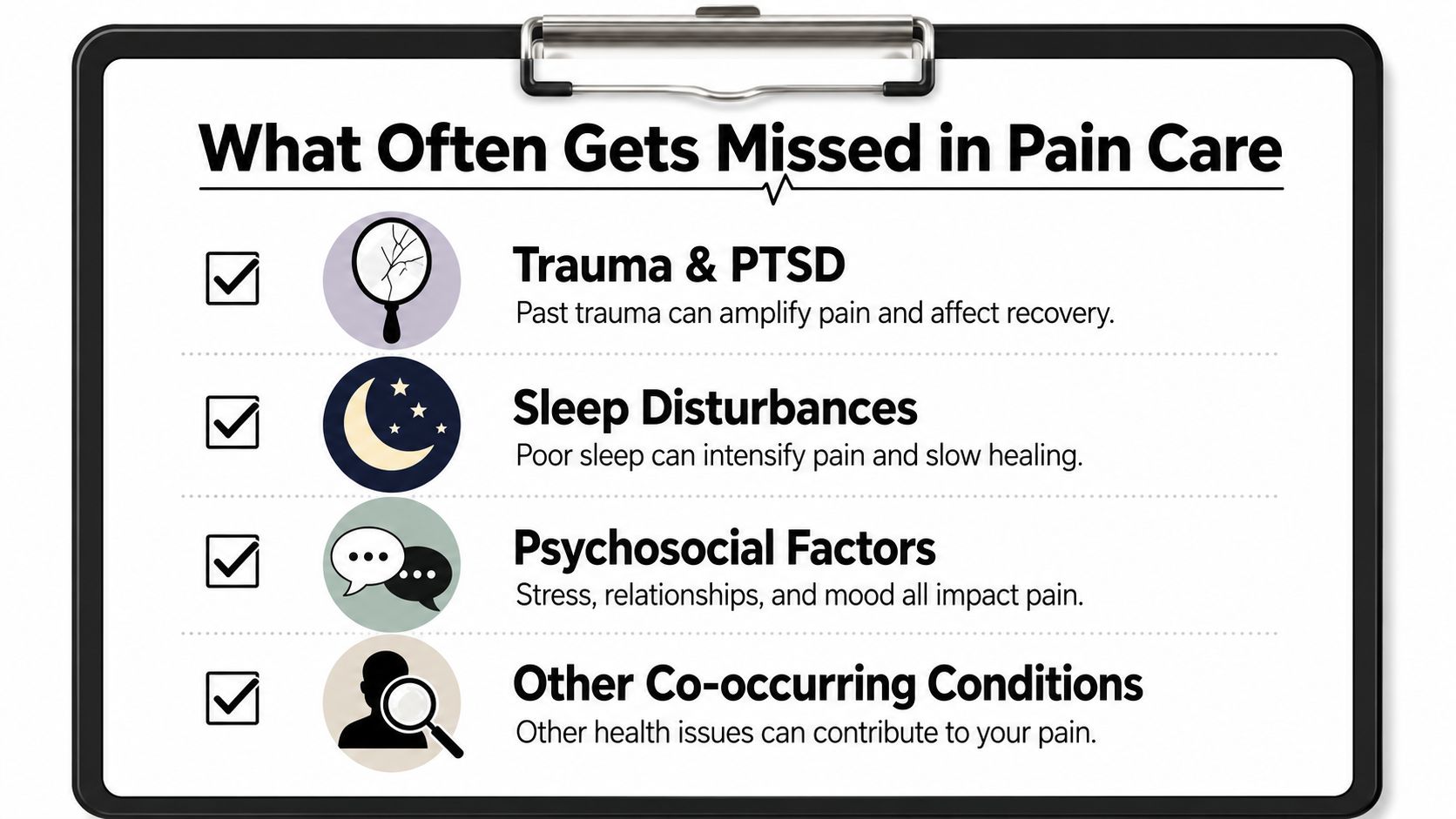
The questions that should be asked
- Trauma and PTSD: “Have you had experiences that still show up in your body or sleep?”
- Sleep disruption: “How many nights are restorative?”
- Food insecurity, housing instability, and isolation: “Is daily life stable enough for healing routines to work?”
- Substance use and medication stress: “Are you relying on anything to get through the day?”
- Immigration or legal stressors: “Are outside pressures making pain feel harder to manage?”
Expert guidance says clinicians should screen proactively instead of waiting for patients to volunteer these issues screening and social determinants guidance. That matters because many people won't bring them up unless they're asked directly.
A good pain clinic isn't being intrusive when it asks about trauma, sleep, or housing. It's doing its job. If a plan ignores the stressors around the pain, it's guessing.
Evidence-Based Treatments That Help Both Pain and Mood
The strongest plans usually start with treatments that can help both sides of the problem at once. Some medicines are useful because they target pain and mood together, especially serotonin-norepinephrine reuptake inhibitors, tricyclic antidepressants, and anticonvulsants. Those choices matter most when depression, anxiety, or nerve pain are part of the picture.
What a multimodal plan often includes
- Medication support: non-opioid options first, with careful selection when mood symptoms are present StatPearls chronic pain review.
- Cognitive behavioral therapy: helpful for pain-related thoughts, pacing, and reducing the sense that every flare means damage.
- Acceptance and commitment work: useful when pain is real, persistent, and resistant to “just think positive” advice.
- Mindfulness and sleep restoration: helpful when the nervous system stays stuck in alarm mode.
- Graded exercise: better than boom-and-bust activity, because it rebuilds trust in movement one step at a time.
- Interventional procedures: nerve blocks, radiofrequency ablation, and spinal cord stimulation can reduce pain enough to make therapy and movement more possible.
For readers with spine pain, the treatment menu for chronic back problems is laid out in more detail in this overview of chronic back pain treatment options. The same principle applies across pain conditions. One tool rarely solves everything, so the plan has to match the person in front of you.
Realistic expectation: therapy does not have to erase pain to be worth doing. If it helps you sleep better, panic less, or move more safely, that is clinically meaningful.
Mindfulness-based approaches also matter, but they work best as part of a larger plan rather than as a stand-alone fix. In people living with chronic pain, psychotherapy tends to help most when it is paired with medication choices, movement, and procedure-based care that lower pain enough for the nervous system to settle.
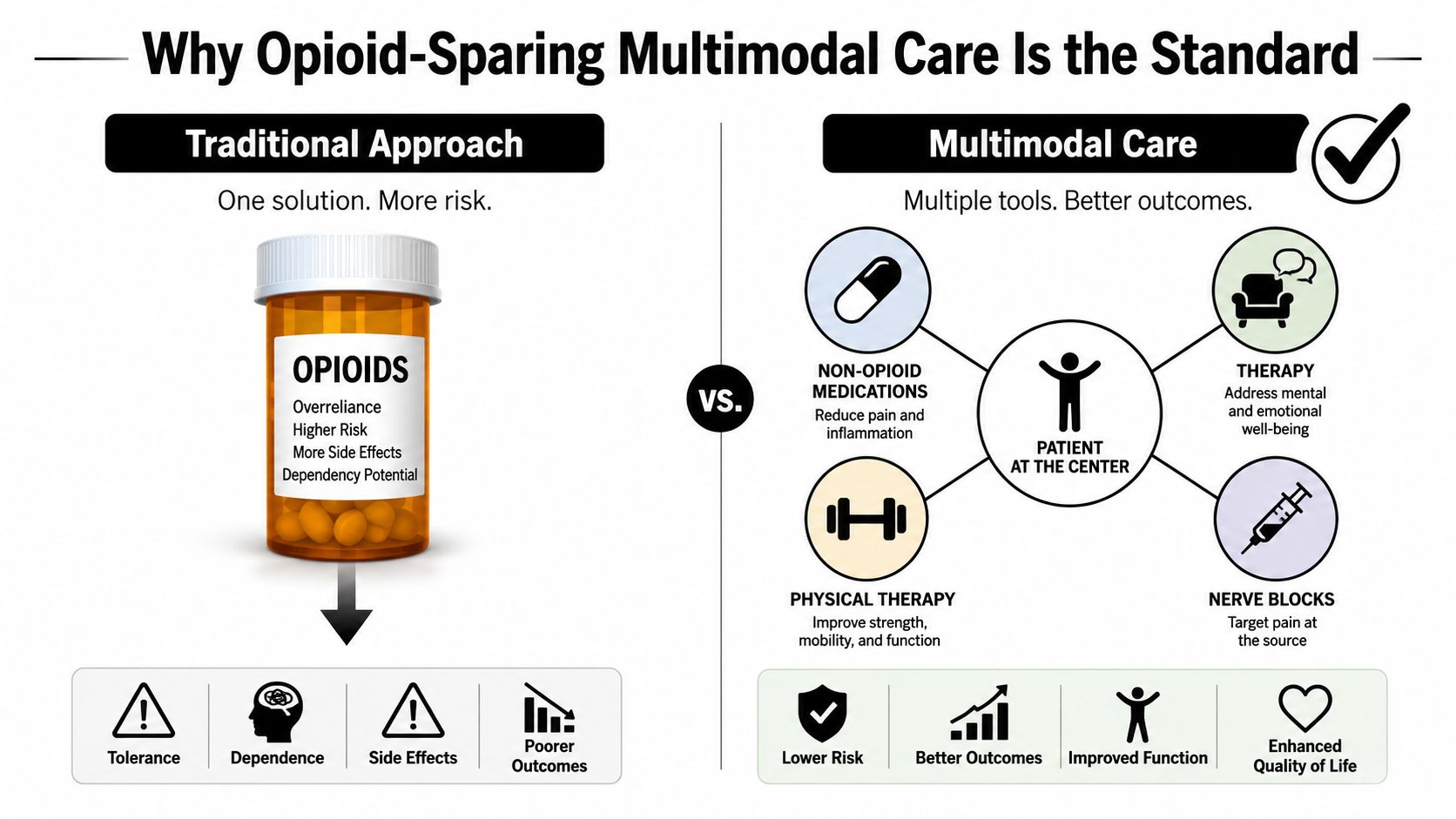
Why Opioid-Sparing Multimodal Care Is the Standard
Chronic pain is too common and too complex for a single-pill strategy. The CDC reported that 24.3% of U.S. adults had chronic pain and 8.5% had high-impact chronic pain, meaning pain severe enough to substantially restrict daily activities, and the burden was also large in 2021, when an estimated 20.9% of U.S. adults, or 51.6 million people, had chronic pain and 6.9% had high-impact chronic pain CDC chronic pain data brief.
That scale matters because it explains why fragmented care fails so often. One clinician prescribes a sedating medicine, another orders imaging, someone else suggests stretching, and nobody has the full picture. The result can be duplicate medications, missed diagnoses, and treatment that drifts away from function.
What opioid-sparing means in practice
Opioid-sparing care does not mean dismissing pain. It means building the plan around non-opioid medications, procedures, rehabilitation, and behavioral support first, then using opioids only when the benefit clearly outweighs the risk. Chronic pain reviews also describe how depression, anxiety, and substance use disorders commonly travel with long-term pain, which is one reason safer plans start with non-opioid analgesics and Narcan training and access StatPearls chronic pain review.
The logic is straightforward. Sleep loss, stress, and mood symptoms can turn up the volume on the pain system, so changing only the opioid dose leaves the rest of the circuit untouched. A coordinated plan gives each problem a role in treatment.
For people with nerve pain, a focused explanation of non-opioid approaches is available in this guide to managing neuropathic pain.
When to Seek Specialized Care and What to Expect
If pain has lasted beyond 12 weeks, it's no longer a short-term problem that should be handled with guesswork. If mood is worsening, if you're relying on medications that aren't helping anymore, or if you're having new suicidal thoughts, it's time for specialized care rather than another round of delay. A pain clinic can sort through the biological, psychological, and medication pieces together.
What a first visit should include
A thorough first appointment should include a pain history, a medication review, prior imaging, a look at sleep and mood, and a plan that fits your function, not just your MRI. A good clinician will also ask about procedures you've already had, what helped, what didn't, and what you're most worried about.
- Bring records: prior scans, operative notes, injection history, and medication lists.
- List symptoms clearly: where the pain starts, where it travels, what worsens it, and what settles it.
- Mention mental health changes: panic, low mood, nightmares, irritability, or feeling unsafe.
- Ask direct questions: “What's the plan if this doesn't help?” and “How do we keep this opioid-sparing?”
If you need a specialty clinic overview, this interventional pain management clinic guide is useful for understanding what that kind of evaluation should look like.
A red flag is simple. If the pain story is getting heavier and your mood is sliding with it, don't wait for it to become an emergency. Specialized evaluation is the right next step.
How Midwest Pain & Wellness Delivers Integrated Care Near Chicago Ridge
Midwest Pain & Wellness in Chicago Ridge is built around interventional, opioid-sparing care for people whose pain has become physically and emotionally exhausting. Led by double board-certified interventional pain specialist Dr. Yaw Donkoh, the clinic uses procedures such as epidural steroid injections, medial branch blocks, sacroiliac and facet interventions, radiofrequency ablation, peripheral nerve and spinal cord stimulation, minimally invasive lumbar decompression, Vertiflex Superion, kyphoplasty, PRP, and Botox for chronic migraine and cervical dystonia, with bioidentical hormone replacement when appropriate.
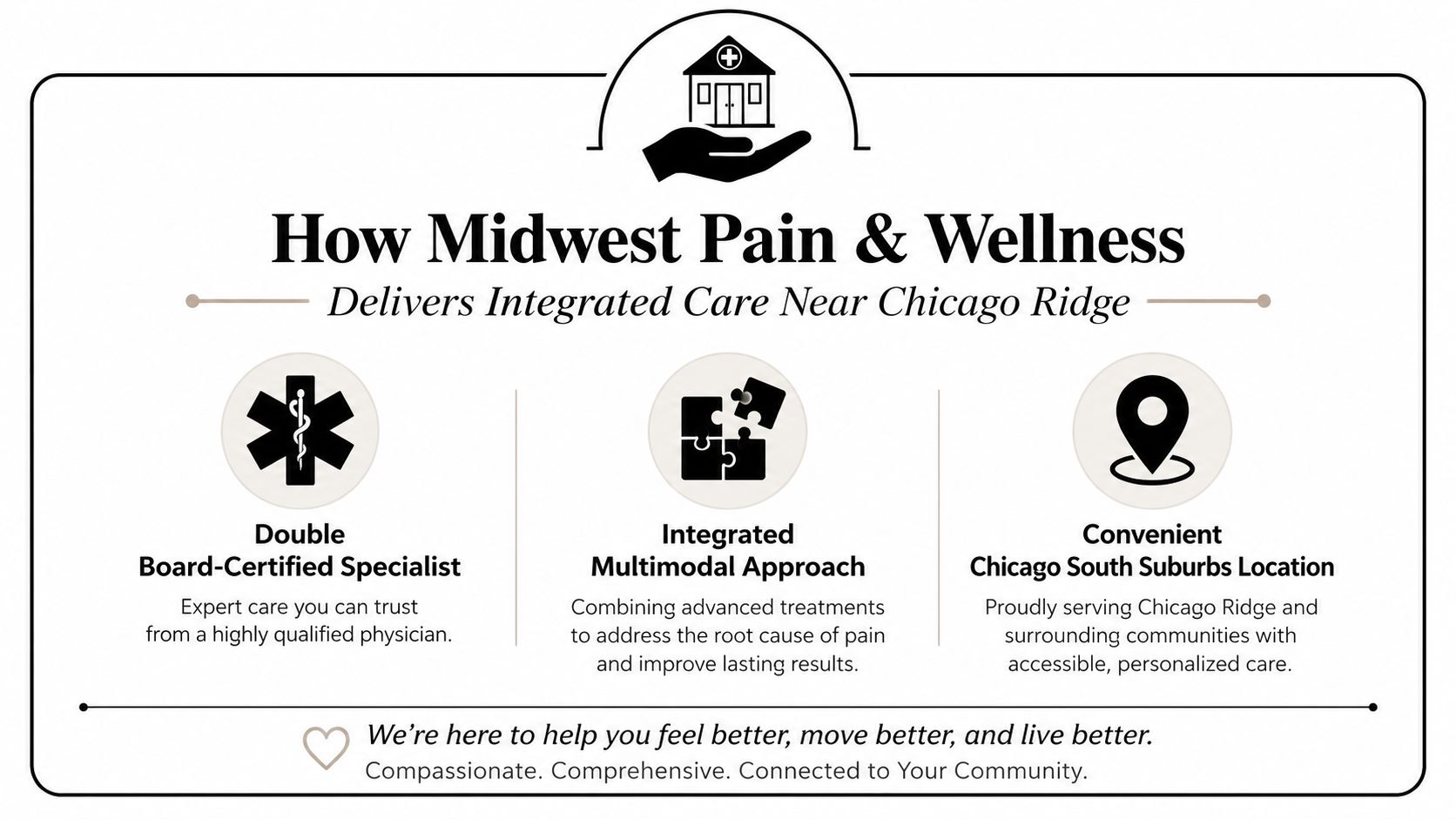
The clinic also coordinates with surgeons, primary care, chiropractors, and rehab therapists, which matters when pain overlaps with anxiety, sleep disruption, or post-surgical recovery. That coordination helps keep the plan from getting chopped into separate, conflicting pieces. It also gives patients a clearer path when workers' compensation or personal injury issues are part of the picture.
Patients come from Oak Lawn, Palos Hills, Palos Heights, Worth, Bridgeview, Hickory Hills, Alsip, Burbank, Evergreen Park, and Orland Park, all in Illinois and surrounding Chicago Ridge. Weekday access makes it easier to stay engaged with care instead of disappearing between flares.
If you're living with pain, sleep loss, and emotional strain in the Chicago south suburbs, don't keep carrying that alone. Reach out to Midwest Pain & Wellness to ask about an integrated, opioid-sparing evaluation, bring your records, and start a plan that treats the body, the nervous system, and the life around the pain together.