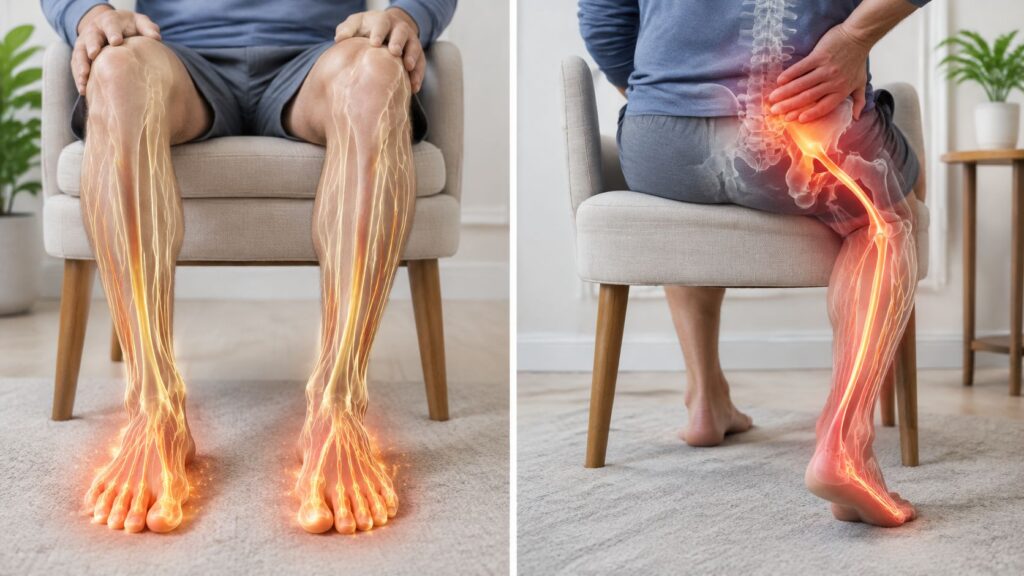
You've started shortening your walks because your legs begin to ache, burn, or feel heavy after standing for a while. An MRI may now show lumbar spinal stenosis, and you're wondering whether a spinal stenosis epidural could help you move more comfortably without going straight to surgery. That question comes up frequently among patients in Chicago Ridge, Palos Heights, Palos Hills, Evergreen Park, and Hickory Hills.
An epidural injection can be useful, but it isn't a cure and it shouldn't be sold as guaranteed dramatic pain relief. The most realistic benefit may be improved function, such as walking farther or standing longer, while pain relief can be modest, temporary, or absent. Your symptoms, imaging findings, overall health, and the injection route all matter.
Table of Contents
- Introduction to Epidural Injections for Stenosis
- Understanding How Epidurals Work in Spinal Stenosis
- Determining Indications and Patient Selection
- Procedure Details with Image Guidance
- Evidence on Benefits and Expected Duration
- Risks, Contraindications, and Safety Measures
- Integrating Injections into Multimodal Care and Referral Pathways
- Conclusion and Next Steps
Introduction to Epidural Injections for Stenosis
A patient from Chicago Ridge might describe a familiar pattern: walking a short distance causes pain and heaviness in both legs, standing at the kitchen counter becomes difficult, and sitting down provides relief. The MRI confirms narrowing in the lumbar spinal canal. After trying medication changes, activity adjustments, and rehabilitation, the patient starts asking about an epidural steroid injection.
That choice makes sense because an injection is minimally invasive and can target irritated spinal nerves without immediately committing the patient to an operation. But the right question isn't limited to, “Will it remove my pain?” A better question is, “Could it improve my function enough to support rehabilitation or help me make a clearer decision about the next treatment?”
This guide explains how epidurals work, who may be a reasonable candidate, what happens during an image-guided procedure, and what the evidence shows. It also covers safety in severe stenosis, the difference between lumbar and cervical treatment, and how injections fit alongside physical therapy, medication management, minimally invasive procedures, and surgical evaluation.
The same principles apply when symptoms occur in the neck and travel into an arm, although the anatomy and procedural risks differ. A careful evaluation is essential before deciding whether an epidural is appropriate.
Understanding How Epidurals Work in Spinal Stenosis
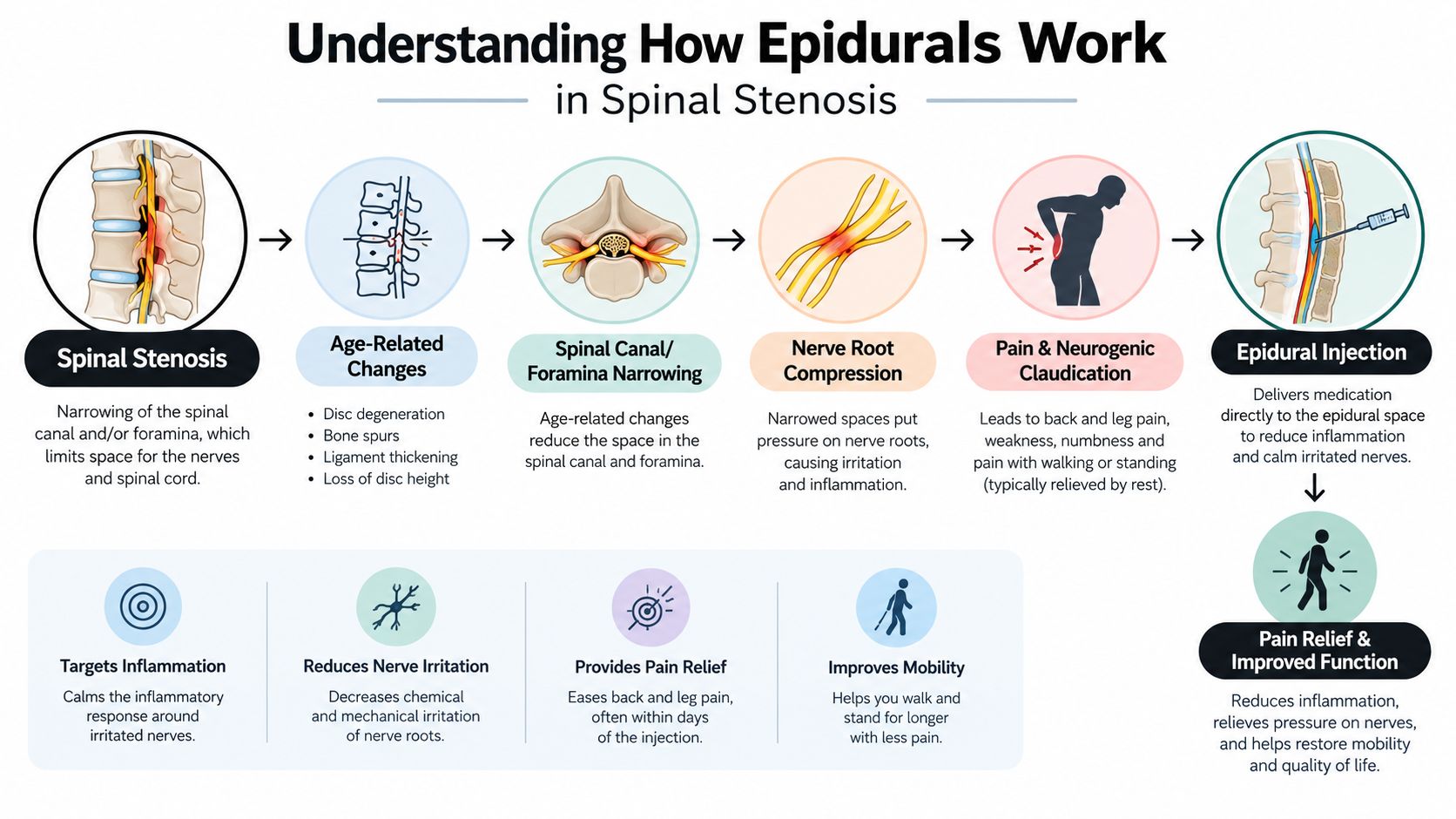
Spinal stenosis develops when age-related changes narrow the spinal canal or the openings called foramina. Thickened ligaments, arthritic joints, disc changes, and other degenerative changes can reduce the space available for nerve roots. In the lower back, this may produce leg pain, numbness, weakness, or neurogenic claudication, a pattern in which standing and walking worsen symptoms while sitting or bending forward may help.
Think of the spinal canal as a tunnel carrying traffic. The nerve signals are cars traveling through that tunnel. When the tunnel narrows, traffic becomes crowded, and the nerve roots can become irritated. An epidural injection doesn't rebuild the tunnel, but it may reduce inflammation around the crowded nerves, much like clearing debris from the roadside so traffic can move more smoothly for a period of time.
The procedure places local anesthetic and, when appropriate, corticosteroid into the epidural space surrounding the spinal nerves. The anesthetic may provide early diagnostic information or temporary numbing. The steroid is intended to calm inflammatory activity around an irritated nerve.
What the injection cannot do
An epidural doesn't remove bone, reverse arthritis, or permanently enlarge a narrowed canal. It also may not help if the main source of disability is mechanical compression without a meaningful inflammatory component, or if symptoms don't match the MRI findings.
That distinction prevents a common misunderstanding. The injection treats the nerve irritation associated with stenosis, not the underlying structural narrowing itself.
Determining Indications and Patient Selection
Patient selection begins with the symptom pattern, not the MRI alone. A scan can show narrowing that isn't causing the person's symptoms, so the clinical history and physical examination must match the imaging.
Signs that may support an injection
A reasonable candidate may have:
- Leg or arm symptoms: Lumbar narrowing commonly causes pain, tingling, numbness, or heaviness into the legs. Cervical narrowing may produce symptoms into an arm.
- Activity-related limitation: Standing or walking may aggravate lumbar symptoms, while certain neck positions may reproduce arm symptoms in cervical disease.
- Correlating imaging: MRI or CT should show stenosis or nerve-root compression in a location that fits the affected side and symptom distribution.
- Incomplete conservative response: Providers generally review medication trials, activity modification, and rehabilitation before recommending an injection.
The injection route depends on the anatomy. An interlaminar approach may distribute medication within the epidural space and can be considered for central or multilevel disease. A transforaminal approach places medication closer to a specific exiting nerve root and may be more suitable when symptoms follow a single-root pattern. A caudal approach enters through the sacral opening and may be useful when medication needs to reach several lower lumbar levels.
For cervical symptoms, the physician must account for the smaller spaces and the importance of avoiding sensitive structures. The decision isn't based on severity alone. It involves the level of narrowing, the direction of nerve compression, the symptom pattern, and the safest path to the target.
Insurance criteria can also affect eligibility. Carelon's 2025 interventional pain management criteria require imaging evidence of nerve-root compression or stenosis that correlates with clinical findings for repeat injections. After three injections in the same region, the criteria set a cumulative steroid ceiling of 240 mg of methylprednisolone or triamcinolone, 36 mg of betamethasone, or 45 mg of dexamethasone. These requirements are detailed in the Carelon 2025 interventional pain management criteria.
Clinical rule: A compelling MRI without matching symptoms isn't enough. The best decisions connect the patient's complaints, examination, imaging, and treatment goals.
Procedure Details with Image Guidance
Image guidance turns the injection from a general delivery into a targeted procedure. Before scheduling, the clinician reviews the diagnosis, medication list, allergies, infection history, bleeding risk, and prior treatment response. The team also confirms which spinal region and symptoms are being treated.
What happens during the procedure
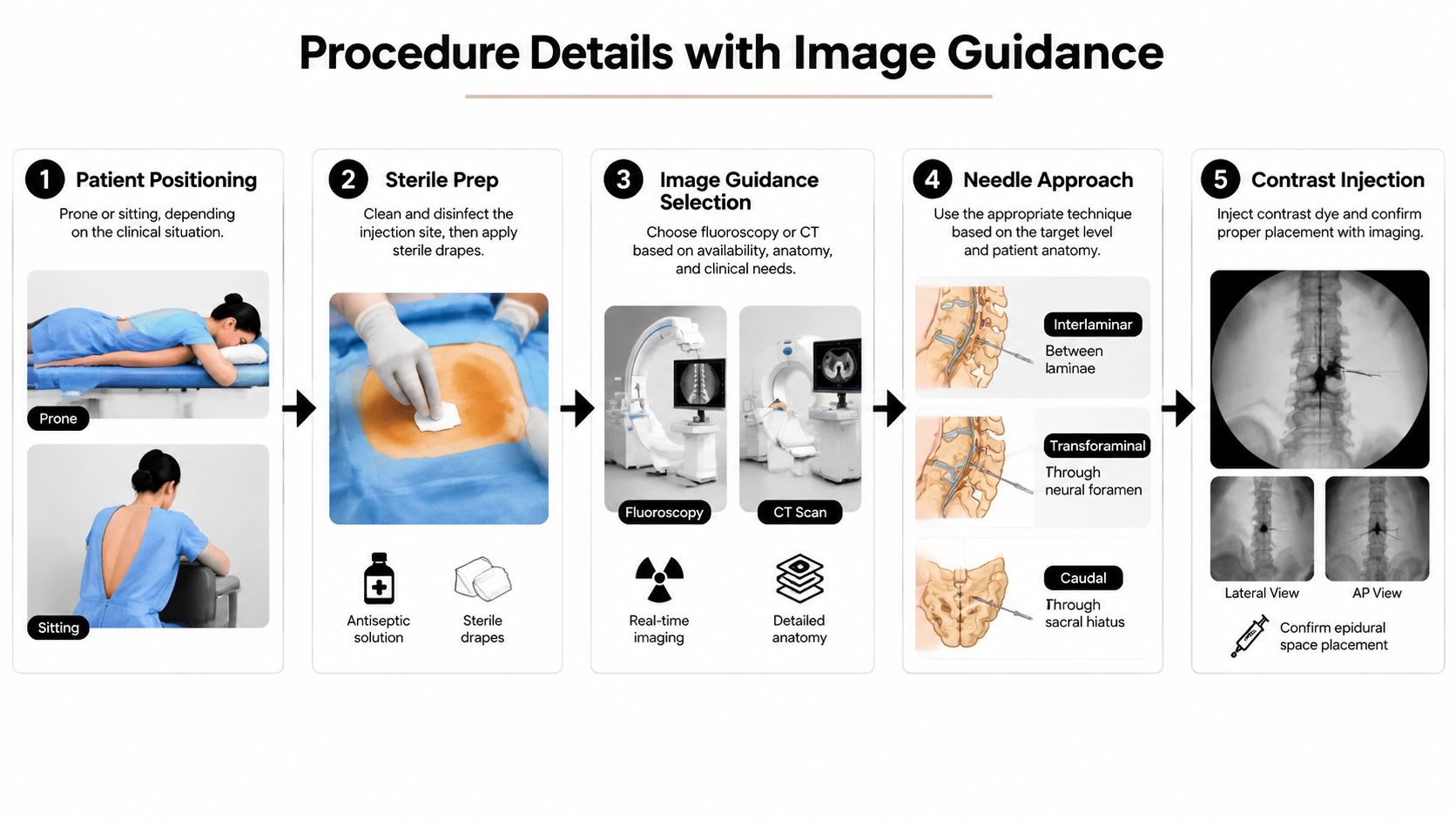
- Positioning: You'll usually lie face down for a lumbar injection. Positioning can be adjusted for comfort and to create the safest path to the epidural space.
- Sterile preparation: The skin is cleaned carefully, and the entry area is covered using sterile technique. Local anesthetic numbs the skin and deeper tissues.
- Image selection: Fluoroscopy provides real-time X-ray views, while CT can offer detailed cross-sectional anatomy. The choice depends on the target and the clinician's procedural plan.
- Needle approach: The physician may use an interlaminar, transforaminal, or caudal route. The route is selected according to whether the disease is central, foraminal, single-level, or multilevel.
- Contrast confirmation: Contrast outlines the intended space and helps confirm that the needle is positioned correctly before medication is delivered.
A lumbar injection may be planned differently from a cervical procedure because the anatomy, target, and potential consequences of an inaccurate needle position aren't identical. Severe narrowing also requires careful trajectory planning. However, severe stenosis isn't automatically a reason to avoid an image-guided epidural.
You can review the role of real-time imaging in a fluoroscopy-guided injection before discussing the procedure with your clinician.
CMS's coverage policy requires epidural steroid injections to be performed under fluoroscopy or CT guidance with contrast to confirm needle placement. The policy also states that only one spinal region may be treated during a session and allows no more than four therapeutic injection sessions per spinal region in any rolling 12-month period. These requirements appear in the CMS epidural steroid injection coverage policy.
Afterward, you'll usually be observed briefly. Temporary soreness, pressure, or numbness can occur, and your clinician will give you individualized instructions about activity, medication, and warning signs.
Evidence on Benefits and Expected Duration
The most important evidence-based adjustment is expectation. For lumbar spinal stenosis, epidural steroid injections may help disability and activity in some patients, but they don't consistently produce substantial pain relief. That means a successful response might look like standing through a meal, walking farther through a store, or participating more fully in rehabilitation, rather than waking up completely pain-free.
What randomized evidence shows
A major 2016 multicenter randomized trial published in the New England Journal of Medicine included 400 patients aged 50 years or older with lumbar central spinal stenosis. Participants received either epidural glucocorticoid plus lidocaine or lidocaine alone. At six weeks, there was no statistically significant difference between groups in disability or leg pain, although both groups improved. The added steroid didn't provide a meaningful advantage in that population, as summarized in this evidence review of epidural injections for spinal stenosis.
That finding doesn't mean every injection is ineffective. It means the steroid component may add little beyond the anesthetic or the epidural delivery itself for many people with stenosis. It also shows why clinicians shouldn't promise that a steroid injection will reverse the condition.
A 2025 neurology systematic review reached a similarly nuanced conclusion. In lumbar spinal stenosis, injections possibly reduced short-term disability by a 26.2% relative risk difference, with a number needed to treat of 4, and long-term disability by 11.8%, with a number needed to treat of 8. The review didn't find clearly improved short-term pain relief and found insufficient evidence that injections reduce long-term pain. Those findings are reported in the 2025 systematic review in Neurology.
| Outcome | Difference | Number Needed to Treat |
|---|---|---|
| Short-term disability | 26.2% possible relative risk difference | 4 |
| Long-term disability | 11.8% possible relative risk difference | 8 |
| Short-term pain | No clear improvement | Not established |
Function may be the better measuring stick
Patients often focus on a pain score, but stenosis frequently limits function in specific ways. Track how long you can stand, how far you can walk, whether you can shop or cook, and whether you can sleep or exercise more comfortably. These details help your physician determine whether the injection achieved its intended purpose.
A 2015 systematic review found that injections, including anesthetic-only injections, improved walking distance in the short term, but longer-term differences compared with control injections weren't demonstrated in the same way. The findings are available in the systematic review of epidural injections for lumbar spinal stenosis.
Duration varies substantially. In one retrospective study of 140 lumbar stenosis patients, 32% reported more than two months of pain relief, 39% reported less than two months, and 29% reported no relief. This variability is why an injection should be treated as a time-limited trial with measurable goals, not as a permanent solution.
For practical planning around symptom response and duration, patients can also review this guide to how long an epidural injection lasts. The useful question is not only whether pain decreased, but whether the change helped you do something important.
Risks, Contraindications, and Safety Measures
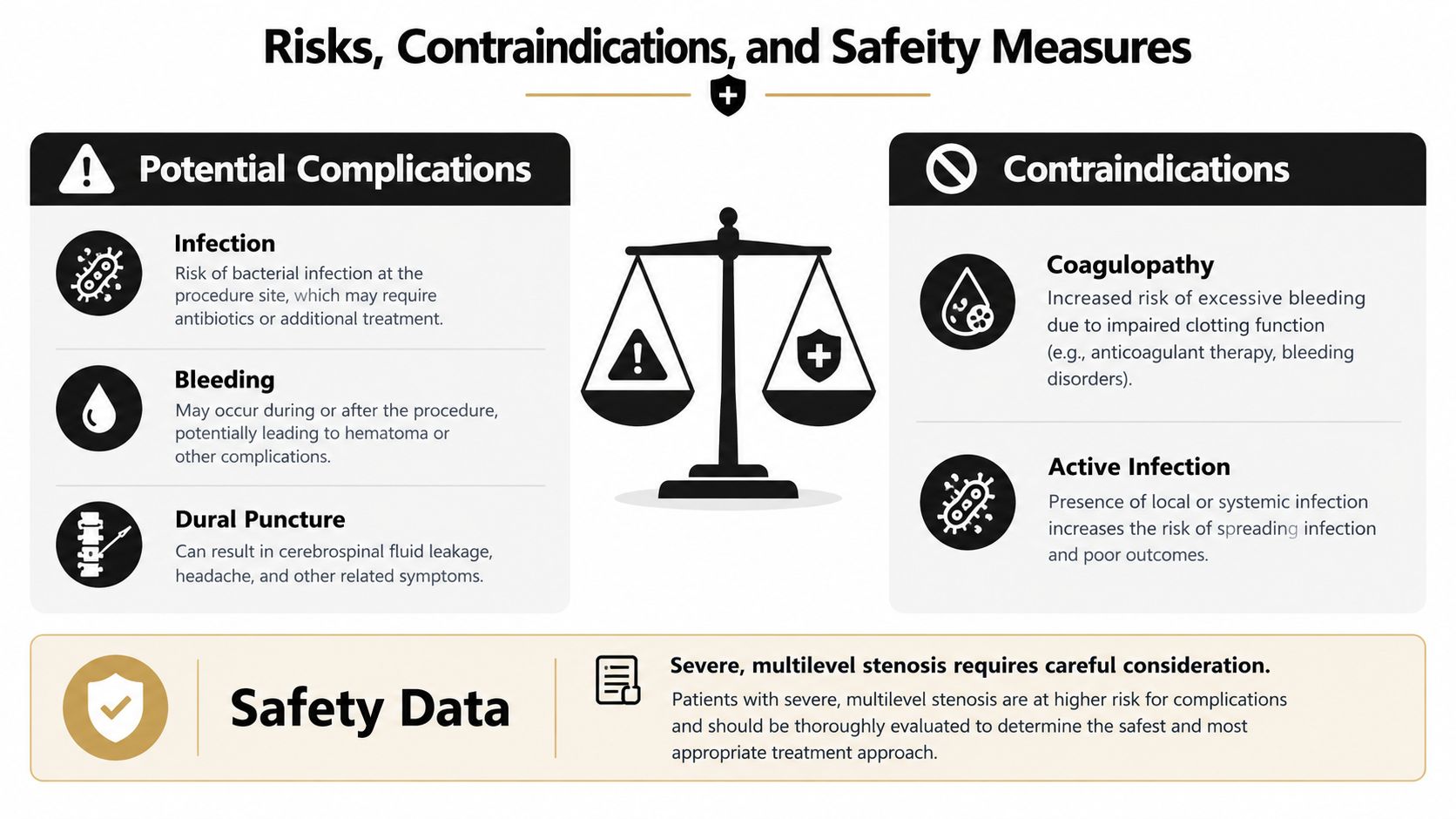
Every spinal procedure requires a risk assessment. Potential complications include infection, bleeding, and dural puncture, while temporary soreness, numbness, or a short-lived increase in symptoms can also occur. Patients with a bleeding disorder, significant medication-related bleeding risk, or an active infection may need treatment postponed or avoided until the concern is addressed.
Severe narrowing isn't an automatic prohibition
A common fear is that a severely narrowed canal makes an epidural impossible. Published reports found no significant complications with injectate volumes up to 8 mL through interlaminar access and up to 20 mL through caudal access in severe, multilevel lumbar stenosis. This evidence supports careful, image-guided treatment rather than excluding someone solely because an MRI shows high-grade narrowing, as discussed in the safety review of epidural injections in severe lumbar stenosis.
That doesn't make every case low risk. The physician still needs to choose the route, volume, medication, and needle trajectory based on the individual anatomy. The team should also review anticoagulants, diabetes, allergies, prior reactions, and symptoms that could indicate infection or progressive neurologic compromise.
Many clinicians consider non-particulate or preservative-free steroid preparations in situations where the risk profile makes that choice appropriate. Medication selection is only one part of safety. Accurate imaging, sterile technique, contrast confirmation, monitoring, and clear aftercare instructions all matter.
Seek urgent medical advice after a procedure if you develop severe or worsening weakness, loss of bladder or bowel control, fever, or other concerning neurologic symptoms.
Integrating Injections into Multimodal Care and Referral Pathways
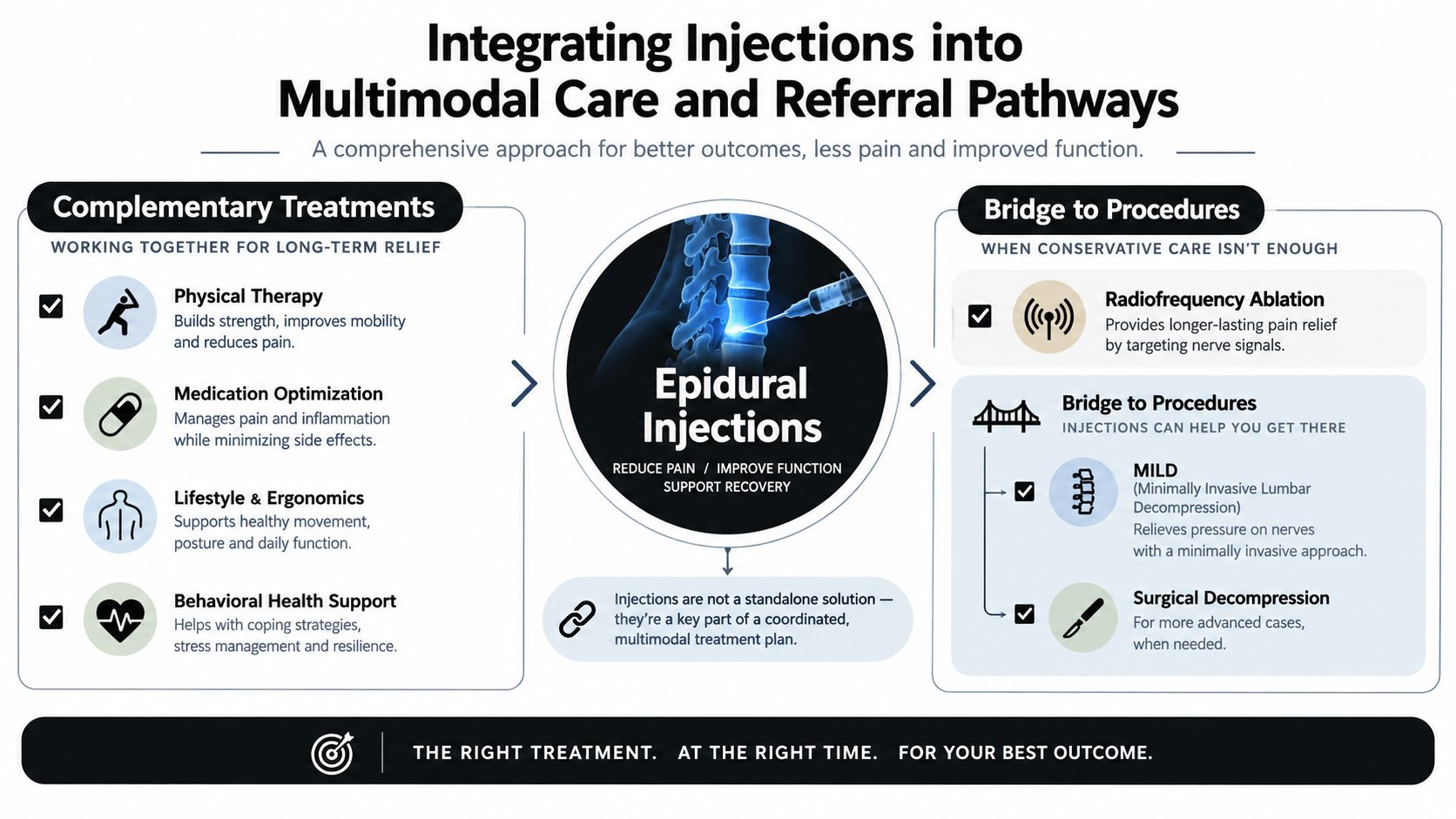
An injection works best when it serves a larger plan. If inflammation decreases enough to make movement easier, physical therapy can focus on strength, posture, conditioning, and strategies that improve tolerance for standing or walking. Medication optimization may address symptoms between visits, while other interventions may be considered when the pain source is facet-related rather than nerve-related.
Coordinating the plan
A practical care pathway may include:
- Conservative foundation: Use activity modification, medication review, and physical therapy when appropriate.
- Targeted injection trial: Define a functional goal before the procedure, such as increasing walking tolerance or completing rehabilitation.
- Response review: Record what changed, how long the change lasted, and whether function improved.
- Alternative pain procedures: Radiofrequency ablation may be considered when facet joints, rather than nerve-root irritation, are the primary pain generator.
- Referral pathway: Coordinate with a primary care clinician, pain specialist, therapist, and surgeon when symptoms persist or the diagnosis remains complex.
For broader self-management ideas that complement clinical care, SunnyBay's complete back pain guide can provide additional patient education. It shouldn't replace an examination or individualized treatment plan.
An injection may also act as a bridge while a patient considers a decompression procedure. For selected lumbar stenosis patients, minimally invasive lumbar decompression may become part of the discussion when symptoms continue despite nonoperative care.
When an injection isn't enough
Progressive weakness, worsening neurologic deficits, or bowel and bladder changes require prompt medical evaluation rather than repeated injections. These symptoms can indicate a need for urgent escalation. Even without those warning signs, persistent loss of walking ability, declining independence, or inadequate response to a coordinated care plan may justify a surgical consultation.
Midwest Pain & Wellness in Chicago Ridge provides interventional pain evaluation and coordinates care with surgeons, primary care providers, chiropractors, and rehabilitation professionals. The practice may use image-guided injections, medication planning, rehabilitation support, radiofrequency procedures, and minimally invasive options according to the diagnosis and treatment goal.
Conclusion and Next Steps
A spinal stenosis epidural can be reasonable when symptoms, examination findings, and imaging point to irritated or compressed nerves. The evidence supports a measured expectation: functional improvement may be more realistic than dramatic pain relief, and any benefit can vary in magnitude and duration. An injection doesn't remove the narrowing, so it should be evaluated as one component of care rather than a structural cure.
Before proceeding, ask your provider to explain which level is being treated, why a particular route is appropriate, what functional change you'll track, and what the next step will be if the injection doesn't help. Review medication risks, infection or bleeding concerns, imaging findings, and insurance requirements. A trial of conservative care may be appropriate when symptoms are stable, while progressive weakness or bowel and bladder symptoms call for prompt evaluation.
For patients in Chicago Ridge, Palos Heights, Palos Hills, Evergreen Park, and Hickory Hills, a consultation with a pain and wellness clinic can clarify whether an injection fits your goals. Bring your MRI or CT report, a current medication list, and a short record of how walking, standing, sitting, and sleep are affected.
Midwest Pain & Wellness offers personalized evaluation for spinal stenosis, image-guided epidural injections, multimodal pain care, and referral coordination when a minimally invasive or surgical option should be considered. Visit Midwest Pain & Wellness to request an evaluation in Chicago Ridge and discuss a treatment plan built around safer movement and meaningful daily function.