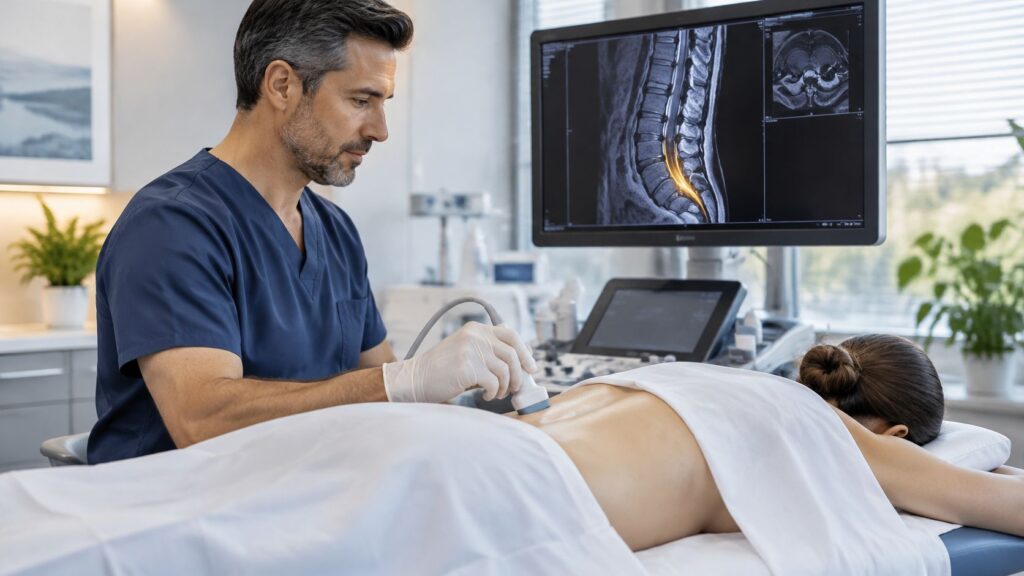
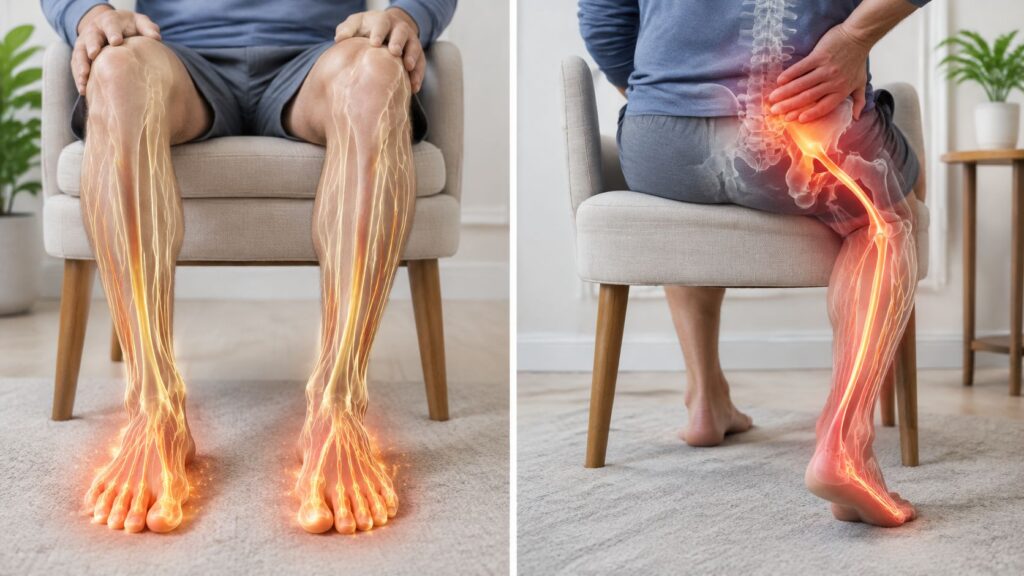
You expected your back surgery to close the chapter. Instead, the pain returned, changed locations, or never left. You may now be wondering whether the fusion failed, whether another operation is inevitable, or whether you're expected to live with burning leg pain and a stiff, aching back.
That frustration has a name, failed back surgery syndrome, or FBSS. It isn't a verdict that your surgeon made a mistake, and it isn't one uniform disease. The right failed back surgery treatment starts by identifying your pain pattern, confirming the actual pain generator, and choosing the least invasive treatment that fits the findings.
Table of Contents
- When Surgery Solves the Problem and When It Doesn't
- What Failed Back Surgery Syndrome Actually Means
- Finding the Real Source of Your Pain
- Non-Surgical and Interventional Treatment Options
- Spinal Cord Stimulation, Nerve Stimulation, and Revision Surgery Decisions
- Realistic Outcomes and How Progress Is Measured
- Next Steps for Patients in Chicago Ridge and the Southwest Suburbs
- Frequently Asked Questions About Failed Back Surgery Treatment
- How soon can FBSS be evaluated after surgery?
- Is a second opinion on my imaging useful?
- How quickly can diagnostic blocks be interpreted?
- Will insurance cover an SCS trial?
- Are stimulators compatible with MRI?
- Can treatment reduce opioid use?
- What if back pain is worse than leg pain after fusion?
- Do regenerative injections have evidence in FBSS?
- How long does radiofrequency ablation last?
- What requires immediate surgical attention?
When Surgery Solves the Problem and When It Doesn't
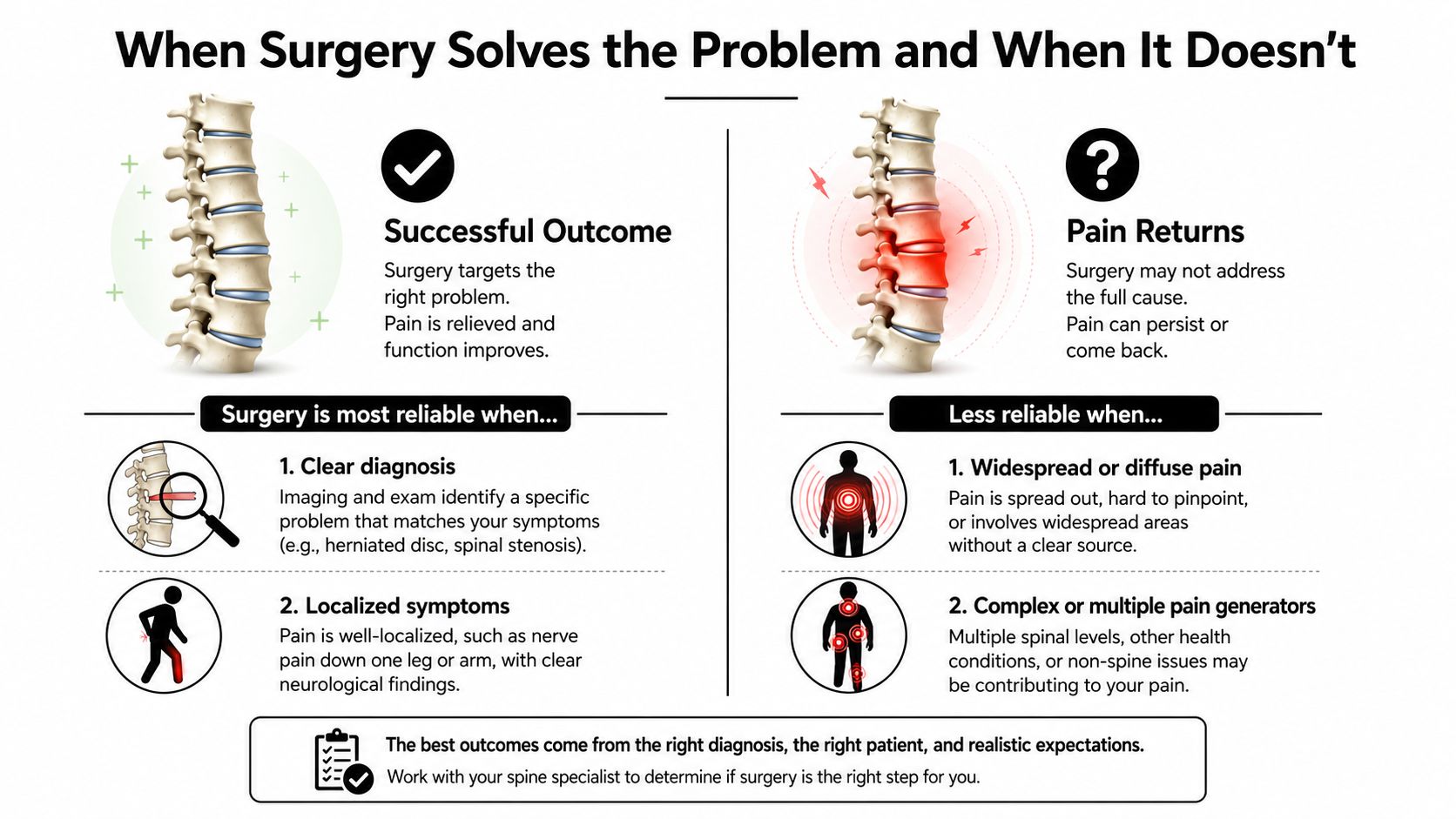
Consider two patients. One has progressive leg weakness caused by a clearly compressed nerve, and the MRI matches the side and level of the symptoms. Decompression addresses the problem directly. Another patient has years of diffuse low-back pain, poor sleep, deconditioning, and several overlapping pain sources. A technically sound fusion may stabilize one segment without eliminating every reason that patient hurts.
Spine surgery is most dependable when it targets a specific structural problem, such as nerve compression, instability, or a defined lesion that matches the examination and imaging. It can decompress a nerve or stabilize a painful segment. It can't reliably erase chronic nervous-system sensitivity, altered movement, muscle weakness, sleep disruption, or pain coming from another joint.
Why pain can persist after a sound operation
Pain may return because of recurrent stenosis, a new disc problem, degeneration above or below a fusion, scar tissue around a nerve, nerve injury, infection, hardware irritation, or altered mechanics. Muscles, facet joints, sacroiliac joints, the hip, and the nervous system can also contribute.
FBSS is common enough that it deserves a structured plan rather than dismissal. Independent reviews report overall rates of about 10% to 40%, while a survey of 1,842 lumbar surgery patients found FBSS in 20.6%, with a 95% confidence interval of 18.8% to 22.6% (review of FBSS prevalence and causes). The same review reports higher failure rates after more complex procedures, including 30% to 46% after lumbar fusion and 19% to 25% after microdiscectomy.
The question I want you to ask
Don't ask only, “Did my surgery fail?” Ask:
- Is the pain mainly in the leg, the back, or both?
- Did it improve and then return?
- Is it burning and electric, or aching and movement-related?
- Do weakness, numbness, fever, wound changes, or bowel and bladder symptoms exist?
- Does current imaging show a correctable problem that matches the symptoms?
Practical rule: Persistent pain calls for reassessment, not an automatic repeat operation.
What Failed Back Surgery Syndrome Actually Means
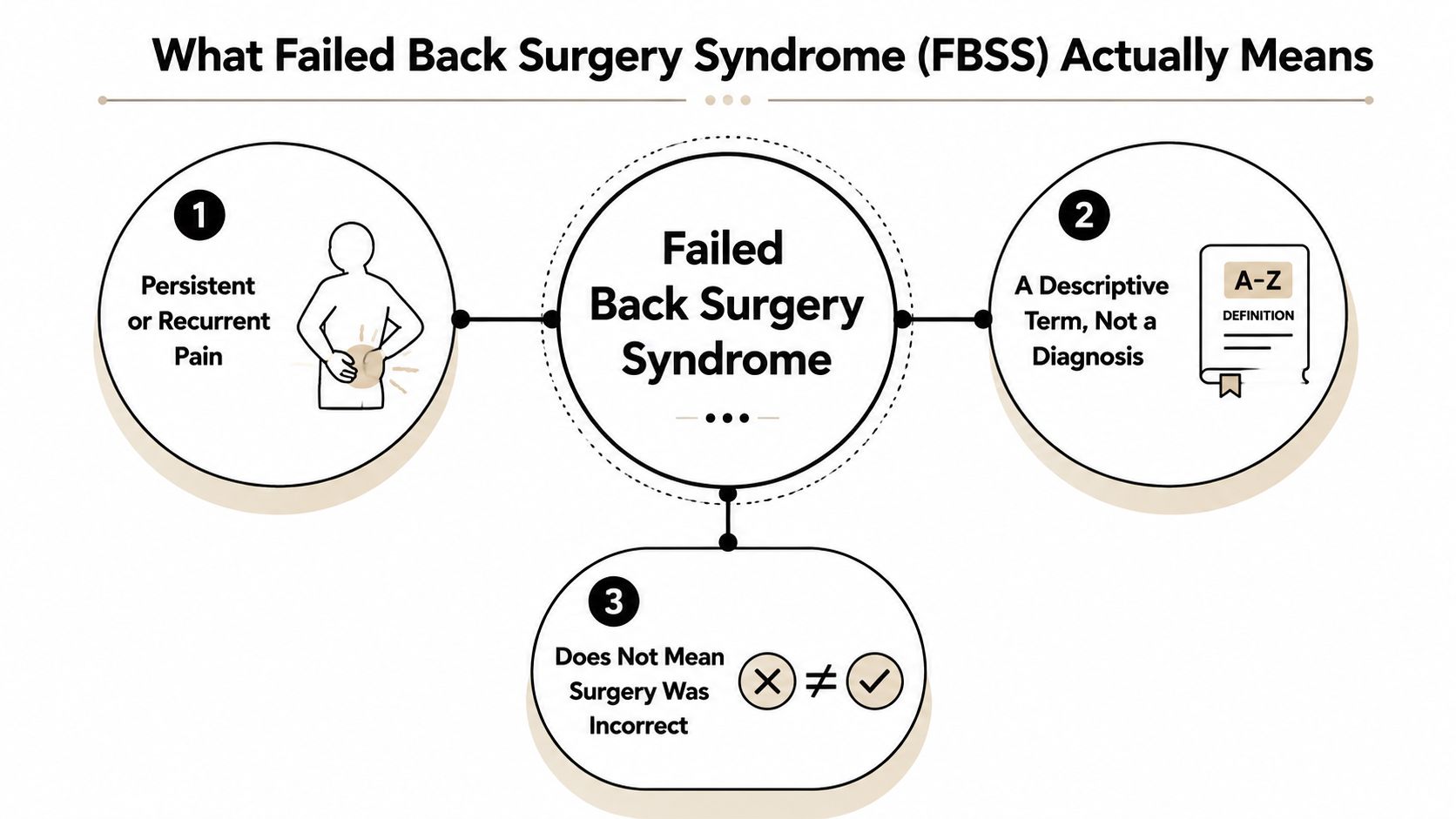
Failed back surgery syndrome describes persistent or recurrent pain after spine surgery. It doesn't prove that the operation was performed incorrectly, and it doesn't identify the structure causing the symptoms. Treat the label as the beginning of the evaluation, never as the conclusion.
A patient with ongoing burning pain down one leg may have persistent nerve irritation. Someone with focal pain over a fused segment may have a mechanical or joint-related source. A third patient may have back and leg pain, numbness, guarded movement, poor sleep, and several contributors at once.
Common patterns behind the label
The causes often fall into overlapping groups:
- Residual or recurrent compression: A nerve may remain compressed, or a disc, stenosis, or instability may develop at the operated or neighboring level.
- Postoperative tissue changes: Epidural fibrosis, which means scar tissue near the nerve roots, can contribute to symptoms in some patients.
- Mechanical pain: Fusion changes movement across the spine. Facet joints, sacroiliac joints, muscles, or hardware may then become relevant pain sources.
- Nerve injury or sensitization: A nerve can remain painful after the original compression has been relieved. The nervous system may continue amplifying signals even after the structural issue is addressed.
- Non-spinal contributors: Hip disease and sacroiliac dysfunction can mimic or compound lumbar pain.
The timing matters. Early soreness may be part of recovery, while new weakness, fever, wound drainage, or rapidly worsening symptoms demands prompt surgical contact. Pain that improves and later returns can point toward a different mechanism than pain that never changed.
Phenotype determines treatment
I separate FBSS into three practical patterns: leg-dominant neuropathic pain, back-dominant axial pain, and mixed pain. That distinction matters because a treatment that interrupts nerve pain may help radiating leg symptoms but do little for nonspecific axial pain.
A 2023 NIH review states that care should begin conservatively and progress to neurostimulation when appropriate (NIH review of FBSS treatment). That sequence protects you from chasing the label instead of treating the specific pain mechanism.
Finding the Real Source of Your Pain
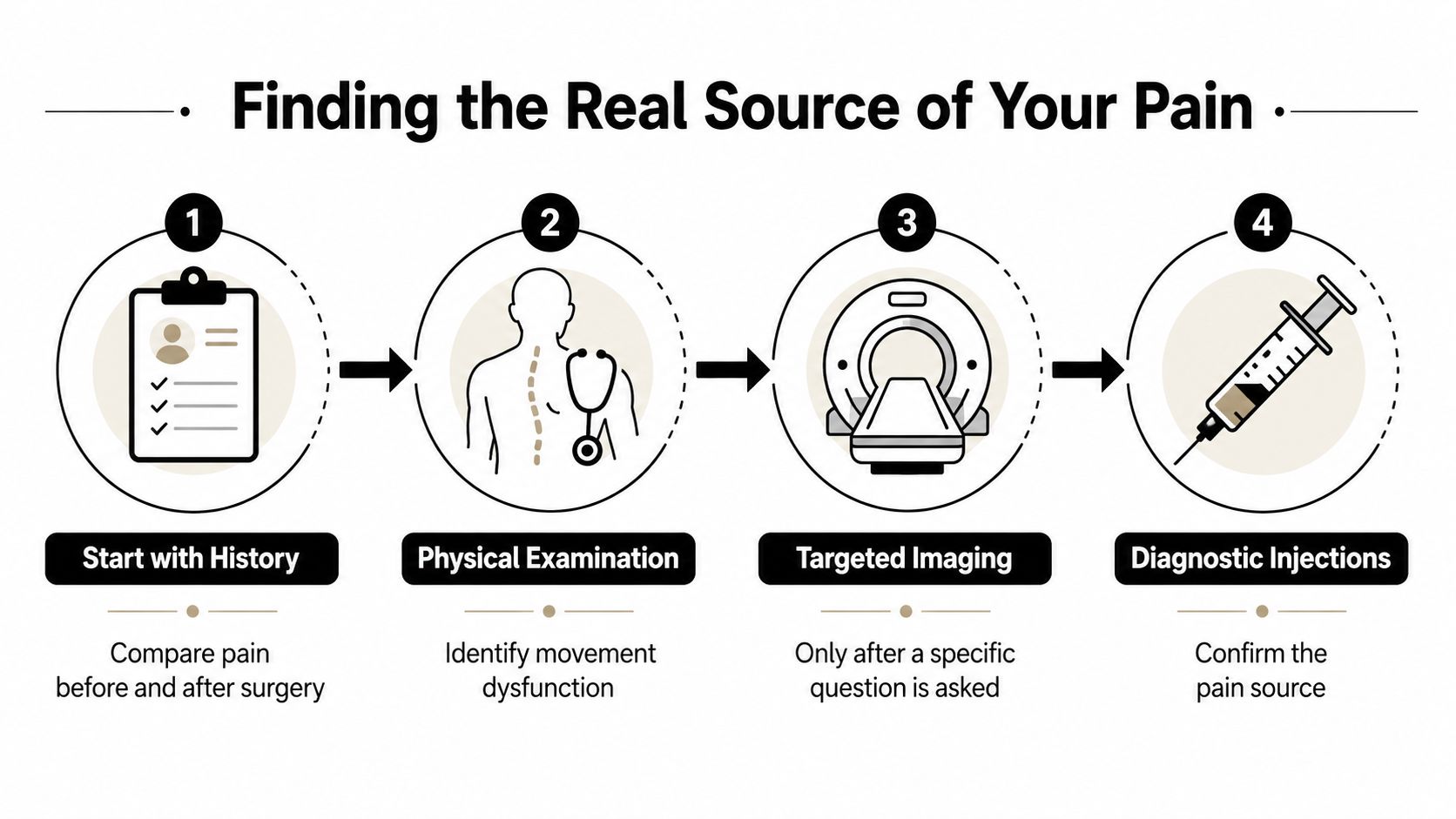
More imaging won't solve a question nobody has defined. A useful evaluation begins with your story, then tests the story against the examination, prior records, imaging, and targeted procedures.
Start with the history
Bring the operative report, not just the MRI. The report shows what the surgeon treated, which levels were decompressed or fused, whether hardware was placed, and whether complications occurred. I also want to know:
- What pain existed before surgery?
- What improved afterward?
- What returned, and when?
- Is the current pain burning, aching, numb, sharp, or electric?
- Does sitting, standing, walking, bending, or lying down change it?
- Are weakness, gait changes, or bowel and bladder symptoms present?
The difference between preoperative and current symptoms often reveals whether the original problem returned or whether a new pain generator emerged.
Examine the whole pain map
A focused examination includes strength, sensation, reflexes, gait, hip motion, spinal movement, and palpation around the surgical area. I'm looking for a neurologic pattern, a mechanically provoked pattern, or pain that doesn't fit the lumbar spine alone.
Imaging then answers a specific question. MRI may help evaluate recurrent compression, stenosis, infection, or postoperative changes. CT can clarify bone, fusion, or hardware findings. Electrodiagnostic testing may help when the examination and imaging disagree. Bone-density evaluation or infection testing belongs in selected cases, not in every routine workup.
Use diagnostic injections purposefully
A selective nerve-root block can test whether a particular nerve explains radiating symptoms. A facet or sacroiliac injection can assess an axial contributor. An epidural injection may address inflammation while also providing information about whether irritated nerve roots are driving the pain.
The value is not whether you feel temporary relief. The relief should be meaningful, occur in the expected distribution, and match the suspected structure. For a plain-language overview of the broader evaluation process, see how back pain is diagnosed.
Non-Surgical and Interventional Treatment Options
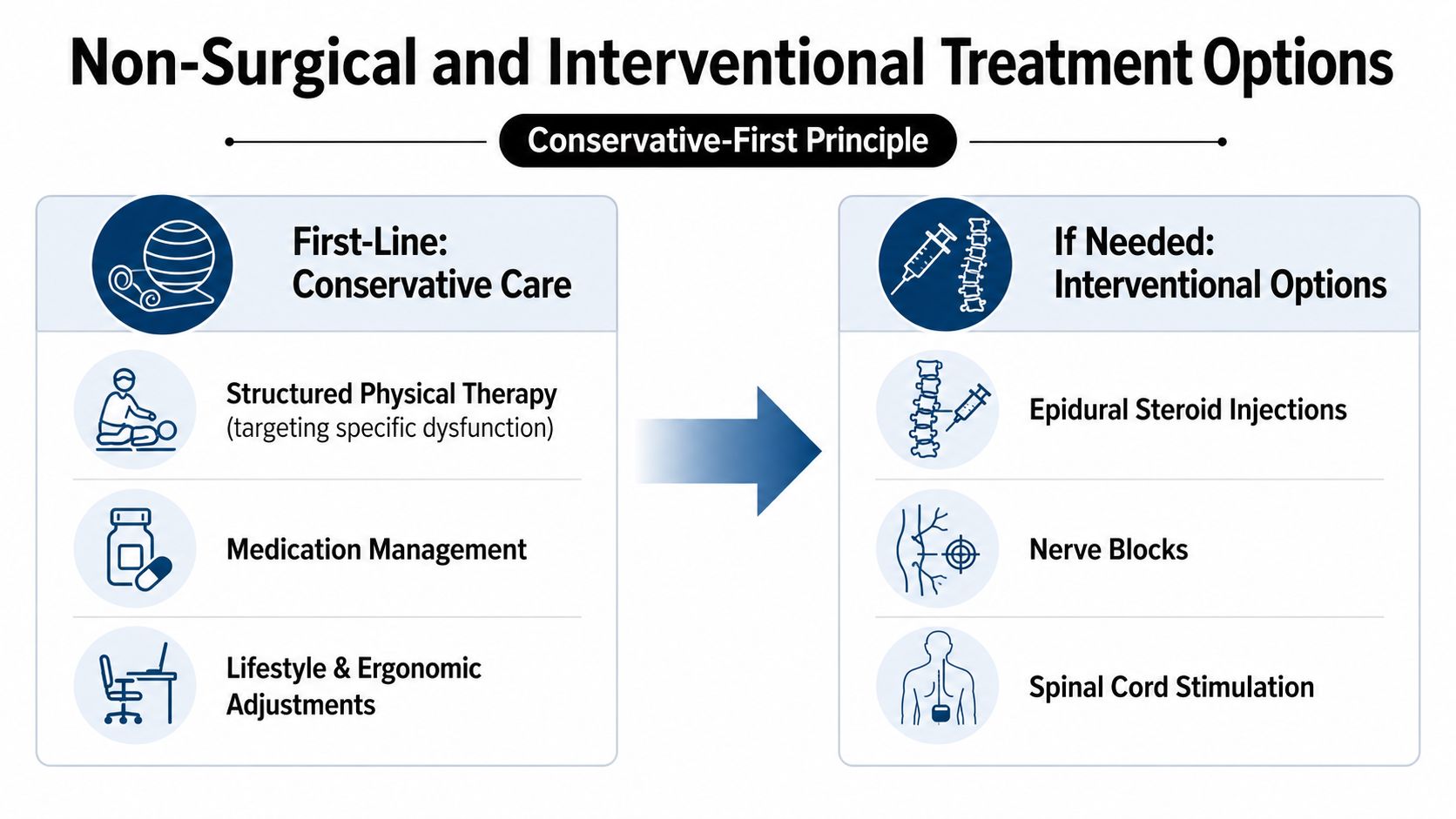
The correct sequence is conservative care first, targeted intervention second, neuromodulation or revision referral when the findings justify it. Guidance for patients without urgent surgical indications supports trying supervised exercise, medication, and physical therapy before invasive treatment (conservative management guidance).
That doesn't mean “just do therapy” and hope. It means matching rehabilitation to the movement problem found during examination. Generic strengthening can irritate a postoperative spine when the patient needs graded exposure, gait retraining, mobility work, endurance conditioning, or a plan for nerve-related movement fear.
Match treatment to the phenotype
| Treatment | Best fit | How I use it |
|---|---|---|
| Structured rehabilitation | Deconditioning, movement intolerance, weakness, or guarded activity | Build capacity around the actual examination findings |
| Medication management | Neuropathic or inflammatory symptoms | Reduce symptoms enough to support function and rehabilitation |
| Epidural steroid injection | Radicular leg pain with suspected nerve inflammation | Use interlaminar, transforaminal, or caudal access according to anatomy and pain distribution |
| Medial branch blocks | Suspected facet-mediated axial pain | Use the response diagnostically before considering ablation |
| Radiofrequency ablation | Confirmed facetogenic pain | Interrupt facet nerve signaling after appropriate diagnostic blocks |
| PRP or other regenerative care | Selected degenerative pain patterns | Discuss evidence limits and avoid presenting it as a universal FBSS solution |
Epidural injections can calm inflammation around irritated nerve roots. Their diagnostic role often matters as much as their therapeutic role, especially when postoperative imaging shows several abnormalities.
Radiofrequency ablation earns its place only after the facet joints are supported as the pain source by diagnostic medial branch blocks. Relief commonly falls within a six-to-twelve-month window, after which repeat treatment may be considered when the original response was meaningful. Selected patients may also discuss PRP, but regenerative treatment shouldn't replace a careful diagnosis or be sold as a guaranteed repair.
For general movement education outside a clinical plan, spinal erectors exercises for growth can provide useful background. Post-surgical exercise still needs individual modification, especially when neurologic symptoms or fusion restrictions are present. You can also review chronic back pain treatment options before your consultation.
Spinal Cord Stimulation, Nerve Stimulation, and Revision Surgery Decisions
Spinal cord stimulation shouldn't be reserved automatically for the very end of a long treatment history. It should be considered when the pain phenotype, diagnostic workup, and conservative response point toward persistent neuropathic pain that isn't explained by a surgically correctable lesion.
The strongest evidence has traditionally involved neuropathic leg pain, rather than isolated axial low-back pain. A review identified 11 eligible publications and concluded that benefits were accumulating mainly in the short term, without solid evidence of durable benefit beyond 2 years after implantation (review of SCS for FBSS). That's why I don't promise permanence. I discuss potential benefit, limitations, device risks, and the need for follow-up.
What the evidence says about SCS
In a randomized trial involving 132 patients across 20 sites, SCS was compared with re-operation. Later studies reported a responder endpoint at six months in 13.6% of SCS patients versus 4.6% with optimal medical management, while 17.6% experienced SCS-related adverse events and 11.8% required surgical reintervention (SCS evidence in FBSS). Earlier follow-up among permanently implanted patients found 75% reporting at least 50% pain relief, although another trial found fewer than 10% reached a broader composite success measure and 19% had devices removed within 18 months.
Those results tell you two things. SCS can help selected patients, but it isn't a cure and the endpoint matters.
When revision surgery makes sense
Repeat surgery deserves a clear structural target, such as recurrent disc herniation, severe recurrent stenosis, hardware failure, progressive instability, or adjacent-segment pathology that matches the symptoms. In a randomized comparison, SCS was more successful than re-operation in 9 of 19 patients versus 3 of 26, with a significant advantage at six months; a systematic review also concluded that SCS was less expensive and more effective than re-operation in selected patients.
DRG stimulation may change the discussion when persistent radicular pain follows a clean, limited nerve distribution. Peripheral nerve stimulation can fit pain mapped to a particular peripheral nerve, while occipital stimulation belongs to a narrower group with specific head and scalp pain patterns. The trial-to-implant pathway typically uses a temporary percutaneous trial lasting seven days, followed by permanent implantation only when pain and function improve enough to justify the commitment.
For a patient-friendly explanation of the technology, see how spinal cord stimulation works.
Realistic Outcomes and How Progress Is Measured
No single injection, ablation, or device reverses years of postoperative pain. I measure success by what you can do, not by whether a number on a pain scale reaches zero.
A meaningful goal might be sleeping through the night, walking to a nearby store, standing long enough to cook, returning to a specific hobby, or reducing reliance on opioid medication. The goal must be concrete enough that you can recognize progress in daily life.
Treatment timelines are different
Nerve blocks and epidural injections often provide relief for weeks to a few months, depending on the pain generator and the individual response. Radiofrequency ablation commonly provides relief in the six-to-twelve-month range before repeat treatment becomes a discussion. Spinal cord stimulation can provide benefit over multi-year horizons for responders, but the earlier evidence limits and device risks still matter.
I track progress with numeric pain ratings, activity goals, medication changes, and validated disability measures such as the Oswestry Disability Index. Each follow-up should answer a practical question: Did you sleep better? Did walking improve? Did you tolerate more activity? Did the treatment reveal that a different structure deserves attention?
A well-chosen unsuccessful treatment isn't automatically wasted. If a targeted block fails in the expected distribution, that result can move the plan away from that structure. For practical preparation during recovery at home, this guide to home surgery recovery may help you organize equipment and daily routines, but it doesn't replace individualized medical guidance.
Next Steps for Patients in Chicago Ridge and the Southwest Suburbs
Patients in Chicago Ridge, IL, Palos Heights, IL, Palos Hills, IL, Evergreen Park, IL, and Hickory Hills, IL can begin with a focused post-surgical pain evaluation rather than another operation arranged by default. The same pathway applies to nearby Illinois communities, including Orland Park, Mokena, and Tinley Park.
Who should request an evaluation
A reasonable candidate usually has persistent neuropathic leg pain, axial pain, or mixed symptoms after recovery from decompression or fusion, with no active infection and no unresolved complication that clearly requires reoperation. New or progressive weakness, bowel or bladder changes, fever, wound drainage, or rapidly escalating pain should go directly to the surgical team or urgent medical care.
Bring:
- Operative notes: These show exactly what was done and matter more than an imaging report alone.
- Recent MRI or CT images and reports: Bring the actual images when possible, not only the written interpretation.
- Medication list: Include dose, response, side effects, and prior medication trials.
- Injection records: Note the target, technique, amount of relief, and duration.
- Surgical and rehabilitation history: Include complications, therapy attempts, and changes in function.
Referrals may come from primary care, orthopedics, neurosurgery, or another treating clinician. Advanced therapies such as spinal cord stimulation generally require clinical documentation, psychological screening when appropriate, and insurance preauthorization. Don't assume approval is automatic.
Midwest Pain & Wellness can coordinate an initial pain-phenotyping consultation, review prior records, use targeted diagnostic blocks when indicated, and stage interventional care before discussing neuromodulation or a surgical referral. The Chicago Ridge clinic serves patients seeking interventional pain and wellness care in Illinois, with scheduling available through the clinic's phone and patient portal. Contact the office directly for current location, weekday hours, referral requirements, and same-day appointment availability.
Frequently Asked Questions About Failed Back Surgery Treatment
How soon can FBSS be evaluated after surgery?
Many patients can be assessed after the expected healing period, often around 8 to 12 weeks, while urgent symptoms should be addressed sooner by the surgeon. The exact timing depends on the operation, symptoms, wound status, and neurologic examination.
Is a second opinion on my imaging useful?
Yes, especially when someone recommends revision surgery without a clear match between the scan and your symptoms. Ask for review of the operative report, images, examination, and pain distribution together.
How quickly can diagnostic blocks be interpreted?
The immediate anesthetic response is usually assessed during the procedure's expected window. The longer-term steroid response may take more time, but the clinician should define what result counts as meaningful before performing the block.
Will insurance cover an SCS trial?
Coverage varies by plan and requires documentation. Insurers commonly review the diagnosis, prior conservative treatment, psychological screening when required, functional impairment, and the clinical rationale for a trial. The clinic should verify benefits and handle preauthorization before proceeding.
Are stimulators compatible with MRI?
Many current devices are designed to be MRI-conditional, but compatibility depends on the exact system, leads, body region, and scanner conditions. Keep your device identification information and ask the imaging center to verify requirements before any scan.
Can treatment reduce opioid use?
It can, but reduction is a goal rather than a promise. Better sleep, improved function, successful targeted procedures, rehabilitation, and neuromodulation may allow a gradual decrease when clinically appropriate.
What if back pain is worse than leg pain after fusion?
Don't assume SCS is automatically the answer. Reassess the facets, sacroiliac joint, fusion integrity, adjacent levels, hip, muscles, and movement pattern. Axial-pain treatment should follow the suspected source, with diagnostic blocks supporting decisions about ablation or other interventions.
Do regenerative injections have evidence in FBSS?
Evidence for PRP and cell-based treatments in FBSS remains limited and largely investigational. They should be discussed selectively, with clear expectations and without delaying evaluation for compression, infection, instability, or hardware problems.
How long does radiofrequency ablation last?
Relief commonly lasts six to twelve months, and the procedure may be repeated when the original response was substantial and the pain returns in the same pattern.
What requires immediate surgical attention?
New or worsening weakness, loss of coordination, saddle numbness, bowel or bladder dysfunction, fever, wound drainage, or rapidly escalating postoperative pain requires prompt contact with your surgeon or urgent evaluation.
Midwest Pain & Wellness evaluates persistent pain after spine surgery with phenotype-based diagnosis, targeted injections, radiofrequency ablation, and neuromodulation options when appropriate. Visit Midwest Pain & Wellness to request an Illinois consultation and take the next step toward a more specific, function-focused failed back surgery treatment plan.