You've just been approved for chronic migraine Botox, and now the practical questions start. Should you fast? Stop your preventives? Cancel plans? Bring someone with you? For most adults, preparation is light, but a few details matter if you take blood thinners, have significant neck pain, or tend to flare after procedures.
This guide explains how to prepare for Botox for migraines before, during, and after your first visit with a qualified injector in Illinois, whether that's a neurologist, headache specialist, or interventional pain clinician at a large medical center or a community pain and wellness clinic. You don't need a special diet, routine laboratory testing as a healthy adult, or a major change to your migraine regimen. You do need an accurate medication list, useful headache records, and an honest conversation about risks that apply to you.
If you're still comparing nonprocedural options for symptom control, this best migraine relief guide for 2026 can help you think through supportive products separately from preventive medical treatment. Patients seeking evaluation in the Chicago Ridge area can also review the clinic's information for a headache specialist in Chicago. The sections below focus on the protocol, a time-based checklist, medication decisions, the appointment itself, aftercare, and questions that deserve more than generic advice.
Table of Contents
- Your First Botox for Migraines Visit Starts Here
- What Chronic Migraine Botox Actually Involves
- Your Pre-Appointment Checklist
- Medications and Supplements to Review Before Treatment
- Arriving at the Clinic and Getting Through the Visit
- Aftercare and What to Expect in the First Two Days
- Common Questions First-Time Patients Ask
Your First Botox for Migraines Visit Starts Here
Being approved for treatment is different from managing a migraine in the moment. Many people with chronic migraine have spent years reacting to pain, light sensitivity, nausea, and interruptions to work or family life. A scheduled injection visit introduces a new task: you have to prepare for prevention even when you may not be having an attack that day.
The good news is that Botox preparation usually isn't a medical ritual. You generally won't need to fast, follow a special diet, or stop established migraine preventives. The useful work is administrative and clinical. Confirm that your records support the chronic migraine diagnosis, bring a current medication list, and track your headache pattern so your clinician has something more reliable than a stressful appointment-day memory.
Practical rule: Don't make medication changes on your own to prepare for Botox. Ask the clinician who prescribed the medicine whether any adjustment is safe.
Three groups deserve more individualized planning:
- People taking anticoagulants or antiplatelet medicines: Bruising may be more likely, but stopping treatment can carry serious clotting or stroke risk. The prescribing clinician and injector should coordinate before any change.
- Sensitive responders: If cosmetic injections, vaccinations, dental work, or other procedures have triggered a headache flare, mention that before treatment rather than waiting until afterward.
- Patients with neck pain or weakness: Positioning and site selection may need extra attention, particularly if your baseline symptoms already include neck fatigue, stiffness, or weakness.
The same preparation principles apply whether you're being treated in Chicago Ridge, Palos Heights, Palos Hills, Evergreen Park, Hickory Hills, or elsewhere in Illinois. The injector's training and adherence to the chronic migraine map matter more than the size of the facility.
What Chronic Migraine Botox Actually Involves
The treatment makes more sense when you understand what it is and what it isn't. The FDA labeling defines chronic migraine as headache on 15 or more days per month, with headache lasting at least 4 hours per day, in adults. The FDA-approved BOTOX labeling provides the indication and dosing framework clinicians use when deciding whether this preventive treatment fits your diagnosis.
The protocol grew out of the PREEMPT program, which established onabotulinumtoxinA as a preventive option for chronic migraine. The standard labeled regimen is 155 Units delivered as 31 injections across seven head and neck muscle areas, using small injections at mapped sites. Those regions include the corrugator, procerus, frontalis, temporalis, occipitalis, cervical paraspinal, and trapezius muscles, as described in this standard chronic migraine injection protocol.
Why the schedule matters
Chronic migraine Botox is generally repeated on a 12-week cycle, rather than used as an occasional rescue treatment. The evidence-based dosing range can extend from 155 to 195 Units across 31 to 39 sites, with additional sites selected according to the clinician's assessment and response pattern. The chronic migraine dosing guidance describes this PREEMPT-style approach and the need to judge response over more than one visit.
Botox for migraine is not cosmetic Botox with a different label. The injection map, dose, muscle selection, and treatment goal are different. A neurologist, headache specialist, or interventional pain clinician familiar with the protocol needs to place the medication accurately, especially around the forehead, temples, back of the head, neck, and shoulders.
The background changes your preparation decisions. You'll want a headache diary because improvement is gradual and can be difficult to judge from memory. You also need to plan for repeat visits, with meaningful reassessment after the second or third cycle rather than expecting immediate relief after the first appointment. For more detail on the treatment's preventive role, see this explanation of how Botox helps migraines.
Your Pre-Appointment Checklist
Use the schedule below as a working checklist. You don't need to complete an elaborate medical routine. You need to make sure the clinician has the information required to treat you safely and evaluate the result.
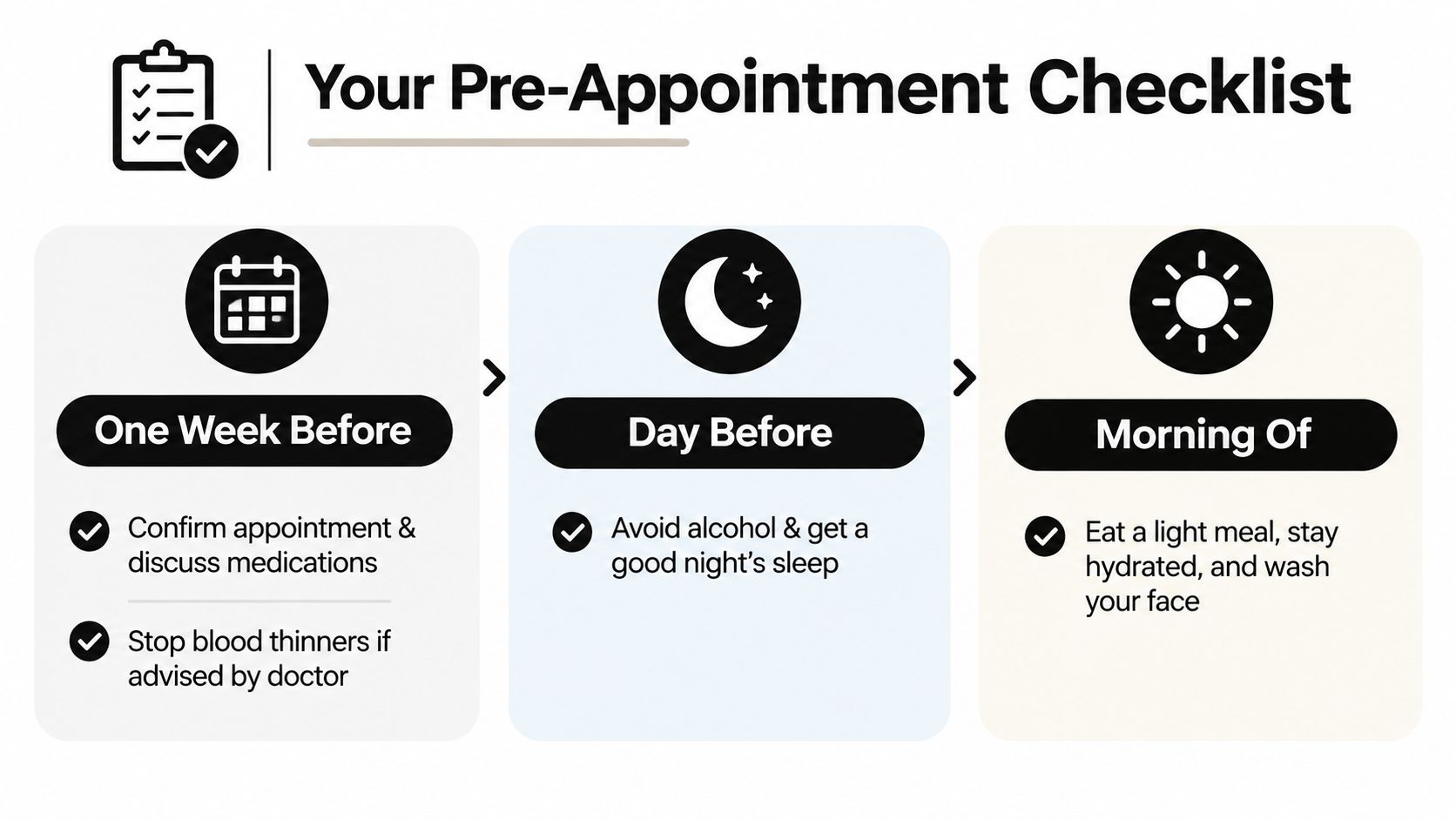
One week before
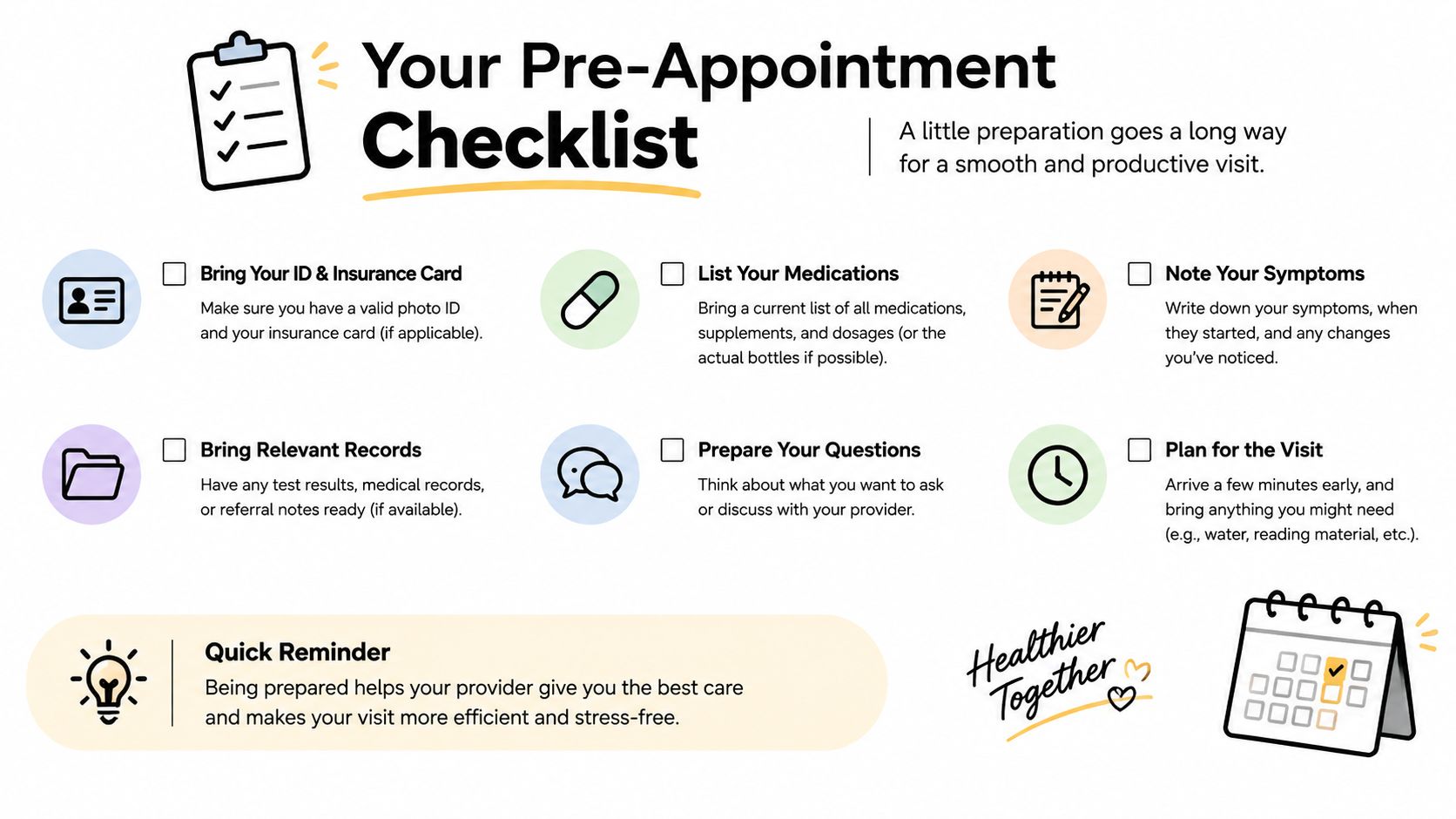
Start with documentation. Confirm that the clinic has your chronic migraine history, prior treatment records, and current diagnosis information. Bring or update a headache diary that records headache days, migraine features, rescue-medication use, and meaningful changes in severity or function.
Prepare a complete medication list. Include prescriptions, over-the-counter pain medicines, vitamins, supplements, anticoagulants, antiplatelets, and any recent Botox treatment received elsewhere. A phone photograph of the labels can be useful if you don't have a printed list.
Call the clinic if you take a blood thinner or an antiplatelet medicine. Don't stop it because a checklist suggests doing so. The clinician who prescribed it may need to weigh bleeding risk against the reason you take it.
If you expect substantial neck tenderness, anxiety, or a flare after procedures, ask what support is appropriate. Most patients don't need transportation, but arranging a ride can make sense if your clinician anticipates positioning difficulty, significant post-treatment soreness, or another reason you shouldn't drive.
The day before
Shower normally and choose a shirt with a loose neckline or easy access to the neck and shoulders. Avoid alcohol because it can increase bruising risk and may aggravate migraine symptoms in people who are sensitive to it.
Put your photo ID, insurance card, medication list, headache diary, and a snack in one place. A snack is useful if you tend to feel lightheaded when you're hungry, although the procedure itself doesn't require fasting.
The morning of treatment
Eat a light meal and drink fluids. Skip unusually heavy caffeine if caffeine is a personal migraine trigger, but don't abruptly change a daily caffeine routine without discussing it if withdrawal commonly causes headaches.
Wash your face and neck. Leave makeup and moisturizer off the planned injection zones, especially the forehead and neck, so the skin can be cleaned easily. Bring your questions, including when to use your usual rescue medication and whom to call if you flare.
Preparation is mostly logistical, not medical. That distinction reassures many first-time patients who expect extensive restrictions.
Medications and Supplements to Review Before Treatment
The medication conversation should separate bruising risk from unsafe self-directed medication changes. Those are not the same issue.
Prescription anticoagulants such as warfarin and direct oral anticoagulants, including apixaban and rivaroxaban, require coordination with the prescribing clinician. Antiplatelet medicines such as aspirin and clopidogrel also belong on the list. The injection sites are superficial and clinicians can apply pressure, so stopping these medicines for elective Botox may not be justified. The decision depends on why you take the medicine, not only on the fact that bruising is inconvenient.
Mayo Clinic specifically advises patients to tell the clinician about blood thinners and any Botox received during the prior four months, as explained in its Botox safety and preparation information. Never pause an anticoagulant or antiplatelet medicine without clearance from the clinician managing that treatment.
Common pain medicines
NSAIDs such as ibuprofen and aspirin can increase bruising risk, so ask whether your injector wants you to avoid them around the procedure. Don't assume that every pain reliever must be stopped, and don't leave uncontrolled migraine pain untreated just to avoid a small bruise. Acetaminophen is generally an acceptable pain-control option for many patients, provided it's safe for your health history and you follow your clinician's dosing advice.
Supplements can also matter. Fish oil, high-dose vitamin E, ginkgo, garlic, ginger, and St. John's wort may raise bruising concerns. If your clinician agrees that pausing them is safe, a 7-day pause can be considered before treatment. That pause isn't appropriate for every person, particularly when a supplement has a medically important role.
Your established migraine preventives don't usually need to be stopped for Botox. CGRP antagonists, topiramate, beta-blockers, and tricyclic medicines can be layered into a preventive plan during titration when your treating clinician believes the combination is appropriate. Bring the complete list so the injector can account for your treatment rather than guessing.
Arriving at the Clinic and Getting Through the Visit
Your first visit usually begins at the front desk. Bring identification and insurance information, then expect the clinical team to confirm your medication list and headache diary. A brief history and vital-sign check may follow, especially if this is also your first evaluation at that clinic.
The consent discussion should be specific. Your clinician may review injection-site pain, bruising, temporary neck weakness, and the possibility of eyelid or eyebrow ptosis. They should also explain the rare spread-of-toxin warning and tell you which symptoms require a call. The benefit discussion matters just as much: the treatment is preventive, and response is judged across the treatment cycle rather than by the first few days.
You'll usually sit in a reclined chair or lie on a procedure table. The skin is cleaned, often with alcohol or chlorhexidine, and the clinician follows the mapped injection pattern across the forehead, temples, occipital region, neck, and trapezius. The standard pass uses 31 sites, with an optional additional 8 sites when the clinician follows the pain pattern and protocol allows.
Each injection takes only seconds. You may feel a small pinch, dull pressure, or brief burning, especially in the forehead or neck. The complete injection pass commonly takes 10 to 15 minutes, although the total appointment can be longer because of check-in, examination, consent, and questions.
Most patients remain upright and drive themselves home. Before leaving, confirm the aftercare instructions and the approximate date for the next cycle, generally 12 weeks later. A visit summary helps you remember what was done and what to report at follow-up.
Aftercare and What to Expect in the First Two Days
Small raised bumps can appear at the injection sites and usually flatten within 30 to 60 minutes. Mild tenderness, pinpoint bleeding, bruising, or a low-grade headache can occur. A headache shortly after treatment is often managed with your usual rescue medication, if your clinician has approved it, rather than treated as proof that Botox caused a complication.
Keep your head upright for about four hours. Avoid helmets, tight goggles, massage chairs, facials, and scalp massage that day or during the next 24 to 48 hours, depending on your clinician's instructions. Wash your hair gently and avoid pressing or rubbing the injection areas.
You can usually apply makeup once any pinpoint bleeding has stopped and the skin is clean. Most patients resume ordinary activity the same day. Heavy lifting can be reasonable if your neck feels stable, but scale back if lifting increases pain or weakness. The Botox aftercare guidance for migraine treatment can help you review these practical points after you leave.
Don't judge the treatment too quickly. Many patients notice fewer or less severe headaches between weeks 4 and 8, while the full assessment belongs at the next treatment cycle. Call the clinic for spreading weakness, a drooping eyelid, vision change, swallowing difficulty, or a rash that could suggest an allergic reaction. Persistent or worsening symptoms deserve attention rather than watchful waiting.
Common Questions First-Time Patients Ask
A sensitive responder is someone who has previously developed a substantial headache flare or unusual discomfort after injections, vaccines, dental work, cosmetic Botox, or another procedure. Tell the injector before treatment. You may need a plan for your usual abortive medication, but don't pre-medicate with an NSAID, triptan, antihistamine, or preventive adjustment unless your clinician recommends it.
A real response isn't determined on day three. The PREEMPT program evaluated outcomes at week 24, and clinical guidance commonly assesses benefit after multiple treatment cycles. Track headache days, severity, rescue-medication use, neck symptoms, and function between visits.
Call sooner for a new headache pattern, significant weakness, vision or swallowing problems, or side effects that persist beyond 48 hours. If there's no meaningful improvement after two completed 12-week cycles, schedule a treatment review rather than assuming the dose or diagnosis is fixed. Clinicians may adjust dosing or add sites at follow-up when appropriate.
Bring your diary to every cycle. Specific records turn “I think it helped” into information your clinician can use.
Midwest Pain & Wellness provides chronic migraine Botox evaluation and treatment through an interventional pain and wellness practice serving Chicago Ridge, Palos Heights, Palos Hills, Evergreen Park, Hickory Hills, and surrounding Illinois communities. Review your preparation questions and visit Midwest Pain & Wellness to request an appointment and discuss a plan for your medications, neck symptoms, and migraine pattern.