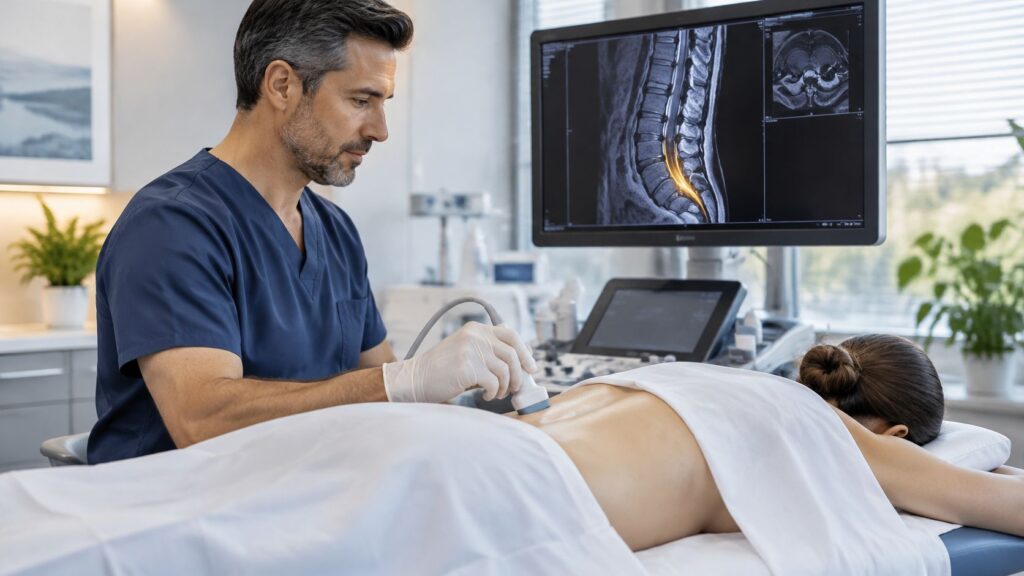
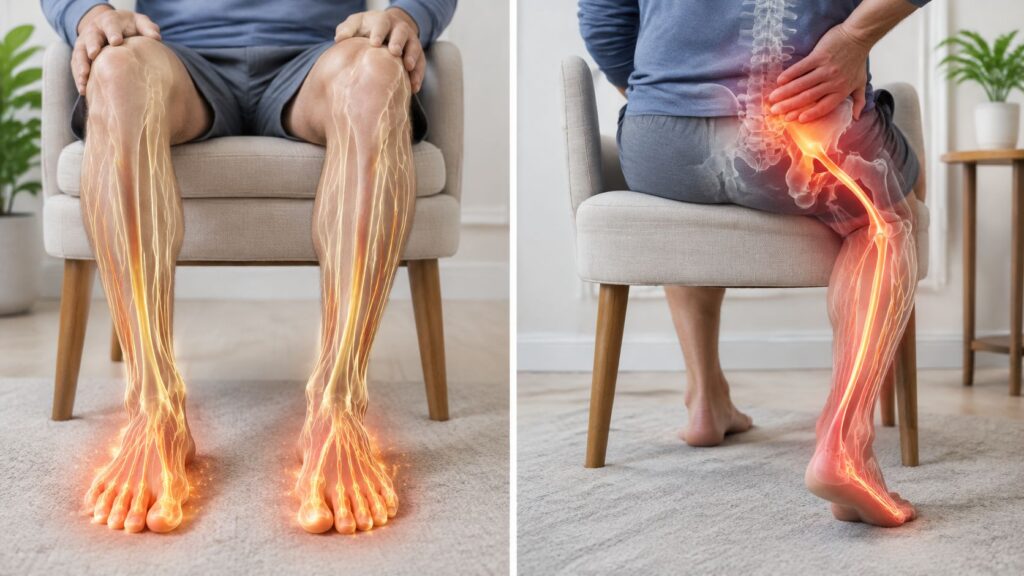
If you've just had Botox for chronic migraine, you're probably doing two things at once. You're hoping this is the treatment that finally gives you more predictable days, and you're also wondering what you should or shouldn't do once you leave the office.
That mix of relief and uncertainty is normal. Patients heading home around Chicago Ridge, whether to Oak Lawn, Palos Hills, Palos Heights, Worth, Bridgeview, Hickory Hills, Alsip, Burbank, Evergreen Park, or Orland Park, usually want the same thing: clear instructions, realistic expectations, and reassurance about what happens next.
Your Guide to Recovery After Botox for Migraine
Getting Botox for chronic migraine is a meaningful step, especially if headaches have been interrupting work, sleep, family plans, or the ability to think clearly through the day. Aftercare is straightforward, but it matters. Small choices in the first day can affect how well the medication stays where it was placed, and good follow-through over the next few months helps you and your clinician judge whether treatment is working the way it should.
Botox for chronic migraine is not an instant rescue treatment. It's a preventive treatment with benefits that build over time. That can make the first few days feel anticlimactic if you were hoping to feel dramatically different right away. Stay patient with it.
One reason many pain specialists continue to rely on this treatment is that long-term follow-up has been encouraging. After consecutive rounds of Botox, more than 70% of patients report having only half as many headaches as before treatment, and treatment has also been associated with reduced medication use and lower migraine-related disability scores, as reported in this clinical review on post-treatment outcomes.
What matters most right now
The first goal is straightforward. Protect the placement of the medication in the hours after injection. The second goal is just as important. Track what happens over time so your next visit is based on real patterns, not guesswork.
If this is your first treatment cycle, it also helps to understand the full process before your next visit. A practical starting point is this guide on how to prepare for Botox injections, which complements aftercare by helping patients think ahead about timing, medications, and follow-up planning.
Recovery after migraine Botox usually isn't difficult. What matters is doing the basic things correctly and giving the treatment enough time to declare itself.
Immediate Aftercare The First 24 Hours
The first day is the most important part of Botox for migraine aftercare. In this window, the job is to reduce the chance that the medication shifts into nearby muscles where it wasn't intended to go.

The non-negotiable rule
Stay upright for 4 to 6 hours after treatment.
That instruction is part of clinically validated aftercare guidance, along with avoiding strenuous exercise, heat exposure, and massaging treated areas for the first day to reduce toxin migration and support proper binding at nerve endings, as summarized in this aftercare review.
That means no lying flat on the couch right away. No nap when you get home. No long period bent over a sink, your phone, or a laptop if you can help it. Normal gentle activity is fine, but keep your head in a neutral, upright position.
What to avoid for the rest of the day
For the first 24 hours, keep the treated areas undisturbed.
- Don't rub or massage your forehead, scalp, neck, or shoulders. Pressure can interfere with where the medication settles.
- Skip hard workouts. Running, heavy lifting, intense cardio, and anything that sharply raises effort should wait.
- Avoid high heat. Saunas, hot tubs, steam rooms, and very hot yoga are poor choices that day.
- Be careful with headwear. Tight hats, headbands, helmets, or anything pressing on injection areas should stay off if possible.
What you can do
A quiet, normal day is usually best. You can walk, do light household tasks, eat normally, and go about routine activities that don't involve pressure, heat, or strenuous exertion.
A simple way to think about it is this:
| Situation | Better choice |
|---|---|
| You feel tired after your appointment | Sit upright and rest instead of lying flat |
| You planned a gym session | Delay it until the next day |
| Your scalp or neck feels tender | Leave the area alone rather than pressing on it |
| You were thinking about heat for soreness | Use a gentle cool approach instead of heat |
The first day doesn't need to be stressful. It just needs to be careful.
Managing Common and Mild Side Effects
Migraine Botox is generally well-tolerated. When side effects do happen, they're usually mild, temporary, and manageable at home with a calm, low-intervention approach.
The key is to recognize what belongs in the normal recovery category. According to reported safety data, 15% of patients experience mild, temporary side effects, with neck pain at 6.7% as the most common issue, followed by injection site pain and headache at 5.4% each.
What normal can look like
You may notice mild neck stiffness, tenderness at the injection points, a small headache, or a temporary sense of tightness in treated areas. Tiny bumps or pinpoint redness can appear shortly after injections and often settle down on their own.
These symptoms are usually irritating, not alarming. They should trend toward better, not worse.
What to do at home
A few practical steps are usually enough:
- Use a cold compress gently. Place it lightly over sore areas for short stretches. Don't press hard.
- Keep your routine simple. A lower-key day often feels better than trying to push through a packed schedule.
- Ask before taking medication if you're unsure. Many patients do fine with simple options, but it's smart to follow the guidance given specifically for you.
- Leave the skin alone. If the injection areas feel a bit irritated, avoid scrubs, friction, or aggressive products.
If you also deal with dryness or sensitivity from skincare products, it can help to review basic skin recovery principles such as how to restore your skin barrier. That's not Botox-specific, but it can be useful if your skin tends to react to irritation around the same time.
What doesn't help
Patients sometimes make mild soreness worse by repeatedly checking the area, massaging it, or using heat because the neck feels tight. That usually backfires on day one. The better strategy is gentle cooling, patience, and minimal interference.
Mild soreness after injection is common. Repeatedly pressing on the area usually creates more discomfort than relief.
A good rule is to watch the direction of the symptom. If it's steady or easing, that's reassuring. If it's intensifying or changing into something functionally limiting, that belongs in a different category.
Your Recovery Timeline What to Expect and When
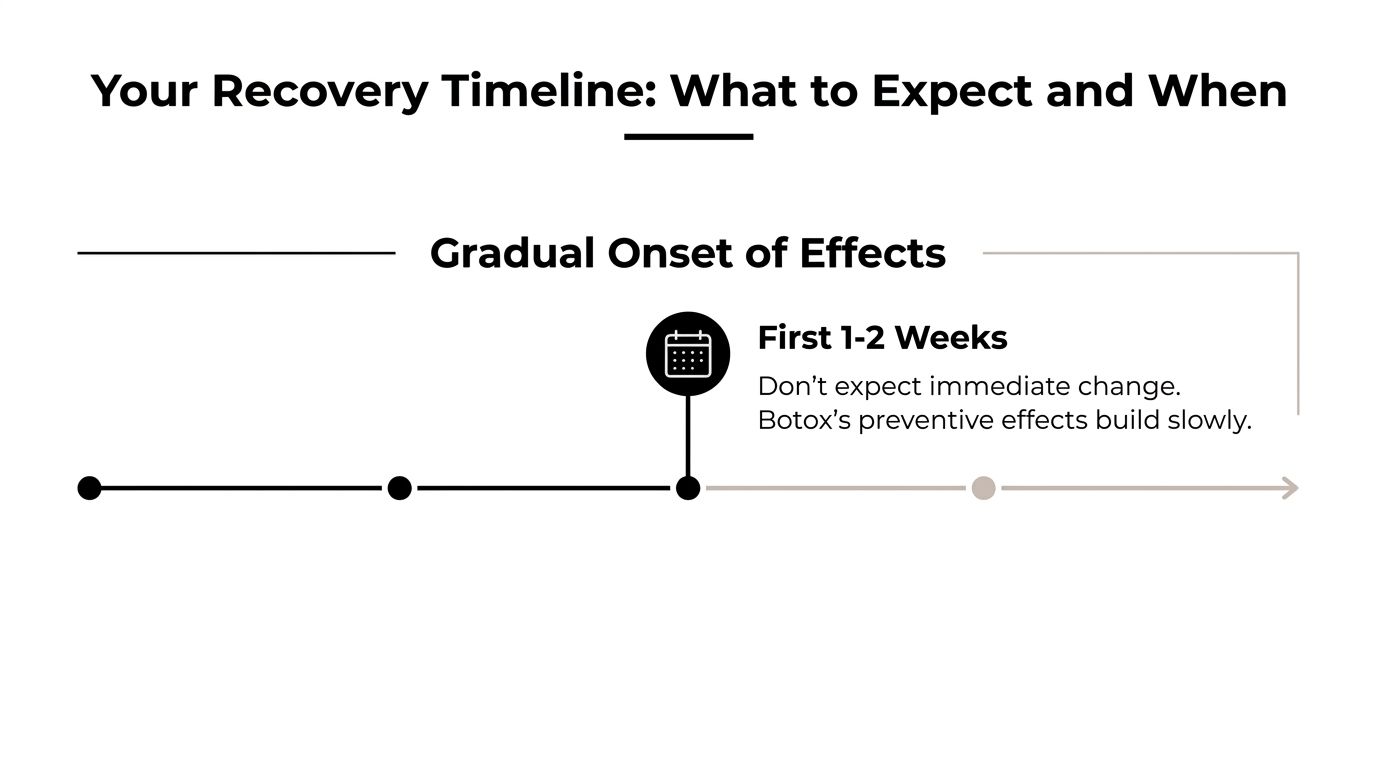
Botox has its own pace. If you judge it too early, you can mistakenly assume it isn't helping when it may still be building.
The first phase
In the first one to two weeks, many patients don't notice a major change. That's expected. Preventive benefit often develops gradually rather than showing up as a sudden overnight shift.
Some people begin to notice early changes within a few weeks, such as less intense headaches, fewer migraine days, or less tension across the scalp, forehead, neck, or shoulders. If you want a clearer sense of that early window, this patient resource on how long Botox takes to work lays out the usual progression in practical terms.
The middle of the cycle
By the middle of the cycle, patients often have enough experience to answer a more useful question than “Did it work instantly?” The better question is, “Am I seeing a pattern of fewer or more manageable migraine days than before?”
That's why a headache diary matters. Write down headache days, migraine features, rescue medication use, and anything unusual. Small improvements can be easy to miss if you rely on memory alone.
The cumulative effect over repeated cycles
This treatment is best judged over more than one session. According to long-term outcome data, nearly 50% of patients achieve a 50% or greater reduction in monthly migraine days after two treatment cycles, and 26% report at least a 75% reduction.
That tells patients something important. The first cycle is often the beginning of the evaluation, not the final verdict.
If you still have migraines between your first and second appointments, that doesn't automatically mean treatment has failed. Botox prevention is cumulative.
A realistic timeline usually feels less dramatic than people expect, but more meaningful over months than they first imagine.
Red Flags When to Contact Our Clinic
Most post-treatment symptoms fall into the mild category. A smaller group belongs in the “call now” category. The challenge is that patients often confuse ordinary neck soreness with a true warning sign.
A point that deserves more attention in patient education is this one: patients need help distinguishing normal neck stiffness from rare but serious problems affecting swallowing-related muscles. That difference matters.
Symptom versus signal
Here's a simple way to sort it out:
| Common symptom | Warning signal |
|---|---|
| Mild neck soreness | Trouble swallowing or the feeling that food is getting stuck |
| Temporary tenderness at injection sites | Weakness that seems to spread beyond the expected area |
| A little stiffness when turning your head | A change in your voice, speech, or breathing |
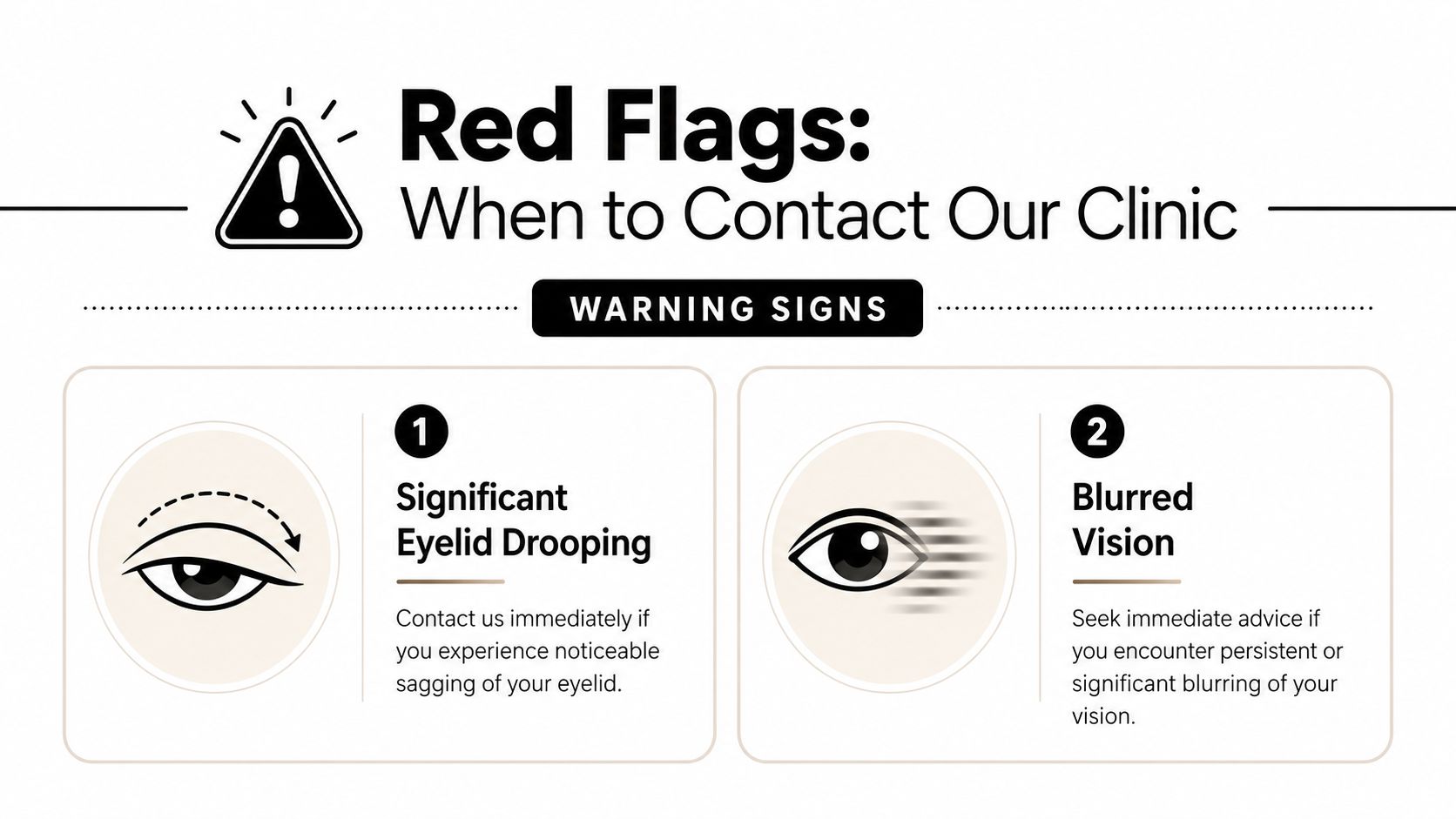
| Mild local heaviness | Significant eyelid drooping or persistent blurred vision |
When the symptom changes the way you function
Benign post-injection discomfort is usually annoying but manageable. You can still eat, swallow, speak, and move through the day. A red flag changes function.
Call promptly if you notice:
- Swallowing difficulty: Not just throat awareness, but actual trouble getting food or liquid down.
- Speech or breathing changes: These need urgent medical attention.
- Noticeable eyelid drooping: Especially if it's new, marked, or getting worse.
- Persistent blurred or double vision: This is not the same as feeling tired after a long day.
- Weakness outside expected soreness: If your neck feels weak in a way that seems disproportionate or unusual, report it.
New functional problems matter more than mild soreness. If a symptom affects swallowing, vision, speech, or breathing, don't wait it out at home.
When in doubt, call. It's better to ask early than to sit with a concerning symptom and hope it passes.
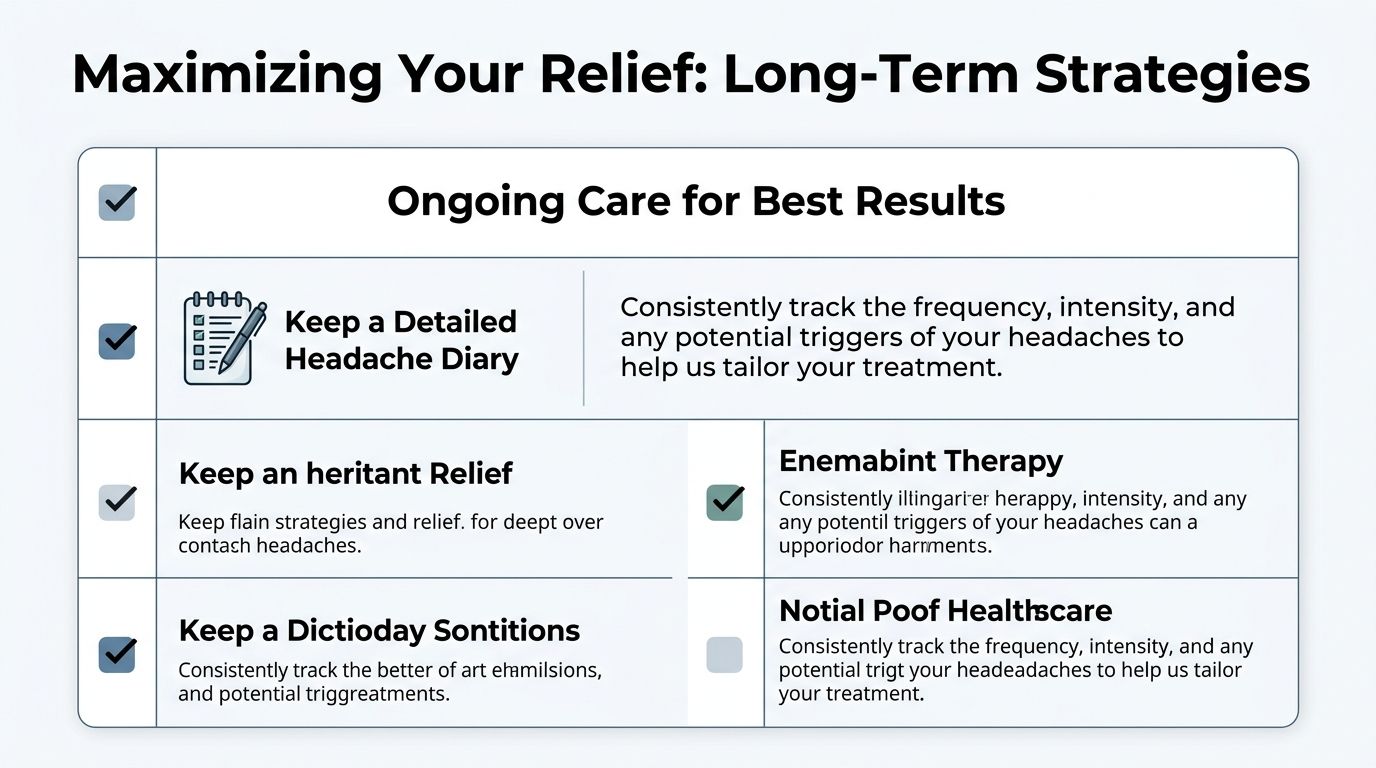
Maximizing Your Relief Long-Term Strategies
Good Botox for migraine aftercare doesn't stop after day one. The biggest gains usually come from what patients do between treatment cycles.
Keep better records than your memory can
Memory tends to overemphasize the worst days and blur the rest together. A headache diary gives your treatment plan something solid to work with.
Write down:
- How often headaches happen
- How severe they feel
- How long they last
- What rescue medication you used
- Any trigger pattern you noticed
That record helps your clinician judge whether you're moving in the right direction and whether your timing or broader migraine plan needs refinement.
Stay consistent with follow-up
Botox for chronic migraine follows a regular schedule. Delaying treatment too long can allow symptoms to creep back before the next cycle has a chance to reinforce the previous one.
For many patients, consistency matters as much as the injection itself. The people who get the clearest answer from treatment are usually the ones who show up on time, keep notes, and report accurately what improved and what didn't.
There's also a long-game mindset here. If you're receiving repeated treatment, it helps to understand why regular, properly spaced care matters. This overview on how to prevent Botox resistance is a useful read for patients planning ongoing therapy.
Support the whole migraine picture
Botox can be a strong preventive tool, but it works best inside a broader migraine strategy. That may include sleep consistency, hydration, trigger awareness, stress management, and selected supplements when appropriate. For patients asking about nonprescription support, a practical primer on the benefits of magnesium supplements can be a helpful starting point for discussion with your clinician.
One more long-term point often gets missed. Not everyone stays on Botox forever. Some patients eventually reach a point where treatment intervals are reconsidered or the plan is reevaluated based on sustained headache improvement. That decision should be deliberate, tracked, and made with your clinician rather than guessed at based on one good month.
If you're looking for experienced migraine care close to Chicago Ridge, Midwest Pain & Wellness provides evidence-based treatment for chronic migraine as part of a broader pain management approach. Patients from Oak Lawn, Palos Hills, Palos Heights, Worth, Bridgeview, Hickory Hills, Alsip, Burbank, Evergreen Park, and Orland Park can schedule an evaluation to discuss whether Botox is appropriate, how to manage aftercare safely, and how to build a long-term plan around fewer headache days and better function.