You probably came home from kyphoplasty with a small bandage on your back, a head full of questions, and one big hope, that the deep fracture pain has finally started to let up. The good news is that kyphoplasty procedure recovery is usually measured in hours and days, not in months of being stuck in bed. The harder part is knowing what's normal soreness, what's too much, and when to call for help.
The First Few Hours After Kyphoplasty
You're awake, the blanket is warm, and the first thing you notice may be less pain in the spot that had been shouting at you for days or weeks. The bandage is small. The staff may ask you to sit up slowly, then stand, then take a few careful steps to the doorway. That first walk matters because it shows the treated vertebra is holding and that your body is responding the way it should.
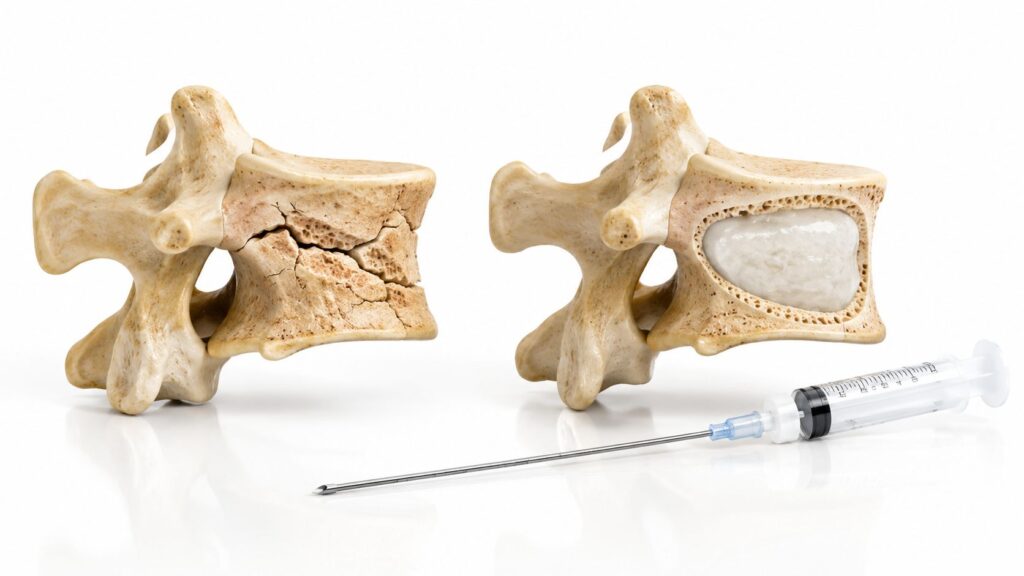
Kyphoplasty works by stabilizing the fractured vertebra with balloon-assisted height restoration and cement support. Once that segment is reinforced, the deep fracture pain often starts to quiet down fast. Cleveland Clinic reports that an estimated 92% of patients report better pain relief after kyphoplasty, with improvement often within 48 hours and sometimes immediately, and procedure-related pain usually settling in 2 to 3 days. Cleveland Clinic kyphoplasty overview
Practical rule: the first pain you feel after the procedure should usually be incision soreness or stiffness, not the same sharp fracture pain that brought you in.
A little achiness is expected. That comes from the skin puncture, the local inflammation around the needle path, and the body's normal response to having a fractured bone stabilized. It feels different from the pre-procedure pain that made every movement miserable. In one clinical study, the average pain score dropped from 8.2 to 3.2 the day after surgery, and 96.1% of patients were fully mobilized within 1 day in another kyphoplasty cohort, which is why early movement is part of a normal recovery path.
If you're leaving the recovery bay and wondering whether you should be doing more, the answer is simple. Walk when the team tells you to, move carefully, and don't test the spine with bending or twisting. The point of these first hours is not to prove toughness, it's to confirm that the vertebra is stable enough for you to go home safely and keep healing there.
What the Immediate Post-Op Period Looks Like
The immediate post-procedure window is short, structured, and deliberate. Most institutional protocols describe 1 to 2 hours of observation, or about 2 hours, before discharge, with some patients staying overnight if they've had multiple vertebrae treated, are recovering more slowly, or have higher medical risk. University of Rochester Medical Center kyphoplasty guide
During that time, the team is checking for the things that matter most right after kyphoplasty, bleeding, blood pressure, neurological changes, and whether you can safely stand and walk. The discharge conversation usually covers wound care, medication use, activity limits, and the ride home with a responsible adult. If you're alert, stable, and steady on your feet, same-day discharge is common.
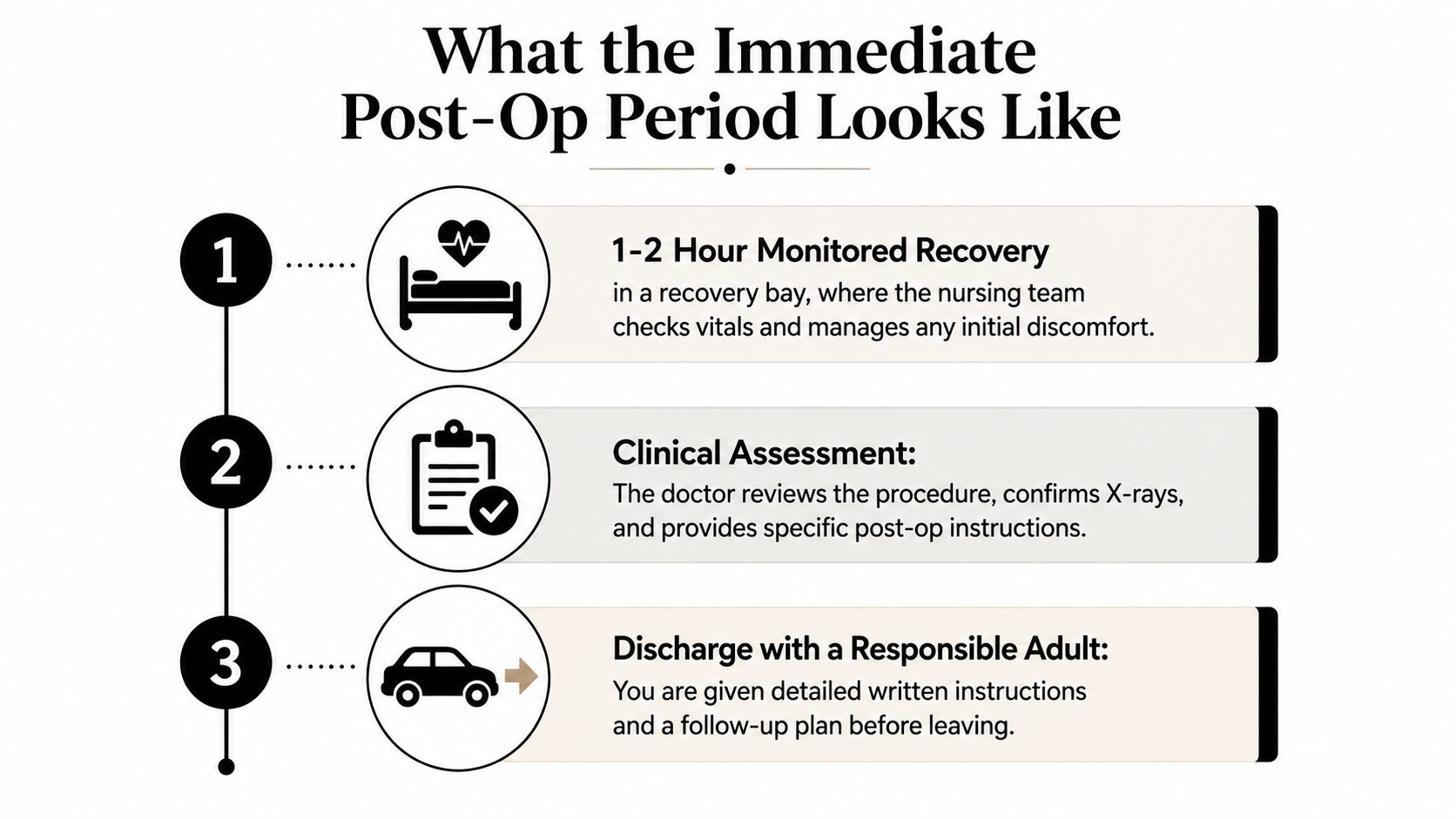
You may notice soreness around the incision site. That's normal, and it usually fades in 2 to 3 days, with wound-care restrictions commonly lasting 1 to 2 weeks. A small bandage is usually enough. Keep it clean and dry unless your discharge paperwork says otherwise.
What the bedside nurse is looking for: a steady blood pressure, no new leg symptoms, and a patient who can ambulate without showing new instability.
If you want a practical explanation of why some pain happens after a procedure even when the fracture pain is better, this internal guide to postoperative pain after interventional procedures is a useful companion. At this stage, the goal is simple, get you home safely, confirm you can move, and make sure the cement-augmented segment is behaving normally before the work of home recovery begins.
Your First 48 Hours at Home
The first two days at home are about staying ahead of discomfort, not chasing it. If your clinician prescribed pain medicine, take it on schedule at first rather than waiting until the pain ramps up. That approach makes it easier to walk, breathe comfortably, and sleep without repeatedly waking up in pain. If nausea or grogginess shows up after anesthesia, light meals and plenty of water usually help more than a heavy dinner.
The most useful movement in this window is short, frequent walking. Get up often, use a steady chair, and keep each walk simple. When you get in and out of bed, roll as one unit and avoid twisting through the waist. That log-roll motion protects the treated vertebra from sudden stress while your body is still settling after the procedure.
Here's the rhythm I want most patients to follow:
- Morning: take your medications as directed, drink water, and walk a short distance in the house.
- Midday: change positions regularly, eat something light, and avoid long periods of sitting in one place.
- Evening: use extra pillows under the knees or behind the back if that's more comfortable, then take another short walk before bed.
- Any time: keep the incision dry unless your discharge instructions say it can be changed or uncovered.
Sleep often improves faster when the spine stays neutral. A pillow under the knees can reduce low-back strain if you sleep on your back. A pillow behind you can help you stay from rolling. If you woke up with the old fracture pain, that's not the same as normal soreness. The pain should be changing in character, not staying exactly as it was before.
If you need a comparison point for a different spine recovery pattern, this epidural steroid injection recovery guide can help you see how post-procedure pacing differs across interventions. The main point for kyphoplasty is that the first 48 hours should feel like controlled healing, not forced inactivity. Move enough to avoid stiffness, but keep the spine protected.
Activity Restrictions and Lifting Limits for Weeks 1 to 6
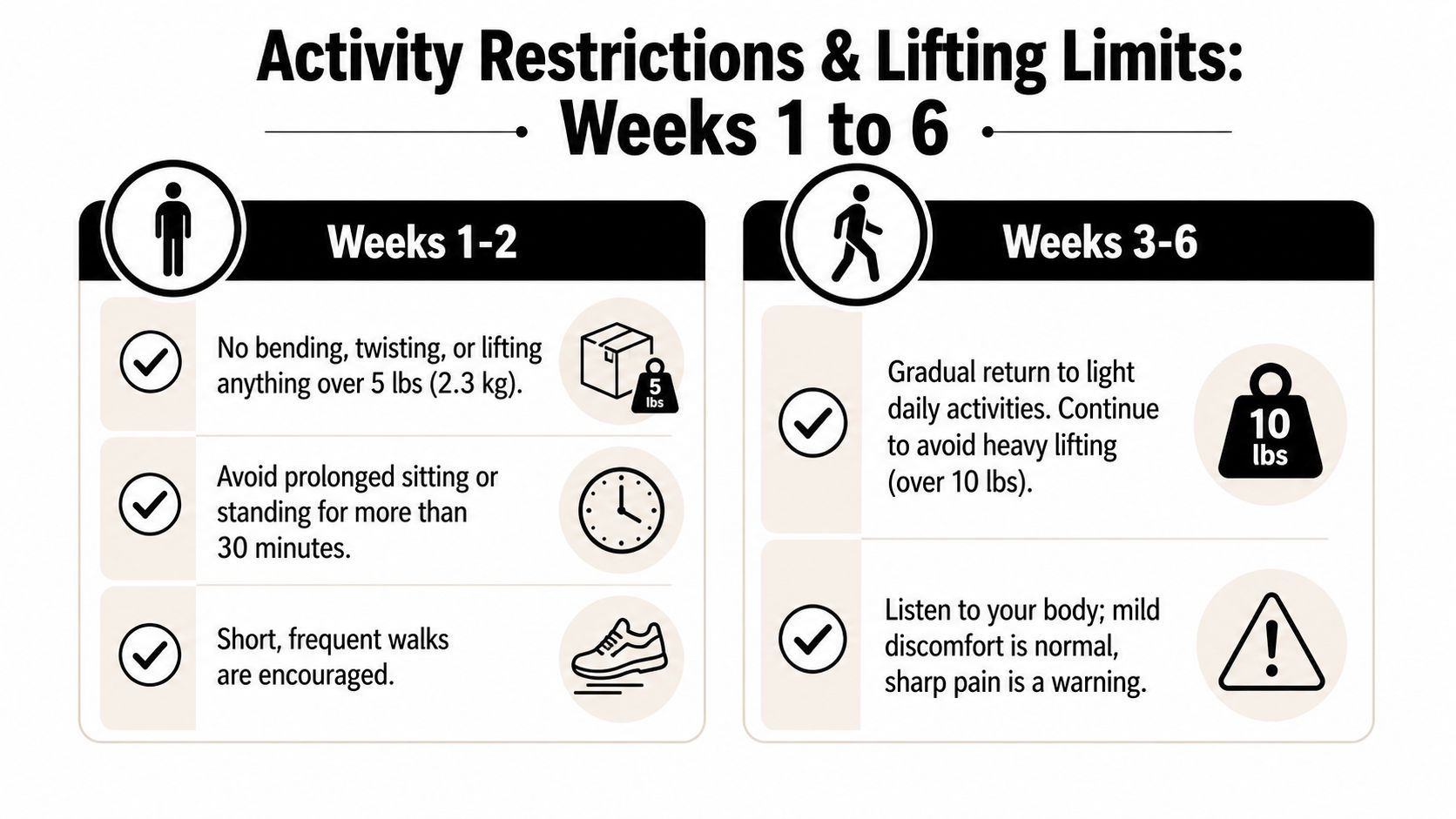
Many people get into trouble, because the pain is better before the spine is fully ready for stress. Major medical sources line up on the same core restrictions, avoid heavy lifting, bending at the waist, twisting, and strenuous exercise for roughly 4 to 6 weeks. MedlinePlus advises avoiding heavy lifting and strenuous activity for at least 6 weeks, and other major patient-education sources give similar limits. MedlinePlus kyphoplasty aftercare
Weeks 1 to 2
Keep the spine quiet, not frozen. Short walks are encouraged, but avoid prolonged sitting or standing in one position for too long. Don't bend to reach a low drawer, vacuum, carry laundry baskets, or twist while putting on shoes.
The 5-pound limit is the clearest practical cutoff many patients remember. That means no lifting anything over 5 pounds, which is why a gallon of milk, a laptop, or a small pet can all be poor choices early on. If you need it, ask someone else to carry it.
Weeks 3 to 6
This is the phase where patients start feeling like they can do more than their body should allow. That's the danger zone. The rules soften into gradual return to light daily activity, but you still avoid heavy lifting and forceful bending or twisting.
Clinical reality: pain relief often arrives before structural recovery is complete, so feeling good is not the same as being cleared.
A simple pacing plan helps. Week 1 is for short walks. Weeks 2 and 3 are for slightly longer walks and more time upright, with frequent breaks. By week 4, some patients are resuming non-strenuous routines, but only with the pain specialist's clearance and only if the spine is behaving well. Heavy work, gym lifting, yardwork, and repetitive trunk rotation still belong off the list.
The reason is straightforward. The treated vertebra needs time to settle, and the surrounding bones are often weakened by osteoporosis. Overloading the spine too early can trigger a new fracture above or below the cemented segment. Recovery gets easier when you keep the guardrails in place.
Physical Therapy and Movement Recommendations
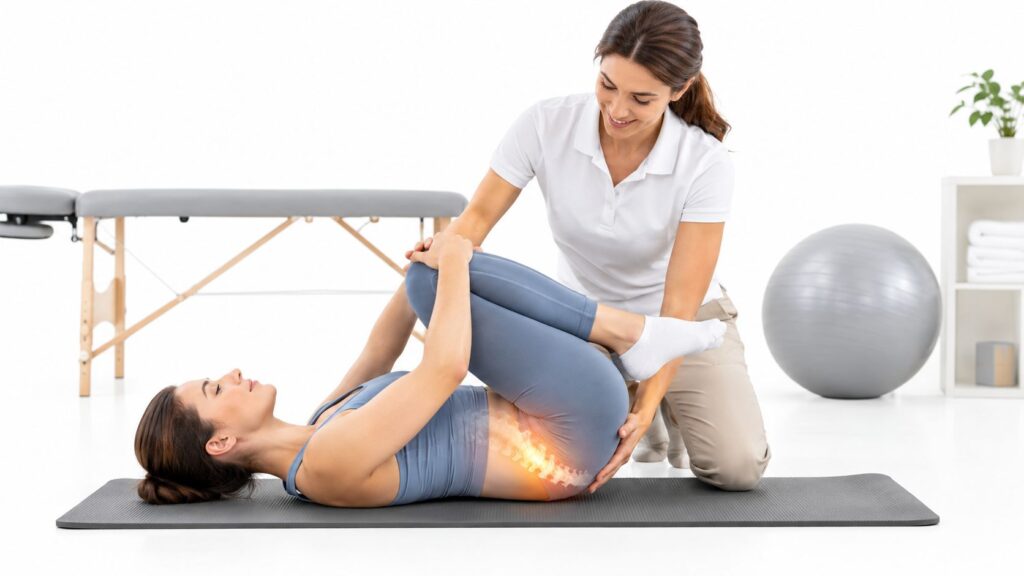
Movement after kyphoplasty should be purposeful, not random. In a pain and wellness clinic, that usually means the medical team coordinates gentle rehab rather than handing the patient off and hoping for the best. The early focus is posture awareness, walking tolerance, and safe activation of the muscles that help protect the spine. If formal rehabilitation is needed, a referral can be made to a trusted PT partner, but the plan still stays medically guided.
How movement usually builds
The first phase is basic walking and position changes. Once the initial restrictions are in place, the team may add gentle range-of-motion work that avoids spinal strain, along with core stabilization that doesn't require bending or twisting. After that, the emphasis shifts to posture training and a graded activity plan that matches what the patient can tolerate that week.
That matters because “I feel fine” can be misleading. Pain relief does not automatically restore endurance, balance, or spinal control. Patients who move too aggressively often compensate with the hips and low back, then flare the tissues around the treated level.
A realistic first-12-week pattern looks like this:
- Weeks 1 to 2: walking, basic posture awareness, and strict lifting limits.
- Weeks 3 to 6: longer walks, controlled daily activity, and continued avoidance of risky trunk motion.
- Weeks 6 to 12: gradual return to fuller daily life, with strength and flexibility work only if the clinician says the vertebra has tolerated recovery well.
The point of rehab after kyphoplasty is not to “work through it.” It's to rebuild confidence in movement without reloading a fragile spine too soon.
Midwest Pain & Wellness fits into this kind of recovery because the clinic treats pain as part of a larger spine plan, not as a single event. That can include guided exercise recommendations, image-guided procedures, and bone-health coordination when osteoporosis is part of the picture. The long-term goal is a safer spine, not just a quieter one.
Warning Signs and When to Call the Clinic
Normal recovery soreness should gradually soften. Sharp worsening pain, new weakness, or changes in bladder and bowel function are different. Those changes need attention right away, especially if they show up after you were already improving.
Watch for these red flags:
- New leg weakness or numbness: call the clinic promptly, and if it's sudden or severe, go to the emergency department.
- Groin or saddle numbness: treat this as urgent emergency care.
- Loss of bowel or bladder control: seek immediate emergency help.
- Fever, drainage, or increasing redness at the incision: contact the clinic the same day.
- Chest pain or shortness of breath: go to the emergency department.
- Pain that returns at the same intensity as before the procedure: call the clinic, because that can mean a new issue needs evaluation.
Pain that spikes after a short walk is not always a crisis. Pain that comes back exactly like the fracture pain you had before kyphoplasty is different. In an osteoporotic spine, new fractures above or below the treated level are part of the reason we don't dismiss recurring pain as “just healing.”

A helpful rule is this. If the symptom is new, neurological, or rapidly worsening, don't wait. If it's soreness that's slowly easing and responds to rest, that's more consistent with expected recovery. When in doubt, call. It's better to ask about a false alarm than to miss a real complication.
Follow-Up Visits, Imaging, and Long-Term Outcomes
The follow-up schedule after kyphoplasty is usually practical rather than flashy. A wound check and medication review often happen in the first week or two. A functional visit at about 6 weeks is where the clinician looks at how well you're walking, how much pain remains, and whether your restrictions can loosen. Imaging isn't routine unless new symptoms appear.
That's important because the best recovery conversations are about function, not just the scan. If you can sit, stand, walk, sleep, and manage daily tasks with less pain than before, that's a meaningful result. Longer-term studies show that kyphoplasty can keep helping well beyond the first recovery window, with pain reduction and mobility gains reported for as long as 3 years after the procedure, and registry-level data cited 4-year survival rates of 62.8% after kyphoplasty versus 57.3% after vertebroplasty in older patients with vertebral fractures. Long-term kyphoplasty outcomes review
A practical way to think about the months ahead is this:
| Milestone | Typical Timeframe | What It Means |
|---|---|---|
| Early home recovery | First few days | Pain should start to settle and walking should be possible with caution. |
| Return to daily activity | About 1 to 2 weeks | Light routines usually resume, but restrictions still matter. |
| Functional reassessment | Around 6 weeks | The spine team checks healing, movement, and whether limits can ease. |
| Longer-term outcome review | 3 months and beyond | The focus shifts to durability, strength, and preventing the next fracture. |
At an average follow-up of 26.7 months, one study found 70.6% of patients had an Oswestry Disability Index below 20, and the same study reported 28% vertebral height gain after treatment. Those numbers don't mean everyone recovers the same way, but they do show that kyphoplasty can support durable functional improvement when the rest of the bone-health plan is taken seriously.
That broader plan matters. Treating the fracture without addressing osteoporosis leaves the next vertebra exposed. Bone-density workup, medication review, and activity guidance all belong in the same conversation.
Next Steps With Midwest Pain & Wellness in Illinois
If you're in Chicago Ridge, Oak Lawn, Palos Hills, Palos Heights, Worth, Bridgeview, Hickory Hills, Alsip, Burbank, Evergreen Park, or Orland Park, Midwest Pain & Wellness can help you make sense of vertebral compression fracture pain and the recovery that follows. The clinic is a pain and wellness practice, so the visit starts with imaging review, a focused exam, and a plan built around spine pain, function, and safe next steps. Vertebral compression fracture pain care
Bring your procedure paperwork, medication list, and any imaging you already have. If you're recovering from kyphoplasty, the team can help review restrictions, check your progress, and coordinate the next phase of care with your other clinicians when needed. Dr. Yaw Donkoh and the Midwest Pain & Wellness team work with patients who need practical guidance after spine procedures, not just another generic follow-up.
If you want a clear recovery plan for kyphoplasty procedure recovery in the southwest Chicago suburbs, start with Midwest Pain & Wellness. Their team can help you understand what's normal, what's not, and what to do next so you can keep healing with a real plan instead of guessing.