You're home after an epidural steroid injection, and the same questions tend to show up fast. Is this soreness normal? Why did the numbing relief wear off? Should you rest, walk, or lie flat? Most patients don't need more vague reassurance. They need a practical roadmap.
That's how I approach epidural steroid injection recovery in clinic. The injection isn't a magic switch. It's a targeted treatment meant to calm irritated spinal nerves and reduce inflammation so movement becomes easier, daily tasks become more manageable, and the body has room to settle down.
For patients in Oak Lawn, Palos Hills, Palos Heights, Worth, Bridgeview, Hickory Hills, Alsip, Burbank, Evergreen Park, Orland Park, and the surrounding Illinois communities near Chicago Ridge, the first few days are usually where uncertainty is highest. The good news is that most of that uncertainty comes from timing, not danger. What you feel in the first several hours often means something different from what you feel several days later.
Your Epidural Steroid Injection Is Done What Happens Now
Walking out after an injection, many patients expect one of two extremes. Either they think the pain should be gone immediately, or they worry that any soreness means something went wrong. Neither is usually true.
An epidural steroid injection is designed to reduce inflammation around a spinal nerve root. That matters because inflamed nerves don't just create pain. They can also cause burning, tingling, heaviness, or pain that shoots from the back into the leg or arm. The point of treatment is to quiet that irritation enough for function to improve.
What recovery is really supposed to look like
Recovery usually happens in phases, not all at once. Early on, you may notice temporary numbness or short-lived relief from the local anesthetic used during the procedure. After that wears off, your baseline pain may return for a bit before the steroid has time to work.
That pattern confuses many people, but it's common. If you want a clearer overview of why the injection behaves that way, this explanation of how a steroid injection works can help connect the procedure to the recovery experience.
Clinical perspective: A successful recovery isn't judged by how you feel in the parking lot. It's judged by whether nerve pain eases enough for walking, sitting, sleeping, and basic activity to become more tolerable.
What actually matters after you get home
Focus on three things first:
- How your body feels overall. Mild soreness near the injection site is common.
- How your nerve symptoms behave. Relief may be delayed, uneven, or gradual.
- How safely you function. Getting around the house, changing positions, and resting comfortably matter more than chasing an immediate pain score.
Patients often do best when they stop treating recovery like a pass-fail test. A little discomfort right after the procedure doesn't tell you much. What matters is the trend over the next several days and whether you're moving toward better function.
Navigating the First 24 Hours Post-Injection
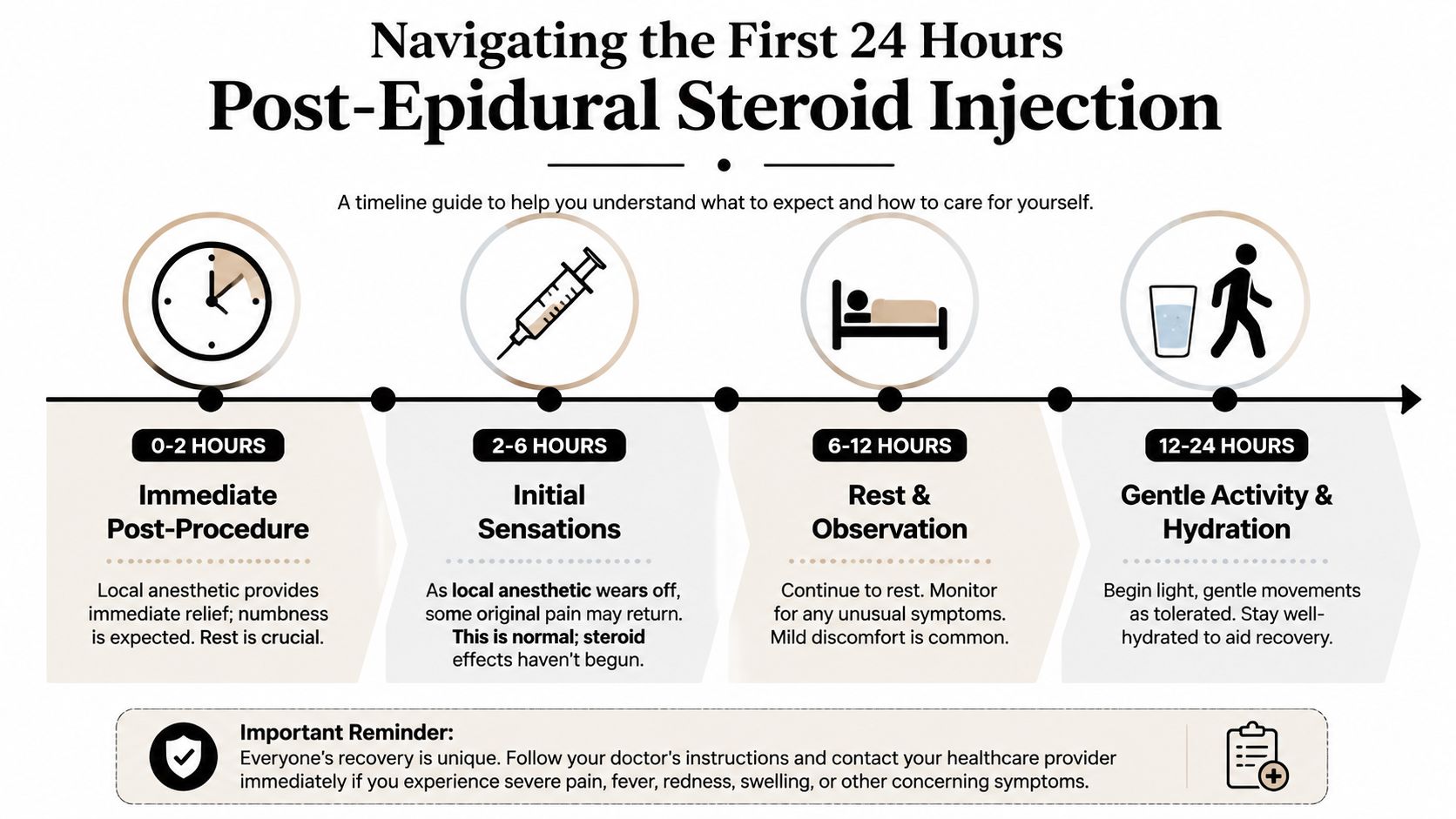
The first day is where expectations can either calm you down or create unnecessary anxiety. The key is understanding that the injection contains two jobs. The local anesthetic acts quickly. The steroid acts later.
Think of the anesthetic as the crew that briefly clears the road. The steroid is the part that works on the inflammation, but it takes longer to arrive at full effect.
Why pain can change during the day
A technically important point is that the local anesthetic effect fades within hours, while the steroid effect usually begins after 24 to 72 hours and may take up to a week to fully declare itself, according to this epidural steroid timing guidance. Because of that lag, a temporary pain flare for 1 to 3 days can happen and doesn't automatically mean the injection failed.
That one detail explains a lot of what patients experience on day one. You may feel better at first, then feel some pain return later. That isn't unusual. It's pharmacology, not necessarily a problem.
What to do during the first day
Use the first 24 hours for a controlled reset, not for testing your limits.
- Rest the area. Keep activity light for the rest of the day. This gives the irritated tissues time to settle after the procedure.
- Use ice if you're sore. A cool pack can help with local tenderness at the injection site.
- Walk briefly if you feel steady. Gentle movement is fine if it feels comfortable, but don't turn a good hour into an overactive day.
- Hydrate and eat normally unless told otherwise. Patients often feel better when they keep the day simple.
What to avoid and why
Some habits increase irritation right when the area is settling down.
| Avoid in the first day | Why it's not helpful |
|---|---|
| Heavy lifting | It can aggravate the same structures the injection was meant to calm. |
| Strenuous exercise | It may trigger a pain flare before the steroid effect has started. |
| Heat on the injection site | If the area is already irritated, heat may worsen local soreness for some patients. |
| “Testing” the pain by overdoing it | A brief numbing effect can make people feel safer than they actually are. |
If the numbing medicine wears off and some pain returns, don't assume the procedure failed. The first day often tells you less than patients think.
The First Week and Beyond When Relief Begins
Once you're past the immediate post-procedure period, the main question becomes timing. Patients want to know when the treatment starts to count.
The usual answer is that benefit often begins gradually. According to MedlinePlus guidance on epidural steroid injections, the steroid usually takes 3 to 5 days to start working. Some people notice benefit within 1 to 3 days, while others may take up to a week. Once it helps, many people get several months of improvement in pain and function, and relief may last weeks to months, rarely up to a year.

What gradual improvement looks like
Improvement usually isn't dramatic from one hour to the next. More often, patients notice small wins:
- Standing a little longer without leg pain
- Needing fewer position changes
- Sleeping with fewer wake-ups
- Walking with less nerve irritation
- Sitting through a meal or car ride more comfortably
That's often more meaningful than a single pain number. If you're curious about what duration of relief can look like once benefit starts, this article on how long an epidural can last gives useful context.
How to return to activity without sabotaging the result
The most common mistake in this phase is the boom-bust cycle. Patients feel a little better, catch up on everything they've been putting off, and then pay for it later.
A smarter approach is to expand activity in layers.
- Start with ordinary tasks. Short walks in the house, basic meal prep, light errands.
- Add steady movement. A little more walking, easier transitions in and out of chairs, less guarded movement.
- Wait on forceful activity. Heavy yard work, repeated bending, and long periods of lifting can come too soon.
Relief that comes on gradually is still real relief. In many cases, the best sign isn't “I feel perfect.” It's “I can do more without flaring up.”
Normal Recovery Symptoms vs Red Flag Warnings
This is the question behind almost every anxious phone call after an injection. “Is this normal, or should I be worried?”
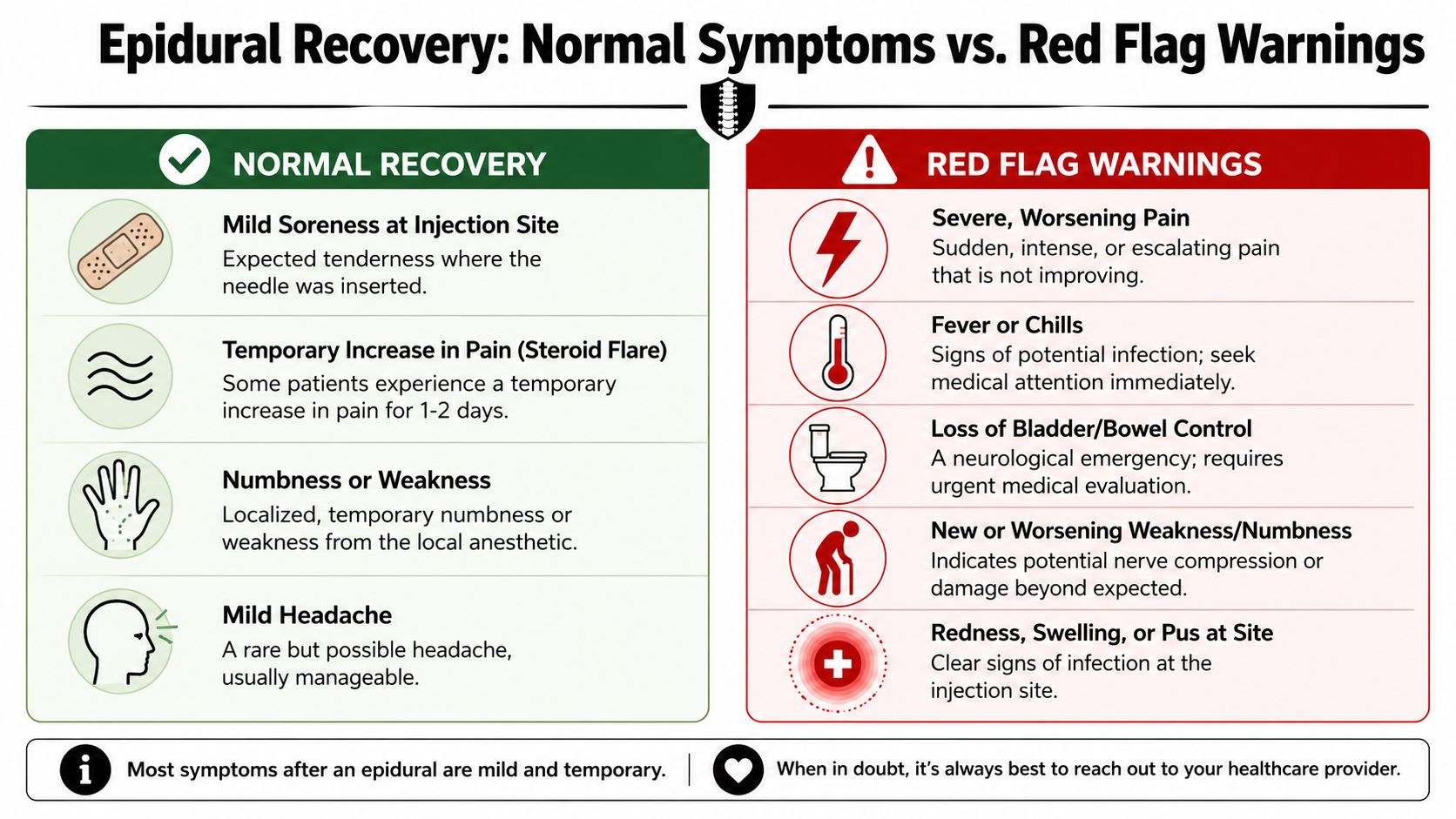
That's a fair concern, because the early phase can include sensations that feel strange but are still part of routine recovery. A brief increase in discomfort can happen before the steroid effect begins, and the expected benefit window can vary, typically 2 to 10 days, based on this recovery overview focused on the post-injection timeline. The more important issue is separating a temporary flare from a true warning sign such as severe headache, fever, or new profound weakness.
Symptoms that are usually expected
These symptoms are often uncomfortable, but they are usually not dangerous by themselves if they stay mild and start settling down.
| Normal recovery symptoms | What they usually mean |
|---|---|
| Mild injection site soreness | Local tissue irritation from the needle and procedure |
| Temporary numbness or leg heaviness | Short-lived effect from the anesthetic |
| A brief pain flare | Inflammation hasn't improved yet, or tissues are still reacting |
| Lingering baseline pain early on | The steroid may not have fully started working yet |
Patients in Oak Lawn or Palos Hills often tell me the strangest part is not the pain itself, but how inconsistent it feels. Better in the morning, worse by evening. Good for a few hours, then sore again. That uneven pattern can still fit normal recovery.
Symptoms that deserve a call right away
Some symptoms should not be watched casually at home.
- Severe headache, especially one that's intense or worsening
- Fever or chills
- New or worsening weakness
- New numbness that feels significant or progressive
- Loss of bowel or bladder control
- Redness, drainage, or obvious swelling at the injection site
These symptoms raise concern for complications that need medical assessment rather than home observation.
A simple way to think about it
Ask two questions.
First, is the symptom mild and stable, or is it escalating?
Second, is it a symptom you were told can happen briefly after the procedure, or is it something clearly new and neurologic, such as increasing weakness or bowel or bladder changes?
Safety rule: Normal recovery symptoms tend to be annoying but limited. Red flag symptoms tend to be progressive, intense, or neurologic.
If you're unsure, don't try to “wait it out” for too long just because you hope it's normal. Ambiguous symptoms are exactly why follow-up communication matters.
Practical Tips for Optimizing Your Recovery at Home
The home setup matters more than people think. A good recovery plan doesn't require fancy equipment, but it does require good judgment.
Make the first few days easier on your body
Keep the essentials close. Water, medications you've already been instructed to use, your phone, a pillow for support, and a small ice pack should all be within easy reach. The less unnecessary bending and twisting you do, the smoother the first couple of days tend to go.
Sleep position also matters. Many patients are more comfortable with a pillow under the knees when lying on the back, or between the knees when lying on the side. The right position is the one that reduces tension through the low back and lets you get restful sleep.
Use comfort strategies that don't backfire
Try these practical habits:
- Ice briefly when the site is sore. Short intervals are usually more helpful than leaving ice on too long.
- Move a little, often. A few gentle walks are usually better than one ambitious outing.
- Respect a good day. Feeling better doesn't mean the tissues are ready for a full reset to normal activity.
- Keep your routine simple. Recovery improves when the nervous system isn't getting repeated aggravation.
If you need ideas for home setup items that can support safe recovery at home with DME, that resource can help you think through basic comfort and mobility needs without overcomplicating things.
Resume local daily life gradually
As symptoms start to settle, a short walk around your neighborhood in Palos Heights, Worth, or Evergreen Park is often a better next step than jumping into chores. Light activity is useful. Heavy lifting, long car rides, deep house cleaning, and strenuous yard work can wait.
A pain clinic's advice diverges from generic internet advice regarding this. The goal isn't bed rest, and it isn't proving toughness. It's protecting the treatment window you just created.
How ESI Fits Into Your Long-Term Pain Management Plan
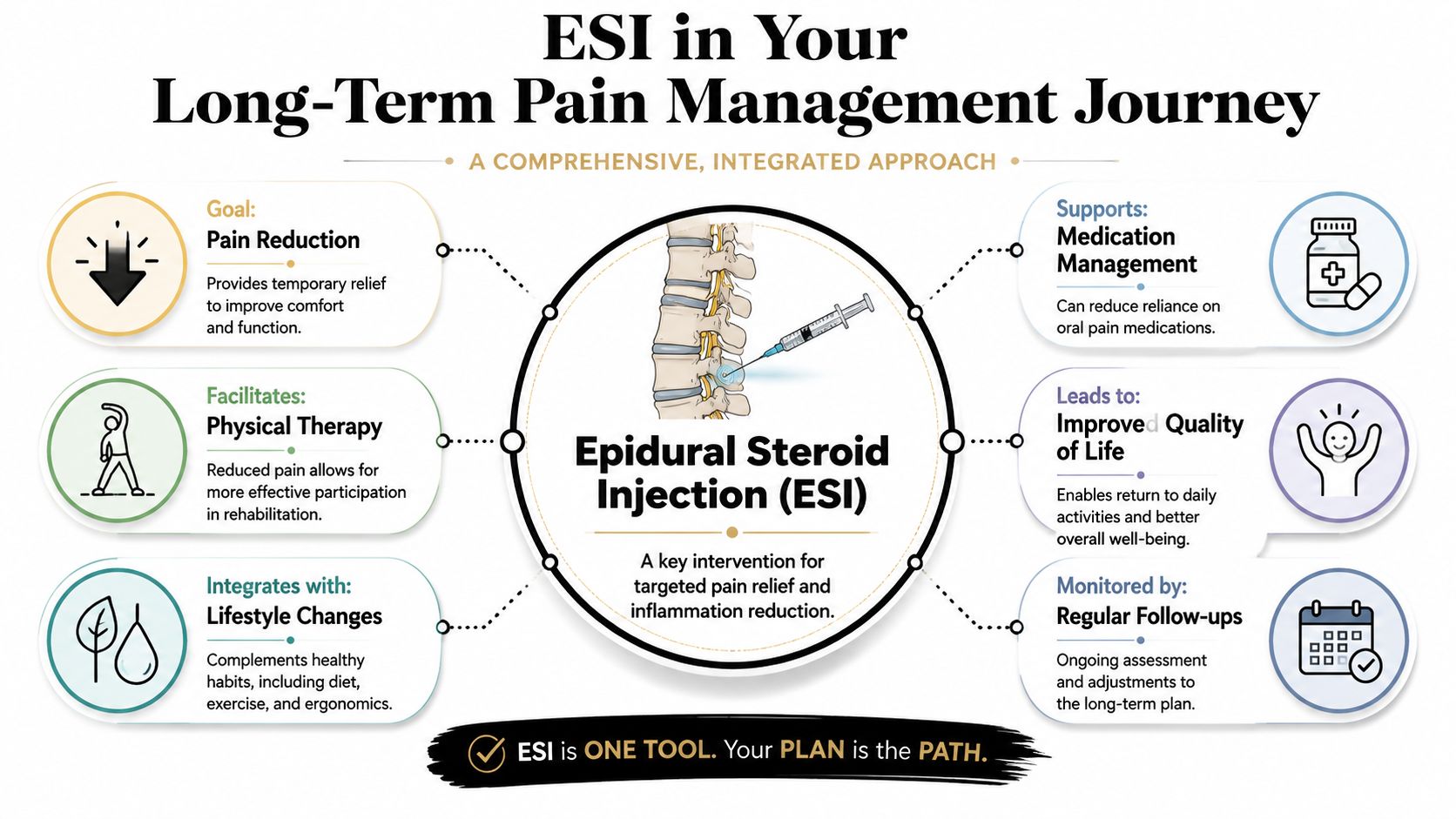
An epidural steroid injection should be viewed as a tool, not a cure by itself. The best use of that tool is to create enough pain reduction that you can move better, tolerate rehabilitation, and interrupt the cycle of guarding and nerve irritation.
What success actually looks like
A good result is rarely just “my pain score dropped.” A better question is whether you can do more with less nerve irritation.
That includes things like:
- Walking farther
- Sitting and standing with less limitation
- Sleeping more comfortably
- Restarting exercise or rehab you couldn't tolerate before
- Reducing the constant cycle of flare, rest, and flare again
At Midwest Pain & Wellness, that broader functional view is central to treatment planning. An injection may be one part of care, alongside medication review, guided exercise, and other interventional options when appropriate.
Why repeat injections shouldn't be automatic
From a planning standpoint, recovery should be judged by function and symptom response over the first 1 to 2 weeks, according to CMS guidance on response-guided epidural treatment. If the first injection doesn't improve pain and radicular symptoms within about 2 weeks, a second injection may be considered. That same guidance states there is no evidence supporting routine “series” injections without regard to the initial clinical response.
That's an important trade-off. Repeating a procedure just because it's on a schedule isn't thoughtful care. Repeating it because the first injection clearly helped, but not enough, is different.
If you're trying to understand that decision in more detail, this page on how many steroid injections may be considered is a useful next read.
The injection should buy you a window. The long-term plan is what determines whether that window leads to durable improvement.
Frequently Asked Questions About ESI Recovery
When can I drive after my injection
Follow the discharge instructions you were given that day. Many patients need someone else to drive them home, especially if they've had temporary numbness, weakness, or sedation. Don't judge readiness by whether you “feel mostly fine.” Drive only when you can move safely, react normally, and are no longer dealing with immediate post-procedure effects.
When can I return to work
That depends on the job, not just the calendar.
A desk job is usually easier to resume because it places less physical stress on the spine, though prolonged sitting can still irritate symptoms. A physical job involving lifting, twisting, climbing, or repeated bending often requires more caution. If your work is demanding, it's safer to ask for specific return-to-work guidance rather than guessing.
What if my pain comes back after a few months
That can happen. An epidural steroid injection treats inflammation and nerve irritation, but it doesn't erase the underlying spine condition. If pain returns, the next step depends on how much relief you had, how long it lasted, and what functional gains you achieved during that window.
Can I exercise if my joints are sensitive
Yes, but choose low-strain options and progress slowly. If you need ideas for gentler movement, this resource on BionicGym's exercise for sensitive joints offers general concepts that may help you think about activity without overloading painful areas.
If you're dealing with lingering back, leg, or nerve pain and want a clearer plan for treatment or recovery, Midwest Pain & Wellness provides evaluation and interventional pain management for patients in Chicago Ridge and surrounding Illinois communities. The right next step is a careful assessment of your symptoms, function, and response so far.