You got discharged from the ER after a crash, and up to 40% of those patients still end up with moderate to severe musculoskeletal pain by 6 weeks. In a major emergency department study, more than 90% of crash patients were sent home after evaluation, which is exactly why so many people hear, “You're stable,” and assume the pain will fade on its own.
If you're in that awkward gap right now, the part where the scans are reassuring but your neck, back, or shoulder still hurts, you're not overreacting. The evidence shows that early, structured pain management matters because crash pain can settle into something harder to reverse if nobody tracks it closely enough.
What Happens After the Crash and What to Do in Those First Hours
The first hours after a car accident are about safety, not elegance. In places like Oak Lawn, Palos Hills, Burbank, and the surrounding Illinois suburbs, many people leave the ER with the same basic instructions, rest, follow up, and return if symptoms worsen. That advice is reasonable in an emergency setting, because the first job is to rule out life-threatening injury.
What gets missed is that crash pain doesn't always announce itself right away. Muscle strain, soft-tissue inflammation, and joint irritation can build over the next day or two, so a normal initial workup doesn't mean your body is done reacting. In that 2016 emergency department study, acute musculoskeletal pain, especially neck and back pain, was the norm among discharged patients, and up to 40% moved into persistent post-traumatic musculoskeletal pain (study details).
Practical rule: if pain is getting tighter, sharper, or harder to move through after the first day or two, don't treat that as “just soreness.”
A useful first-48-hours checklist is simple:
- Track pain location and movement limits. Write down where it hurts, what motions set it off, and whether you're sleeping normally.
- Use the meds you were given exactly as directed. The same study found 49% of patients given NSAIDs and 56% of those given opioids still had moderate to severe pain at 6 weeks, with no significant difference in persistent pain risk between the two groups (study details).
- Don't wait weeks to reassess. If pain is still blocking daily activity, that's the point to move from watchful waiting to a structured plan.
For a neck-injury example, the mechanics and symptom pattern are worth reading in a focused way, especially if the crash involved a rear-end impact. A dedicated page on whiplash injury treatment can help you connect the dots between the injury mechanism and the symptoms that follow.
The point is not to panic in hour one. It's to avoid the common mistake of disappearing into silence after the ER visit and hoping the body will sort it out without any follow-up structure.
Common Injuries After a Car Accident and Why Imaging Alone Doesn't Tell the Whole Story
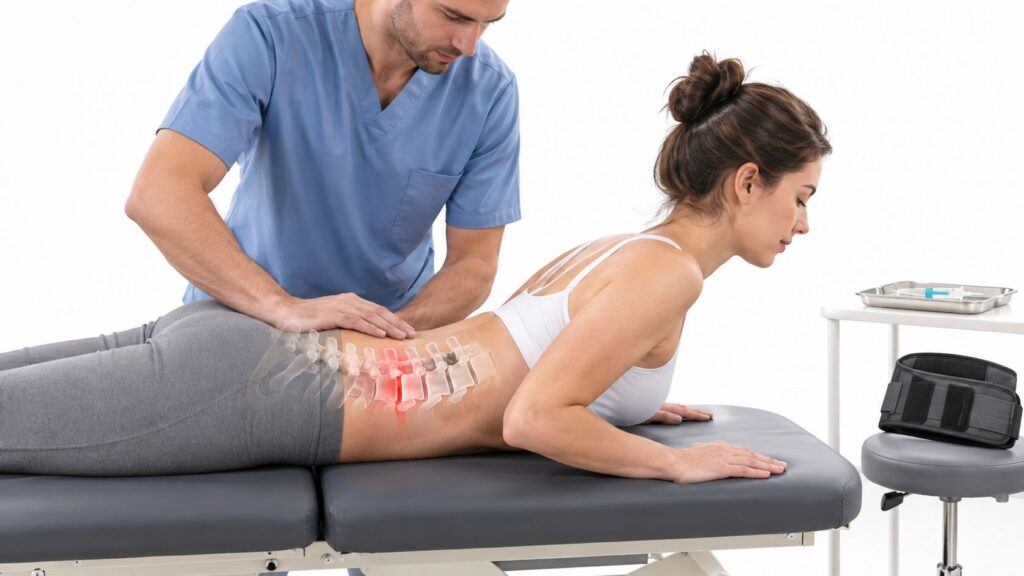
A crash can leave a patient hurting even when the first scans look ordinary. That happens because post-collision pain often reflects a combination of whiplash, cervical strain, disc irritation, facet joint injury, and nerve root irritation, not one clean structural lesion. The vehicle takes the hit, while soft tissues, joints, and pain pathways keep reacting after everyone else thinks the event is over.
Rear-end crashes can snap the neck forward and back fast enough to strain muscles, ligaments, and the small joints that stabilize the cervical spine. Side-impact collisions can load the shoulder, ribs, pelvis, and lower back unevenly. Rollovers can create stress in more than one plane, which is why some patients describe pain that feels diffuse and hard to fit into a single label.
Symptoms often lag behind the crash itself. Inflammation builds, muscle guarding starts, and a person who felt workable at the scene may wake up stiff, nauseated, and unable to turn the head the next day. That delay is one reason early follow-up matters in the 2-to-8-week window, when acute pain can either settle or start hardening into a longer problem.
The AURORA motor-vehicle-collision cohort makes the follow-through issue plain. Analysts at AURORA data found that persistent moderate or severe musculoskeletal pain was common at 2 weeks and still present for many patients at 8 weeks. Among participants who still had moderate to severe pain at 2 weeks, most remained in that category at 8 weeks. That gives clinicians a practical cutoff, pain that is still clearly significant at the two-week mark deserves a real plan, not passive reassurance.
For a plain-language overview of common crash-related injury patterns, injuries after a Wisconsin car crash is a useful reference because it matches the soft-tissue and joint complaints people often bring in after impact.
The diagnosis is not just “What does the scan show?” It is also “What can this person do, what hurts with movement, and what is still changing over time?”
A pain evaluation looks at the crash mechanism, the pain map, range of motion, sleep disruption, and whether the pattern points toward a joint, disc, nerve, or muscle source. If symptoms persist or worsen, advanced imaging or targeted diagnostic injections can become appropriate, but those decisions come from the clinical picture, not from pain severity alone.
For patients who want a focused explanation of nerve-targeted evaluation, what is a nerve block injection helps explain why a specialist may use an injection as a diagnostic tool, not just a treatment.
Understanding the Treatment Spectrum from Conservative Care to Interventional Procedures
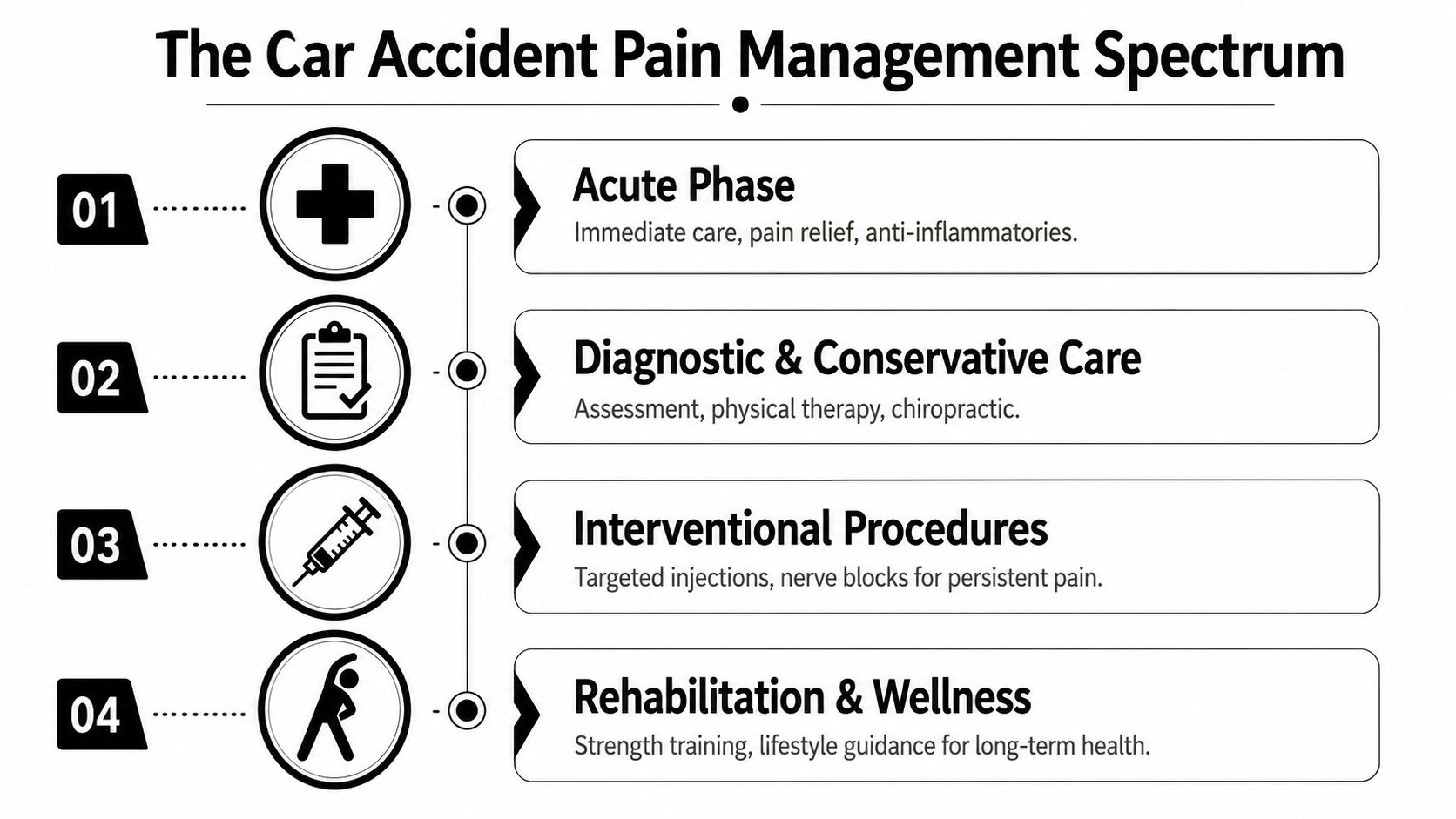
Car accident pain management works best when it matches the stage of healing. Early on, the goal is to calm inflammation, preserve motion, and keep pain from training the nervous system to stay on high alert. Later, the goal shifts toward identifying the pain generator and restoring function without leaning on one medication class or one procedure.
At the conservative end, activity modification, graded movement, and non-opioid medication are the starting point for many patients. For some, that means a short course of symptom control while the body settles. For others, it means a structured plan because pain isn't resolving on its own.
Practical rule: if a treatment reduces pain but doesn't help you move, sleep, or return to normal tasks, it's not doing enough.
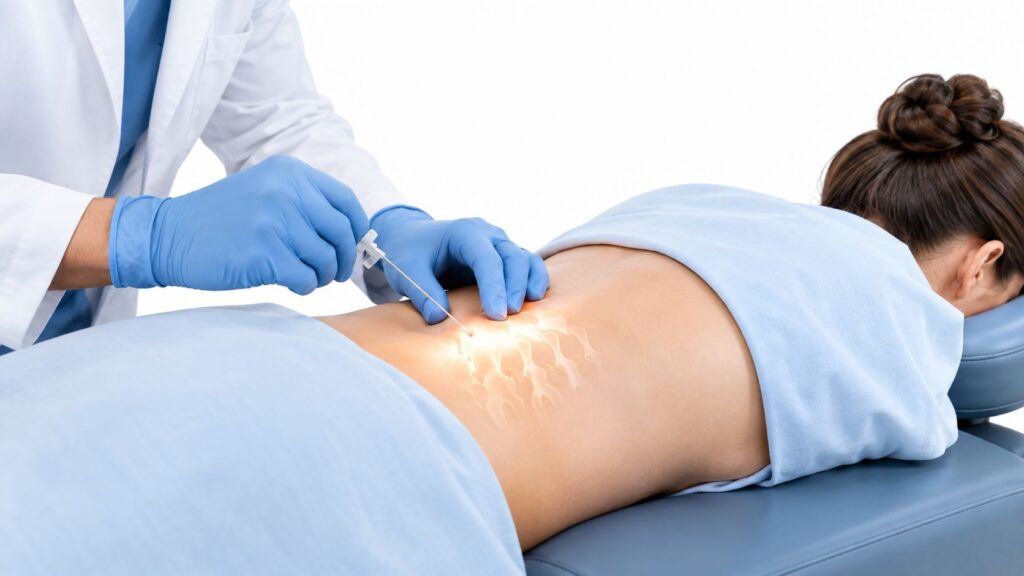
More targeted options come next. Image-guided injections can help when a specific structure is suspected. Epidural steroid injections are often used when nerve irritation is part of the problem, medial branch blocks help identify facet-joint pain, and sacroiliac joint injections can clarify pain coming from the pelvis or low back.
If conservative care stalls, radiofrequency ablation may be an option for facet-mediated pain because it interrupts pain signaling from the affected joint nerves. For pain with a strong nerve-mediated component, neuromodulation approaches such as peripheral nerve stimulation or spinal cord stimulation may enter the discussion. These are not first-line tools for every crash patient, but they matter when pain has persisted and the pattern supports a targeted intervention.
There's also a place for regenerative and biologic treatments in selected cases, but they should be discussed carefully and matched to the diagnosis. If you want a broader backdrop on long-term back pain options, the MEDISTIK back pain guide is helpful context for understanding how chronic pain discussions often evolve beyond the acute phase.
A trauma-focused acute pain guideline recommends multimodal analgesia, including acetaminophen and NSAIDs unless contraindicated, and it also notes that regional analgesia is a best practice, with continuous regional analgesia preferred over a single injection when pain is expected to last beyond 12 hours (guideline). That same framework supports the way an interventional clinic thinks, multiple tools, chosen for a specific pain pattern, not a single “stronger” medication.
A review from a pain management clinic perspective on interventional pain management makes this spectrum easier to understand because it connects diagnostic blocks, injections, and longer-term procedures into one care pathway.
How Multimodal Opioid-Sparing Care Works in Practice
A crash patient often expects one strong medicine to settle everything. In practice, that approach rarely holds up well. After a collision, pain is often coming from more than one source, and the first few weeks are where treatment choices matter most because that is when acute pain can either start settling or begin shifting toward a longer problem.
Opioids may have a limited role, but they should not be the default answer for musculoskeletal crash pain. Trauma guidance recommends the lowest effective immediate-release opioid for the shortest period possible, while also considering regional anesthesia and psychosocial interventions when they fit the injury pattern (guideline). In plain terms, treatment should match the pain generator, not just the pain score.
Medication review is part of that decision-making. In one road-traffic-injury study, prescription opioid use rose from 10.5% before injury to 32.7% in the 18 months after injury, and benzodiazepine use increased from 4.8% to 7.2% over the same general period; the study estimated that 39% of postinjury opioid use and 73% of benzodiazepine use may have been unrelated to the injury itself (study details). That is why every medication on the list matters, including sleep aids, anxiety medicines, and anything a patient may already have been taking before the crash.
The practical goal is function. If pain control leaves a person sedated, constipated, foggy, or more hesitant to move, the plan is not helping recovery as much as it should. A careful approach usually combines medication review, movement guidance, image-guided procedures when indicated, and counseling about sleep, fear, and activity so the nervous system does not stay locked in a guarded state.
Practical rule: if a medication plan is making you sedated, anxious, constipated, or more isolated without improving function, the plan needs to be rethought.
For patients in Chicago Ridge, Orland Park, Bridgeview, and nearby Illinois communities, the same principle applies in clinic. A sound plan uses the right tools in the right order, and a multimodal interventional pain clinic approach can bring those pieces together without relying on a single fix. If the injury claim starts affecting day-to-day decisions, an Oregon total loss guide can also help patients understand one of the outside stressors that often complicates recovery.
The point is not to avoid pain medicine altogether. The point is to use enough relief to keep a patient moving, sleeping, and participating in care, because that is what gives the best chance of getting through the 2-to-8-week window without letting acute crash pain harden into chronic pain.
How Compensation Systems Affect Recovery and What to Know Before You Navigate Them
For many people, the injury claim becomes a second job. That stress isn't imaginary, and it can change how pain feels and how recovery unfolds. A review of chronic pain after motor-vehicle collision found that 70% of included studies reported adverse outcomes, including all of the highest-quality studies, and it also noted that compensation-system engagement was associated with more prevalent self-reported chronic pain, mental health disorders, and reduced return to work (review).
A separate systematic review concluded there is considerable evidence that compensation either does not facilitate recovery or is associated with poorer recovery (review). That doesn't mean people shouldn't pursue legitimate claims. It means the process itself can become part of the recovery burden, especially when documentation is inconsistent and follow-up care is fragmented.
The useful response is to track recovery like a clinician would.
- Write down function, not just pain. Note sleep, driving tolerance, work tolerance, lifting, and household tasks.
- Keep symptom changes tied to treatment changes. If a block, medication adjustment, or procedure helped for a few days, document that clearly.
- Separate the claim from the body. Your case file can move slowly while your symptoms need attention now.
For readers dealing with a totaled vehicle while they're still sorting out medical care, the Oregon total loss guide is a useful example of how vehicle-loss questions can add another layer of stress, even though the legal details vary by state.
What matters medically is whether pain is still being driven by active tissue injury, whether it's becoming sensitized, or whether stress and fear are amplifying the experience. Those can overlap, and a good evaluation should recognize that overlap instead of forcing every case into one box.
What to Expect When You Seek Care at Midwest Pain & Wellness in Illinois
If you live in Oak Lawn, Palos Hills, Palos Heights, Worth, Bridgeview, Hickory Hills, Alsip, Burbank, Evergreen Park, or Chicago Ridge, the right next step after a car accident is often a dedicated pain visit, not more waiting. Midwest Pain & Wellness in Illinois is set up for exactly that kind of follow-up, with care led by double board-certified interventional pain specialist Dr. Yaw Donkoh.

Your first visit should be organized, not mysterious. Bring any ER paperwork, imaging reports, medication lists, accident details you remember, and a short written summary of what motions hurt and what's changed since the crash. That helps the clinician decide whether you need medication adjustment, a diagnostic injection, or a more specific procedure.
The clinic's treatment model is opioid-sparing, with options that may include image-guided injections, epidural steroid and medial branch blocks, sacroiliac and facet interventions, radiofrequency ablation, peripheral nerve and spinal cord stimulation, minimally invasive lumbar decompression, Vertiflex Superion procedures, kyphoplasty, PRP, cell-based therapies, and Botox for selected headache or neck-related conditions. Care is coordinated with surgeons, primary care clinicians, chiropractors, and rehab therapists when needed, and the practice also supports workers' compensation and personal injury cases.
If your pain has lasted beyond the first couple of weeks, or if it's limiting work, sleep, or basic movement, that's the moment to stop guessing. Midwest Pain & Wellness can help you move from symptom control to a real treatment plan with a clear target and follow-up.
If you're still hurting after a crash, don't wait for the pain to decide its own timeline. Visit Midwest Pain & Wellness to get a focused evaluation, review your options, and build a plan that fits your injury, your goals, and your life in Illinois.