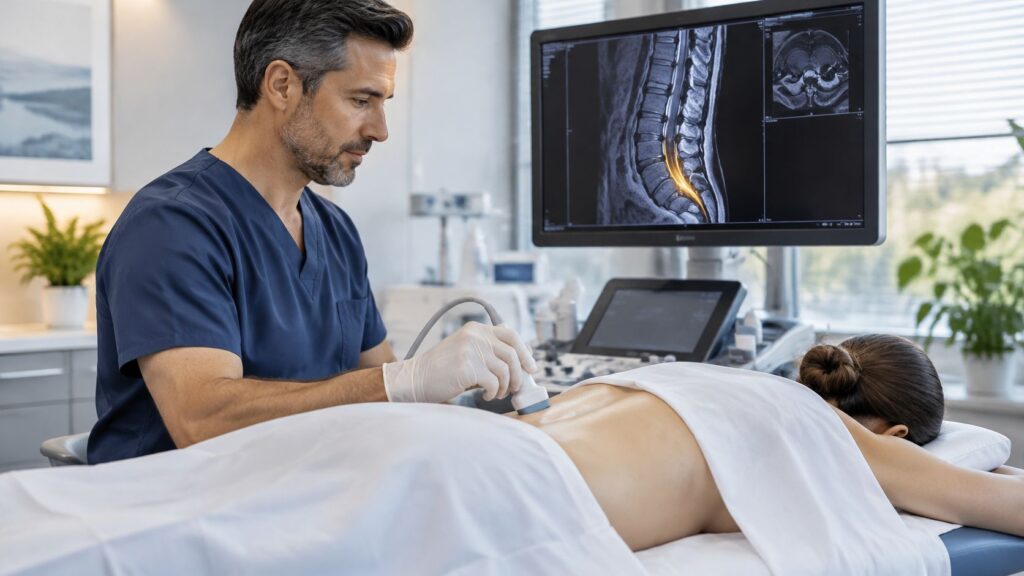
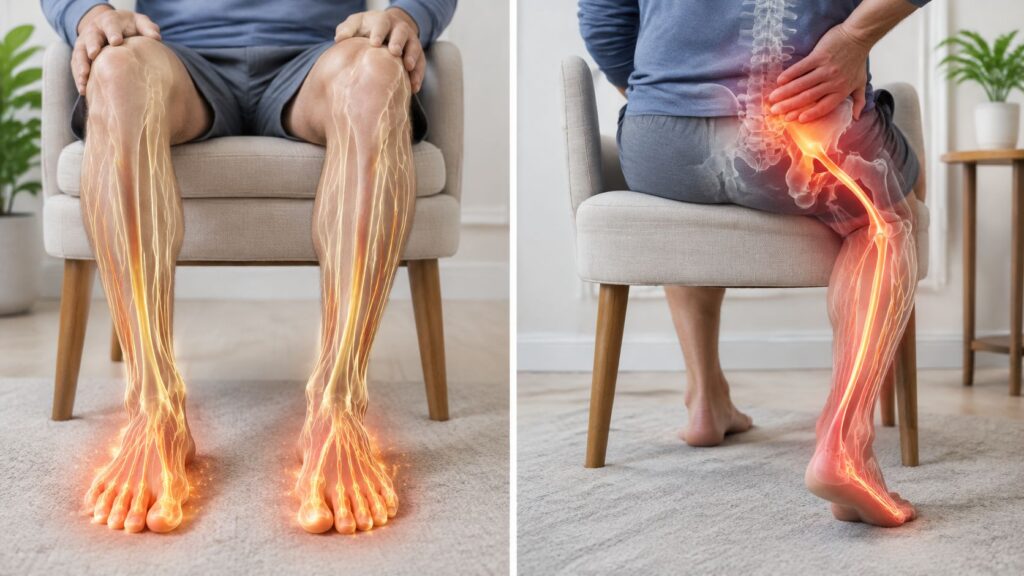
You've been dealing with back pain long enough to know the pattern. Some days you can get through work, errands, and family plans in Oak Lawn or Orland Park, and other days bending to tie a shoe or stand up from a chair feels like a negotiation with your own spine. When a clinician starts talking about surgery, it's normal to picture a big incision and a long recovery, but that picture doesn't always match modern spine care.
Minimally invasive surgery changes the discussion because it aims to treat the problem without the same level of tissue disruption as open surgery. For many patients, that means a very different experience after the procedure, and a different kind of conversation before it. If you're sorting through treatment options, a practical starting point is a clear overview of back pain relief so you can see where conservative care ends and procedural care begins.
When Surgery Sounds Scary, There Is Another Path
A lot of people from Palos Hills, Bridgeview, or Evergreen Park reach the same point in the back-pain journey. They've tried medications, therapy, rest, and injections, but the pain keeps coming back, or the leg symptoms keep getting in the way of walking and sleeping. Then surgery comes up, and the whole thing suddenly feels bigger and more frightening than before.
That reaction makes sense. Many people think of spine surgery as a major operation with a large incision, a hospital stay, and weeks of being laid up. What often gets missed is that the field of surgery has evolved, and in selected patients, minimally invasive surgery offers a more targeted path with far less disruption to surrounding tissue.
A different kind of repair
The point isn't to make the problem disappear with a tiny cut. The point is to reach the problem area while preserving as much healthy tissue as possible. In a pain and wellness setting, that matters because the goal is usually not just fixing anatomy, but helping you get back to standing, walking, sleeping, and working with less interruption to your life.
Practical rule: if a treatment can solve the mechanical problem while sparing muscle and soft tissue, recovery often feels very different to the patient.
That's why this topic deserves a plain-language explanation instead of a surgical textbook. For someone deciding whether to keep living with symptoms or move toward a procedure, the question is simple. What gets treated, how invasive is it, and what will daily life look like afterward?
A useful place to keep in mind while you compare options is your full treatment path, not just the procedure itself, and that's where a clinic overview like chronic back pain treatment options can help frame the conversation.
What Minimally Invasive Surgery Is
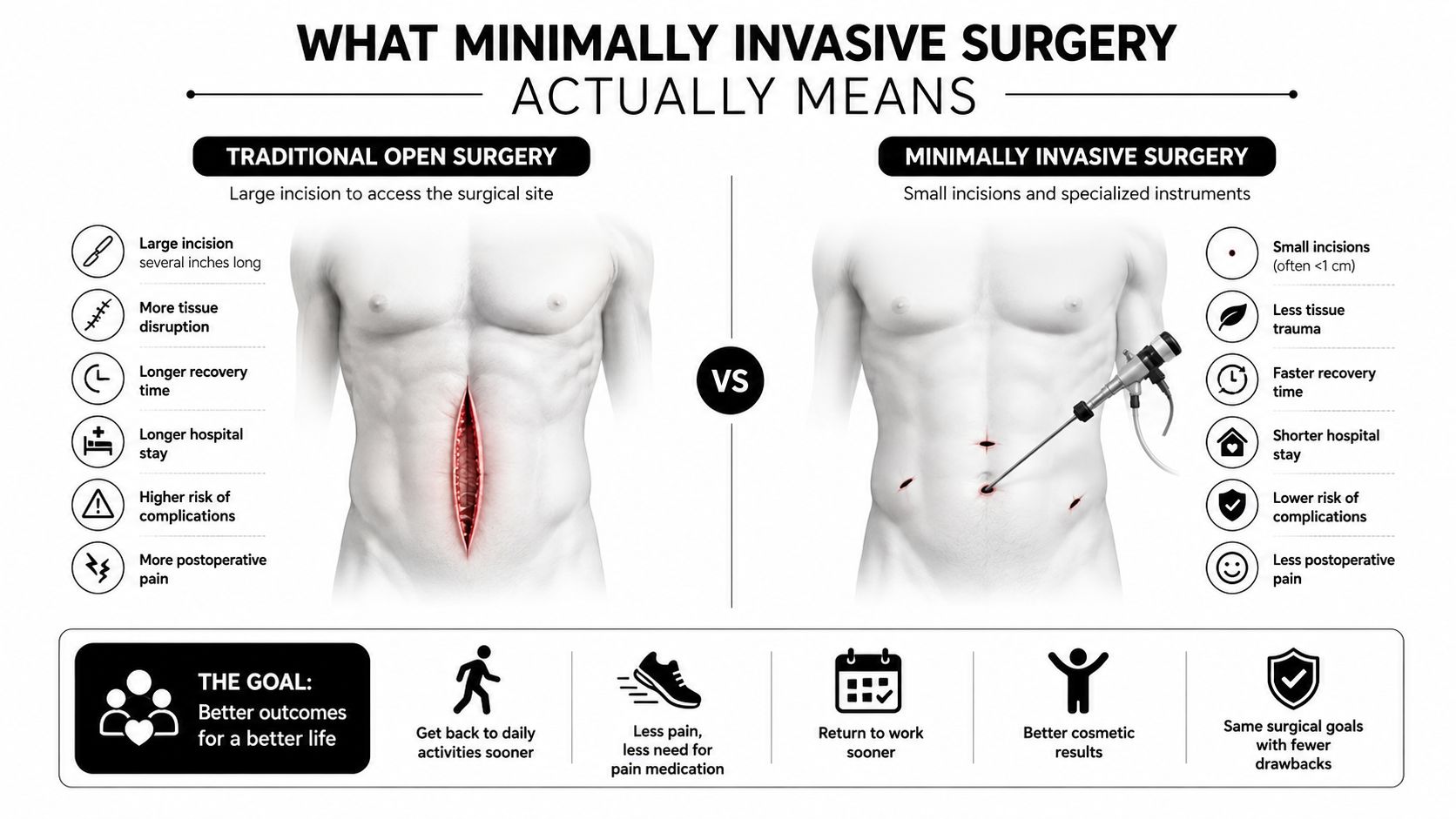
Minimally invasive surgery is a family of techniques, not one single operation. It includes approaches such as laparoscopy, endoscopy, arthroscopy, catheter-based interventions, and robot-assisted surgery, all built around the same idea, reach the treatment target while limiting incision size and tissue disruption. The technical standard is not just smaller cuts. It is achieving the same result with less postoperative morbidity.
The keyhole approach
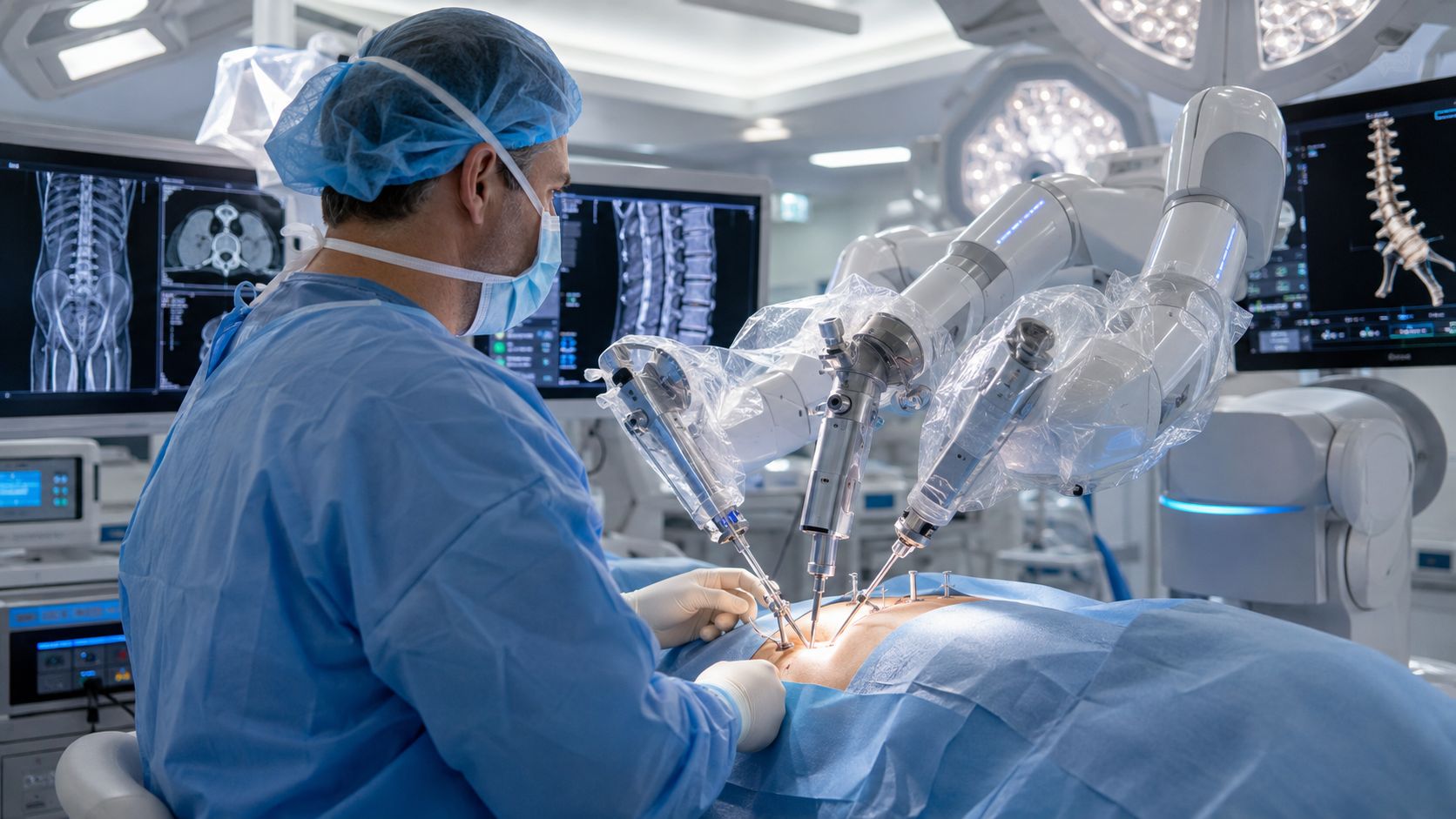
The defining feature is port-based access. Procedures are usually done through one or more small keyhole incisions, often about half an inch long or less, with a narrow endoscope providing the view and long, slender instruments passing through the working ports. In plain terms, the surgeon or interventional specialist reaches the target through small entry points instead of opening a wide path.
That matters because less skin, muscle, and soft tissue has to be cut. Less cutting usually means less tissue trauma, which helps explain the lower postoperative pain, fewer wound problems, and faster recovery compared with open surgery. For the spine, this matters even more, because open procedures often require moving or stripping muscle away from the bone to reach the area that needs treatment.
How that feels different from open surgery
With spine-focused minimally invasive techniques, dilation and specialized tubular retractors create a working channel through the muscle rather than removing large amounts of it. The muscle is still respected, which helps preserve function. Patients may not care about the machinery behind that choice, but they do care about what it means, less soreness, less blood loss, a shorter stay, and a quicker return to normal movement.
For spine and pain care, the term covers a practical middle ground between continued conservative treatment and a larger open operation. The procedures are targeted, image-guided, and chosen for a specific mechanical source of symptoms rather than for vague discomfort. That is why a spine intervention should be understood through the lens of an interventional pain specialist, not just a surgical textbook. If you are trying to connect symptom control with procedural care, a plain explanation of back pain relief can help frame the conversation.
A spine procedure like the Vertiflex Superion system shows how this approach works in practice, using a small access point and a focused treatment plan rather than a large open incision.
Common Minimally Invasive Procedures for Spine and Pain
When people hear “minimally invasive surgery,” they sometimes imagine one universal technique. In reality, it's a platform, and the exact method depends on the problem being treated. In spine and pain care, the work is usually very specific, image-guided, and aimed at a mechanical source of symptoms rather than a vague area of discomfort.
Two spine procedures that fit the category
One procedure used for certain cases of lumbar spinal stenosis is the MILD procedure, which targets thickened ligamentum flavum tissue. The physician uses image guidance and removes a small portion of the excess ligament through a tiny incision in the lower back. The goal is to relieve pressure on the nerves without cutting bone or destabilizing the spine. That makes it feel very different from the older idea that every spinal decompression has to be a major operation.
Another option is the Vertiflex Superion system, a dynamic interlaminar spacer placed between the vertebrae to help keep the spinal canal open in patients with mild to moderate lumbar stenosis. The logic is straightforward. If the space around the nerves narrows when you stand or walk, a spacer can help preserve room in that channel. For the right patient, that can mean less nerve compression with less disruption than a traditional open decompression.
Why this matters to a patient
These procedures are not generic surgery. They are targeted interventions for a defined structural problem, done on an outpatient basis in many cases, and they sit in the middle ground between staying stuck in conservative care and moving to a much larger operation. That middle ground matters when you still want a meaningful treatment, but don't want to jump straight to fusion or open surgery.
The real value of a spine procedure is not that it sounds high-tech. It's that it matches the anatomy, the symptoms, and the patient's goals.
For readers comparing options and wondering what a spacer does in practice, a focused overview of the Vertiflex Superion procedure can make the concept easier to picture.
Benefits and Risks You Should Understand
The appeal of minimally invasive surgery is easy to understand once you look at what it avoids. Smaller incisions usually mean less tissue trauma, and less tissue trauma is tied to less pain after the procedure, less blood loss, fewer wound complications, and a faster return to normal activity. That's the practical reason people often feel relieved when they hear they may not need a large open operation.
The adoption pattern also shows how far the field has moved. In U.S. inpatient care, MIS cases rose from 529,811, or 8.9% of eligible inpatient operations, in 1993 to 1,443,446, or 20.7%, in 2014 according to HCUPNet data cited in a Johns Hopkins review. More recent U.S. data show MIS at 11.1% of inpatient major operating room procedures in 2017 and 11.2% in 2018, while ambulatory surgery MIS rose from 16.9% in 2016 to 18.0% in 2018. Those numbers show the shift from niche technique to a mainstream approach across inpatient and outpatient care.
Benefits and limits side by side
| Common upside | Important reality |
|---|---|
| Less tissue disruption | It still involves surgery |
| Lower postoperative pain | Bleeding and infection can still happen |
| Faster recovery | Not every anatomy is suitable |
| Shorter hospitalization | Operator skill and patient selection matter |
The honest part is just as important. MIS is not risk-free. Bleeding, infection, and anesthesia-related complications still apply, and the technique can be a poor fit for some patients with complex anatomy, severe deformity, or certain medical conditions. Open surgery may still be the safer or more effective choice in those situations.
If your spine is part of a broader recovery picture, you may also want to understand how other structural support strategies fit into care. A useful patient resource on advanced bracing and AI monitoring can give you another angle on how clinicians think about support, stability, and follow-up.
What Recovery Looks Like After Minimally Invasive Spine Surgery
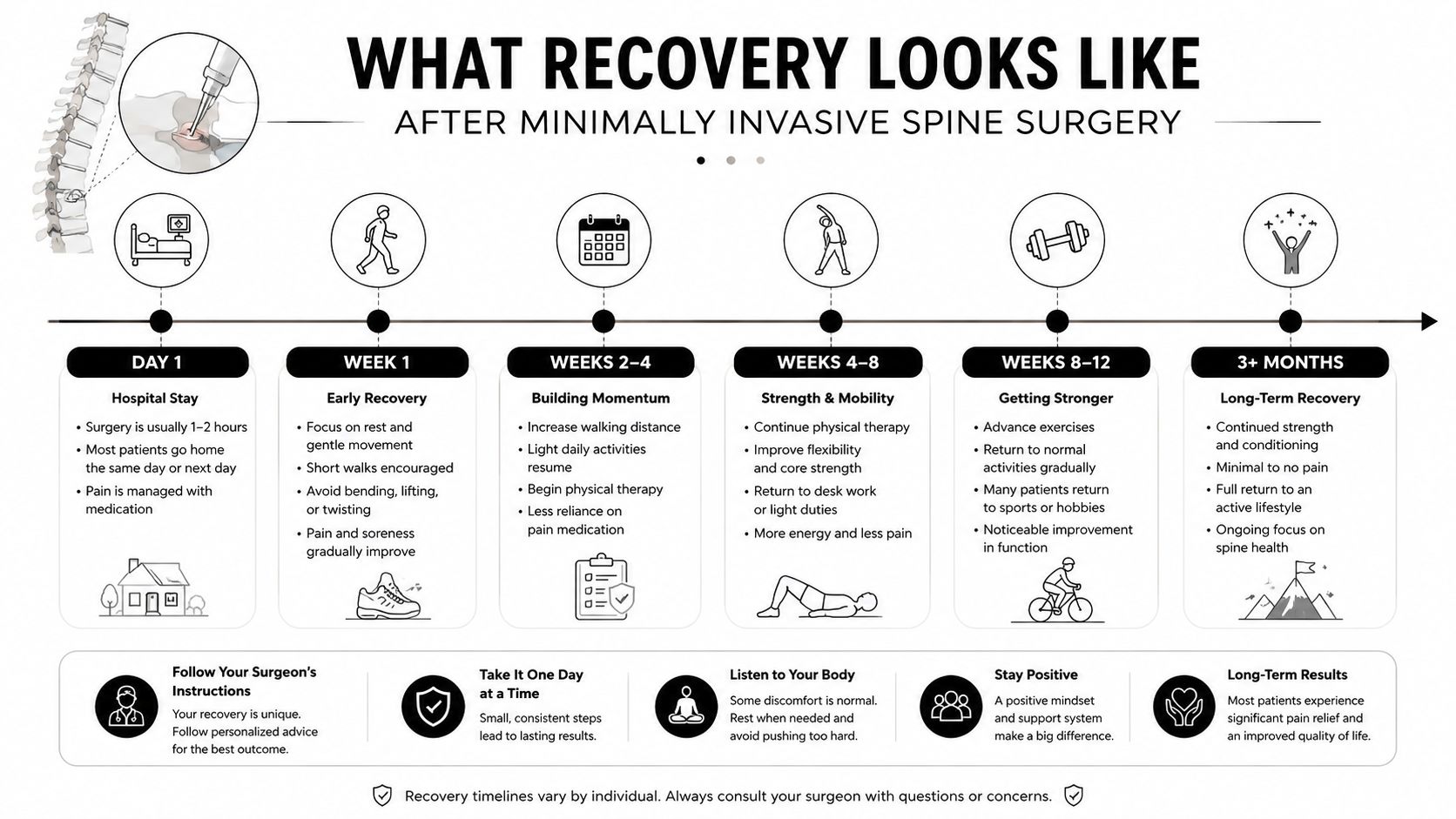
Recovery is where patients really feel the difference. With minimally invasive spine procedures such as MILD or Vertiflex Superion, many people go home the same day, and the incision soreness is usually much milder than what people expect from the word “surgery.” The goal is not to promise zero discomfort, but to make the post-procedure period manageable and predictable.
A realistic timeline
Most patients are encouraged to walk the same day or the next day, because movement helps recovery and keeps stiffness from taking over. Light daily activity often comes back quickly, while heavier lifting, bending, twisting, and high-impact exercise stay restricted longer, commonly for several weeks depending on the procedure and the person's health. The exact plan always comes from the treating physician, because a good recovery plan is individualized, not copied from a brochure.
What patients usually need to manage
Pain at the incision site is often short-lived and may be handled with over-the-counter medication for a short period, but that doesn't mean recovery is automatic. Some people benefit from physical therapy to strengthen supporting muscles and rebuild confidence in movement. Others need a more careful home setup, especially when stairs, sleeping position, or daily chores would otherwise trigger flare-ups.
A simple at-home recovery guide can be helpful when you're planning for the first few days after a procedure, and a DME Superstore recovery guide can give you practical ideas for organizing that period.
Recovery is not an instant cure. It's the body settling down after a targeted mechanical fix, then relearning movement without the old pain pattern.
If you're trying to separate normal post-procedure soreness from warning signs, a clinic explanation of postoperative pain can help you understand what's expected and what deserves a call.
Who Is a Good Candidate for Minimally Invasive Spine Procedures
Not everyone with back pain is a candidate for a minimally invasive procedure, and that's a good thing. The best candidates usually have a clear mechanical source of pain, such as lumbar spinal stenosis, facet joint arthritis, or a vertebral compression fracture, along with symptoms that haven't improved enough with conservative care or that justify a more definitive step.
The evaluation usually starts with a detailed history, a physical exam, and a close look at imaging such as MRI or CT scans. A clinician may also order lab work if there's a reason to rule out other contributing problems. That process matters because the procedure has to match the actual pain generator, not just the area that hurts that day.
What the consultation should sort out
A good candidacy visit should answer three questions, what is causing the pain, what has already been tried, and which treatment can address the problem with the least disruption.
Patients with uncontrolled medical conditions, active infections, or certain types of spinal instability may need another approach. So the candidacy conversation isn't a sales pitch, it's a filter. It protects patients from procedures that sound appealing but don't fit their anatomy or health status.
For people in Chicago Ridge, Worth, Burbank, or the surrounding Illinois suburbs, that consultation is also the place to ask direct questions about goals. Do you want less leg pain, better walking tolerance, improved sleep, or a way to avoid a bigger operation? Those details matter because the right procedure depends on what you're trying to get back in your life.
A pain and wellness clinic can be part of that decision-making process, and Midwest Pain & Wellness offers minimally invasive injections and procedures within a broader chronic pain plan. That still doesn't replace careful selection, but it does show how this type of care fits into a larger treatment pathway.
Taking the Next Step With Confidence
The main thing to understand is that minimally invasive surgery is neither a buzzword nor a miracle. It's a mature set of techniques that can provide meaningful relief when the diagnosis is right and the specialist doing the procedure is trained to match the method to the patient. For many people, it represents the practical middle ground between living with persistent symptoms and moving straight to a major open operation.
That middle ground matters most when back pain has already taken too much from your day. If you're in Illinois, living in or near Oak Lawn, Palos Heights, Hickory Hills, Alsip, or the Chicago Ridge area, the smartest next step is a consultation with a board-certified interventional pain specialist who can review your imaging, explain your options, and tell you whether a minimally invasive approach fits your condition.
Understanding the procedure is only half the job. The other half is knowing when it's the right tool for your body, your symptoms, and your goals. Once you have that clarity, the decision gets less scary and a lot more practical.
If you're ready to talk through your back pain with a team that treats spine and nerve conditions in a pain and wellness setting, visit Midwest Pain & Wellness. They can evaluate whether a minimally invasive procedure, another interventional option, or a different plan makes the most sense for your situation.