You're leaving the procedure room with a small bandage on your lower back, a little numbness or heaviness in one leg, and a surprisingly light feeling around the sacroiliac joint. That early improvement can feel encouraging, but it isn't the final answer. The local anesthetic works quickly, while the steroid may need several days before it begins reducing inflammation.
For most patients, sacroiliac joint injection recovery time has two separate parts. The first lasts from the procedure through roughly the first day or two and involves observation, numbness, soreness, and activity restrictions. The second unfolds over the following week or two, as the steroid response develops. Understanding both windows makes the recovery easier to manage and prevents a common mistake, expecting the injection to show its full benefit before the medication has had time to work.
Table of Contents
- What to Expect Right After the Injection
- How the Injection Works and Why Relief Is Delayed
- A Realistic Hour-by-Hour and Day-by-Day Timeline
- When You Can Sit, Walk, Drive, Work, and Exercise Again
- Aftercare Tips, Red Flags, and Follow-Up Planning
- How Long Relief Lasts and When to Talk About Next Steps
What to Expect Right After the Injection
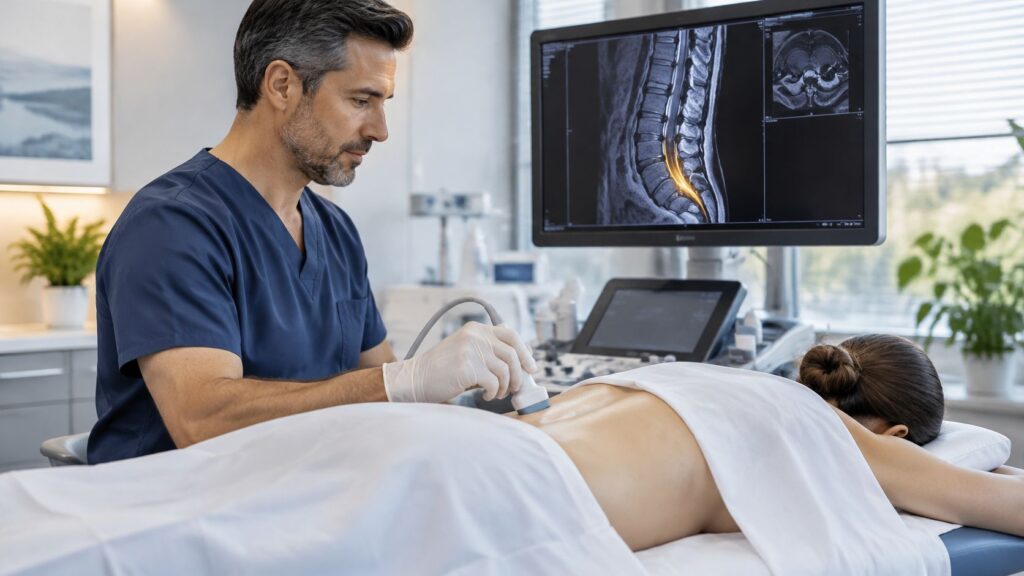
A typical patient spends a short period in the recovery area after an image-guided sacroiliac joint injection. One major academic patient guide describes recovery-room observation of 15 to 30 minutes, followed by instructions not to drive or operate machinery for at least 24 hours and to avoid strenuous activity that day. You can review the role of image guidance in the clinic's fluoroscopy-guided injection treatment.
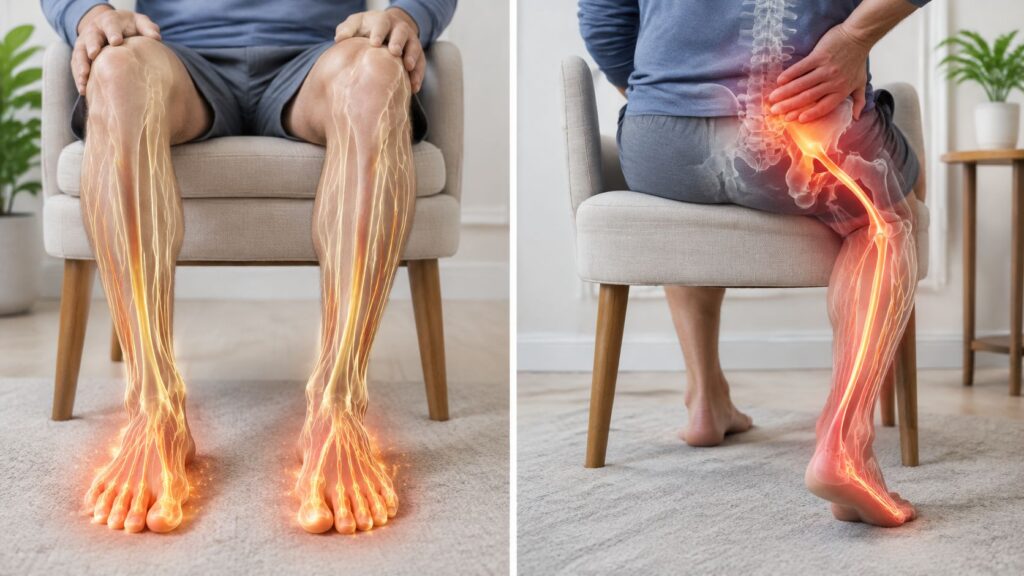
The first sensation may be temporary numbness, warmth, or heaviness in the buttock or leg. That usually reflects the local anesthetic, not a permanent nerve problem. The injection site can feel tender once the numbing medicine fades, much like a bruise or a deeper muscle soreness.
Practical rule: Arrange for someone to drive you home, even if you feel alert and your pain has improved.
The rest of the day should be quiet. You may take short, easy walks around the house, but you shouldn't test the joint with prolonged standing, heavy lifting, vigorous exercise, or a long car ride. If sedation was used, follow the discharge instructions about medications and decision-making carefully.
The early pain relief can be dramatic. That response may help your clinician judge whether the sacroiliac joint is contributing to your symptoms, but it doesn't predict the complete steroid result by itself. The anesthetic can wear off within hours, and a brief return or flare of pain can follow. Patient guidance commonly notes that steroid relief may take up to 2 weeks to fully develop, while another aftercare guide describes steroid onset in 3 to 7 days and a typical recovery period of about 14 days (academic sacroiliac joint injection recovery guidance).
How the Injection Works and Why Relief Is Delayed
An SI joint injection usually combines two medications with different jobs. The local anesthetic, such as lidocaine or bupivacaine, numbs the area quickly. The corticosteroid, often a medication such as methylprednisolone or triamcinolone, is intended to calm inflammation more gradually.
During the procedure, the clinician uses fluoroscopy to guide the needle toward the sacroiliac joint or nearby supporting structures. Contrast dye helps confirm that the medication is being delivered to the intended location. This image-guided approach is important because the joint is small and sits close to nerves, blood vessels, and other sensitive structures.
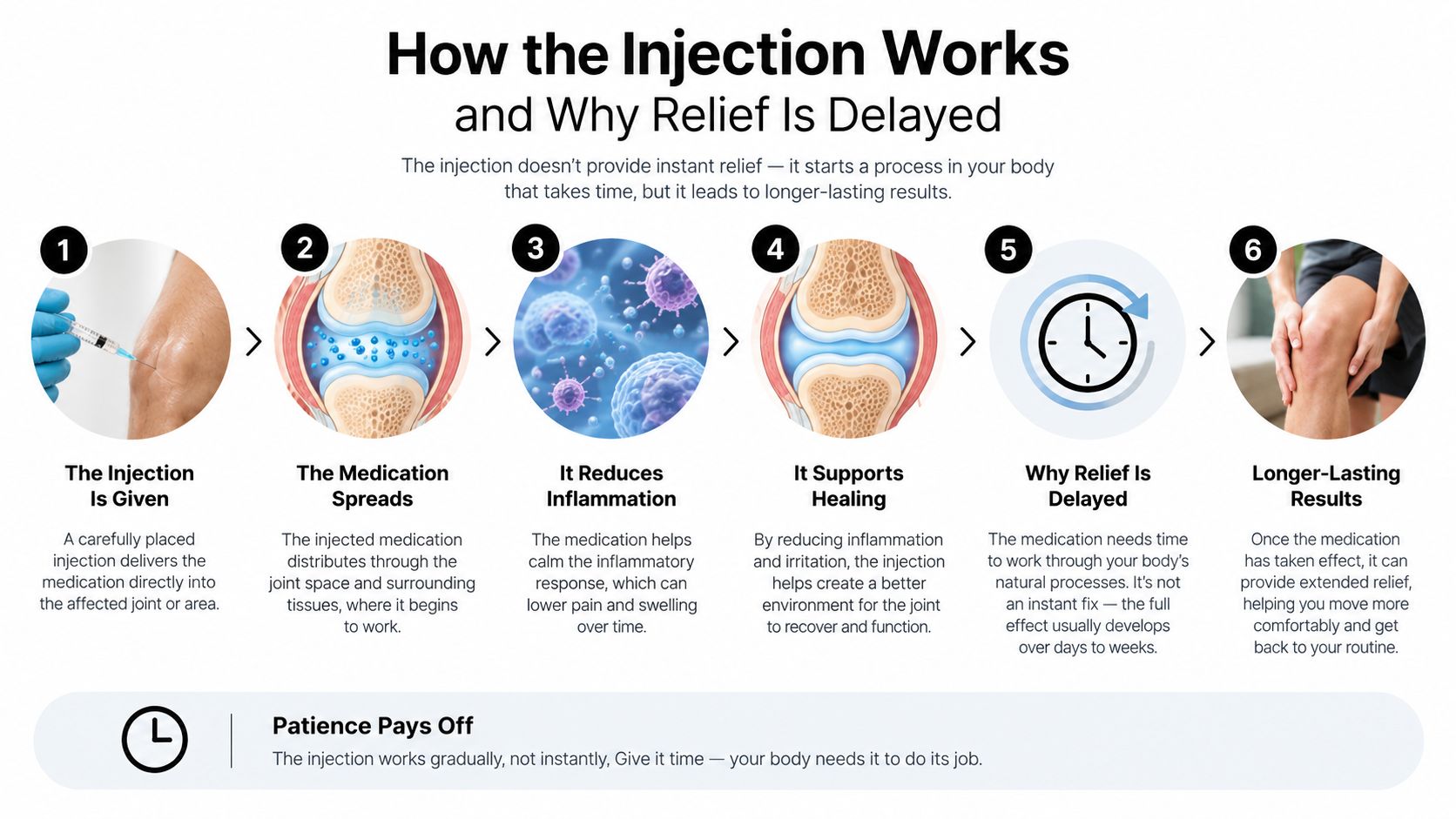
The anesthetic explains why someone may walk out feeling much better than expected. Its effect can fade within hours and may last up to roughly six hours, depending on the medication and the individual. As it wears off, the original pain can return temporarily, and the needle site may add its own soreness.
The steroid follows a slower course. After injection, it needs time to influence inflammatory activity within the joint and surrounding tissues. The response often starts around 3 to 7 days, with the fuller effect commonly appearing over 1 to 2 weeks. That delay is why a pain flare during the first few days doesn't automatically mean the procedure failed.
The most useful way to interpret the first day is as a diagnostic and anesthetic window, not as the final treatment result. For a broader explanation of this medication distinction, see how a steroid injection works.
A Realistic Hour-by-Hour and Day-by-Day Timeline
Recovery doesn't move in a perfectly straight line. The following checkpoints give you a practical way to judge what's happening without treating every ache as a complication.
The first 24 hours
Hours 0 to 2: You'll usually remain under observation while the care team checks your comfort, movement, and vital signs. Mild numbness may still be present, and soreness around the needle path can begin as the anesthetic starts to fade.
Hours 2 to 6: Some patients still have useful numbing during this period. Rest is sensible, even if the joint feels unusually comfortable. Don't use the temporary relief as a reason to perform chores, exercise, or sit through a long trip.
Hours 6 to 24: The anesthetic may have worn off, revealing the underlying SI joint pain. A noticeable rebound can occur, and ice or an approved over-the-counter pain reliever may help if your clinician has said those options are safe for you.
Days 2 through 7
Day 2: The injection site may remain sore, but the soreness should be manageable and should not be accompanied by concerning new symptoms. Short walks are preferable to long periods of standing or sitting.
Days 3 to 5: Some responders begin to notice small changes, such as easier transitions from sitting to standing or less pain during a brief walk. Improvement may be subtle rather than dramatic.
Days 5 to 7: The corticosteroid response may become clearer. The published evidence describes steroid benefit as delayed, with many patients needing several days before they can judge whether baseline pain is changing (review of sacroiliac joint injection safety and outcomes).
Days 7 through 14
During the second week, keep measuring function as well as pain. You may notice better sitting tolerance, easier walking, or less guarding when changing position. The point isn't to chase a pain-free hour. It's to identify whether ordinary activities are becoming more manageable.
By about day 14, you and your clinician can make a more meaningful assessment of the injection. If there's no meaningful improvement after the full steroid window, further evaluation may be more useful than assuming another injection will solve the problem.
When You Can Sit, Walk, Drive, Work, and Exercise Again
Activity should return in layers. The right question isn't only, “Can I do this?” It's also, “Will doing this irritate the area before the medication has had time to work?”
The table below reflects common ranges, not a personal prescription. Your discharge instructions override it, especially if you had sedation, take blood-thinning medication, or have other medical conditions affecting mobility and safety.
SI Joint Injection Activity Timeline
| Activity | First 24 Hours | Days 1-3 | Days 4-7 | Week 2+ |
|---|---|---|---|---|
| Sitting | Use short periods and change position regularly | Increase gradually, avoiding prolonged sitting | Test longer periods if soreness is settling | Resume according to comfort and clinician guidance |
| Walking | Short, easy walks are usually reasonable if sensation is normal | Take frequent brief walks rather than one long walk | Increase distance gradually | Return toward usual walking if symptoms permit |
| Driving | Avoid driving while numb, sedated, or taking driver-impairing medication | Often resumes after sensation and alertness have returned | Continue only if braking and entering or exiting the vehicle are comfortable | Normal driving if safe and medically cleared |
| Desk work | Usually rest rather than work immediately after the procedure | Many patients can restart within 1 to 3 days if symptoms are mild | Build in regular standing and position changes | Resume normal schedule as tolerated |
| Lifting | Avoid strenuous lifting | Keep loads light and close to the body | Gradually reintroduce ordinary lifting | Heavier work only if pain and movement are stable |
| Exercise | Skip structured exercise | Gentle movement only | Gradual return to low-impact activity | Progress toward regular exercise with guidance |
For sitting, a 20-minute change-of-position rule during the first 48 hours can prevent one comfortable position from turning into a later flare. Stand briefly, walk around, or shift posture before the joint becomes irritated.
Driving usually resumes the next day only when numbness and sedation have cleared and no medication is impairing reaction time. Desk work may be possible within a few days, but physically demanding work and structured exercise often need to wait until the 1 to 2 week steroid-response window has played out. Some aftercare protocols recommend gradual progression over 2 to 3 weeks, particularly when activity tends to reproduce the original pain.
Aftercare Tips, Red Flags, and Follow-Up Planning
Your home plan should protect the puncture site, reduce unnecessary irritation, and give you a way to recognize whether the recovery is following an expected pattern.
Use an ice pack over the injection area for 20 minutes on and 20 minutes off during the first 48 hours, with a cloth barrier between the ice and your skin. If your clinician has approved acetaminophen or a prescribed medication, taking it as directed can work better than waiting until soreness becomes difficult to control. Keep activity gentle, choose short frequent walks, and avoid prolonged standing.
Avoid baths, pools, and hot tubs for 48 hours unless your care team gives different instructions. Showering may be permitted, but follow the dressing and wound-care directions you received.
Seek an urgent call to the clinic if you develop:
- Worsening pain: Pain that keeps escalating instead of settling after day 3 deserves attention.
- New weakness: New or worsening leg weakness isn't something to watch casually.
- Saddle-area numbness: Numbness in the groin or saddle area requires prompt medical guidance.
- Fever or chills: A fever above 100.4°F, especially with chills, should be reported.
- Site changes: Redness, increasing warmth, swelling, or drainage at the injection site can signal a problem.
- Bowel or bladder changes: Loss of bowel or bladder control requires urgent medical evaluation.
Keep a simple diary. Record morning and evening pain, sitting tolerance, walking ability, sleep, and any medication use. General joint-care ideas can also support daily function, and this resource on how to improve life with joint care may help you think beyond the injection itself. A follow-up call or visit around 2 weeks gives your clinician a clearer picture than the first few hours do.
How Long Relief Lasts and When to Talk About Next Steps
A successful steroid response may last from several weeks to several months, but the duration depends on why the SI joint hurts, how accurately the joint was identified as the pain source, and how your symptoms respond over time. The injection can be therapeutic, but the temporary anesthetic response can also provide useful diagnostic information.
If relief is strong but short-lived, discussing a repeat injection or a staged radiofrequency ablation evaluation may be reasonable. If there's little or no improvement after the complete 1 to 2 week steroid window, repeating the same procedure without reassessing the diagnosis may not be the most useful choice. The pain could be coming from a nearby joint, a nerve, the lumbar spine, the hip, or another source.
Regenerative alternatives deserve careful interpretation. A 2025 systematic review rated the evidence for PRP and cell-based SI joint injections as level IV with a weak recommendation, so these options aren't yet supported by strong evidence for routine use (systematic review of PRP and cell-based SI joint injections). For an overview of diagnostic and treatment pathways, review the clinic's sacroiliac joint pain treatment options.
Midwest Pain & Wellness coordinates follow-up care for patients throughout Illinois, including Chicago Ridge, Palos Heights, Palos Hills, Evergreen Park, and Hickory Hills. The clinic can review your recovery diary, assess the response, and discuss whether continued observation, rehabilitation, another intervention, or a different diagnostic direction makes sense.
Midwest Pain & Wellness is a pain and wellness clinic offering image-guided sacroiliac joint injections and individualized, opioid-sparing care for chronic pain. If you're recovering from an injection or deciding whether it's appropriate, visit Midwest Pain & Wellness to connect with the Illinois care team and plan your next step.