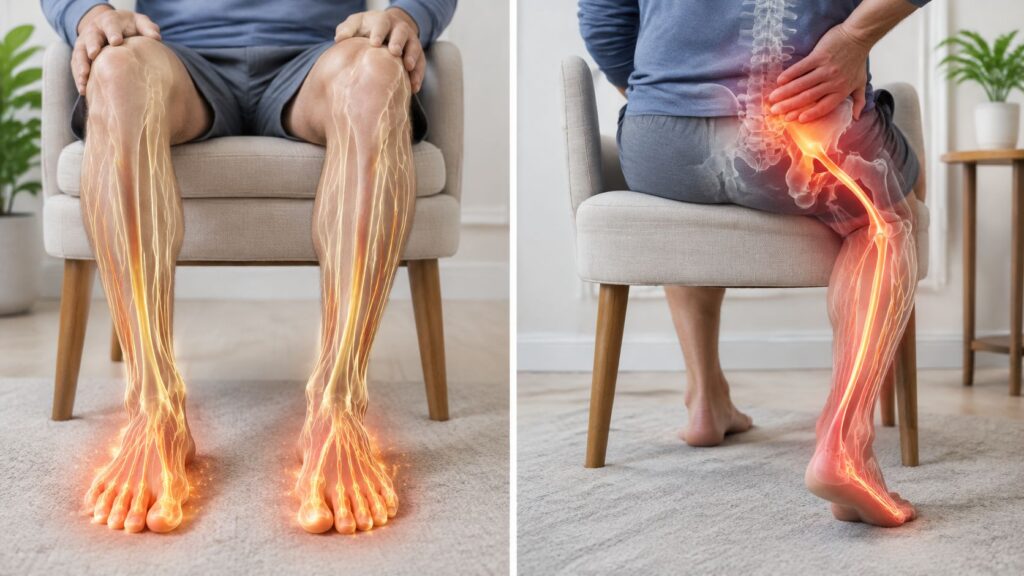
To get real facet joint pain relief, you first have to know what’s actually causing the problem. For many people, that nagging, chronic back or neck pain isn’t just a mystery—it’s the result of a completely normal, age-related process that affects the small, stabilizing joints in your spine.
What Is Causing Your Back and Neck Pain
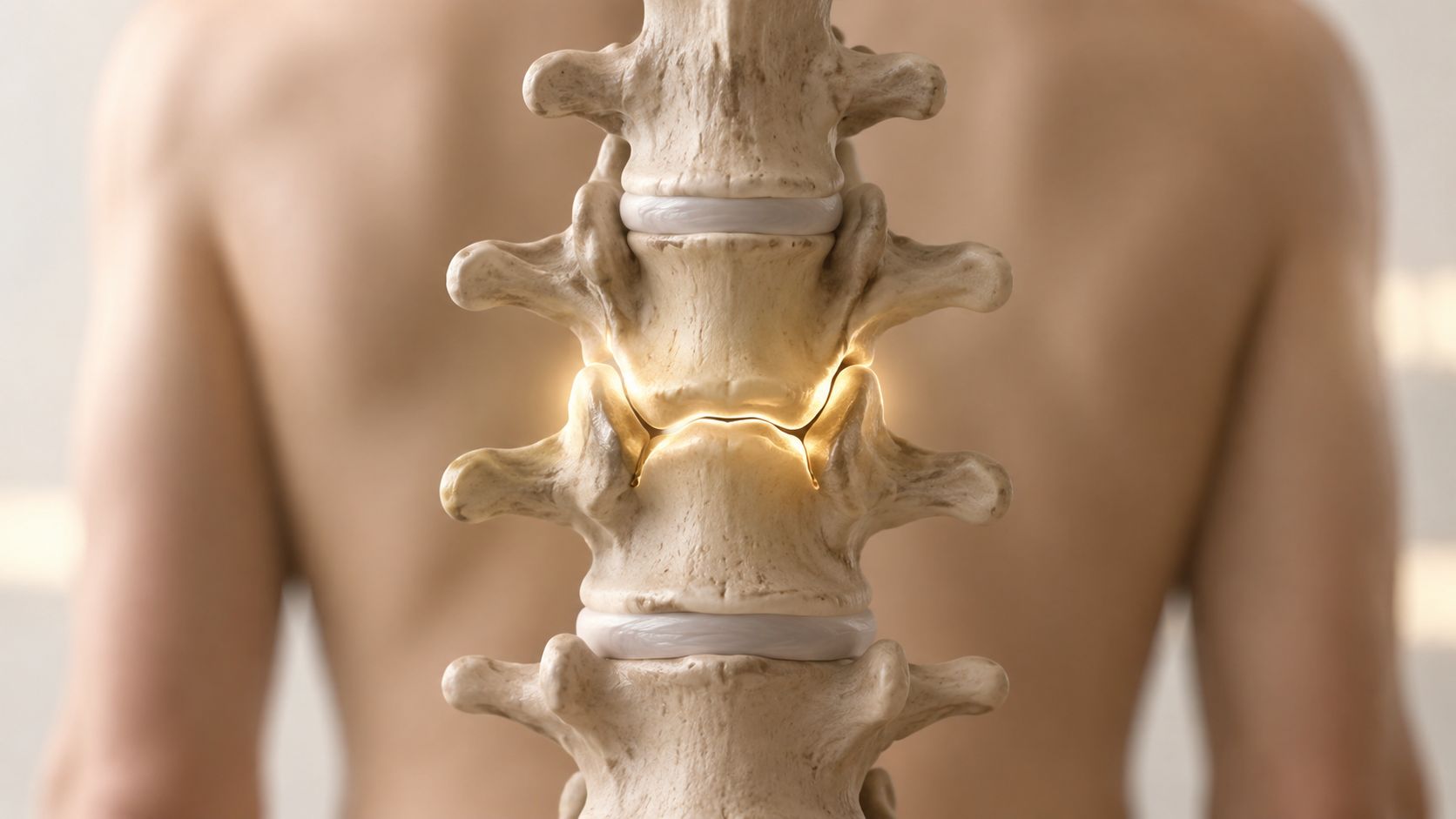
Imagine your spine isn’t one solid rod, but a stack of building blocks (your vertebrae). In between each block are small, stabilizing joints called facet joints. They work like tiny, flexible hinges, letting you twist, bend, and move without losing stability. But just like the hinges on a busy door, these joints see a lot of action and can wear down over time.
This slow, steady wear and tear is a type of osteoarthritis. When it happens in the facet joints, it’s called facet arthropathy, and it’s one of the most common reasons for persistent back and neck pain in adults. Over the years, the smooth cartilage that keeps these joints gliding freely wears thin. This leads to inflammation, stiffness, and eventually, the grinding pain of bone on bone.
Understanding the Symptoms
Unlike the sharp, shooting nerve pain of sciatica that zips down your leg, facet joint pain usually feels more localized and achy. You might notice:
- A dull, persistent ache in your lower back or neck.
- Pain that gets worse when you twist, bend backward, or stand for a long time.
- Stiffness that’s most noticeable in the morning or after sitting still.
- Pain that spreads into your shoulders (if the issue is in your neck) or into your buttocks and thighs (if it’s in your lower back). It almost never goes past the knee.
For our patients in Illinois communities like Oak Lawn, Palos Hills, Palos Heights, and Worth, learning to spot these specific symptoms is the first real step toward getting an accurate diagnosis and effective treatment at our pain and wellness clinic.
Why Age Is a Major Factor
It’s no coincidence that facet joint pain becomes more common as we get older. As the spine naturally goes through degenerative changes, the facet joints have to take on more and more of the load. This extra stress just speeds up the wear-and-tear process.
The data backs this up. Facet joint osteoarthritis is incredibly common in older adults. One clinical review, for example, found that a staggering 89% of patients aged 60 to 69 had clear evidence of facet joint degeneration.
This is exactly why a generic "back pain" diagnosis so often leads to failed treatments. If you don't identify the specific joint that's causing the problem, you can't target it effectively. A specialized pain and wellness clinic can pinpoint the source for lasting relief.
This is critical knowledge for anyone in Bridgeview, Hickory Hills, Alsip, Burbank, Evergreen Park, or Orland Park who is tired of living with pain. When you understand that a specific joint is the real culprit, you can move past temporary fixes and toward the advanced diagnostics and treatments that actually work. Our clinic specializes in getting to the bottom of these complex conditions, which you can read more about by reviewing the conditions we treat.
How Illinois Pain Specialists Pinpoint the Problem
To find lasting facet joint pain relief, we have to start with a precise diagnosis. For our patients in Illinois, from Oak Lawn to Orland Park, this means moving beyond guesswork to identify the exact joint sending pain signals. It’s a methodical process that confirms the root of your discomfort before we even talk about treatment.
The journey starts with a simple conversation and a thorough physical exam at our pain and wellness clinic. We’ll listen to your story, and then your pain specialist will assess your range of motion, noting which movements make the pain worse. By gently pressing along your spine, they can often find tender spots that point directly to specific facet joints.
The Gold Standard for Diagnosis
While the physical exam gives us strong clues, the definitive test for facet joint pain is a minimally invasive procedure called a medial branch block. This isn’t a treatment—it’s a diagnostic tool. Its only job is to confirm whether a specific facet joint is the real source of your pain.
The medial branch nerves are tiny nerve fibers that carry pain signals from your facet joints to your brain. During the procedure, your doctor uses live X-ray guidance (fluoroscopy) to inject a small amount of local anesthetic right near these nerves. It's a highly targeted test designed to temporarily “turn off” the pain signal from the suspected joint.
If your chronic back or neck pain disappears after the injection, even for just a few hours, we have our answer. We’ve found the culprit. This confirmation gives our patients from Worth to Bridgeview and Hickory Hills the confidence that we’re on the right track, paving the way for effective, long-term treatment.
This evidence-based approach is what sets a dedicated pain and wellness clinic apart. Instead of cycling through treatments that don’t work, patients from Alsip, Burbank, and Evergreen Park get a clear roadmap. The success of a diagnostic medial branch block provides the critical information we need to move forward with therapies designed for long-term relief. It takes the mystery out of your pain and puts you on a direct path to a more comfortable, functional life.
Strategies for Initial Facet Joint Pain Relief
Once we’ve pinpointed your facet joints as the source of your pain, our immediate goal is to find effective facet joint pain relief. For our patients in Illinois communities like Oak Lawn and Palos Hills, we always start with a conservative approach designed to calm inflammation and get you moving again without jumping to invasive procedures.
These first steps are a team effort, combining at-home care with our professional guidance at our pain and wellness clinic. We often recommend anti-inflammatory medications to soothe the irritated joints, but we also create a plan that may include exercises designed to correct the posture and movement habits that are stressing your facet joints in the first place.
Comparing Initial Facet Pain Relief Strategies
To help you understand the first steps in managing facet pain, this table compares the most common conservative and interventional approaches we use. Each has a specific role in your recovery plan.
| Treatment Approach | Primary Goal | Typical Duration of Relief | Best For |
|---|---|---|---|
| At-Home Care & Medication | Reduce inflammation, improve mechanics, build long-term stability | Ongoing with consistent practice | Mild to moderate pain; building a foundation for lasting stability |
| Therapeutic Facet Joint Injections | Rapidly reduce severe inflammation and pain | Weeks to several months | Breaking the pain cycle to allow for other restorative therapies |
Ultimately, our goal is to use the right tool at the right time. For many, a combination of these strategies provides the most comprehensive and lasting relief.
Therapeutic Facet Joint Injections
When conservative methods don't provide enough relief, or if the pain is so intense it’s preventing you from engaging in restorative therapies, we move to the next step: a therapeutic facet joint injection. This isn’t the same as the diagnostic block we use to find the problem. Here, the goal is treatment.
At our Chicago Ridge, Illinois pain and wellness clinic, we use precise guidance to inject a powerful anti-inflammatory steroid right at the source of the painful facet joint. It’s like delivering a high-potency fire extinguisher directly to the inflammation. The steroid gets to work reducing the swelling and irritation, which is what brings down your pain level.
This provides a crucial window of opportunity, often lasting for weeks or months. It breaks the cycle of pain and inflammation, allowing you to engage more effectively in other restorative therapies that build long-term strength and stability.
Before we perform any therapeutic injection, we make sure we have a clear diagnosis. The process below shows how we pinpoint the exact joint causing your pain, ensuring that treatment is delivered precisely where it’s needed.
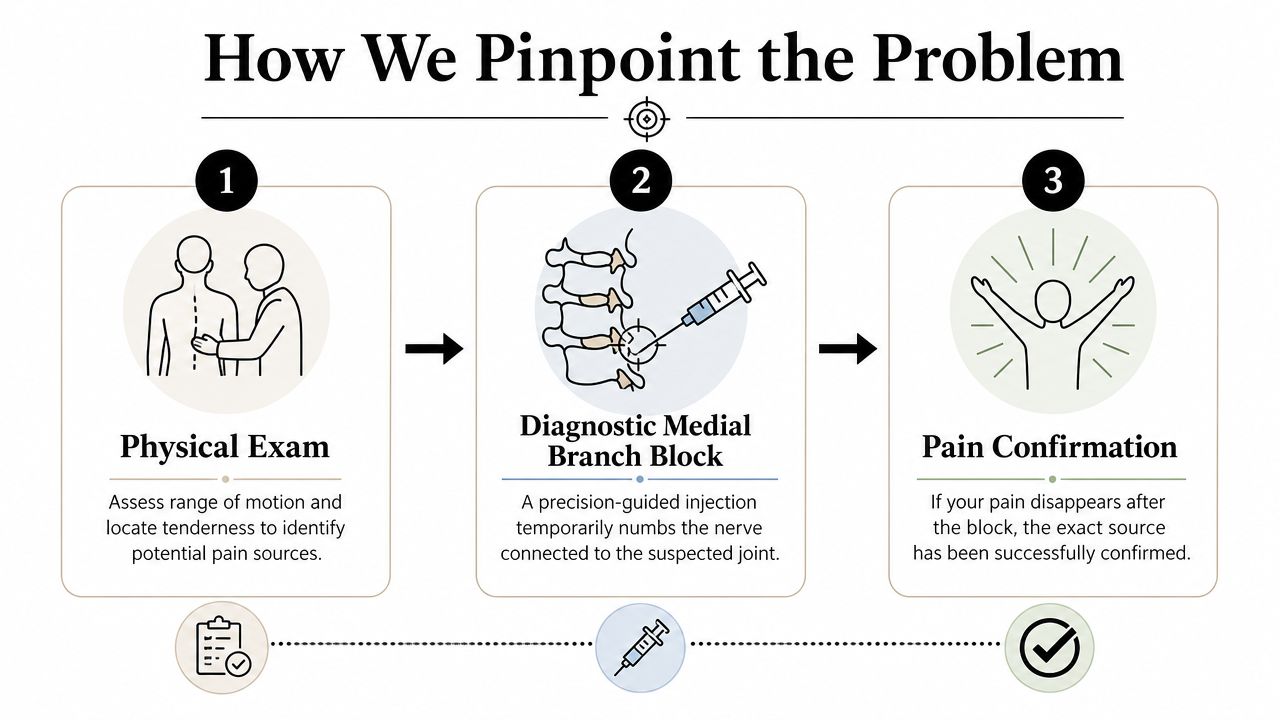
This diagnostic clarity is what makes our therapeutic injections so effective—we’re not guessing. We’re targeting the problem with precision.
The Role of Injections in Your Treatment Plan
It’s important to see these injections as one part of a bigger picture. They are a tool to get you over a hurdle, not the entire race. The goal is to provide enough relief for you to make real progress in other areas of your care.
The evidence backs this up. One study found that 33% of patients achieved more than 50% pain reduction for over three months after their facet joint blocks. These findings on the effectiveness of injections show that for many people in Palos Heights, Worth, and Bridgeview, these procedures do more than confirm a diagnosis—they provide durable symptom control.
By calming the joint, injections create the opportunity you need to build strength and stability through targeted exercises and therapies. This lays the groundwork for lasting solutions and helps our patients in Hickory Hills and Orland Park get back to their lives.
Achieving Long-Term Relief with Radiofrequency Ablation
After we’ve confirmed the source of your pain with diagnostic blocks, the next question is, "What now?" For many people dealing with chronic facet joint pain in Illinois, the answer is a procedure designed for lasting results: Radiofrequency Ablation (RFA). This isn't a temporary patch but a way to get meaningful, long-term facet joint pain relief.
Think of it like this: the medial branch nerves connected to your arthritic facet joints are sending constant pain signals to your brain. RFA works by interrupting those specific communication lines, effectively silencing the "alarm."

How Radiofrequency Ablation Works
Radiofrequency ablation is a minimally invasive procedure we perform right here in our pain and wellness clinic. Just as with the diagnostic blocks, your pain specialist uses live X-ray guidance (fluoroscopy) to guarantee absolute precision. A specialized needle is placed next to the confirmed medial branch nerve, and a small radiofrequency current is passed through it.
This current generates a tiny, controlled field of heat, creating a lesion on the nerve that stops it from transmitting pain signals. Your healthy surrounding tissues are left completely unharmed. The entire process is safe, targeted, and highly effective.
The goal of RFA is simple but powerful: to provide a period of profound pain relief that can last anywhere from 6 to 18 months, and sometimes even longer. This gives your body a true break from the cycle of chronic pain and inflammation.
For our patients from Hickory Hills to Evergreen Park and Orland Park, this extended period of relief can be life-changing. It creates the freedom to get back to gardening, walking, or just getting through the day without a constant, nagging ache. You can see how RFA fits into a complete care plan by exploring the different procedures we use for treatment.
What to Expect from the Procedure
Because we’ve already confirmed you’re an excellent candidate with diagnostic blocks, the success rate for RFA is remarkably high. Patients often report a significant drop in their pain levels once the nerve has been treated.
Here’s a quick overview of the RFA process:
- Confirmation: We only move forward with RFA after you’ve had at least two successful diagnostic blocks that gave you temporary pain relief. This proves we’re targeting the correct nerve.
- The Procedure: The procedure itself is relatively quick, usually taking about 30-60 minutes. You'll be kept comfortable the entire time.
- Recovery: You can go home the same day and are typically able to resume normal activities within a day or two. Some initial soreness at the site is normal and quickly fades.
- Results: It can take a few weeks to feel the full effects of the ablation. Over time, the treated nerves may regenerate, but the procedure can be safely repeated if the pain returns.
This approach empowers our patients in Alsip, Burbank, and nearby Illinois towns to reclaim an active lifestyle, often reducing or even eliminating the need for daily pain medication. It's a definitive step toward managing pain on your own terms.
When to See a Pain Specialist in Illinois
Knowing when to pivot from your primary care doctor to a specialist for back or neck pain is a crucial step toward getting true facet joint pain relief. While your family doctor is an excellent first stop, certain signs tell you it’s time to see an interventional pain expert—especially when the pain becomes a constant, unwelcome part of your daily life.
If your pain has stuck around for more than three months, it’s now considered chronic. That’s a key signal that this isn't something likely to clear up on its own. Waiting it out often just leads to more frustration and a lower quality of life.
Signs It Is Time for Specialized Care
For those living in Illinois communities like Oak Lawn, Palos Hills, and Palos Heights, recognizing these signs is the first step toward reclaiming your life from pain. It's time to call a specialist if you're experiencing any of this:
- Pain That Limits Your Life: You're avoiding activities you used to love, like gardening, walking the dog, or playing with your grandkids because you know it will hurt.
- Conservative Treatments Have Failed: You’ve already tried at-home care, anti-inflammatory pills, or chiropractic adjustments, but nothing has delivered significant, lasting relief.
- Pain That Interrupts Sleep: The constant ache and stiffness in your back or neck are robbing you of a good night's sleep, leaving you tired and drained.
- Worsening Pain or New Symptoms: The pain is getting more intense, or it's starting to travel, radiating down into your buttocks or up into your shoulders.
When back or neck pain stops you from doing the things that matter, you need more than just pain management—you need a strategy to resolve the pain. Seeing a specialist at a pain and wellness clinic is about getting a definitive diagnosis and a targeted plan to fix the problem.
The Advantage of a Local Illinois Pain Clinic
A specialized pain and wellness clinic offers a direct route to advanced, opioid-sparing treatments that get to the root of the problem. For our neighbors in Worth, Bridgeview, Hickory Hills, and Alsip, having an expert close to home means you don't have to travel far for top-tier care. A specialist can perform the necessary diagnostic tests, like medial branch blocks, to confirm if the facet joints are the real source of your pain.
This precision is what makes all the difference. Instead of trying one generic treatment after another, you get a diagnosis based on evidence. This allows for truly effective interventions, from therapeutic injections to radiofrequency ablation. If you live in Burbank, Evergreen Park, or Orland Park and you're ready to stop just "managing" pain and start resolving it, the next step is clear.
If these signs sound familiar, it’s time to get answers. You can schedule a consultation for your pain and start the journey back to a more comfortable, functional life.
Your Facet Joint Treatment Questions Answered
Deciding to move forward with an advanced pain procedure is a big step. Here at our pain and wellness clinic, serving Oak Lawn, Palos Hills, and the surrounding Illinois communities, we believe that clear, honest information is the best way to help you feel confident in your care.
To give you a better sense of what to expect, we’ve put together answers to the questions we hear most often about treatments for facet joint pain relief. We want every patient, from Palos Heights to Worth, to walk in feeling prepared and empowered.
How Long Does a Facet Procedure Actually Take?
One of the first things people ask about is the time commitment. Most are pleasantly surprised to find out just how efficient these procedures are.
A diagnostic medial branch block or a therapeutic facet joint injection is usually finished in under 30 minutes. The longer-term solution, Radiofrequency Ablation (RFA), typically takes between 30 and 60 minutes, depending on how many joints we need to address.
Because these are minimally invasive procedures, you go home the same day. There’s no hospital stay, which is a huge plus for our patients from busy Illinois communities like Bridgeview and Hickory Hills. Our goal is to provide effective treatment with the least possible disruption to your life.
Will I Feel Pain During Radiofrequency Ablation?
The idea of any procedure involving needles can be unsettling, but your comfort is our top priority. We take several steps to make the RFA procedure as comfortable as we can.
First, we completely numb the skin and deeper tissues with a local anesthetic, much like what a dentist uses. This works very well to block discomfort at the treatment site. While you might feel a bit of pressure or a different sensation when the radiofrequency current is applied, it’s not something patients typically describe as painful.
Most patients tell us that the temporary soreness after the procedure is far easier to manage than the chronic facet joint pain they were living with every day. We make sure you feel at ease from start to finish at our pain and wellness clinic.
Is Insurance Coverage Available for Facet Joint Treatments?
Yes, the majority of insurance plans, including Medicare, do cover these treatments. Diagnostic medial branch blocks, therapeutic facet joint injections, and radiofrequency ablation are all considered medically necessary when chronic pain hasn't gotten better with more conservative care like medications or at-home exercises.
For our patients in Alsip, Burbank, and Evergreen Park, Illinois, our staff takes care of the pre-authorization process with your insurance provider. We work directly with them to make sure there are no surprises, so you can focus on what’s important—getting better. We firmly believe that financial concerns shouldn't be a roadblock to high-quality facet joint pain relief.
What Is the Recovery Like After a Block or RFA?
Recovery from facet procedures is generally quick and straightforward. After a diagnostic or therapeutic injection, you can usually get back to your normal activities the very next day. We just ask that you take it easy and avoid strenuous activity for 24 hours.
After Radiofrequency Ablation (RFA), it’s normal to have some mild soreness or a muscle ache near the injection site for a few days. This is just part of the healing process and typically gets better with ice packs and over-the-counter pain relievers. Most people are back to their regular routine within 2-3 days. It can take a few weeks to feel the full pain-relieving effects of RFA as the nerves quiet down, but the recovery itself is very brief.
If you live in Orland Park or the surrounding Illinois areas and you’re tired of letting back or neck pain run your life, our team at Midwest Pain & Wellness is here to help. We provide clear answers and advanced, evidence-based treatments to help you find lasting relief. Visit our website to learn more or schedule your consultation.